Rare 1927 Nickel Errors (List & Pictures)
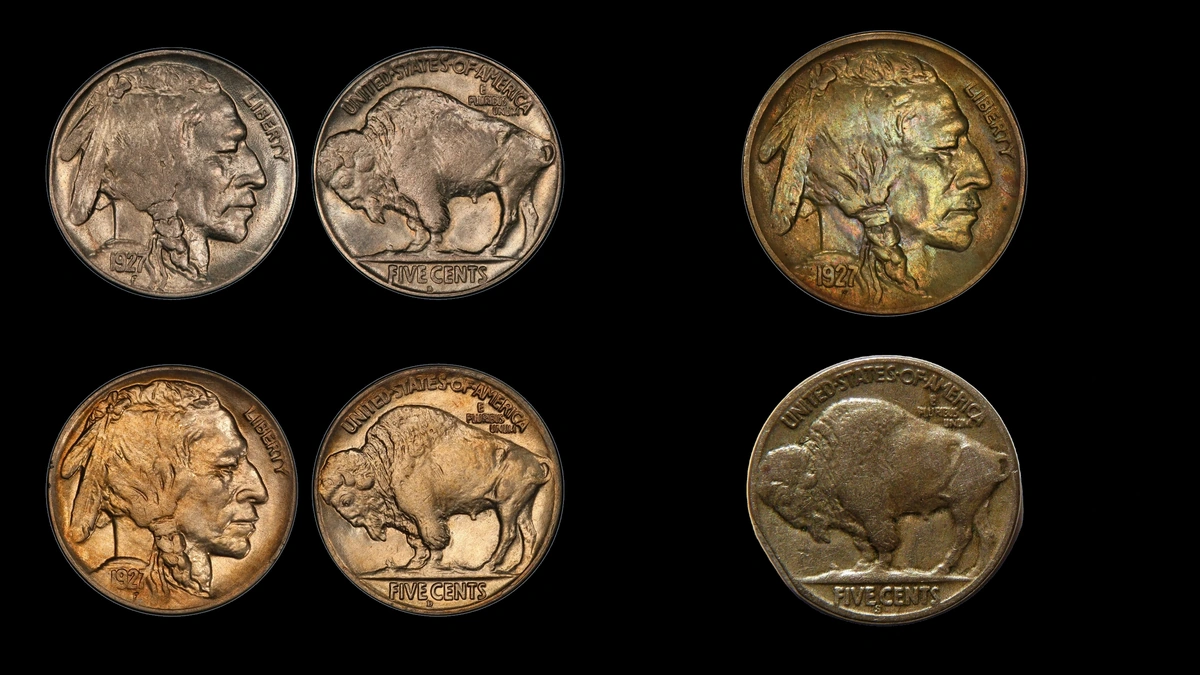
A buffalo leg that is partly absent needs a different explanation from one with an extra outline. Among 1927 Buffalo Nickel errors, the Denver three-and-a-half-leg variety reached $7,475 in February 2012.
The estimated ranges below cover $10–$8,000. Check the blank’s outline, the details that are missing or repeated, and the mint letter before choosing a variety or price comparison.
1. 1927 Nickel A Section of the Blank Is Missing: Clipped Planchet Error
A planchet is the prepared blank that becomes a coin. If it enters the press incomplete, the struck rim and design form around its existing gap.
The documented Philadelphia example has a 6% clip and a PCGS MS64 grade. That percentage describes the missing amount, not the opening’s position around the edge.
How to Identify
A normal Buffalo nickel weighs about 5 grams, measures 21.2 millimeters, and has a plain edge. A clip reduces the surviving metal, but low weight alone cannot tell you whether the loss occurred before or after striking.
Examine where the gap meets the rim for natural struck transitions rather than saw or file marks. Weakness opposite the missing section can provide supporting evidence.
The known Philadelphia coin has no mint letter beneath FIVE CENTS. Compare its entire outline instead of assigning a clock position from the 6% description.
What It’s Worth
Ordinary Philadelphia clips are estimated at $40–$350, from worn pieces to attractive unworn examples. The 6% clipped MS64 nickel sold for $223.25 on August 16, 2015.
A readable date and an untouched original gap strengthen the comparison. Removing the same amount of metal from a finished coin does not create the same collectible error.
2. 1927 Nickel A Small Feather or Part of a Leg Is Absent: Overpolished Die Error
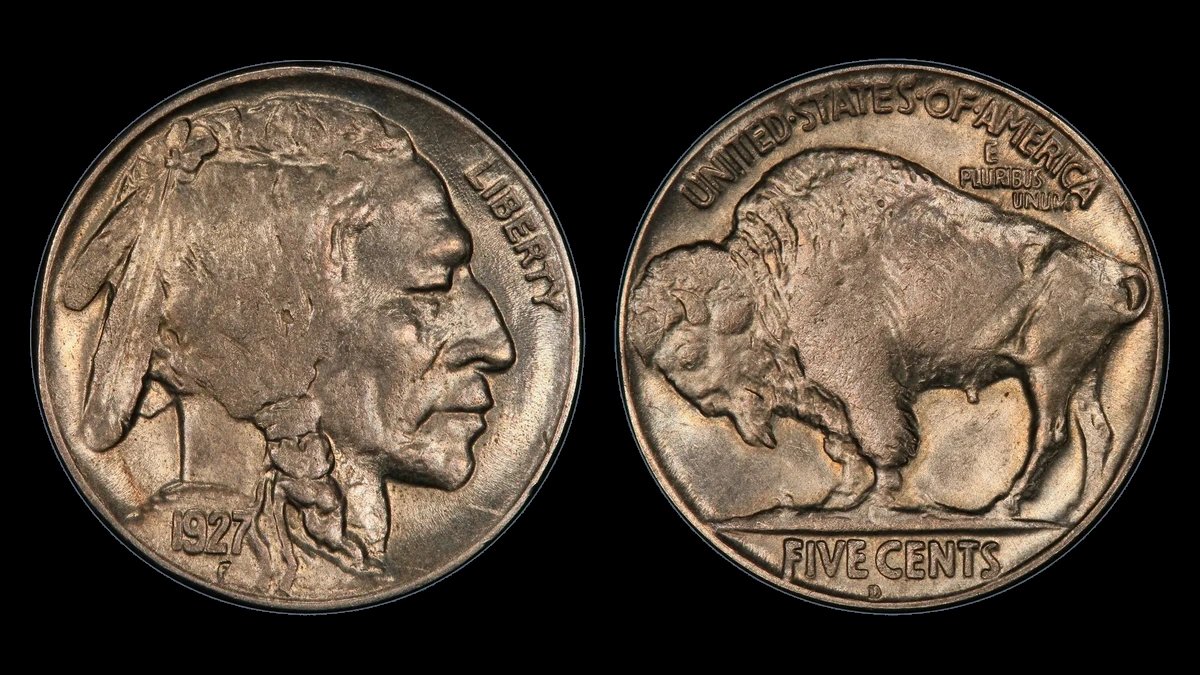
Heavy polishing can remove shallow design detail from a die before it strikes more coins. The 1927-D three-and-a-half-leg variety reflects this loss in part of the buffalo’s front leg.
Separate Denver and San Francisco two-feather varieties have a missing or reduced small feather beside the two large feathers behind the portrait. Some S examples retain a short remnant.
The feather and leg varieties share a production cause, but they should not be presumed to appear together. Each requires its own design comparison.
How to Identify
Check the larger feathers and surrounding portrait for wear before judging the small feather. General wear can reduce all the detail without establishing an overpolished-die variety.
For a Denver leg candidate, compare the body, reduced leg, and hoof with the 1927-D three-and-a-half-leg variety. The famous 1937-D three-leg coin is a different comparison.
Keep the mintmark visible when matching a two-feather coin. The short remnant permitted on some San Francisco examples means that a perfectly empty patch is not required.
What It’s Worth
Identifiable Denver three-and-a-half-leg coins are estimated at $300–$8,000. An MS62 specimen brought $7,475 at Heritage in February 2012.
Two-feather varieties have a separate estimated $75–$2,500 range. Heritage results include $400 for a Denver XF40 coin in February 2017 and $2,280 for a San Francisco MS63 in February 2021.
These results combine variety, mint, and preservation in one whole-coin price. A weak ordinary strike or worn feather cannot receive the same premium without the matching variety details.
3. 1927 Nickel Extra Outlines Repeat Portrait or Leg Details: Doubled Die Error
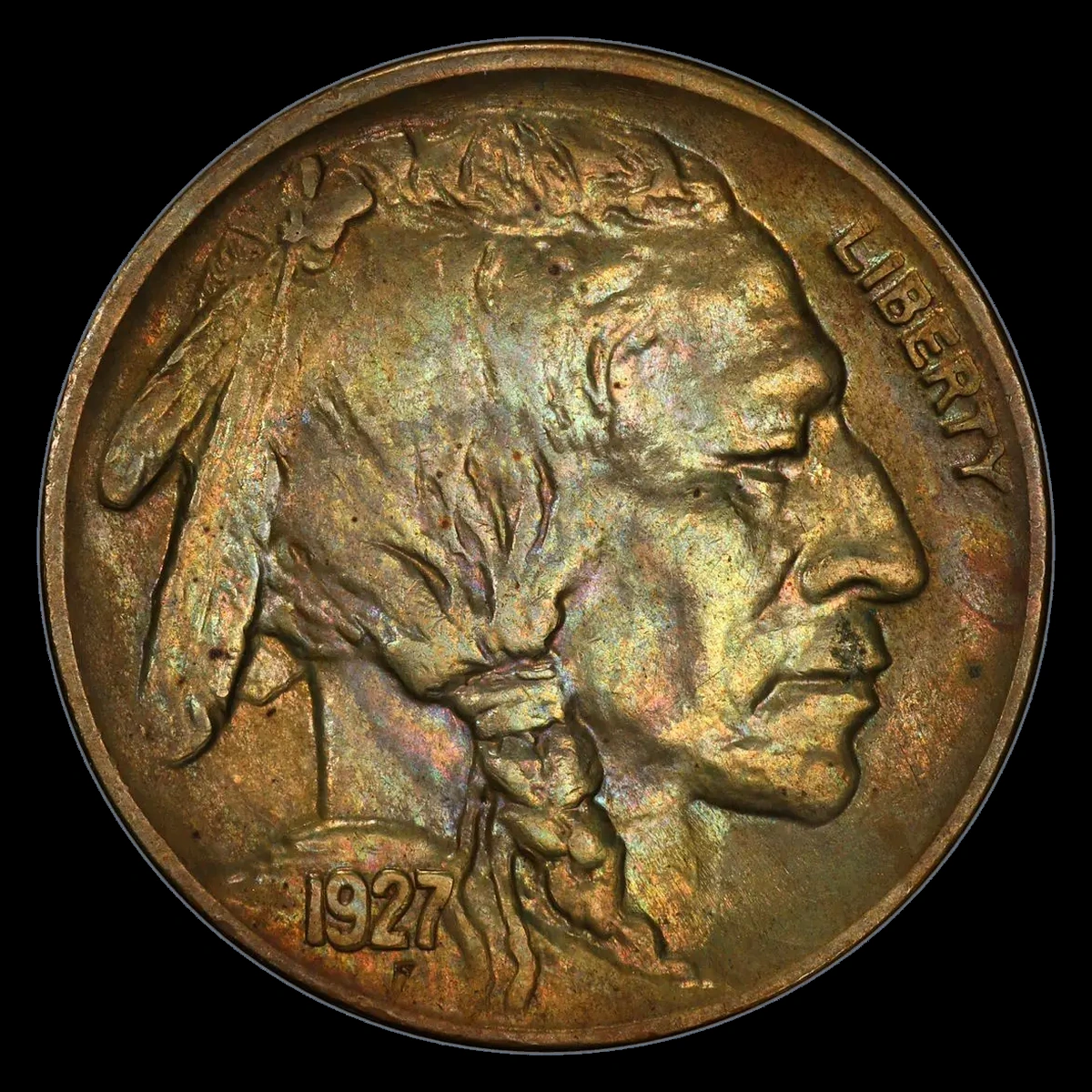
San Francisco doubled-die varieties add detail rather than remove it. One front pattern includes the date, braid, ribbon, small feather, and back of the neck.
A separate reverse pattern repeats both of the buffalo’s front legs toward the upper-right. The repetition originated in the die, so it does not mean the individual coin was struck twice.
How to Identify
Find the S beneath FIVE CENTS before selecting either listed pattern. A Denver coin with a partly missing leg belongs to the previous section.
On a front candidate, follow repeated outlines through several features rather than stopping at a thick numeral. Their relationship provides the match.
On the reverse, look for raised copies of both front legs in the reported direction. A broad flat shelf can result from movement during striking and is different from repeated detail built into the tool.
What It’s Worth
The front variety is estimated at $100–$1,200, while the less prominently documented reverse pattern has a working estimate of $75–$400. Both include the ordinary value of the 1927-S coin.
An AU58 front FS-101 specimen sold for $840 at Heritage in June 2019. That lightly worn coin does not establish a price for the separate doubled-leg reverse.
4. 1927 Nickel Another D or S Extends beyond the Mintmark: Repunched Mintmark Error
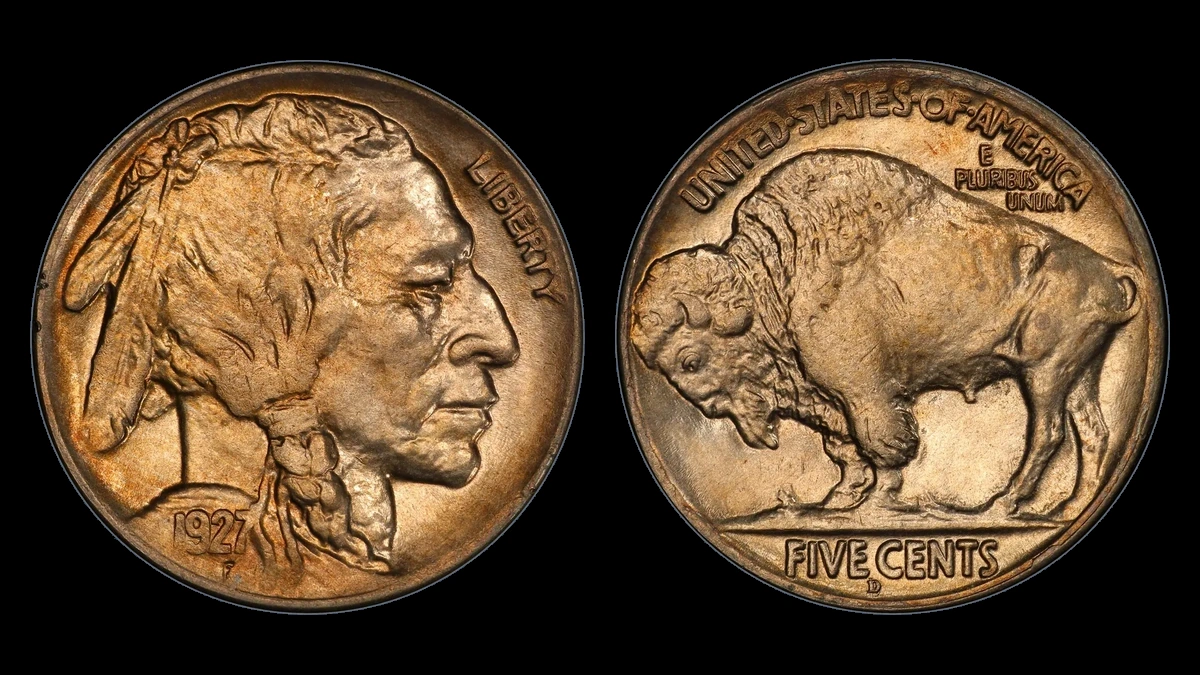
The mint letter was punched into the die separately in 1927. A shifted repeat application could leave an earlier letter partly visible beside the final one.
One reported Denver form has extra D detail above and below the main letter, while another has an upper outline. San Francisco reports describe extra S shapes toward the right or upper-right.
How to Identify
Keep FIVE CENTS upright so the direction of the extra strokes remains meaningful. Inspect the complete letter, including both the upper and lower areas of a Denver candidate.
Match the appropriate mint in the illustrated repunched-mintmark catalog. A D outline cannot establish which of the S patterns is present.
Change the lighting to separate a raised letter segment from a reflection or flat shelf. A damaged curve can suggest another punch without reproducing its full shape.
What It’s Worth
Identifiable ordinary examples are estimated at $35–$500. Strong clear punch remnants on well-preserved coins support better comparisons than minor traces obscured by wear.
PCGS records a Denver FS-501 in XF40 at $335 on eBay in May 2021. That marketplace result concerns the Denver variety and does not individually price either reported San Francisco pattern.
5. 1927 Nickel Raised Lines or Small Lumps Cross the Design: Die Crack and Chip Error
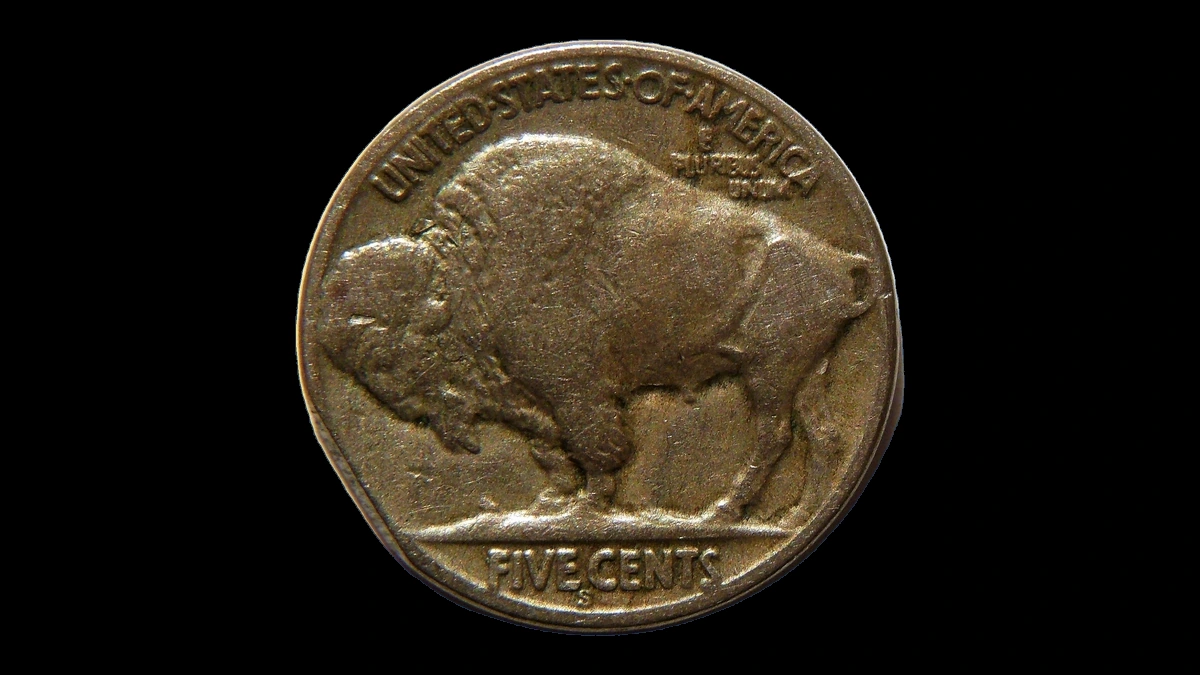
A die crack creates an opening into which coin metal can rise during striking. A small broken portion of the tool can instead leave a raised chip-shaped lump.
The reported 1927 category does not establish one fixed location or mint. The coin itself need not be cracked for a raised die-crack line to appear.
How to Identify
Compare the area with an ordinary Buffalo nickel first so that normal design is not mistaken for a new ridge. Low side lighting helps distinguish raised metal from a cut.
A scratch can displace metal along its sides, so inspect the center of the line as well. For a lump, document whether it remains inside the design or reaches the rim.
Record the date and any D or S below FIVE CENTS. Their ordinary value may matter greatly even when the crack itself is small.
What It’s Worth
Readable ordinary 1927 nickels with modest genuine cracks or chips are estimated at $10–$200. The range is not intended to cover every high-grade Denver or San Francisco coin.
No specific crack auction supplies a direct 1927 comparison here. Added metal and scratches do not gain a mint-error premium merely by resembling the reported feature.
Conclusion
On a 1927 Buffalo nickel, missing detail and extra detail lead to different explanations. A feather remnant can fit an overpolished die, while a raised second leg outline belongs with doubling.
Use the mintmark and several connected features to match a variety, then compare condition and the nature of the recorded price. The strongest sale here concerns a Denver three-and-a-half-leg coin, not every nickel with a weak leg.