Rare 1951 Nickel Errors (List & Pictures)
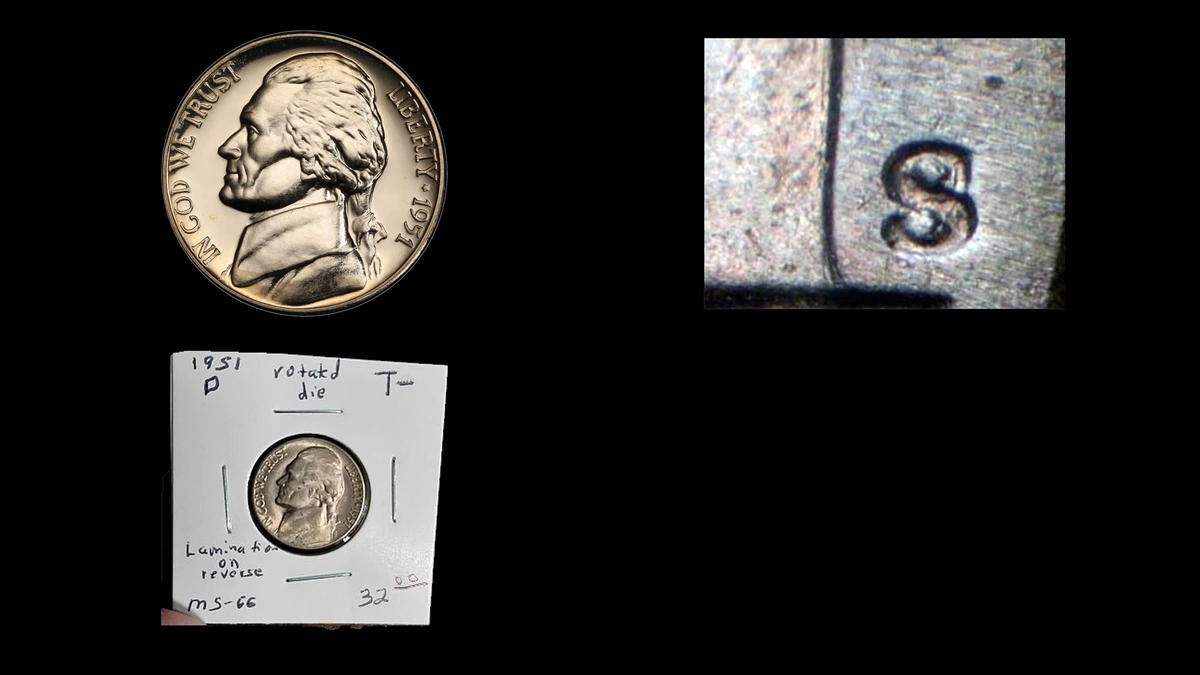
Three fine outlines below IN are a useful clue on one 1951 Proof nickel. An FS-101 example in exceptional condition brought about $494 in July 2015.
These 1951 nickel errors range from about $5–$750, including peeling metal, a light blank, and misplaced strikes. Separate specially made Proof coins from ordinary circulation nickels before comparing the smaller details.
1. 1951 Nickel Doubled or Tripled Lettering Error
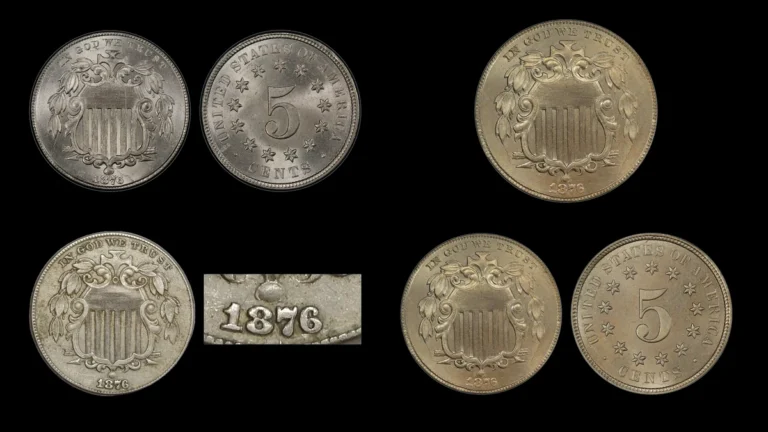
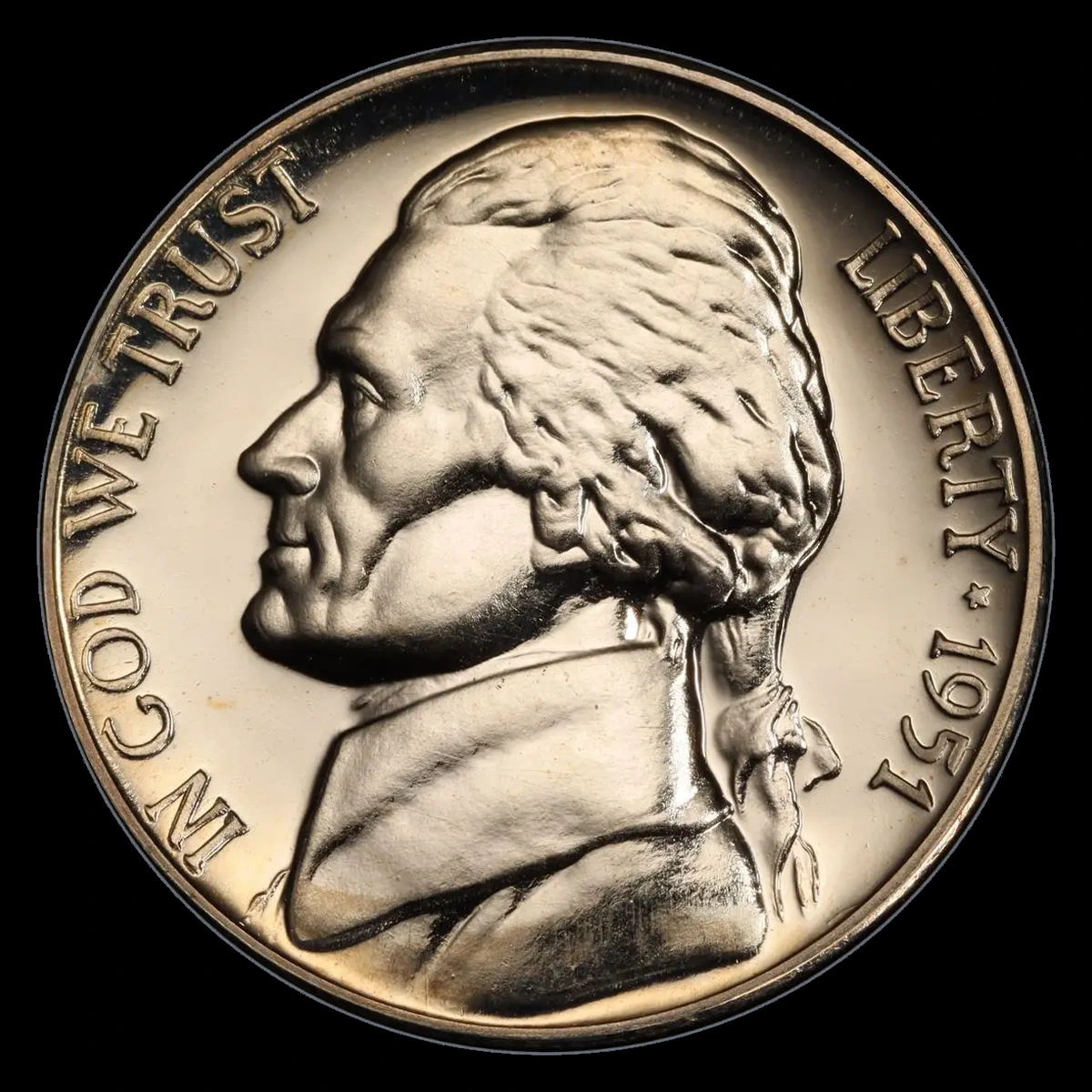
The recognized Proof front shows tripling along the lower edges of IN. Its paired back has close doubling in several letters, while other Proof backs and a Denver variety have their own patterns.
The repeated details came from the die, the stamping tool. They do not mean the finished nickel received three separate blows.
How to Identify
On the Proof front, compare the lower IN outlines and then examine the matching back lettering. Relevant areas include UNITED STATES OF AMERICA, CENTS, and the second O in MONTICELLO.
The Denver variety instead has very close doubling in E PLURIBUS UNUM. Do not expect it to show the Proof’s stronger front tripling.
Match the mint and finish as well as the rounded extra outlines. Both Philadelphia circulation coins and Philadelphia Proofs lack a mintmark, while flat letter shelves can result from movement during striking.
What It’s Worth
$10–$750 spans minor identified doubling around $10–$75 and stronger Proof examples around $100–$750. The two ends describe different kinds of coins.
A PR68 FS-101 Proof brought about $494 at Heritage in July 2015. Its exceptional condition contributes to the price, alongside its readable variety.
2. 1951 Nickel An Extra D or S from a Repunched Mintmark Error
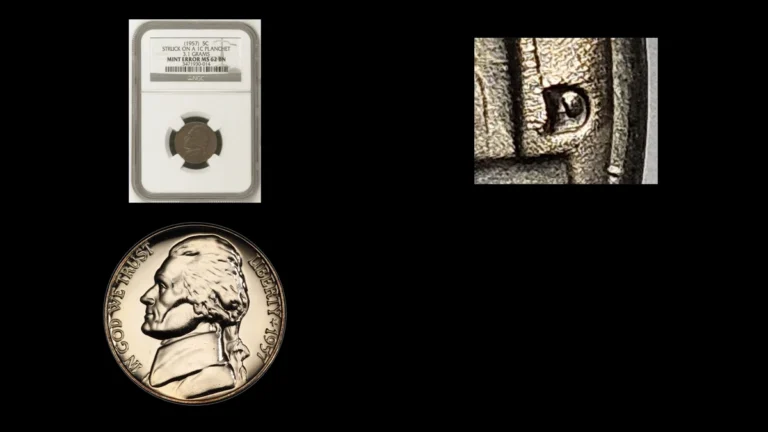
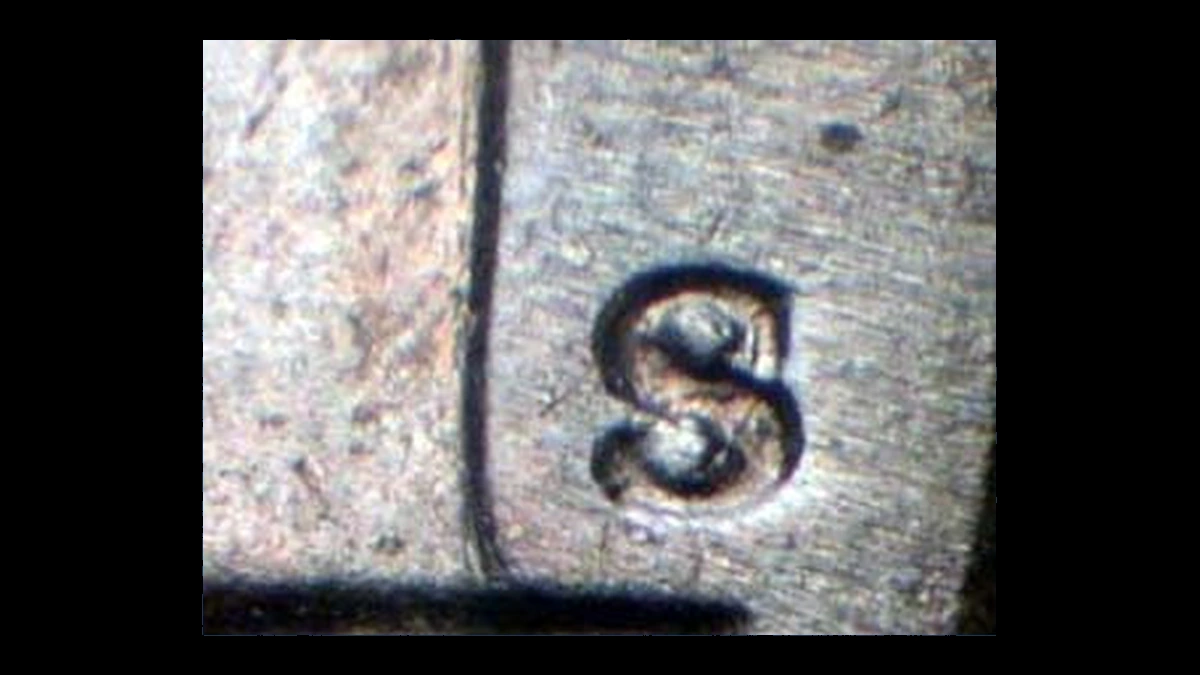
The small mintmark to the right of Monticello can retain part of an earlier punch. Reported 1951 examples include D over D and S over S.
A worker made the repeated letter while preparing the die. This affects the mintmark separately from doubling in the date or surrounding design.
How to Identify
Trace the extra curve or upright stroke under magnification. Its direction and shape must match the particular D/D or S/S example being compared.
Check for cuts or displaced metal around the letter. A thick or shadowed mintmark alone does not establish a cataloged variety.
What It’s Worth
$10–$150 is a practical estimate, with modest identified pieces around $10–$50 and clearer attractive unworn examples around $50–$150. No matching individual auction result is supplied for these reports.
A recognizable second letter makes the feature easier to appreciate. Wear that hides it or cleaning that damages the nearby surface can reduce interest.
3. 1951 Nickel Raised Bumps from Die Chips and Cuds Error
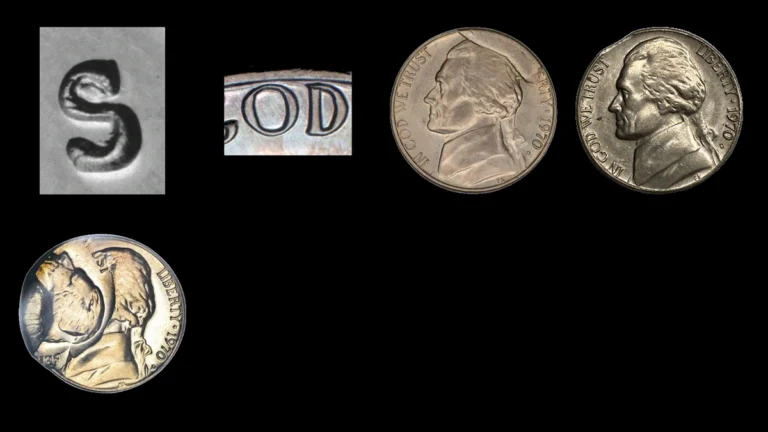
A broken piece of a die leaves space that coin metal can fill during striking. A small interior break can form a chip-like lump; a larger break connected to the edge can leave a rim cud.
Reports for 1951 do not establish one fixed location. An isolated central bump is not a rim cud simply because it is large.
How to Identify
Follow the surface into the raised feature and look for a natural connection. Glue, solder, or a dent pushing metal sideways can create misleading lumps.
For a cud, trace its join with the rim and examine the opposite face for possible weakness. That weakness can support a substantial die break, although it is not required for every small chip.
What It’s Worth
$5–$500 includes small genuine chips around $5–$50 and more obvious rim cuds around $50–$500. Their size and the surrounding coin’s condition help place them.
A 1959-D MS65 cud sold for $504 in May 2021. That different-year substantial break is not a price guide for every tiny bump inside a 1951 letter.
4. 1951 Nickel A Crack or Flap from Lamination Error
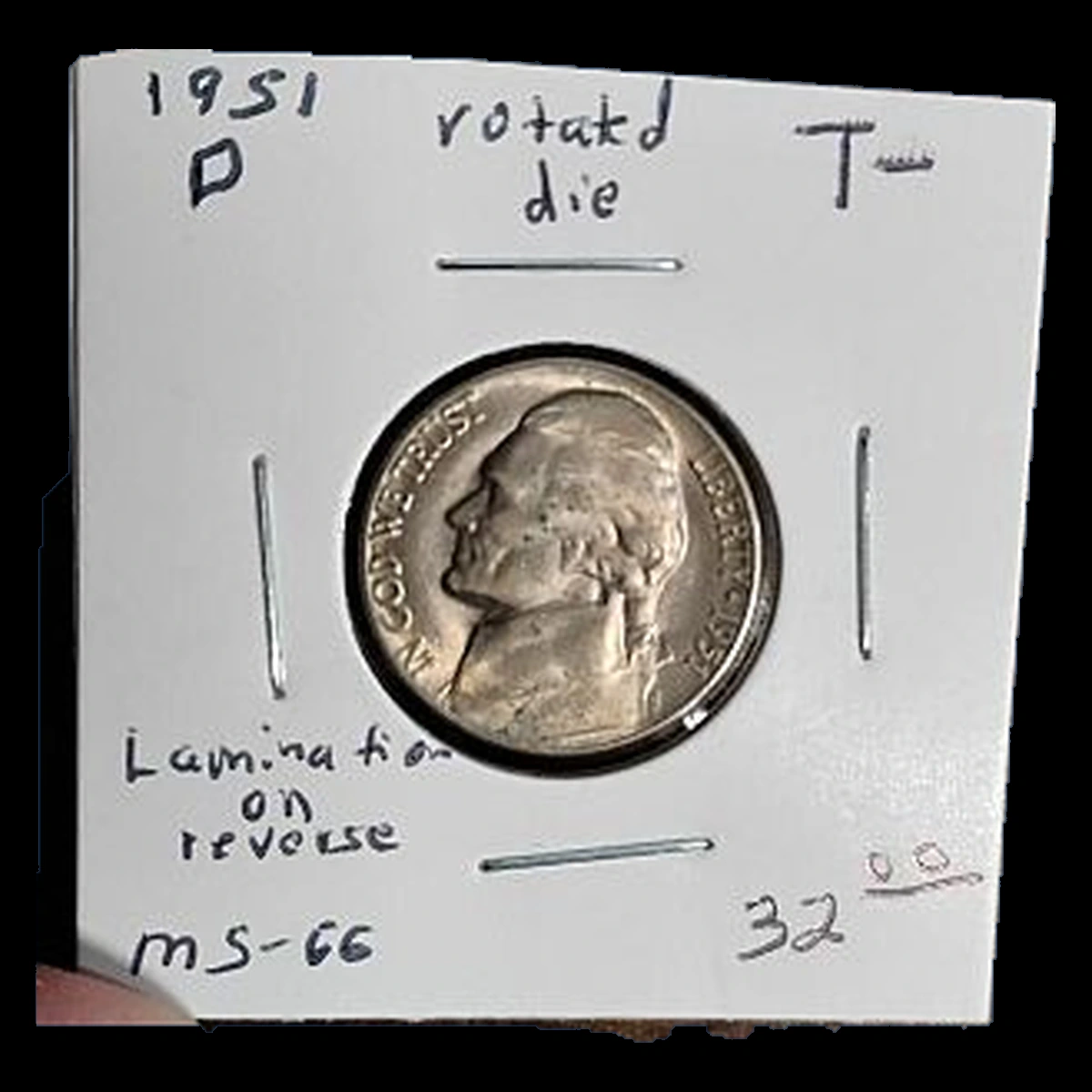
A line opening into the metal can lead to a thin flap or a patch where a layer has fallen away. This is lamination, caused by weakness inside the blank rather than a broken stamping tool.
How to Identify
Use low side lighting to find an opening within the original metal. A coating on top of the coin or a scraped trench has a different boundary.
Keep a surviving flap attached and photograph any design on it. Roughness alone is not enough, because corrosion and chemical damage can also disturb a nickel’s surface.
What It’s Worth
$5–$250 covers small separations at roughly $5–$50 and larger, attractive examples at $50–$250. These are estimated values for genuine metal flaws, not a specific 1951 sale.
An attached flap can make the cause easier to understand. Peeling that removes most of the design may be less appealing despite its size.
5. 1951 Nickel Low Weight from a Thin Blank Error
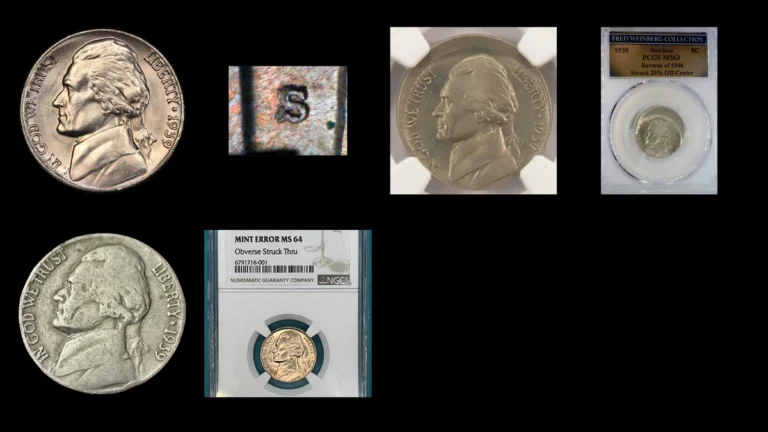
The recorded 1951-S thin-blank nickel weighs 3.5 grams and carries an NGC MS66 grade. A normal nickel weighs about 5 grams and measures roughly 21.2 mm across.
Too little metal through the blank’s thickness explains this category. The record does not establish a foreign denomination, different alloy, or earlier split.
How to Identify
Weigh a loose coin, then compare its width and thickness with a normal nickel. A much smaller outline may suggest another blank type or later cutting instead.
Inspect both faces and the plain edge for grinding, acid damage, or an exposed split. The strongest evidence is original struck design on the thin blank, together with its measurements and visible S.
What It’s Worth
$75–$400 is a working range for verified examples, allowing roughly $75–$200 for pieces with some wear and $200–$400 for especially attractive coins. The NGC MS66 example sold for $149.50 on September 26, 2010.
The older sale shows why a numerical grade cannot guarantee a price within today’s estimated bands. Readability, surfaces, and confidence in the attribution also influence offers.
6. 1951 Nickel A Curved Gap from a Clipped Blank Error
A year guide describes a 1951-D nickel with a 17% curved clip. It does not state a clock position for the opening.
A curved clip can begin when blank cutting overlaps an earlier hole in the strip. The shortened blank then receives the design across its remaining metal.
How to Identify
Inspect the curve and its two ends for softened detail and metal flow toward the gap. Sawing, filing, or sharp burrs support a later cut.
Reduced weight records missing metal but cannot tell when it disappeared. Include the readable date and D in photographs, and check the opposite rim for supporting weakness.
What It’s Worth
$20–$300 covers worn authenticated clips around $20–$100 and clear, well-preserved examples around $100–$300. The reported 17% size does not supply a sale price.
A 1997-P nickel with a 20% clip brought $124 in March 2025. It provides a comparison for a similar broad error without transferring its date or exact shape.
7. 1951 Nickel A Shifted Design from an Off-Center Strike Error
An off-center nickel keeps a crescent of bare metal beside the struck design. The blank sat partly outside the dies, so some intended detail landed beyond its edge.
No shared percentage or direction is established for the 1951 reports. Those measurements need to come from the actual specimen.
How to Identify
Compare the two faces for compatible displacement and missing outer design. One shifted face with a normal opposite side can point to a misplaced die instead.
Inspect the boundary between struck and bare metal for scraping, and preserve the date in photographs. Unlike a clipped opening, the unstruck crescent remains solid metal.
What It’s Worth
$50–$750 spans modest offsets at $50–$200 and stronger examples with identifiable dates at $200–$750. A larger shift can lose appeal if it removes the year.
A 1955-D MS66 nickel struck 15% off center sold for $402.50 in October 2010. That is a different-year comparison, not a measured description of a 1951 coin.
Conclusion
Begin a 1951 nickel check with the feature you can actually show: repeated lettering, a raised bump, a metal separation, or a changed outline. The Proof varieties require a different comparison from ordinary Denver or San Francisco coins.
If the coin feels light, record its measurements before choosing an explanation. Keep the surface and any attached flap intact so the cause remains visible.