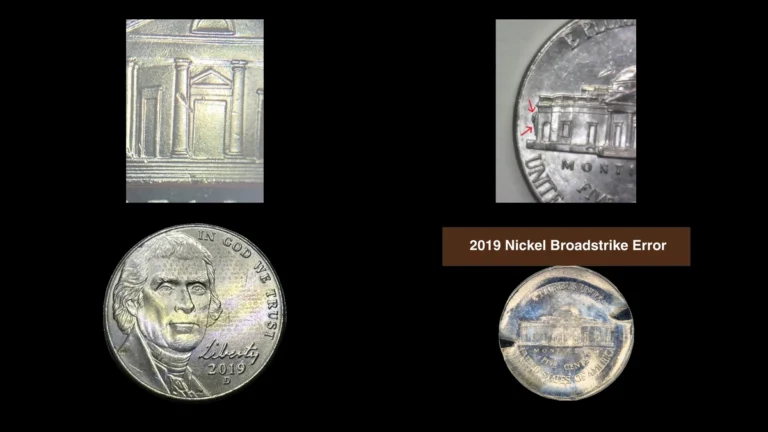
Rare 1939 Nickel Errors (List & Pictures)
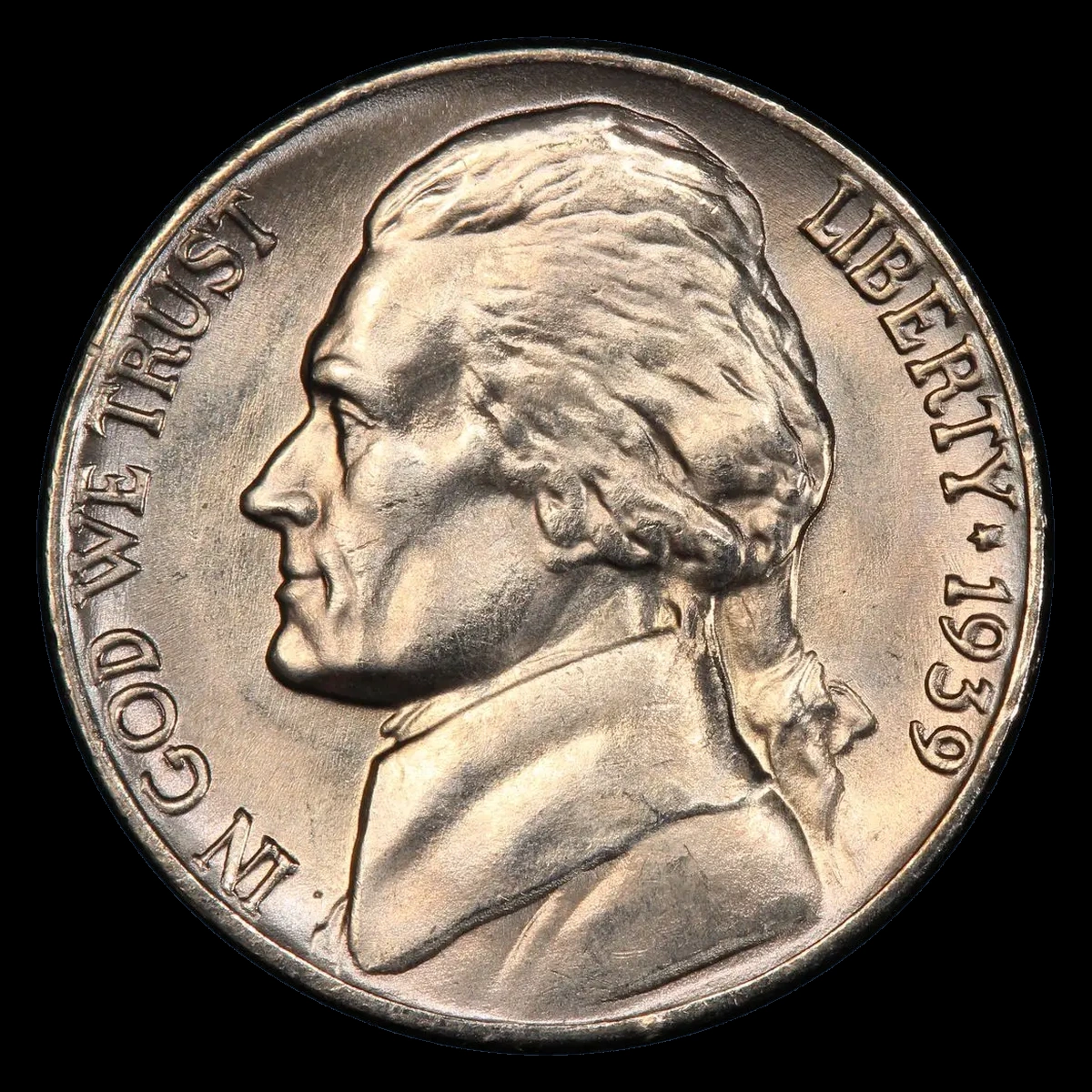
Monticello’s steps changed during the early Jefferson series, and both normal reverse styles occur in 1939. Repeated lettering is a separate matter: an exceptional Doubled Monticello nickel sold for $23,500 in September 2019.
The supplied 1939 nickel errors have estimated values of $5–$25,000. Establish the reverse style and mint first, then compare letter outlines, the disc’s shape, and the way unusual details meet the original surface.
1. 1939 Nickel MONTICELLO and FIVE CENTS Repeat to the Left: Doubled Die Error
The famous Philadelphia Doubled Monticello variety carries bold extra outlines to the left of those two inscriptions. The repeated design existed in the die before it struck the coins.
It uses the Reverse of 1940, with straighter steps than the rounded, wavier-looking Reverse of 1938. Those two normal designs are not errors merely because their steps look different.
How to Identify
Start with the lettering beneath the building rather than judging the steps. Look for distinct repeated outlines in both MONTICELLO and FIVE CENTS that match the known variety.
Other reported varieties affect the date, front lettering, or different reverse inscriptions, including some Proof collector coins. Match the exact mint, face, and finish with the 1939 variety photographs instead of combining all patterns into one coin.
A normal nickel weighs about 5 grams, measures 21.2 millimeters, and has a plain edge. These basic checks support identity, while the actual repeated lettering establishes the variety; a shiny cleaned coin is not automatically a Proof.
What It’s Worth
$10–$200 for minor identified varieties, $200–$5,000 for stronger Doubled Monticello examples, and $5,000–$25,000 for exceptional pieces are the estimates. The highest category requires outstanding preservation and sharply defined steps.
PCGS records $23,500 in September 2019 for an MS67 Full Steps example. That high-grade whole-coin result is not a premium for any thick-looking inscription or minor Proof variety.
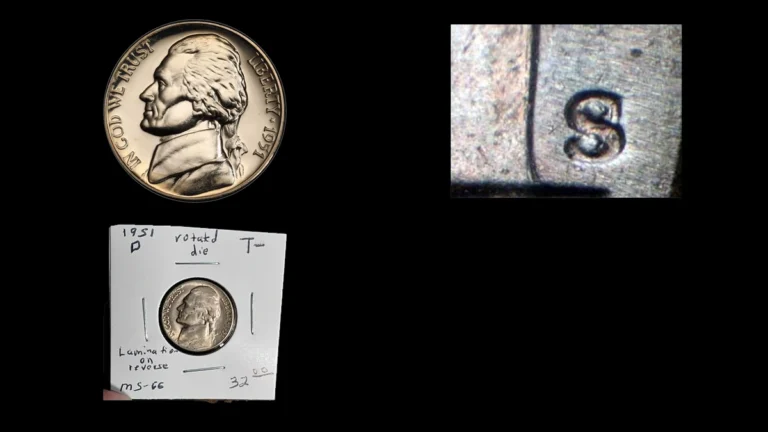
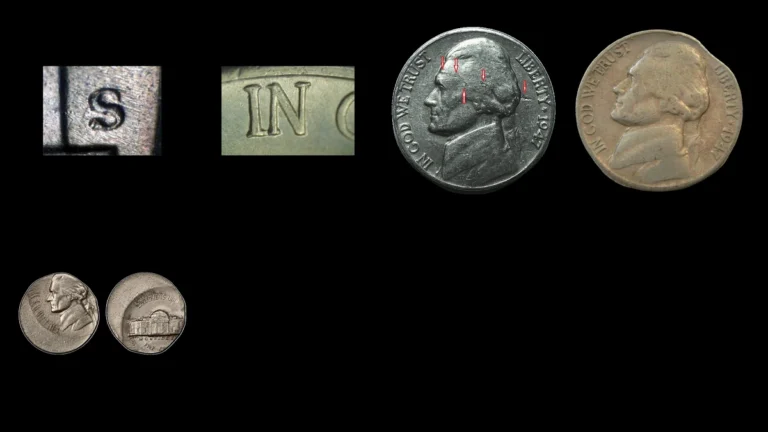
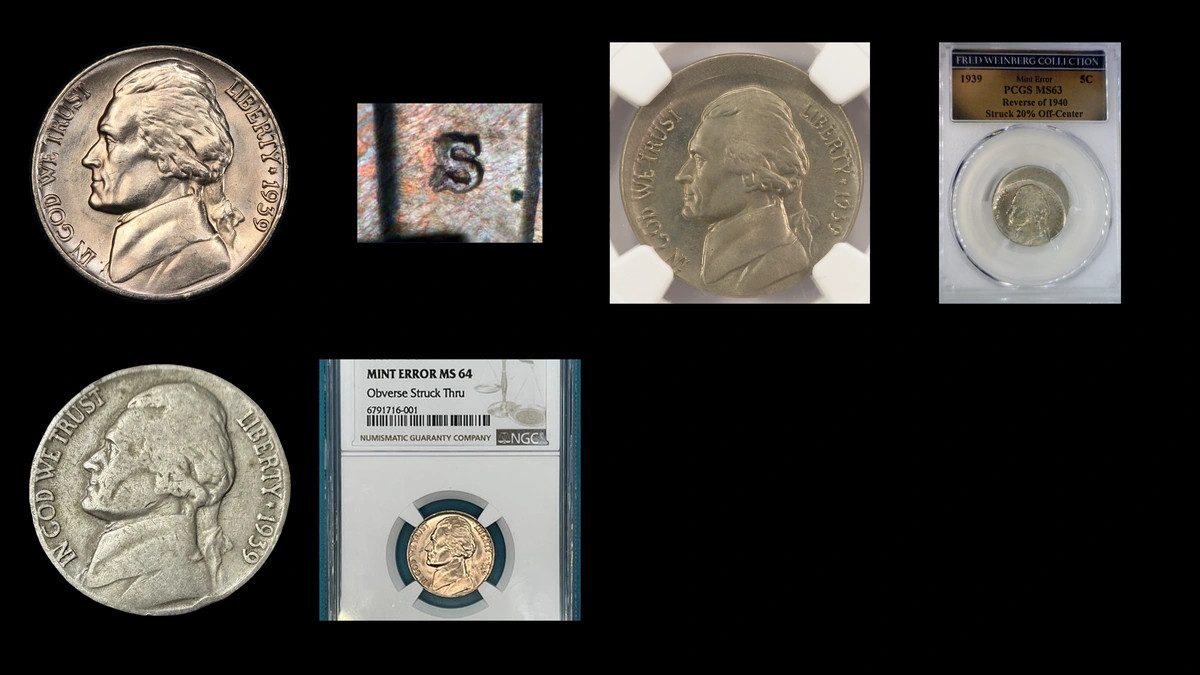
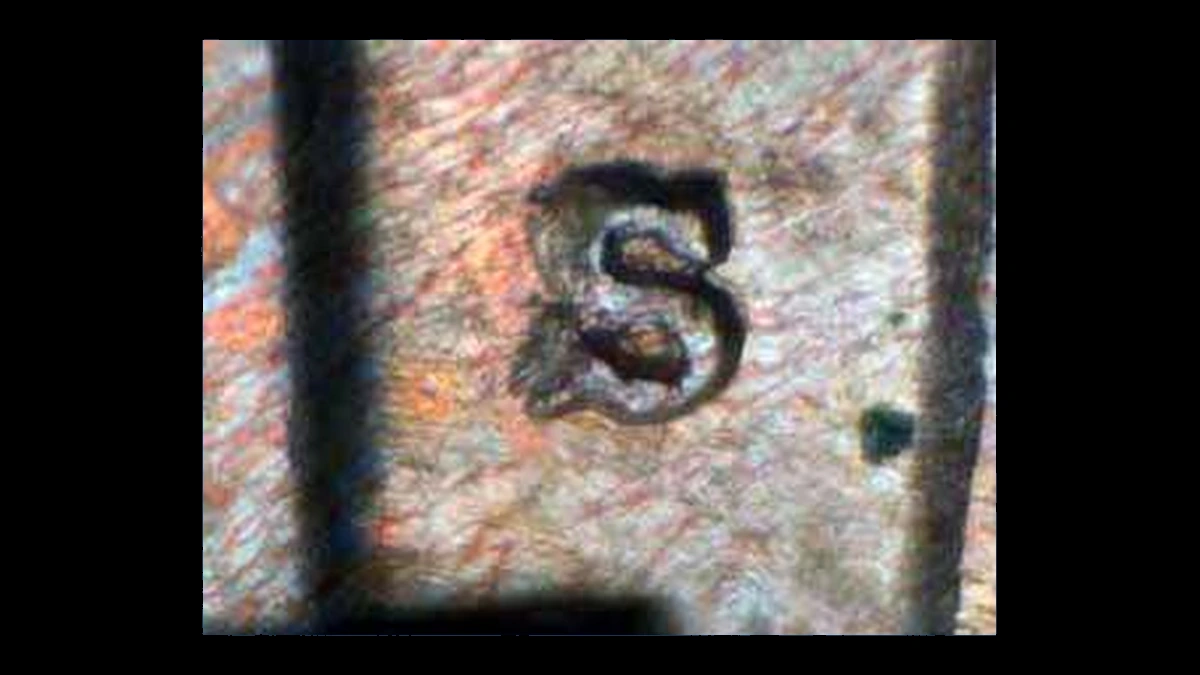
2. 1939 Nickel Extra D or S Curves Appear Beside Monticello: Repunched Mintmark Error
In 1939, the mintmark was applied separately to the working die with a punch. A repeat application at a different position could leave overlapping impressions that appear on later coins.
The Denver pattern preserves tilted D impressions, while the San Francisco variety has an extra S below the main letter. Both mintmarks sit to the right of Monticello.
How to Identify
Find the mintmark beside the building and compare its curves with the correct 1939 mintmark photographs. An unmarked Philadelphia coin cannot be a D/D or S/S example.
A swollen or damaged letter may lack a recognizable second outline. Use changing light to follow the tilted D pattern or the lower S, rather than calling any neighboring bump repunching.
What It’s Worth
$20–$100 for identified worn examples and $100–$350 for attractive unworn pieces are the estimates. These ranges include the underlying collectible coin.
Compare Denver and San Francisco separately because their ordinary values and demand can differ. Clear repeated strokes help support a premium, while cleaning and heavy scratches can reduce appeal.
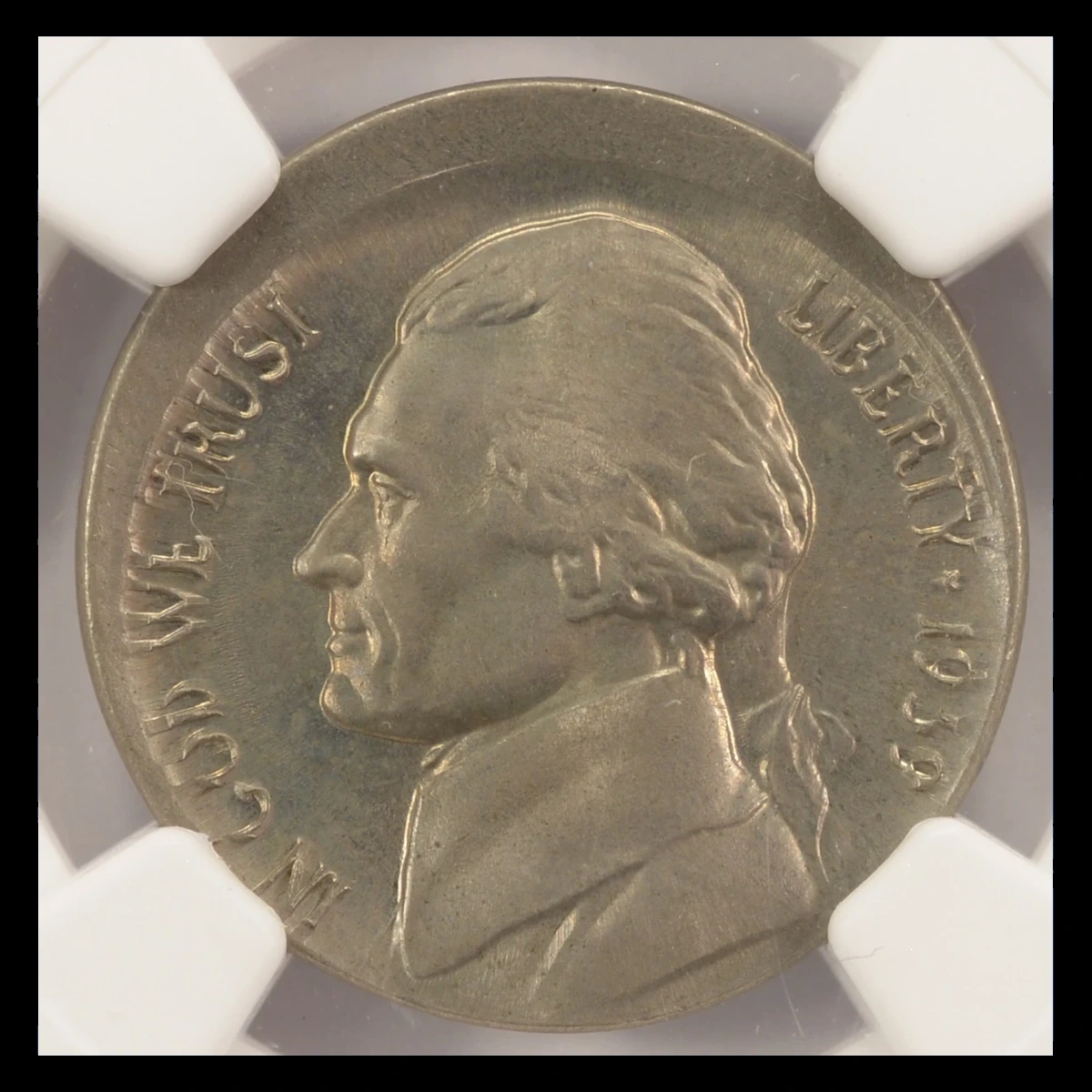
3. 1939 Nickel An Uneven Wide Border Surrounds Complete Designs: Broadstrike Error
The recorded Philadelphia broadstrike has extra border near 10:30 but none near 5 o’clock. Its metal spread unevenly because the collar did not restrain the blank normally.
The coin uses the Reverse of 1940 and was graded MS64 Six Full Steps. Clear staircase detail describes strike quality, not an additional error in the building.
How to Identify
Follow the complete design and outward-stretched lettering around both faces. A broadstrike can appear off center without actually losing intended design beyond the blank.
Measure the expanded outline and inspect the edge and portrait for crushing or tool marks. Unequal border width alone cannot distinguish original spreading from later flattening.
What It’s Worth
$100–$500 is the estimate for an attractive 1939 broadstrike. The recorded MS64 example was listed as unsold in May 2007, so that offering gives no completed transaction.
A 1999-P broadstrike sold for $89 in March 2025. It supplies modest different-year context rather than an exact price for this early Jefferson coin.
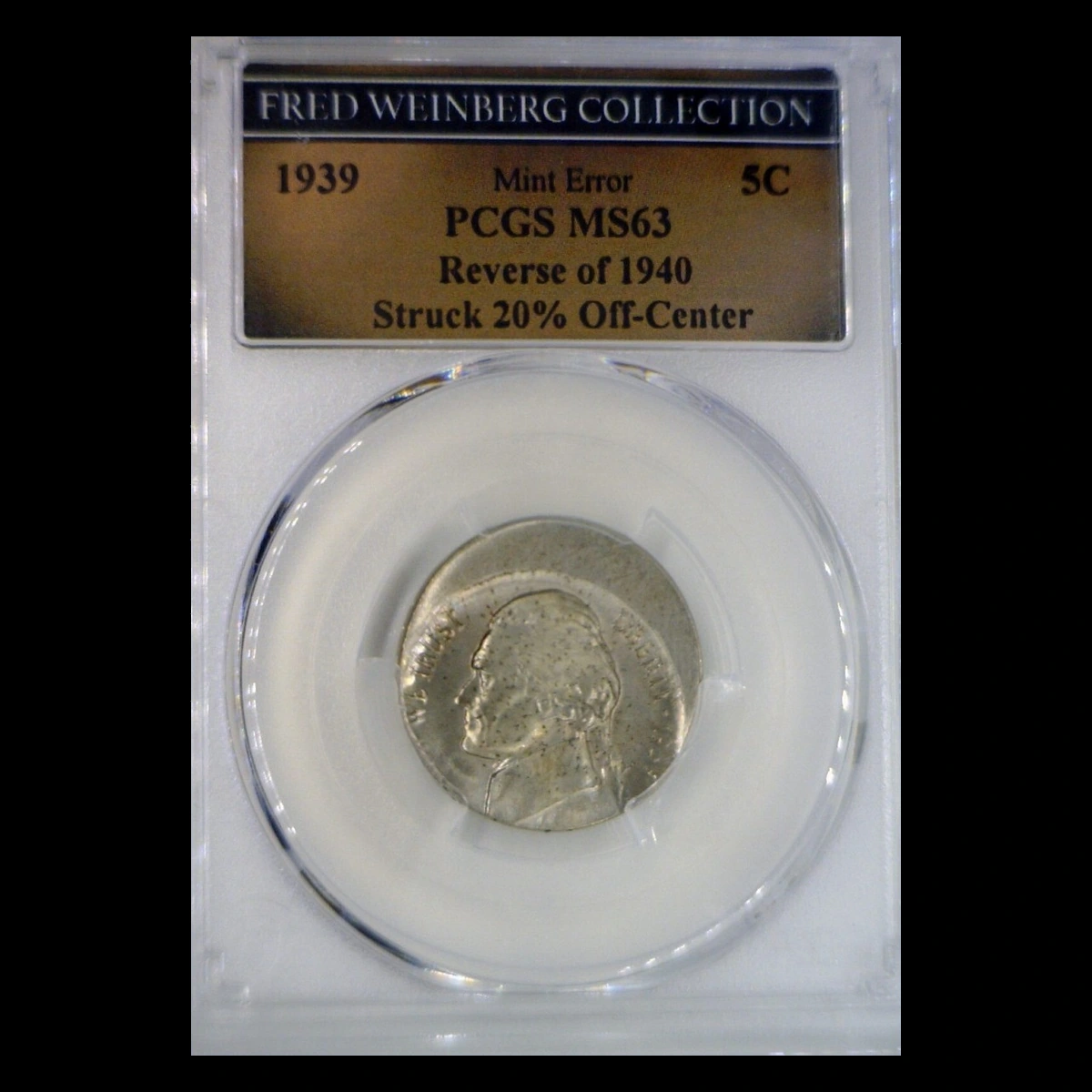
4. 1939 Nickel The Design Runs Beyond the Blank: Off-Center Strike Error
Two recorded Philadelphia examples combine off-center striking with different normal reverses. The 10% example uses the Reverse of 1940, while the separate 15% coin has the Reverse of 1938.
In each case, a misplaced blank left solid unstruck metal beside a partial design. The step-style difference does not constitute another minting error.
How to Identify
Read the date and identify the reverse before selecting a reference photograph. Keep the two specimens’ percentages and normal design styles separate.
Compare both faces for a consistent division between struck and blank areas. The unused copper-nickel should remain intact, without grinding marks, erased letters, or a cut opening in its place.
What It’s Worth
$75–$250 for worn or less striking examples and $250–$750 for attractive unworn dated coins are the estimates. The 10% off-center MS65 with the later reverse sold for $252 on March 8, 2021.
The 15% example does not inherit that price merely because it is more displaced. Condition, reverse type, and surviving details belong to the individual comparison.
5. 1939 Nickel Two Design Positions Fit Inside a Normal Outline: Rotated Double Strike Error
The recorded Philadelphia double strike turned between blows while remaining within the collar. Its outline could therefore stay close to normal even though the portrait and reverse acquired overlapping positions.
NGC graded the example MS61, an unworn coin with noticeable marks. The repetition comes from separate strikes, unlike fixed extra letter outlines already present in a doubled die.
How to Identify
Trace recognizable parts of both impressions on the front and see how the reverse supports the same sequence. Scratches crossing the design are not remnants of an earlier strike.
No precise turning angle is established for this specimen. Normal dimensions are compatible with collar-confined striking, so they do not rule out the documented double impression.
What It’s Worth
$200–$600 for worn or less attractive readable examples and $600–$1,200 for better-preserved strong double strikes are the estimates. The MS61 coin sold for $499.38 on March 2, 2014.
That direct comparison concerns two recognizable design positions. A confusing group of damaged details or one doubled-looking letter is not equivalent evidence.
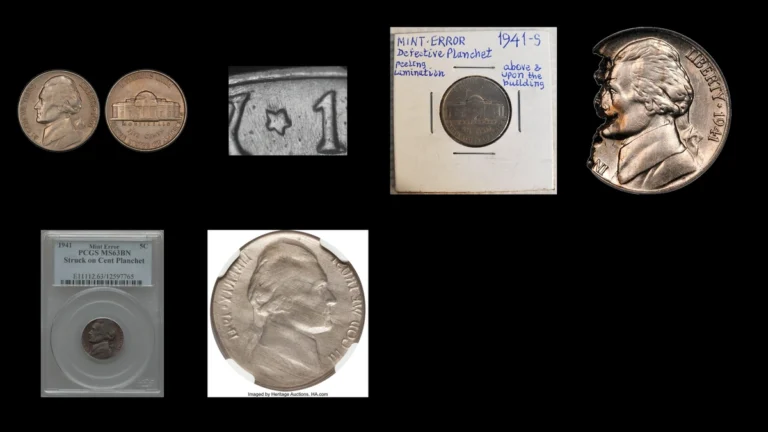
6. 1939 Nickel Nickel Details Crowd a Smaller Disc: Cent or Silver Dime Planchet Error
The Philadelphia cent-planchet example is brown and retains its full date and LIBERTY, while most of WE TRUST misses the edge and part of IN GOD is distorted. Its blank was smaller than the nickel design intended for it.
A separate San Francisco coin uses a silver dime blank and the Reverse of 1940. Silver color alone does not establish that metal because an ordinary copper-nickel coin can look similar.
How to Identify
Compare weight and composition with the relevant starting standards: about 3.11 grams for a contemporary cent and 2.5 grams for a silver dime. These are reference figures, not supplied measurements of the two auctioned errors.
Cent and dime blanks begin around 19 and 17.9 millimeters respectively, though striking can spread them. Check cropped lettering and edge surfaces for natural crowding rather than plating or grinding.
For the Philadelphia example, match the full date and LIBERTY with the cut-off motto. The San Francisco coin needs its own silver-planchet and reverse-type attribution.
What It’s Worth
$750–$1,750 for worn but clear examples and $1,750–$3,500 for stronger pieces are the estimates. The Philadelphia cent-planchet AU58 sold for $1,560 in September 2019.
The separate San Francisco silver-dime-planchet AU55 also brought $1,560, in December 2024. Equal prices do not make their grades, metals, or sale histories interchangeable.
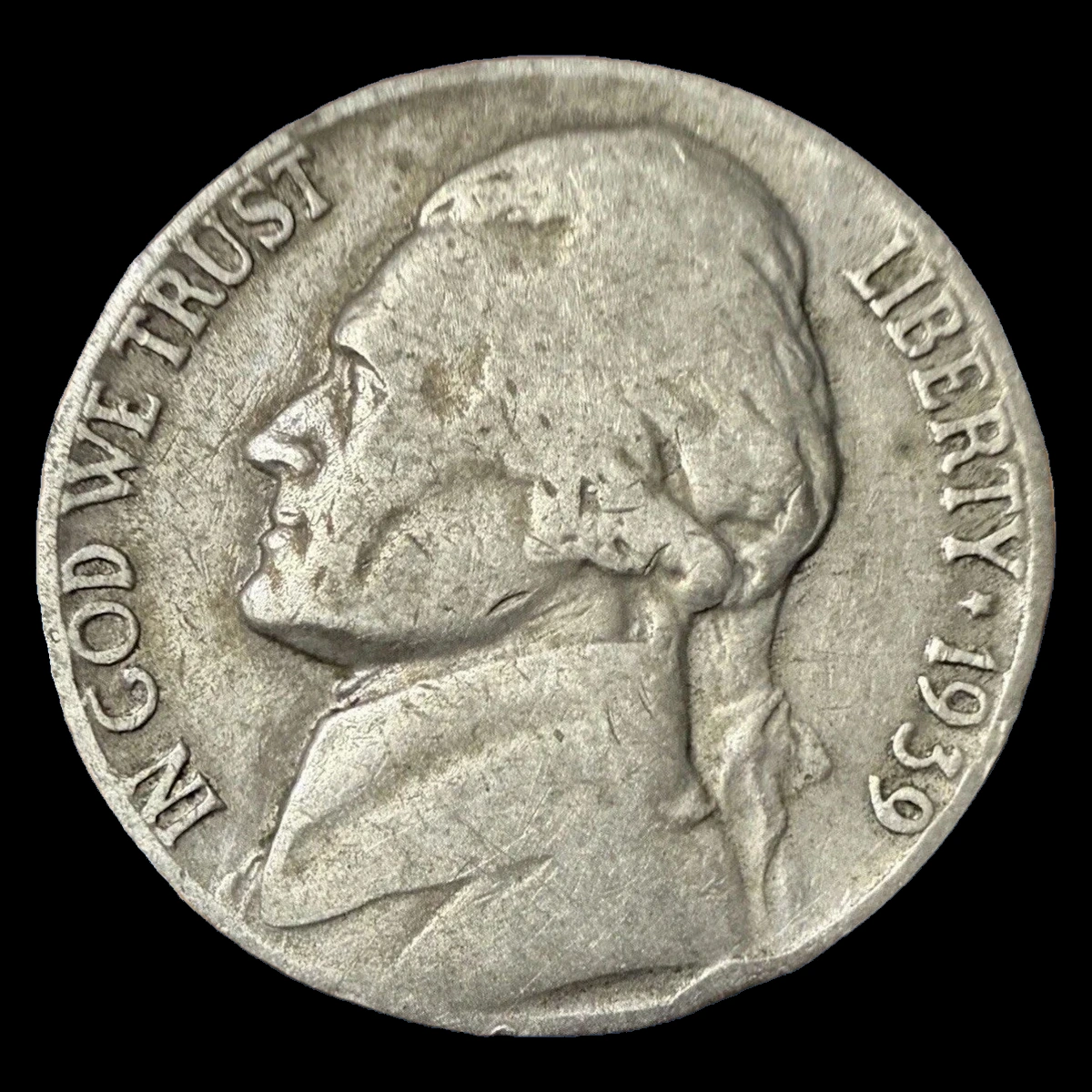
7. 1939 Nickel Ridges or Rim-Connected Blobs Replace Detail: Die Cracks and Cuds Error
A crack in a die allows metal to form a narrow raised line on the coin. A larger missing section at the die’s edge can leave a broad rim-connected patch called a cud.
The 1939 report does not establish one mint or path for these features. Each candidate needs its own examination rather than an assumed crack map.
How to Identify
For a blob, verify that it joins the rim and inspect for a seam, different texture, or an adjacent dent. An interior lump or metal pushed upward by a later blow needs another description.
For a line, check that the feature itself rises rather than merely forming a bright lip beside a cut. Follow its relationship with the original design under low light without scraping it.
What It’s Worth
$5–$40 for fine crack lines and $50–$600 for clear rim cuds are the estimates. A 1959-D cud sold for $504 in May 2021, supplying a different-year comparison.
No specific 1939 break is assigned that sale. The premium assumes original die damage rather than added metal or a rim impact.
8. 1939 Nickel A Local Impression Blocks the Intended Design: Struck Through Error
Material between die and blank can prevent a letter or portrait area from forming. It may fall away after striking or remain attached, so retained debris is not required on every struck-through coin.
The supplied 1939 report identifies neither an exact object nor a location. The impression must support any more specific explanation.
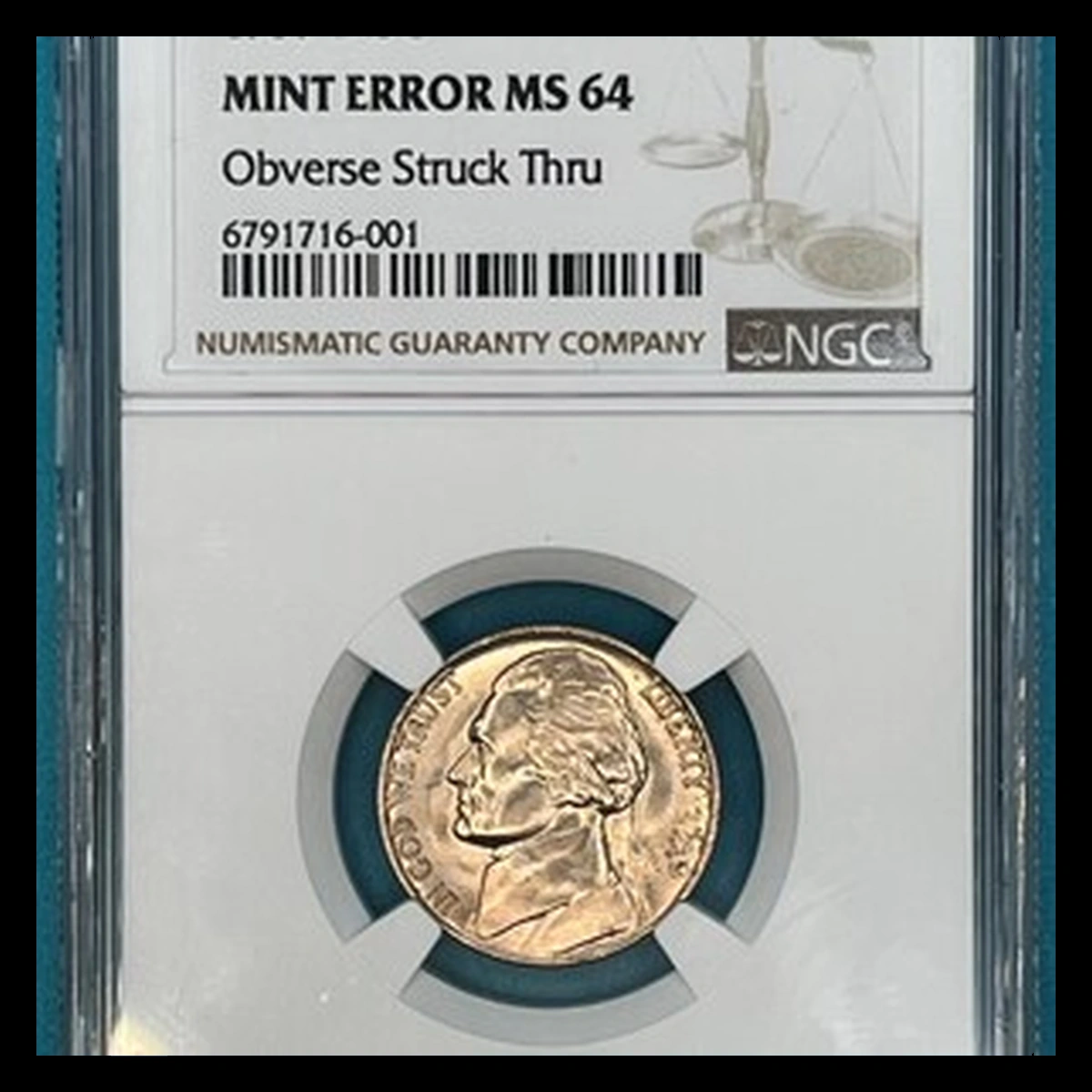
How to Identify
Compare the affected patch with adjacent high points to distinguish a local obstruction from general wear or a weak strike. Sharp neighboring detail provides more useful context than a uniformly faded face.
Inspect the boundary for scraping or metal pushed aside by later contact. Leave any retained material in place so its relationship with the coin can be assessed.
What It’s Worth
$10–$75 for small distinct areas and $75–$350 for larger recognizable impressions are the supplied estimates. No particular 1939 object strike is assigned a sale result here.
A named obstruction may add interest when supported by evidence. It should not be invented simply to justify the higher range.
9. 1939 Nickel Abnormal Color May Have Begun During Blank Heating: Improper Annealing Error
Annealing softens a blank before striking, and abnormal heating conditions can affect its surface. The 1939 report does not establish a specific mint or reverse style.
A nickel remains a copper-nickel mixture throughout, so brown areas are not exposed copper beneath a missing outer layer. Age, burial, chemicals, and later heating can also change its appearance.
How to Identify
Compare both faces and the edge under neutral light, paying attention to protected areas beside letters. Crusts, corrosion, or an added coating may explain color without a mint heating error.
Normal size and weight do not identify when the change happened. Keep the surface intact for specialist examination instead of scratching a bright test spot through it.
What It’s Worth
$15–$150 is the estimate for a correctly identified mint annealing error. A 2005-D identified as improperly annealed sold for $119 in December 2022.
That later nickel has the same broad alloy type but remains a different-year comparison. Ordinary dark toning does not qualify for the estimate merely because the color is unusual.
Conclusion
Start a 1939 nickel examination with its normal reverse style and mintmark location. Those details help select the correct doubled-letter, off-center, or wrong-planchet comparison before unusual features are interpreted.
Keep equal auction prices attached to their separate specimens and remember how strongly preservation affects the top results. Clear letter outlines, original boundaries, and intact surfaces provide stronger evidence than thick lettering, shine, or color by itself.