Rare 1801 Penny Errors (List & Pictures)
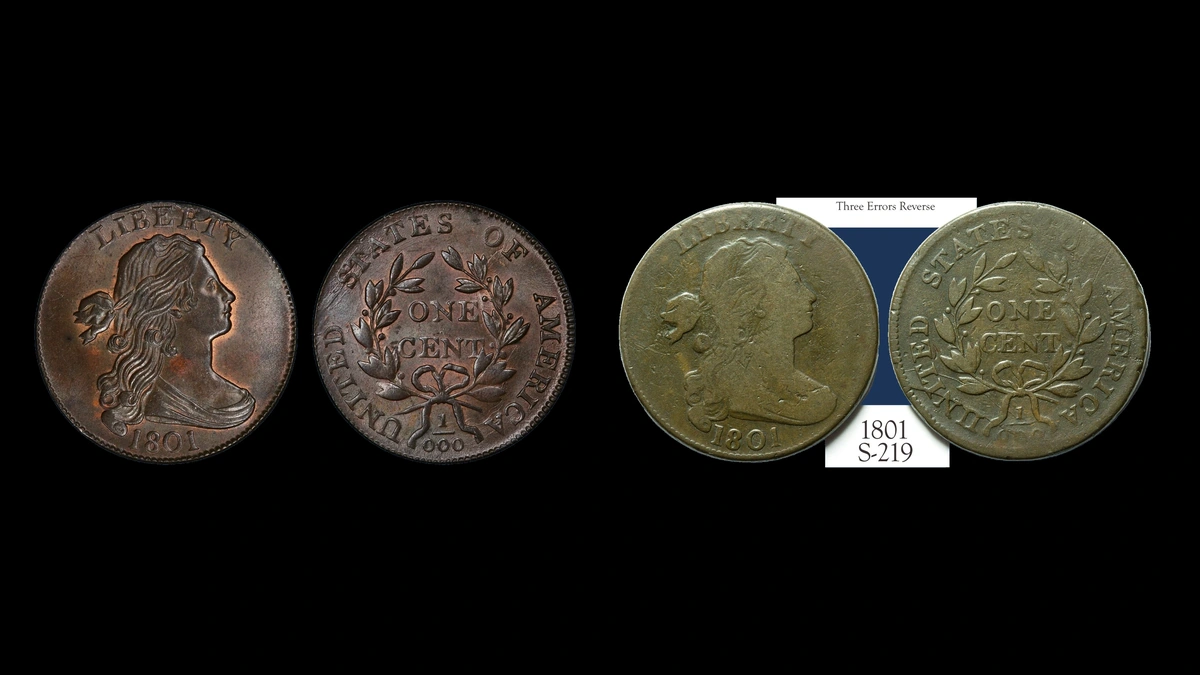
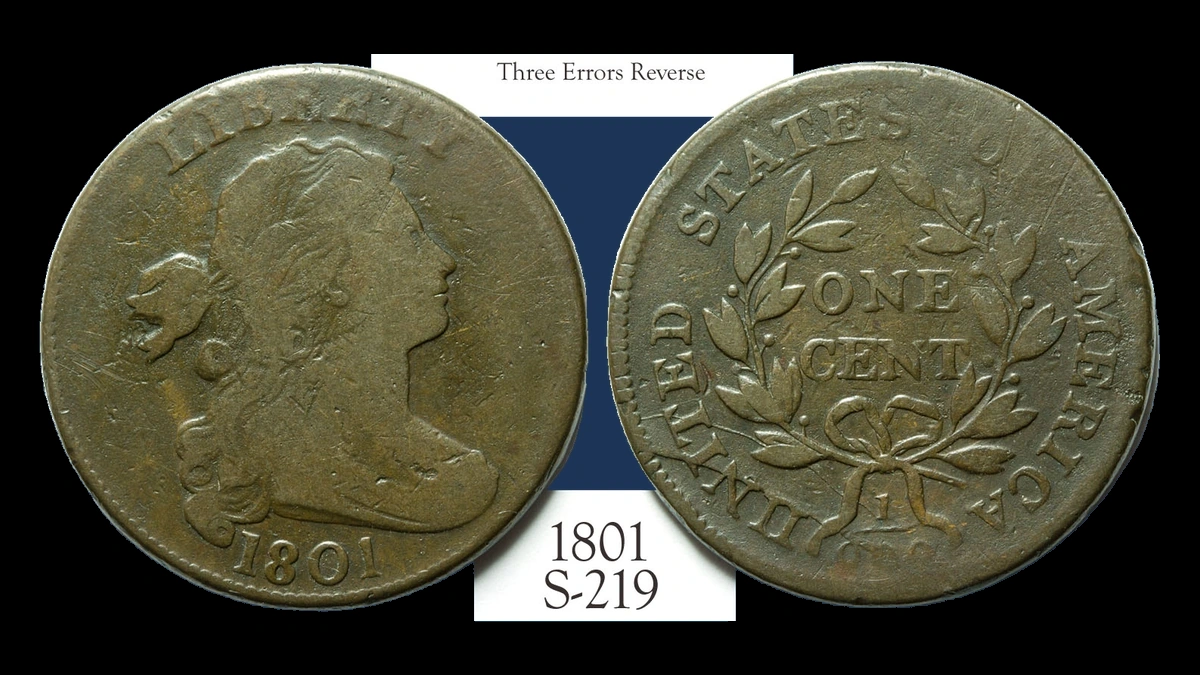
Turn an 1801 large cent over before searching its edges: the fraction below the wreath may contain the biggest clue. An exceptional Three Errors example sold for $138,000 in January 2005.
The 1801 penny errors here range from about $100–$150,000 for complete coins, with most worn finds far below that standout result. Check the back’s engraved details first, then the raised lines and copper itself.
1. 1801 Penny Wrong Fractions and the Three Errors Back Error
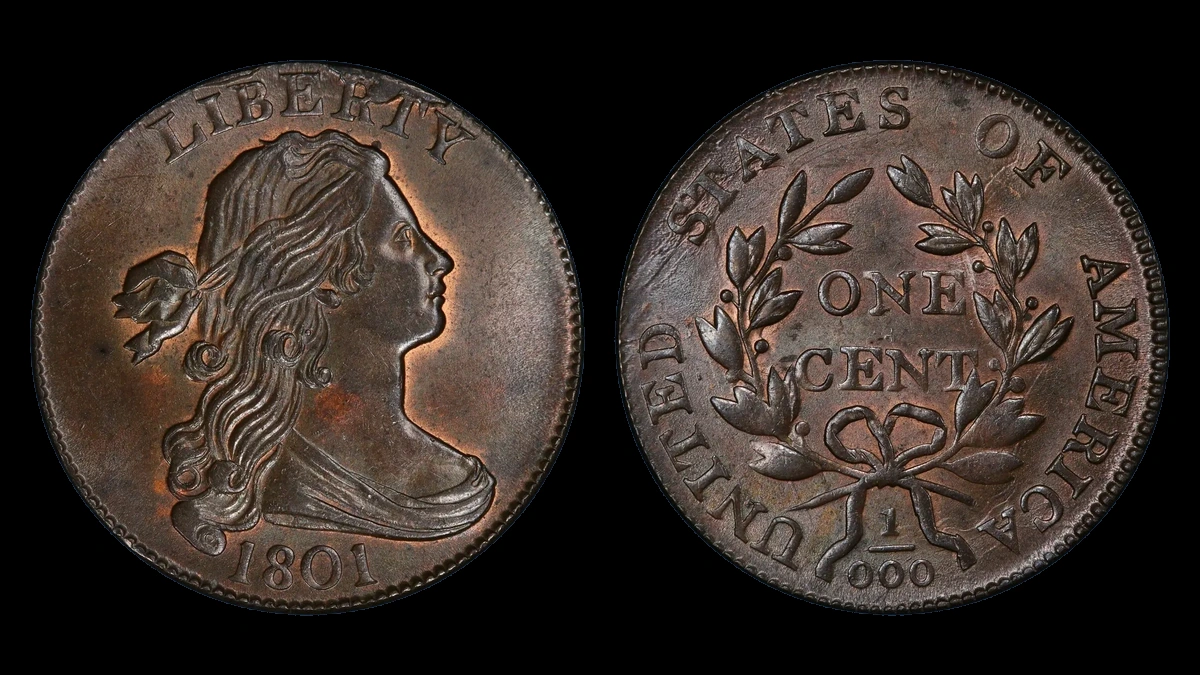
A normal cent uses 1/100 to mean one hundredth of a dollar. Some 1801 dies, the tools used to stamp coins, instead carried 1/000.
Another die had a 1 punched over the first lower zero to correct the fraction. Traces of the old zero remained around the replacement digit.
The Three Errors back combines the wrong fraction, a missing left wreath stem, and a corrected U resembling II in UNITED. These are three preparation mistakes on one design, not three strikes on the coin.
How to Identify
Find ONE CENT to confirm that you have the large cent, then magnify the fraction below the wreath. Distinguish three lower zeros from a corrected first digit that retains an older zero.
For Three Errors, examine the stem and UNITED too. Match all three features with a documented Three Errors back, since wear alone can hide a stem.
Do not pick at dirt inside a faint digit. Lighting from different directions can reveal its shape without cutting the copper.
What It’s Worth
$200–$150,000 covers a very wide market, from many worn examples around $200–$5,000 to scarce or exceptional pieces around $5,000–$150,000. Correct identification and preservation account for much of that difference.
The Three Errors MS63 coin sold for $138,000 in January 2005 and was an exceptional unworn example. It does not set the price of a worn coin with a barely readable fraction.
A corrected-fraction cent sold for $650 before buyer’s premium in January 2026. Its description noted grainy surfaces and a small rim bruise.
2. 1801 Penny Raised Lines and Rim Patches from Broken Dies Error
Thin raised lines can record cracks in the stamping tool. Copper entered those cracks during striking and formed ridges above the design.
Recorded 1801 patterns include wavy lines in front of Liberty and cracks through the date or back fraction. Larger rim-connected patches, called cuds, occur below 801 or beside AT in STATES on separate examples.
How to Identify
Move a light across the feature to distinguish a raised ridge from a scratch cut into the coin. Follow it through nearby details and compare its route with the illustrated 1801 examples.
For a cud, find the natural connection to the rim and inspect the edge. Added solder, a seam, or a folded lip can explain a lump differently.
What It’s Worth
$100–$2,000 is a useful whole-coin estimate, with worn examples around $100–$500 and clearer breaks on attractive cents around $500–$2,000. Small cracks are familiar on early copper and may add little by themselves.
A large visible cud can attract more attention than a hairline crack. If the coin also has a wrong fraction, value the combination on one cent rather than adding two complete estimates.
3. 1801 Penny A Thin Flap from Copper Lamination Error
Lamination happens when a weakness inside the blank allows copper to separate in a layer. A flap may stay attached, or a shallow opening may remain after it falls away.
This reported category requires a genuine separation within the original metal. Peeling paint, corrosion, or a scraped patch needs a different explanation.
How to Identify
Use side lighting to see under an attached flap without lifting it. Follow the boundary and look for struck detail continuing onto the separated layer.
Inspect any area where the separation meets the edge. Rough pits and crossing scrape lines can help distinguish corrosion or damage from a metal flaw.
A normal large cent started at about 10.89 grams and measures roughly 28–29 mm across, with a plain edge. A retained flap may change the weight very little.
What It’s Worth
$100–$1,500 covers worn coins with genuine laminations at $100–$400 and more attractive examples at $400–$1,500. Remaining original surface matters alongside the flaw’s size.
An 1841 large cent with a front lamination brought $564 in December 2021. That is a related, later-date comparison rather than a recorded 1801 sale.
4. 1801 Penny An Incomplete Edge from a Clipped Blank Error
An incomplete copper blank could still receive the cent design at the early Mint. A year guide reports an 1801 clipped example with a VG Details grade, meaning heavy wear plus another condition problem.
The report does not establish its clip shape or direction. Those details must come from the coin rather than another year’s photograph.
How to Identify
Examine both ends of the opening for struck metal flow or design fading toward the gap. Saw marks, filing, or a sharp cut across finished lettering suggest later removal.
Weakness on the opposite rim can support an original clip, though circulation may hide it. Both a genuine clip and a later cut reduce weight, so the scale alone cannot decide.
What It’s Worth
$100–$1,200 allows roughly $100–$400 for well-worn genuine clips and $400–$1,200 for more attractive examples. The guide reports a $649.99 asking price for the VG Details piece.
That amount records what a seller wanted, not a completed sale. A dramatic modern cut does not earn the same error premium.
Conclusion
The fraction, left wreath stem, and U in UNITED offer a practical starting point for an 1801 cent. Read them together before naming the Three Errors back.
Then decide whether unusual metal is raised, peeling, or missing from the edge. Preserve the surface, keep any flap intact, and remember that exceptional unworn prices describe a very different coin from a heavily circulated find.