Rare 1936 Nickel Errors (List & Pictures)
A partly missing buffalo leg can be a valuable clue, but its date matters: the 1936-D three-and-a-half-legged variety differs from the famous 1937-D three-legged nickel.
Estimated values for 1936 nickel errors run from $5 to $25,000, with a documented three-and-a-half-legged example bringing $20,700. Check the buffalo and small lettering first, then examine surface breaks, the outline, and overlapping designs.
| Visible clue | Possible explanation | Estimated range |
|---|---|---|
| Partly erased front leg | Three-and-a-half-legged variety | $500–$25,000 |
| Extra raised letter or digit outlines | Repunched mint mark or doubled die | $20–$750 |
| Weak design or separating metal | Strike-through or lamination | $5–$300 |
| Missing edge segment | Clipped planchet | $20–$250 |
| Expanded or incomplete design | Broadstrike or off-center strike | $75–$1,200 |
| Opposite designs overlap | Flipover double strike | $300–$3,000 |
| Unusual metal or undersized blank | Wrong planchet | $2,000–$12,000 |
1. 1936 Nickel Part of the Buffalo’s Front Leg Is Missing: Three-and-a-Half-Legged Variety Error
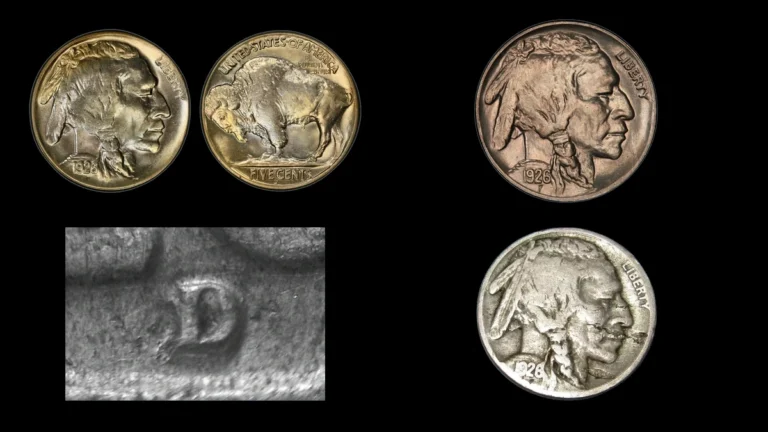
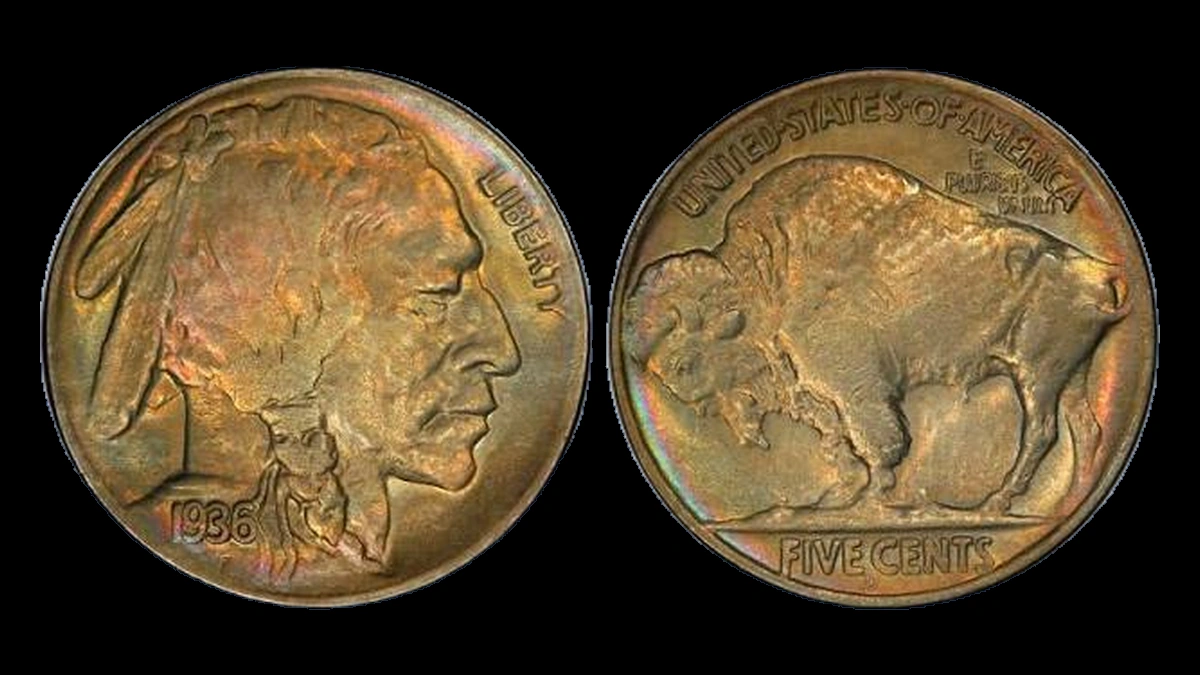
On the recognized 1936-D variety, one of the buffalo’s front legs is partly absent. Excessive polishing removed some of the leg from the working die, so the missing portion was never impressed onto the coin.
How to Identify
Read both the 1936 date and the D below FIVE CENTS before judging the leg. Then compare the leg’s remaining shape and nearby details with an attributed 1936-D example.
A worn buffalo can lose detail in several places, while scraping usually disturbs the surrounding surface. Neither is enough to establish this variety, and photographs of the 1937-D three-legged nickel are not a substitute for the correct comparison.
What It’s Worth
$500–$3,000 is an approximate range for worn examples, rising to $3,000–$8,000 for stronger circulated coins and $8,000–$25,000 for unworn pieces. Authentication and how much original detail survives have a large effect on the price.
An MS63 example sold for $20,700 in March 2009, while an FS-901 example graded XF45 brought $7,500 in October 2025. These records appear in the supplied PCGS variety value records.
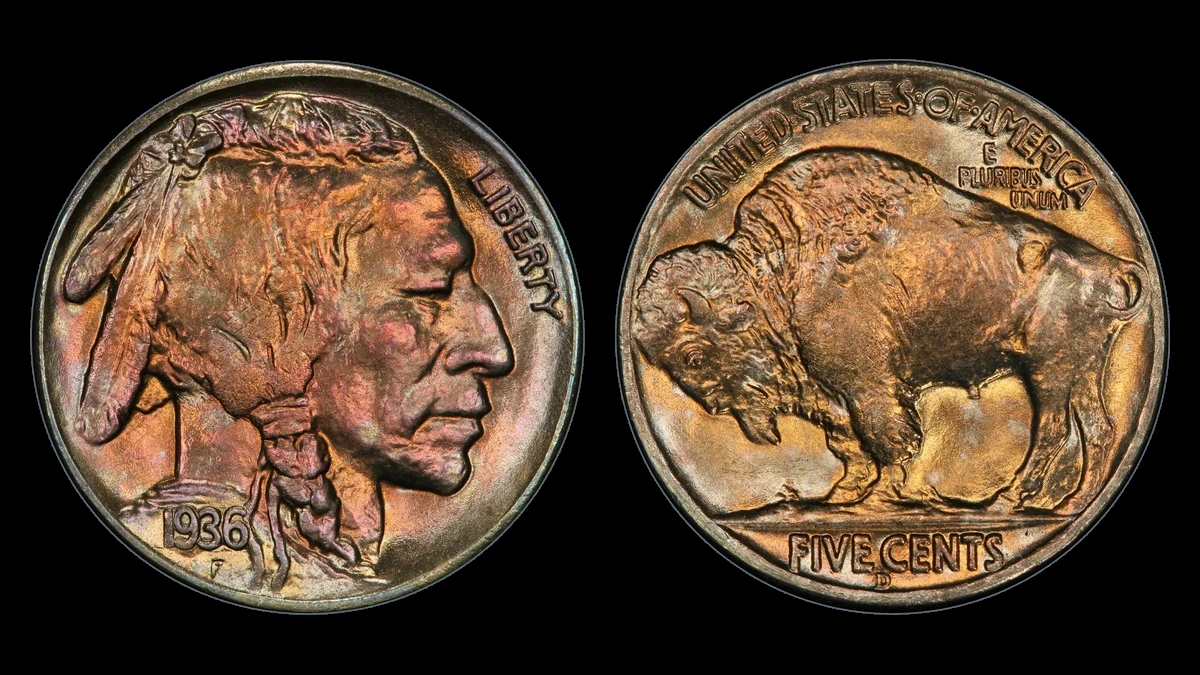
2. 1936 Nickel A Second Outline Appears Beside D or S: Repunched Mint Mark Error
The small mint letter below FIVE CENTS can preserve part of an earlier impression. These marks were punched into dies by hand, and a second placement sometimes failed to cover the first completely.
How to Identify
Look for a raised remnant that follows the shape of D or S, rather than an isolated bump or a dent beside the letter. Compare the position and shape with the specific mint-mark variety being claimed.
The supplied 1936-S variety is FS-501, formerly listed as FS-020. Reported D/D examples need their own attribution; an S/S photograph cannot establish the direction of a Denver repunching.
What It’s Worth
$20–$150 covers a broad working range for circulated examples, with attractive unworn coins potentially around $150–$750. The supplied material gives no completed auction for a specific 1936 repunched mint mark, so these are estimates rather than sale records.
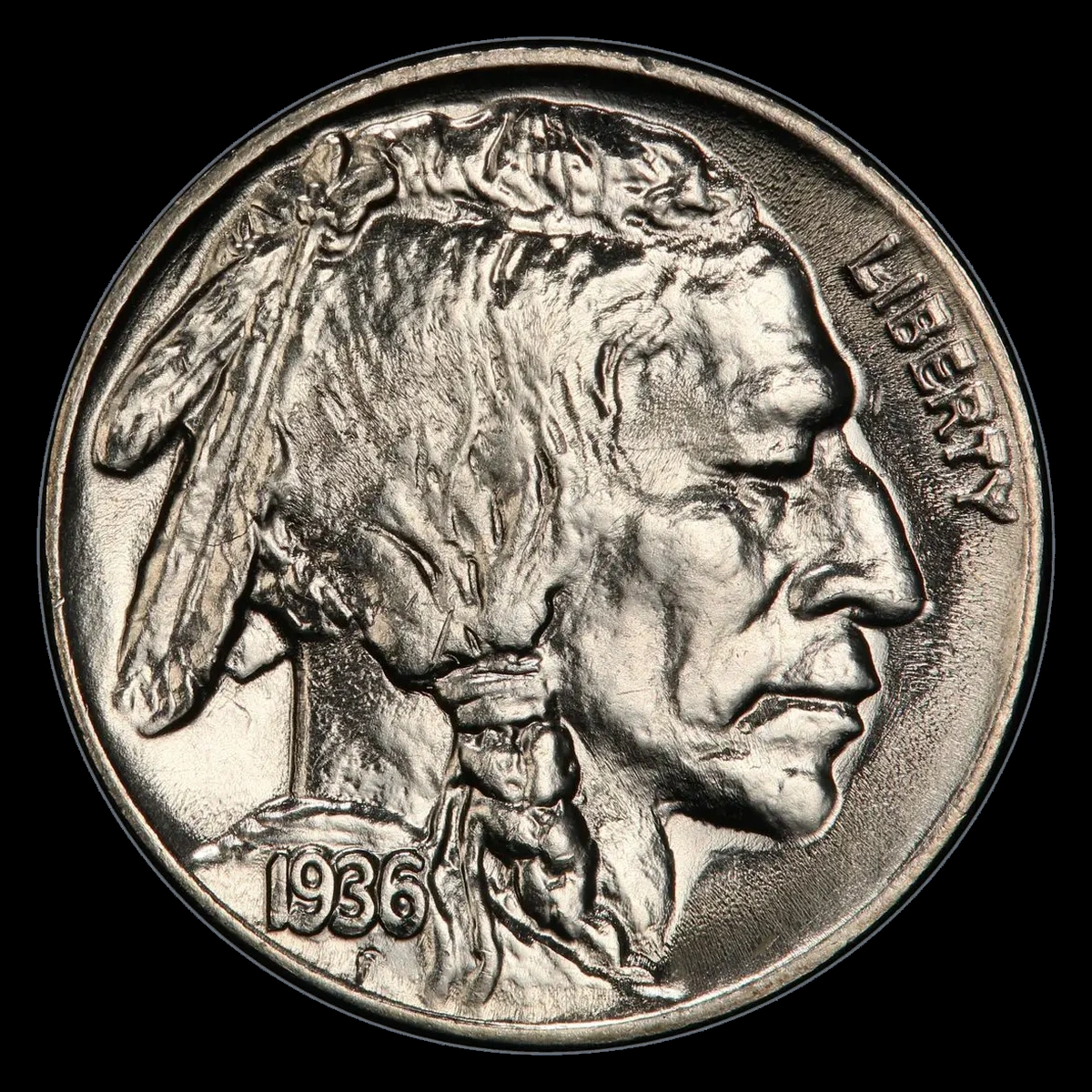
3. 1936 Nickel Raised Doubling Extends Beyond One Letter: Doubled Die Error
Examine the date and lettering for a second raised outline that belongs to the design. A doubled die receives slightly misaligned design impressions during its preparation, and that die can reproduce the same doubling on many coins.
How to Identify
The supplied category includes reported Philadelphia obverse and reverse doubling, but does not establish one exact variety number or diagnostic pattern. Philadelphia circulation coins have no mint mark, and each side needs to be assessed separately.
Flat shelves beside letters may be mechanical doubling, which occurs during the strike. Also keep 1936 Satin and Brilliant Proof coins separate from circulation strikes when comparing finish, attribution, or value.
What It’s Worth
$20–$100 is an estimated range for modest confirmed doubling, and clearer examples may reach $100–$350. Without a specific attribution and completed sale in the supplied evidence, a precise price would overstate what is known.
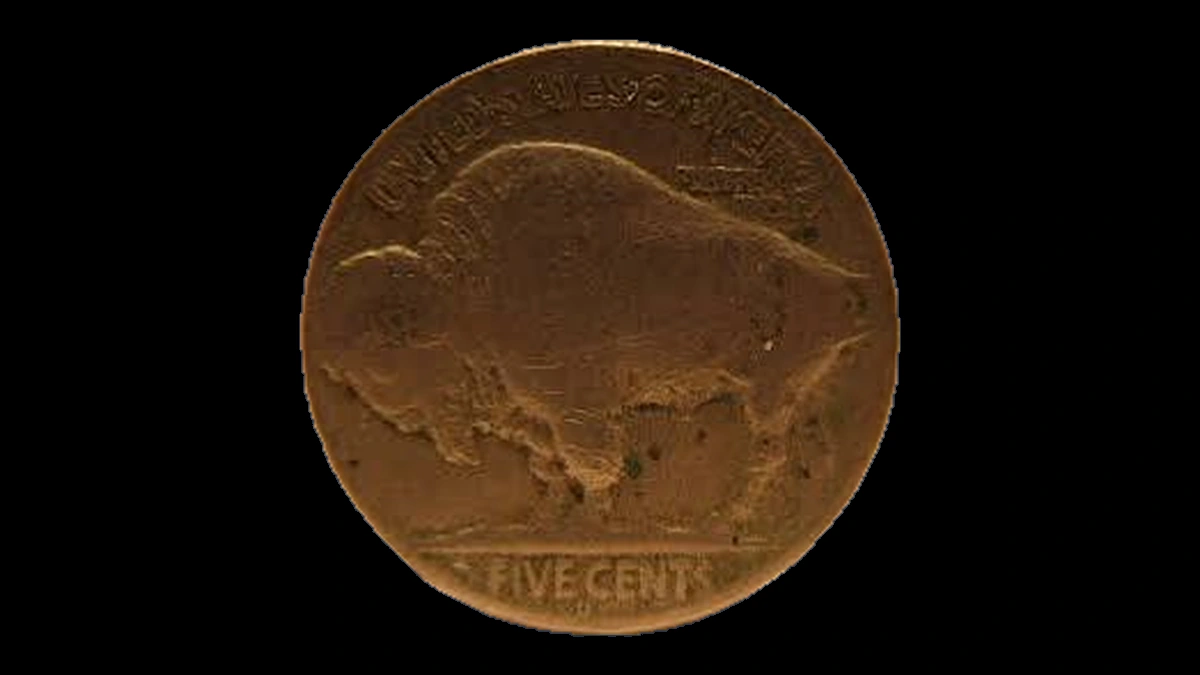
4. 1936 Nickel A Local Patch of Design Looks Washed Out: Struck Through Grease Error
Grease or other material between a die and the blank can prevent parts of the design from forming. The affected patch may look weak even when nearby details remain reasonably sharp.
How to Identify
Compare the weak area with surrounding relief and with the other face. Buffalo nickel dates wear readily in circulation, so a weak date by itself does not prove a strike-through.
Separate reported examples show weakness around CENTS, the date, or the portrait’s mouth. Those locations should not be combined into a single specimen description.
What It’s Worth
$15–$100 is a useful estimate for modest examples, with larger and more obvious disruptions potentially reaching $100–$300. A 1936 nickel graded AU50 by ANACS sold for $79 on August 26, 2021.
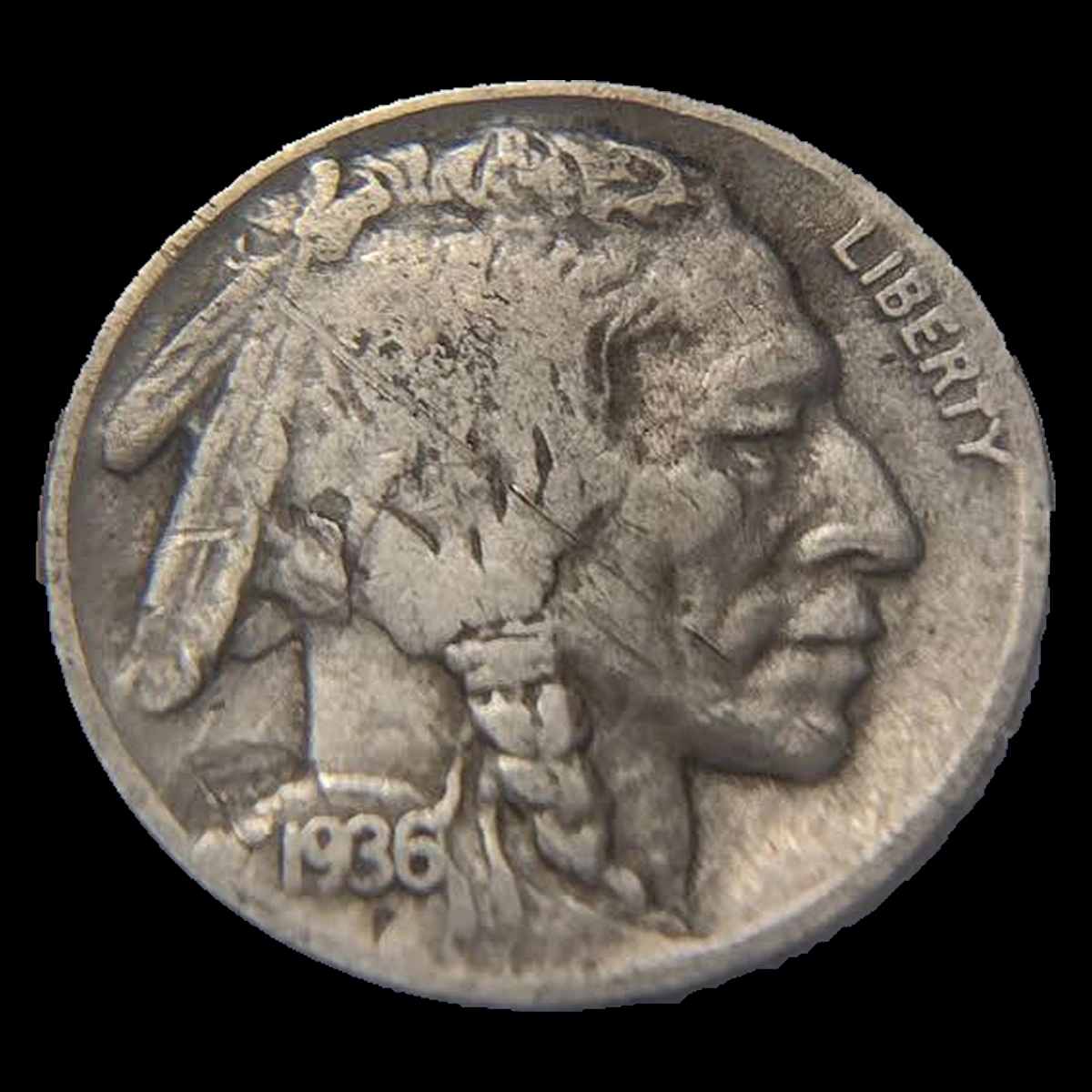
5. 1936 Nickel Thin Metal Separates Across the Buffalo: Lamination Error
A lamination follows a weakness within the coin’s alloy, leaving a fissure, a peeling area, or a missing shallow layer. A reported heavily worn example shows the disturbance extending from the buffalo’s neck toward a leg.
How to Identify
Study how the metal separates and whether pieces of the original design remain on it. This nickel is solid copper-nickel alloy, so a peeling patch is not a normal plated coating coming off.
Do not lift an attached flap to inspect underneath. A standard example weighs about 5 grams, measures 21.2 millimeters across, and has a plain edge; these measurements can also help with the shape and planchet errors below.
What It’s Worth
$5–$40 is a practical estimate for modest laminations on worn coins, while large, clear examples may bring $40–$200. The supplied worn specimen has no documented sale, and extensive circulation wear can limit the appeal of even a visible flaw.
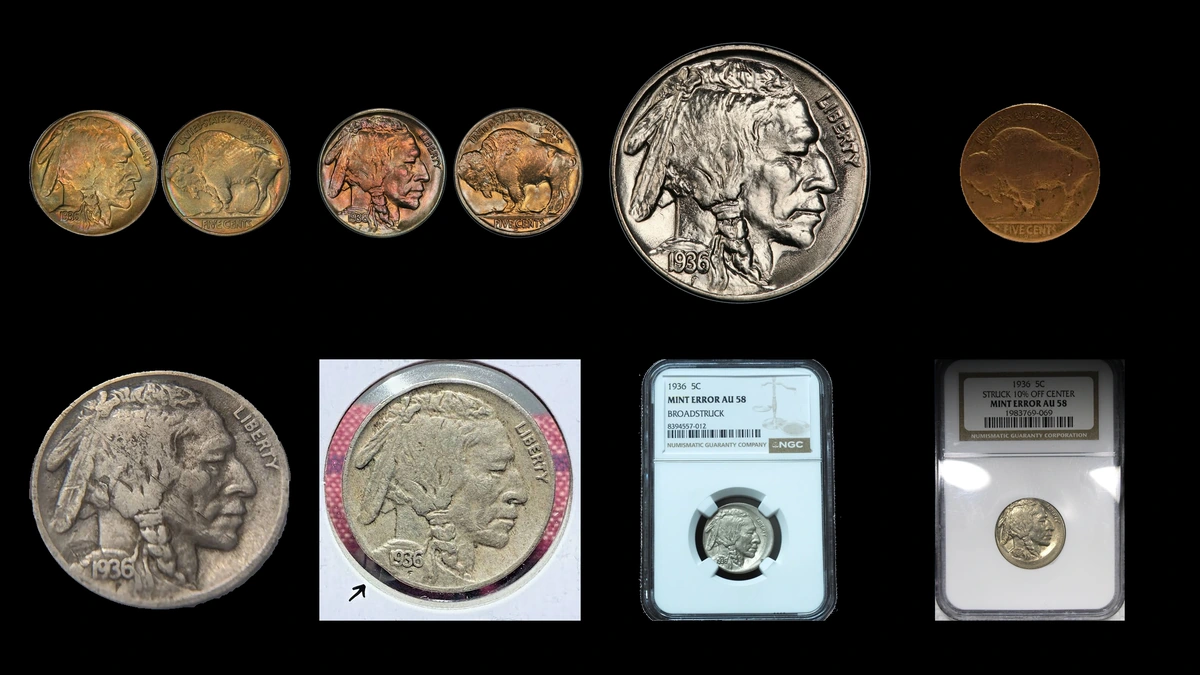
6. 1936 Nickel A Small Section of the Edge Is Absent: Clipped Planchet Error
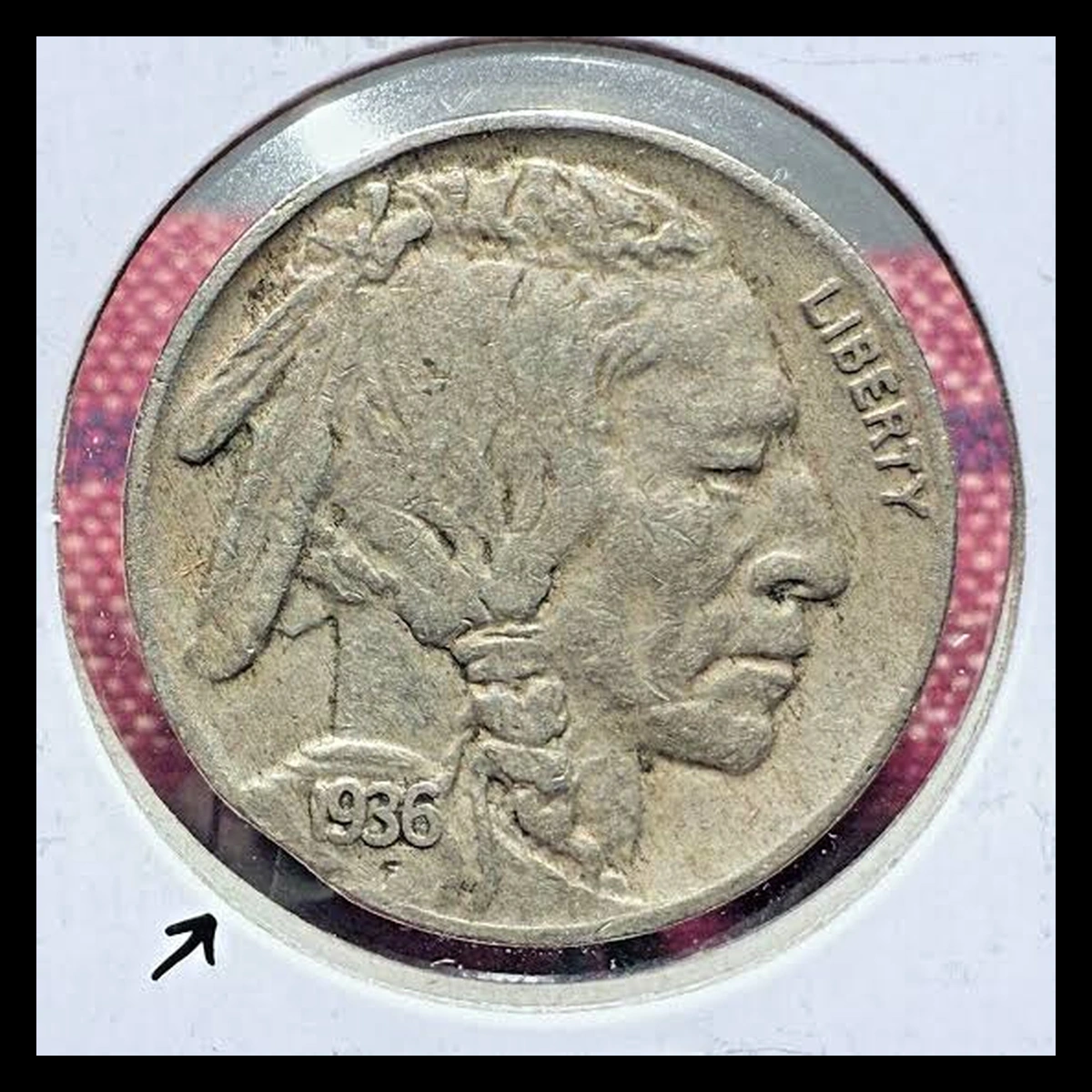
A clip begins before striking, when the blanking operation produces an incomplete disk. The supplied 1936 example is graded MS64 and described as a small 1% clip below the date.
How to Identify
Inspect the boundary of the missing area for the way the rim and design formed beside it. The record does not establish the exact clip shape, and a shallow dent pushed into a finished coin should not be relabeled as a clip.
Some clips have a weak rim on the opposite side, although that feature is not always conspicuous. A 1% clip removes very little metal, so a nearly normal weight does not rule it out.
What It’s Worth
$20–$100 is a rough range for small clips, with attractive unworn examples potentially reaching $100–$250. No sale is supplied for the 1936 MS64 piece; the cited $124 sale in March 2025 concerned a much later 1997-P Jefferson nickel with a 20% clip.
7. 1936 Nickel The Full Design Sits Inside a Wider Border: Broadstrike Error
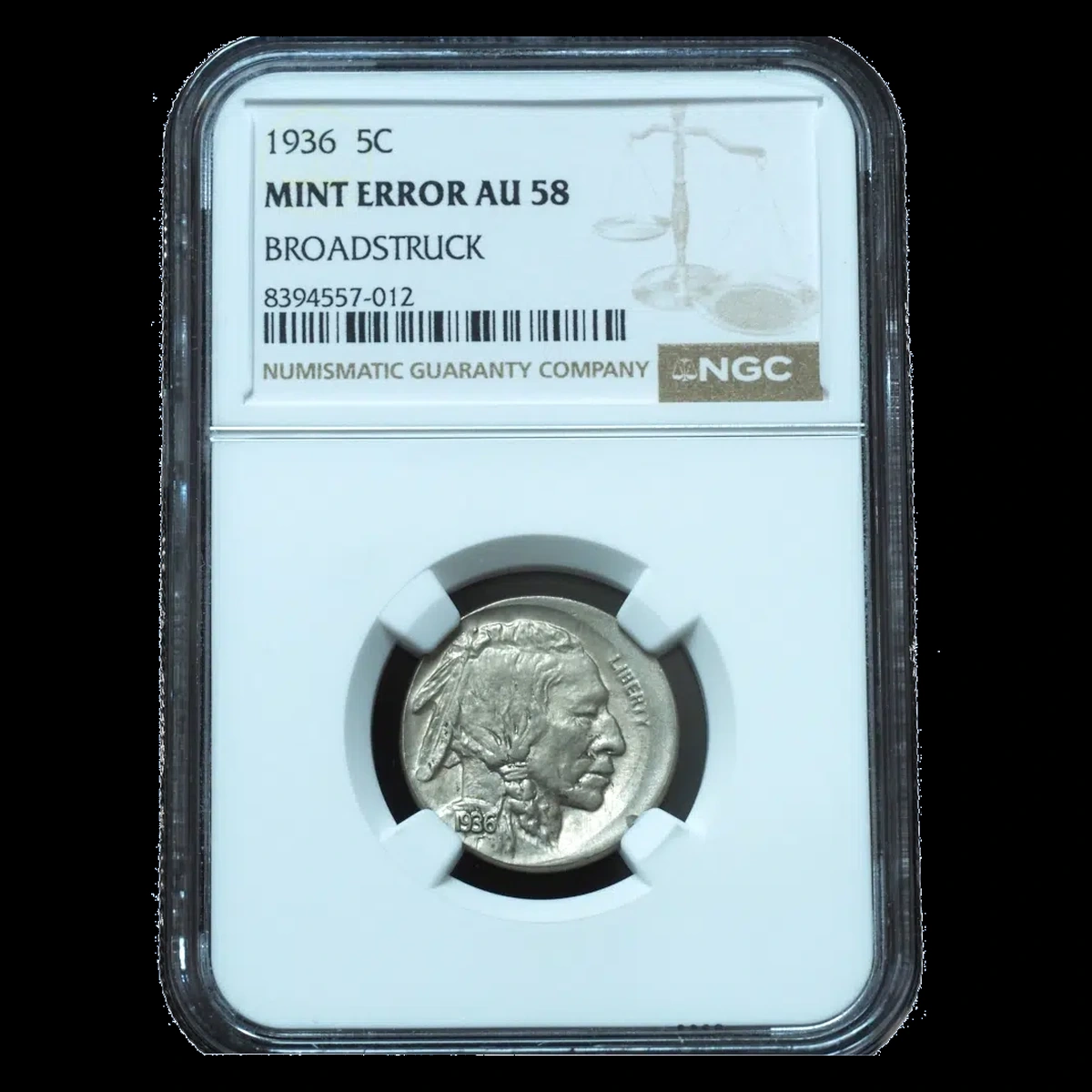
Without proper support from the collar surrounding the blank, metal can spread sideways under pressure. The resulting broadstrike may have a broad, uneven border while retaining the intended design.
How to Identify
An uncentered 1936 broadstrike graded MS64 appears in the supplied collector material. Trace the design around both faces: unequal margins alone do not make a coin off-center if the intended design remains present.
Damage that flattens and enlarges a finished coin usually also distorts its relief. Compare the spread with the preserved struck details, rather than relying on diameter alone.
What It’s Worth
$100–$300 is an estimated range for worn or less striking broadstrikes, increasing to $300–$900 for attractive examples. The supplied 1936 display is not an auction result; the $89 comparison from March 2025 belongs to a 1999-P Jefferson nickel.
8. 1936 Nickel Part of the Design Runs Off the Blank: Off-Center Strike Error
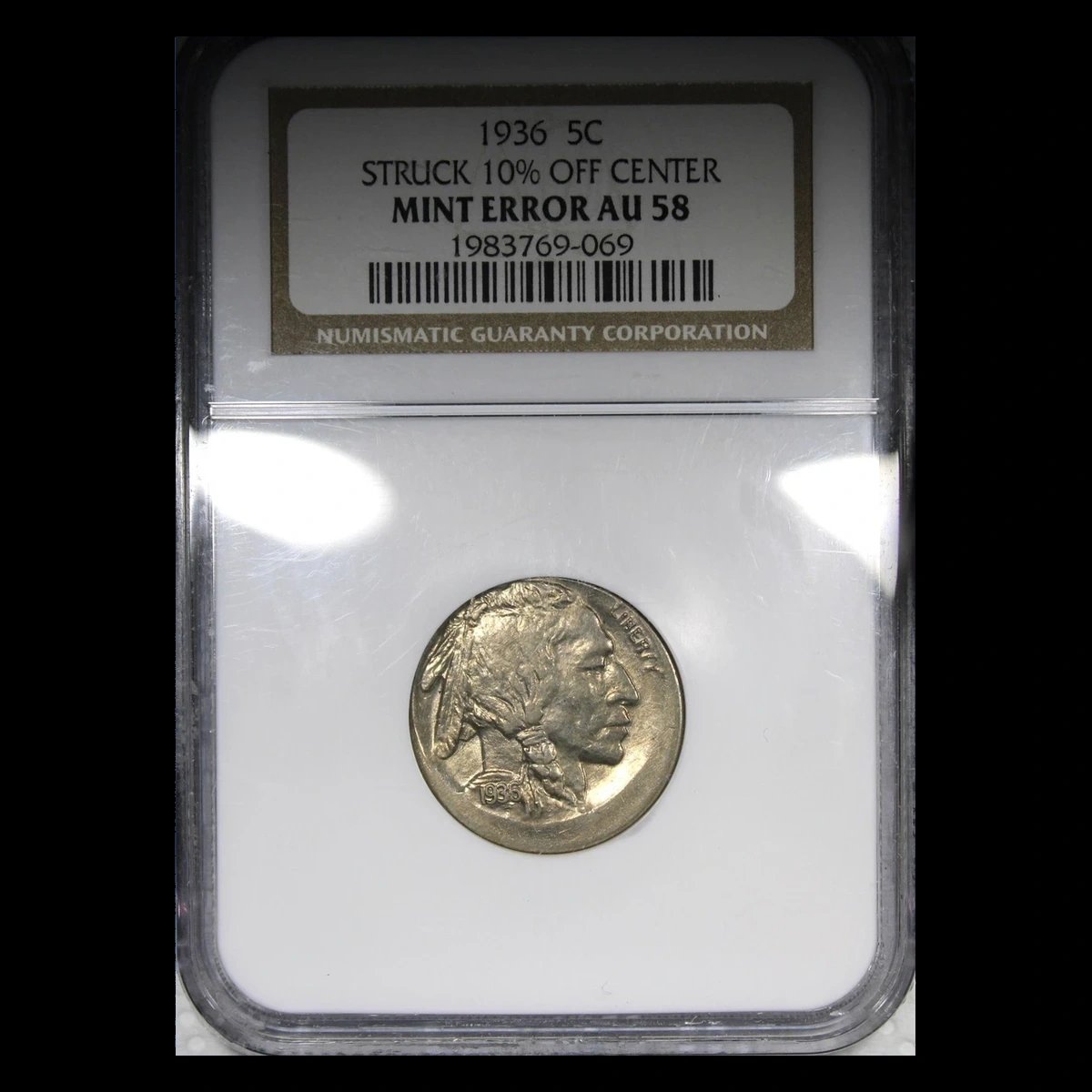
An off-center blank meets the dies in the wrong position, leaving part of the disk unstruck and part of the design missing. Both faces should help explain the same displaced strike.
How to Identify
The supplied examples include a Philadelphia AU58 coin and a San Francisco MS62 coin. Their records do not establish a displacement percentage or direction, so judge those details from the actual photographs.
A readable date preserves the 1936 identity, and the S below FIVE CENTS distinguishes the San Francisco piece when that area survives. A design merely surrounded by an uneven expanded border may instead be a broadstrike.
What It’s Worth
$75–$300 is an approximate range for modest off-center strikes, with more dramatic, attractive examples potentially around $300–$1,200. Neither supplied 1936 display has a sale price; a $252 sale in March 2021 concerned a 1939 Jefferson nickel struck 10% off-center.
9. 1936 Nickel Portrait and Buffalo Designs Overlap: Flipover Double Strike Error
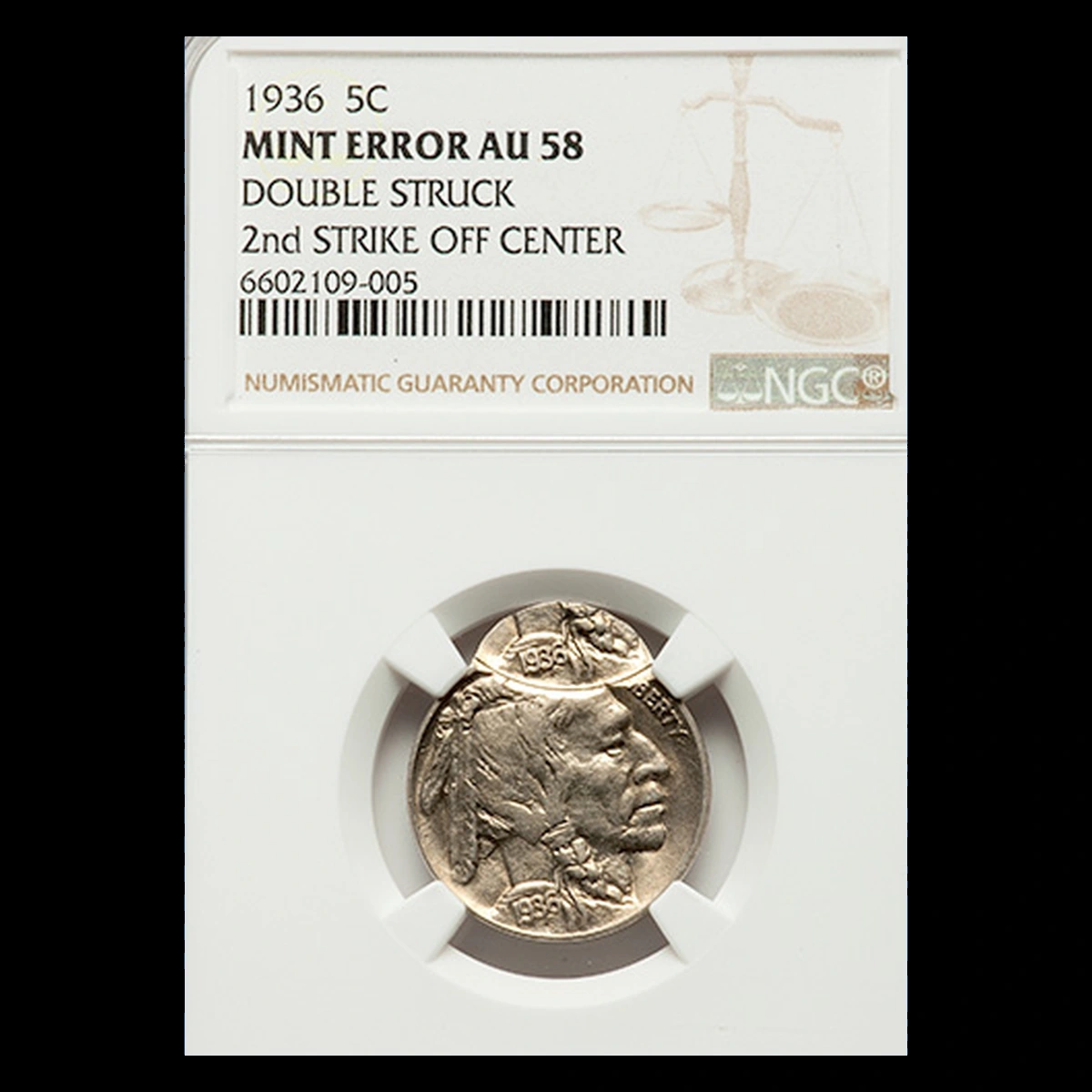
A coin that flips before being struck again can carry parts of the two opposing designs on the same face. The reported 1936 example has a second strike described as 50% off-center.
How to Identify
Find identifiable details from both strikes and use their positions to reconstruct the flip. A doubled die produces repeated outlines within one design, rather than a displaced portrait overlapping a buffalo.
The supplied specimen also has later attempted drilling. That damage is separate from the mint error and can explain lost metal without implying a wrong planchet.
What It’s Worth
$300–$1,000 is a broad estimate for worn or damaged examples, while better preserved pieces may reach $1,000–$3,000. No completed sale is supplied for this 1936 coin; a $216 record from March 2023 involved a different, in-collar 1947 Jefferson nickel graded AU55.
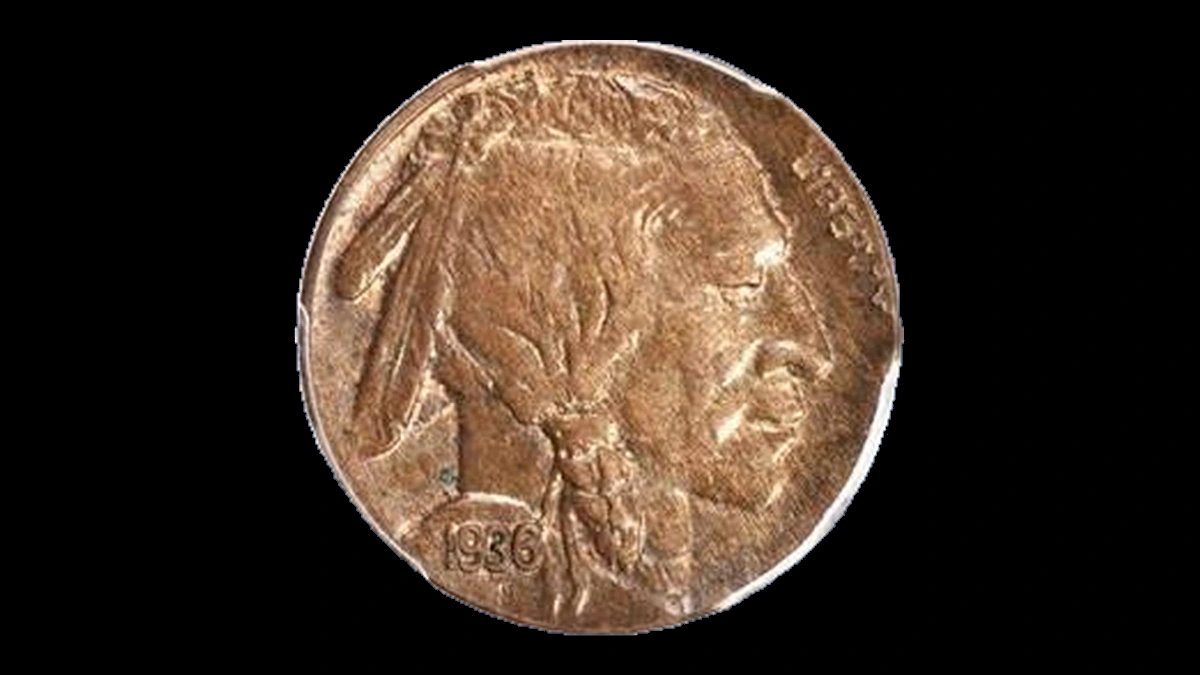
10. 1936 Nickel The Nickel Design Appears on Another Coin’s Blank: Wrong Planchet Error
The dies can impress a Buffalo nickel design onto a smaller or differently composed blank that entered the press by mistake. The supplied cases include U.S. cent stock, a Nicaraguan one-centavo blank, and silver dime planchets.
How to Identify
Use the combined evidence of metal, dimensions, surviving design, and professional attribution. A contemporary U.S. cent blank normally weighed about 3.11 grams and a silver dime blank about 2.5 grams, but those standards are not measurements of the individual specimens.
The cent-planchet AU55 example lacks the mint-mark area, so its mint cannot be assumed to be Philadelphia. The foreign bronze blank also needs more than a copper-colored surface to establish its identity.
What It’s Worth
$2,000–$5,000 is a broad estimate for U.S. cent-planchet examples, with foreign or silver-planchet cases potentially around $5,000–$12,000. The AU55 cent-planchet coin sold for $3,290 in June 2017.
A nearly full-design MS62 example on a Nicaraguan one-centavo blank sold for $7,637.50 in November 2015. A separate 1936-S MS62 dime-planchet example, noted with cheek damage, reportedly brought $9,775 in January 2011.
Conclusion
A convincing 1936 nickel error should explain the surrounding design as well as the unusual feature. Confirm the date and mint before matching a weak leg or repunched letter, and use both faces when evaluating a displaced strike.
Keep wear, drilling, and other later damage separate from mint-made features. For unusual planchets and valuable leg varieties, a reliable attribution matters more than a resemblance in one small photograph.