Rare 1960 Nickel Errors (List & Pictures)
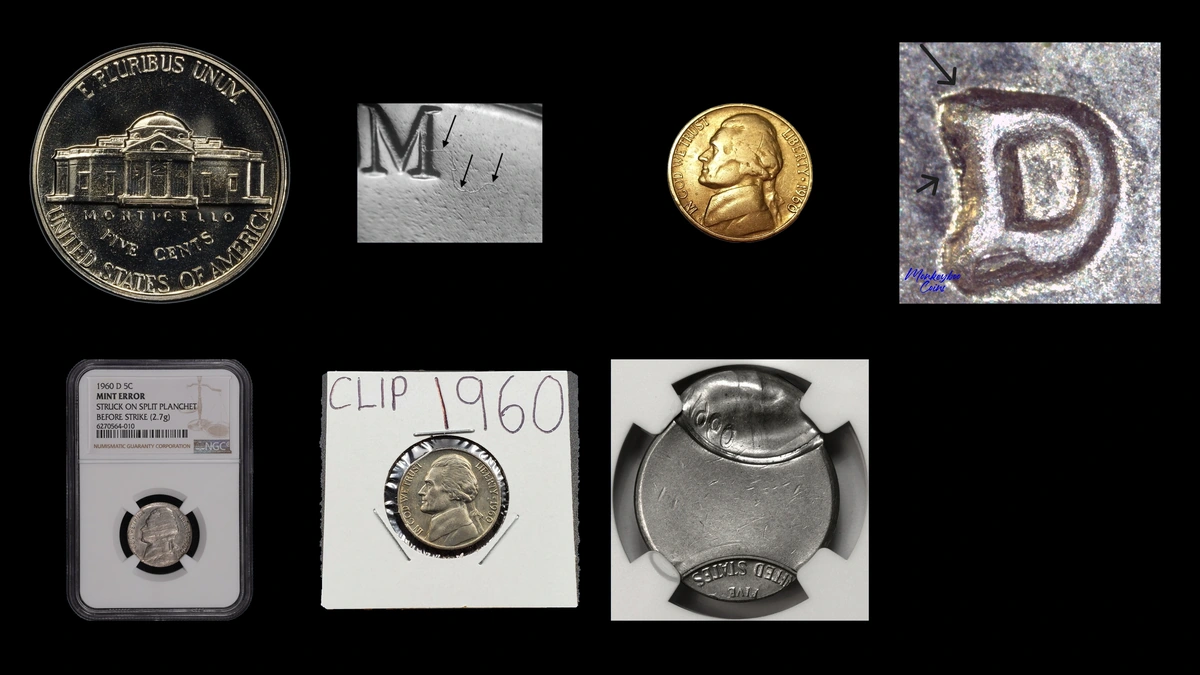
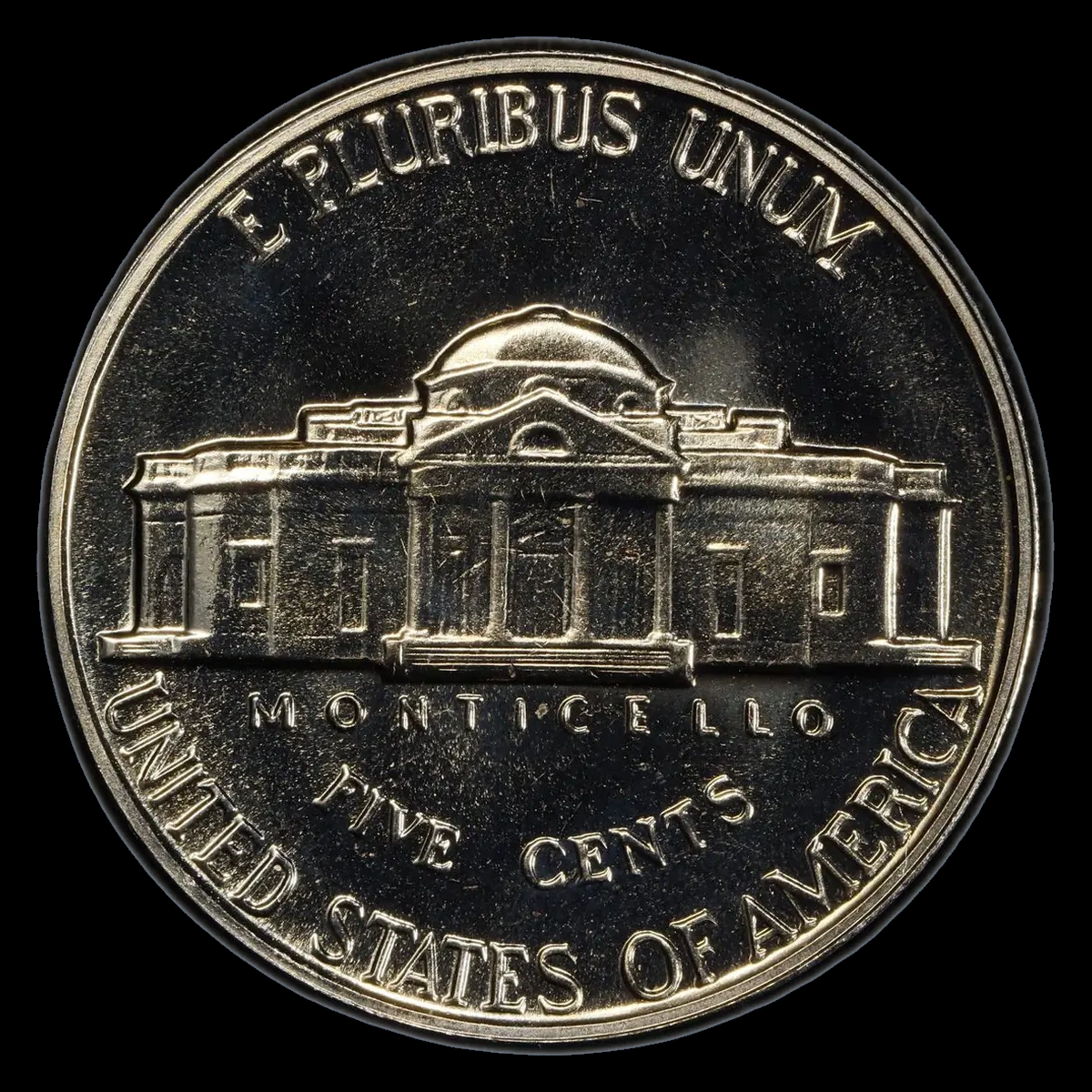
Some 1960 Proof nickels have more than two outlines around their back lettering. A recognized quadrupled-die example brought $650 on eBay in January 2021.
The broader group of 1960 nickel errors spans about $5–$2,000, from small die breaks to a repeated strike with a backward date. Check the finish first, then decide whether the unusual detail is raised, recessed, or missing altogether.
1. 1960 Nickel Multiple Letter Outlines on a Proof Error
The QDR FS-801 variety has repeated back detail, including the upper motto and country name. QDR means quadrupled die reverse: the tool used for the back carried four design outlines in affected areas.
Other Proof varieties show smaller front or back patterns. Extra detail around LIBERTY, the star, or the date does not require the same coin to have FS-801 on its back.
How to Identify
Inspect complete letters in E PLURIBUS UNUM and UNITED STATES OF AMERICA under changing light. Follow the rounded extra outlines rather than counting reflections as separate designs.
A flat shelf can result from movement during striking. If the unusual feature is on the front, compare it with the appropriate front variety instead of assuming it belongs to QDR FS-801.
What It’s Worth
$15–$1,000 covers smaller identified patterns around $15–$150 and attractive matched QDR examples around $100–$1,000. Preservation and strength of separation matter.
The PR67 QDR FS-801 record lists a $650 eBay result in January 2021. That price belongs to its particular variety and condition, not every doubled-looking Proof.
2. 1960 Nickel Fine Thread-Like Impressions on a Proof Error
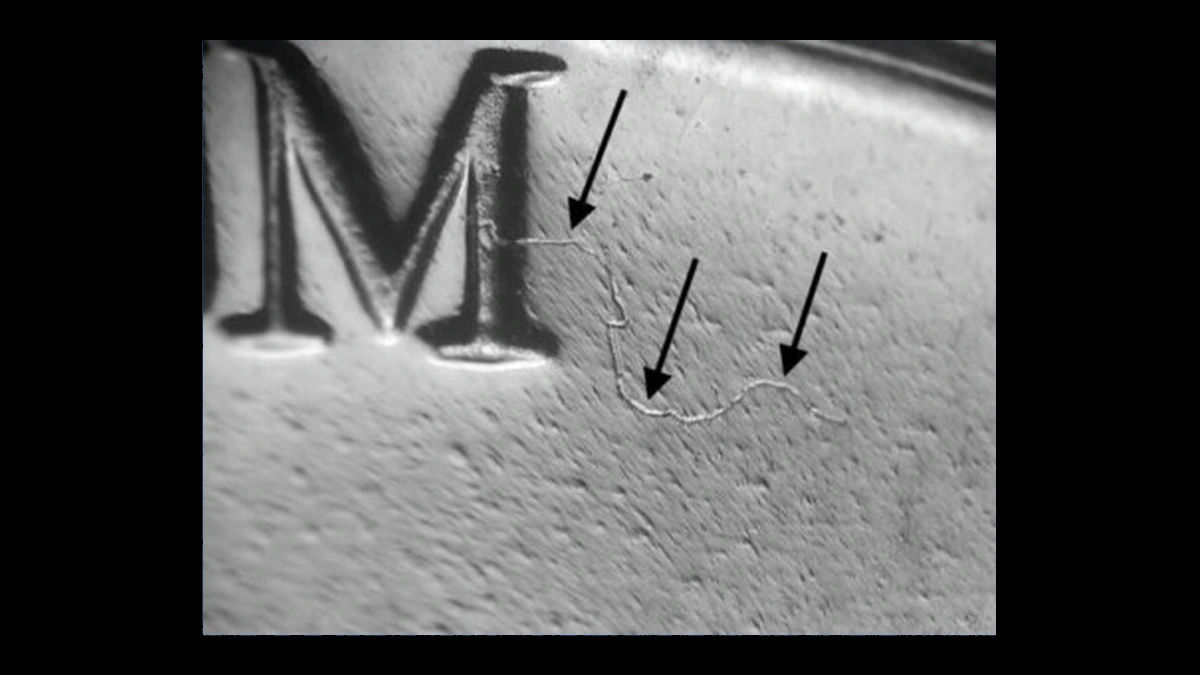
A small obstruction can leave a thin or tangled impression in a Proof’s otherwise smooth surface. One Philadelphia example affects ED in UNITED, while a separate coin has a mark near TY in LIBERTY.
The seller described the back obstruction as probably a small wad of thread. Its exact material remains an interpretation of the impression.
How to Identify
Use side lighting to distinguish a recessed impression from material sitting on top of the coin. Do not wipe the reflective surface to investigate.
The two dealer examples have separate locations. Follow the full boundary where detail was blocked, watching for sharp scratches cutting through already finished design.
What It’s Worth
$10–$100 is the estimate for small genuine thread-like strike-throughs. The two dealer listings each asked $9.95.
Their sold-out status does not confirm the final amount paid. Clear impressions on well-preserved Proof surfaces make more useful comparisons than an unexplained line.
3. 1960 Nickel A Raised Cheek Line or Date-Area Break Error
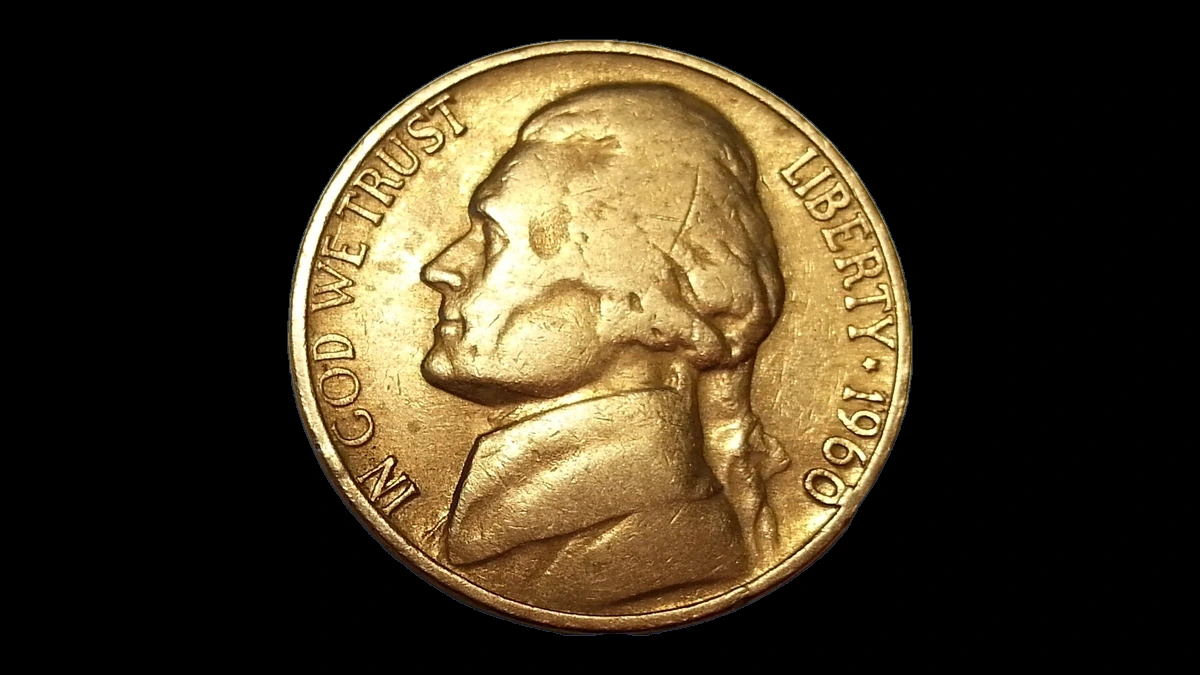
A crack in the stamping tool can leave a fine raised line on Jefferson’s cheek. A separate report describes a raised patch between the date’s zero and the rim.
Metal entered damaged areas of the die while the coin was struck. The cheek line and date-area patch need not appear together.
How to Identify
Inspect the center of a line in low light: a die crack leaves a ridge, while a scratch can have raised sides around a groove. Keep nearby undamaged design in the photograph.
For the date patch, follow the feature toward the rim and inspect the adjacent edge. A later hit may push metal upward without any broken-die involvement.
What It’s Worth
$5–$100 covers minor genuine cheek cracks or date-area breaks. A clear original feature on an attractive coin supports the higher end.
A worn 1983-P nickel with a rim-connected break sold for $63 in July 2022 as a different-year comparison. Any high-grade coin’s ordinary condition value should not be mistaken entirely for the premium on a tiny crack.
4. 1960 Nickel An Earlier D from a Repunched Mintmark Error
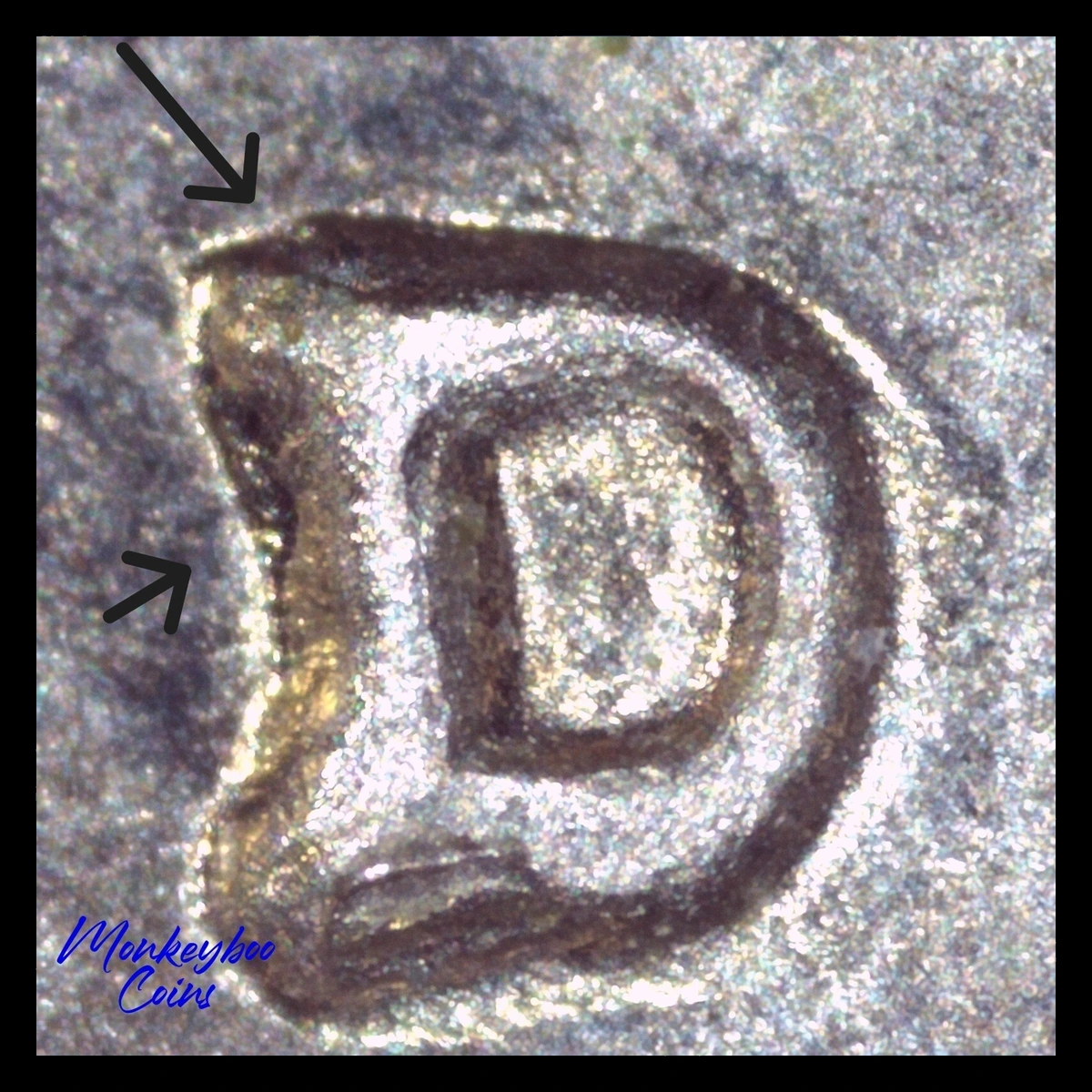
The Denver D sits to the right of Monticello on a 1960 nickel. An earlier shifted punch can leave part of a second D outline on the die.
The reports do not establish one direction for every example. Philadelphia’s normal lack of a mintmark in that location is not a missing-mintmark error.
How to Identify
Trace the outside edge and opening of the D, recording where a separate rounded stroke projects. Compare the exact shape with the relevant variety photograph.
Do not force a northward match if the feature lies elsewhere. Flat shelves, nicks, or displaced metal can make the main letter look repeated without a second punch.
What It’s Worth
$5–$200 is the estimated range for matched 1960-D repunched mintmarks. Sharper examples with readable separation make stronger comparisons than worn, indistinct letters.
No individual variety sale is supplied for these reports. The broad D/D label alone does not establish the upper value.
5. 1960 Nickel Unusual Color from Improper Annealing Error
Annealing is the heating step that prepares the blank for striking. Incorrect conditions can change its surface color or texture.
Recorded Philadelphia examples include a coin described as sintered. A normal nickel has copper and nickel mixed throughout, rather than a thin nickel coating over a copper core.
How to Identify
Compare protected areas beside letters under neutral light and inspect any rough texture. Paint, crusts, or corrosion can create a different explanation for a dark surface.
A normal loose nickel is about 5 grams and 21.2 mm across, with a plain edge. Measurements help investigate another blank type but cannot date the discoloration, so leave the surface intact for examination.
What It’s Worth
$30–$175 is the estimate for comparable identified heating errors. A 1960 NGC AU58 example sold for $89 in June 2026.
An earlier PCGS MS63 coin described as sintered brought $64 in June 2008. Ordinary stains do not qualify merely because their shade resembles these examples.
6. 1960 Nickel A Thin Layer from a Split Blank or Coin Error
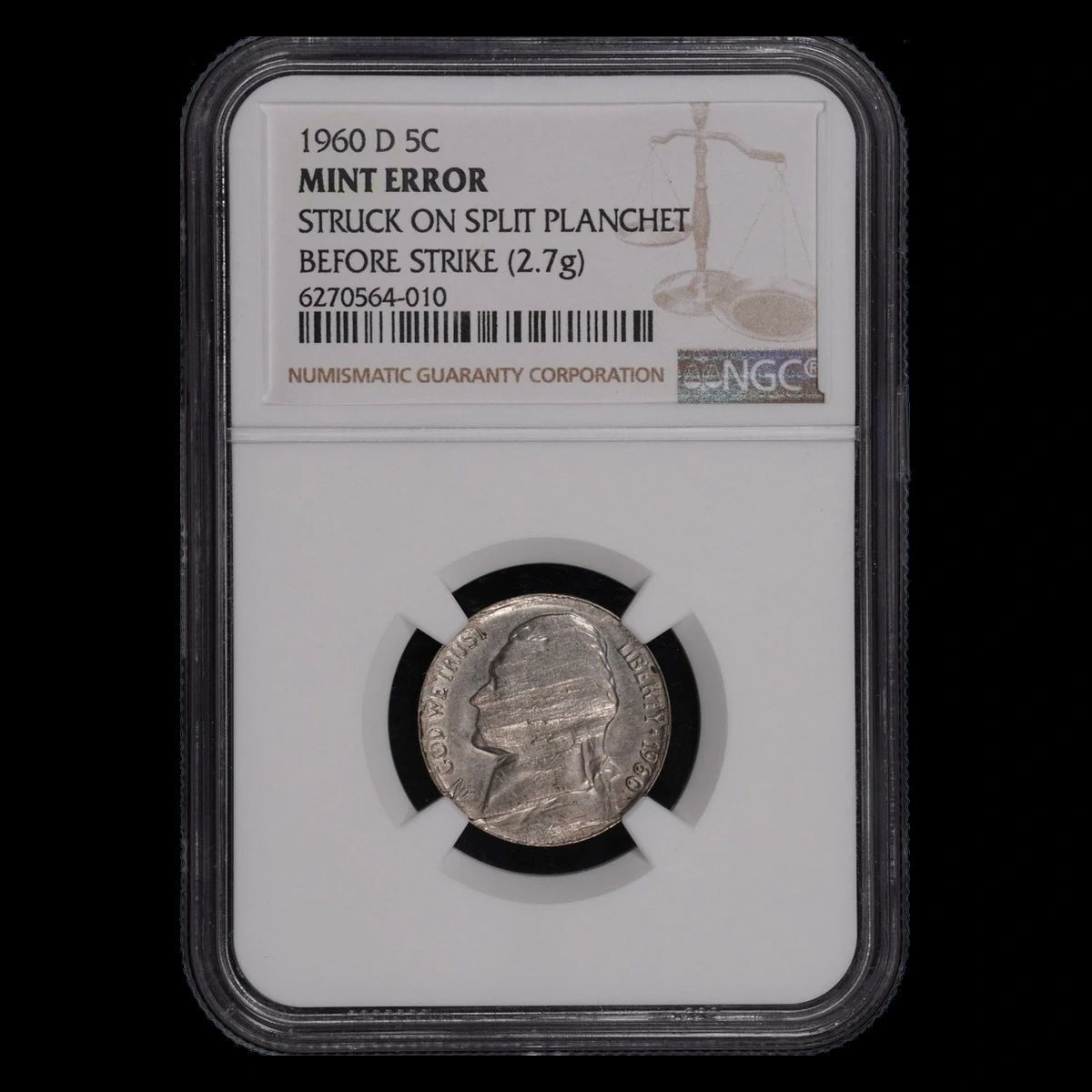
Philadelphia and Denver split-before-striking examples are recorded at 2.5 grams. The press placed design onto metal exposed by the separation.
A separate auctioned piece is the front half of a split nickel, retaining the outer portrait opposite an exposed inner surface. Its appearance needs to be examined before assigning the same sequence.
How to Identify
Compare both faces and the thin edge. Design pressed onto a rough inner surface supports separation before striking, while an unstruck inner fracture tells a different story.
Look for parallel grinding marks that cut through finished design. Record the weight, but do not identify the process from a low reading alone.
What It’s Worth
$40–$350 covers comparable split pieces with clear evidence and readable design. The Philadelphia 2.5-gram split-before-strike example sold for $64 in June 2008, while the detached front half brought $51 in April 2021.
The Denver 2.5-gram piece appeared with a 1953-D coin in one lot. A group amount would not establish either coin’s individual value.
7. 1960 Nickel A Curved Clip in an Ordinary or Proof Blank Error
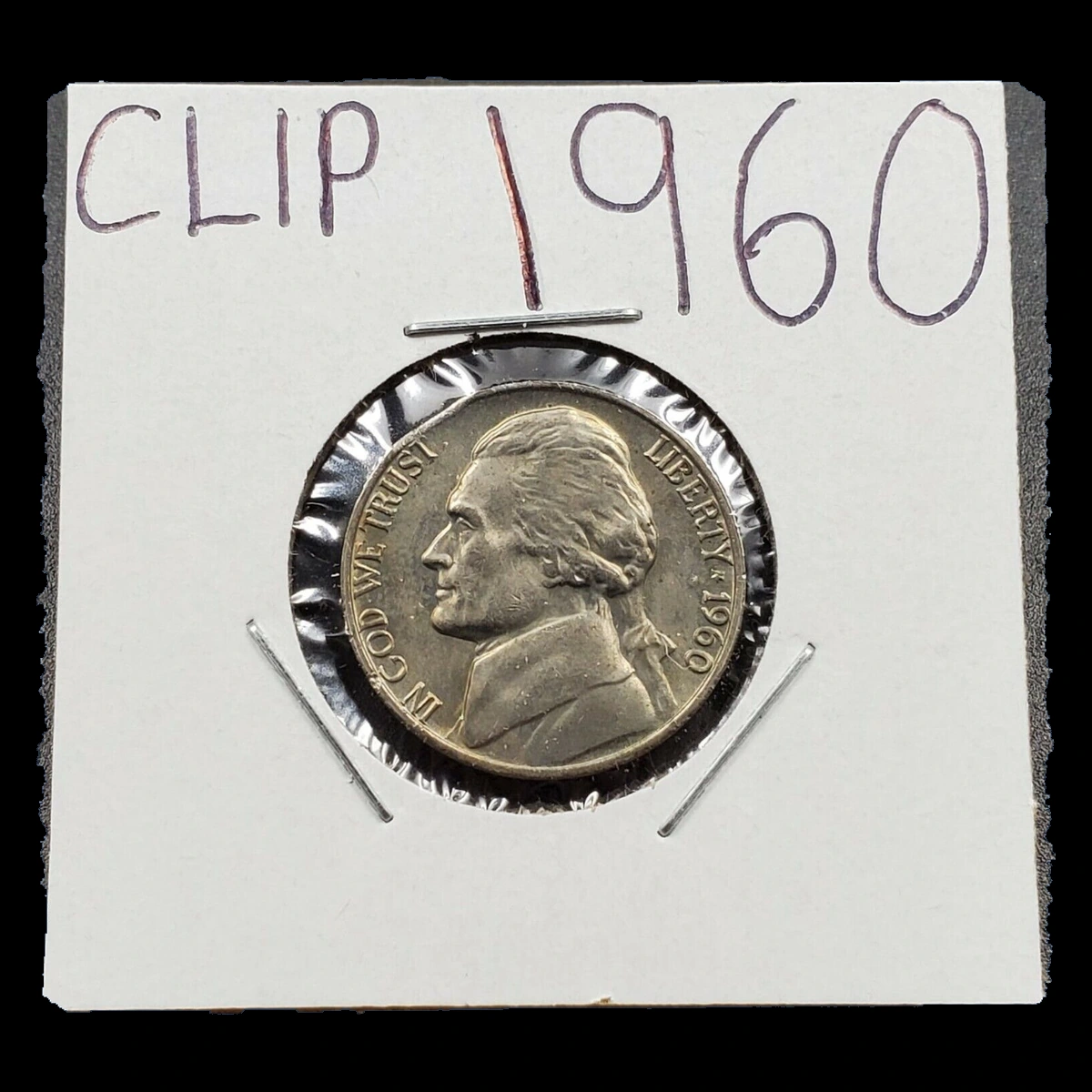
The ordinary Philadelphia example has a 4% clip near eleven to twelve o’clock. A separate Philadelphia Proof has a curved opening near one o’clock.
These gaps existed before striking, when the blanks were cut from incomplete areas of metal. Finish and location belong to their respective examples.
How to Identify
Check the finish before choosing a comparison. Follow the lettering toward the gap for softened detail or natural flow around the original opening.
Inspect the gap and edge for saw marks or a sharp cut through completed letters. Unlike an off-center crescent, a clipped opening contains no metal.
What It’s Worth
$30–$750 spans ordinary examples around $30–$200 and well-preserved clipped Proofs around $150–$750. The ordinary 4% clip graded PCGS MS66 sold for $92 in January 2005.
The Proof range is an estimate without a supplied matched sale. Its collector finish should remain separate from the ordinary coin’s auction result.
8. 1960 Nickel A Denver Design Struck Off Center Error
A year guide reports a 1960-D type about 10% off center. The unused crescent is part of the blank that missed the stamping tools.
The account gives no universal clock direction or authenticated specimen for every claim. The visible coin must establish its particular offset.
How to Identify
Compare both faces to see whether the same misplaced blank explains their designs. One shifted face with a normal opposite side can have another cause.
Inspect bare metal for scraping and the edge for trimming. If Monticello’s right side is missing, an invisible D cannot establish Philadelphia or prove a match to the Denver report.
What It’s Worth
$20–$250 is the estimate for a genuine modest offset with a readable date. Visual clarity and preservation matter alongside the percentage.
A 1999-P nickel struck 15% off center brought $64 in March 2025. That later coin supplies a comparison rather than a sale of the reported 1960-D type.
9. 1960 Nickel A Smaller Copper Coin from a Cent Blank Error
A Philadelphia example received the nickel design on a copper cent blank and was graded PCGS MS64 Red and Brown. The smaller disk could not hold all the outer nickel detail.
How to Identify
Use the period cent’s standard 3.11 grams and 19.05 mm as starting comparisons, allowing for spreading. Those standards are not published measurements of this particular specimen.
Inspect naturally truncated lettering and the edge for coatings or filing. Earlier Lincoln detail would instead suggest a finished-cent overstrike, rather than an unused blank.
What It’s Worth
$250–$1,500 is the range for comparable authenticated cent-blank nickels. The Philadelphia MS64 Red and Brown example sold for $470 in January 2013.
A 1981-P nickel on a copper cent blank brought $372 in September 2025. Its copper-era material makes it a closer comparison than a modern zinc-cent blank.
10. 1960 Nickel A Repeated Strike with a Backward Date Error
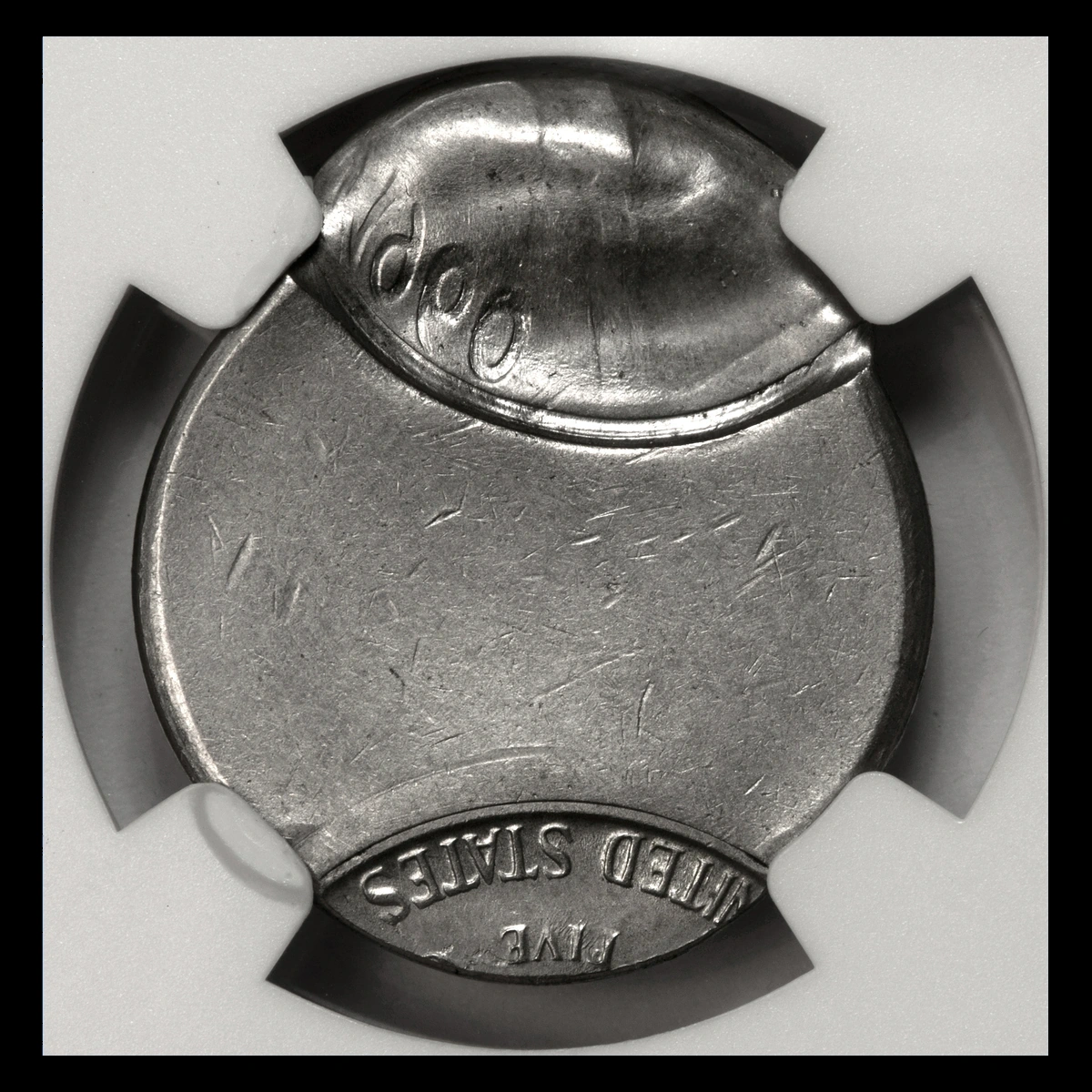
The illustrated NGC MS64 coin received another off-center strike and a sunken backward impression on its back. That transferred impression, called brockage, came from contact with another struck coin.
The extra date lies within the larger struck area. It is not another normal raised date made directly by the date-bearing die.
How to Identify
Read the extra numbers without reversing the photograph and check that they are recessed and backward. Then map the original and displaced nickel designs as separate impressions.
The illustrated example shows how the transfer relates to the larger struck area. Later squeezing can also create a mirror image, so examine the boundary and edge for alteration.
What It’s Worth
$300–$2,000 is the estimate for a convincing repeated strike with a clear mirror date. The illustrated 1960 specimen has no sale price supplied.
A 1964 broadstruck nickel with front brockage sold for $319.20 in July 2021. That related but different sequence offers context, and the combined 1960 features should be priced as one coin.
Conclusion
The depth of a mark is a useful starting clue on a 1960 nickel. Raised repeated lettering, an impressed thread-like shape, and a backward recessed date explain different events.
Keep ordinary coins separate from Proofs when matching photographs and prices. For thin or copper-colored pieces, combine measurements with the surface evidence instead of allowing weight or color to decide the identification alone.