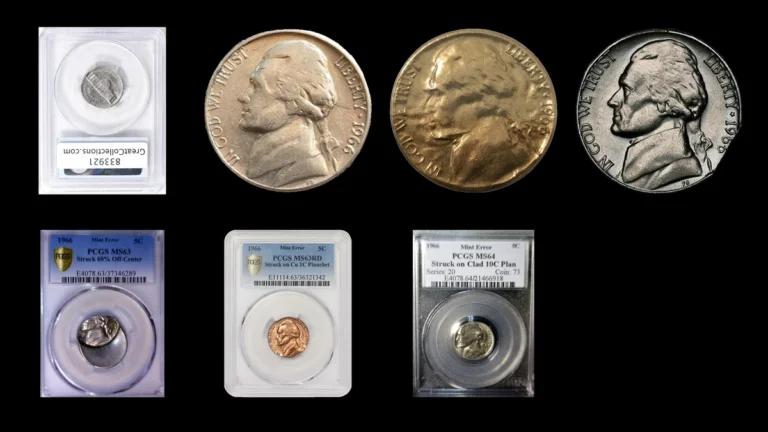
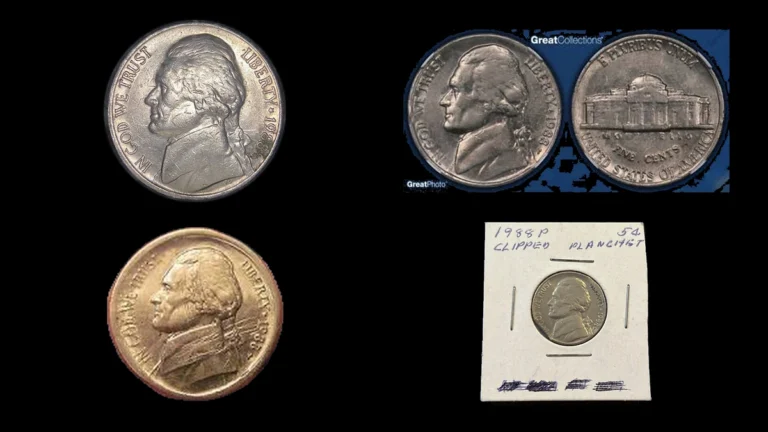
Rare 1910 Nickel Errors (List & Pictures)
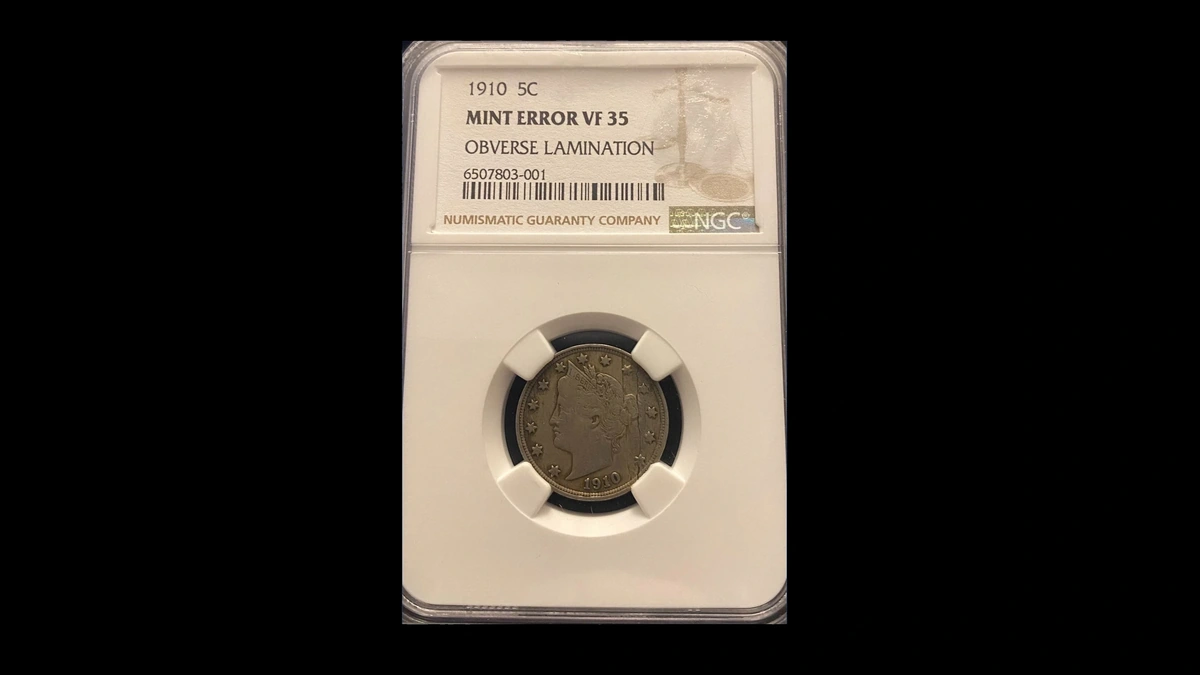
A Liberty nickel on a cent blank brought $5,462.50 at Heritage in January 2006. Estimated values for 1910 Liberty nickel errors range from $10–$8,000 across blocked designs, separated metal, off-center strikes and wrong blanks.
Compare the entire coin before examining a small flaw: missing outer lettering can have more than one explanation.
| Clue to examine | Possible error | Estimated value |
|---|---|---|
| Unused crescent beside incomplete design | Off-center strike | $100–$2,000 |
| Smaller copper-rich disk with cropped design | Cent-blank strike | $2,000–$8,000 |
| Flap or thin separated piece | Lamination or split | $15–$1,500 |
| Local interruption in otherwise intact detail | Strike-through | $10–$300 |
The normal coin weighs 5 grams and measures about 21.2 millimeters, with a plain edge. Take complete photographs of Liberty, the large V on the reverse and the edge before checking a loose candidate with a scale, calipers and magnifier.
1. 1910 Nickel An Unused Crescent Alongside the Design: Off-Center Strike Error
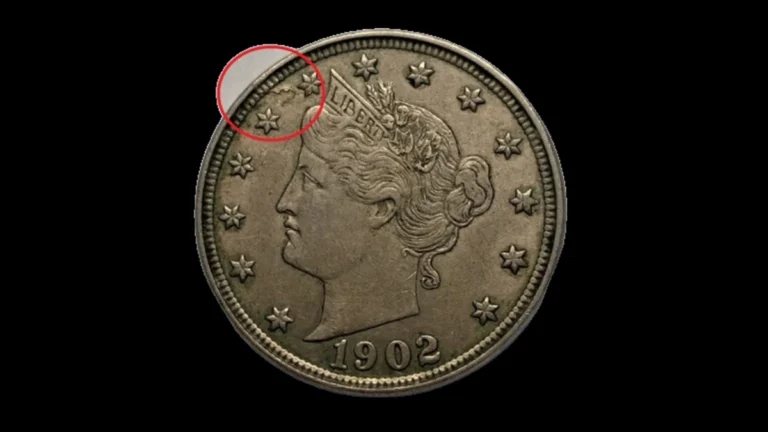
An off-center coin retains metal that never received the intended image. On the opposite side of its outline, stars or reverse lettering may have missed the blank entirely.
The blank was misplaced when the dies, the steel tools carrying the designs, came together. The 1910 report does not establish a particular percentage or direction.
How to Identify
Start with the date and follow the design toward both edges. A real unused crescent should remain part of the original metal, beside design that continues beyond the available surface.
Compare both faces to see whether the same blank position explains them. A merely uneven rim, especially on only one face, does not establish an off-center strike.
Inspect the transition under magnification for scraping or grinding. Spreading can alter a genuine coin’s outline without the weight loss expected from cutting metal away.
What It’s Worth
A genuine dated 1910 off-center nickel is estimated at $100–$2,000. The amount of shift, surface preservation and readability of the year determine which comparisons are useful.
A 1902 Liberty nickel struck 20% off center sold for $561.20 in March 2026. It was graded XF40, meaning moderate wear with substantial detail remaining.
That same-series comparison is from a different year. Its percentage and grade are not descriptions of an established 1910 specimen.
2. 1910 Nickel Nickel Designs on a Small Brown Disk: Cent-Blank Strike Error
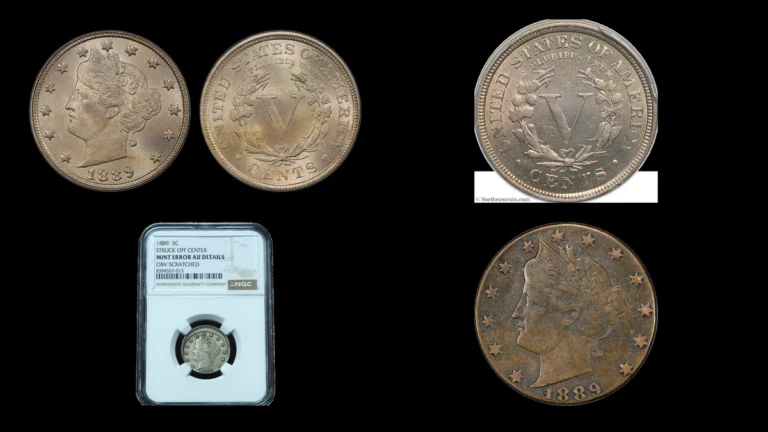
With a cent blank, the size problem begins before the nickel press closes. The copper-rich disk is too small to receive all of the nickel’s outer design.
The recorded PCGS AU58 example was struck toward 2:30, losing some right-side stars and part of AMERICA beyond the edge. A scratch near the final star is later damage on that specimen.
How to Identify
A cent of this period normally starts near 3.11 grams and 19 millimeters. These are blank standards, not a measured weight supplied for the auctioned nickel.
Compare the candidate’s weight and metal with its naturally cropped design. Striking can enlarge a smaller blank, so a single diameter measurement cannot settle the question.
Examine the edge for trimming and the surfaces for an added copper coating. Brown color by itself is not enough, and a scratch supplies no evidence that the wrong blank entered the press.
Read the actual date and use non-damaging metal examination if the composition remains uncertain. An unused cent blank does not require an older Lincoln design beneath Liberty.
What It’s Worth
Comparable authenticated 1910 cent-blank errors are estimated at $2,000–$8,000. Strong surviving identification and condition are central to that range.
The PCGS AU58 coin sold for $5,462.50 on January 7, 2006. AU58 indicates only slight wear.
The result concerns a genuine wrong-blank coin with its later scratch included. A plated or deliberately reduced normal nickel does not enter the same price range.
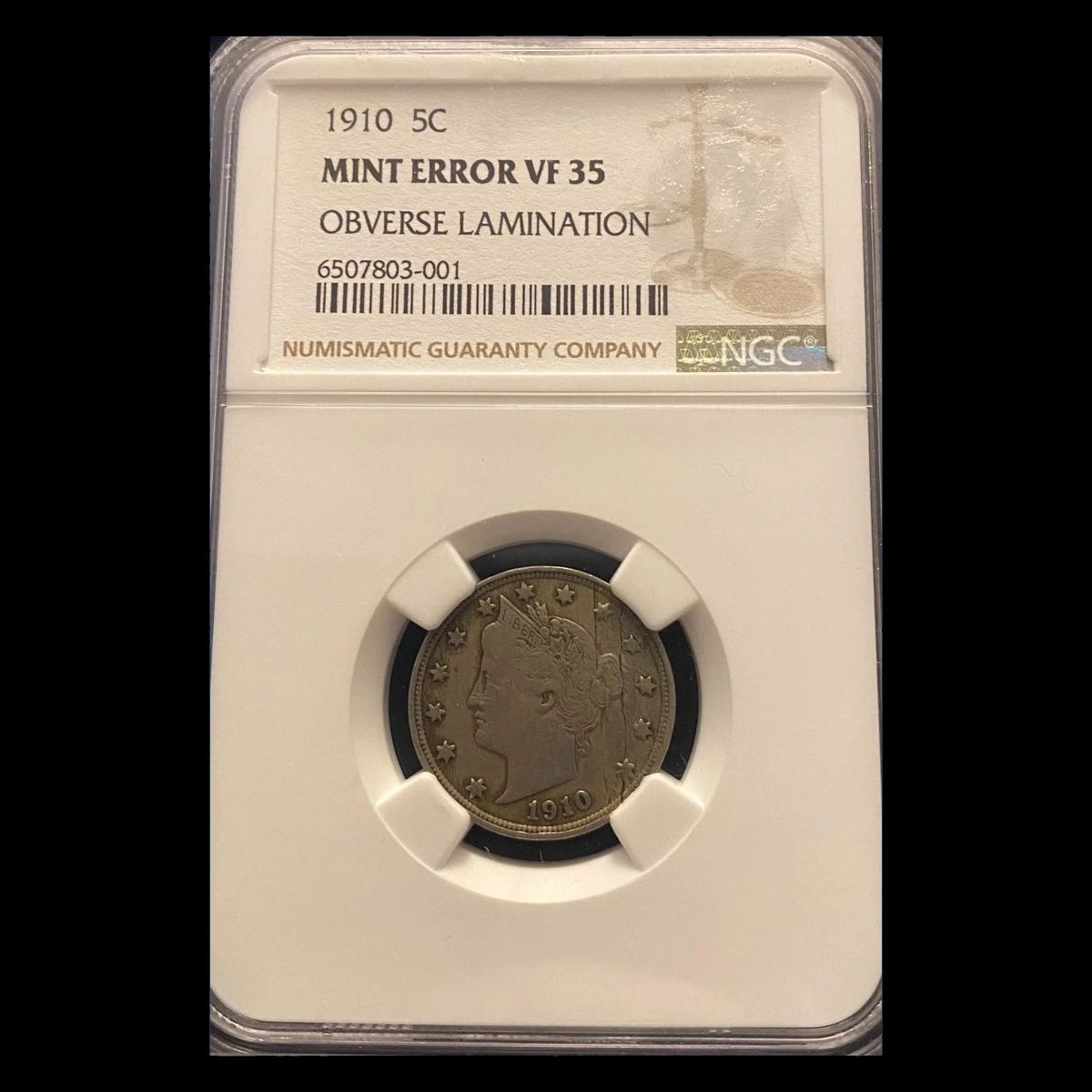
3. 1910 Nickel Peeling Metal or a Thin Separated Piece: Lamination and Split Error
A weakness within the alloy can open at the surface as a flap or shallow missing patch. A more extensive separation can divide a struck coin into thin pieces.
A separated piece may retain its original design on the outside and expose rough internal metal on the other face. Both forms are reported for 1910, but no surviving matching pair is established in the supplied report.
How to Identify
Support a detached piece without bending it, and leave an attached flap alone. A split fragment can remain nearly full diameter even though it weighs much less than an intact nickel.
Inspect the inner face and surviving edge for the irregular boundary of a natural separation. Regular saw lines or a polished flat interior suggest machining.
On a local peel, follow the flap into the surrounding metal. The nickel’s copper and nickel are mixed throughout, so this is not a normal plated layer coming loose.
What It’s Worth
A local lamination is estimated at $15–$250, while a genuine piece separated after striking is estimated at $100–$1,500. Preserved outer design and clear natural separation support the latter identification.
NGC reports a 1917 Buffalo nickel split pair at $1,260 in June 2023, with both pieces graded MS64. That price covers the two pieces together.
The different date, design and complete pair prevent this result from pricing one 1910 fragment directly. A small surface peel also needs its own comparison.
4. 1910 Nickel A Local Blank-Looking Patch: Strike-Through Error
A patch of absent detail can record an obstruction between the blank and a die. Soft material may weaken a design, while a harder object can leave a distinct impressed shape.
The general 1910 report identifies no specific object or location. Grease and wire describe possible mechanisms, not separately confirmed specimens for this year.
How to Identify
Compare the affected area with neighboring details at similar height. Broadly worn hair and letters may simply show circulation rather than an unusual interruption during striking.
Move the light across the patch and examine its boundary. Polished streaks, scratches or metal pushed up beside a dent indicate other possible causes.
A local interruption should fit the original surface around it. Even when that relationship supports a strike-through, a smooth patch may not reveal the material responsible.
What It’s Worth
A genuine ordinary-strike example is estimated at $10–$300. A faint missing detail on a worn coin generally offers less than a clear impression on an attractive unworn one.
This range is an estimate, not a documented sale for an identified 1910 strike-through. Ordinary wear and polishing do not receive the same premium.
Conclusion
The most useful first distinction is between missing design and missing metal. An off-center strike leaves unused solid metal, a cent blank starts too small for the design, and a split exposes the interior of the coin.
Keep original surfaces and loose pieces intact while recording those relationships. Auction comparisons become more meaningful when the date, condition and number of pieces match what is actually being offered.