Rare 1988 Nickel Errors (List & Pictures)
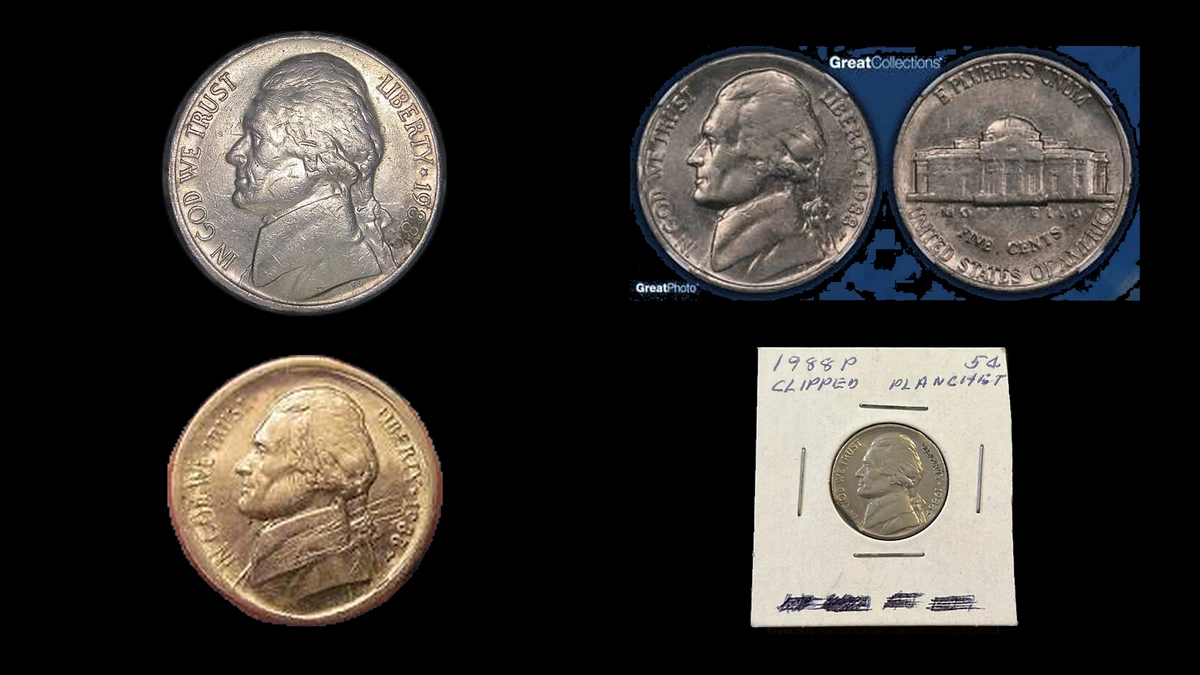
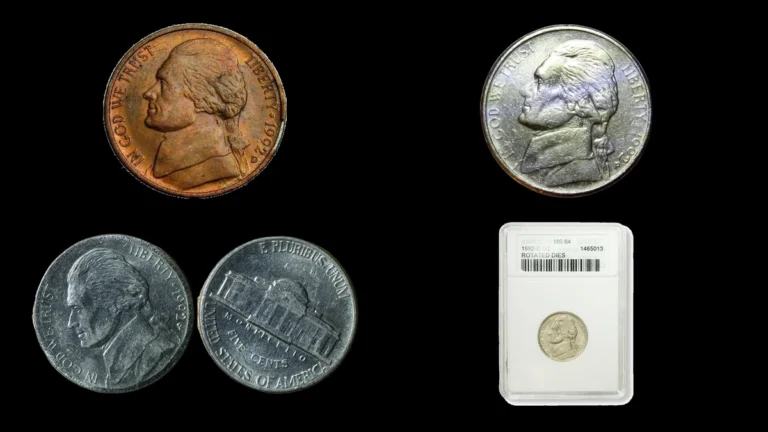
Recognizable designs provide the best clues to 1988 nickel errors, from faint portrait fragments near Monticello to Lincoln cent details beneath Jefferson. Estimated individual values range from $5 to $2,500.
The documented nickel-over-cent coin sold for $600 in September 2024, while a separate nineteen-coin group brought $2,562 in June 2026. That group total belongs to all nineteen pieces; begin with small design changes, then inspect the outline and any surviving earlier denomination.
| Visible clue | Possible error | Estimated individual value |
|---|---|---|
| Extra mint-letter outline | Reported repunched mintmark | $10–$250 |
| Repeated portrait or front lettering | Reported doubled die | $20–$350 |
| Head or coat traces on the reverse | Die clash | $5–$200 |
| Interrupted reverse letters | Struck through | $10–$300 |
| Full design with outward spread | Broadstrike | $20–$400 |
| One or more missing edge sections | Clipped planchet | $25–$600 |
| Design misses a large part of the blank | Off-center strike | $25–$750 |
| A hollow accompanies expansion or displacement | Indent combination | $50–$800 |
| Overlapping designs or a cup-like shape | Multiple strike and die cap | $100–$1,500 |
| Small layered-metal blank | Dime planchet | $300–$2,000 |
| Cent design remains under the nickel strike | Double denomination | $400–$2,500 |
1. 1988 Nickel A Second Shape beside P or D: Reported Repunched Mintmark Error
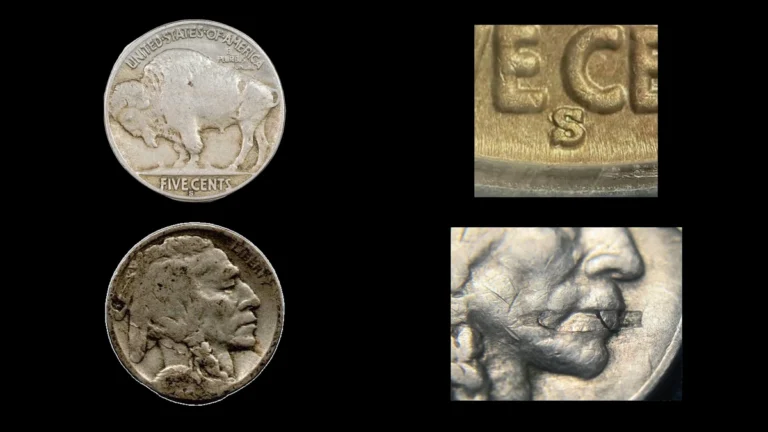
The mint letters were still separately punched into working dies in this period. A repeated punch placed slightly differently could leave part of the earlier letter visible on coins struck by that die.
The year source raises repunching as a possibility without establishing a specific 1988 variety. No catalog number or direction of overlap should be assigned from that broad mention alone.
How to Identify
Photograph the mintmark with the date, then follow any extra stroke under changing light. A real earlier letter remnant should remain fixed and relate to the shape of P or D.
Shadows, scratches and flat ledges from strike movement can imitate a second outline. Document the candidate for a specialist rather than borrowing a variety number from another year.
What It’s Worth
$10–$75 is a conditional estimate for authenticated minor repunching, with $75–$250 for a clear attractive example. These estimates are not evidence that a particular 1988-P or 1988-D variety has been certified.
No completed sale is established by the supplied report. The additional letter impression has to be demonstrated before an error premium is considered.
2. 1988 Nickel Extra Portrait and Lettering Contours: Reported Doubled Die Error
Philadelphia front-side doubling is reported around the eye, lips and chin, with effects in LIBERTY and IN GOD WE TRUST. A doubled die contains repeated details before the coin is struck.
The description supplies locations but no precise catalog number. A second-looking eye therefore needs a pattern match rather than an automatic attribution.
How to Identify
Compare the proposed eye addition with the lips, chin and affected lettering under magnification. Several related fixed contours are more informative than one bright edge in a photograph.
A rounded added shape differs from a flat shelf that cuts into the main design. Mechanical movement, wear and damage need to be separated from duplication made into the die.
What It’s Worth
$20–$100 is estimated for identifiable minor doubling, with $100–$350 for stronger attractive examples showing little wear. No verified sale of a named 1988 catalog variety is supplied here.
Clear photographs and a matching attributed specimen support the comparison. Merely thick-looking letters do not establish the reported doubled die.
3. 1988 Nickel Portrait Traces around Monticello: Die Clash Error
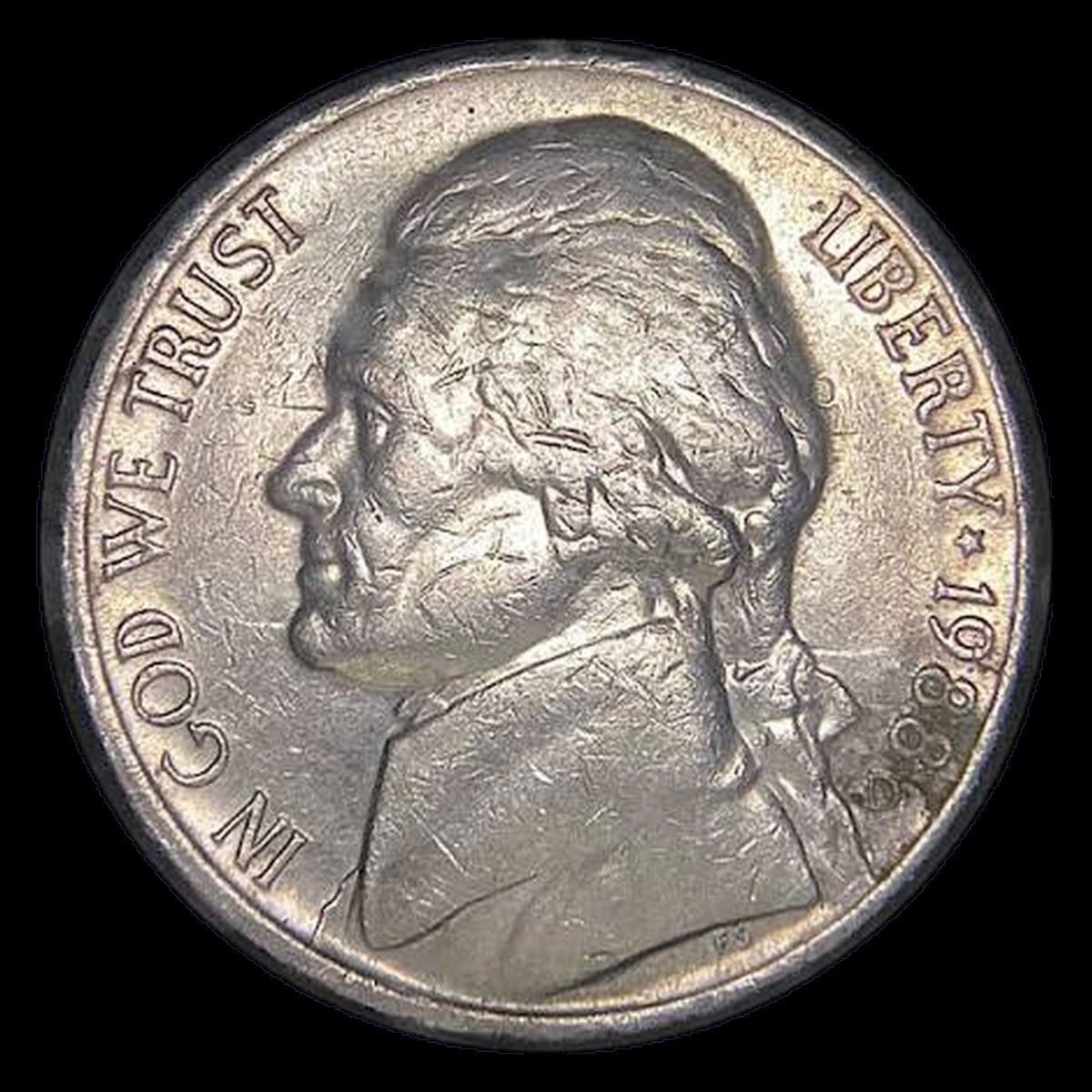
An owner-reported Philadelphia example shows a head outline below FIVE CENTS and coat traces above Monticello. The identification came from discussion of photographs rather than a grading-service certificate.
A clash occurs when the dies meet without a blank, transferring parts of their designs to each other. Later coins can receive those fragments along with their intended images.
How to Identify
Locate the head-like curve below FIVE CENTS and compare it with Jefferson’s actual outline. Then assess whether the separate marks above the building fit the coat rather than unrelated scratches.
The proposed pieces should agree in both shape and placement. They are faint transferred fragments, not a complete second portrait impressed into the coin.
What It’s Worth
$5–$50 is estimated for faint recognizable clashes, with $50–$200 for stronger examples displaying clear design relationships. No completed auction price is supplied for the reported 1988-P.
Wear and numerous contact marks can make genuine traces difficult to show. An elaborate description does not replace a visible connection to the opposing design.
4. 1988 Nickel Reverse Letters Fail to Form: Struck Through Error
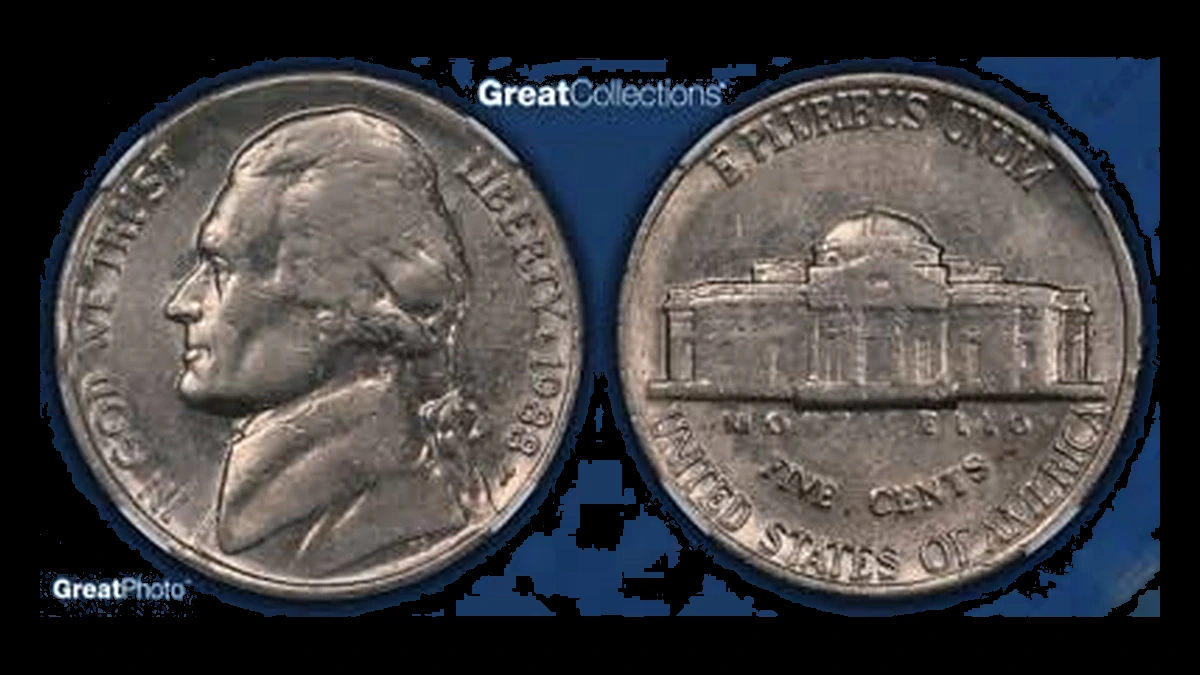
A seller described a 1988-P with missing reverse lettering and an NGC AU Details label. The proposed obstruction prevented some detail from transferring normally during the strike.
The supplied description names neither the exact letters nor the material. AU Details also indicates a condition problem rather than a problem-free numerical grade.
How to Identify
Read the label’s accompanying problem description and record precisely which inscription elements are interrupted. Compare the weak patch with sharp nearby detail and the coin’s overall wear.
Polishing lines, scraped metal or impacts may show that lettering was removed after striking. Missing letters alone cannot identify grease as the obstruction.
What It’s Worth
$10–$100 is estimated for a genuine local interruption, rising to $100–$300 for a strong clear effect on an attractive coin. The Details problem can reduce the value of the reported example.
No completed price is provided for that 1988-P. A 2000-P front struck-through nickel sold for $84 in February 2015, offering a different-year and different-face comparison.
5. 1988 Nickel Metal Spreads around the Full Design: Broadstrike Error
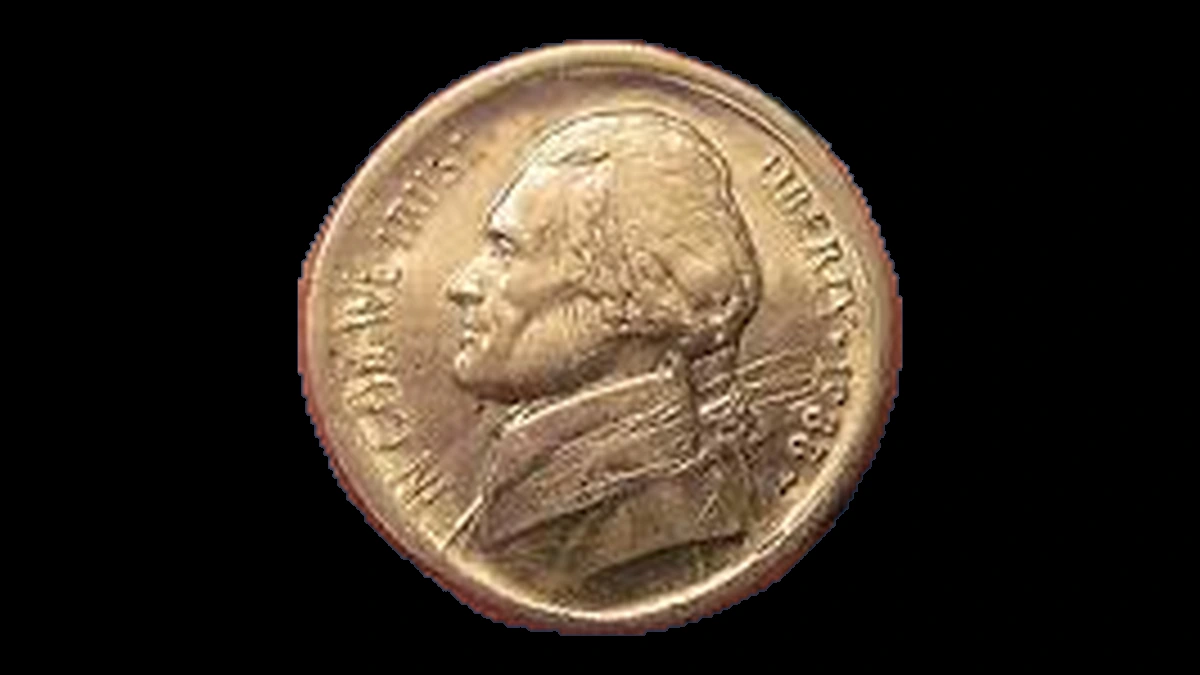
The documented ICG MS65 Philadelphia broadstrike retains complete design in an expanded outline. Metal spread beyond its intended diameter because the surrounding collar did not restrain it properly.
Additional broadstrikes occur in the nineteen-coin Philadelphia group. They should not be assumed identical to the individually described ICG example.
How to Identify
Trace all outer lettering on both faces before judging size. A genuine simple broadstrike retains that design even when the expanded border is uneven.
For loose coins, normal references are 5 grams and 21.21 millimeters across, with a plain edge. Check enlarged examples for hammer marks and crushed finished details that could explain later widening.
What It’s Worth
$20–$125 is estimated for ordinary broadstrikes, with $125–$400 for strong attractive spreads. No individual sale amount is assigned to the 1988 ICG MS65 specimen in the supplied comparison.
A Philadelphia broadstrike dated 2000 sold for $51 in July 2022. The nineteen-coin 1988 group’s total is not an individual broadstrike price.
6. 1988 Nickel Curved, Straight or Several Gaps: Clipped Planchet Error
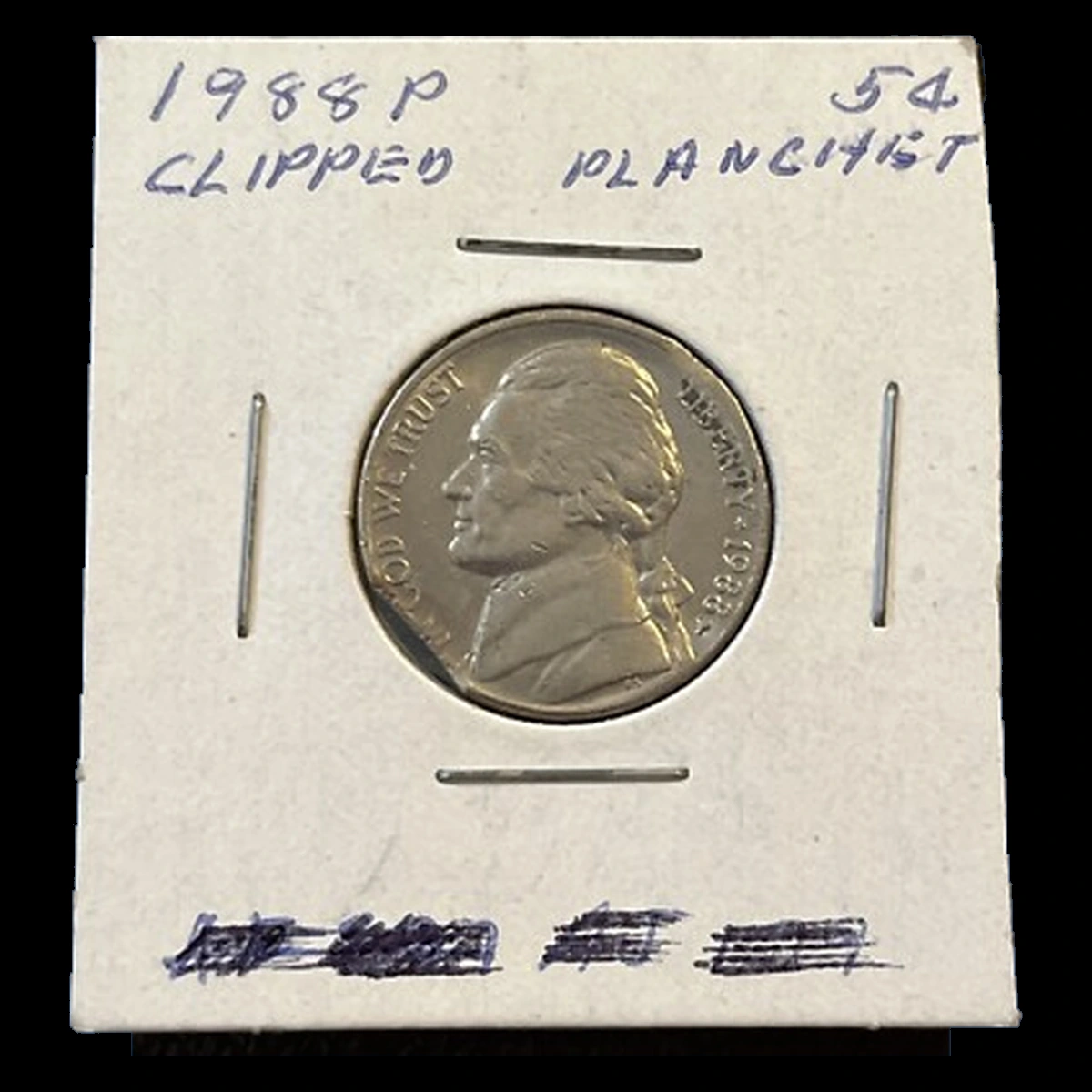
The recorded ANACS MS62 1988-P curved clip weighs 4.61 grams. Double, triple and straight clips also appear among the group examples, sometimes with expansion or an off-center strike.
These coins began on incomplete blanks. A blank-cutting punch can overlap prior holes or a strip edge, leaving metal absent before the design is struck.
How to Identify
Examine each gap’s endpoints and the approaching design for original striking effects. Saw grooves or a clean cut across already formed lettering suggest later removal.
Weakness opposite a clip may provide support but is not present on every genuine example. On a compound coin, keep missing metal separate from an unstruck area where the metal is still present.
What It’s Worth
$25–$150 is estimated for straightforward clips, with $150–$600 for attractive multiple clips or clear combinations. The 4.61-gram weight belongs specifically to the documented curved-clip coin.
A 1997-P nickel with a 20% curved clip sold for $124 in March 2025. The mixed 1988 group supplies no separate price for each of its clip forms.
7. 1988 Nickel Only Part of the Blank Receives Design: Off-Center Strike Error
The ANACS MS63 Denver example is described as about 60% off center toward eleven o’clock. Philadelphia records include a 10% shift and other layouts in the large group.
A misplaced blank leaves a crescent of untouched metal while some design falls beyond its edge. This is different from a second impression over an already struck coin.
How to Identify
With Jefferson upright, compare the direction and surviving design on both faces. Apply eleven o’clock only to the documented Denver example, not to other coins from the year.
Look for original unstruck metal and check whether a second arrangement of letters or portrait details survives. Retain the visible date and mintmark in photographs rather than identifying the coin from its outline alone.
What It’s Worth
$25–$150 is estimated for modest clear shifts, with $150–$750 for striking examples with readable dates and attractive surfaces. The Denver 60% coin sold together with a 1994-P off-center nickel for $49 in January 2022.
That amount covers both coins. Neither it nor the nineteen-piece Philadelphia total establishes a separate realized price for one 1988 off-center specimen.
8. 1988 Nickel A Hollow Joins Expansion or Displacement: Indent Error
The Philadelphia group includes expanded coins with indents and a separate off-center coin with an indent. An overlapping object pressed a depression into the metal while preventing normal detail from forming beneath it.
The auction description does not establish a shared position or percentage for these hollows. The combinations belong to separate objects.
How to Identify
Inspect the interior first for readable reversed design. That would indicate a struck coin as the obstruction and introduce brockage, rather than an unspecified smooth overlap.
Verify that metal remains beneath the hollow and compare the opposite face for later pressure damage. A curved missing edge section is a clip, not an indent simply because the boundary looks similar.
What It’s Worth
$50–$250 is estimated for genuine indents, with $250–$800 for dramatic attractive combinations. Each figure values a complete coin with its accompanying effects.
A 1996-P multiple strike with a front indent brought $373.75 in September 2010. Its repeated blows make it a distinct comparison, while the 1988 lot provides no individual indent sale price.
9. 1988 Nickel Repeated Designs or a Cup-Shaped Coin: Multiple Strike and Die Cap Error
A Denver example is cataloged as multiply struck and 60% off center. Philadelphia records include a displaced second strike and another coin whose second strike formed a cap.
A cap develops when a coin stays attached to a die and its metal rises around the tool. Its curved walls require more explanation than two crossing impressions on a flat coin.
How to Identify
Trace the oldest visible impression and then the later design, checking both faces against the proposed sequence. A small flat ledge beside one letter does not prove another complete blow.
For a cap, preserve side views of the wall and stretched design without flattening or squeezing it. Keep the Denver displacement and Philadelphia cap formation attached to their separate specimens.
What It’s Worth
$100–$600 is estimated for clear repeated strikes, with $600–$1,500 for exceptional layouts or strong cap combinations. The Denver multiple strike, graded NGC MS67, sold for $104 in October 2010.
MS67 describes very strong unworn preservation, but it did not make that sale exceptionally expensive. The Philadelphia cap and other doubles have no individual prices within the nineteen-coin group.
10. 1988 Nickel A Small Layered-Metal Disc Carries Jefferson: Dime Planchet Error
The Philadelphia group specifically includes a nickel struck on a dime blank. The group was sold uncertified, so its description is not an individual grading-service guarantee for every piece.
A dime blank starts near 2.268 grams and 17.91 millimeters, with layered metal. Its smaller surface can leave outer nickel lettering beyond the available disc.
How to Identify
Assess the measured weight, edge construction and incomplete design together, allowing for expansion during the nickel strike. Acid damage or grinding can also reduce size and weight but should leave different surface evidence.
An unused blank need not have dime reeds, which normally form in the dime collar during striking. Surviving Roosevelt design would instead indicate an already struck dime and a different error.
What It’s Worth
$300–$1,000 is a conditional estimate for an authenticated dime-planchet nickel, reaching $1,000–$2,000 for exceptional preservation and presentation. The nineteen-coin Philadelphia group sold for $2,562 in June 2026.
That total includes this reported wrong-blank piece and eighteen other errors. Dividing by nineteen would still fail to account for their very different characteristics.
11. 1988 Nickel Lincoln Cent Details Remain beneath Jefferson: Double Denomination Error
The documented Denver coin began as a finished 1988-D Lincoln cent before receiving the 1988-D nickel design. Its surviving lower design is what separates this overstrike from a nickel struck on an unused cent blank.
NGC graded it MS66 Red, indicating strong unworn preservation with retained copper color. Its host was a copper-plated zinc cent rather than normal nickel alloy.
How to Identify
Identify an unmistakable cent feature beneath the later design and read each surviving date and D independently. Copper color alone cannot demonstrate an already struck cent underneath.
The cent began near 2.50 grams and 19.05 millimeters, although the later strike may alter the outline. Examine the edge for a joining seam or added coating that could imitate a mixed-denomination object.
What It’s Worth
$400–$1,200 is estimated for clear examples with comparable preservation, with $1,200–$2,500 for exceptional surfaces and especially visible host detail. The recorded 1988-D nickel over 1988-D cent sold for $600 in September 2024.
This is an individual result, separate from the Philadelphia group. Both denominations’ readable features help explain the appeal, while the top of the range remains an estimate.
Conclusion
Look for a consistent explanation across the entire coin, whether the clue is a faint transferred curve or a surviving Lincoln cent design. Missing metal, unstruck metal and metal pressed into a hollow can look related in a cropped image but describe different events.
Keep specimens and sale units separate as well. An individual overstrike, a two-coin off-center lot and a nineteen-piece collection provide different kinds of price evidence.