Rare 1923 Nickel Errors (List & Pictures)
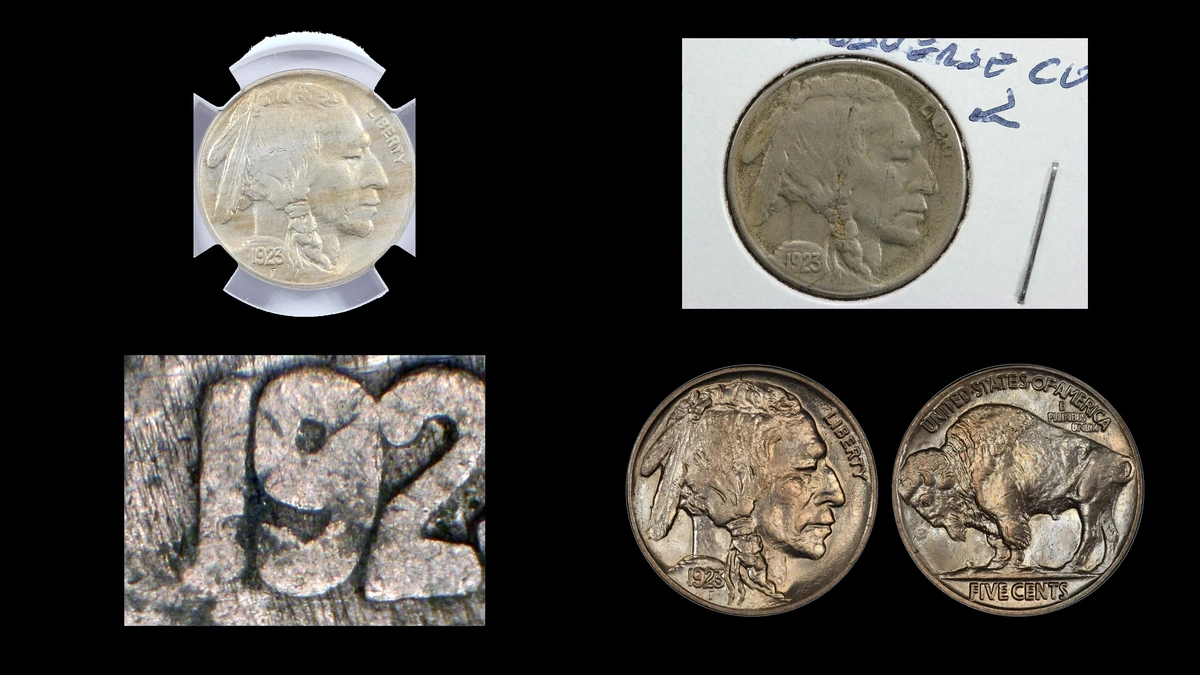
A different-year 1927-S two-feather nickel sold for $2,280 in February 2021. Estimated values for 1923 Buffalo nickel errors span $5–$2,500, but that comparison is not a 1923 sale.
Read the date and mint area, then examine the outline, missing portrait details and original metal before choosing a variety or error name.
| Observation | Possible explanation | Estimated range |
|---|---|---|
| Ragged opening at the edge | Clipped blank | $40–$350 |
| Unused metal beside shifted designs | Off-center strike | $150–$1,000 |
| Peeling original metal | Lamination | $5–$100 for small peels |
| Localized weak detail | Grease-filled die | $15–$150 |
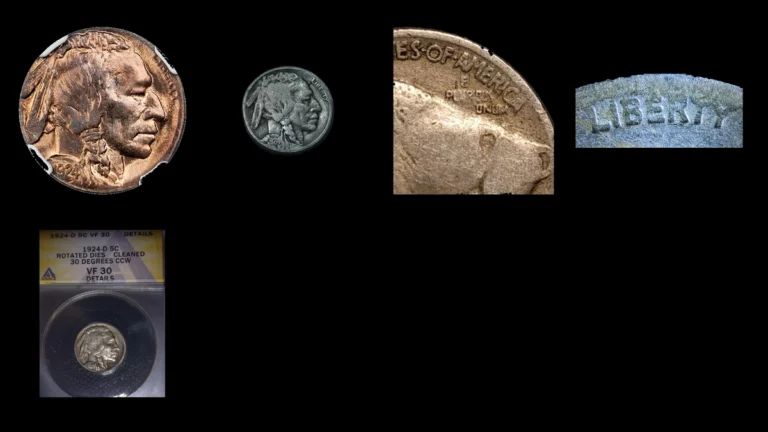
| Absent F beneath the date | Reported missing initial | $20–$200, conditional |
| Thickened date and LIBERTY | Doubled obverse | $40–$600 |
| Reduced small feather | Two-feather variety | $75–$2,500 |
A normal Buffalo nickel weighs 5 grams and measures about 21.2 millimeters with a plain edge. An S below FIVE CENTS identifies San Francisco; the small F below the obverse date is designer James Earle Fraser’s initial.
1. 1923 Nickel A Jagged Missing Edge Section: Clipped Blank Error
The reported 1923 type is a ragged end clip. A shortage at the metal strip’s edge can leave an incomplete blank that later receives the coin design.
The available report supplies no mint or certified specimen. A rough opening alone cannot show whether the metal was missing before striking or broke away later.
How to Identify
Inspect where the design approaches the opening for metal shaped during striking. Fresh cuts, file marks or sharp later breaks need a different explanation.
Check the opposite rim for supporting weakness, while recognizing that its absence does not settle the issue. Read the date and mint area instead of assigning them from the gap’s shape.
What It’s Worth
An ordinary authenticated 1923 clip has a conditional estimate of $40–$350. Valuable San Francisco grades require separate whole-coin comparisons outside this general range.
A 1927 Philadelphia Buffalo nickel with a 6% clip sold for $223.25 in August 2015. Its percentage and shape do not describe the reported 1923 ragged clip.
2. 1923 Nickel Incomplete Designs Beside a Solid Crescent: Off-Center Strike Error
A collector’s PCGS Registry display records a 1923-S nickel struck 10% off center in VF30. The blank missed the proper position, leaving some design outside the metal and some solid metal unstruck.
VF30 describes moderate wear with much of the design remaining. The listing gives no clock direction for the shift.
How to Identify
Compare the complete front and back to connect missing design with the unused crescent. An uneven border on one face alone can have another cause.
Inspect the edge for trimming and the blank-looking area for grinding. Keep the readable date and S beneath FIVE CENTS in the photographs.
What It’s Worth
Readable 1923-S off-center nickels are estimated at $150–$1,000. The registry example itself supplies no sale price.
A 1940 Philadelphia Jefferson nickel struck 15% off center sold for $218.50 in October 2010. Its different design, mint, date and offset make it a broad comparison rather than a direct match.
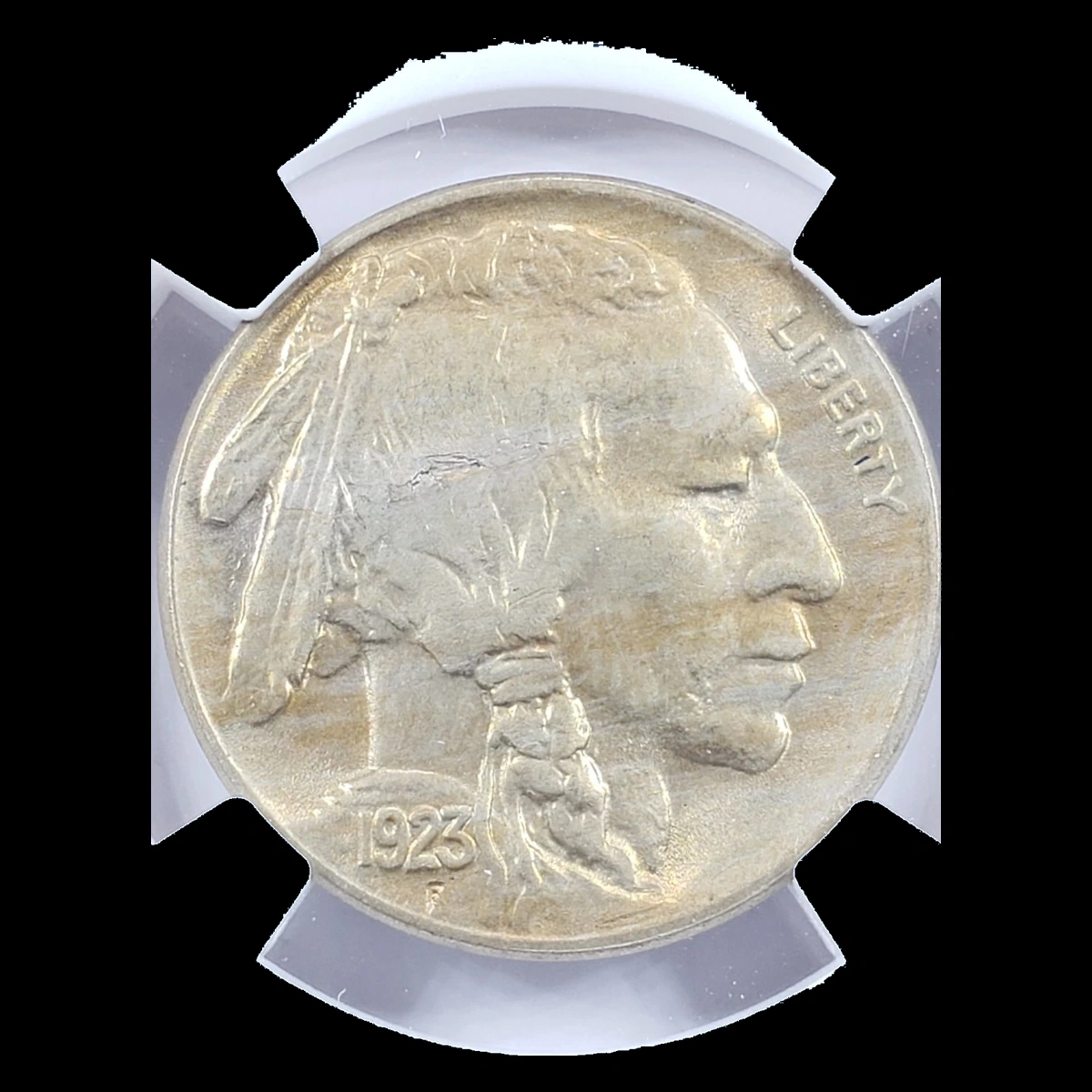
3. 1923 Nickel A Thin Flap or Surface Opening: Lamination Error
A weakness inside the alloy can allow surface metal to lift or fall away. The reported Philadelphia example has a separation extending from the right rim toward the nose.
Separate San Francisco descriptions include a neck peel, peeling on both faces and a patch above the buffalo. They do not establish one combined pattern or a coin split into two complete halves.
How to Identify
Leave any flap attached and trace its boundary under side lighting. Original design carried on the loose metal can help explain the separation.
The nickel’s copper and nickel are mixed throughout, rather than plated as separate layers. An attached piece may leave weight nearly normal, while corrosion or a gouge has a different boundary.
What It’s Worth
Small recognizable peels on worn 1923 coins are estimated at $5–$100. More dramatic defects and better grades need individual comparison.
A historical catalog offered four examples with $3 or $4 minimum bids, which were not completed prices. A different-year 1944-D Jefferson lamination sold for $27 in April 2008, with a different design and wartime alloy.
4. 1923 Nickel Local Soft Detail: Grease-Filled Die Error
Grease and debris can block recesses in a die, preventing the normal raised design from forming. This usually needs comparison with sharper adjacent detail.
A Philadelphia 1923 nickel graded ANACS F15 was described as struck through grease in a 2023 auction. The written record identifies neither an affected face nor a specific missing letter.
How to Identify
First compare ordinary high points on the portrait and buffalo. Widespread flattening can be normal wear, especially on a coin graded Fine.
Inspect the transition between weak and preserved detail for scraping or smoothing. The listing’s broad description cannot assign an exact missing feature to another coin.
What It’s Worth
An individual identifiable 1923 grease-filled example is estimated at $15–$150. Local weakness and a readable date make it easier to compare.
The Centennial result on April 11, 2023 was $108 for the nickel and a 1967 half dollar together. The whole-lot total is not the nickel’s individual price.
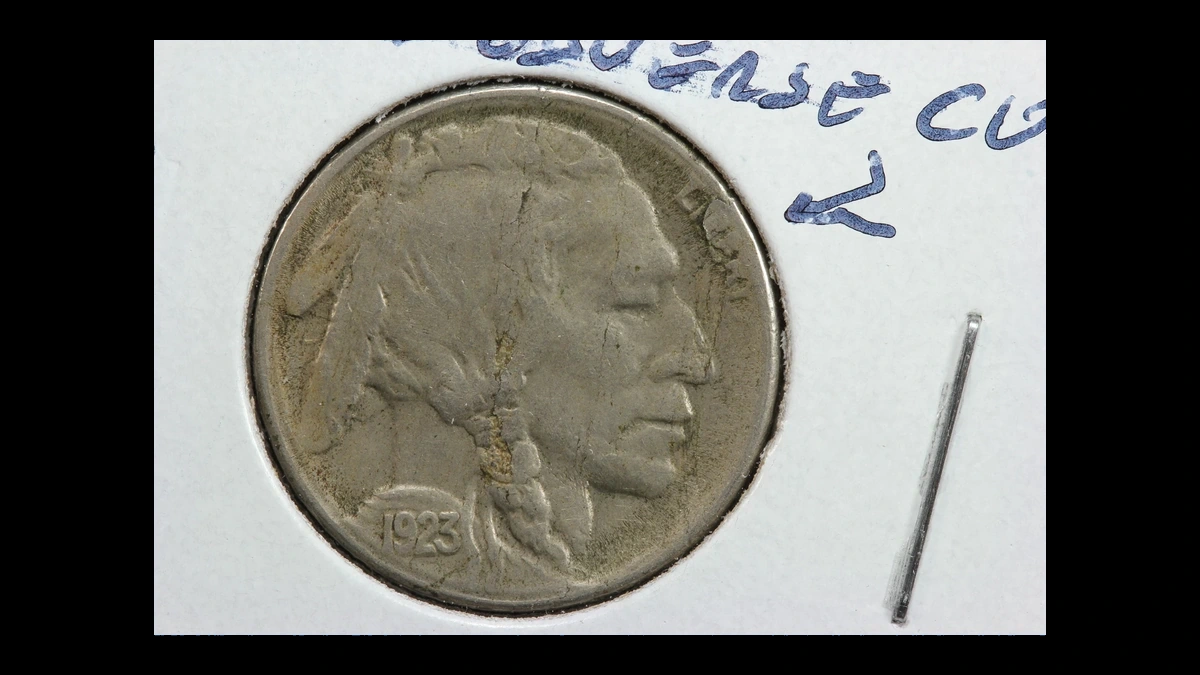
5. 1923 Nickel No F Beneath the Date: Reported Missing Initial Error
The small F beneath 1923 belongs to the designer, not the mint. A reported missing initial could involve die polishing or material blocking its recess.
Wear and later smoothing can also erase that small feature. The supplied report establishes neither a certified 1923 pattern nor a particular mint.
How to Identify
Compare the date and nearby surface with a normal coin of similar wear. A clear date beside undisturbed metal is more promising than a broadly smoothed lower portrait.
Photograph the area under changing light to look for parallel scratches or a shallow ground patch. Damage that also cuts into the date weakens the case for an original omission.
What It’s Worth
A genuine Mint-made missing F has a conditional estimate of $20–$200. Ordinary wear that removes the initial does not qualify.
No documented 1923 auction result supports a fixed price here. A two-feather variety’s value should not be transferred to a missing designer initial.
6. 1923 Nickel Extra Thickness in the Date and LIBERTY: Doubled Obverse Error
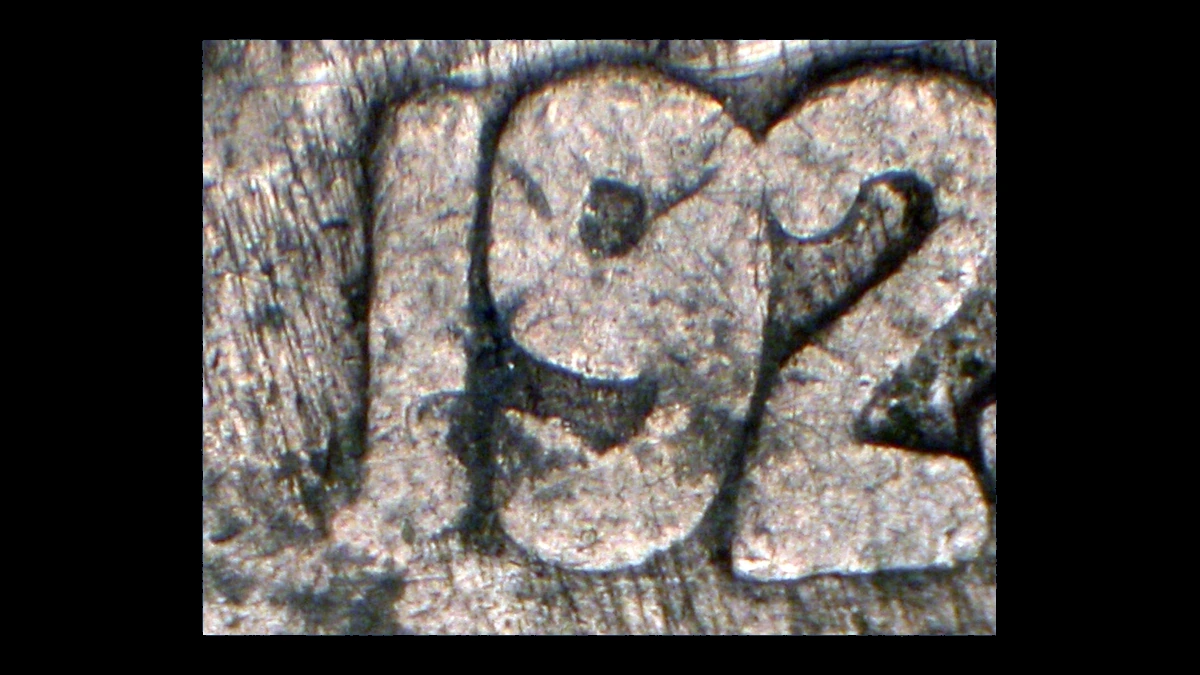
The Philadelphia catalog describes a doubled die with strongly thickened front details. The repeated design was present in the die, so one normal blow could transfer it to a coin.
Some two-feather descriptions also mention a doubled front. That association does not make every two-feather coin this doubled-die variety.
How to Identify
Compare the numeral shapes and LIBERTY with CONECA’s illustrated Philadelphia variety. An S coin needs its own attribution rather than the Philadelphia pattern.
Use consistent lighting to avoid false width from shadows. Wear-blurred edges and flat shelves from movement during striking can resemble thickened strokes.
What It’s Worth
Matched Philadelphia doubled obverses are estimated at $40–$600. The range is a working estimate rather than a recorded sale of the cataloged die.
A different-year 1927-S doubled obverse in AU58 brought $840 in June 2019. If doubling and reduced feathers occur on one coin, value that complete coin rather than adding two full ranges.
7. 1923 Nickel A Reduced Small Feather: Two-Feather Variety Error
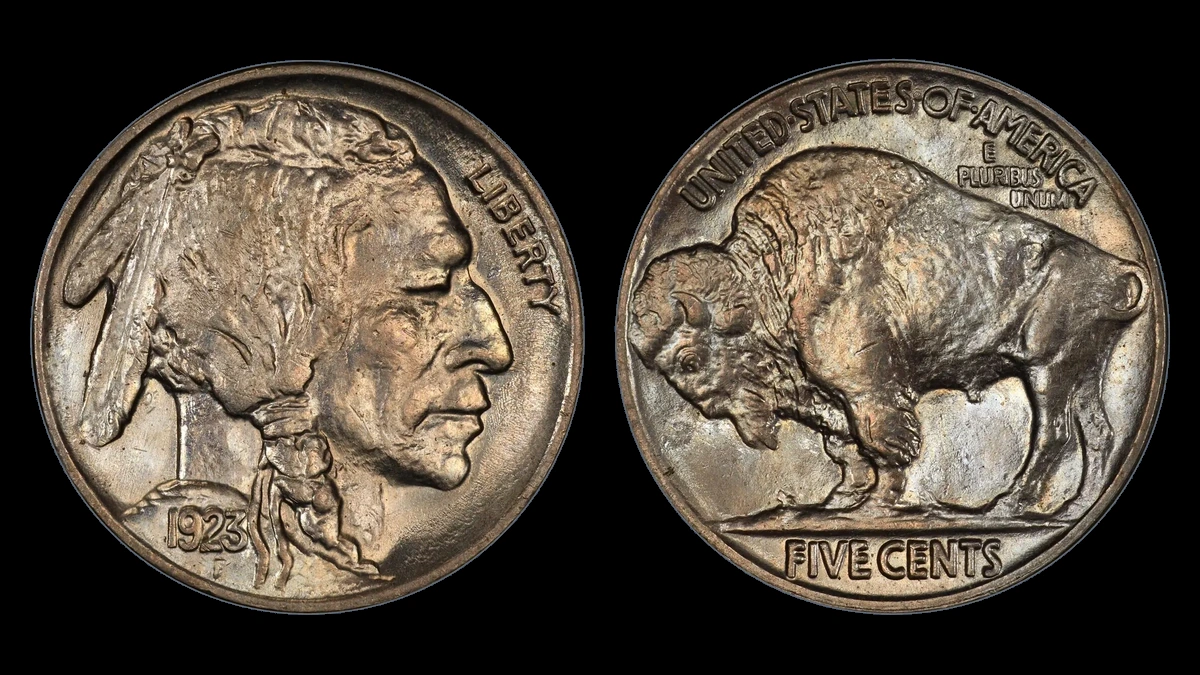
Heavy die polishing can remove the shallow design for the small inner feather. The two larger feathers remain, while the small one may be reduced rather than erased completely.
The documented Philadelphia MS64 example retains an isolated scrap disconnected from both neck and hair. That remnant is compatible with the variety.
How to Identify
Compare the gap and any detached speck with the collector’s illustrated 1923 example. The relationship to the neck and hair matters more than a simple feather count.
Examine adjacent portrait detail to determine whether ordinary wear explains the loss. Check for scraping and confirm the Philadelphia reverse without trying to remove or flatten a surviving remnant.
What It’s Worth
Recognizable 1923 two-feather coins are estimated at $75–$2,500 across different preservation levels. The cited page supplies no auction amount for this example.
A 1927-S MS63 two-feather nickel sold for $2,280 at Heritage in February 2021. Its different year and mint remain essential limits on the comparison.
Conclusion
Missing detail is not one diagnosis on a 1923 nickel. The small feather, designer’s F and grease-blocked design each require a different location and surface comparison.
A detached feather remnant can support an attribution, while a completely blank area may simply be worn or altered. Preserve loose metal, retain the full date and mint area in photographs, and keep minimum bids and group totals separate from individual completed sales.