Rare 1948 Nickel Errors (List & Pictures)
Clear Monticello steps can survive even when a nickel’s design is off center. A 1948-S example with that combination sold for $391 in October 2010.
The 1948 nickel errors in this guide range from about $5–$750, including small mintmark varieties and a coin struck several times. Begin with the design itself, then examine surface texture and the shape of the blank.
1. 1948 Nickel Extra Letter Edges from Doubled Dies Error
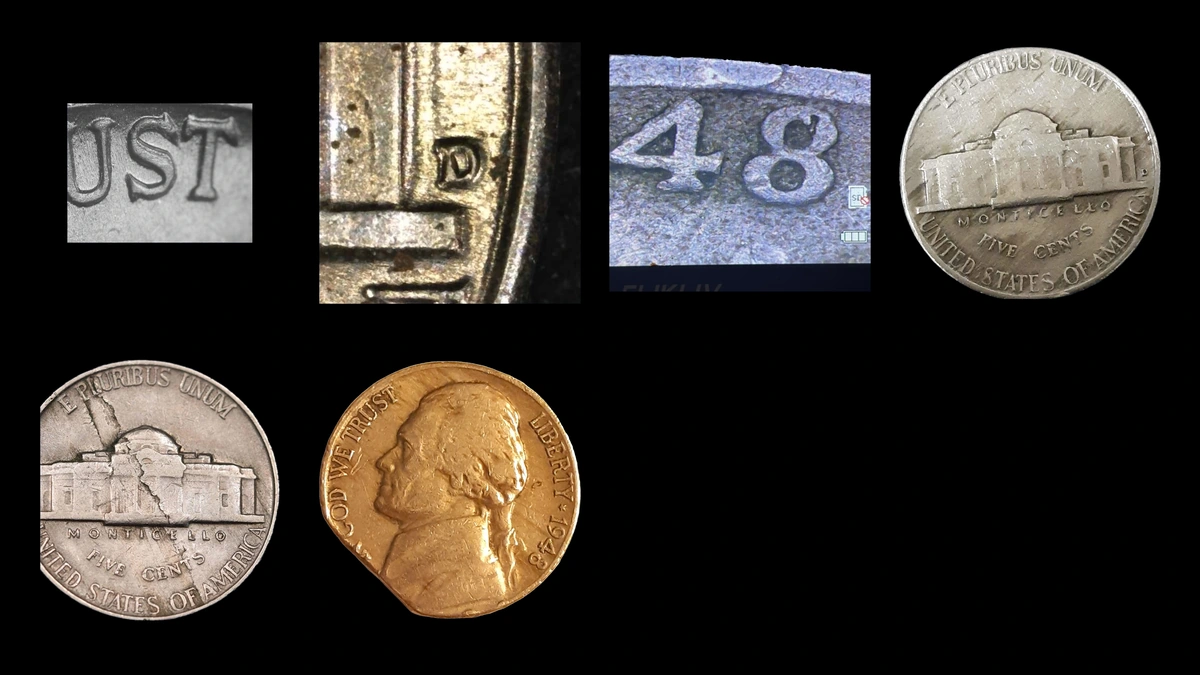
Philadelphia and one San Francisco front variety affect LIBERTY, the star, and the date. Other Denver and San Francisco examples have subtle changes in IN GOD WE TRUST.
Back varieties affect the upper inscriptions, with stronger separation toward the right. These repeated details were already on the dies, the tools used to stamp the coin.
How to Identify
Choose the mint and face before using Brian’s 1948 variety photographs. A Denver motto pattern cannot be identified from the Philadelphia date.
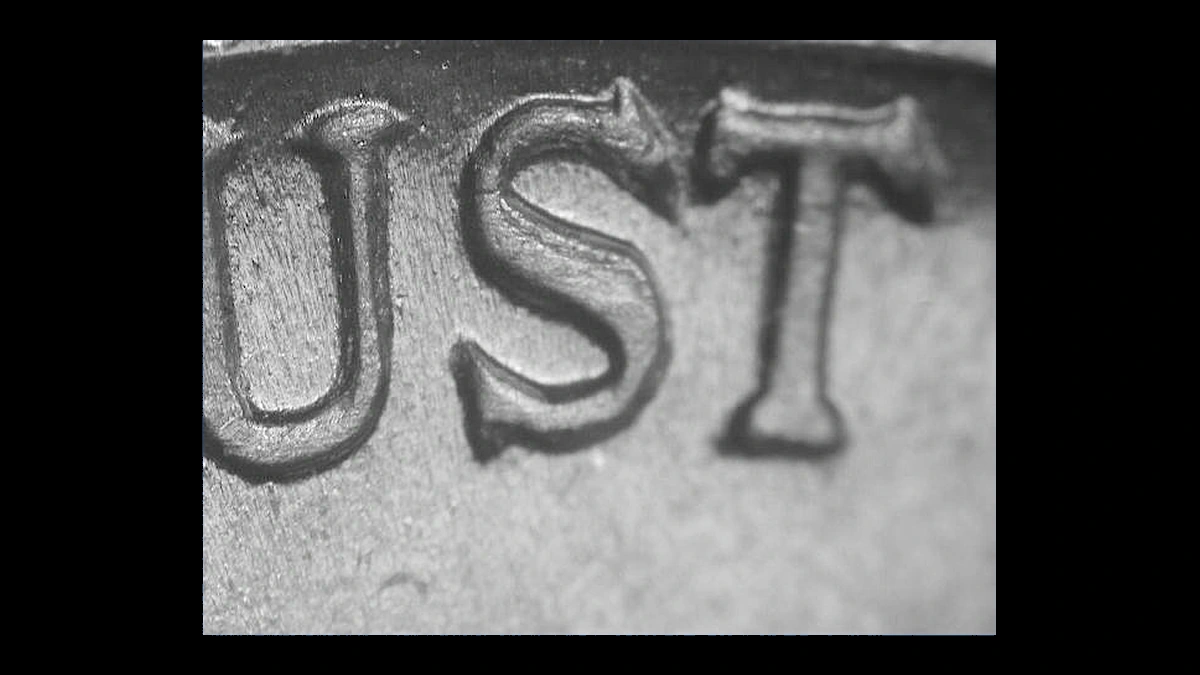
Compare several letter edges and how their separation changes. Flat shelves from movement during striking differ from a matched pattern of repeated raised outlines.
What It’s Worth
$10–$100 is the estimate for clearly identified small doubled designs. Better preservation and visible separation support the higher end.
One San Francisco back variety also has a repunched S. Both features belong to a single coin, so two complete price ranges should not be added together.
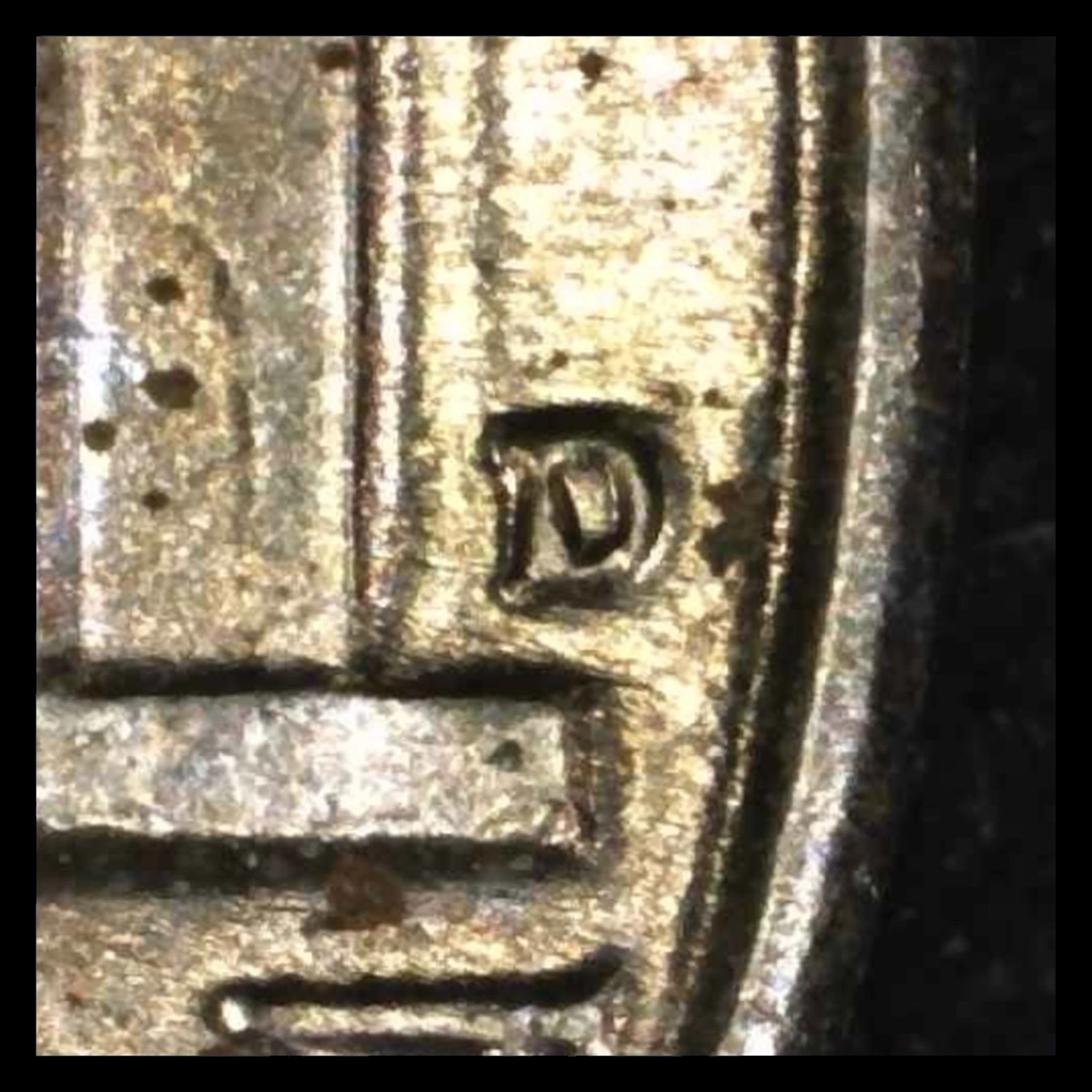
2. 1948 Nickel Repeated D or S Mintmarks Error
An earlier mintmark punch can leave an extra curve or stroke beside the final letter. Denver patterns include leftward, tilted, and lower-right impressions.
San Francisco has several distinct forms, including three overlapping S punches on one variety. A lower S remnant alone does not identify which pattern is present.
How to Identify
Find D or S to the right of Monticello and trace the entire overlapping shape. Philadelphia nickels have no mintmark there.
Compare the connections and curves with the appropriate Wexler photographs. A cut through the main letter is damage, while a similarly directed extra S may still belong to a different variety.
What It’s Worth
$10–$125 is the working range for these minor D and S varieties. A readable extra outline on an attractive unworn coin is easier to appreciate than a faint worn remnant.
Cracks or doubled lettering on the same coin may help identify it. They do not automatically earn separate full payments beyond the whole coin’s value.
3. 1948 Nickel Ghost Design Traces from a Die Clash Error
When the dies meet without a blank between them, they can pick up traces of the opposite design. Later coins may show those extra shapes as clash marks.
The reported 1948 category does not establish one mint or exact outline. A random line beside Jefferson needs more evidence before it receives this name.
How to Identify
Compare several connected traces with the opposite face of a normal nickel. A mirrored reference image can help align the designs.
Do not rely on an isolated scratch or assume every clash mark must have the same depth. The relationship to recognizable opposing design is the stronger test.
What It’s Worth
$10–$150 is the estimate for genuine 1948 clashes, from faint recognizable traces to stronger attractive examples. The range requires marks that actually match the opposing design.
More unexplained lines do not necessarily mean more value. A dramatic clash price from another year should not be attached to ordinary scratches.
4. 1948 Nickel Raised Building Lines and Rim Cuds Error
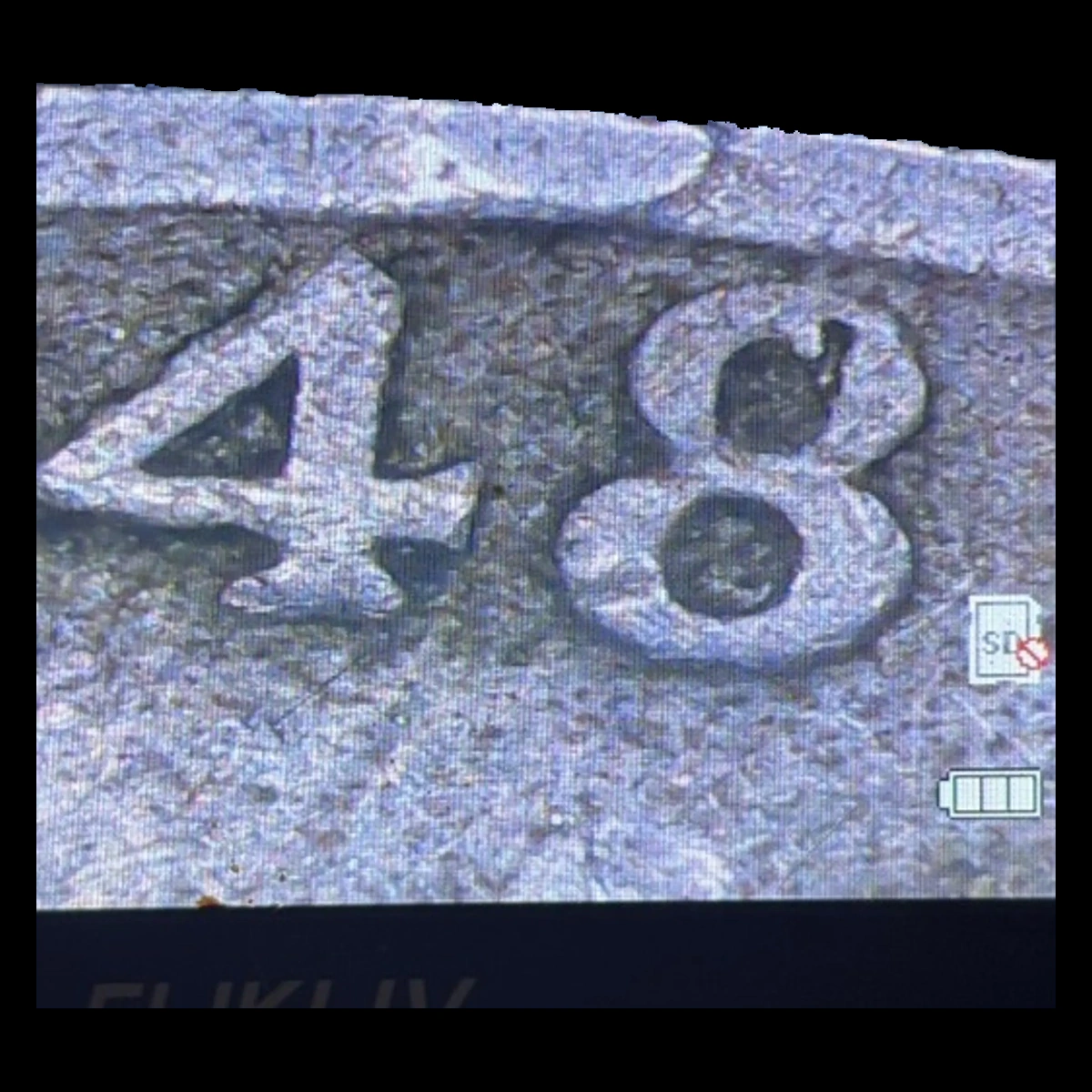
Denver die cracks follow different paths through Monticello, its steps, or nearby lettering. Metal fills a crack in the die and leaves a raised ridge on the coin.
A larger break reaching the die’s edge can create a rim-connected patch called a cud. The reported cud is not automatically the same specimen as a narrow Denver crack.
How to Identify
One Denver pattern runs from the dome’s right edge through the third and fourth columns toward the steps. Another has cracks around the dome and letters in PLURIBUS and MONTICELLO.
Match one complete route rather than combining them. For a cud, trace the patch to the rim and inspect for solder seams or an impact that pushed metal upward.
What It’s Worth
$5–$300 spans small cracks through substantial convincing rim breaks. A crack used as a mintmark-variety marker may add little by itself.
A worn 1983 Philadelphia cud sold for $63 in July 2022 as a different-year comparison. The size and clarity of the actual break matter more than the label alone.
5. 1948 Nickel Bands of Color from a Streaked Alloy Error
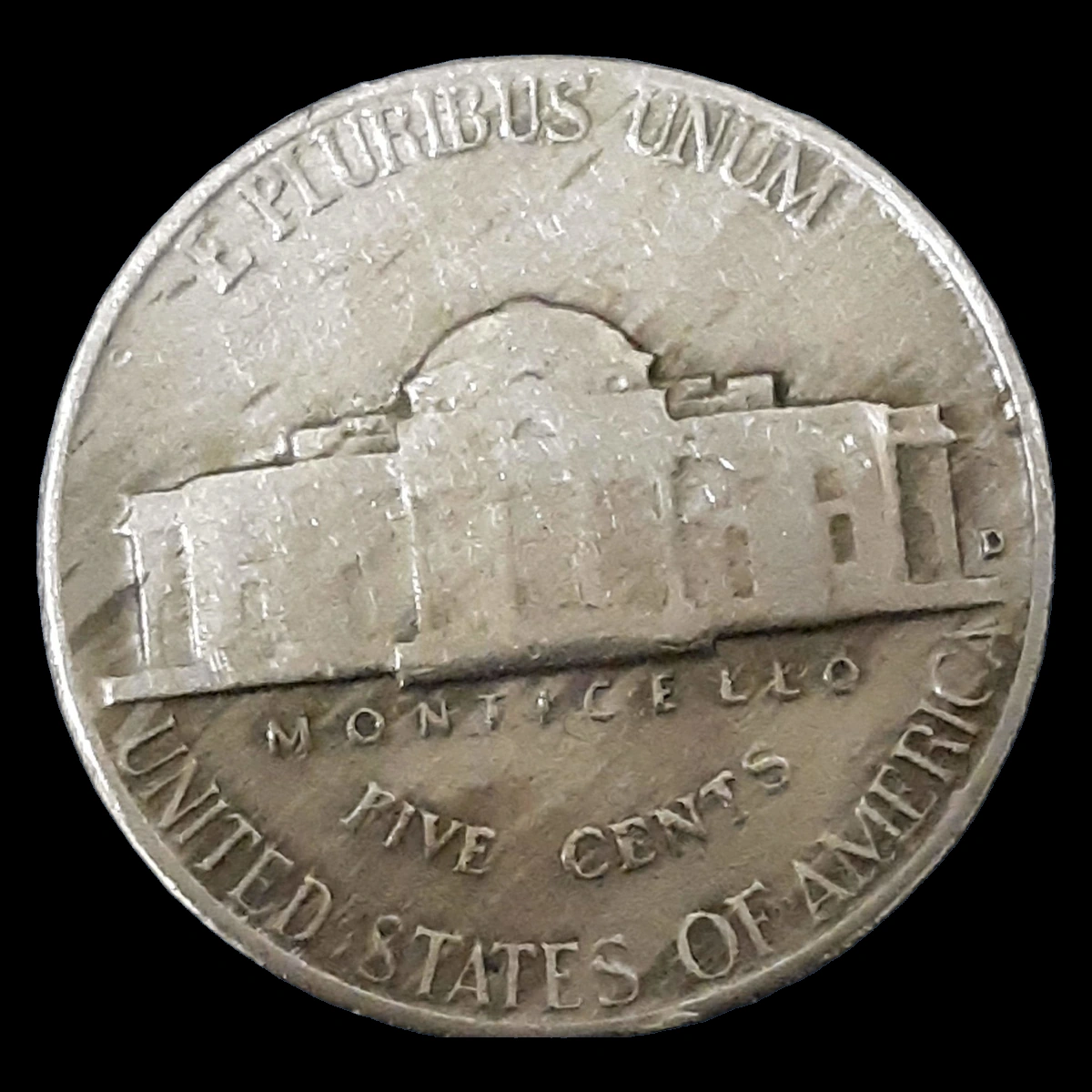
Dark bands on a discussed 1948-D nickel resemble wood grain. Specialist Fred Weinberg described its appearance from photographs as a minor uneven metal mixture.
That opinion was not a grading certificate or chemical test. Color bands also do not necessarily mean a layer is peeling from the coin.
How to Identify
View the whole surface under neutral light and follow the bands across portrait and background. Stains or residue may stop around damaged or dirty patches.
The original discussion concerns a mild streaked appearance. Preserve the texture instead of rubbing it to test whether the color disappears.
What It’s Worth
$5–$40 is the estimate for a genuine minor streaked-alloy example. A pleasing pattern on an unworn coin can be more appealing than faint bands on a heavily used piece.
The forum specimen has no supplied sale price. This is a small visual feature, not evidence of a rare wrong-metal blank.
6. 1948 Nickel Peeling Metal from Lamination Error
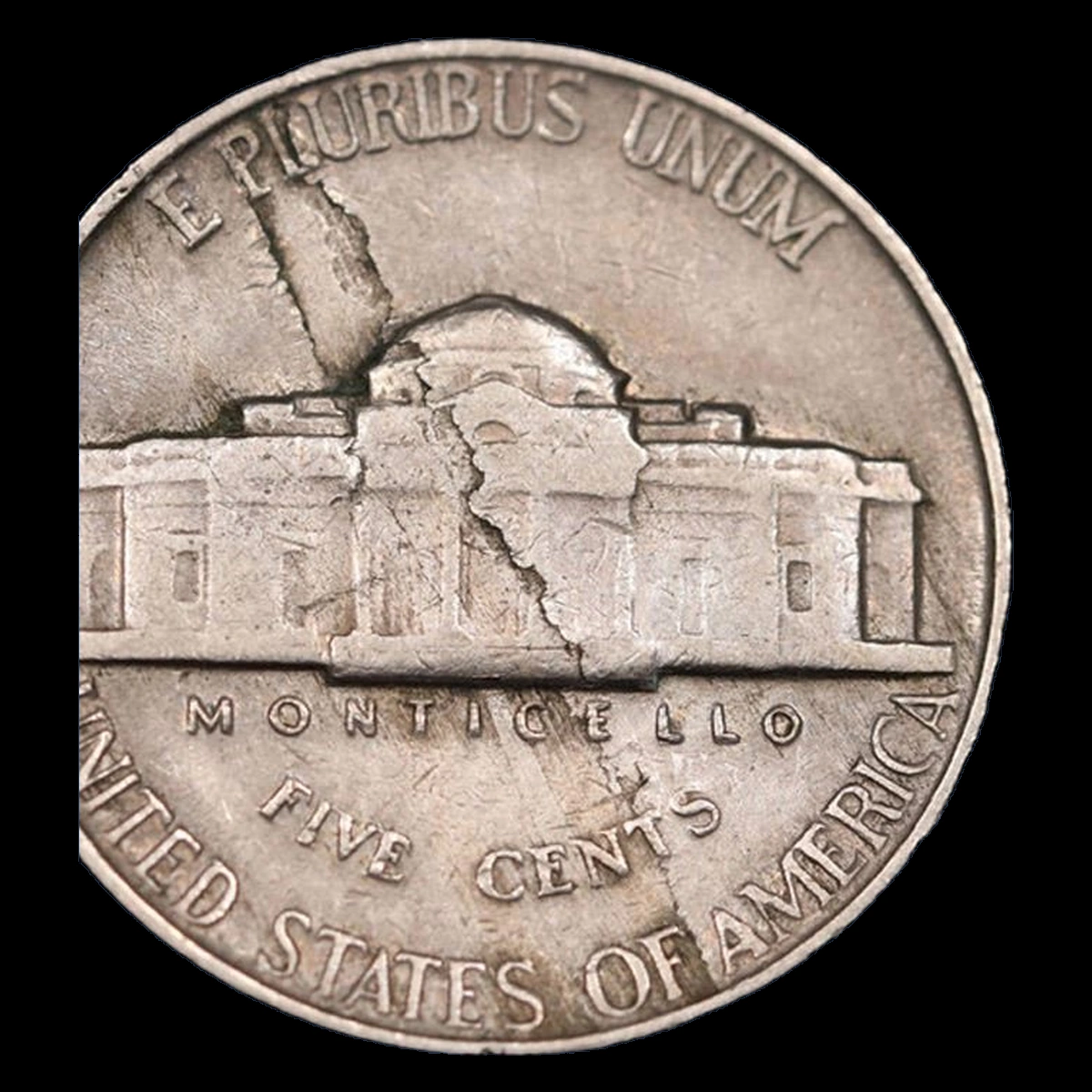
A weak area inside the blank can separate as a thin flap or leave a shallow missing patch. This is lamination within the nickel’s alloy.
A normal 1948 nickel has copper and nickel mixed throughout. It does not have a nickel shell that peels away to reveal a different copper core.
How to Identify
Find the boundary where intact surface meets exposed metal and inspect it in side light. An internal layer differs from a coating above the surface or smooth tool cuts.
Leave a flap attached and avoid squeezing it with measuring tools. A normal coin starts near 5 grams and 21.2 mm, but a retained flap may barely affect the weight.
What It’s Worth
$10–$175 covers small worn patches through larger clear peels. The range does not assume a complete matching split pair is documented for 1948.
A 1952 hinged separation, often called a clamshell, was recorded at $36 in February 2012. Its different shape limits the comparison but shows that a genuine separation can remain affordable.
7. 1948 Nickel Interrupted Detail from a Strike-Through Error
Material between a blank and a die can stop part of the design from forming. Soft material may blur detail, while a harder object can leave a sharper impression.
The 1948 report does not establish a specific object or location. A weak patch should not automatically be called grease, cloth, or wire.
How to Identify
Compare the interrupted area with nearby high points. A local obstruction can leave sharp letters beside missing detail, while circulation wear usually affects exposed areas more broadly.
Follow the boundary for an impressed shape or texture and check for grinding marks. Keep any retained material untouched.
What It’s Worth
$10–$200 is the estimate for confirmed strike-throughs, from small weak areas to distinct impressions. Readable shape can be more useful than size alone.
A 2000 Philadelphia struck-through nickel sold for $84 in February 2015. It provides a later-year comparison without naming the substance or pricing a particular 1948 coin.
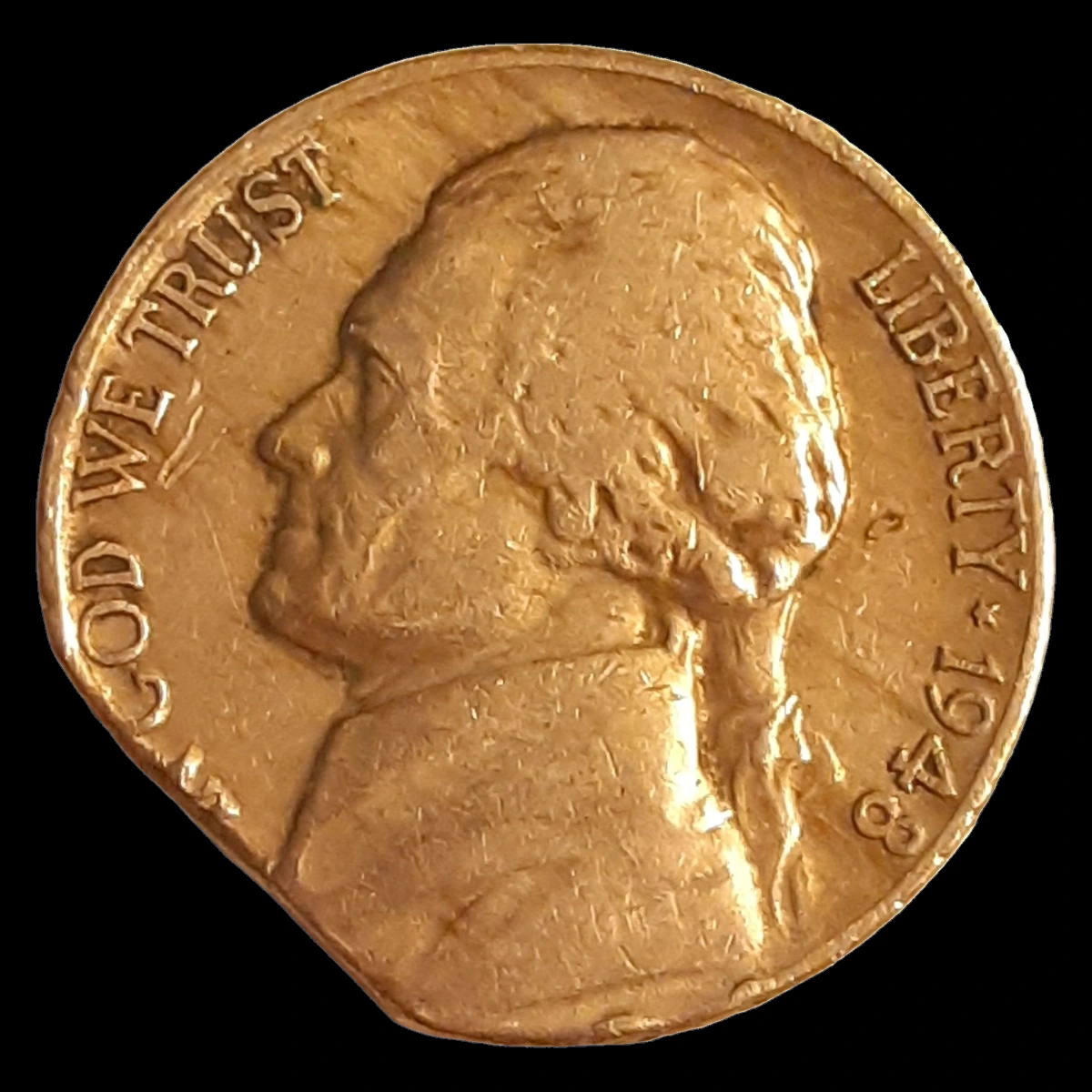
8. 1948 Nickel Missing Metal from a Clipped Blank Error
The documented Denver example has a 15% ragged clip and weighs 4.3 grams. It was graded MS65 and offered with a different 1943-S nickel.
Curved and straight clips are also reported for 1948. A rough boundary is not automatically a later cut, but each shape needs its own evidence.
How to Identify
Inspect both ends of the missing section and the way struck design meets it. Parallel saw marks, filing, or displaced burrs suggest metal removed later.
Look across the coin for possible weakness in the opposite rim. The recorded 4.3 grams belongs to the Denver specimen and is not a target weight for every clip.
What It’s Worth
$20–$250 spans genuine clips according to missing area and condition. Large well-preserved pieces with readable dates generally make stronger comparisons than small worn ones.
The Denver example’s two-coin lot cannot supply its individual price. A 1997 Philadelphia nickel with a 20% clip sold separately for $124 in March 2025.
9. 1948 Nickel Repeated Strikes with a Broadstruck Outline Error
A Denver nickel was struck several times while the collar failed to contain the metal properly. The result combines overlapping design with a wider outline.
NGC described it as unworn with a front wheel mark. That later mechanical damage is separate from the multiple strikes, whose exact number is not stated.
How to Identify
Trace a recognizable letter or portrait segment through the overlap and compare the other face. Keep the scraped wheel-mark area separate from repeated design.
Inspect the expanded border for later hammering. The overlapping impressions and spread should fit one striking sequence, without inventing a blow count or direction.
What It’s Worth
$50–$500 is the estimate for comparable multiple-struck pieces. The documented 1948-D coin sold for $64 on March 31, 2025.
Its later wheel damage helps explain the modest result. Cleaner surfaces or clearer repeated design can support more, while the broadstrike and extra blows remain features of one coin.
10. 1948 Nickel An Off-Center Strike with Clear Steps Error
The 1948-S NGC MS64 Full Steps example is about 15% off center. Part of the blank remained bare while intended design missed its opposite edge.
Full Steps describes sharp detail on Monticello, not an additional error. Good local detail can coexist with a misplaced overall design.
How to Identify
Compare the boundary between struck and unused metal on both faces with the design lost opposite. An uneven rim around an otherwise complete design is a different clue.
Inspect the blank area and plain edge for grinding or trimming. Read the 1948 date and small S beside Monticello before matching the documented example.
What It’s Worth
$50–$750 covers a broader range of 1948 off-center nickels. The 15% San Francisco MS64 Full Steps coin brought $391 on October 31, 2010.
Mild or worn examples can sell lower. Greater displacement with a readable date and attractive surfaces can justify a higher comparison within the range.
Conclusion
On a 1948 nickel, first separate a design change from a metal or surface change. Extra mintmark curves, a ghost of the opposite design, and streaked color need different comparisons.
Record both faces before pricing an unusual outline. Where one coin combines a variety, crack, or repeated strike, keep its condition and complete set of features together rather than adding several whole-coin estimates.