Rare 1961 Nickel Errors (List & Pictures)
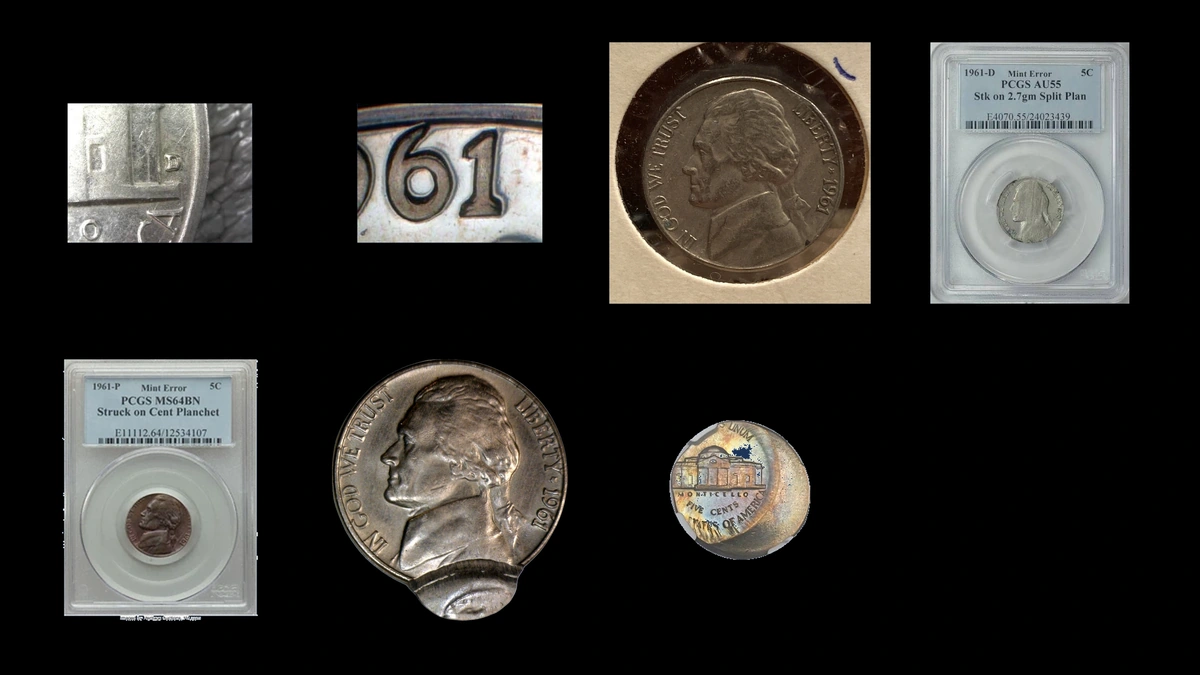
A retained staple and a raised bar can look similar at first glance, yet only one contains a foreign object. The differences among 1961 nickel errors become clearer when each feature is examined where it meets the design.
Estimated values run from $5 to $6,000, with a 30% off-center Proof recorded at $4,025. Start with letters and raised marks, then inspect openings, unusual blanks, overlapping strikes, and Proof surfaces.
| Visible evidence | Category | Estimated range |
|---|---|---|
| Extra D strokes | Repunched mint mark | $10–$200 |
| Repeated letter outlines | Doubled or tripled die | $10–$500 |
| Raised bar | Die break | $5–$75 |
| Embedded staple | Retained strike-through | $200–$800 |
| Opening through the metal | Cracked planchet | $30–$200 |
| Edge gaps, sometimes with a split | Clip or clip-and-clamshell combination | $20–$400 |
| Thin piece with struck rough surface | Split before striking | $40–$180 |
| Design on another denomination’s blank | Wrong planchet | $300–$1,800 |
| Two design positions | Double strike | $125–$650 |
| Partial Proof design and blank crescent | Off-center Proof | $2,500–$6,000 |
1. 1961 Nickel Extra Strokes Appear beside the D: Repunched Mint Mark Error
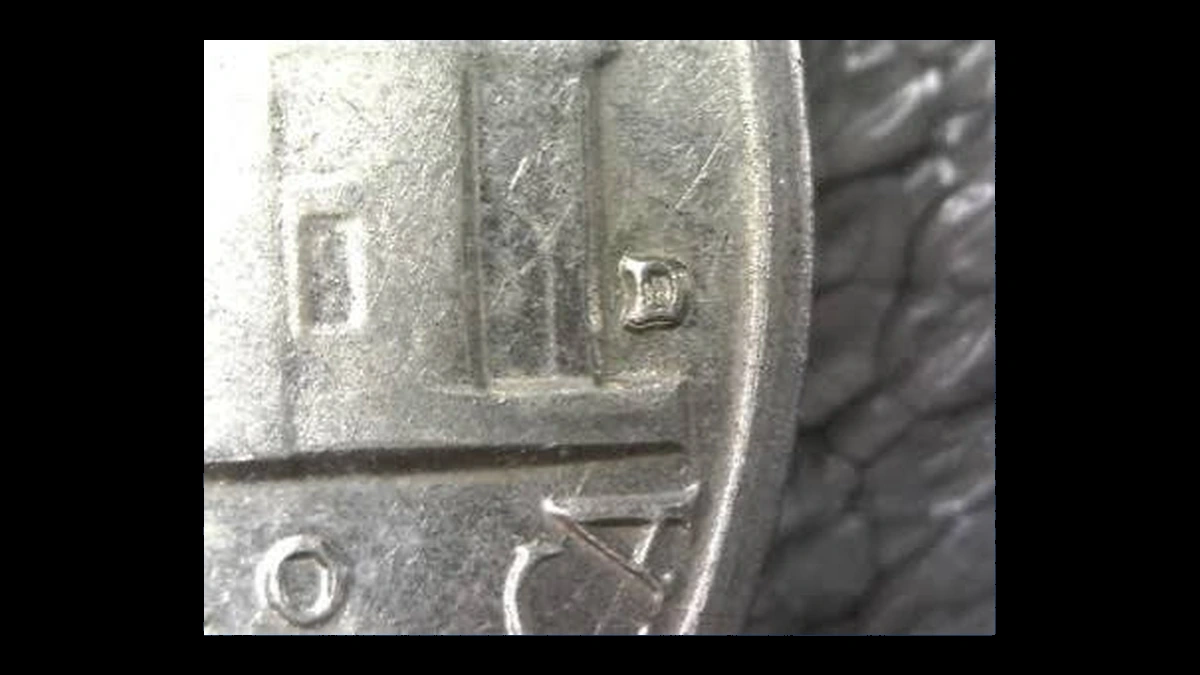
For 1961, look to the right of Monticello on the reverse to find Denver’s D. A repunched mint mark preserves part of an earlier hand-punched impression that the later placement did not fully cover.
How to Identify
Compare the exact extra stem or curve with Wexler’s repunched-mint-mark listings. Reported 1961-D forms include tilted impressions and a lower secondary D, which require different pattern matches.
A flat shelf along the letter can result from movement during striking. Normal Philadelphia coins lack a mint letter, and the later obverse mint-mark position does not apply to this date.
What It’s Worth
$10–$200 is an estimated range for identified repunched D varieties. Strong secondary strokes and good preservation support better comparisons, but the supplied material provides no individual auction result for each listed form.
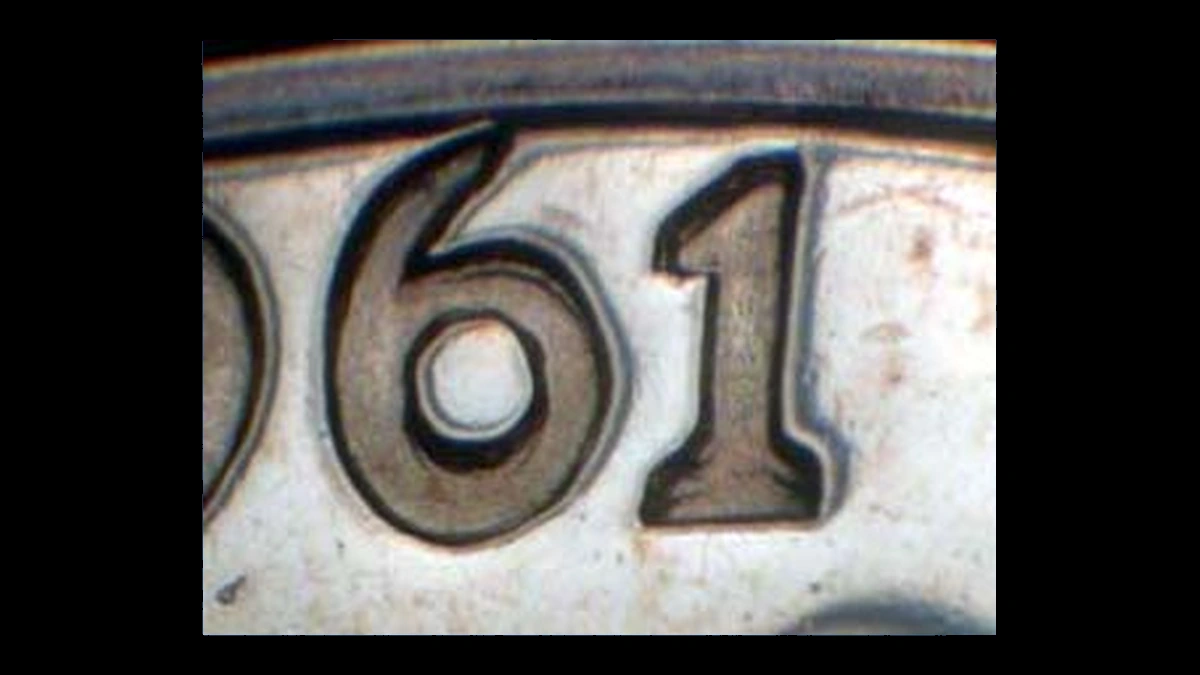
2. 1961 Nickel Words Show Two or Three Raised Outlines: Doubled and Tripled Dies Error
Some 1961 Proofs carry close repetition in the motto, date, LIBERTY, or star. Reverse varieties affect lettering and portions of Monticello, with separation ranging from very slight to conspicuous.
The extra outlines originated in the dies used to make these collector coins. Three outlines do not mean that one coin shifted and received three separate impressions.
How to Identify
Trace several letters within an affected word and match their spacing to the appropriate entry in Brian’s variety catalog. Tiny shared features on multiple dies are not enough to establish a scarce individual variety.
Confirm the Proof finish and separate rounded raised outlines from flat movement doubling. Keep holdered Proofs protected rather than removing them to inspect their edges.
What It’s Worth
$10–$75 is an estimate for minor identified doubling, while stronger Proof doubled or tripled dies may fall around $75–$500. These ranges are not individual sales for every catalog entry, and a high numerical grade does not establish the premium for a particular pattern.
3. 1961 Nickel A Short Bar Rises from the Surface: Die Break Error
A damaged die can leave a narrow strip of extra metal that resembles a bar. The reported 1961-D category has no single established location in the supplied evidence.
How to Identify
Examine both ends and the center under low side lighting. The feature should be continuous with the coin’s metal, rather than an attached wire, solder, or a scratch bordered by displaced metal.
A retained staple has a separate material boundary and needs a different explanation. Confirm the reverse D before applying the Denver report.
What It’s Worth
$5–$75 is an estimate for a genuine small bar-shaped break with original surfaces. No completed sale is supplied for this type, and the retained-staple auction below must not be used to price it.
4. 1961 Nickel A Staple Remains Pressed into the Front: Retained Strike-Through Error
A foreign object between a die and blank can interrupt the design and become trapped in the struck metal. The recorded 1961-D retained-staple example was graded NGC XF45.
How to Identify
Leave the staple in place and inspect where its boundary meets the original struck surface. Interrupted design and metal formed around the object matter more than the mere presence of a staple.
Glue, solder, fresh scratches, or an object laid over uninterrupted relief can reveal later attachment. Its added material may affect the combined weight, so an exact normal-nickel reading is not required.
What It’s Worth
$200–$800 is an estimated range for comparable authenticated retained-object pieces. Heritage recorded a 1961-D retained-staple nickel at $345 in September 2010.
A January 2010 listing also records $345, but does not establish a second distinct specimen. The price concerns the complete coin and retained object together.
5. 1961 Nickel An Opening Runs into the Coin’s Body: Cracked Planchet Error
A cracked planchet has a fracture in the coin’s own metal, rather than a raised line copied from a damaged die. A Philadelphia 1961 example was cataloged with this attribution in PCGS XF45.
How to Identify
Follow the opening on both faces and toward the plain edge without flexing the coin. Its depth distinguishes it from a superficial raised die-crack ridge.
Saw grooves or metal distorted by bending point toward later damage. For loose specimens, about 5 grams and 21.21 millimeters are normal nickel references, useful for this and the following blank-related errors.
What It’s Worth
$30–$200 is an estimate for a professionally identified cracked planchet of this date. The XF45 catalog record supplies no completed sale price, and an opening enlarged by handling is a weaker comparison than a stable original fracture.
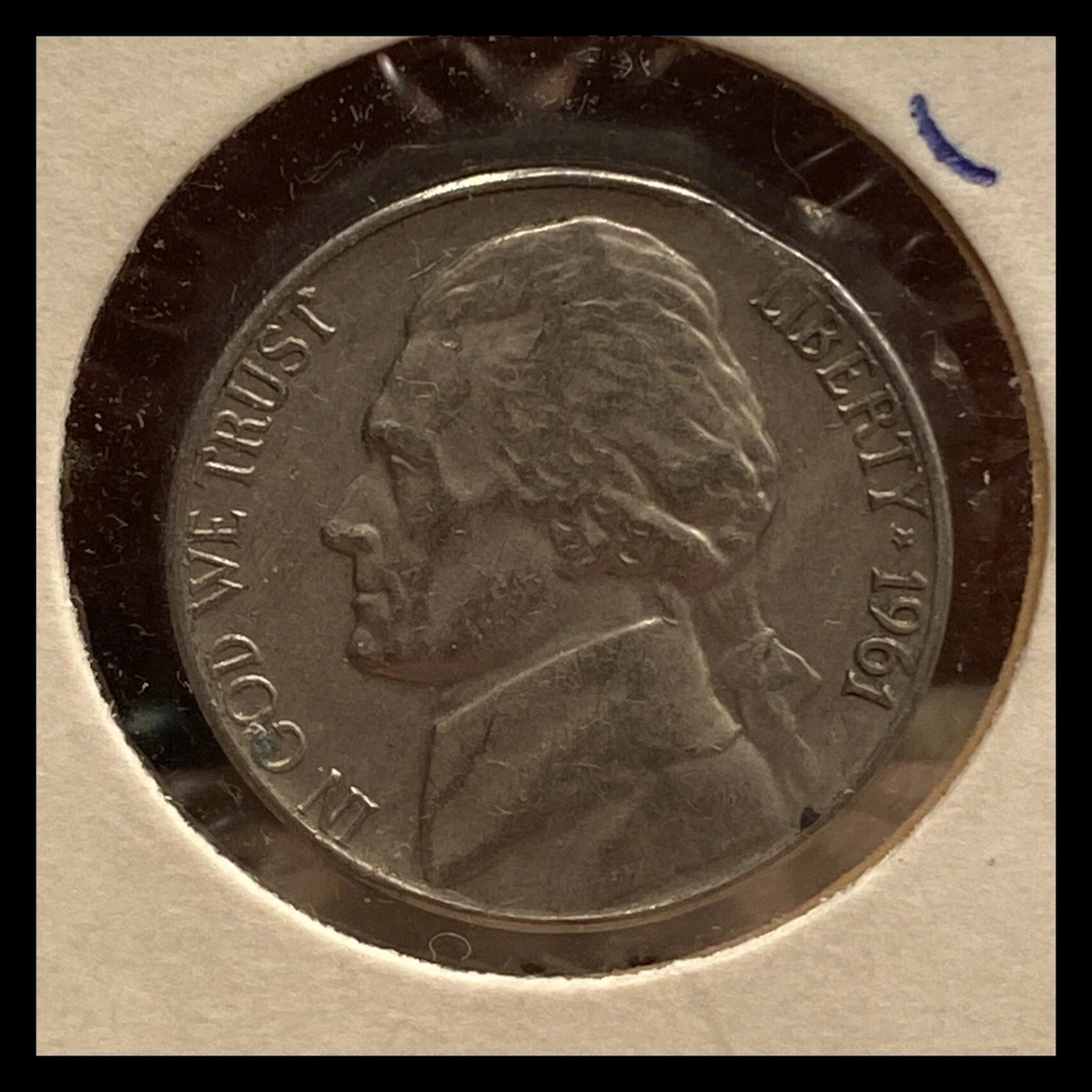
6. 1961 Nickel Missing Edge Sections Accompany an Opened Layer: Clips and Clamshell Split Error
The supplied examples show two distinct combinations of blank defects. One Philadelphia coin has two small curved clips, while a Denver coin has a much larger straight clip together with a deep clamshell separation.
How to Identify
Inspect the rim and design as they approach each missing area for evidence that the gap existed during striking. Later filing or sawing can lower a coin’s weight without creating an original clip.
On the Denver combination, assess the straight boundary separately from the split through the thickness. Leave the connected layers in their present position; opening the clamshell farther can break them apart.
What It’s Worth
$20–$150 is an estimate for smaller genuine clips, while comparable clip-and-split combinations may fall around $100–$400. The Philadelphia 2% double-curved clip graded PCGS MS65 sold for $61 in September 2024.
The Denver 25% straight clip with a clamshell split brought $126.50 in August 2010. That was one whole-coin price, not separate amounts to assign to its clip and split.
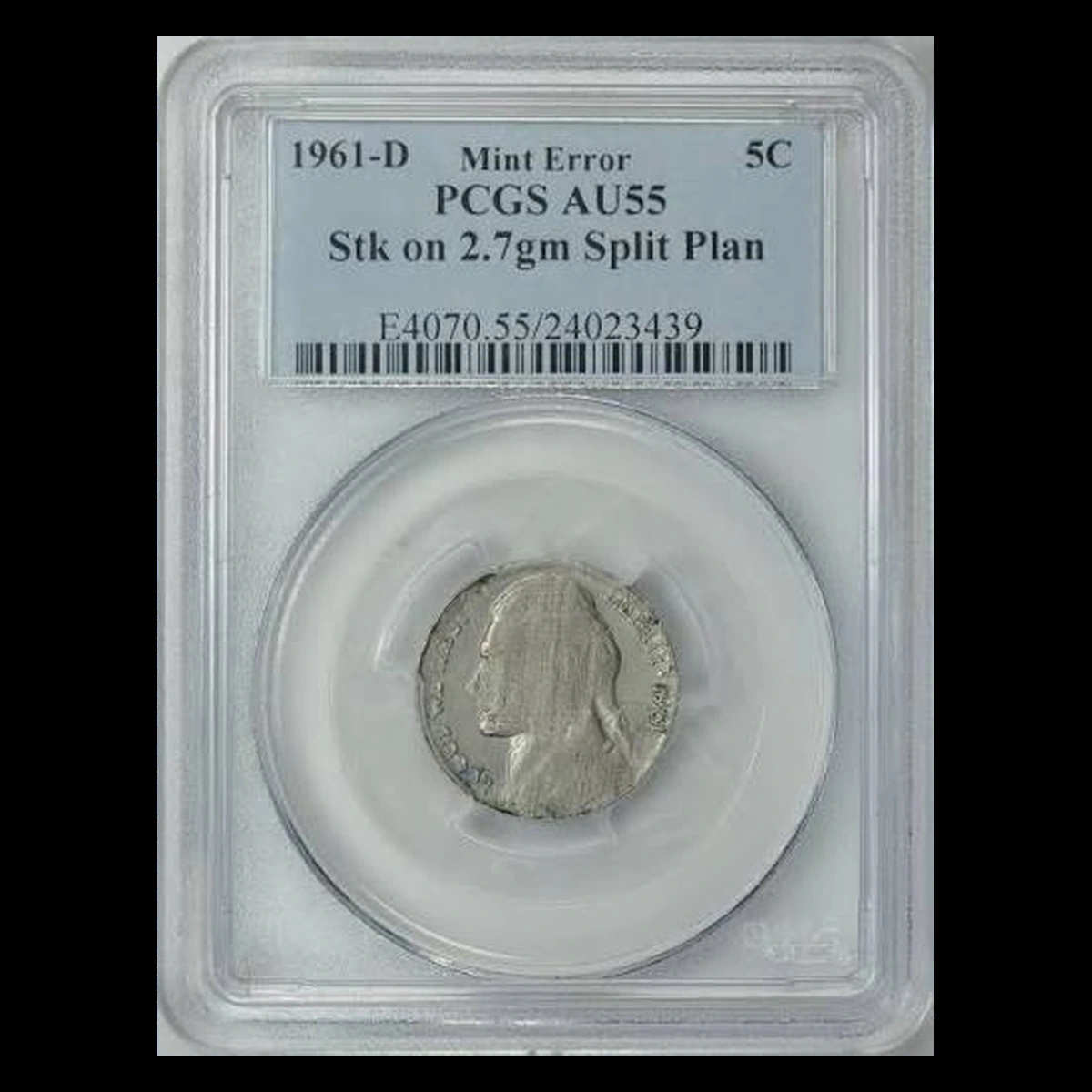
7. 1961 Nickel A Thin Blank Carries Design over a Rough Face: Split Before Striking Error
If a blank separates internally before entering the press, the surviving thin piece can still receive a design. The recorded 1961-D example weighs 2.7 grams and is graded PCGS AU55.
How to Identify
Look for struck details on the rough surface exposed by separation. Their presence helps establish that splitting came first, whereas a later separation would expose metal after the original strike.
The coin may retain much of a normal nickel’s diameter despite losing substantial thickness and weight. Parallel grinding marks or flattened design can instead indicate deliberate thinning, and 2.7 grams belongs to the recorded specimen rather than every split blank.
What It’s Worth
$40–$180 is an estimate for comparable identified 1961-D split-before-strike coins. The AU55 example has no supplied sale; a different 1969-D example weighing 4.2 grams sold for $64 in December 2024.
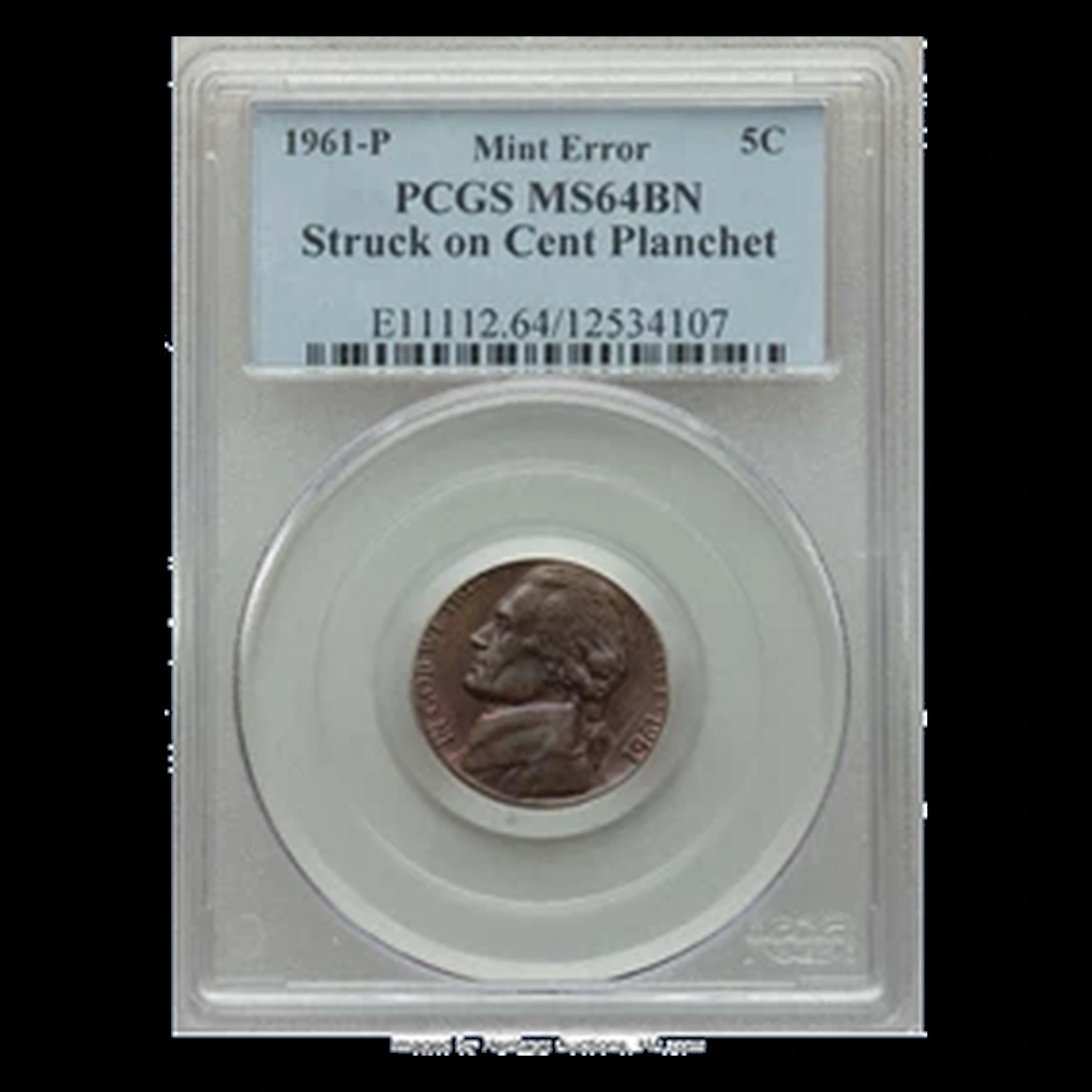
8. 1961 Nickel Nickel Details Fill an Undersized Blank: Wrong Planchet Error
Recorded 1961 errors include a Philadelphia nickel on a cent blank and a Denver nickel on a silver dime blank. Separate Philadelphia and Denver examples were struck on Philippine ten-centavo blanks.
How to Identify
Assess composition, weight, and the way the design ends at the smaller disk together. Copper color can suggest cent stock, but plating a normal nickel does not create naturally missing outer design.
A period cent blank normally weighed 3.11 grams and a silver dime blank 2.50 grams. The Philippine examples have recorded actual weights of 2.04 grams for Philadelphia and 2.0 grams for Denver.
Inspect the edge for trimming and use nondestructive alloy identification when needed. Low weight alone cannot distinguish a foreign blank from damaged or separated nickel metal.
What It’s Worth
$300–$1,200 is an estimate for comparable cent or silver-dime planchets, and $300–$1,800 for identified Philippine blanks. The Philadelphia cent-planchet coin graded MS63 Brown sold for $576 in July 2022.
The scratched Denver silver-dime example brought $747.50 in August 2006, and the 2.04-gram Philippine-planchet coin realized $402.50 in January 2011. The Denver foreign-planchet piece appeared in a two-coin lot totaling $1,175, which cannot be treated as its individual price.
9. 1961 Nickel A Later Design Crosses an Earlier One: Double Strike Error
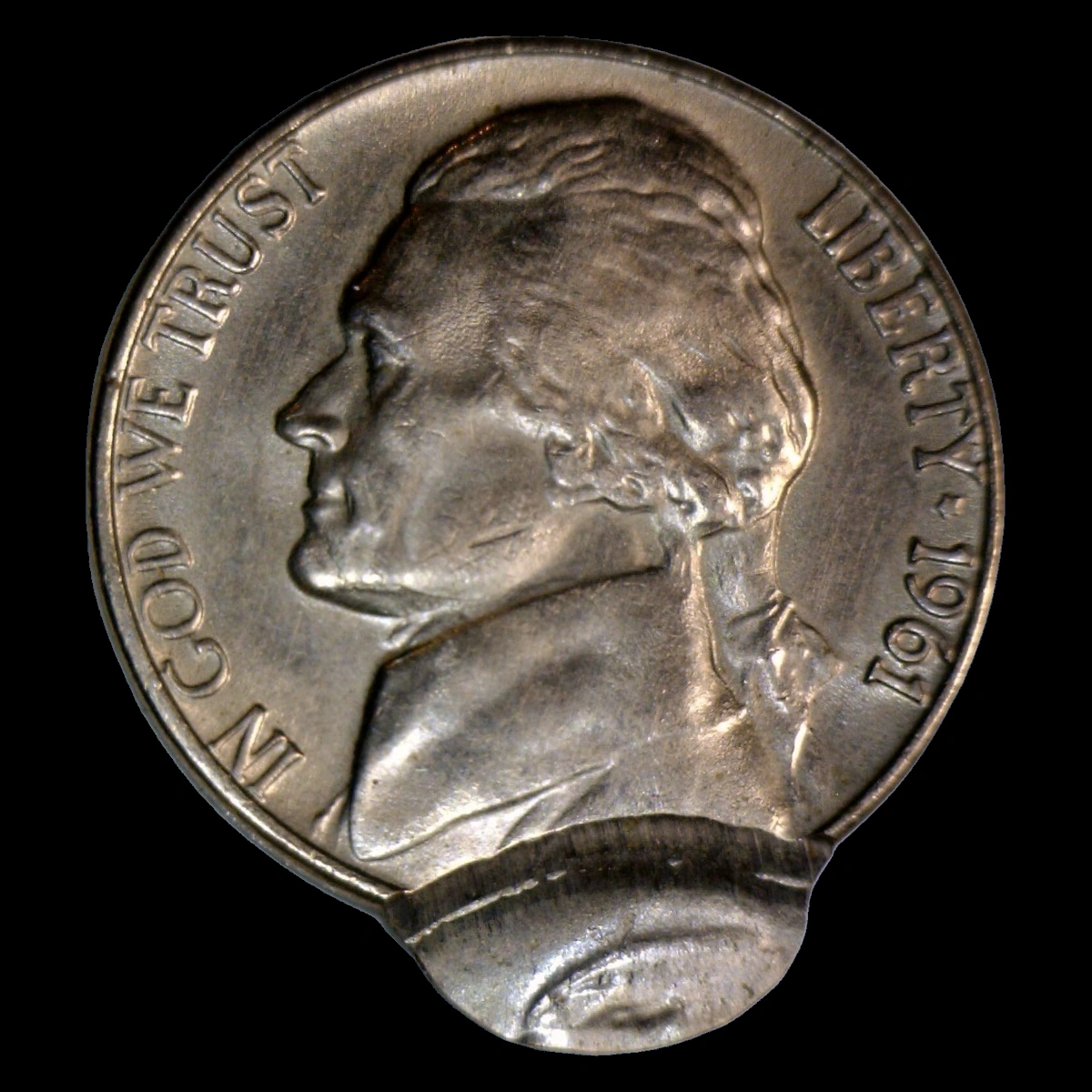
A second blow after the coin has moved can leave separate overlapping portraits or lettering. The supplied Denver examples include an NGC AU58 coin with a 50% off-center second strike and a separate CACG AU58 coin with a 93% second strike.
How to Identify
Trace the crossing of a later feature over earlier relief and compare the sequence on the reverse. Closely spaced extra letter edges from a doubled die do not explain two substantially different design positions.
Keep the percentages assigned to their individual specimens. A later strike can flatten earlier detail, and a very large offset may leave only a small fragment of its design on the coin.
What It’s Worth
$125–$650 is an estimated range for comparable 1961-D double strikes. Sullivan Numismatics listed the 93% second-strike example at $175, an asking price rather than a completed auction.
The separate 50% coin requires its own comparison. Readable overlapping details can matter more than the largest displacement percentage.
10. 1961 Nickel A Proof Design Leaves a Broad Blank Crescent: Off-Center Strike Error
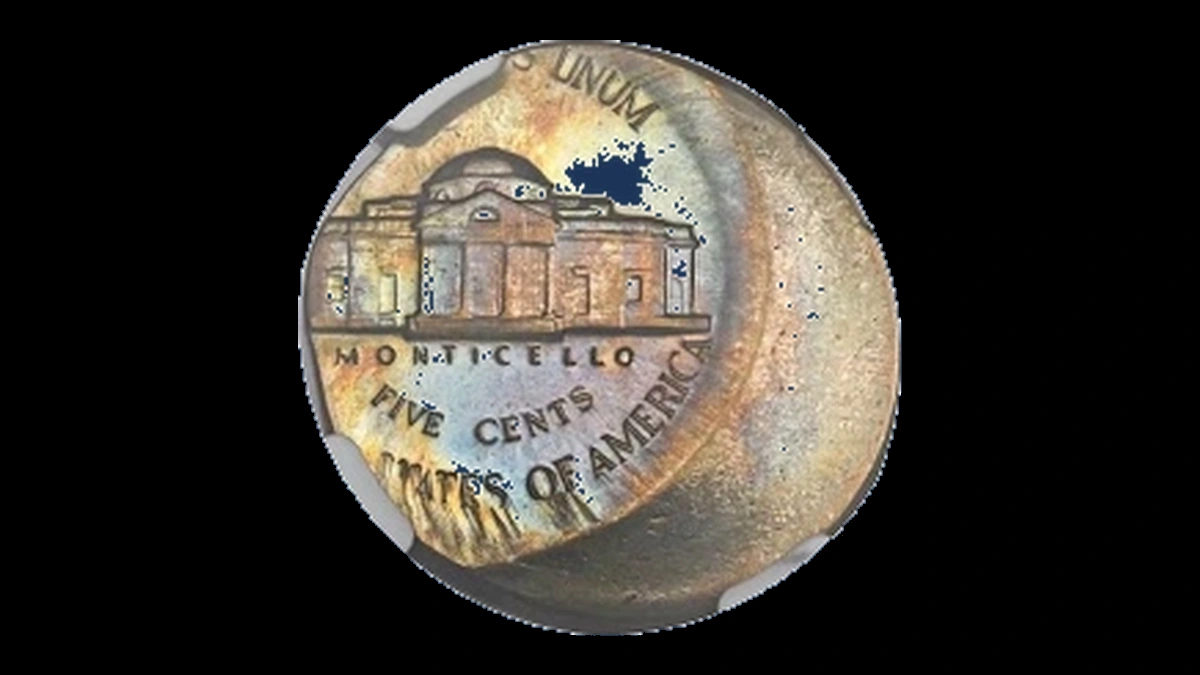
A specially prepared Proof blank can still be misplaced when the dies strike. The recorded 1961 PR66 example has a 30% offset, leaving part of the design beyond the blank and part of its metal untouched.
How to Identify
Confirm the Proof manufacture before using the Proof price comparison. A polished circulation coin can appear shiny without retaining the original collector-coin surfaces.
Both faces should support the same displaced strike at the boundary between struck and unstruck metal. Philadelphia Proofs of this date normally have no mint letter, and a graded example should remain in its holder.
What It’s Worth
$2,500–$6,000 is an estimate for a comparable authenticated off-center 1961 Proof. Heritage’s August 2008 records list the 30% off-center PR66 example at $4,025.
A December 2008 appearance of this type was marked not sold. It should not be counted as another completed transaction, nor should the Proof range be applied to a regular nickel with a similar offset.
Conclusion
The most useful evidence on a 1961 nickel often lies at a boundary: beside a repunched D, around a trapped staple, along a split, or where one strike crosses another. Examine that relationship before selecting a price comparison.
Remember that Denver’s mark belongs beside Monticello and that Proofs need their own comparisons. Preserve retained objects and fragile metal, and keep lot totals, asking prices, and unsold listings separate from individual completed sales.