Rare 1907 Nickel Errors (List & Pictures)
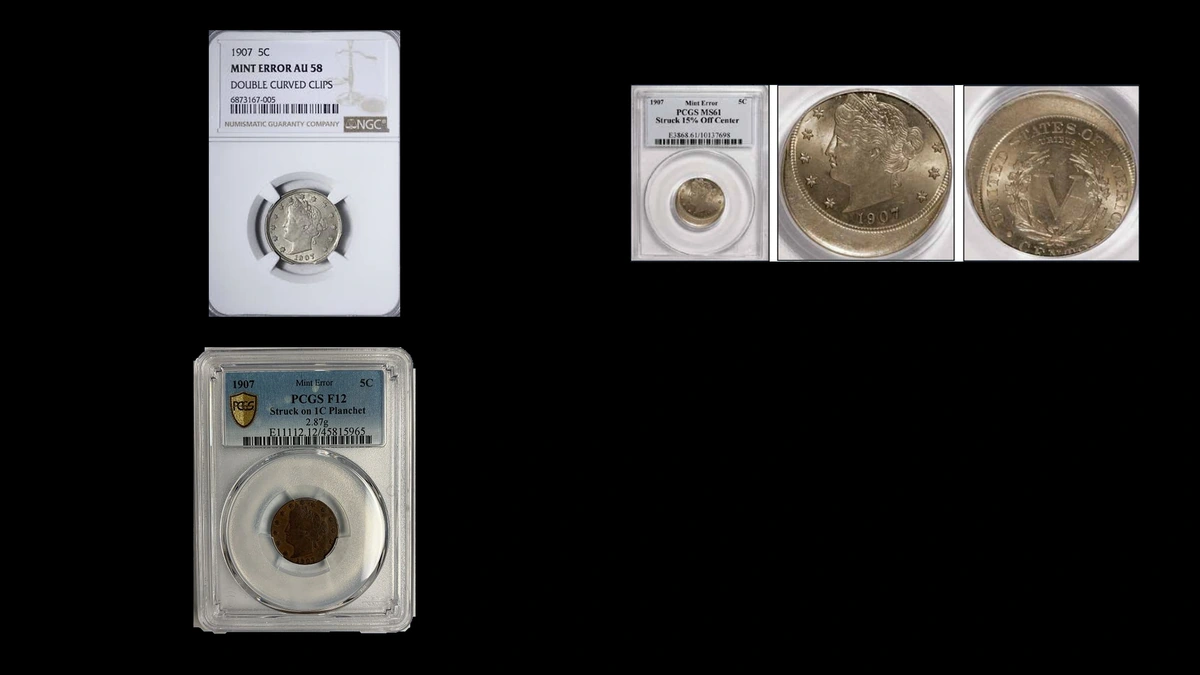
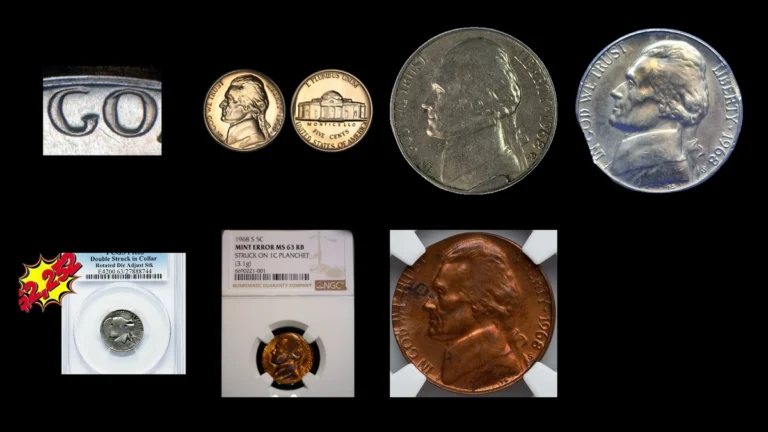
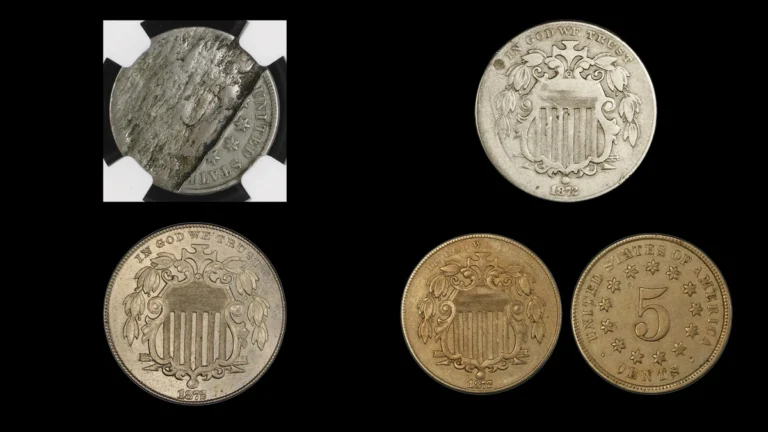
A brown 1907 Liberty nickel can be more than a coin with dark toning. One struck on a copper cent blank brought $7,475 in 2006, then $5,280 when it returned to auction in 2020.
These 1907 nickel errors have estimated values of $10–$8,000. Start with the date, inspect the surface, and then check whether the design fits the coin’s outline.
1. 1907 Nickel Extra Marks Under the Digits: Repunched Date Error
Look closely at the first 1 and the 9 in 1907. On the recognized repunched date, earlier digit outlines survive beside the final ones.
The date was punched into the die more than once. A die is the steel tool that presses the design onto a coin.
How to Identify
Find raised traces below the 1 and along the right side of its upright stroke. The 9 should also show earlier curves below its middle and lower parts.
Compare the complete pattern with the NGC 1907/19/9 listing. That name describes overlapping digits, not a coin dated three times.
A nick beside one number is not enough. Flat, shelf-like doubling also differs from the raised remnants of the earlier punches.
What It’s Worth
$20–$200 is a useful estimate for worn coins through ordinary unworn examples. Clear extra digit outlines make the variety easier to recognize and sell.
A historical specialist guide listed about $20–$140 across several grades. Those figures were guide estimates, rather than recorded auction sales.
2. 1907 Nickel A Loose Surface Layer: Lamination Error
A reported 1907 nickel has a line across the back that nearly joins opposite rims. If that line opens beneath a peeling layer, it points to lamination.
This happens when a weak seam in the metal allows the surface to separate. The loose metal may remain attached or break away.
How to Identify
Move a light across the line and look for a lifted edge or a rough patch beneath missing metal. Leave any flap in place.
A solid raised ridge is more likely to come from a cracked die. A scratch cuts into the finished surface without forming a natural peeling layer.
The owner’s description of a long separation does not establish a coin split into two full halves. Check the face and edge together before using that stronger description.
What It’s Worth
$10–$150 covers ordinary recognizable laminations on this date. A broad, visible peel generally adds more interest than a thin seam on a heavily worn coin.
A worn 1911 Liberty nickel with front lamination sold for $51 in January 2023. It provides a same-series comparison, not a sale of the reported 1907 back separation.
3. 1907 Nickel Faint Centers on Shiny Metal: Very Weak Strike Error
Missing detail can look like wear even when a coin never circulated. A cataloged 1907 nickel has very weak centers but still shows original mint shine in the open areas.
NGC labeled that example a die-adjustment strike. The label describes that certified coin; weak details alone do not reveal why a press was set that way.
How to Identify
Tilt the coin and watch for moving bands of original shine around the faint design. Years of circulation tend to leave worn high points and disturbed surfaces instead.
Check both sides for weakly formed central detail. Fine scratches, polished areas, or smooth worn patches can explain a similar appearance without a weak strike.
What It’s Worth
$100–$1,000 is an estimated range for a genuine, unusually weak strike with supporting unworn surfaces. Clear contrast between faint centers and preserved shine can increase its appeal.
The 2009 catalog describes an NGC Mint State coin, meaning one without circulation wear. No completed sale amount from that listing is used here.
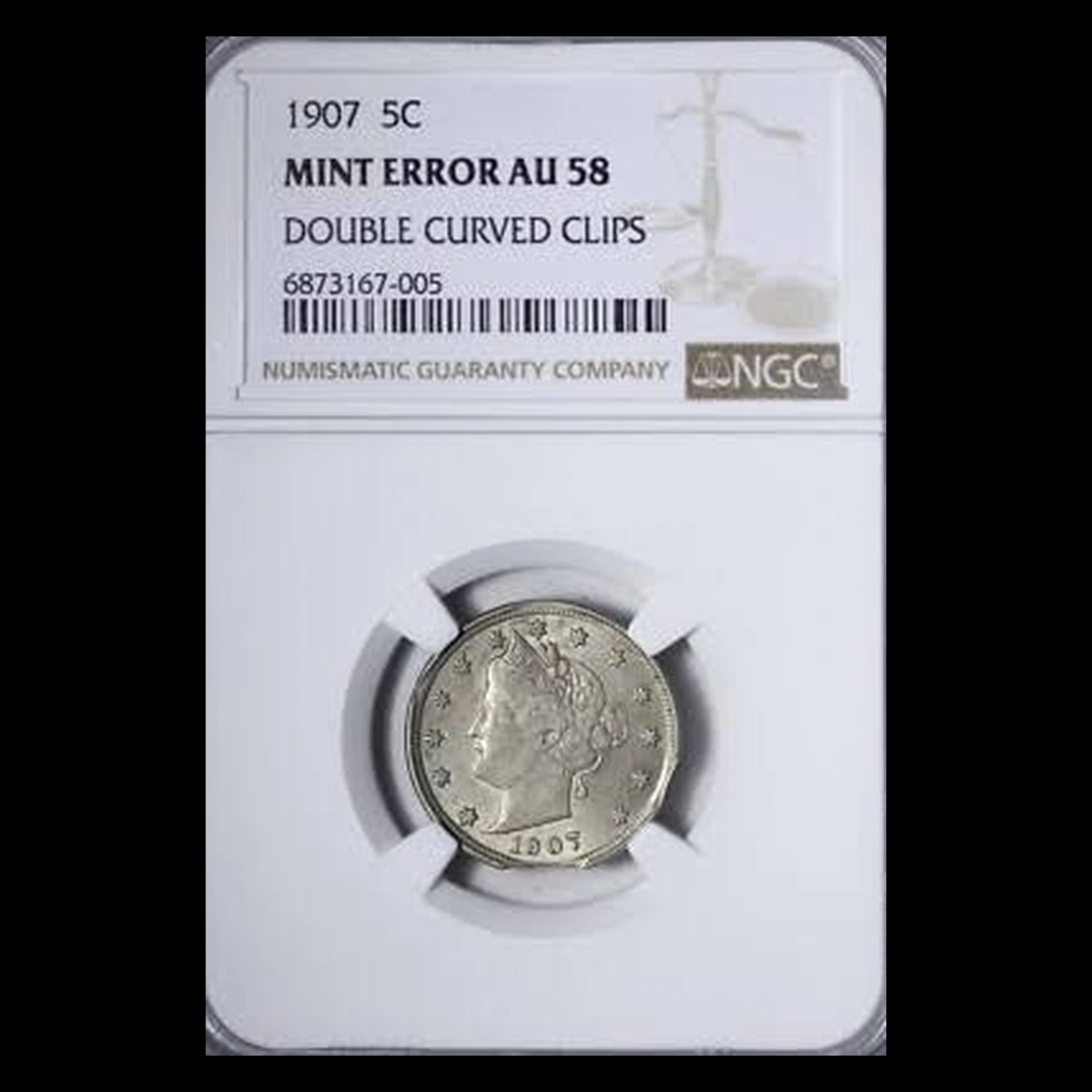
4. 1907 Nickel A Straight Gap in the Edge: Straight Clip Error
A flat missing section can begin at the edge of the metal strip from which coin blanks are cut. If that incomplete blank reaches the press, it receives a design despite the missing metal.
One 1907 example weighs 4.28 grams. A different cataloged coin has a 12% straight end clip.
How to Identify
Inspect both ends of the gap for metal shaped during the strike. Saw marks or a freshly filed surface point toward later damage.
A normal Liberty nickel weighs 5 grams and measures about 21.2 millimeters across. A clip should reduce the weight, but the amount depends on how much metal was missing.
Do not assign the 12% clip measurement to the 4.28-gram coin. They are separate examples, and the measured coin has an ANACS MS60 Details grade indicating a condition problem.
What It’s Worth
$50–$450 is a reasonable estimated span for genuine 1907 straight clips. Preservation and a clear original clip edge help place a coin within that range.
The recorded early bid on the 4.28-gram coin was not a final sale. A cleaned 1911 nickel with two curved clips was offered at $195, which is only a different-date asking-price comparison.
5. 1907 Nickel A Wider Coin With the Whole Design: Broadstrike Error
An expanded rim area can form when the ring around the blank fails to contain the strike. Metal spreads outward, producing a broadstrike.
The complete design should remain on the coin. A 1907 dealer example was graded G6, a heavily worn grade.
How to Identify
Follow the outer lettering around both faces. An unusually wide outline with all the design present supports broadstriking.
Measure across several directions and compare with the normal diameter above. The edge of an ordinary Liberty nickel is already plain, so a smooth edge does not identify this error.
Look for hammer marks or flattened metal from later alteration. The spread area should belong to the original strike.
What It’s Worth
$100–$750 covers an estimated range from worn examples to more attractive broadstrikes. Obvious expansion and less wear can raise collector interest.
The dealer-listed G6 example carried a $195 asking price. That figure describes an offer for a worn coin, rather than an auction result.
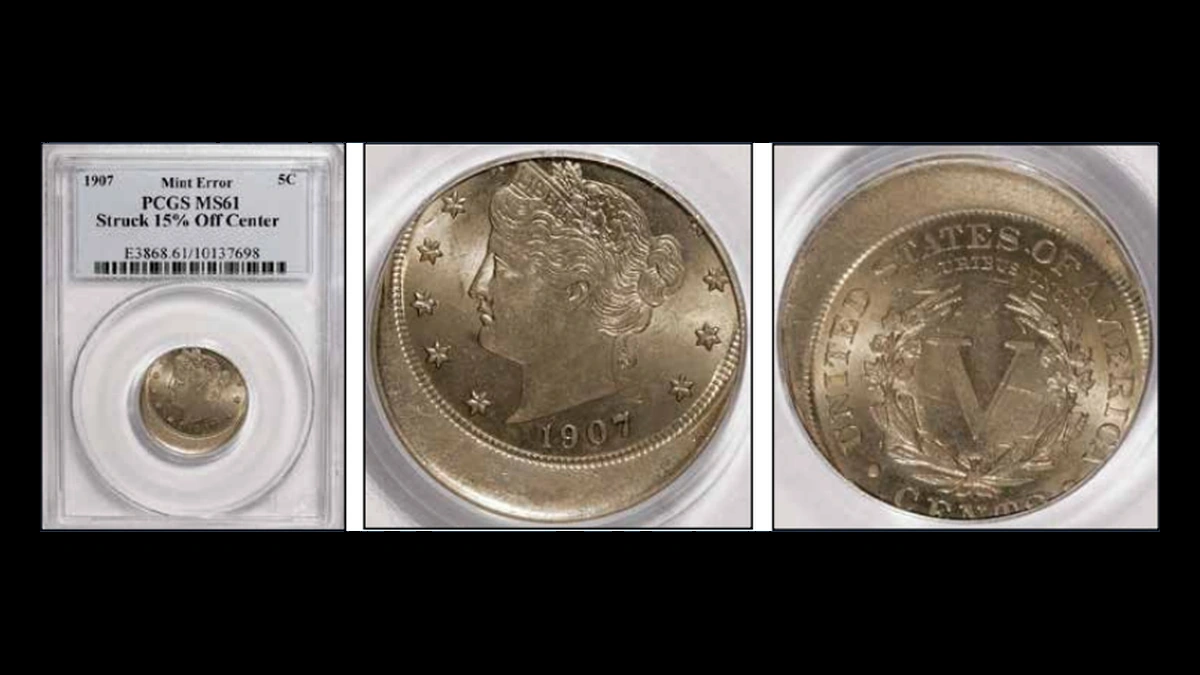
6. 1907 Nickel Blank Metal Beside Missing Design: Off-Center Strike Error
An off-center nickel has an untouched area where the dies missed the blank. Across from that area, part of the design runs off the edge.
The blank was out of position when the press struck it. Documented 1907 examples include a 20% off-center coin graded MS63 and a separate 35% example graded XF45.
How to Identify
Check for both signs: blank metal and lost design. If the entire design remains inside an enlarged outline, return to the broadstrike comparison.
Look for enough of the date to establish 1907. Compare the actual shape with a photographed example rather than guessing a direction from its stated percentage.
An off-center strike can retain nearly normal weight because the metal moved without being removed. A cut edge is a different condition.
What It’s Worth
$100–$1,500 is an estimated range for dated 1907 off-center nickels in varying condition. A clear date and a strikingly displaced design can help a coin stand out.
Neither of the two 1907 catalog descriptions supplies a sale amount used here. A 1911 nickel struck 10% off-center sold for $155.25 in March 2003; it was described as VF20 and was not certified.
7. 1907 Nickel A Second Portrait or Design: Double Strike Error
A second strike can put another large design across the first. The historical 1907 listing describes a double strike toward 9 o’clock, or the left side when the front is upright.
The coin received two blows from the dies. This produces a much larger repeated image than the extra traces in a repunched date.
How to Identify
Trace the first design beneath the second impression. Then inspect the back for the related second strike.
The historical catalog description says both faces received die-struck designs. A sunken mirror image pressed into one face by another coin is a different effect.
Use the 9-o’clock direction only for the listed example or a matching photograph. The record does not supply an exact offset percentage.
What It’s Worth
$500–$4,000 is a working estimate for recognizable 1907 double strikes. Widely separated designs and good surfaces can support the upper part of the range.
The historical coin was offered at $650 in a 1984 catalog. That is an old dealer price, not a current sale record.
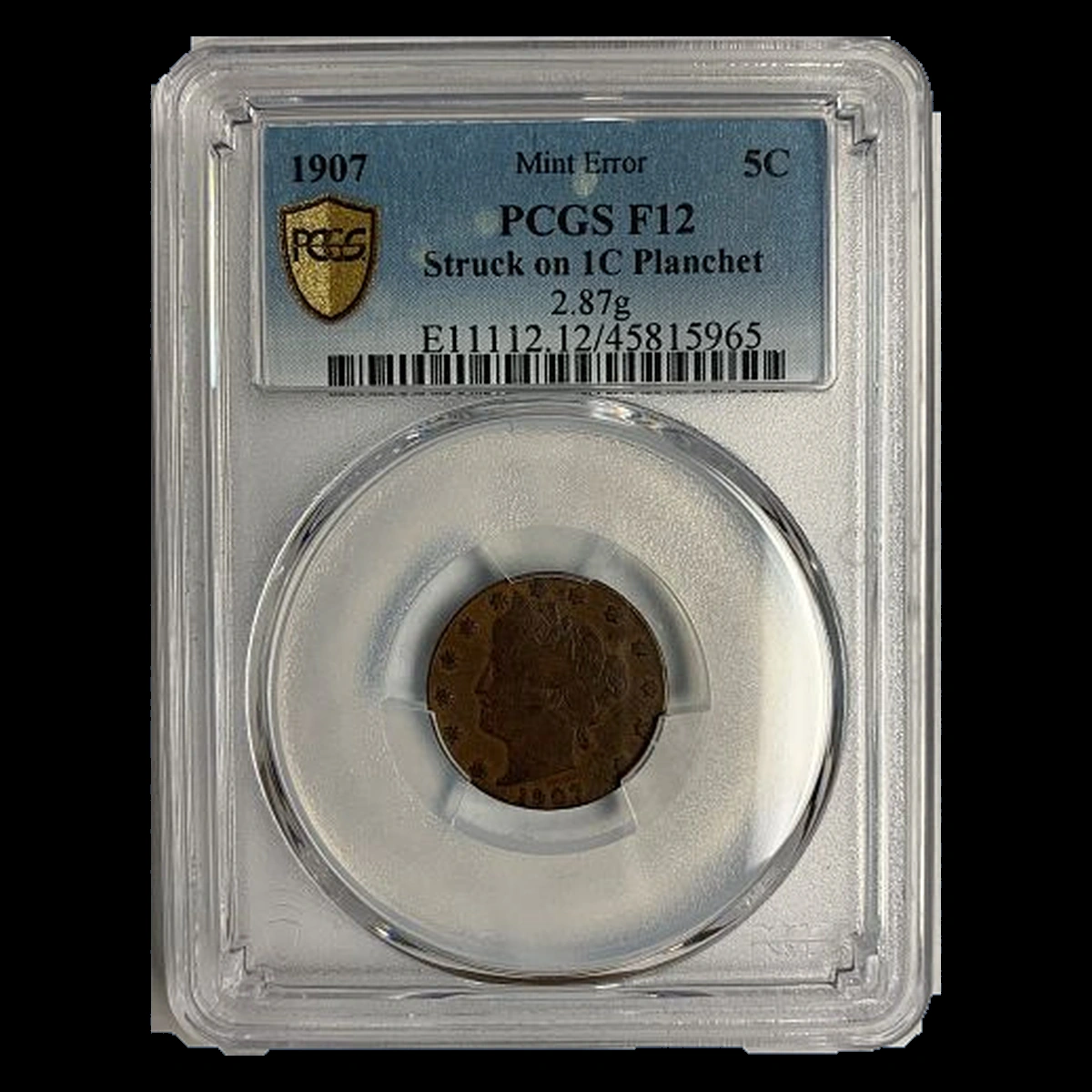
8. 1907 Nickel A Copper Coin With an Oversized Design: Cent Planchet Error
The known cent-blank nickel is chocolate-brown, with parts of UNITED and CENTS missing at the edge. The nickel design was too large for the smaller copper-alloy blank.
A planchet is a prepared blank ready to be struck. Here, a cent planchet entered a press making nickels.
How to Identify
Check how the lettering fits on the metal before judging the color. A brown, normal-size nickel may simply have darkened over time.
A copper cent blank normally starts near 3.11 grams and 19 millimeters. Those are standard figures for the blank, not reported measurements of this specific error.
The documented coin is slightly uncentered and graded PCGS AU58, which means it has slight wear. Match the entire coin to its certification images and have the metal checked if needed.
What It’s Worth
$2,000–$8,000 is an estimated range for genuine examples, with condition and surface quality affecting the price. Copper color alone does not put a coin in this range.
The AU58 cent-planchet error sold for $5,280 on April 24, 2020. It had previously brought $7,475 on January 7, 2006.
Those two results follow the same documented coin through separate auctions. They also show that a rare error’s price can move down as well as up.
Conclusion
For a 1907 nickel, the shape of the fault is more useful than a quick impression that something looks strange. Extra date traces, loose surface metal, and a second large design lead to different explanations.
Values span about $10–$8,000 across these categories. Keep the date, complete outline, and both faces in your photographs so the price comparison matches the whole coin.