Rare 1915 Nickel Errors (List & Pictures)
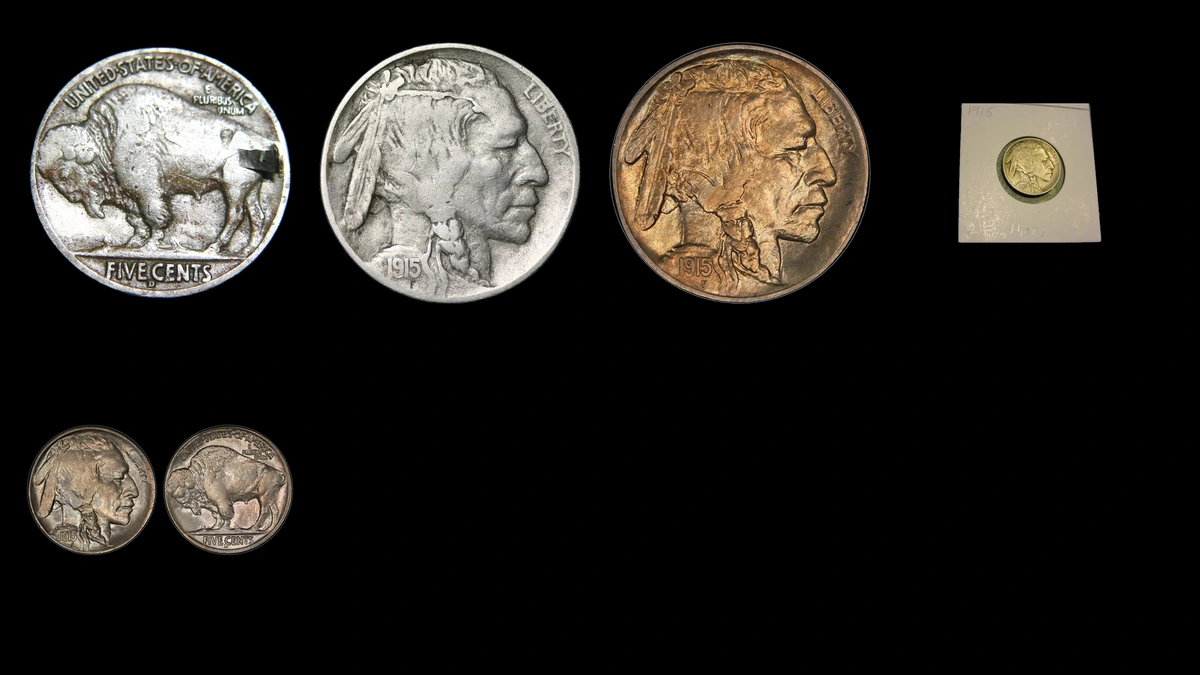
Some 1915 Buffalo Nickel errors have specific cataloged examples, while others remain reports awaiting a convincing match. Estimated values range from $20–$5,000, with a Philadelphia Two Feathers coin bringing $3,840 in January 2020.
Begin at the edge and work inward to the portrait, feathers, and mintmark. Keep the date visible: a similar-looking feature from another year cannot establish a 1915 variety.
1. 1915 Nickel A Small Crescent Is Missing from the Edge: Curved Clip Error
The cataloged 1915-D NGC VF30 nickel has a minor curved clip near 2:30 when the front is viewed like a clock. No missing percentage is supplied.
The opening originated when the blanking punch overlapped an earlier hole in the strip. The design and rim then formed around the incomplete blank.
How to Identify
Examine both ends of the crescent for rim flow toward the gap. File strokes, sharp burrs, or compressed metal can indicate a notch made after striking.
A normal loose Buffalo nickel weighs 5 grams, measures 21.21 millimeters, and has a plain edge. A minor clip may remove too little metal for a basic scale to show a clear difference.
The 2:30 position helps identify the recorded Denver specimen; another genuine clip could lie elsewhere. Opposite-rim weakness is a supporting clue rather than a compulsory feature.
What It’s Worth
A genuine small 1915-D curved clip is estimated at $75–$350. No completed price is adopted for the cataloged VF30 example.
A better-preserved 1924 nickel combining a 4% clip with a partial collar sold for $345 in January 2011. Its different date and two-error combination limit the comparison.
2. 1915 Nickel The Edge Has a Step between Two Levels: Partial Collar Error
A blank sitting only partly inside the collar can spread unevenly during the blow. The collar is the ring that controls diameter, and the contained band stays narrower than the exposed portion.
A 1978 dealer list called a 1915 example a “wrong-way partial collar.” That wording establishes neither its mint nor which face sat higher in the ring.
How to Identify
Slowly turn the edge at eye level to follow a ledge between the restrained and expanded bands. Check the metal for natural spreading rather than filing or hammer marks.
This denomination has a plain edge. The two rows of reeds sometimes shown on partial-collar errors of other coins are not the appropriate test here.
What It’s Worth
A clear 1915 partial collar is estimated at $100–$600. The prominence of the ledge and surviving surfaces affect its appeal.
The 1978 dealer listing reproduced by Mint Error News asked $30 for an unworn example. That is a historical asking price, while the 1924 clip-and-partial-collar comparison above was a $345 completed sale.
3. 1915 Nickel Blank Metal Borders a Displaced Design: Reported Off-Center Strike Error
An off-center blank can leave an untouched crescent beside the struck area while part of the design misses the metal. Both faces should reflect the same broad displacement.
A public list includes 1915 off-center nickels without identifying a certified specimen or mint. It supplies no particular direction or percentage.
How to Identify
Read the date on the coin and compare the shift on both faces. A border displaced on only one face can instead involve one misaligned die.
Inspect the transition between struck and unused metal for grinding or later pressing. A partial worn numeral is insufficient to assign the year securely.
If the mintmark area below FIVE CENTS never received a strike, its missing letter cannot prove Philadelphia origin. The mint must remain unassigned unless the surviving evidence supports it.
What It’s Worth
A confirmed dated 1915 off-center nickel is estimated at $150–$3,000. Slight displacement on a worn coin differs substantially from a dramatic well-preserved example retaining its date.
This is a comparison-based range, not a documented sale of the list’s unspecified coin. The underlying mint and condition remain part of the whole value.
4. 1915 Nickel A Ragged Layer Peels from the Metal: Lamination Error
An internal weakness can reach the surface and open into a flake before or after striking. Buffalo nickels are solid copper-nickel alloy, so this is not a clad outer layer detaching from a separate core.
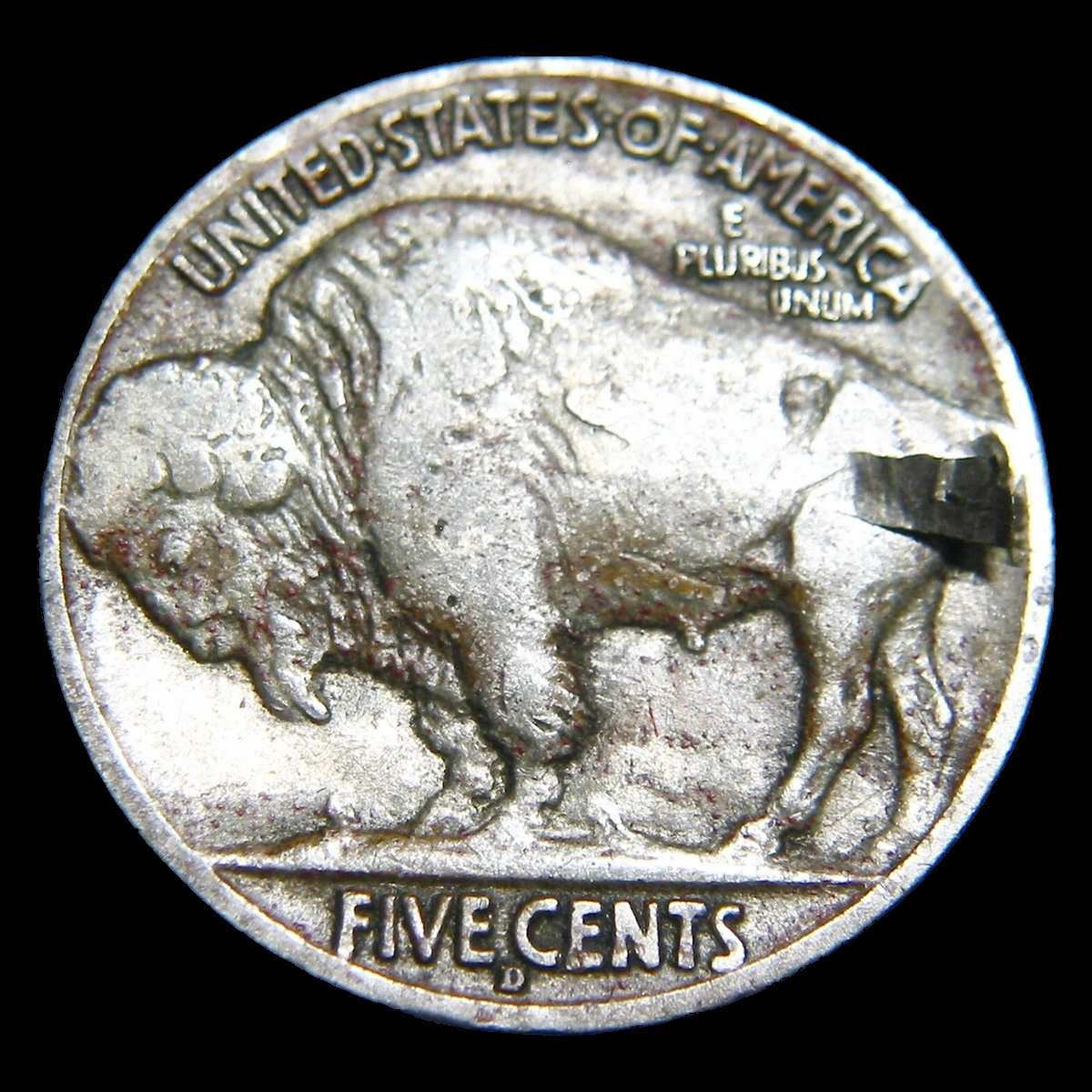
The recorded Denver example has reverse lamination and an ANACS VG10 grade. A separate San Francisco coin is described as ANACS AU58 Details, indicating slight wear with an unspecified condition problem.
How to Identify
Keep an attached flap in place and study its boundary under low light. A thin lip or layered rough surface differs from marks made by scraping into sound metal.
The Denver report identifies the reverse, while the San Francisco title does not establish the affected side. Neither its location nor its condition problem should be invented from the grade alone.
What It’s Worth
The reported laminations have an estimated whole-coin range of $40–$1,500. A heavily worn Denver coin and a lightly worn San Francisco coin occupy different parts of that comparison.
The 1915-S listing supplies its Details grade but no sale amount adopted here. The full value cannot be attributed solely to a small peeling patch.
5. 1915 Nickel Raised Lines or Rim Patches Interrupt the Surface: Die Crack and Break Error
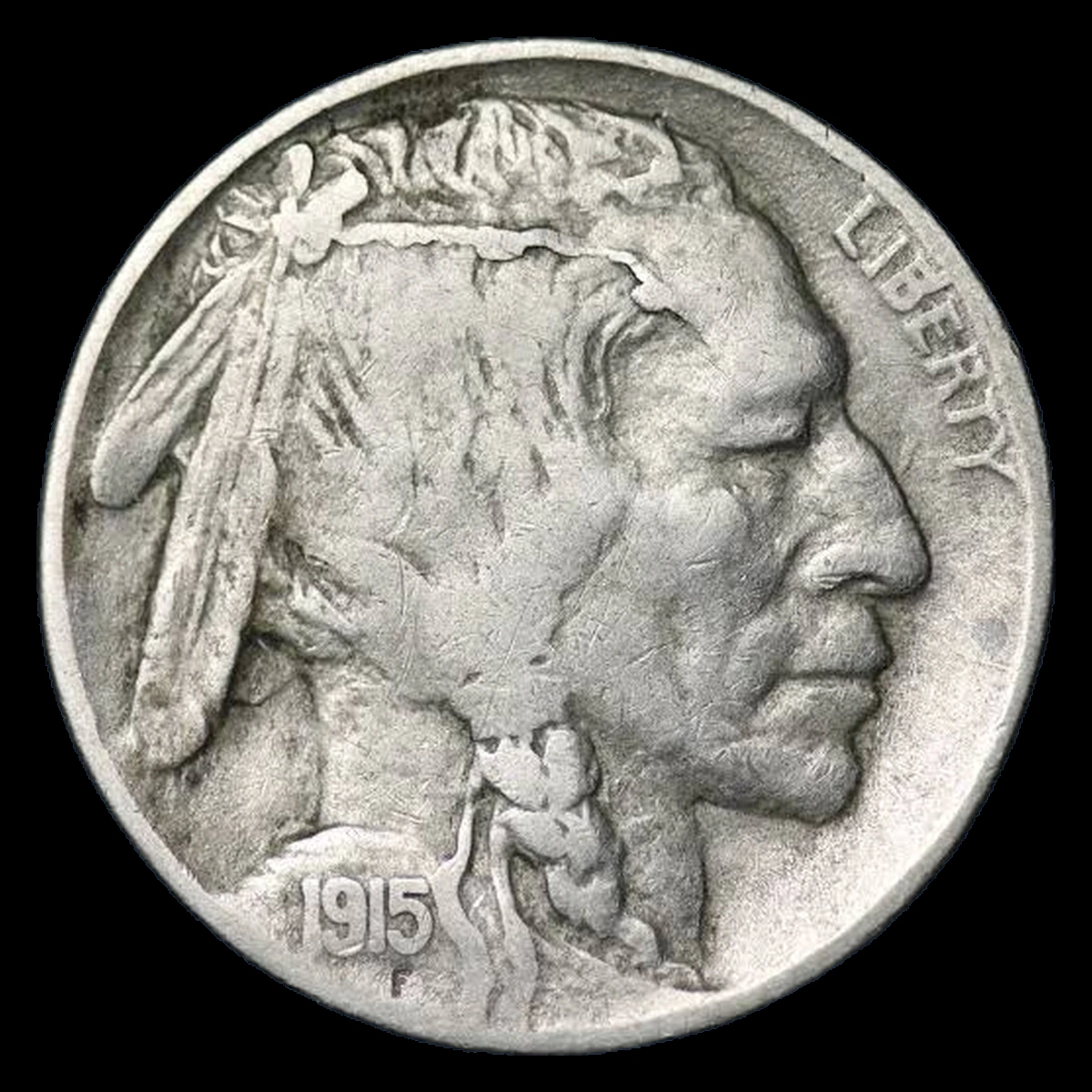
A narrow crack in a die can leave a ridge when metal enters it during striking. A larger missing piece at the die edge can create a raised rim-connected patch called a cud.
The 1915-S reports include breaks and retained damaged pieces without fixed locations. If a broken portion remains attached to the die, some design may survive over the affected area.
How to Identify
Light a line from the side to determine whether its center rises above the surface or forms a cut. For a larger patch, document its connection to the rim.
An interior lump is not automatically a cud, and unevenness alone does not prove the broken die piece fell away. Surviving detail can matter when considering a retained break.
Check for solder, a seam, or nearby impact damage that could explain added or displaced metal. Genuine die damage needs no foreign material attached to the finished coin.
What It’s Worth
Confirmed 1915-S cracks and rim breaks are estimated at $75–$800 as whole coins. Small ridges generally compare lower than prominent rim breaks.
No specific auction record is supplied for the unnamed reported examples. The San Francisco date, overall grade, and any corrosion or damage contribute substantially to the result.
6. 1915 Nickel A Triangular Hollow Interrupts the Date Area: Struck Through Error
The cataloged 1915-S example has a roughly triangular depression near and above the date. Stack’s described it as AU55 in the March 2009 Coin Galleries sale.
Material obstructed the die and left a hollow with a smooth boundary. The description does not establish what that material was.
How to Identify
Photograph the entire date and depression together, then confirm the S beneath FIVE CENTS on the reverse. An isolated hollow without the coin’s identity is not enough for this comparison.
Inspect its boundary for the difference between blocked design and a later blow that displaced finished metal. Leave deposits undisturbed rather than cleaning the area to reveal it.
What It’s Worth
A confirmed 1915-S strike-through of this general size and preservation is estimated at $500–$2,500. The scarce date and mint account for a substantial part of the value.
The March 2009 catalog documents the AU55 specimen without a realized price used here. A smaller or more worn feature could compare below the range, and damage near the date can reduce appeal.
7. 1915 Nickel Stray Curves Match the Opposite Design: Die Clash Error
The two dies can mark each other if they meet without a blank between them. Later coins may then carry shallow partial traces of the design from the other side.
The public 1915 report identifies neither a mint nor a fixed mark location. A random line cannot be matched merely by calling it a clash.
How to Identify
Trace the suspected curve in a photograph and compare it with a mirrored view of the opposite design. Look for adjoining features that support the same alignment.
Use different light directions to distinguish the trace from a cut, crack, or polishing line. Keep complete views of both faces so the relationship remains visible.
What It’s Worth
A confirmed 1915 clash is estimated at $20–$250. The stronger end requires a recognizable transferred shape and appealing surfaces.
No individual sale is assigned to the unnamed report. The mint and grade can add value independent of a faint clash trace.
8. 1915 Nickel Eye, Nostril, and Lips Have Extra Edges: Doubled Die Obverse Error
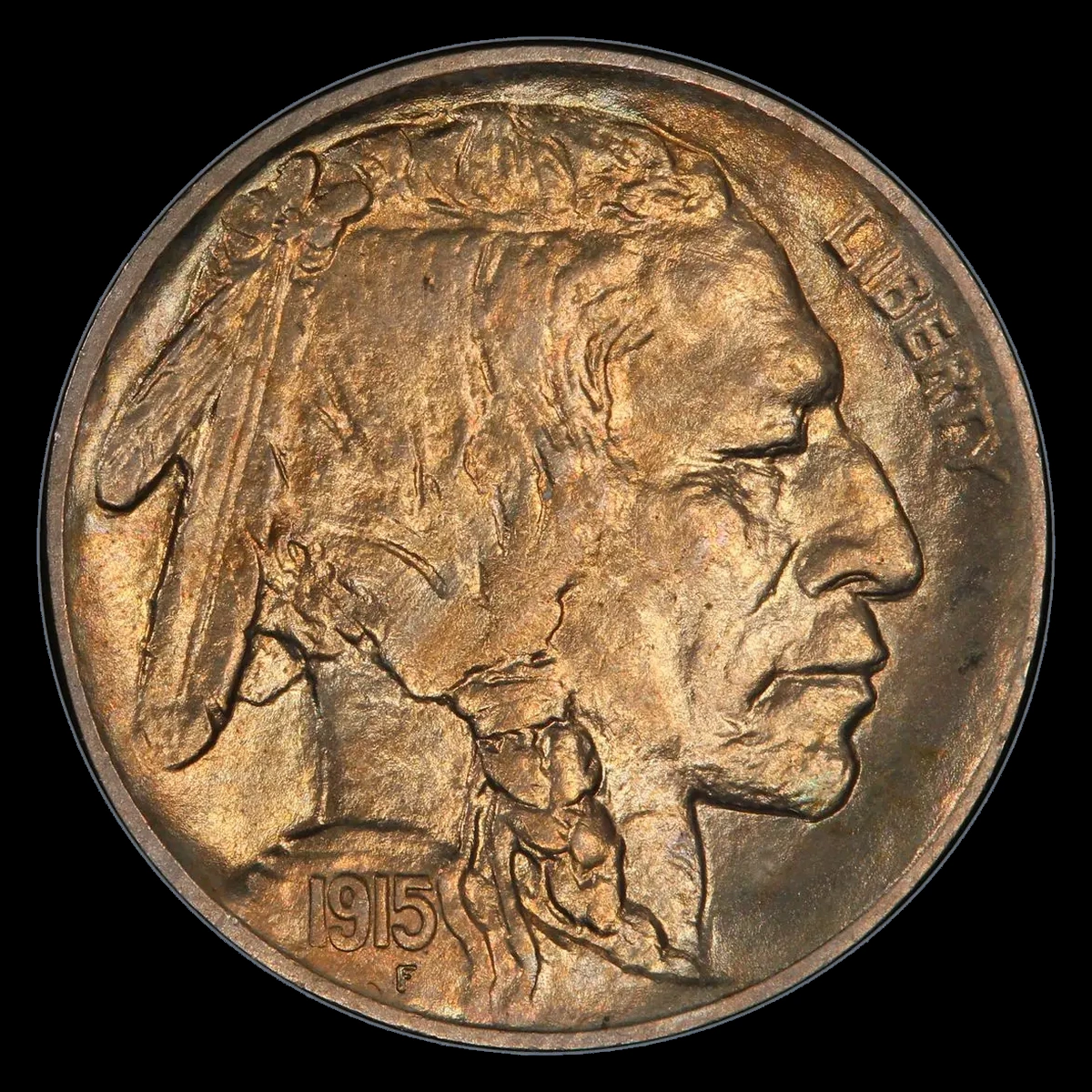
The Philadelphia FS-101 variety is identified through repeated facial details. The useful outlines occur around the eyelid, nostril, and lips, rather than simply making the date appear thick.
The repetition was present in the die before it struck the coin. This 1915 pattern is distinct from the much stronger famous 1916 doubled date.
How to Identify
Move from the eye to the nostril and lips, matching all three areas to an identified FS-101 photograph. One thick edge cannot substitute for the connected facial pattern.
Change the light to inspect rounded extra detail versus a flat shelf from striking movement. Check the full reverse mint area before attributing the coin to Philadelphia.
What It’s Worth
Identified 1915 doubled-front examples are estimated at $100–$2,500. Clear facial repetition and clean surfaces strengthen a comparison.
PCGS records a Heritage sale of an AU58 Philadelphia FS-101 for $1,320 in August 2019. It prices a nearly unworn attributed coin rather than a fixed premium to add to every 1915 nickel.
9. 1915 Nickel The Small Inner Feather Is Absent: Two Feathers Error
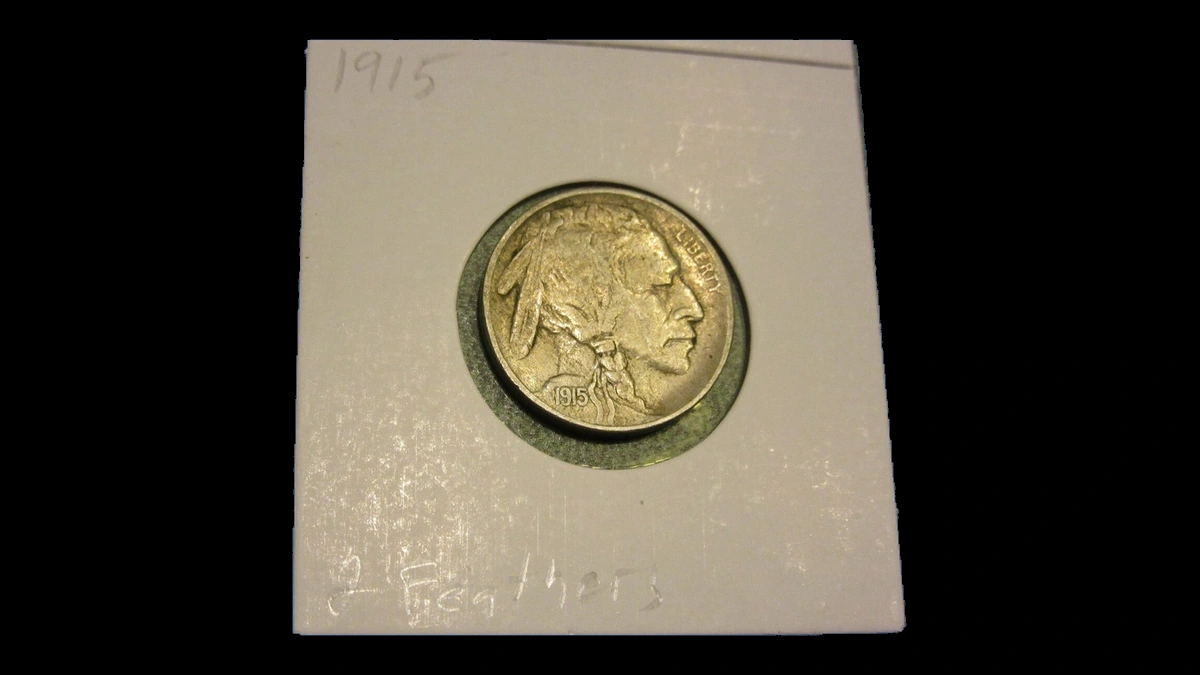
Polishing a die can remove the shortest feather behind the portrait while leaving the two larger feathers visible. That local loss gives the Two Feathers variety its name.
Philadelphia examples appear in PCGS records, and Denver examples are reported separately. Similar missing detail does not mean that the same die produced both mints’ coins.
How to Identify
Compare the inner feather near the neck with the larger pair and surrounding hair. If all the features have faded together, wear or weak striking may explain the appearance.
Find the mintmark, if present, below FIVE CENTS and choose the corresponding attributed example. Match the actual remaining feather shapes instead of relying on an FS-401 label alone.
What It’s Worth
Identified 1915 Two Feathers examples are estimated at $100–$5,000. Stronger prices require both a secure variety match and preservation.
PCGS records a Philadelphia MS66 coin at $3,840 in Heritage’s January 2020 sale. Its high unworn grade and clear local feature cannot be inferred just by counting two feathers on a worn coin.
10. 1915 Nickel A Front Leg Looks Shortened: Unverified Short-Leg Report Error
A public list mentions a shortened front leg for 1915, but the claim is not tied to a verified specimen or named mint. It remains a reported possibility.
Heavy die polishing can remove part of a leg, yet wear, a weak strike, and deliberate damage can produce a similar first impression. Established missing-leg varieties from other years do not prove this one.
How to Identify
Keep the 1915 date visible and compare the shortened area with the other legs and belly. Broad flattening across the buffalo points toward wear or weak striking.
Look for a scraped channel and seek a properly identified same-year comparison bearing the same local feature. Sharp surrounding detail is a useful starting point, but the present report supplies no established variety match.
What It’s Worth
If a genuine 1915 die-polishing loss is demonstrated, a conditional working estimate is $100–$1,000. This is not evidence of a completed 1915 short-leg sale.
A worn ordinary leg earns no such premium. Prices for known varieties of other dates should not be transferred to the unverified claim.
11. 1915 Nickel Another Rounded Stroke Borders the D or S: Repunched Mintmark Error
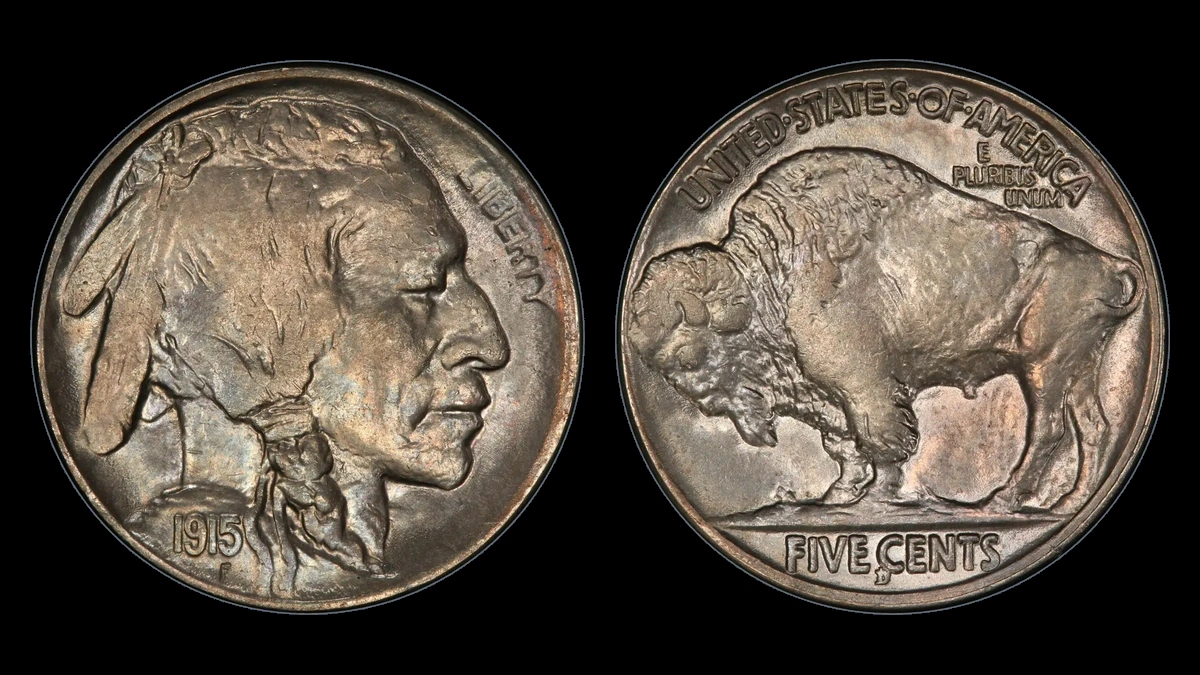
Workers punched mint letters separately into the dies. A shift between applications could leave remnants of the earlier letter beside the final D or S.
The reported Denver extra impression lies toward the upper-right, while the San Francisco example has traces around its S. These are repeats of each mint’s own letter, rather than a D over an S.
How to Identify
Inspect the small letter below FIVE CENTS, not the F on the front, which is the designer’s initial. A second rounded segment should follow part of the appropriate letter.
Compare the shape with an identified example of the same mint. Flat shelves across nearby details or metal displaced by a dent do not establish a repeat punch.
What It’s Worth
Identifiable 1915 repunched mintmarks are estimated at $50–$1,200. The underlying Denver or San Francisco coin and its grade contribute to that whole-coin range.
No individual auction result is assigned to the two reported examples. Clearly preserved remnants provide a firmer comparison than an ambiguous damaged mintmark.
Conclusion
A useful 1915 examination keeps the date and mint connected to every close-up. A stepped edge, repeated facial outline, and missing inner feather each require different matching evidence.
Recorded examples support several categories, but the short-leg claim remains unverified and the off-center report lacks a named specimen. Preserve that distinction when comparing prices, and leave flakes or original date-area surfaces untouched so their evidence remains available.