Rare 1908 Nickel Errors (List & Pictures)
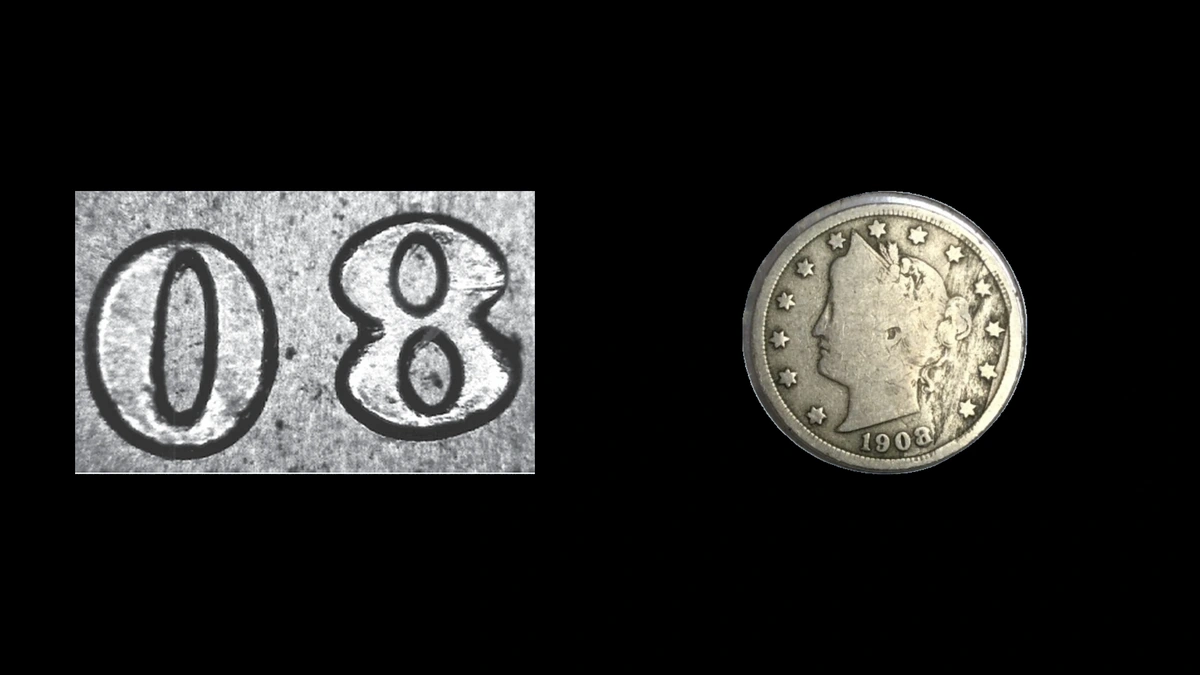
An extra 8 can hide among the border teeth beneath a 1908 nickel’s date. Other unusual examples need an edge view to distinguish an incomplete blank from metal that separated after it was made.
Estimated values for 1908 nickel errors span $15–$2,000. A 1983 catalog’s $800 asking price for an off-center coin was an offer, not an auction result; use the checks below to compare date details, surface flaws, and displaced designs.
| Where to inspect | Category | Estimated range |
|---|---|---|
| Date and border teeth | Repunched and misplaced date | $30–$300 |
| Peeling boundary | Lamination | $15–$250 |
| Gaps in the outline | Clipped blank | $50–$450 |
| Flawed metal and specimen weight | Defective planchet | $75–$500 |
| Blank crescent and cropped design | Off-center strike | $150–$2,000 |
1. 1908 Nickel Another 8 Appears beneath the Repeated Date: Misplaced and Repunched Date Error
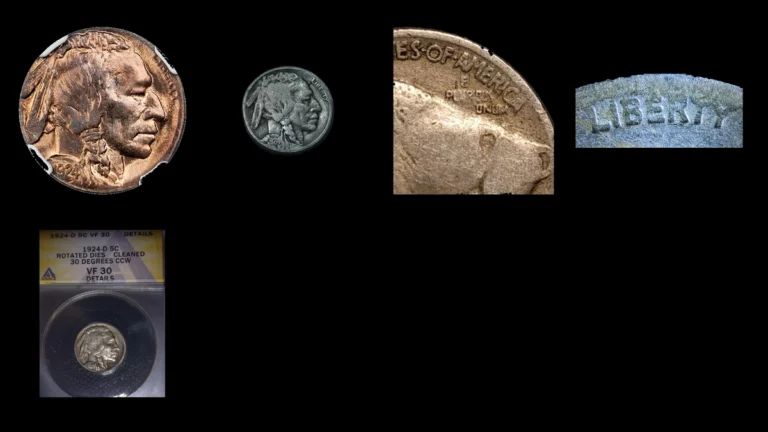
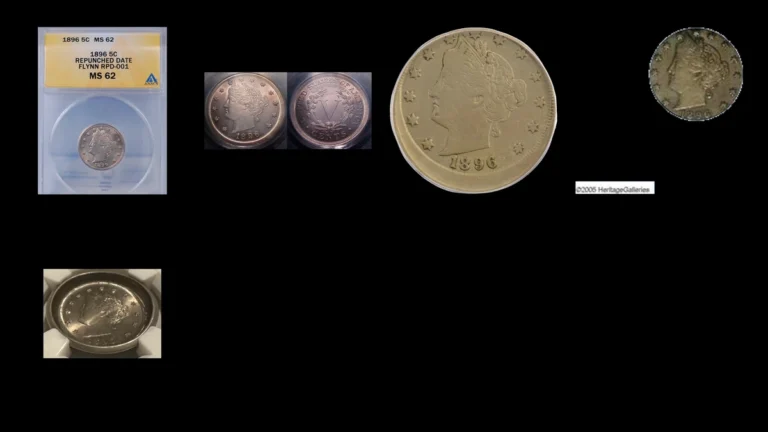
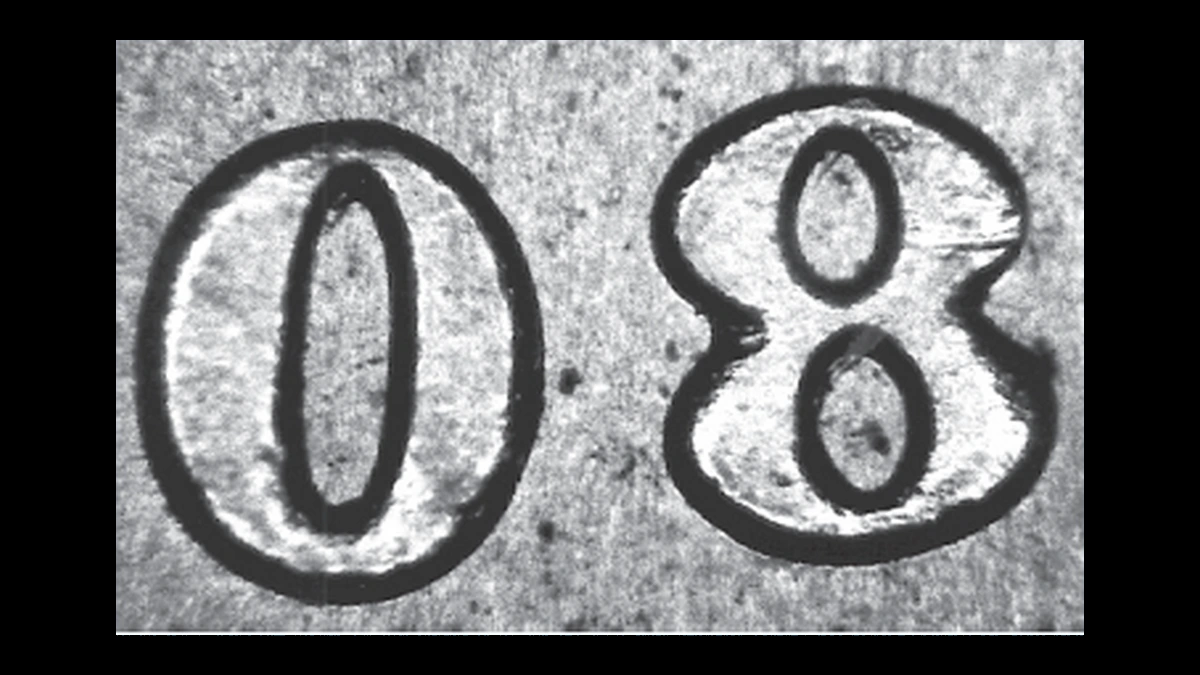
The published variety combines rightward repunching of all four date digits with part of another 8 below them. The top of the misplaced 8 appears among the denticles, the small border teeth between the regular 0 and 8.
These marks originated when punches were applied to the die during preparation. Coins from that die could reproduce both features together.
How to Identify
Photograph the entire date and its lower border at the same scale as the reference. Locate a rounded numeral remnant among the denticles rather than treating any shapeless border bump as the extra 8.
Then follow the rightward remnants beside all four normal digits. A matching coin should combine those regular-date traces with the lower misplaced digit.
What It’s Worth
$30–$300 is an estimate for identifiable circulated through lower unworn examples. Kevin Flynn’s misplaced-date reference gives historical guide figures of $25 in Very Fine and $190 in MS63, not auction results.
Both features belong to one variety on one coin. They should not be valued as two complete coins merely because two kinds of date punching are visible.
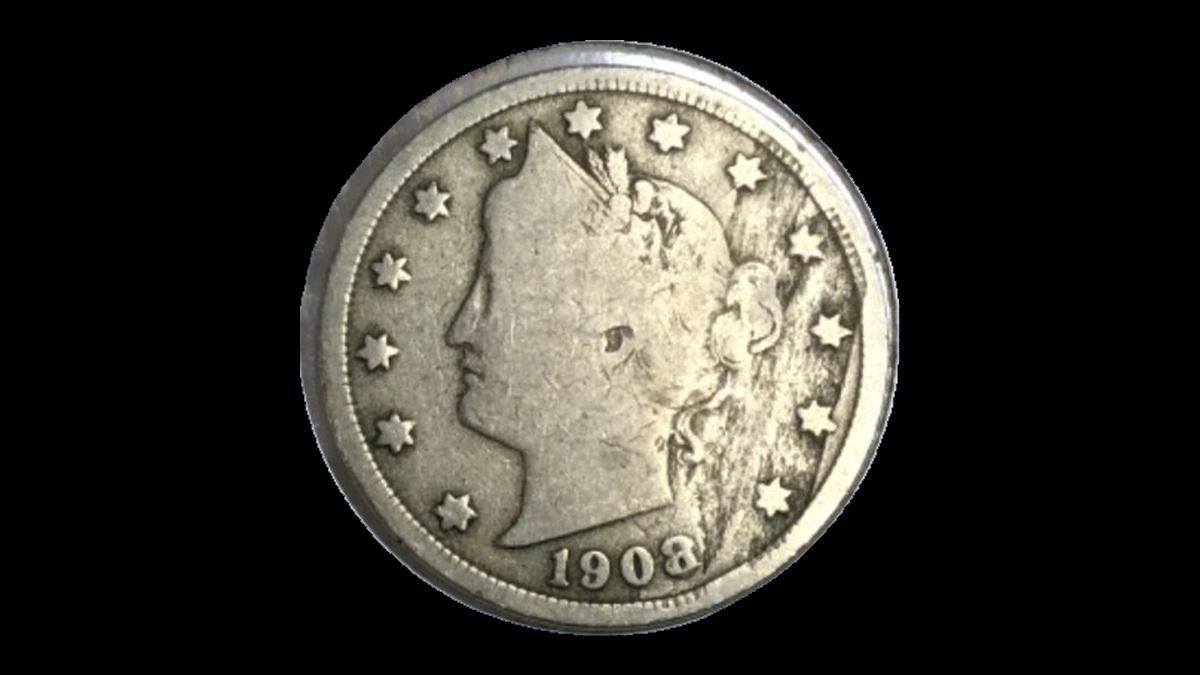
2. 1908 Nickel A Thin Surface Layer Begins to Lift: Lamination Error
A weak region inside the copper-nickel alloy can separate into a shallow flap or leave a rough patch after the layer detaches. The supplied seller example is a heavily worn VG+ coin with obverse peeling.
How to Identify
Inspect the joining edge under side lighting without lifting it. A thin layer and rough internal boundary differ from parallel scrape marks or scattered corrosion pits.
The reported example has no fixed clock position. Its surface peel should not be described as a complete separation into two coin halves.
For a loose coin, normal reference measurements are about 5 grams and 21.21 millimeters, with a plain edge. A retained thin flap may barely change weight, while a detached piece can reduce it.
What It’s Worth
$15–$250 is an estimated range for confirmed surface laminations. The VG+ obverse example has no supplied completed sale, and harsh cleaning or corrosion can limit the appeal of a genuine peel.
3. 1908 Nickel One or Two Gaps Interrupt the Original Edge: Clipped Blank Error
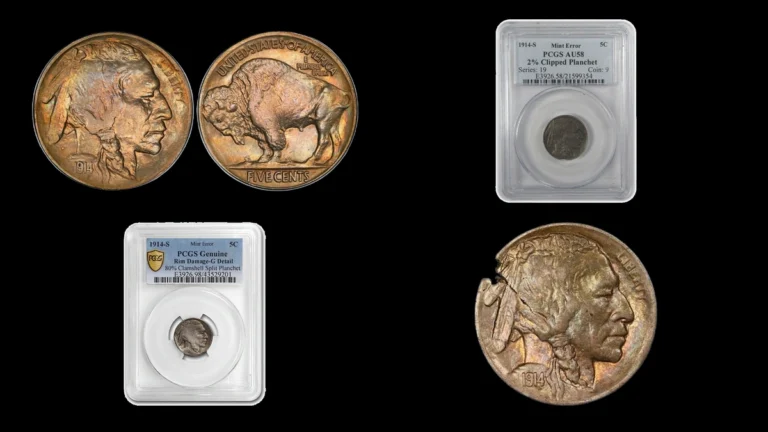
The recorded PCGS AU58 double clip has two gaps totaling 4%. A separate ANACS MS60 Details curved clip is listed at 5.12 grams, slightly above the normal nickel weight.
How to Identify
Examine the rim’s approach to every opening for natural strike formation and exclude saw or file marks. Opposite-rim weakness can help, but the boundary at the gap remains essential.
The 4% figure is the combined clip amount, not 4% for each gap. Neither specimen has an established gap position in the supplied text.
Keep the listed 5.12-gram measurement rather than changing it to fit an expected weight loss. Weight alone cannot accept or reject the attribution, and the Details label’s condition issue is not specified here.
What It’s Worth
$50–$450 is an estimate across recognizable 1908 clips. No individual sale amount is supplied for either recorded specimen, and their differing grades and measurements must not be blended.
Two original gaps can interest collectors, but do not automatically double the price. Remaining design, surfaces, and the authenticity of each boundary all matter.
4. 1908 Nickel A Flawed Blank Weighs 4.7 Grams: Defective Planchet Error
The recorded NGC MS62 coin was cataloged as struck on a defective planchet. Its 4.7-gram measurement is specific, but the supplied description does not identify the flaw’s exact location or cause.
How to Identify
Inspect the faces and edge for an original irregularity that explains the broad attribution. Low weight alone does not prove a foreign blank, missing layer, or one particular manufacturing defect.
Check for filing or other later removal, and preserve the original surface of any cavity. For a holdered coin, use its recorded measurements without opening the holder.
What It’s Worth
$75–$500 is an estimate for a genuine defective blank of this general kind. The 4.7-gram MS62 example sold in August 2018, but the supplied material does not state its realized price.
The page’s $130 starting bid is not used as a final sale amount. This estimate also should not be promoted to the valuation of an authenticated foreign-planchet error.
5. 1908 Nickel Both Designs Miss Part of the Blank: Off-Center Strike Error
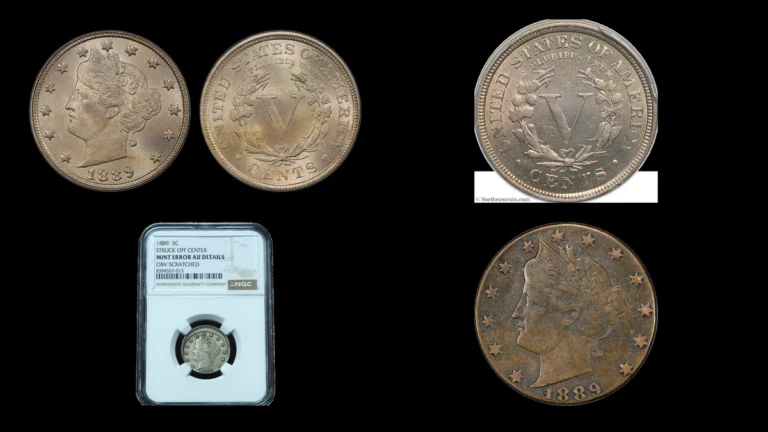
A 1983 dealer catalog describes a 15% off-center 1908 nickel as Gem BU, an especially attractive unworn coin. A 1981 catalog places a reported example toward one o’clock, without establishing that both entries concern the same specimen.
How to Identify
Read the 1908 date and compare missing peripheral design with untouched blank metal on both faces. An uneven border alone or a shift limited to one face does not establish the same misplaced-blank strike.
Check the blank area for grinding and the edge for later trimming. All 1908 Liberty nickels came from Philadelphia, and their original design has no P, D, or S mint letter.
What It’s Worth
$150–$2,000 is an estimated range for dated off-center examples across circulated and stronger condition. The reproduced 1983 dealer catalog asked $800 for its 15% Gem BU piece.
That historical offer documents an example, not a completed auction or fixed present-day price. The separate one-o’clock description should not be added to it without a specimen match.
Conclusion
Keep the complete date and its lower border visible when evaluating a 1908 punching variety. For missing or flawed metal, examine the original edge and surface alongside measurements rather than relying on weight alone.
The supplied records include guide figures, a starting bid, and historical asking prices, which are different from known realized amounts. Preserve those distinctions, and keep each clipped or off-center specimen’s details attached to that coin.