Rare 1958 Nickel Errors (List & Pictures)
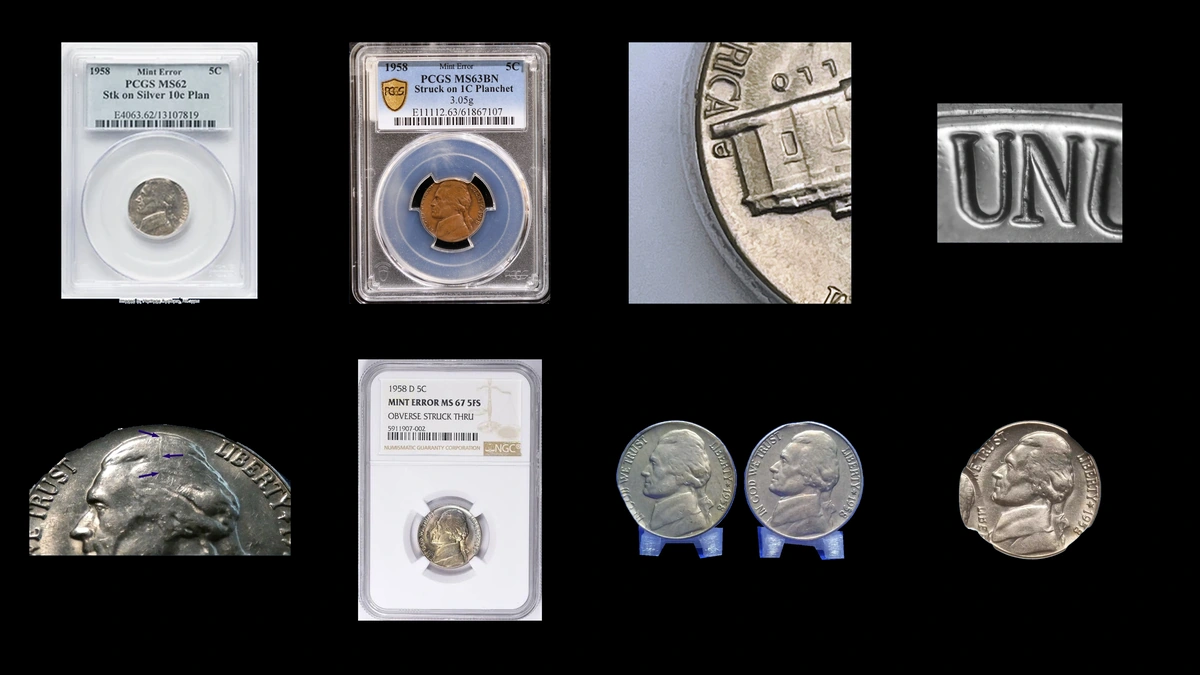
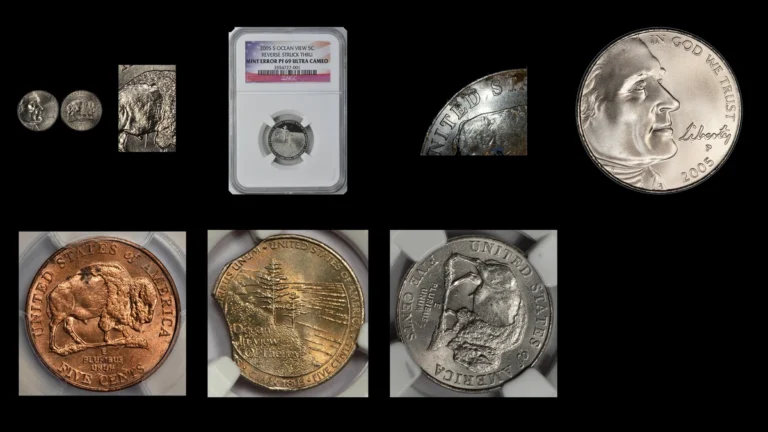
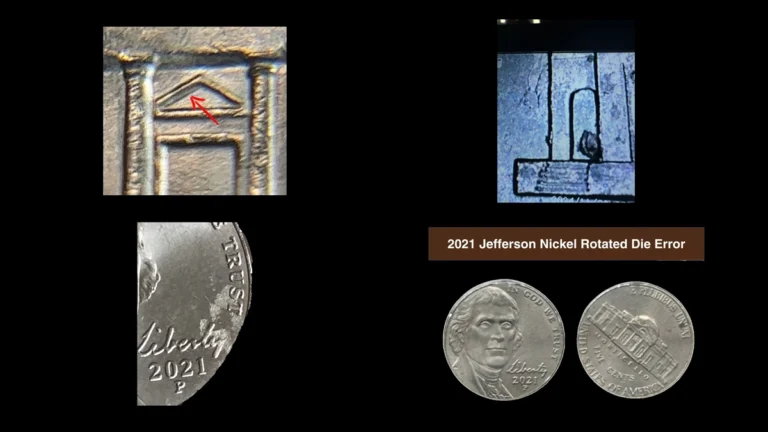
Weighing a small 1958 nickel is helpful, but two different wrong blanks can both weigh 2.5 grams. The silver-dime and Cuban-centavo examples below show why the metal and remaining design matter too.
These 1958 nickel errors have estimated values of $10–$3,000, with a silver-dime-blank example bringing $2,357.50 in August 2010. Begin with the smaller coins, then inspect ordinary-size examples for letter, surface, and striking faults.
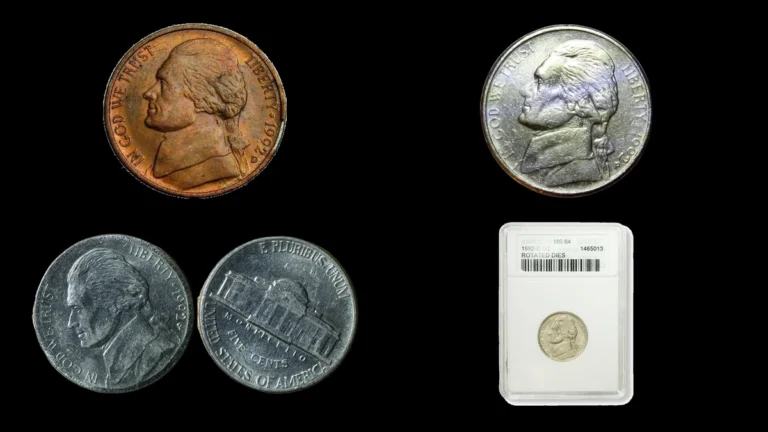
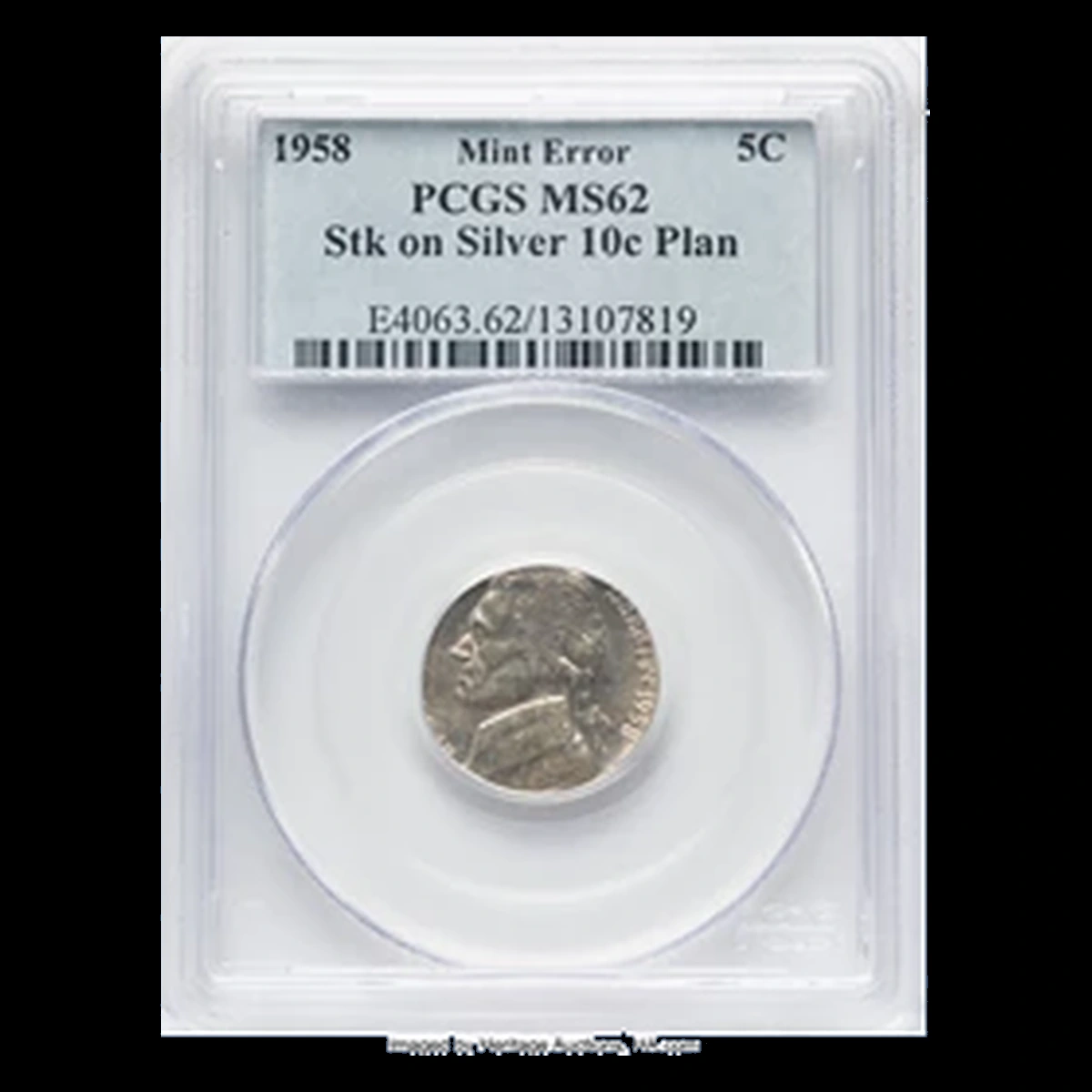
1. 1958 Nickel A Small Nickel on Silver Metal: Dime Blank Error
A silver dime blank cannot hold the full nickel design. On the documented 2.5-gram MS65 example, the design sits toward 10 o’clock and leaves WE TRUST and UNITED STATES beyond the metal.
The date is nearly complete, but the central details are weak. Gold and reddish toning cover parts of the silver surface.
How to Identify
Match the surviving date with the missing outer wording. That combination gives a more useful comparison than silver color alone.
A contemporary silver dime blank normally starts at 2.5 grams and 17.91 millimeters. A normal nickel is 5 grams and 21.21 millimeters; the smaller blank may spread during striking.
Check the metal as well as the weight. This error uses pre-clad silver dime metal, not the copper-centered material used for later circulating dimes.
What It’s Worth
$500–$3,000 is an estimated range for comparable identified silver-dime-blank nickels. Preserved surfaces and readable identification help support a stronger comparison.
The documented MS65 example sold for $646.25 in October 2012. A 2010 Heritage record lists a 1958 silver-dime-blank nickel, also MS65, at $2,357.50.
The same grade does not guarantee the same price. Compare the actual coin’s surfaces, design, and auction context.
2. 1958 Nickel Another 2.5-Gram Coin: Cuban Centavo Blank Error
The recorded Cuban-blank nickel also weighs 2.5 grams, but its intended use was a Cuban one-centavo coin. It was graded NGC MS62, an unworn grade with noticeable marks.
Its design is shifted toward 4 o’clock. The date and part of LIBERTY remain, along with most of E PLURIBUS UNUM on the back.
How to Identify
Compare that surviving lettering and the shift with the documented gray-surfaced coin. Do not use the silver-blank example’s 10-o’clock position for this one.
Record the actual dimensions rather than assuming a normal nickel’s diameter. Professional metal testing should support the foreign-blank identification.
The shared 2.5-gram weight is not enough to choose between the two blank types. Inspect the edge for trimming or coating that could also mislead a weight-and-color check.
What It’s Worth
$700–$2,500 is an estimated range for identified examples on Cuban centavo blanks. A secure metal attribution and clear date are important parts of the comparison.
NGC’s auction record lists $1,140 in August 2020 for the MS62 coin. That result does not apply to every nickel weighing 2.5 grams.
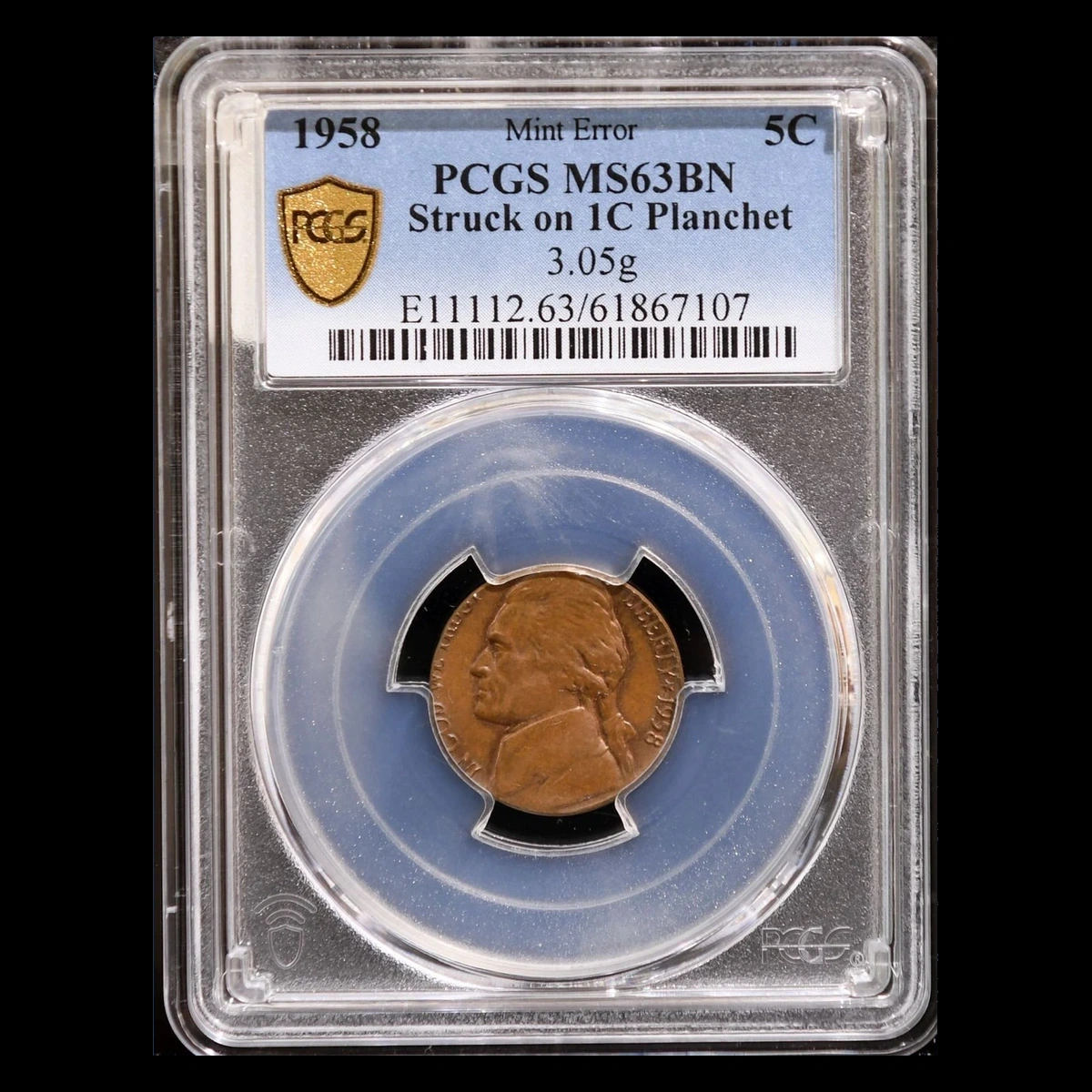
3. 1958 Nickel Copper Color and Cropped Letters: Cent Blank Error
A blank intended for a cent can receive the larger Jefferson nickel design. The result is a smaller copper-alloy coin with too little room for some outer details.
A Philadelphia 1958 example appears in a catalog as PCGS MS63 Brown. The grade describes an unworn coin with visible marks and brown copper color.
How to Identify
A contemporary cent blank normally starts near 3.11 grams and 19.05 millimeters. Those standard figures are not published measurements of the cataloged MS63 coin.
Check how the nickel design reaches the available edge, then inspect for trimming or a coating. Brown color on an ordinary-size nickel cannot establish this error.
Look separately for any older Lincoln design. An unused cent blank has no earlier coin design, while an overstruck finished cent does.
What It’s Worth
$200–$1,200 is an estimated range for genuine 1958 cent-blank nickels. The date, original surfaces, and condition help narrow the comparison.
A 1966 example graded MS63 Red and Brown sold for $552 in December 2025. That different-year coin supplies price context, not the 1958 coin’s actual measurements or color grade.
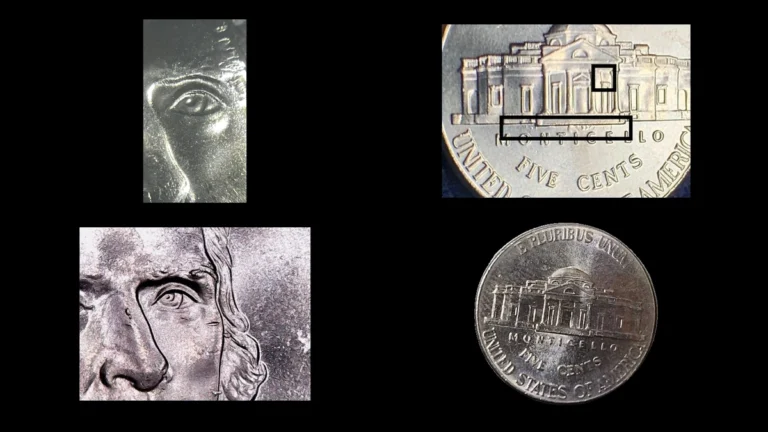
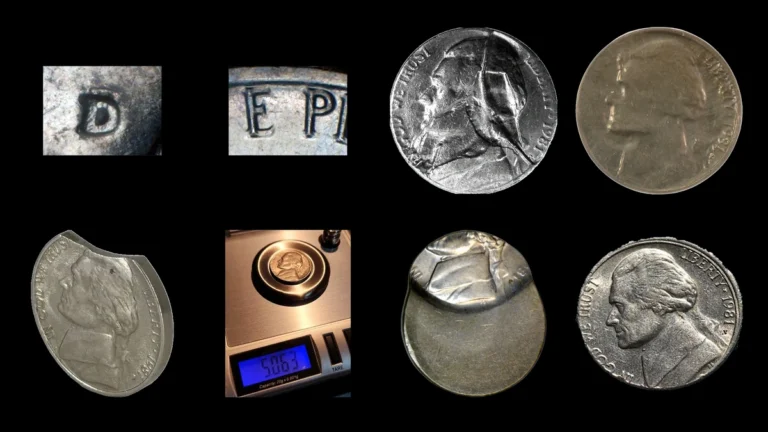
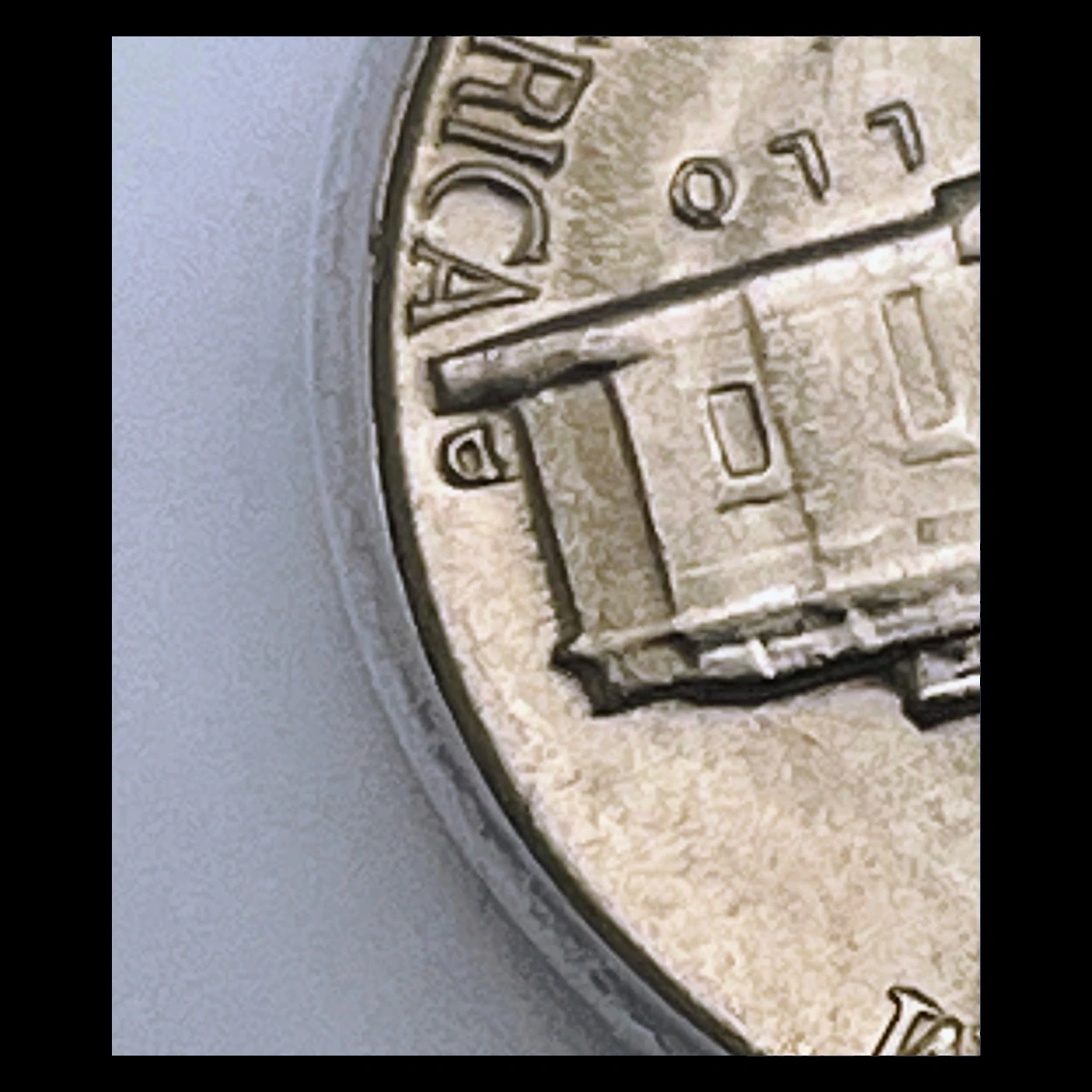
4. 1958 Nickel An Extra D Beneath the Mintmark: Repunched or Inverted D Error
The mintmark on a 1958-D nickel sits on the back, to the right of Monticello. An earlier punch impression can leave another D beneath the finished letter.
The best-known inverted pattern began with an upside-down D, followed by an upright one. Other patterns show tilted or shifted impressions instead.
How to Identify
Find the full extra outline before naming the variety. An extra stroke above or beside the D does not by itself prove that the earlier letter was upside down.
Use the illustrated inverted-D explanation to understand how the overlapping curves fit. FS-501 is the catalog name for the well-known inverted pattern.
The inversion happened when the letter was punched into the die, the steel stamping tool. It does not mean the finished coin was struck upside down.
What It’s Worth
$10–$1,500 spans estimated values from minor repunches to stronger inverted-D examples. The actual pattern matters much more than a general claim of an unusual D.
A clear inverted outline on a well-preserved coin needs a different comparison from a faint shifted stroke. Wear and flat mechanical doubling can reduce or obscure the useful detail.
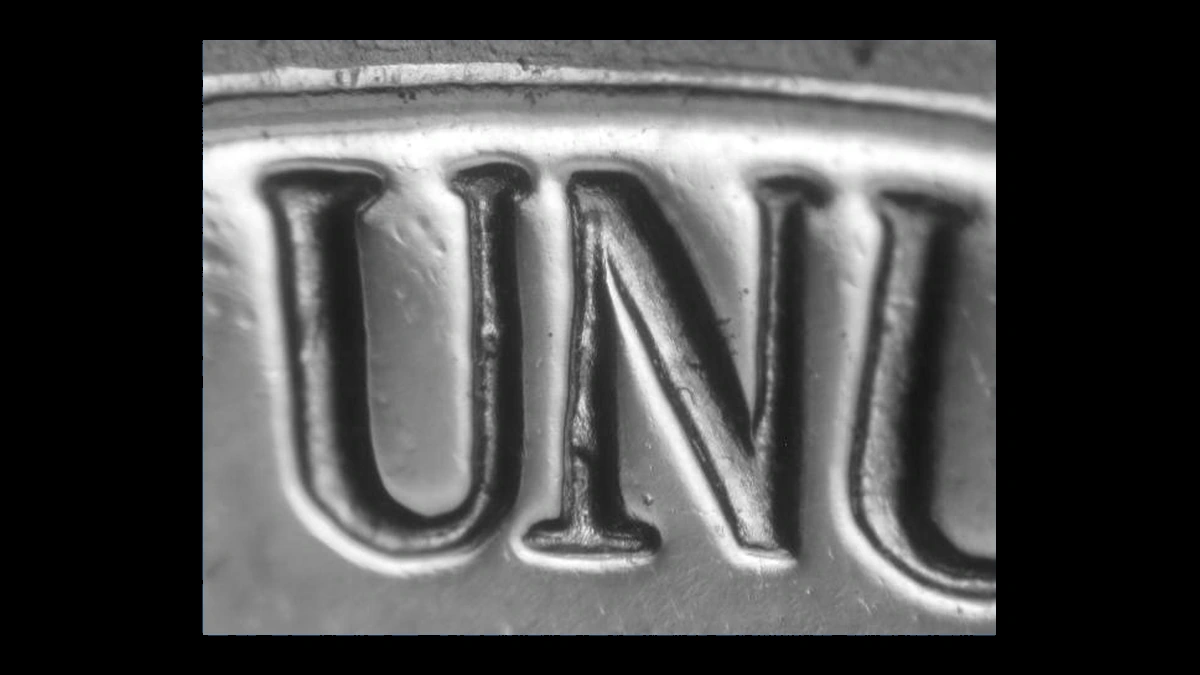
5. 1958 Nickel Closely Repeated Lettering: Doubled Die Error
A die made with a repeated design can pass extra outlines to the coins it strikes. Unlike a double strike, this begins in the tool itself.
The Denver back pattern affects UNITED STATES OF AMERICA. Separate Philadelphia Proof varieties involve IN GOD on the front or UNUM and other lettering on the back.
How to Identify
Determine whether the coin is an ordinary strike or a specially made collector Proof. Compare it with the matching mint and finish in the 1958 variety photographs.
Follow rounded repeated edges or split letter ends. A flat shelf alongside a letter can result from movement during striking instead.
Each listed pattern has its own affected areas. Do not combine every doubled letter into one expected coin.
What It’s Worth
$10–$250 is an estimated range for identified minor doubled designs. Visibility, preservation, and the particular variety help determine value.
An attractive Proof with a clear pattern is not the same comparison as a worn Denver coin. A high grade or thick lettering alone does not establish a doubled die.
6. 1958 Nickel A Layer Peeling Away: Lamination Error
A weak seam in the metal can let a thin surface layer lift. This separation is called lamination.
The reported 1958-D category concerns a peeling layer, without a specified patch location. It does not describe a whole nickel divided into two halves.
How to Identify
Leave any attached flap untouched and inspect the split beneath it. Its natural connection to the coin is useful evidence.
Look for pry marks, scraping, or corrosion that might explain the rough area instead. An attached small layer may leave the total weight close to normal.
What It’s Worth
$10–$150 is an estimated range for recognizable 1958-D surface laminations. A clear intact flap may draw more interest than a tiny rough patch.
A 1966 nickel in three matching pieces sold for $109.25 in August 2010. That was a much larger separation on another date, rather than a result for the reported Denver flake.
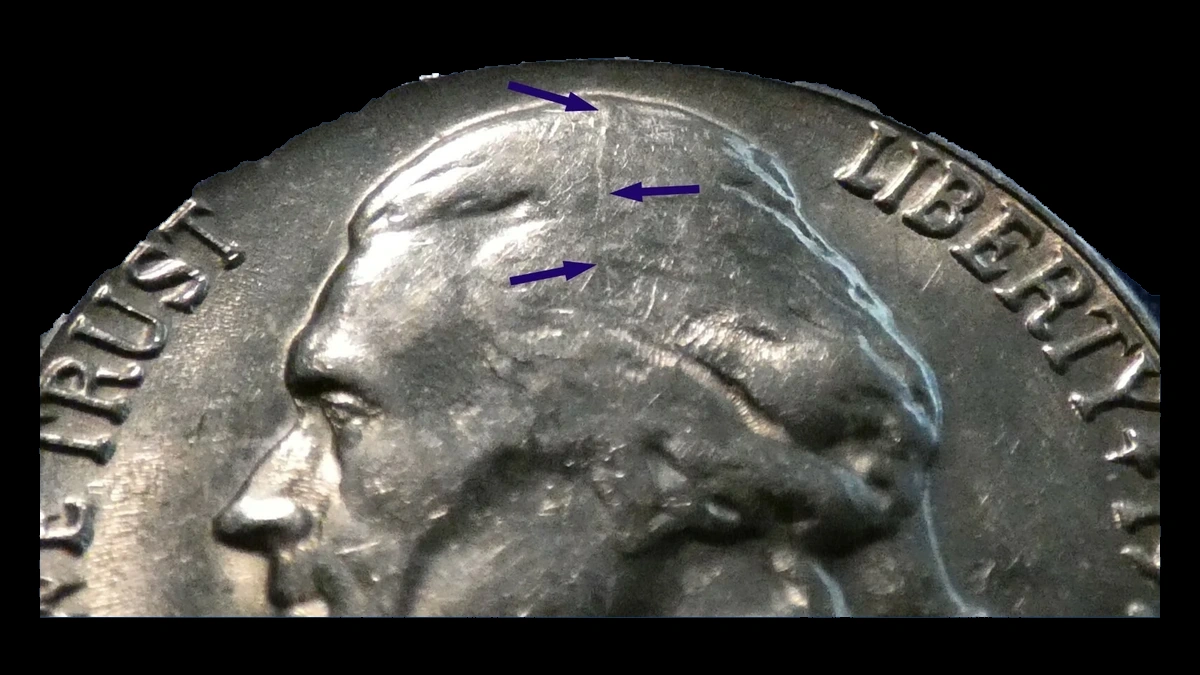
7. 1958 Nickel Raised Lines or Rim Patches: Die Cracks and Cuds Error
A cracked die leaves a raised line where metal enters the opening. A larger broken section can leave a raised patch that replaces part of the normal design.
A patch connected to the rim is often called a cud. The supplied 1958-D report does not establish one fixed break position.
How to Identify
Check a thin line for a raised surface rather than a cut. For a broader patch, follow its boundary and see whether it joins the rim.
Inspect for a seam from solder or damage from a rim hit. An internal lump is not automatically a rim-connected cud.
What It’s Worth
$10–$350 is an estimated range from small cracks to stronger rim breaks. Most fine lines belong toward the lower end.
A lightly worn 1970-D nickel with two front breaks sold for $63 in October 2022. Its layout should not be used as the required pattern on a 1958 coin.
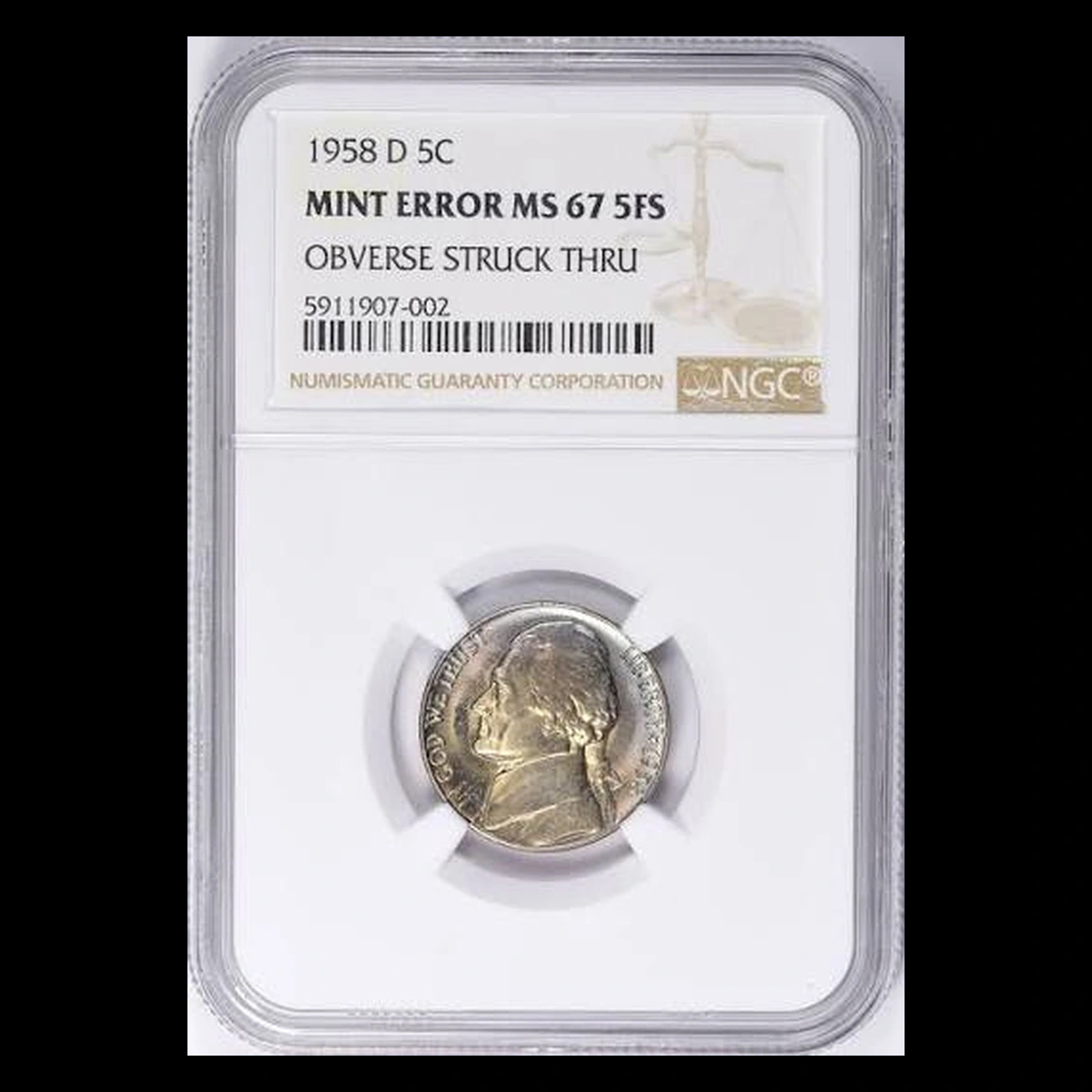
8. 1958 Nickel Texture Across Jefferson: Struck Through Material Error
Material caught between a die and blank can leave its texture instead of the normal coin design. The Philadelphia report describes parallel marks across Jefferson that were attributed to cloth.
The pattern must belong to the original strike. Parallel scratches made afterward are a different condition.
How to Identify
Follow several lines where they cross the portrait. A fabric impression should interrupt how the design formed, rather than cut through completed details.
Look for repeating texture that supports the cloth description. Do not use cloth, grease, and wire as interchangeable names for every missing-design patch.
What It’s Worth
$20–$500 is an estimated range for genuine struck-through examples. A clear recognizable texture can attract more interest than slight unexplained weakness.
The supplied year guide reports $68 at a 2024 auction for the cloth example. No grade is given, so that figure remains a reported comparison rather than a detailed primary auction record.
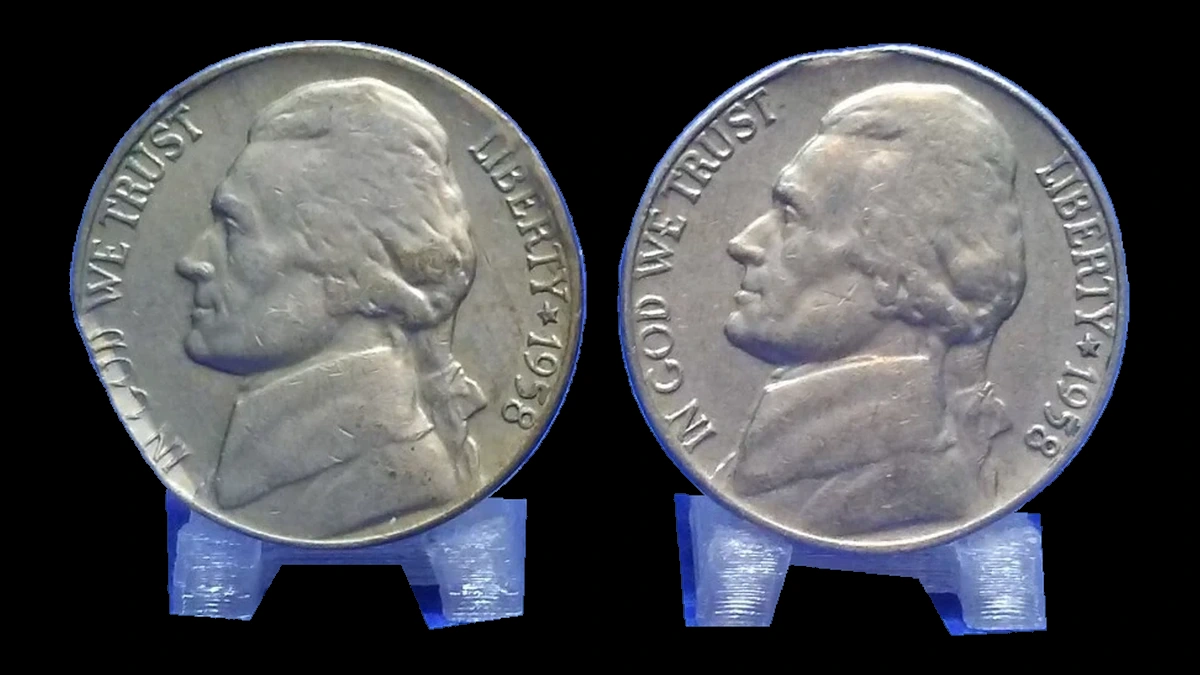
9. 1958 Nickel A Curved Opening in the Edge: Clipped Planchet Error
A blank-cutting punch can overlap a hole already left in the metal strip. The incomplete disk then receives a coin design around the shortage.
This is a clipped planchet, meaning a clipped blank prepared for striking. The Denver report describes a curved gap without giving its size or clock position.
How to Identify
Inspect the rim ends and nearby lettering for the effects of striking around missing metal. A later cut can slice through an already complete design.
A significant clip lowers weight, but so does a later cut. Look for saw or file marks and use the surrounding struck surface to decide when the metal disappeared.
A weak rim opposite a curved opening can support the identification. It is not required on every clipped coin.
What It’s Worth
$10–$300 is an estimated range for genuine 1958-D curved clips. Larger attractive examples usually differ in value from small worn clips.
A 1974 nickel with two curved clips sold for $132 in July 2021. That different-year unworn coin is a comparison, not a documented 1958-D result.
10. 1958 Nickel A Wide Coin With Complete Lettering: Broadstrike Error
Without proper restraint from the collar, a nickel can spread wider during striking. Its intended design remains inside the enlarged outline.
The reported 1958-D example measures 23 millimeters across. That is wider than the usual 21.21 millimeters.
How to Identify
Measure across several directions, then trace the outside lettering on both faces. A broadstrike keeps the design, whereas an off-center strike loses part of it beyond the metal.
Look for original spread surfaces rather than hammer marks and crushed details. Another genuine broadstrike need not measure exactly 23 millimeters.
What It’s Worth
$30–$400 is an estimated range for identifiable broadstrikes. A clear expanded border with well-preserved lettering can support greater interest.
The year guide reports an $85 result in 2023 for the 23-millimeter coin. Its grade is not supplied, and the figure is not presented as an independently checked primary auction record.
11. 1958 Nickel A Large Bare Area: Off-Center Strike Error
A blank far outside the center of the press receives only part of the design. The remaining metal can stay untouched.
The 1958-D report describes a 75% off-center example graded NGC MS65. It does not establish a specific direction for that shift.
How to Identify
Read the date before assigning the coin to 1958. If the back permits it, locate the D beside Monticello.
Compare the struck and untouched boundaries on both sides. They should fit one misplaced blank, rather than one shifted die.
The 75% figure belongs to this off-center example. It should not be confused with the 85% second strike in the next category.
What It’s Worth
$50–$700 is an estimated range for genuine dated off-center nickels of this year. A readable date can matter more than an enormous unstruck area.
A 1999-D nickel struck 65% off center sold for $75 in September 2024. That result provides different-year context without setting a price for the reported 1958-D MS65 coin.
12. 1958 Nickel Another Image Near the Edge: Double Strike Error
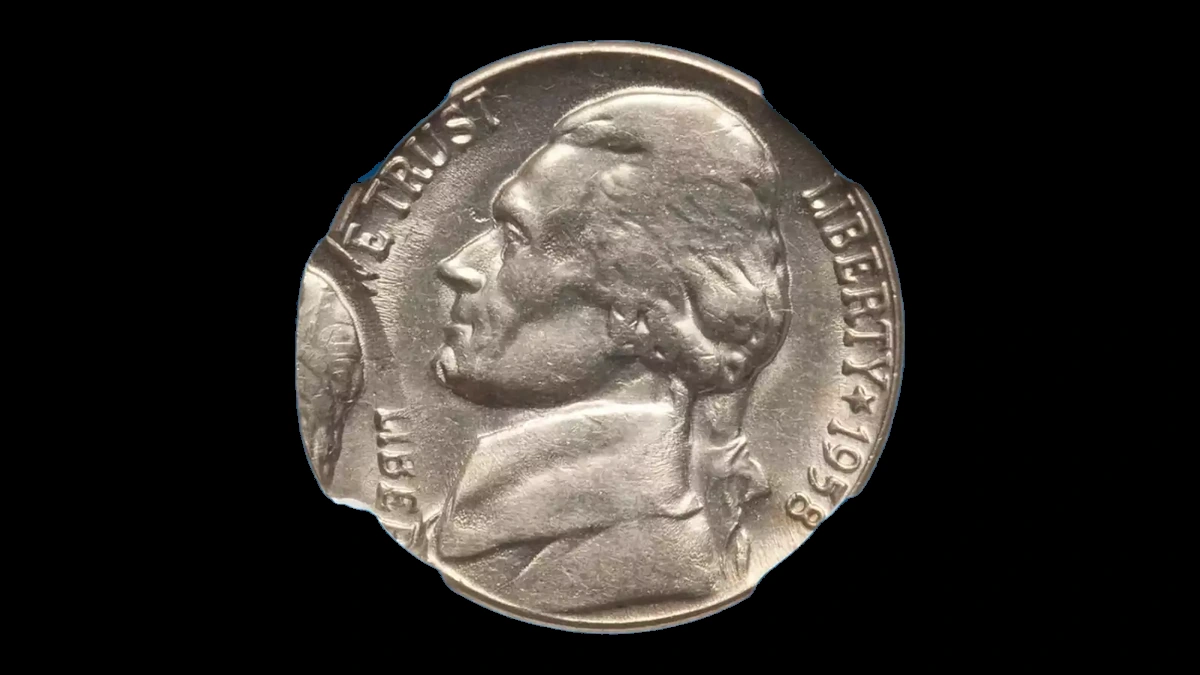
The reported 1958-D double strike received a second blow about 85% off center. It was graded NGC MS63, meaning unworn with visible marks.
The percentage describes the later strike’s position. It does not mean 85% of the metal is missing.
How to Identify
Connect letters or portrait fragments into two separate images. Check where the later impression crosses or flattens the earlier one.
Turn the coin over to find related repeated detail. Tiny extra letter edges from a doubled die do not form the same widely separated design.
What It’s Worth
$150–$1,000 is an estimated range for recognizable 1958 double strikes. Distinct images and good surfaces help collectors understand and appreciate the sequence.
The supplied year summaries disagree on the MS63 example’s price, so no single result is assigned to it here. A 1986-D nickel with a 70% second strike sold for $253 in June 2008 and provides a separate comparison.
Conclusion
The two 2.5-gram wrong-blank nickels show why one measurement cannot identify an error. Metal, remaining words, and strike position distinguish the Cuban blank from the silver dime blank.
For ordinary-size coins, look closely at the D and then follow any unusual surface or outline. Estimated values of $10–$3,000 cover these very different findings, so choose a comparison that matches the complete coin.