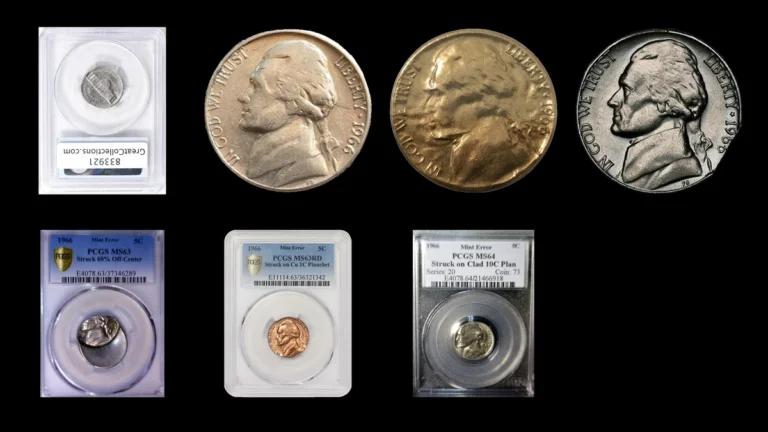
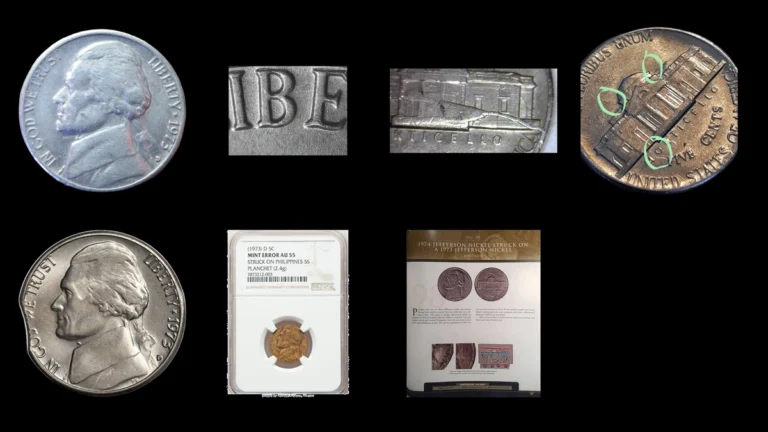
Rare 1992 Nickel Errors (List & Pictures)
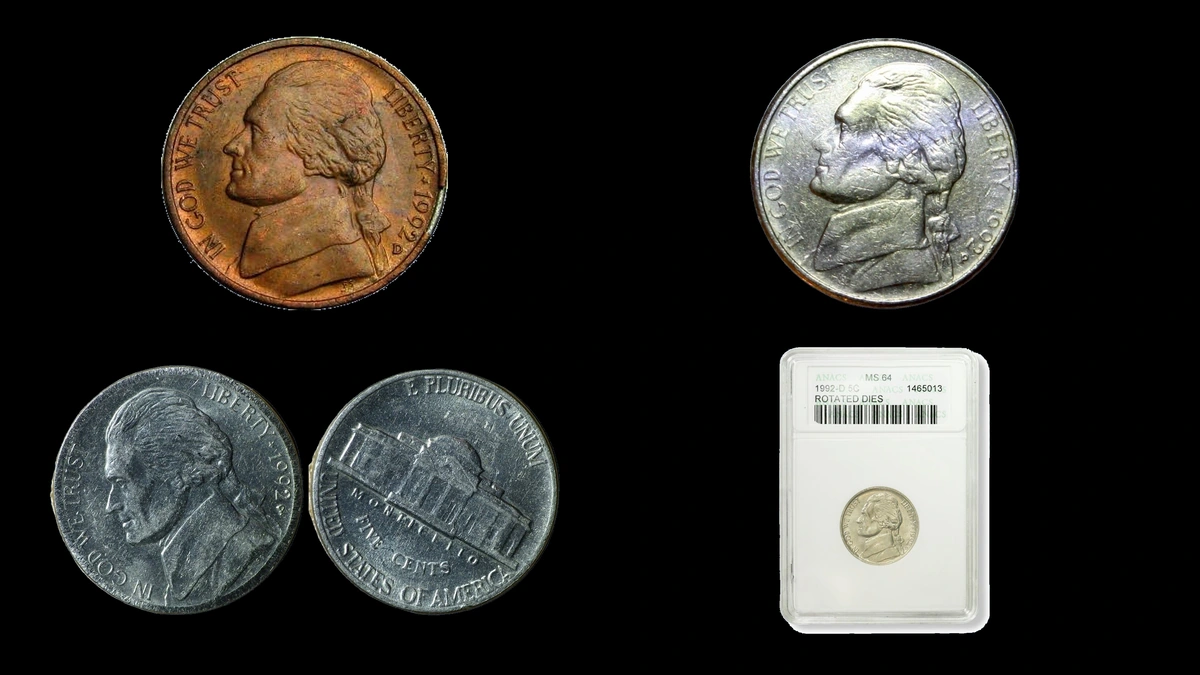
A copper-colored nickel can have several explanations, and only one involves starting as a penny. This guide to 1992 nickel errors covers surface changes, missing details, and unusual strikes worth about $10–$2,000.
A 1992-P nickel struck over a 1992 cent brought $630 in November 2020. Begin with the metal and color, then check the design, edge, and alignment.
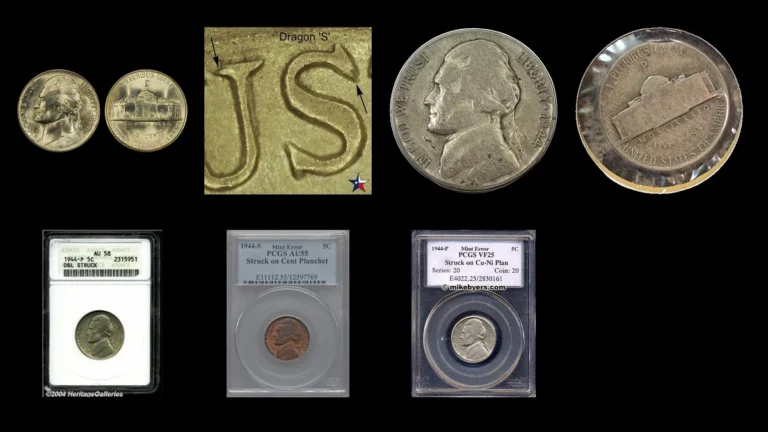
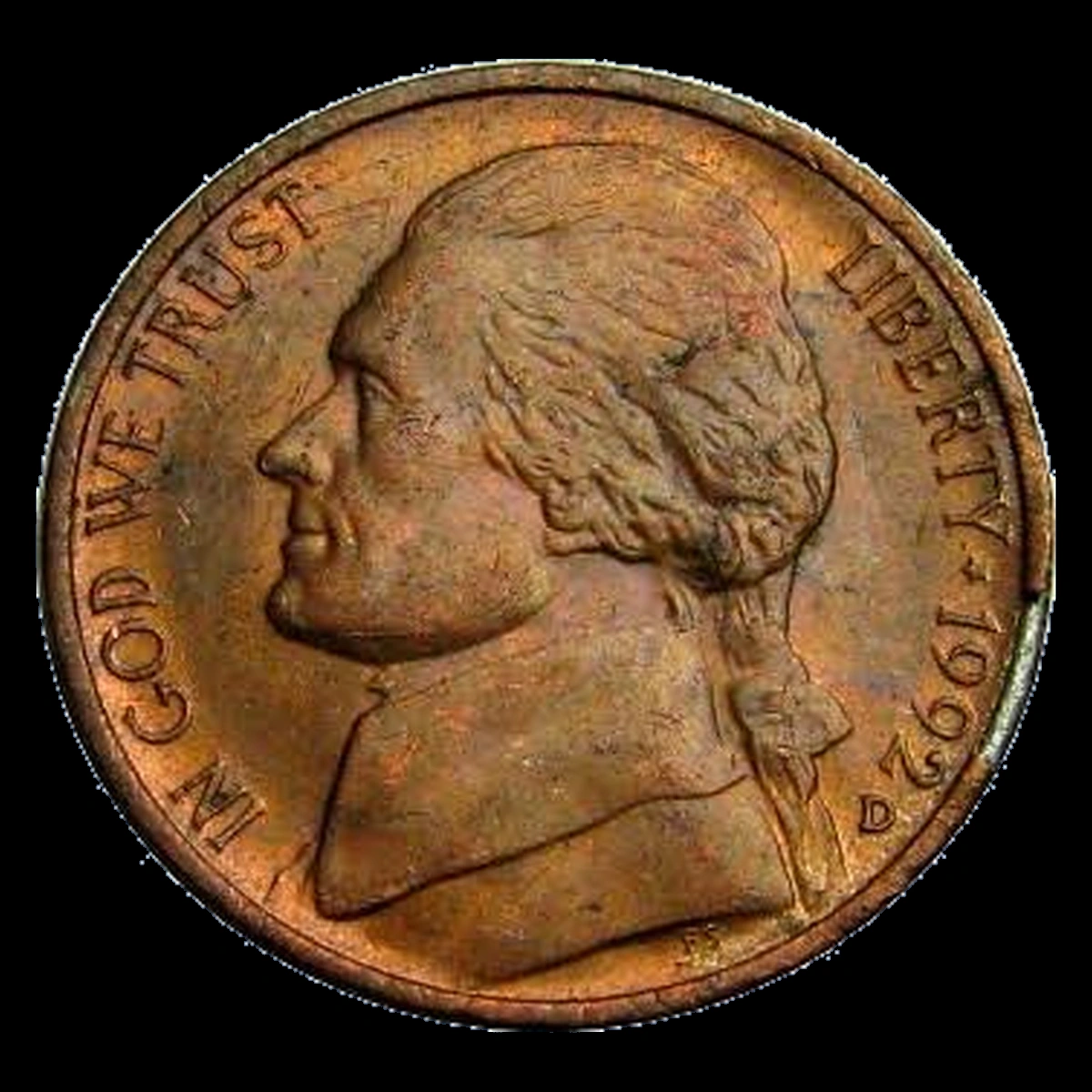
1. 1992 Nickel Copper Color from Improper Annealing Error
The 1992-D example illustrated by Error-Ref has a copper-rich, oxidized surface on both sides. The change happened during heating before the coin received its design.
A normal nickel contains copper and nickel mixed throughout its metal. It does not have a nickel coating that can peel away to reveal a copper center.
How to Identify
Look at both faces and the edge in neutral light. Compare them with the documented 1992-D annealing example, rather than judging a warm-colored photograph alone.
A normal nickel weighs about 5 grams and measures 21.21 mm across. Those measurements help separate a color change from a strike on a smaller cent.
Color by itself is not proof: chemicals and heat can also change a coin after it leaves the Mint. Keep the surface intact so an examiner can study how the color relates to the struck details.
What It’s Worth
$40–$500 is a useful range for an authenticated annealing error. Worn pieces fall around $40–$150, while clear, unworn examples can reach $150–$500.
A 2005-D Bison nickel with improper annealing sold for $119 in December 2022. That sale provides a comparison for the error type, rather than a sale record for the 1992-D coin.
2. 1992 Nickel A Thin Flap from Lamination Error
A lamination is a split within the coin’s metal, sometimes leaving a thin flap attached. The reported 1992 category concerns this kind of separation, not missing plating.
How to Identify
Follow the border of the flap or shallow opening with a magnifier. The break should appear to run within the metal, rather than around an added coating.
Do not pull up a loose piece to look underneath. Scratches, corrosion, and peeling foreign material can resemble a metal split, so the boundary matters more than its color.
What It’s Worth
$20–$400 covers the working range for this reported category when the separation is identified as a mint error. A modest flaw fits about $20–$100; a larger, clear flap can bring $100–$400.
These figures describe comparable lamination errors. They do not represent a documented 1992 auction result.
3. 1992 Nickel A Nickel Design over a Lincoln Cent Error
Two different coins share the surface here: Jefferson’s design was struck over an already minted 1992 Lincoln cent. Remaining cent details make this more revealing than an unusual color alone.
How to Identify
Search both sides for recognizable parts of the earlier cent beneath the nickel design. Their positions depend on how the cent entered the nickel press.
A normal 1992 cent starts at about 2.5 grams and 19.05 mm across, although the later strike can spread it wider. Compare the weight, surviving designs, and edge together.
An undersized nickel without visible cent details may have been struck on a cent blank. That is different from proving it was struck over a finished cent.
What It’s Worth
$400–$2,000 covers a readable over-cent example through an especially attractive piece. The documented 1992-P coin, graded NGC MS63 Red Brown, sold for $630 on November 6, 2020.
Comparable pieces can fall around $400–$1,000, with stronger overlapping designs supporting $1,000–$2,000. Readable evidence of both coins is a major part of the appeal.
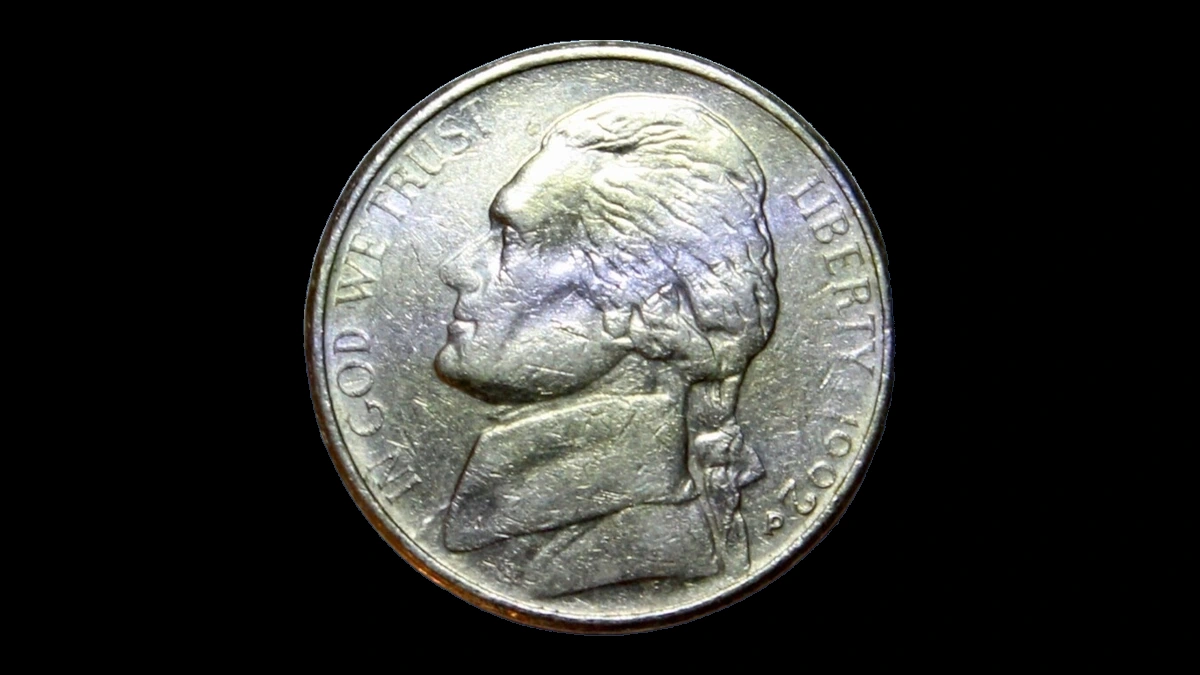
4. 1992 Nickel Soft or Missing Detail from a Struck-Through Error
A patch of weak design can form when material gets between the die and the blank. The die is the tool that presses the design into the coin, and the obstruction keeps part of it from reaching the metal.
Struck-through errors appear in reports for this year, but those reports do not establish one shared location or obstruction. A soft patch should not automatically be named as a grease strike.
How to Identify
Compare the weak area with nearby details and the other side. Local missing detail surrounded by a clear strike deserves a closer look than even wear across the high points.
Check the patch’s boundary for scraping or polishing. Name the material that blocked the strike only when the impression actually supports that explanation.
What It’s Worth
$10–$250 allows for a small weak patch at roughly $10–$75 and a much more visible obstruction at $75–$250. Size alone does not decide the price; a clear, attractive error is easier to sell.
For comparison, a 2000-P nickel with a front struck-through error brought $84 in February 2015. It is a different-year example of the same broad process.
5. 1992 Nickel Extra Back Details from a Doubled Die Error
Reported doubling involves the Monticello building and nearby lettering, including MONTICELLO and FIVE CENTS. A doubled die carries extra design detail on the tool before it strikes the coin.
How to Identify
Use a magnifier to examine the letter edges and building details. Move the light to check that the extra outline is part of the coin, rather than a shadow.
A flat, shelf-like edge can come from movement during striking and is not enough to establish a doubled die. Match the entire pattern to a documented variety before giving it a catalog name.
What It’s Worth
$20–$300 is a comparison-based range for genuine back doubling in this reported category. Worn examples fit about $20–$100, while clearer unworn coins can fit $100–$300.
The supplied reports do not identify one confirmed variety for every 1992 claim. A readable, correctly attributed pattern matters more than how many letters appear soft or thick.
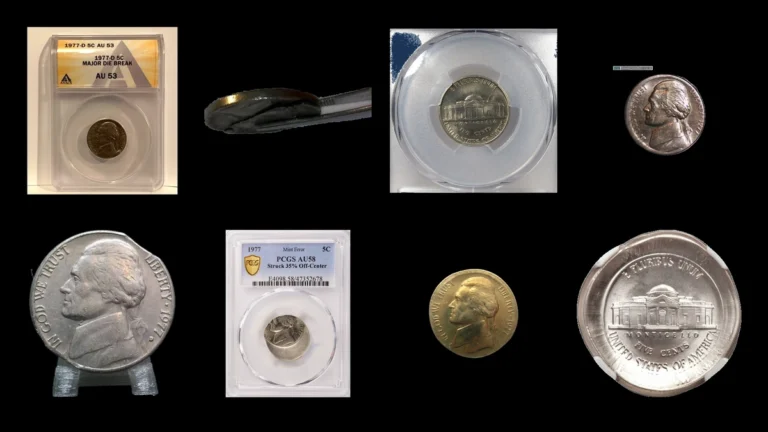
6. 1992 Nickel A Raised Patch from a Die Break Error
When steel breaks away from a die, coin metal can fill the space and leave a raised patch. A 1992-P nickel graded ANACS AU50 was sold with a major die break.
How to Identify
Look for normal detail ending at the raised area. Check for an added-metal seam or damaged rim that would suggest a later alteration.
A break that reaches the rim is often called a cud. An interior raised patch does not earn that name simply because it is large.
What It’s Worth
$20–$350 includes worn examples around $20–$100 and stronger, more attractive breaks around $100–$350. The 1992-P ANACS AU50 example sold for $26 in August 2021.
That result is a helpful reminder that “major” describes the error’s appearance. It does not guarantee a large auction price.
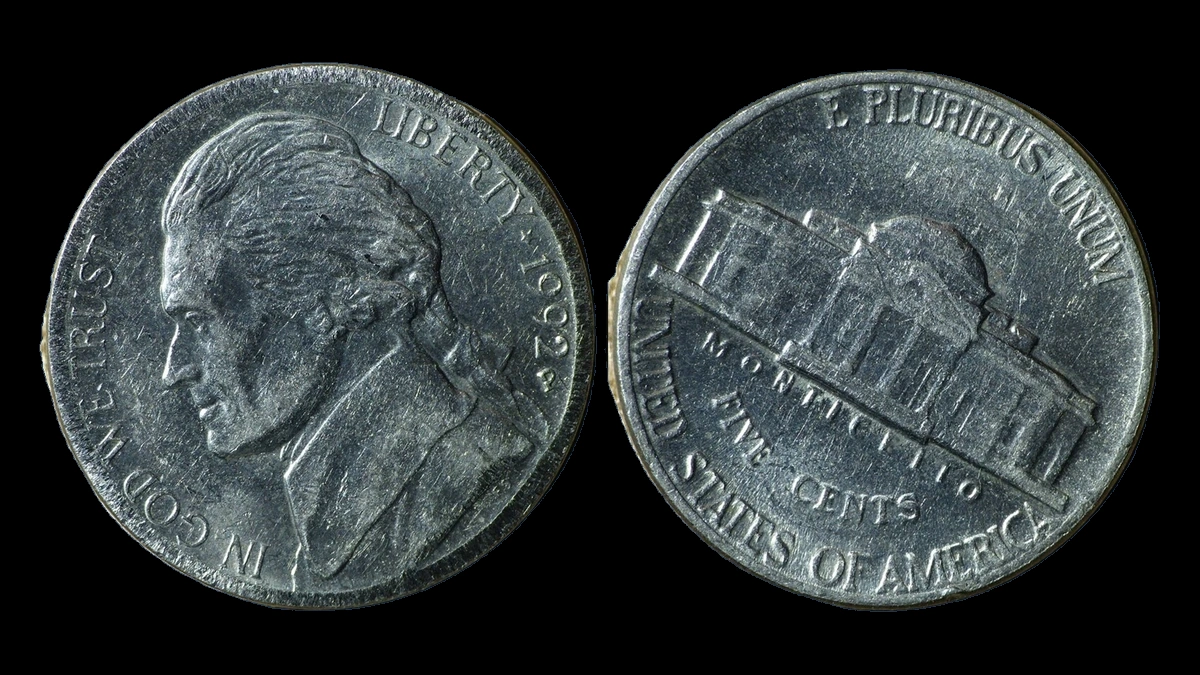
7. 1992 Nickel A Complete Design on a Broadstrike Error
A broadstrike spreads wider because the collar fails to contain the metal properly. Unlike an off-center strike, it can keep the complete outer design.
How to Identify
Check that the outer lettering remains on the coin, then measure across several directions. Compare its size with the normal measurements given above.
A plain edge is normal on a nickel and proves nothing by itself. Hammering can widen a coin too, but often flattens its high points or leaves impact marks.
What It’s Worth
$25–$300 suits a straightforward broadstrike through a particularly clear, attractive example. The lower $25–$125 portion fits modest pieces; stronger expansion can support $125–$300.
A 2000-P broadstrike sold for $51 in July 2022. Use it as a comparison, since the 1992 reports do not supply a matching individual sale.
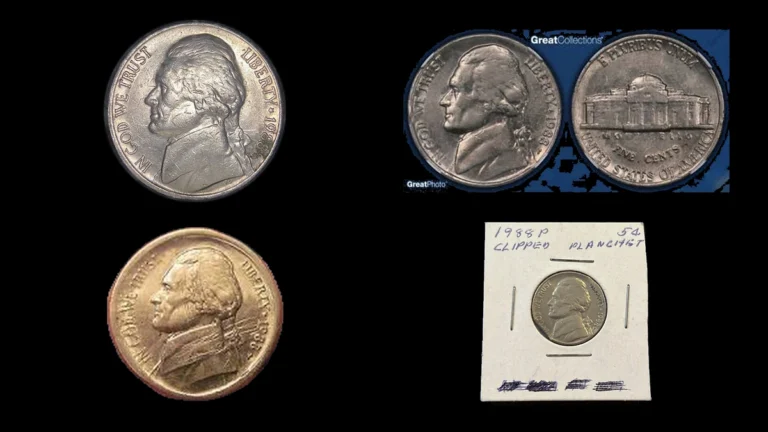
8. 1992 Nickel A Missing Edge from a Clipped Blank Error
A clip is missing metal from the blank before the design is struck. A curved clip can occur when the blank-cutting machine overlaps a hole left by an earlier blank.
How to Identify
Study both ends of the gap and the nearby rim. Fresh file marks or a sharp cut through finished letters point toward later removal.
Weakness opposite a clip can support the identification, though it is not always obvious. A lower weight supports missing metal but cannot tell you when it disappeared.
What It’s Worth
$25–$400 covers typical clips at $25–$150 and larger, convincing examples at $150–$400. A 1997-P nickel with a 20% curved clip sold for $124 in March 2025.
The 1997 coin illustrates the category’s market. Its clip size and shape should not be assigned to a reported 1992 piece without examining that coin.
9. 1992 Nickel A Shifted Design from an Off-Center Strike Error
A documented 1992-D nickel was struck 20% off center toward seven o’clock and graded ANACS MS63. Part of its blank missed the dies, leaving an unstruck crescent.
How to Identify
View the whole outline on both sides, including the blank crescent. Find the date and D mintmark so the coin’s identity remains clear.
The design should extend beyond the available striking area. A fully present design on a wider coin points instead toward a broadstrike, while grinding can leave scratches where detail was removed.
What It’s Worth
$40–$600 spans clear examples around 20% off center at $40–$150 and especially dramatic pieces at $150–$600. A readable date generally improves the appeal.
The documented 1992-D appeared in a lot with two other nickels, so that lot does not establish its individual price. A separately sold 2000-P off-center nickel brought $52 in April 2022 as a broader comparison.
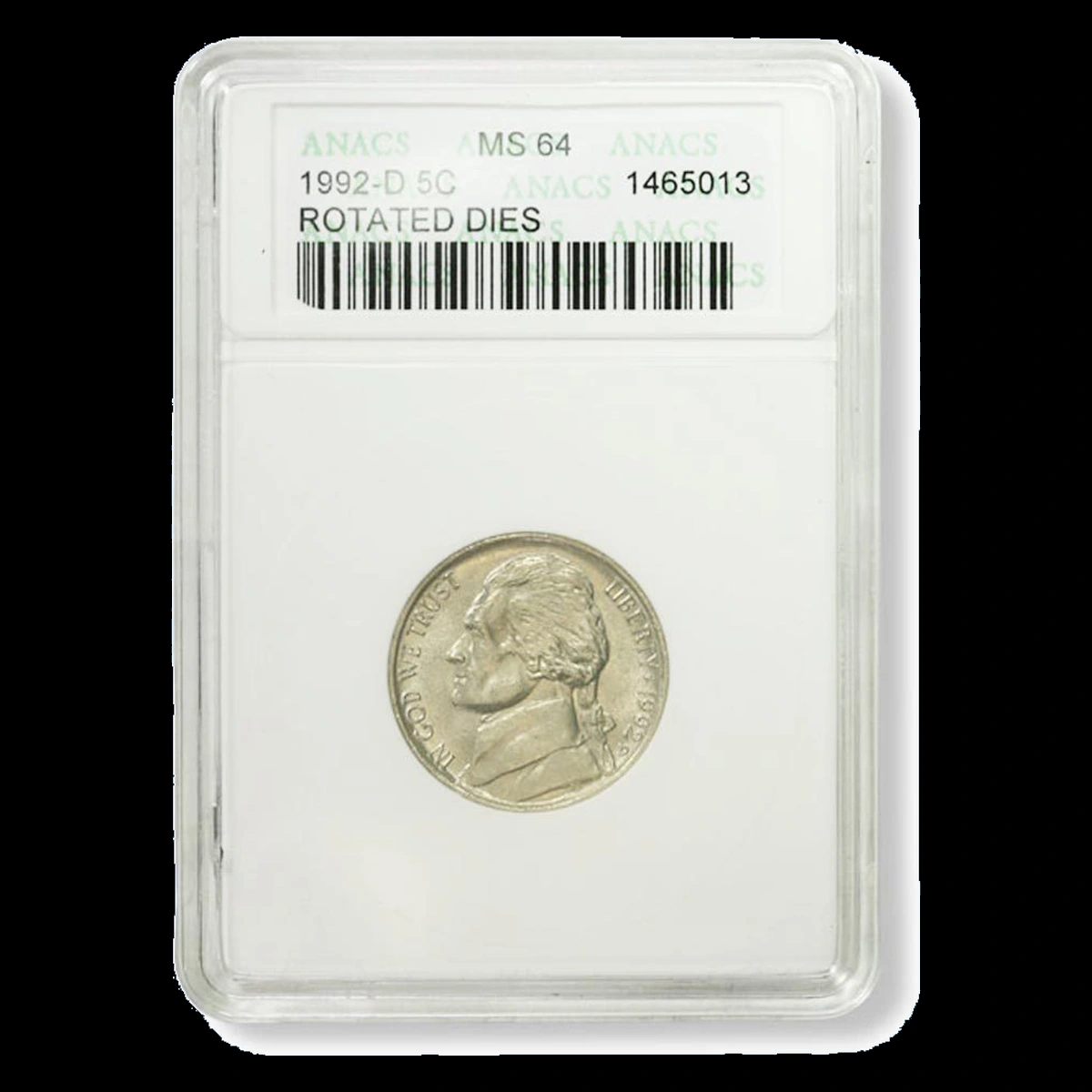
10. 1992 Nickel A Tilted Back from Rotated Dies Error
The reported 1992-D rotation example carries an ANACS MS64 grade. Its report does not supply an angle, so it should not be described as a 90-degree or 180-degree turn.
How to Identify
Hold Jefferson upright and turn the coin over from top to bottom without twisting your fingers sideways. Monticello should finish upright on a normally aligned coin.
Repeat the movement against a straight guide or record it on video. Check the edge for a join, since two altered faces can also create unusual alignment.
What It’s Worth
$25–$500 covers modest rotations around $25–$150 and larger, clearly demonstrated turns around $150–$500. The amount of rotation needs to be measured on the coin being priced.
A 2015-D nickel rotated 90 degrees clockwise sold for $79 in October 2021. That angle and result belong to the 2015 coin, not the reported 1992-D.
Conclusion
Start a 1992 nickel check by deciding whether the odd feature involves color, missing metal, raised detail, or the position of the design. This keeps similar-looking changes from being confused.
Save clear views of both faces and the edge before handling a loose flap or unusual surface. For a copper-colored piece, weight and surviving cent details can help separate a heating error from the much more unusual nickel struck over a penny.