Rare 1872 Nickel Errors (List & Pictures)
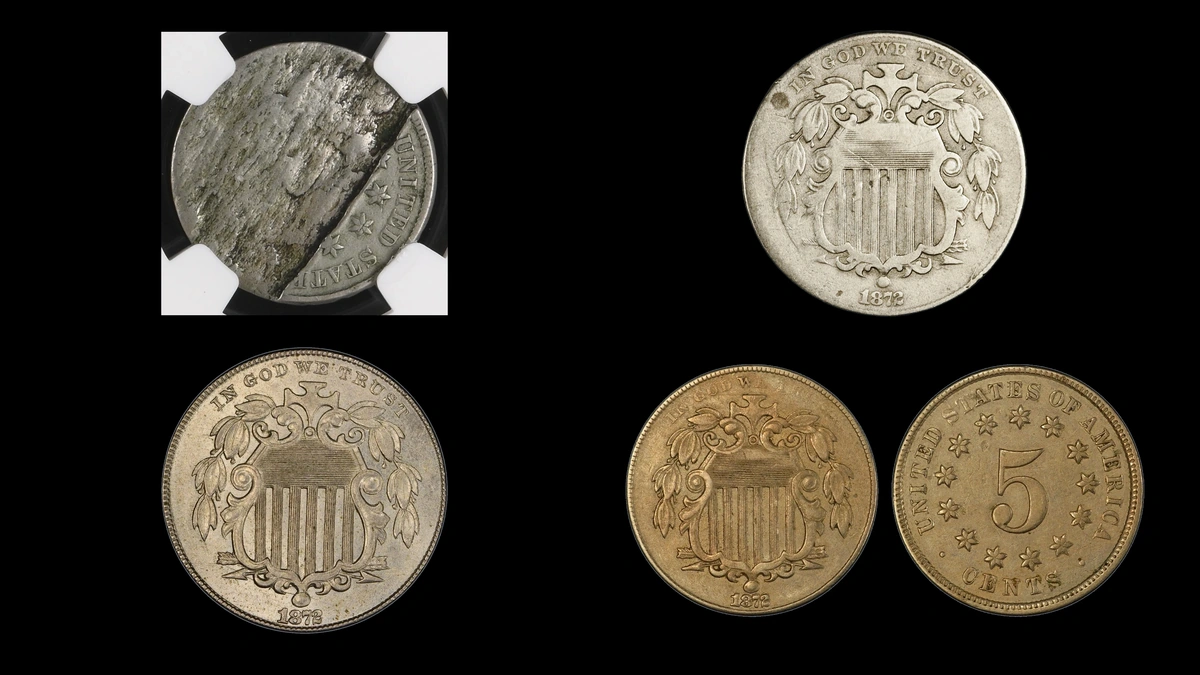
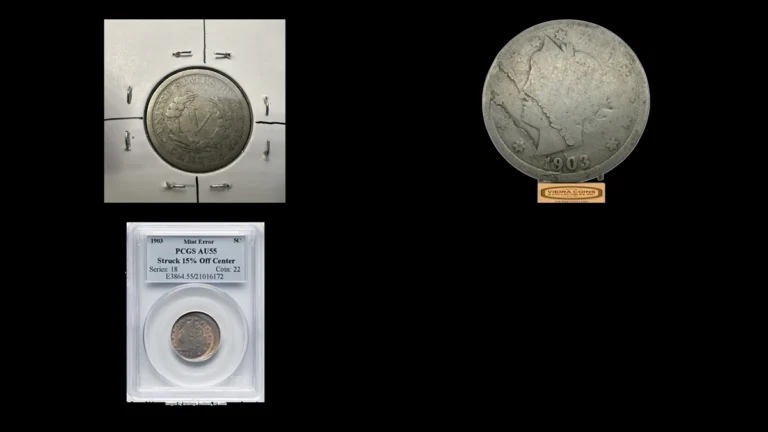
A different-year Proof 1903 Liberty nickel with a rotated reverse sold for $1,380; an 1872 doubled obverse brought $685 in April 2024. Estimated values for 1872 Shield nickel errors range from $20–$3,000 for the ordinary-strike types below.
Use the exposed metal, face alignment and exact repeated shapes to choose the right comparison.
| What looks different? | Possible explanation | Estimated range |
|---|---|---|
| Extensive rough reverse opening | Large lamination | $150–$1,000 |
| Reverse nearly upside down after a controlled flip | Rotated dies | $100–$1,500 |
| Raised lower-shield lines | Die cracks | $20–$300 |
| Repeated shield or star outlines | Doubled die | $100–$2,500 |
| Extra numeral strokes near the date or ornament | Repunched or misplaced date | $75–$3,000 |
An intact Shield nickel weighs about 5 grams and measures 20.5 millimeters across its plain edge. It is copper-nickel alloy throughout, so internal separation differs from loss of an outer clad layer on a modern coin.
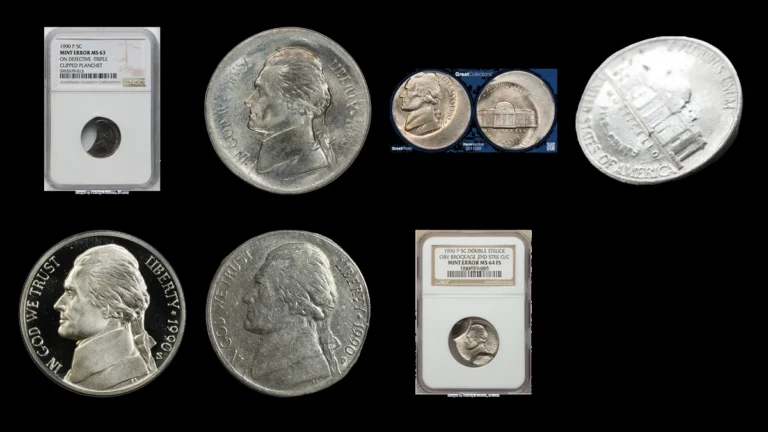
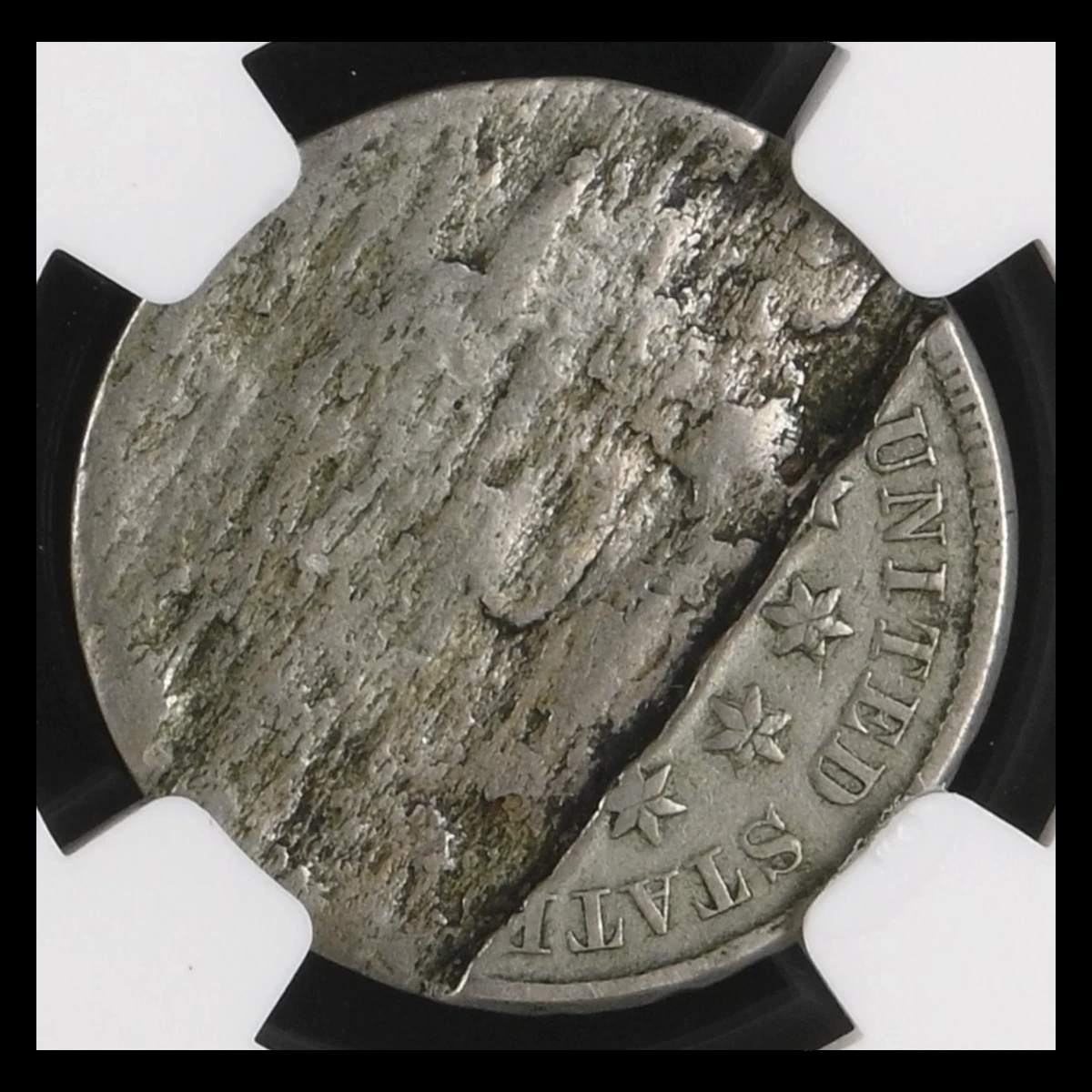
1. 1872 Nickel Much of the Reverse Surface Missing: Large Lamination Error
A 1978 catalog describes an 1872 nickel with about 80% of the back split away. The surviving surface and exposed interior belong to one extensively separated coin.
The percentage describes affected surface area, not loss of 80% of the coin’s weight. The report does not establish an offered matching pair of halves.
How to Identify
Inspect the boundary between remaining reverse design and rough exposed metal without pulling attached pieces. A layered natural opening differs from a machined recess.
Check for smooth circular tracks, uniform grinding or cutting at the edge. Record actual weight instead of calculating it from the reported surface percentage.
The description reprinted in Mint Error News concerns an extensive back-surface separation. A nearly blank face alone cannot establish the same cause without the original boundary.
What It’s Worth
A large genuine separation is estimated at $150–$1,000. Remaining identity, original texture and condition affect its display and appeal.
An 1899 Liberty nickel consisting of one split front half sold for $109 in January 2023. That different design and more complete division provide only a broad comparison.
2. 1872 Nickel The 5 Finishes Almost Upside Down: Rotated Dies Error
The Shield Nickel Varieties catalog records an 1872 example with nearly 180 degrees of rotation. The two dies, the steel stamping tools, faced the wrong direction relative to one another.
Each individual design can otherwise appear centered and complete. Nearly a half turn is the reported relationship, not an angle to assign to every tilted reverse.
How to Identify
Hold the shield upright with the date below, then flip the coin top to bottom without twisting sideways. A normally aligned reverse 5 should finish upright.
Repeat with a normal coin to confirm the motion and use a fixed holder or continuous view to preserve orientation. Separate photographs can be turned independently and cannot prove the rotation.
Inspect the edge for a seam from joined pieces. The candidate must reproduce the same unusual relationship without slipping inside its support.
What It’s Worth
Clearly demonstrated large rotations are estimated at $100–$1,500 across worn through attractive ordinary-strike examples. Preservation still matters alongside the angle.
A Proof 1903 Liberty nickel with a 180-degree rotation sold for $1,380 in April 2006. Its specially prepared finish and different design prevent direct transfer of that result to this Shield nickel.
3. 1872 Nickel Raised Lines Around the Lower Shield: Die Cracks Error
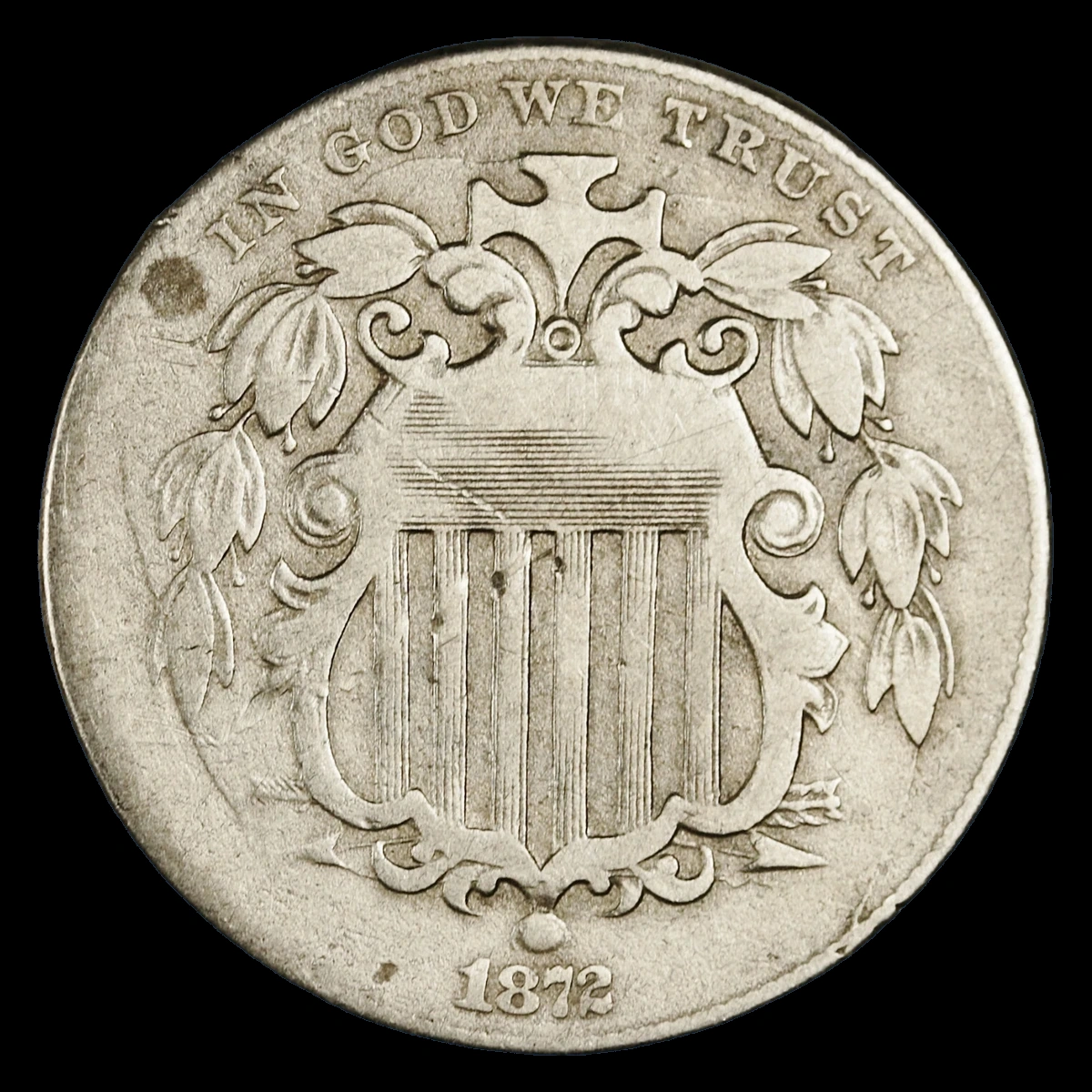
Reported cracks cross the round lower ornament, curved decoration or lower leaf tips, sometimes extending toward the rim. Coin metal filled openings in the die and copied them as raised threads.
The routes can reflect different tools or stages of die wear. A longer branch is not automatically a separate type of error.
How to Identify
Inspect the adjacent edge for an impact, then trace the line inward under low light. Its center should rise above the surface rather than form a groove.
A scratch may push metal up along its sides and appear raised in one photograph. Change the light direction to judge the relief rather than the line’s brightness or length.
What It’s Worth
Visible cracks on worn through lightly worn coins are estimated at $20–$300. Clear connected ridges and preserved surfaces support stronger comparisons.
The amount includes the coin’s ordinary value. An exceptional unworn coin can command more for preservation, without that total being a crack-only premium.
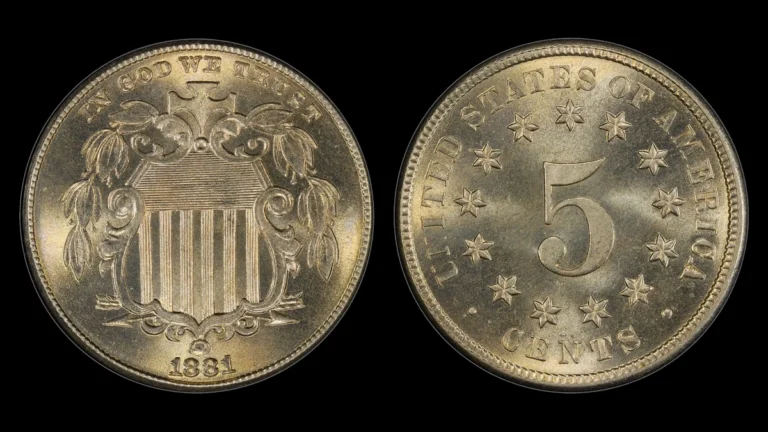
4. 1872 Nickel Repeated Shield, Ornament or Star Detail: Doubled Dies Error
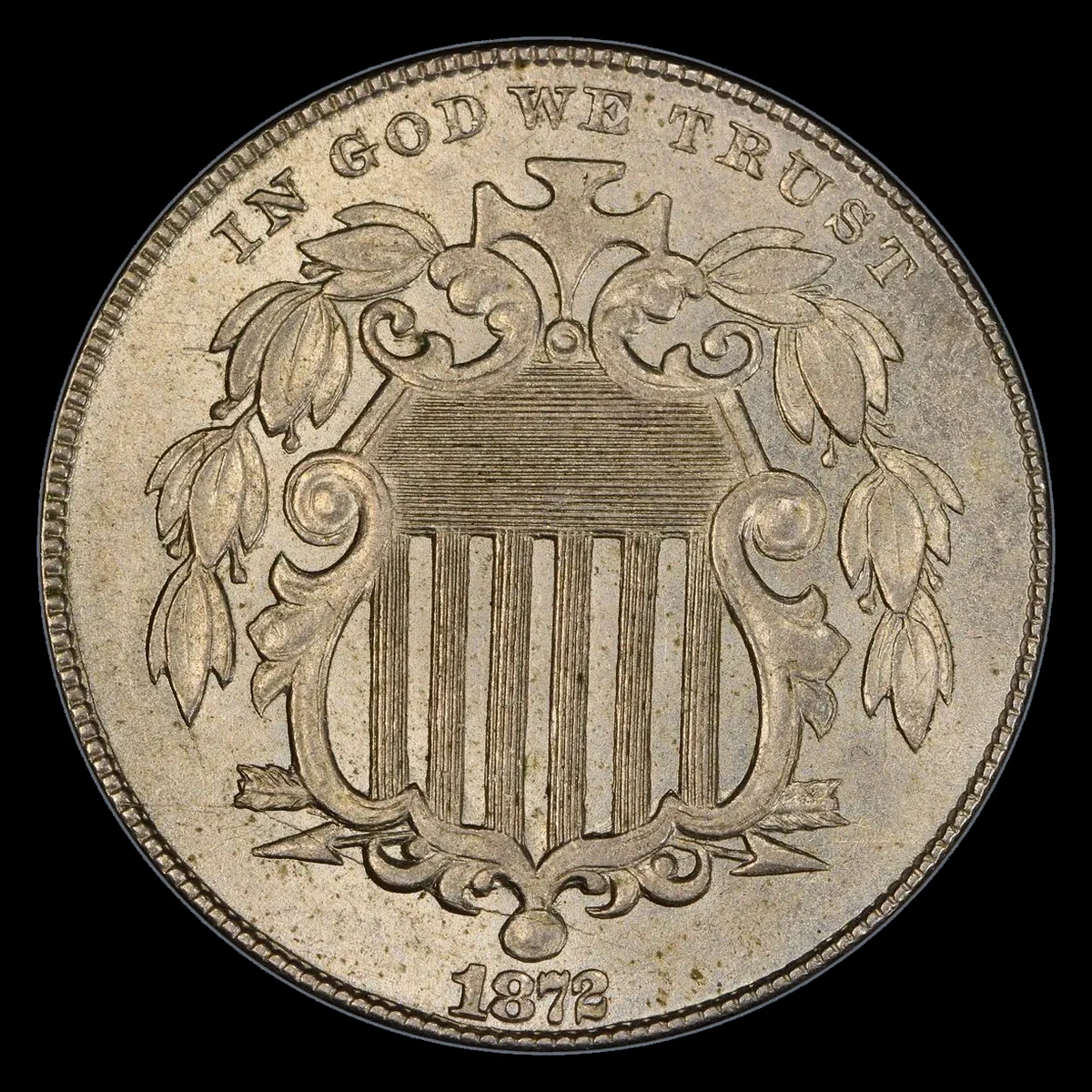
Some 1872 dies repeat front details in the shield, cross, round ornaments or curved decoration. Other examples have doubled reverse stars.
The image was repeated in the die before striking, so one blow could reproduce both outlines. Front and reverse patterns are separate varieties.
How to Identify
Choose a photograph showing the same face and pattern, then trace rounded extra contours. Flat shelves from movement during striking have a different origin.
A doubled-star reverse can accompany an extra date trace below 2. Check that trace separately rather than using it in place of a match to the stars.
What It’s Worth
Identified doubled varieties are estimated at $100–$2,500. The exact pattern, strength of separation and condition guide the comparison.
PCGS records $685 on eBay in April 2024 for an MS62 FS-103 doubled obverse. That result does not belong to a doubled-star reverse or every other 1872 variety.
5. 1872 Nickel Older or Misplaced Numerals: Date-Punch Varieties Error
One variety preserves parts of a larger date punch intended for a dime beneath the corrected nickel date. This was a wrong-tool event during die preparation, not a nickel struck on a dime blank.
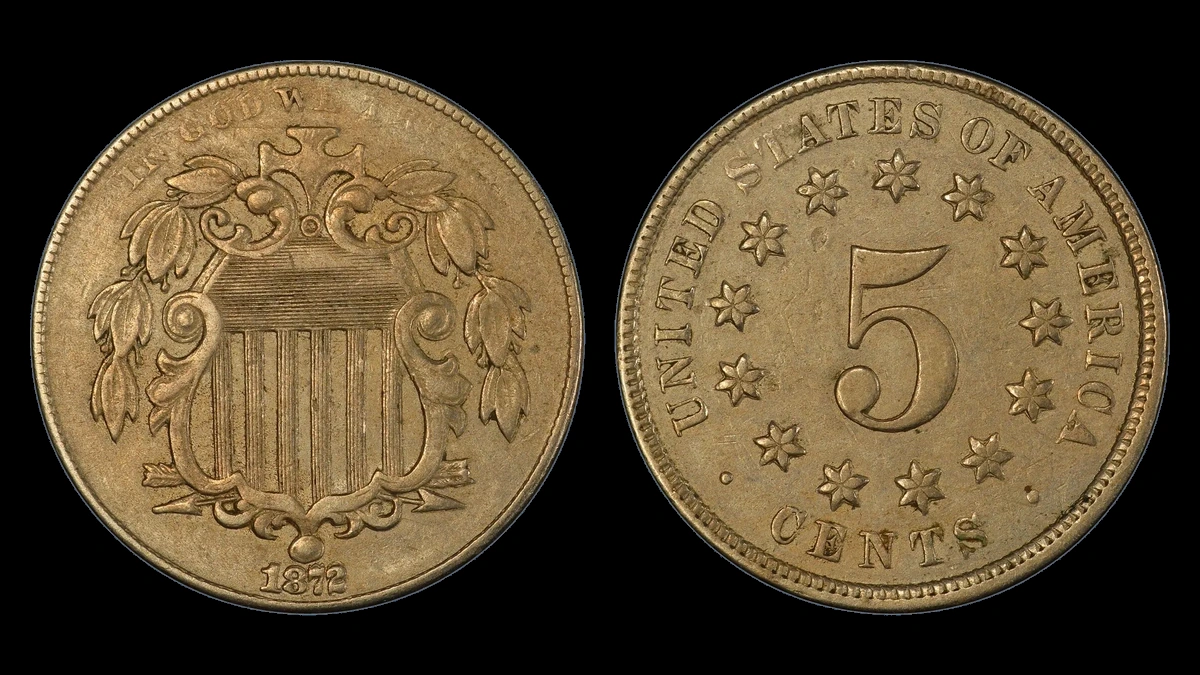
Other reported arrangements include a curved top of 2 beside the round ornament above the date and a misplaced 2 below 7. They require different location checks.
How to Identify
Enlarge the whole date before studying an isolated stroke. For the large-date correction, compare remnants around the normal numerals with the size and spacing of the earlier punch.
For misplaced digits, inspect beside the ornament and below 7 against the appropriate Shield Nickel Varieties reference. A bump or crack must not substitute for a recognizable numeral contour.
A wrong date punch leaves the normal metal blank unchanged. Color and low weight are not diagnostics for this die variety.
What It’s Worth
Identifiable repunched and misplaced dates are estimated at $75–$3,000. A small worn remnant and a clear large-date correction need different comparisons.
The same-year $685 doubled-obverse result supplies general variety-and-condition context, not a sale of the corrected large date. Multiple remnants on one coin receive one combined valuation.
Conclusion
An 1872 nickel can preserve a flaw in the blank, the die’s alignment or the way its design was prepared. Exposed interior metal, a repeatable reversed orientation and recognizable extra numeral strokes each tell a different story.
Keep original metal attached and compare the same variety and finish before applying a price. A dime-sized date punch is a tool detail, while an 80% surface separation is not a claimed 80% loss of weight.