Rare 1903 Nickel Errors (List & Pictures)
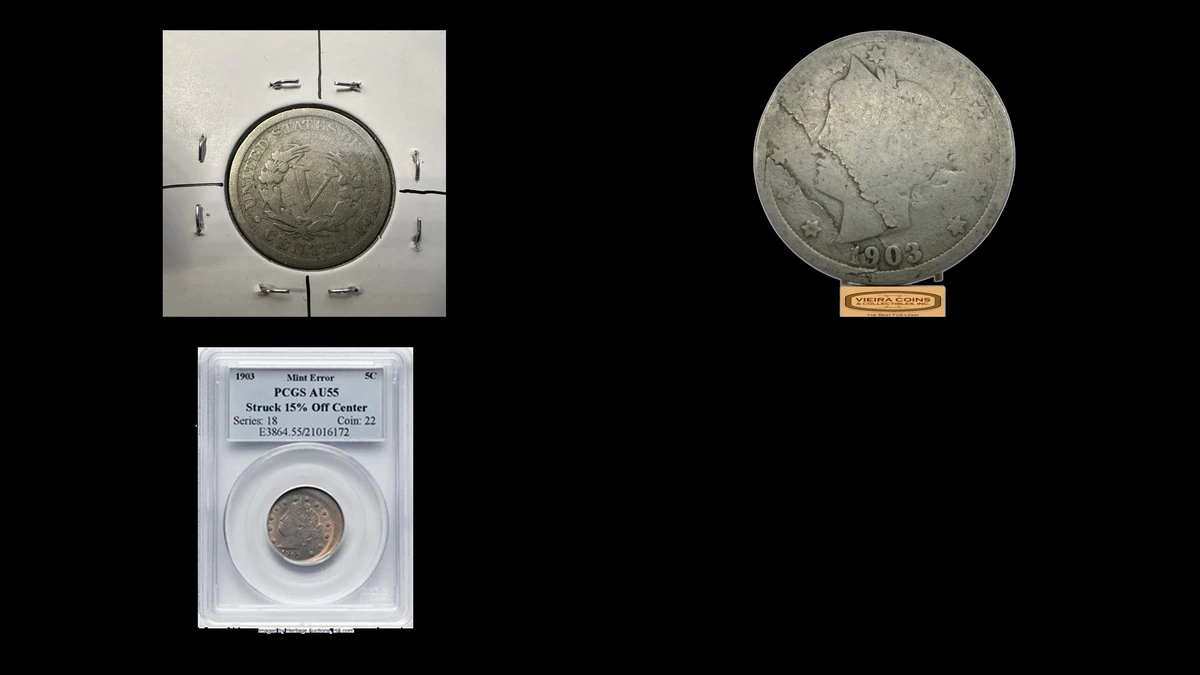
A 1903 Proof can hide a dramatic alignment error behind an ordinary-looking portrait. The reverse reveals it only when the coin is turned in a controlled way.
Estimated values for 1903 nickel errors span $10–$3,500, with a 65% off-center example recorded at $2,875. First check the relationship between the faces, then compare extra date strokes, separated layers, and design displaced across the blank.
| Inspection | Possible error | Estimated range |
|---|---|---|
| Controlled top-to-bottom turn | 180-degree Proof rotation | $300–$2,000 |
| Magnified date | Repunched date | $10–$200 |
| Peeling boundary or paired inner surfaces | Lamination or split after striking | $10–$1,500 |
| Missing design beside blank metal | Off-center strike | $100–$3,500 |
1. 1903 Nickel The Reverse Is Upside Down after a Top-to-Bottom Turn: Rotated Proof Dies Error
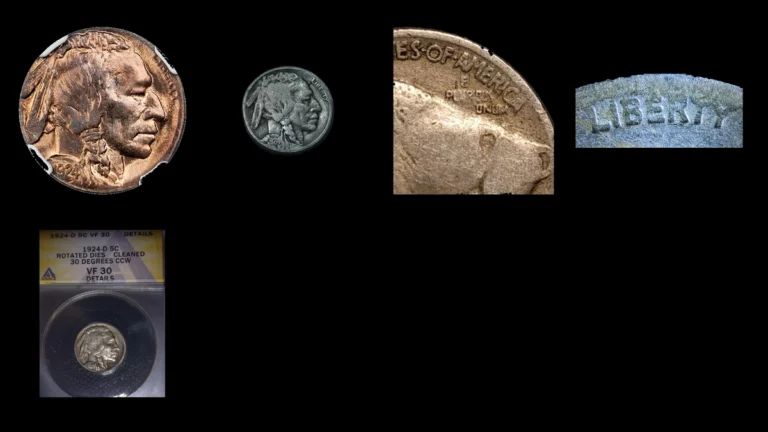
Some 1903 Proof nickels were struck with the designs set 180 degrees from their intended relationship. This produces medal alignment, rather than the normal coin alignment used for U.S. nickels.
The effect concerns the two dies’ orientation, not a design shifted toward the edge. It is recorded on a portion of the Proof issue, not every 1903 Proof.
How to Identify
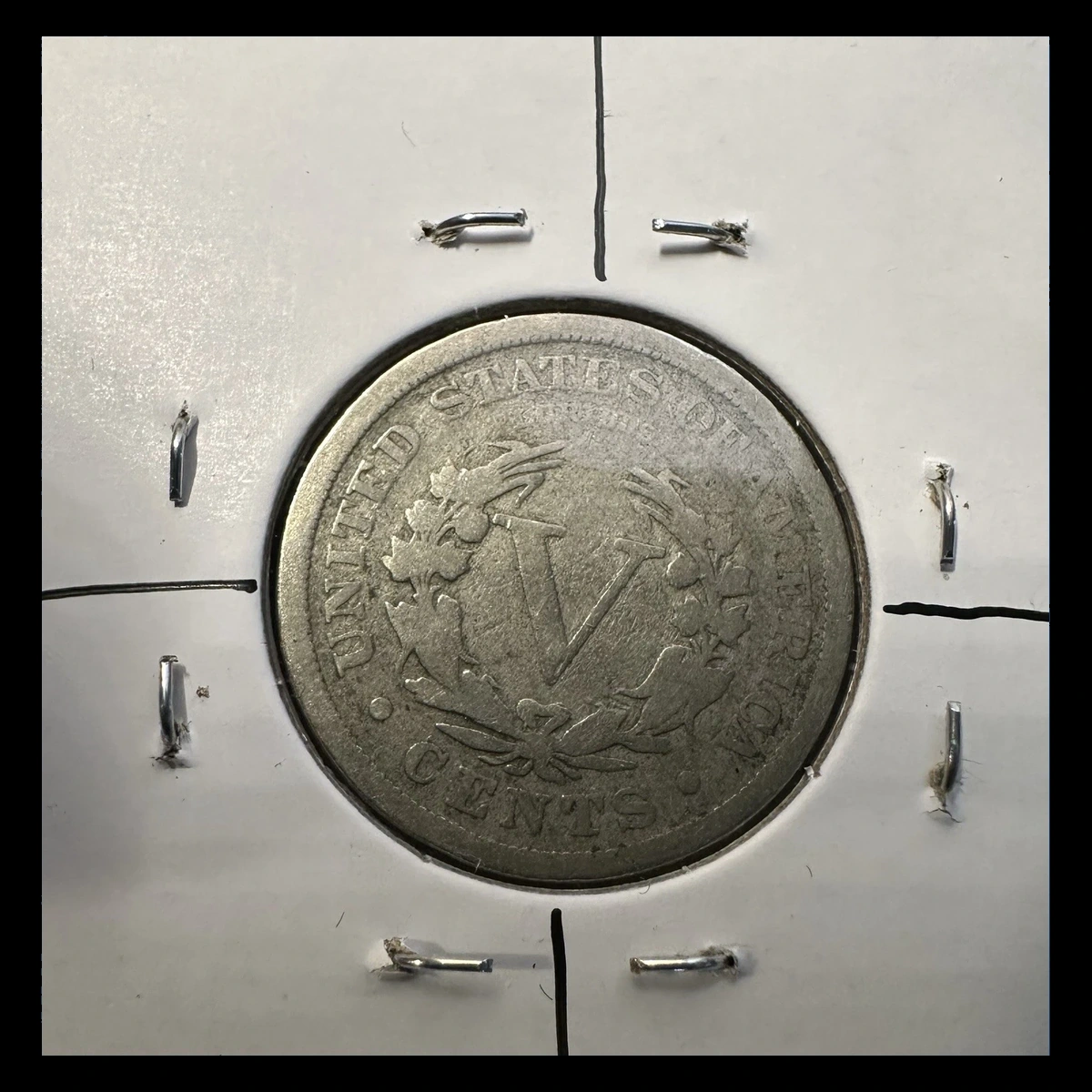
Begin with Liberty upright and flip the coin top to bottom around a horizontal axis. A normal comparison nickel’s reverse becomes upright, while the 180-degree error’s reverse remains upside down.
Repeat without twisting sideways, preferably recording a short video. Two independently rotated photographs cannot establish the relationship, and an encapsulated Proof can be tested without opening its holder.
Confirm Proof manufacture and inspect a loose coin’s edge for a joining seam. Normal references are about 5 grams, 21.2 millimeters, and a plain edge, useful for the other physical checks below as well.
What It’s Worth
$300–$2,000 is an estimated range for genuine rotated 1903 Proofs in ordinary collectible grades. A PCGS PR66 Cameo example sold for $1,380 in April 2006.
Cameo describes frosted details against reflective fields. That result includes the underlying well-preserved Proof, so scratches or cleaning can substantially change the comparison.
2. 1903 Nickel Small Numeral Remnants Appear beside the Date: Repunched Date Error
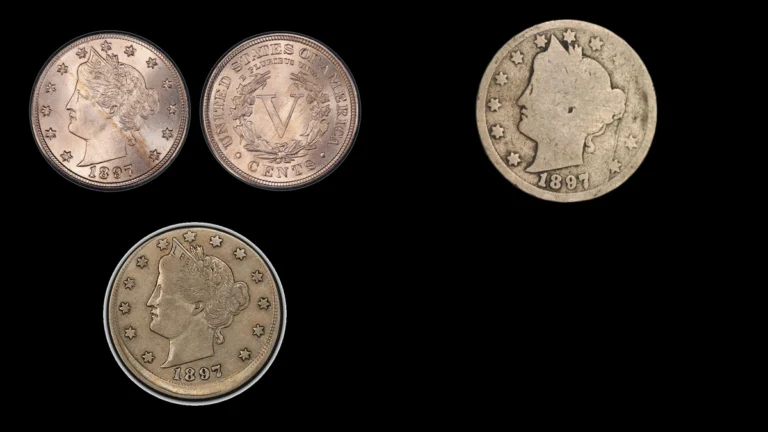
One published 1903 pattern shows extra portions beneath 1 and 9. Another has traces to the left of the lower portions of 1, 9, and 0.
These remnants came from shifted date punches into a die before it struck coins. The two patterns should remain separate, even though both fall within repunched dates.
How to Identify
Compare the complete date with the published variety photographs, following the bottom of 1 into the relevant 9 and 0 details. Distinguish raised numeral fragments from cuts, reflections, and flat shelves.
NGC also lists a 1903/903 variety, but the label alone does not establish a match to either published pattern. Philadelphia placed no mint letter on these 1903 nickels, so that absence is normal.
What It’s Worth
$10–$200 is an estimated range from circulated examples through moderately marked unworn coins. The Flynn and Van Note book’s historical figures of $10 to about $110 were guide estimates for the published patterns, not completed auctions.
Readable extra strokes and better preservation improve the comparison. A visible date variety can still be worth less when its surfaces have been heavily cleaned.
3. 1903 Nickel A Surface Layer Peels or Matching Pieces Separate: Lamination and Split Metal Error
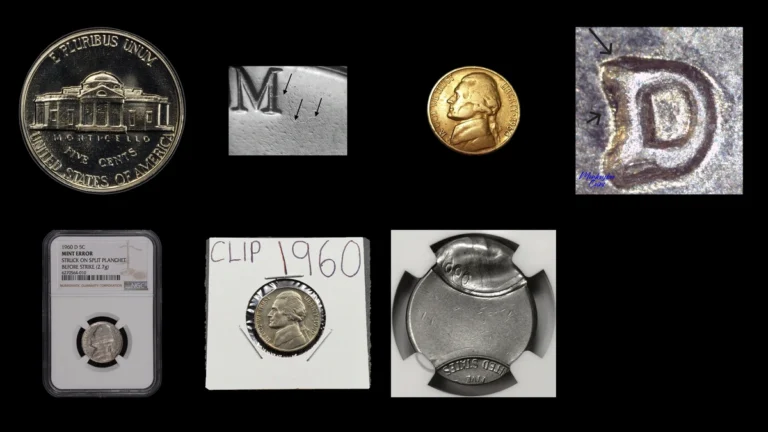
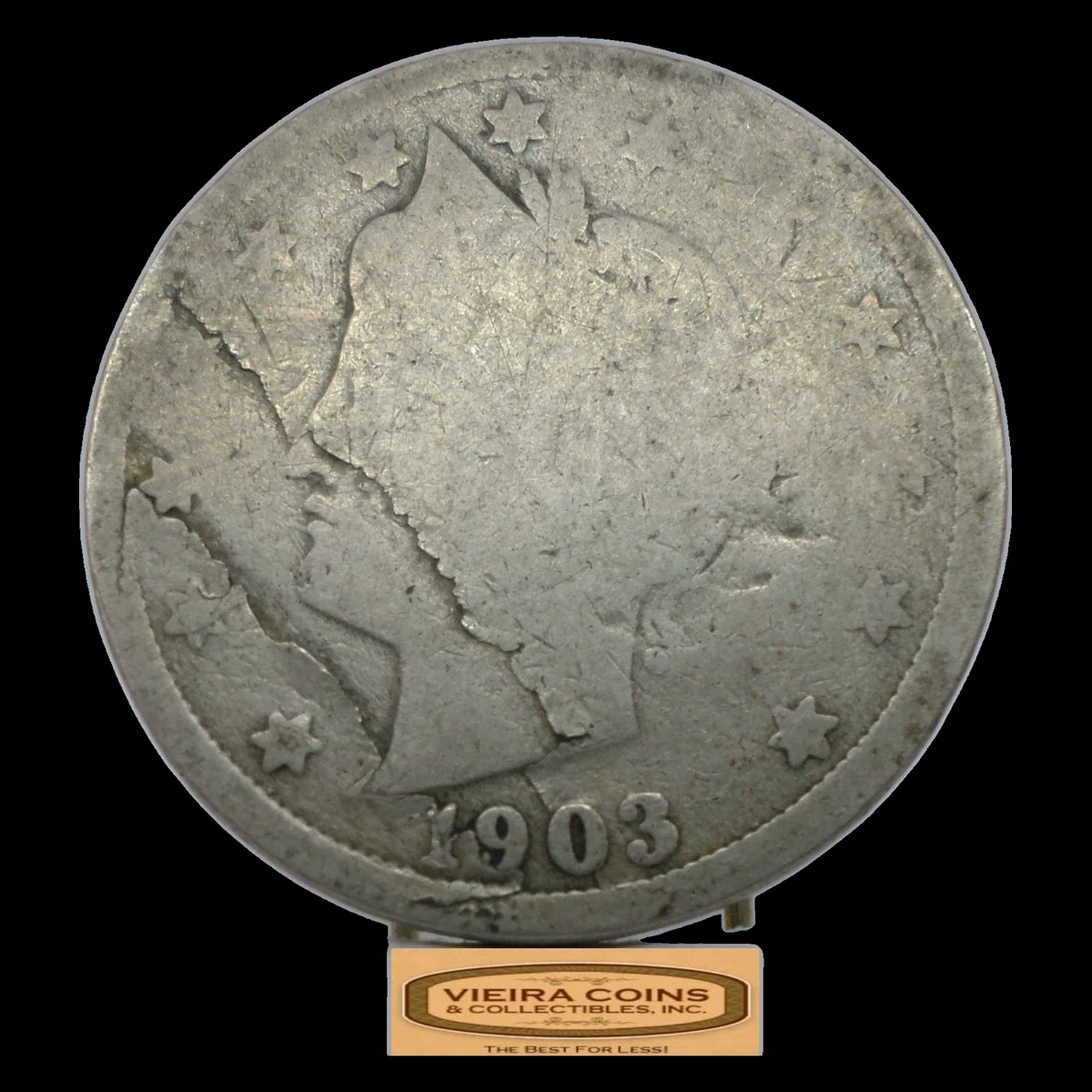
The 1986 Harry Einstein auction catalog described an MS60 nickel with obverse lamination. This local surface separation differs from a collector’s recollection of a 1903 coin that split into two layers after striking and was sold with both pieces together.
How to Identify
For a peel, examine the layer boundary without lifting attached metal. A rough exposed surface and thin ledge differ from a scratch with metal pushed up along its sides.
For an alleged pair, compare complementary inner surfaces and the surviving obverse and reverse designs using photographs. Do not press pieces together, and do not accept a shared diameter as proof that they came from the same coin.
The combined weight should approach the original nickel’s weight if little metal has been lost. Keep that paired evidence separate from a single small flake or an unmatched thin fragment.
What It’s Worth
$10–$200 is an estimate for small genuine laminations, while a verified split-after-striking pair may fall around $300–$1,500 for both pieces together. The supplied pair is a collector recollection without an individual completed sale amount.
A 1911 Liberty nickel with an obverse lamination sold for $51 in January 2023. That nearby-year surface-peel comparison does not value a complete 1903 split pair.
4. 1903 Nickel The Design Runs Off the Disk beside an Empty Area: Off-Center Strike Error
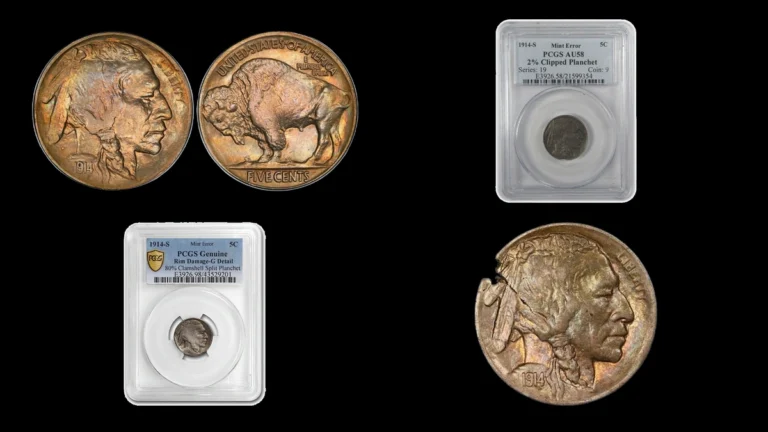
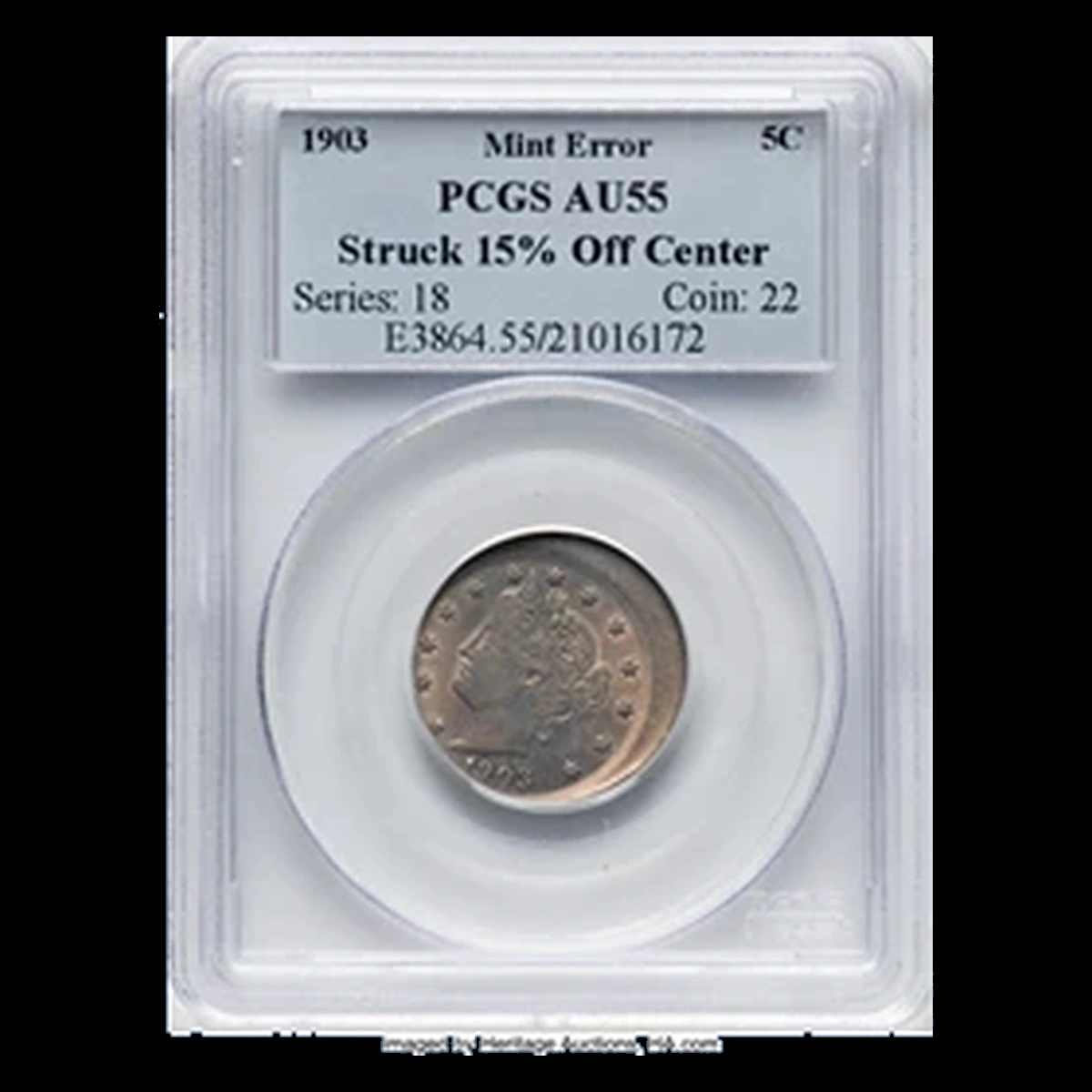
The supplied examples show very different degrees of displacement: a PCGS AU55 coin struck 15% off-center and an NGC MS64 coin struck 65% off-center. Both resulted from a blank positioned away from the dies’ center.
How to Identify
Verify the surviving date and inspect both faces at the border between untouched metal and struck relief. Some intended design should end beyond the disk, rather than remain complete within a wide border.
A centered reverse opposite an uneven obverse suggests a different alignment problem. Check apparent blank areas for grinding or polishing that removed finished detail after minting.
What It’s Worth
$100–$3,500 is an estimated range for dated 1903 off-center nickels. The 65% MS64 example realized $2,875 in a Heritage auction reported by Mint Error News.
Its unworn surfaces, dramatic offset, and readable identity support that specific result. The much smaller 15% AU55 error needs a separate condition and displacement comparison.
Conclusion
For a 1903 nickel, choose the inspection method that fits the suspected feature. A controlled turn reveals die rotation, magnification separates date patterns, and photographs of matching inner surfaces help evaluate a split pair.
Keep original surfaces and attached metal intact. When comparing values, distinguish a modest worn off-center strike from a dramatic unworn example, and a single peel from both pieces of one separated coin.