Rare 1884 Nickel Errors (List & Pictures)
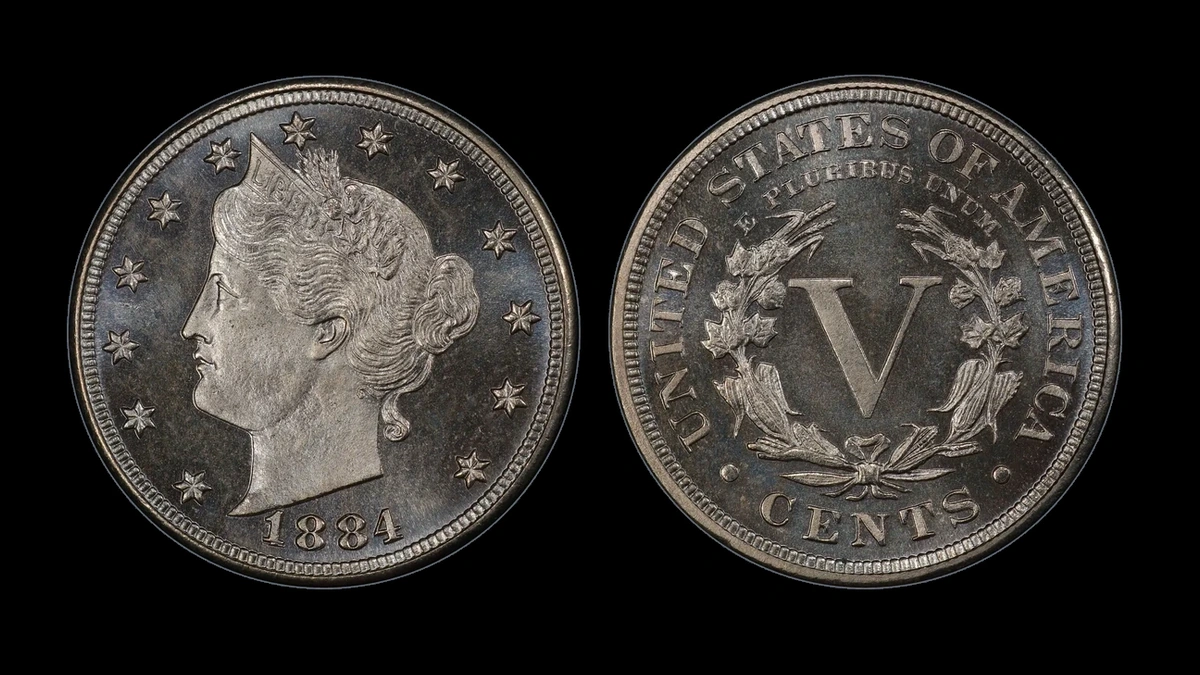
Matching an 1884 repunched date does not tell you whether the nickel is an ordinary strike or a Proof. That separate distinction can explain a large part of its value.
Estimated whole-coin values for 1884 nickel errors range from $25 to $9,000, with an exceptional FS-301 Proof bringing $8,812.50. Compare the date remnants first, establish the finish independently, and then inspect any peeling metal on each face.
1884 Nickel Earlier Numeral Strokes Appear beside the Date: Repunched Date Error
FS-301 preserves portions of an earlier date-punch position in the die. Coins struck with that die repeated the extra strokes without needing a second blow on the finished nickel.
The recognized pattern occurs on ordinary circulation issues and specially made Proofs. Its presence alone therefore identifies neither finish nor grade.
How to Identify
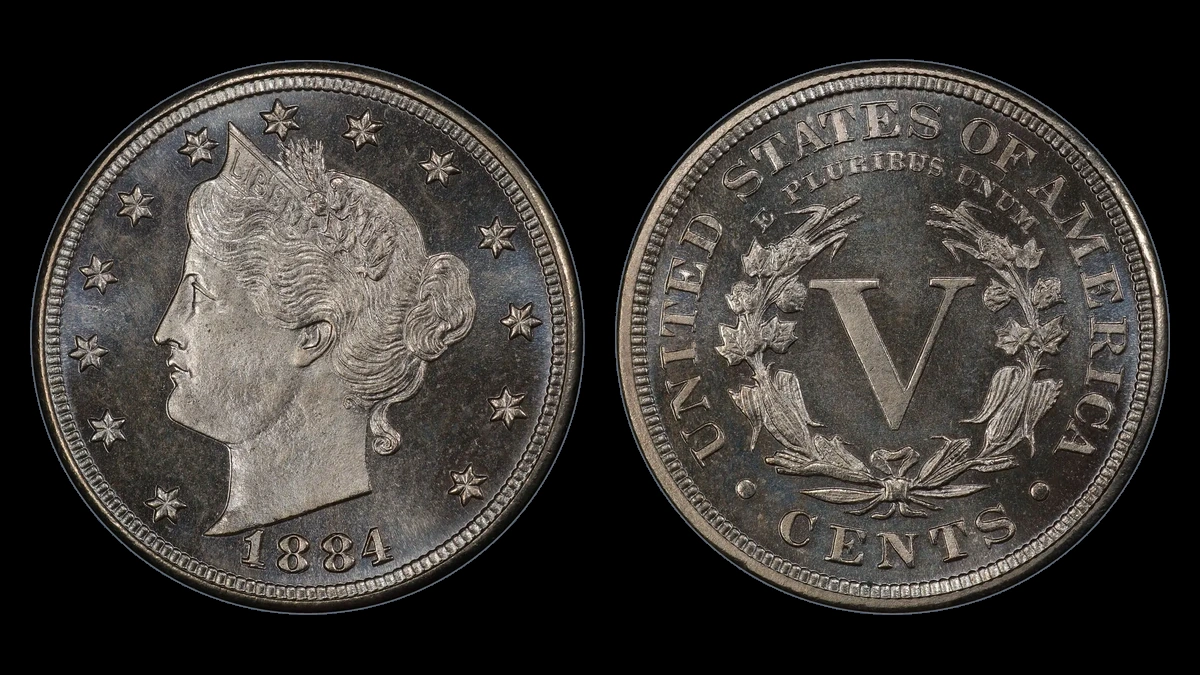
Examine all four digits together and compare their remnants with the cataloged FS-301 example. The supplied description places earlier strokes toward the upper left of the final digits.
Look for recognizable parts of numerals rather than random lumps or scratch edges. Flat shelves from movement during striking can make a date look doubled without reproducing the same punched pattern.
Evaluate Proof manufacture separately from the date, using the full coin and an appropriate attributed comparison. Reflective surfaces can result from polishing, so brightness alone is insufficient.
What It’s Worth
$40–$800 is an estimated whole-coin range for circulated through lower unworn repunched-date examples. Proofs across a wider quality range have a separate estimate of $300–$9,000.
Heritage recorded $8,812.50 in June 2013 for a PCGS PR66+ Deep Cameo FS-301. That describes an exceptionally preserved Proof with frosted raised detail against mirrorlike fields.
Its finish and preservation account for much of that high result. The entire amount should not be described as a premium added for a few extra date strokes.
1884 Nickel Thin Surface Metal Separates on Both Faces: Lamination Error
A reported ungraded 1884 nickel has lamination on its obverse and reverse. Weakness inside the alloy allowed surface metal to separate, leaving a flap or a shallow area of exposed inner metal.
This is not nickel plating peeling from a different core. Two affected faces also do not establish that the disk split completely into two pieces.
How to Identify
Photograph each face separately and follow the actual layer boundaries under angled light. A naturally separating sheet differs from a gouge or scattered corrosion pits.
Leave any attached flap in place and inspect the plain edge for cutting or grinding. The seller’s ungraded description does not establish a certified condition or a fixed flaw location.
A loose normal nickel weighs about 5 grams and measures 21.21 millimeters. Missing fragments may lower the weight, while retained layers can leave it nearly unchanged.
What It’s Worth
$25–$250 is an estimate for genuine 1884 surface laminations, depending on preservation and the visibility of the separation. The supplied seller listing is marked sold and displays $34.95, but it allowed Best Offer.
That displayed figure does not establish the final accepted amount. It also does not justify assigning two separate complete values merely because both faces are affected.
Conclusion
An 1884 nickel needs two different comparisons depending on the feature: matching numeral remnants for FS-301, or an actual internal layer boundary for lamination. The date pattern can occur on both ordinary and Proof coins.
Preserve the original surfaces and determine finish and condition independently. An exceptional Deep Cameo result and a modest ungraded surface-flaw listing do not measure the same kind of value.