Rare 1974 Nickel Errors (List & Pictures)
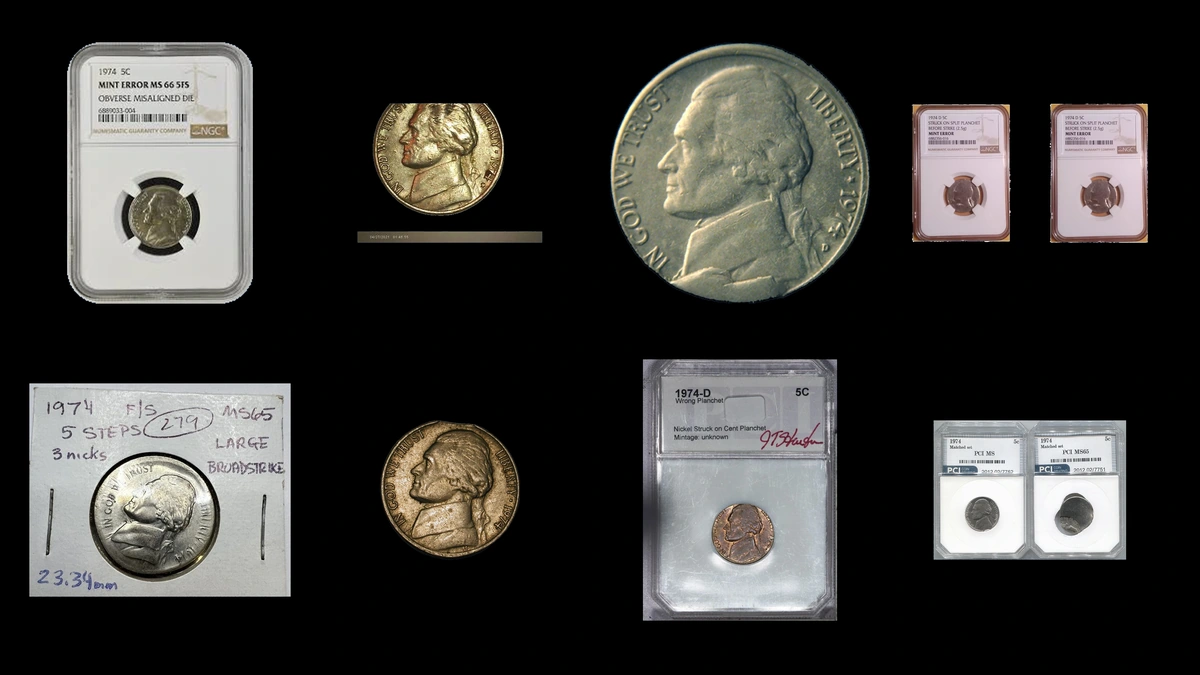
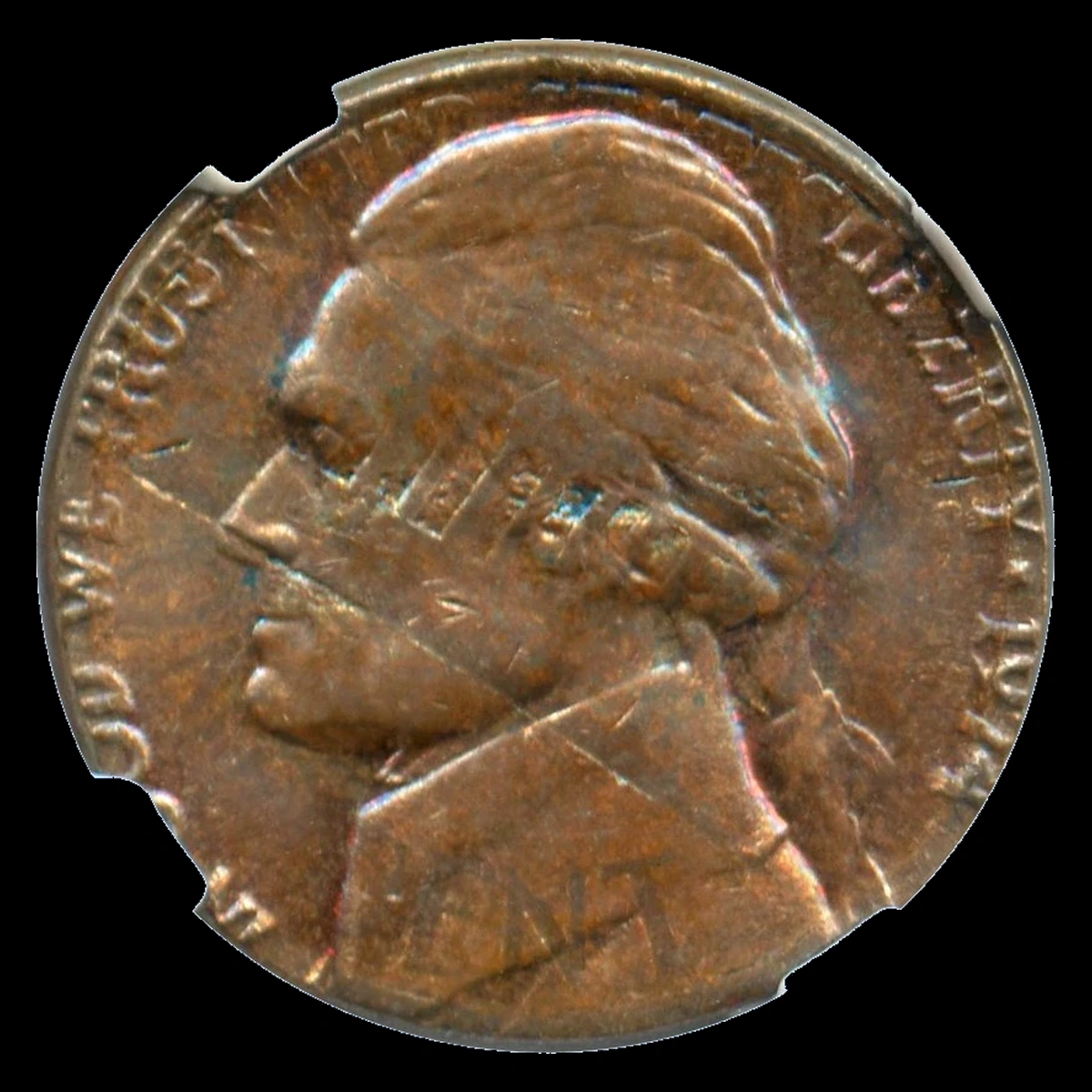
Memorial columns across Jefferson’s jaw reveal a finished Lincoln cent beneath one 1974 nickel design. That coin sold for $5,040 in January 2023.
The wider list of 1974 nickel errors spans about $5–$7,500, including modest die flaws and striking errors with two dates. Compare both faces before deciding whether your clue involves the design, the blank, or another coin underneath.
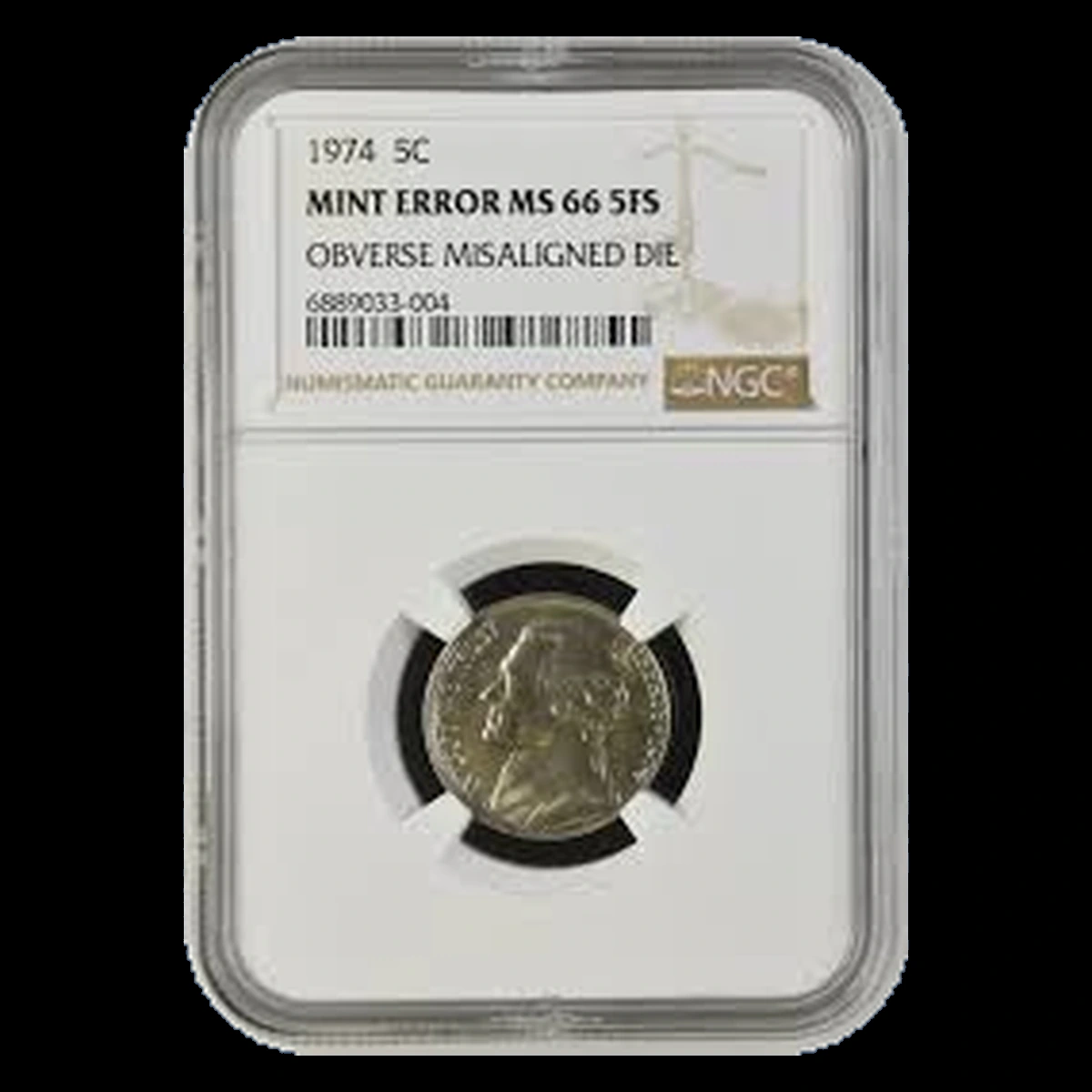
1. 1974 Nickel One Shifted Face from a Misaligned Die Error
The recorded 1974-D PCGS AU58 example has a front design displaced 6% while its back remains centered. One stamping tool moved, rather than the whole blank.
How to Identify
Compare Jefferson’s border with Monticello’s in straight-down photographs. The portrait and surrounding letters should move together on the affected face.
A crushed rim can change border width without moving the whole design. Check the edge for squeezing, and do not transfer the recorded 6% to every uneven nickel.
What It’s Worth
$15–$150 is the estimate for modest genuine examples. The documented Denver coin sold for $84 in December 2024.
That price concerns one displaced face and very slight wear. It does not price a two-sided off-center strike.
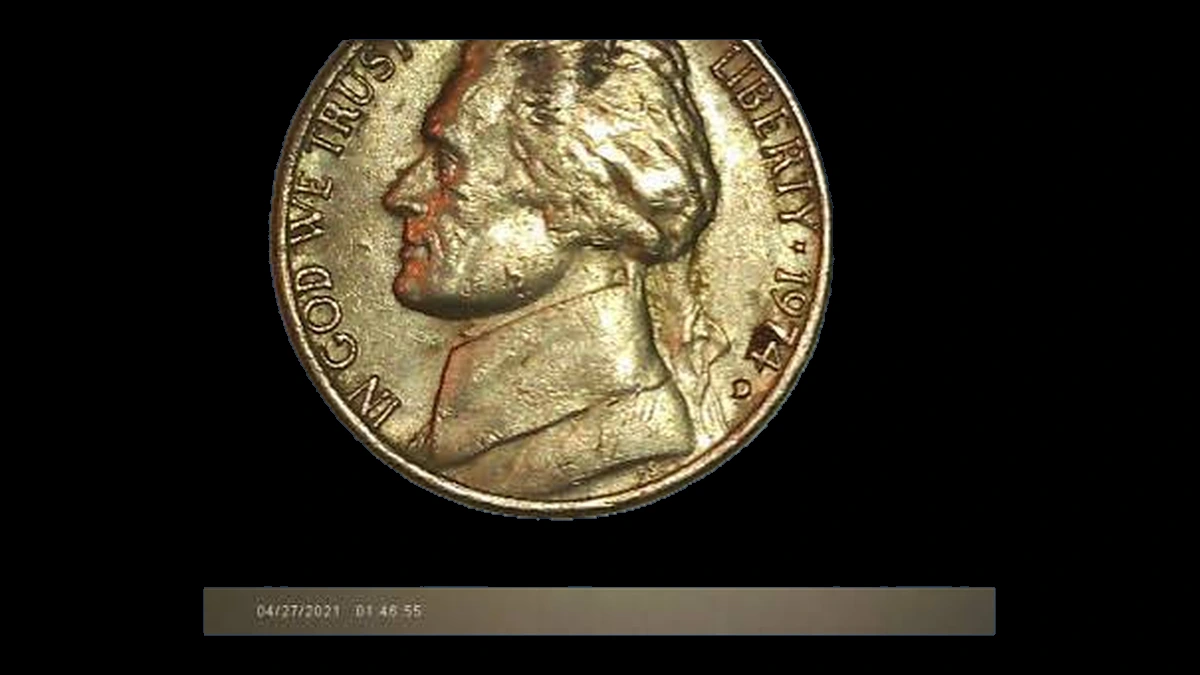
2. 1974 Nickel A Reported Extra Mintmark Outline Error
A repeat punch can leave part of an earlier D or S on the die. Year lists report this category, but the comparison must be a nickel variety.
Philadelphia normally has no P in 1974, Denver uses D, and S identifies collector Proofs. These issues are not interchangeable.
How to Identify
Find the mintmark below the date and trace the complete extra curve. It should fit another impression of the same letter.
Compare an identified same-year nickel, rather than borrowing a Lincoln-cent variety number. Move the light to separate lasting metal detail from glare.
What It’s Worth
$10–$200 is the estimate for a genuine matched repunched mintmark in this reported category. Clear overlap and original surfaces support the upper portion.
No particular 1974 sale sets this range. A normal D or S by itself earns no repunching premium.
3. 1974 Nickel Repeated Details from a Doubled Die Error
Reported Denver doubling concerns design repeated on the stamping tool before it made the coin. It does not require another trip through the press.
How to Identify
Compare the actual extra outlines with a normal 1974-D and a confirmed variety image. The report does not justify assuming a particular date letter or building feature must be doubled.
Follow several connected details for a consistent pattern. Flat shelves that cut into a letter can result from movement during striking instead.
What It’s Worth
$15–$250 is a working estimate for identified modest doubled designs. Visibility and preservation affect the comparison.
This is not a recorded sale of a named 1974 variety. Its normal date-and-mint value is already part of the whole-coin range.
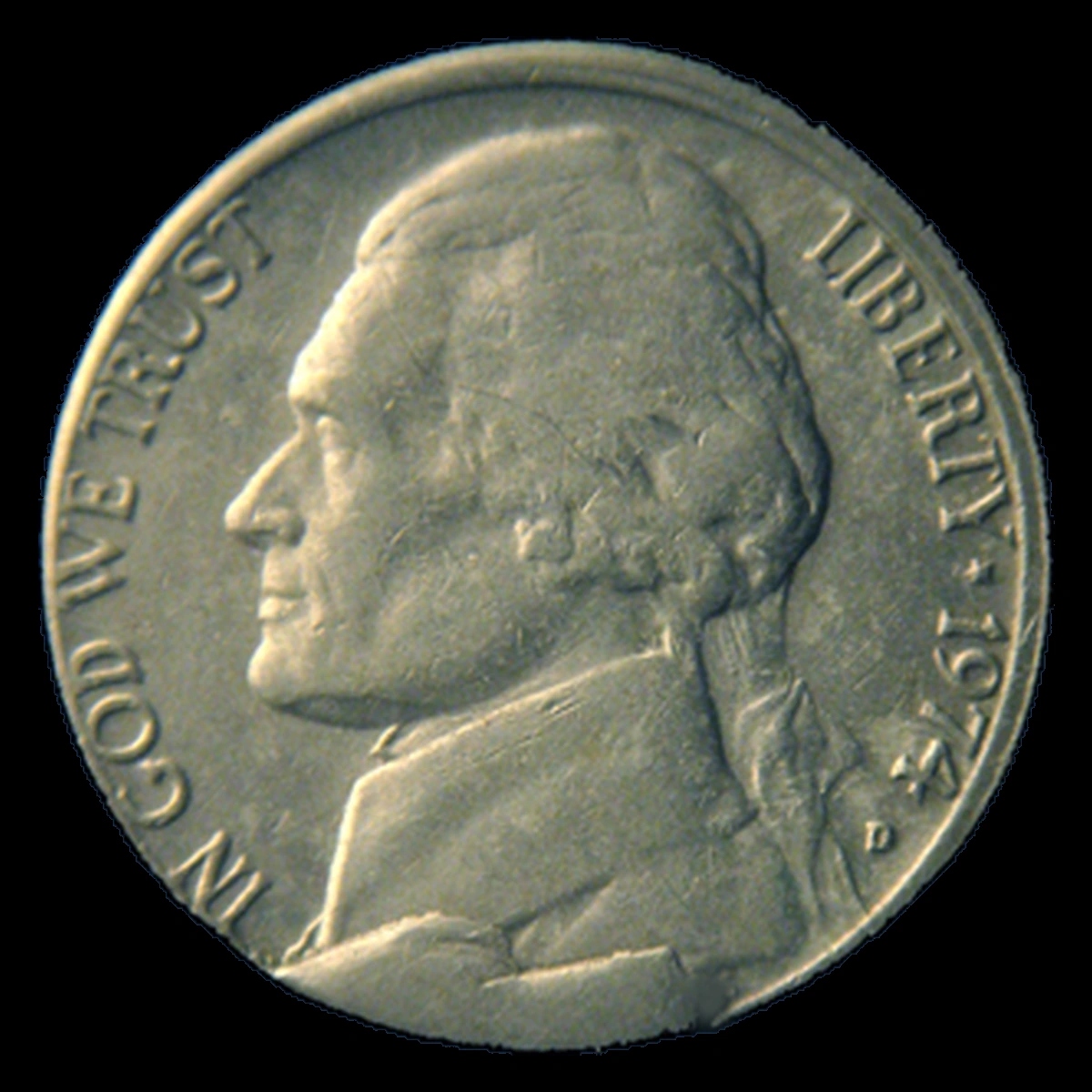
4. 1974 Nickel Raised Cracks and Denver Cuds Error
A cracked die leaves a raised line, while a larger broken edge can leave a rim-connected patch called a cud. Six Denver patterns include separate locations below the shoulder, beside the lower motto, and above the head.
How to Identify
Choose the actual pattern before comparing its boundary. Follow a larger patch to the rim and inspect for impact damage or an added-metal seam.
For a narrow line, check that its center is raised rather than cut into the surface. A small crack does not necessarily progress into a large cud.
What It’s Worth
$5–$600 includes modest cracks around $5–$50 and clearer cuds around $30–$600. Size, remaining design, and surface condition matter.
A 1982-P MS65 cud sold for $84 in August 2021 as a different-year comparison. It does not price all six Denver patterns alike.
5. 1974 Nickel Local Missing Detail from a Strike-Through Error
An obstruction between a die and the blank can weaken detail or leave a depression. The 1974 reports do not establish one material or location.
How to Identify
Compare the weak patch with nearby sharp letters and the high points on both faces. Similar flattening across the whole coin may simply be wear.
Inspect the boundary for scraping, torn metal, or later impact. Include normal surrounding detail in photographs instead of isolating a blank-looking patch.
What It’s Worth
$10–$300 covers original local strike-throughs of differing clarity and size. A distinct impression usually makes a stronger comparison than slight weakness.
A 1986-P nickel with a deep front impression brought $204 in June 2023. It supplies price context without identifying the obstruction on a 1974 coin.
6. 1974 Nickel A Flaw in the Original Blank Error
A Philadelphia NGC MS61 coin was described as struck on a defective planchet. Its group also contained a 1943-P partial collar and a 1963 ragged clip, which are separate objects.
How to Identify
Examine how the nickel’s own design meets the actual flaw. Letters formed across defective metal differ from details cut apart after striking.
Record weight and size, then inspect the edge for trimming, corrosion, or added material. The other auction coins cannot supply this specimen’s defect shape.
What It’s Worth
$20–$400 is the estimate for genuine defective blanks, with more substantial clear flaws above small surface defects. The range depends on the actual coin.
The three-coin group sold for $89 in July 2021. That total is not an individual 1974 result.
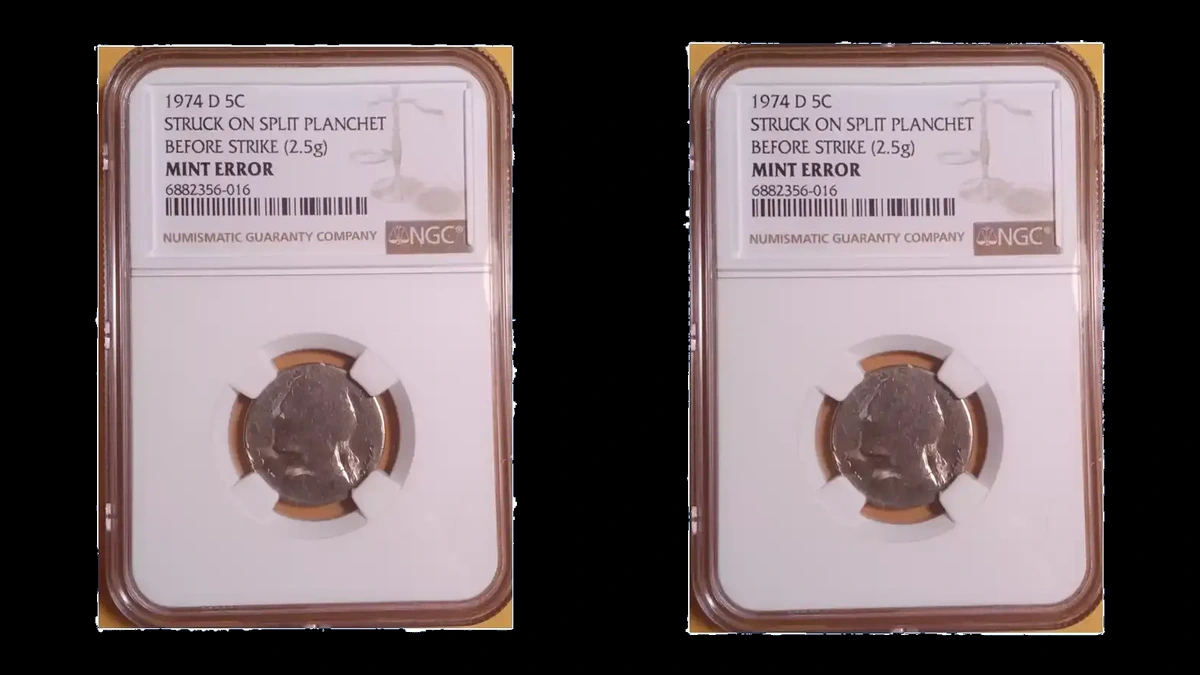
7. 1974 Nickel A Thin Layer Struck after a Split Error
Two separate 1974-D split-before-striking pieces weigh 2.56 and 2.7 grams. Each thin layer received its nickel design after separating.
They were grouped with a 1981-P error, whose MS62 grade and 3.67-gram weight belong to that later coin. Numerical grades were not supplied for the two NGC-certified Denver pieces.
How to Identify
Look for design pressed onto the rougher surface exposed by the split. A finished coin that separates later instead exposes an interior that missed the final strike.
Compare thickness and weight with a normal 5-gram nickel, and inspect for grinding. The two Denver pieces are not a documented matching pair.
What It’s Worth
$75–$500 is the estimate for individual recognizable examples. Thinness, readable design, and surface preservation affect the comparison.
The two Denver coins and 1981-P piece sold together for $207 in September 2010. Neither the full total nor an equal third establishes either Denver coin’s price.
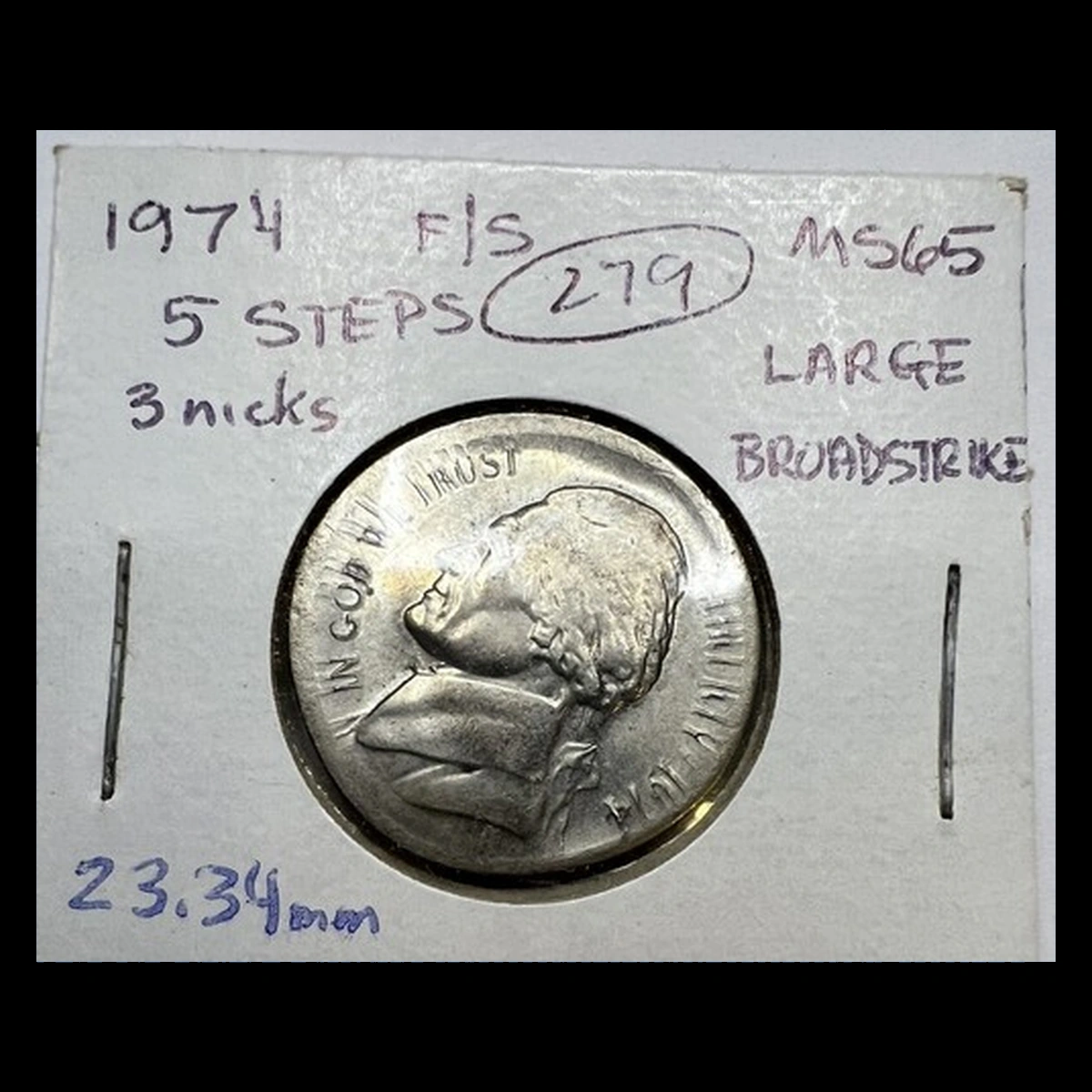
8. 1974 Nickel A Wider Outline from a Broadstrike Error
A Philadelphia PCGS MS64 example spread beyond normal size when the collar failed to contain it. The full design remained on the expanded metal.
How to Identify
Trace the complete outside words on both faces and measure several spans against the normal 21.21 mm. Spreading alone need not reduce weight.
Inspect for rolling marks, crushed letters, or later hammering. No P is normal for Philadelphia in 1974 and is unrelated to the broadstrike.
What It’s Worth
$20–$350 is the estimate across differing expansion and preservation. The recorded MS64 broadstrike sold for $24 in August 2021.
An obvious error can still be affordable. Size alone does not guarantee the upper estimate.
9. 1974 Nickel A Blank Crescent from an Off-Center Strike Error
The Philadelphia ANACS MS65 example is 40% off center toward eleven o’clock. Both faces reflect the same misplaced blank.
How to Identify
Read the surviving date, then compare design lost beyond the edge with unused metal on both faces. One shifted face or a complete design inside a wide border needs another explanation.
Inspect the bare area for grinding. An absent mintmark region does not prove Philadelphia on an otherwise unidentified coin.
What It’s Worth
$30–$650 covers genuine dated offsets across differing condition and displacement. The 40% MS65 example brought $67 in January 2022.
The modest result shows that percentage is not a fixed price scale. A larger shift can also remove the date collectors want to read.
10. 1974 Nickel Gaps and Oval Shapes from Incomplete Blanks Error
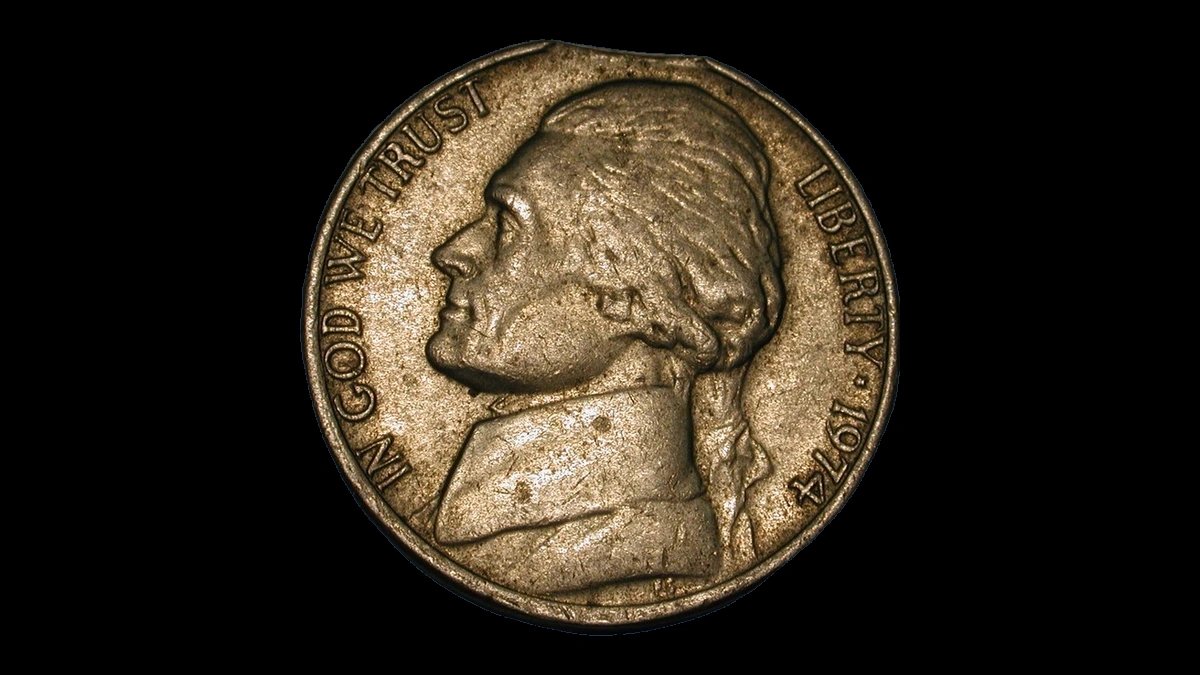
Philadelphia examples include double curved clips, a 50% straight clip, and a 2.8-gram triple clip. On the triple-clipped coin, 50% describes the largest opening.
An elliptical example has an oval blank-making outline. These forms belong to the same broad missing-metal family but have different shapes and measurements.
How to Identify
Compare the actual outline first and inspect every gap where it meets the rim and lettering. Natural striking around an incomplete blank differs from a later saw cut.
Use intact spans for diameter measurements. The triple clip’s 2.8 grams and a separate 20% straight clip’s 4.2 grams must stay with their own specimens.
What It’s Worth
$20–$1,500 spans modest clips through unusual well-preserved shapes. The double-curved MS66 sold for $132 and the separate 50% straight-clip MS66 for $109 in July 2021.
The elliptical PCGS MS64 example brought $780 in July 2022. Three gaps on one coin do not create three separate full prices.
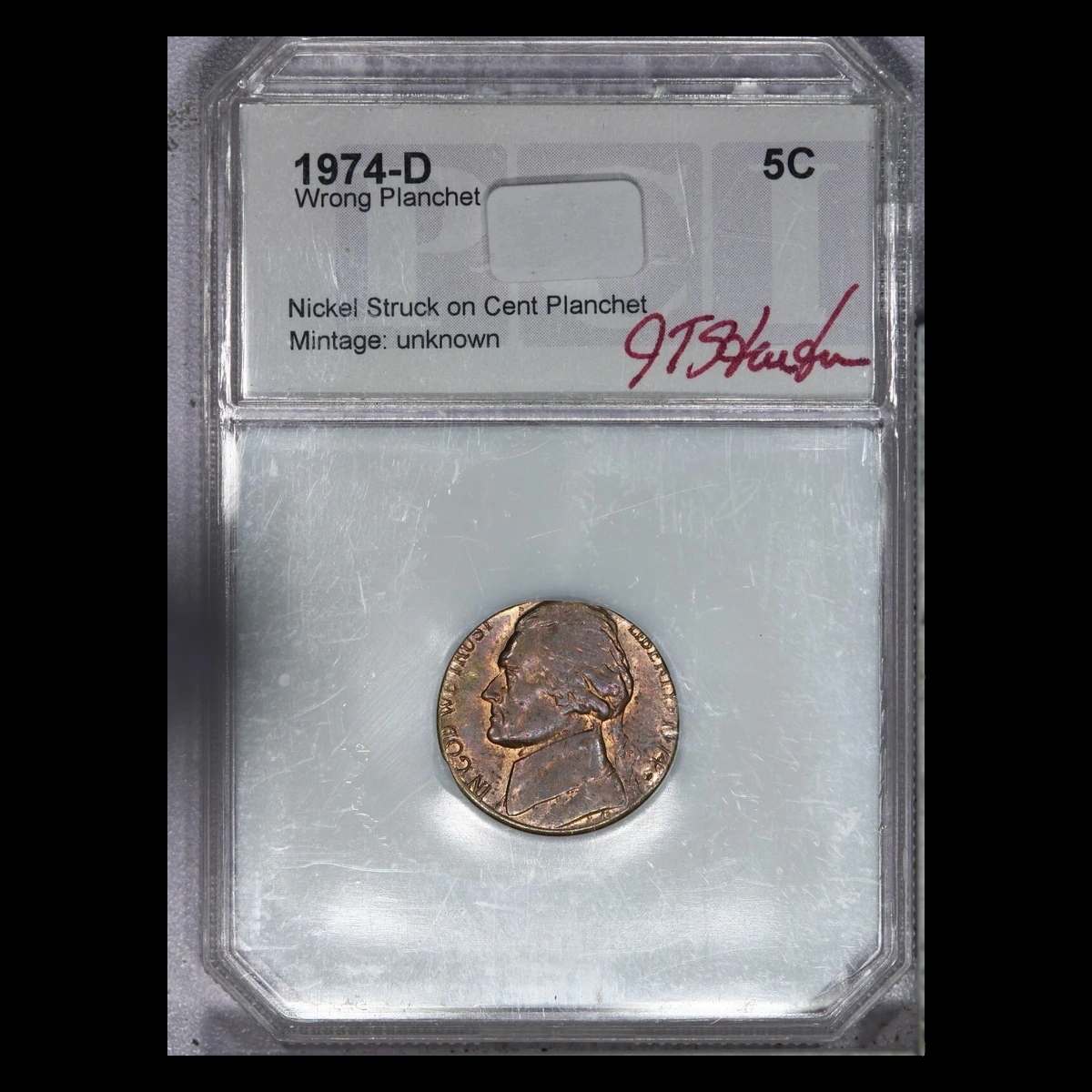
11. 1974 Nickel Nickel Designs on Copper Cent Blanks Error
A Denver MS64 Red and Brown example weighs 3.06 grams. Philadelphia records include a separate 3.1-gram MS62 Brown coin and a higher-grade MS66 Red and Brown example.
Their smaller unused blanks received nickel designs without an earlier Lincoln image. That distinguishes them from completed cents used again.
How to Identify
Combine weight with naturally cropped lettering and copper metal. Period cent blanks start near 3.11 grams and 19.05 mm, allowing for spread during striking.
Check the edge for trimming or plating and search for older Lincoln detail. Keep each reported measurement with its particular coin.
What It’s Worth
$150–$900 is the estimate for identified copper-blank examples. The Denver MS64 Red and Brown coin sold for $270 in January 2022, while another Denver coin at that grade brought $204 in September 2019.
The higher-grade Philadelphia specimen needs its own comparison. Brown color alone does not establish the smaller original blank.
12. 1974 Nickel A Nickel Design on a Dime Blank Error
The Philadelphia NGC AU58 example weighs 2.33 grams. Its smaller layered-metal blank was intended for a dime but received the nickel design.
How to Identify
Compare the actual weight with a dime blank’s approximate standard of 2.27 grams and 17.91 mm diameter. The nickel strike can spread the smaller disk.
Inspect cropped lettering and the edge for the copper core, trimming, or squeezing. An unused dime blank needs no earlier Roosevelt portrait or torch.
What It’s Worth
$200–$1,000 is the estimate for identified examples. The recorded 2.33-gram AU58 piece sold for $299 in January 2011.
Readable dating and original surfaces support comparison with better examples. Filing a normal nickel down to a similar weight does not create this error.
13. 1974 Nickel A Denver Nickel on a Foreign Blank Error
A Denver NGC AU58 Red and Brown coin was cataloged on a foreign blank without an identified intended country or denomination. Its color describes the surface, not a complete metal attribution.
How to Identify
Read the original attribution and record actual weight, dimensions, and metal findings. A generic catalog’s 5-gram nickel specification is not this unusual blank’s measured weight.
Inspect how the design reaches the edge and check for plating or trimming. Color alone cannot name a foreign denomination.
What It’s Worth
$200–$1,200 is the estimate for comparable identified foreign-blank errors. The documented lightly worn Denver coin brought $201.25 in August 2009.
That result does not price every possible foreign alloy. Preservation and the strength of the blank identification determine a useful comparison.
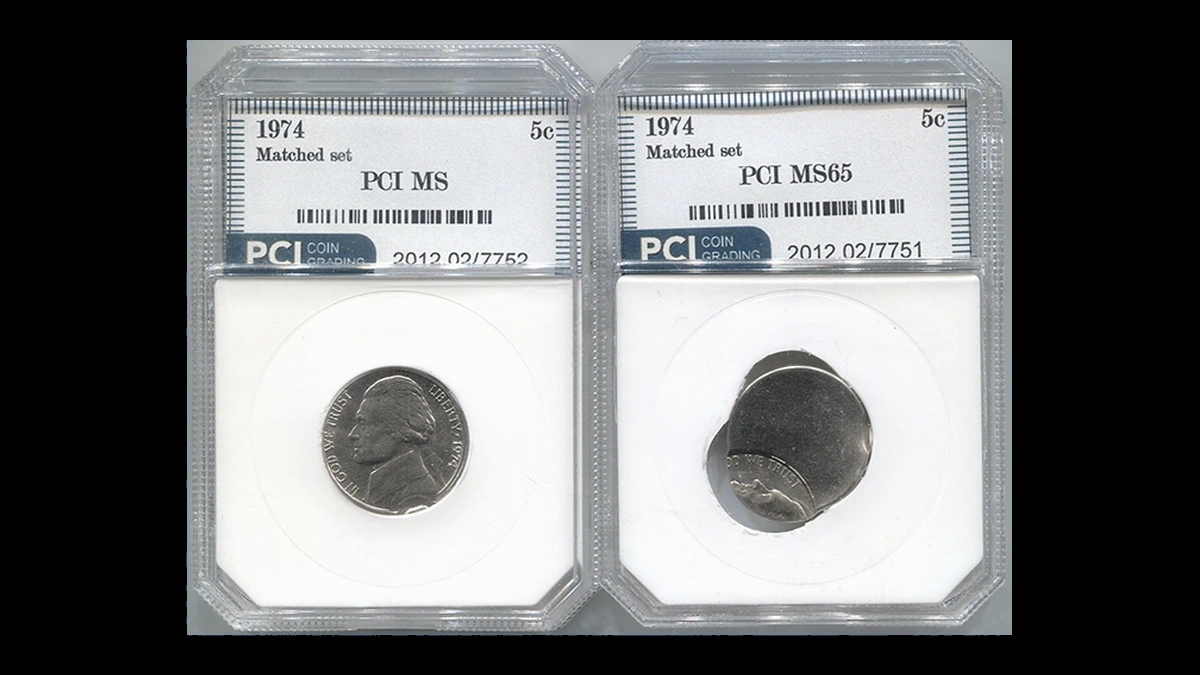
14. 1974 Nickel A Reported Matched Error Pair Error
A dealer listed a 1974 matched set in a PCI MS65 holder. The title alone does not establish whether the pieces were struck together, separated from one blank, or connected another way.
How to Identify
Look for a physical relationship such as matching fracture surfaces or an impression fitting the other piece. Shared dates and similar color are insufficient.
Keep the set together and compare photographs without pressing the pieces against one another. Expected combined weight depends on whether one or two original blanks were involved.
What It’s Worth
$300–$3,500 is the working estimate for a genuine connected pair with a clear original match. The mechanism must be established before selecting the comparison.
A 1941 pair with a backward transferred portrait sold for $2,760 in August 2010. Its visible relationship provides context without proving the same process for 1974, and the range covers both pieces together.
15. 1974 Nickel Repeated Nickel Strikes, Sometimes with Two Years Error
One report describes a second strike 90% off center. A separate coin carries a 1974 design over a finished 1973 nickel that flipped before the later strike.
The two-date coin remained within the collar. It combines two years of the same denomination rather than a nickel and a different coin value.
How to Identify
On the two-date example, look to the right of the final M in UNUM for the earlier 3. Follow other old details beneath the new back to check the flipped-face arrangement.
For the separate large-offset second strike, trace where a recognizable later design overlaps the first. These are different inspection routes, not features required together.
What It’s Worth
$100–$5,000 spans large-offset ordinary double strikes around $100–$600 and confirmed comparable two-date coins around $1,000–$5,000. The underlying sequence explains the different ranges.
The mint set containing the 1974-over-1973 nickel sold for $1,897.50 in August 1997. That amount covers the offered set with its featured error, not every repeated-strike nickel.
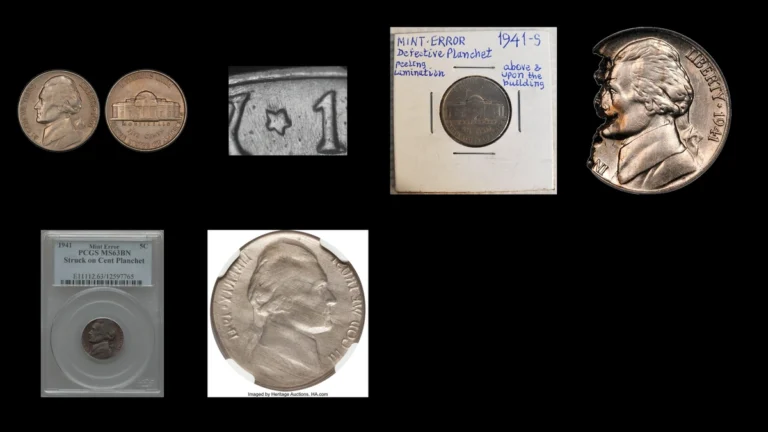
16. 1974 Nickel Lincoln Memorial Columns beneath Jefferson Error
The NGC MS65 Red and Brown example was a finished 1974 cent before it received the nickel design. Memorial columns cross Jefferson’s jaw, and Lincoln’s beard and bowtie point down near Monticello’s steps.
The lower nickel date and a faint cent date near the back’s bottom edge survive. Those earlier cent details establish a double-denomination error.
How to Identify
Follow several remnants through the nickel design, including the jaw columns and features near the steps. They should fit one overlapping struck object rather than a later sunken mirror impression.
Use cent size and weight as supporting standards, then inspect the edge for joins or trimming. Read both surviving dates from the actual metal.
What It’s Worth
$1,500–$7,500 is the estimate for comparable authenticated pieces with readable overlapping designs. The MS65 Red and Brown example sold for $5,040 in January 2023.
The same specimen appeared in 2010, so those records are not two discoveries. A copper blank carrying only nickel detail belongs to the separate unused-blank group.
Conclusion
A 1974 nickel’s two faces help separate one shifted die, a misplaced blank, and a coin struck again. For smaller or unusually colored pieces, measurements and the original edge need to agree with the design evidence.
Keep paired pieces together and preserve fragile layers. Several effects on one coin create one complete object to value, while a group auction total should remain attached to the whole group.