Rare 2021 Dime Errors (List & Pictures)
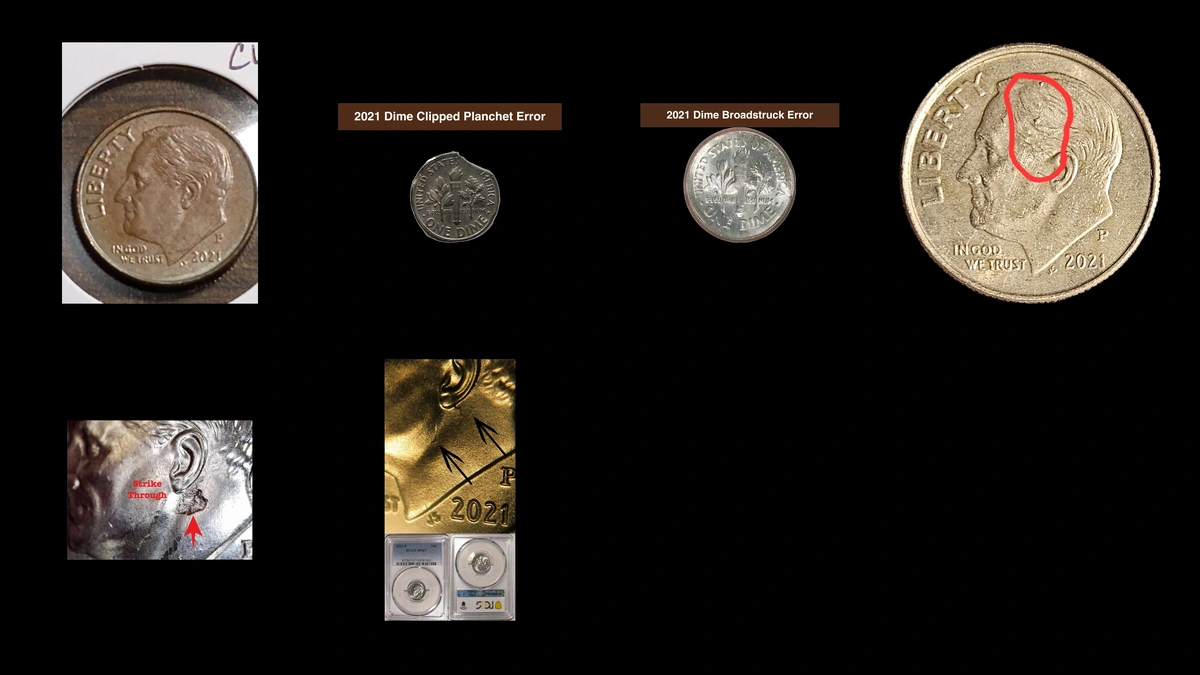
Color, size, and edge shape help sort the reported 2021 Roosevelt Dime errors, whose estimated values range from $5–$2,500. These categories concern ordinary clad coins.
As a different-year comparison, a 2018-P dime on a foreign iron blank brought $2,160 in July 2023. That result does not establish the reported 2021 cent-blank claim; inspect the metal and outline before moving to smaller raised or missing details.
1. 2021 Dime Roosevelt Appears on Copper-Colored Metal of Unusual Size: Reported Cent Blank Error
The year guide includes a dime struck on a cent blank, but its size descriptions conflict. A modern cent blank starts larger than a dime blank, so an apparently smaller copper-colored coin is not enough to establish this claim.
The proposed error concerns the wrong starting disc entering the dime press. A normal dime stained brown or stripped of an outer layer has a different explanation.
How to Identify
A modern cent blank starts near 2.50 grams and 19.05 millimeters, with copper plating over zinc. A normal clad dime is about 2.268 grams and 17.91 millimeters.
Record actual measurements and inspect how the design fits the metal. A cent blank starts with a plain edge, while a normal dime receives grooves during striking; the finished outline may change under pressure.
Non-destructive testing can distinguish copper-plated zinc from ordinary dime metal. The full explanation must fit composition, size, and the struck design together.
What It’s Worth
After a genuine cent-blank strike is established, the estimated range is $300–$2,500. No 2021 auction result is claimed for this reported type.
A 2018-P dime on a foreign iron blank sold for $2,160 in July 2023. Its different year, metal, and intended blank make it context for identified wrong-planchet errors rather than a direct cent-blank price.
2. 2021 Dime Copper Is Exposed beneath an Outer Layer: Missing Clad Error
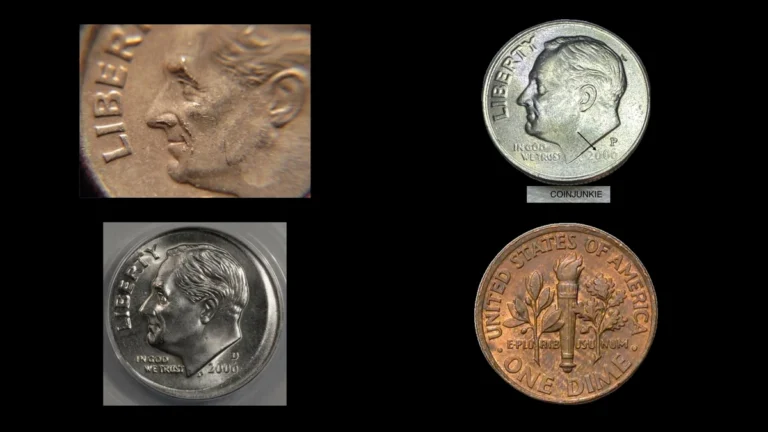
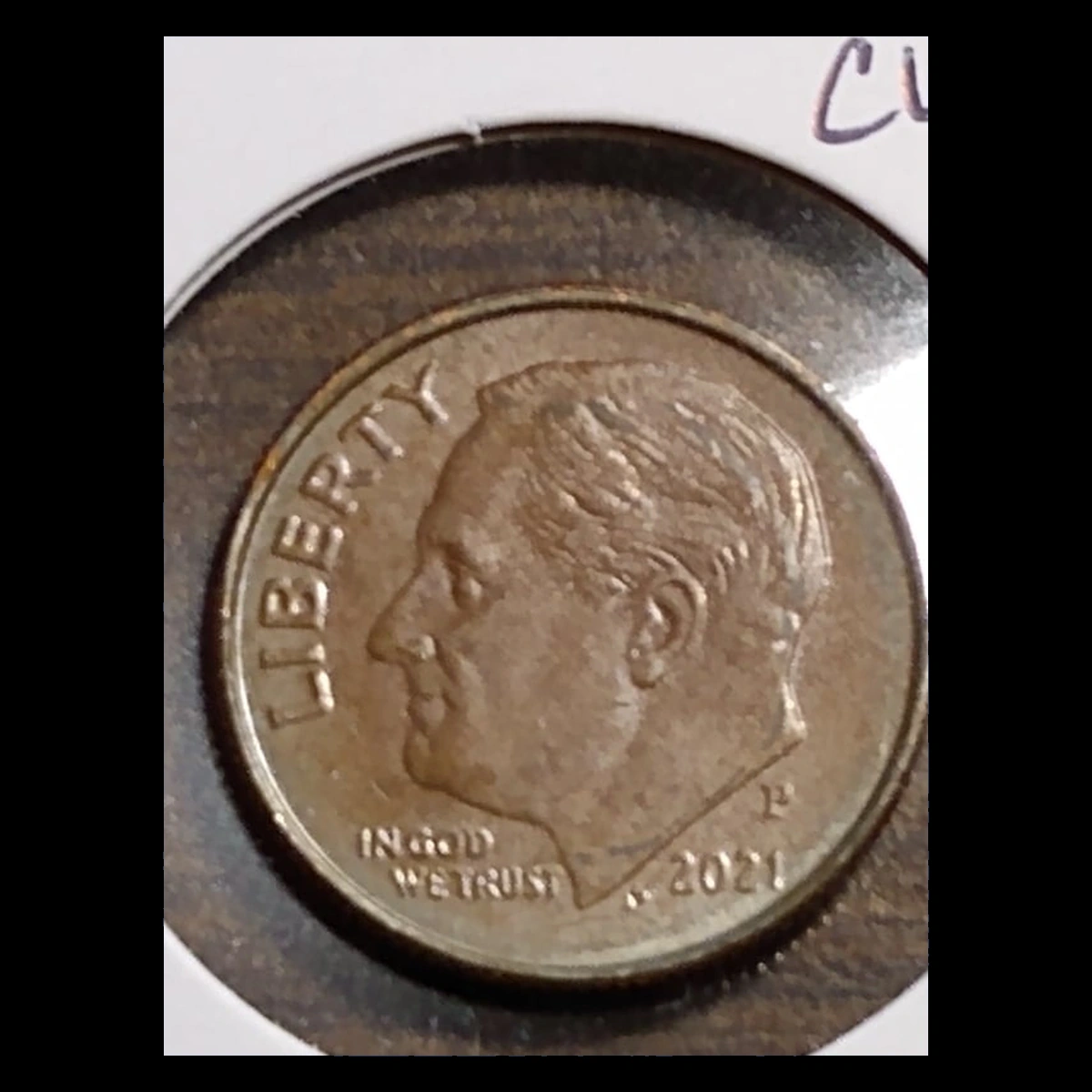
Ordinary dimes have a copper center bonded between copper-nickel outer layers. If one layer separates, part or much of the face can expose the copper beneath it.
The 2021 missing-layer report does not establish a single mint. It must be kept separate from silver collector Proofs and from a small local peeling flap.
How to Identify
Weigh a loose candidate and examine the boundary where silver-colored metal meets exposed copper. Substantial original layer loss should reduce weight as well as change the surface.
Look for pitting, chemical attack, grinding, or a colored coating that could produce a misleading appearance. The 2021-S silver Proof is not an ordinary copper-core dime missing a layer.
What It’s Worth
Genuine partial through complete layer losses are estimated at $50–$600. The amount exposed and the remaining design and surfaces affect the comparison.
A 2018-P dime missing its front layer, graded PCGS MS64, sold for $384 in July 2021. That is a different-year result, not a premium for every brown 2021 dime.
3. 2021 Dime A Small Flap Separates near the Portrait: Lamination Error
Denver reports describe local peeling near the hair or jaw. Weakness within the metal can open into a thin flap or rough separation boundary.
This is a lamination rather than an assumption that an entire outer layer is gone. The amount and shape of the affected surface should guide the description.
How to Identify
Use side lighting to look beneath the lifting edge without touching it. A natural shallow separation differs from a fresh gouge that pushes metal up beside a deeper cut.
Check the neighboring surface and edge for scraping or corrosion. Tiny loss may barely change weight, so the connection between flap and original metal is more useful than color alone.
What It’s Worth
Genuine local peeling is estimated at $15–$200. A well-defined separation on an attractive coin compares more strongly than a small rough spot hidden by wear.
No individual auction result is supplied for these Denver reports. Removing an attached flap changes the evidence and does not improve the original error.
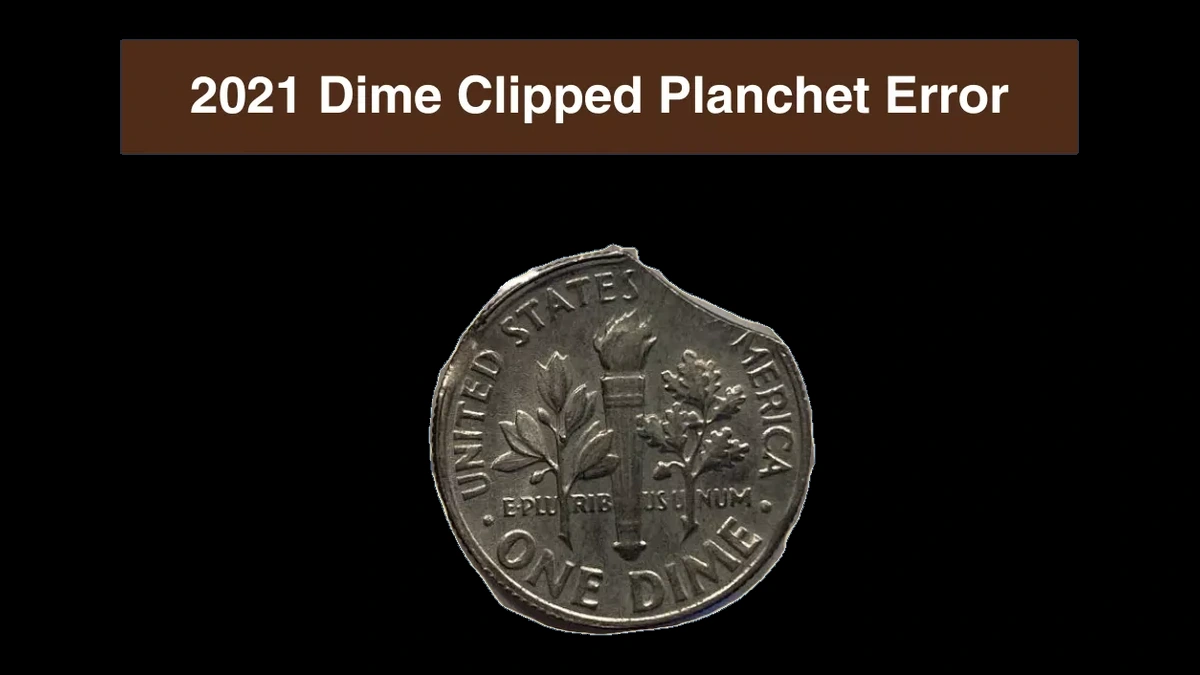
4. 2021 Dime A Gap Removes Part of the Edge: Clipped Planchet Error
A blanking punch can overlap an earlier hole in the strip and produce an incomplete disc. That prepared blank, or planchet, can still receive the dime design.
The 2021 report supplies no established mint or gap direction. A missing piece must be shown to have preceded the strike rather than resulted from later cutting.
How to Identify
Inspect both endpoints for original rim and lettering formed toward the shortage. File lines or cuts through completed edge grooves indicate another sequence.
Opposite-rim weakness can help support a clip. Low weight confirms missing metal but cannot establish when it disappeared.
Keep the surviving date and mint letter in a full photograph. A larger gap can remove identifying detail that a smaller clear clip preserves.
What It’s Worth
Original 2021 clips are estimated at $20–$400. A readable date, natural boundary, and intact surrounding design all influence value.
The range is not tied to a particular completed sale here. A small convincing clip can be more useful to collectors than a larger opening surrounded by damage.
5. 2021 Dime Solid Bare Metal Sits beside a Cropped Design: Off-Center Strike Error
A blank misplaced between the dies can receive only part of each design. The rest remains as an untouched crescent, with metal still present.
The reported 2021 category fixes no mint, direction, or percentage. Different shifts should be assessed as separate coins rather than given one universal layout.
How to Identify
Read the date and compare the struck boundary on both faces. Both should fit the same displaced blank, while one shifted face may involve a misaligned die.
Inspect the empty area for original unstruck metal instead of filed-away letters. Include the whole outline and remaining edge grooves so the transition can be judged in context.
What It’s Worth
Genuine dated examples are estimated at $30–$500. Readable identity often matters more than maximizing the blank area.
A 1977 dime struck 10% off center, graded NGC MS64 Full Bands, sold for $109 in June 2026. Its percentage and date belong to that comparison, not to a reported 2021 specimen.
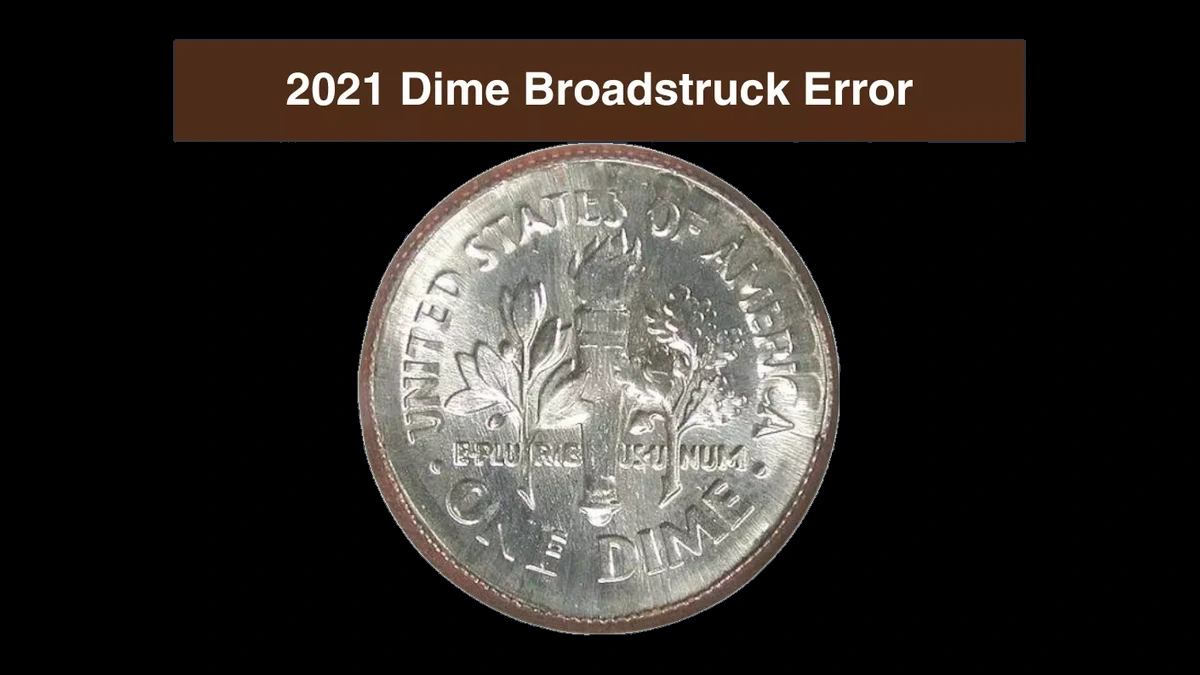
6. 2021 Dime Complete Detail Fits inside a Wide Outline: Broadstrike Error
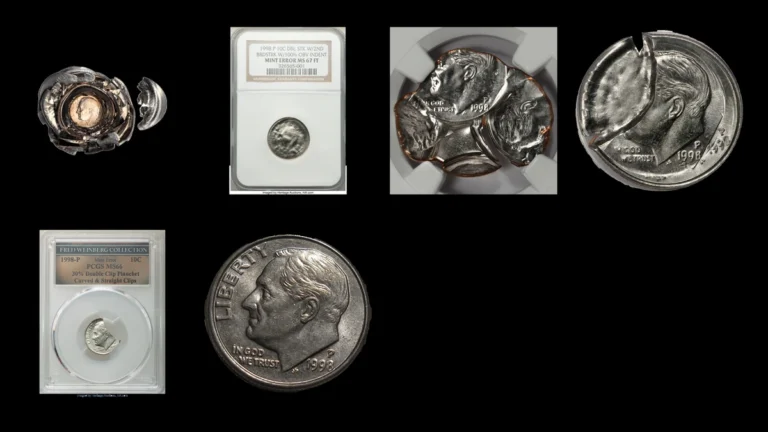
A broadstrike occurs when the collar does not contain the metal during the blow. The collar normally limits diameter and forms the edge grooves.
The design stays on the expanded disc, although the border can be uneven. The 2021 report gives no specific mint or measured width.
How to Identify
Trace all outer details on both faces to ensure they remain within the metal. Cropped design opposite unused metal belongs with off-center strikes.
Inspect the wider border and any incomplete grooves for original expansion. Later hammering can flatten letters, while grinding or wear can remove grooves without a broadstrike.
What It’s Worth
Genuine visibly expanded 2021 broadstrikes are estimated at $50–$450. Complete design and appealing surfaces strengthen the comparison.
A 2000-P dime with broadstriking and multiple strikes brought $159 in September 2025. Its additional blows make it a combined error rather than a direct sale of a simple 2021 broadstrike.
7. 2021 Dime A Thin Lip Rises above the Border: Finned Rim Error
Metal squeezed into a narrow gap beside the die can form a thin projecting rim. Philadelphia reports place this finning near LIBERTY or the motto on the front.
The lip differs from a broad raised die-break patch. A sharp-feeling edge can also result from damage after minting.
How to Identify
View the rim from a low angle to see its height and thickness. A front-on picture of a wide border may miss the defining thin projection.
Inspect its base without bending it, looking for crushed grooves or an inward fold caused by later impact. Keep measuring tools away from the fragile raised metal.
What It’s Worth
A modest original fin is estimated at $10–$150. A clear tall lip on an otherwise attractive coin is easier to appreciate than slight roughness.
No completed specimen price is supplied here. Bending, scraping, or breaking the lip can reduce its appeal and obscure how it formed.
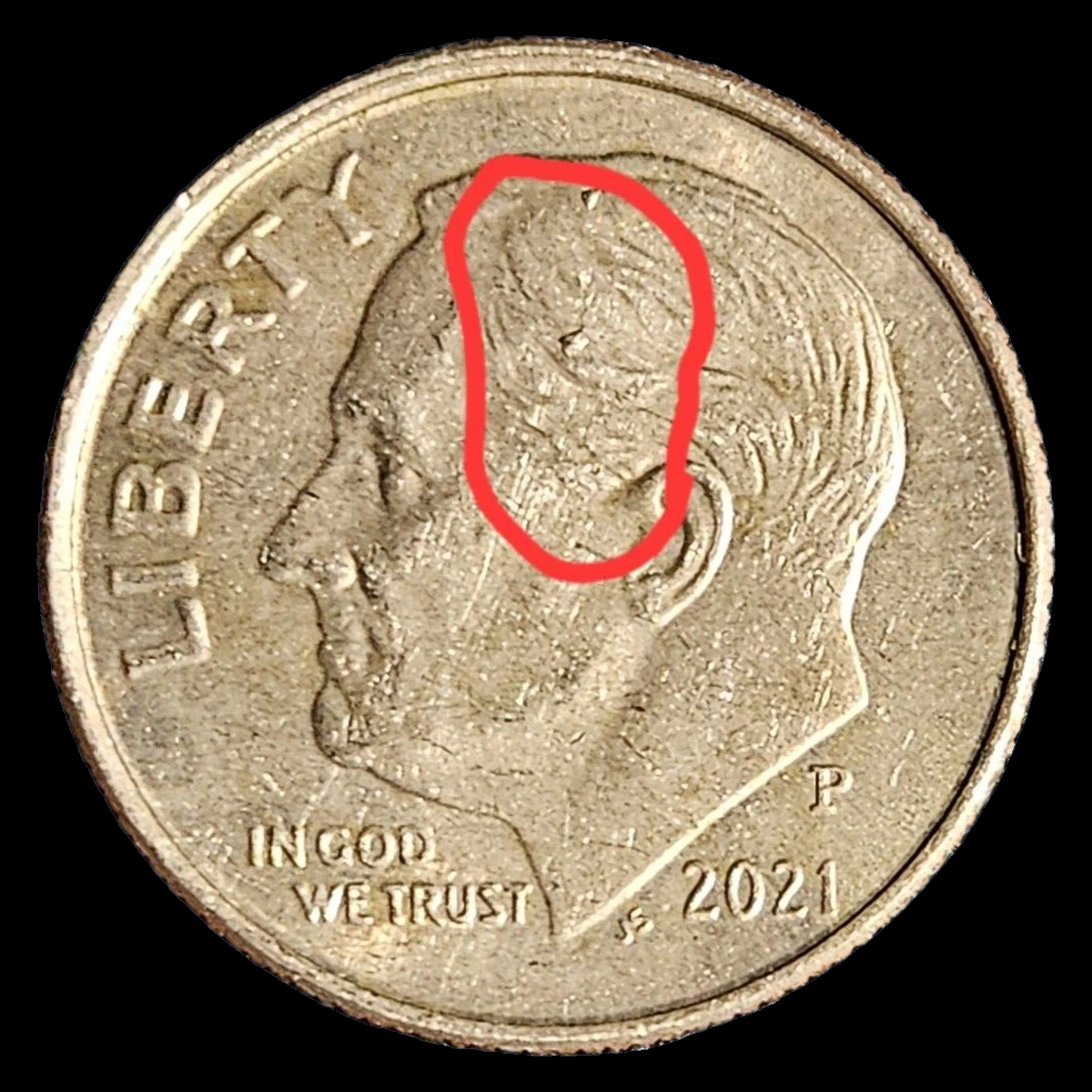
8. 2021 Dime A Raised Line or Bump Changes the Design: Die Crack and Chip Error
Cracks and small missing pieces in a die can leave raised lines or chip-shaped patches on coins. Philadelphia reports include head-to-rim cracks and small portrait bumps.
Other reported locations include above DI and around reverse torch or lettering details. Those marks need not occur together on one specimen.
How to Identify
Use side light to follow the center of a suspected crack. A genuine ridge differs from a scratch that cuts into the design, even if the cut has raised lips.
For a bump, compare the normal contour and check for a nearby dent that pushed metal upward. The original design should meet a struck patch without fresh scrape marks around it.
What It’s Worth
Small genuine cracks and chips are estimated at $5–$100. More obvious cleanly formed features usually draw more interest than tiny bumps.
Magnification can exaggerate the scale of a minor mark. A nickname does not establish a major-error value without the actual shape, size, and condition to support it.
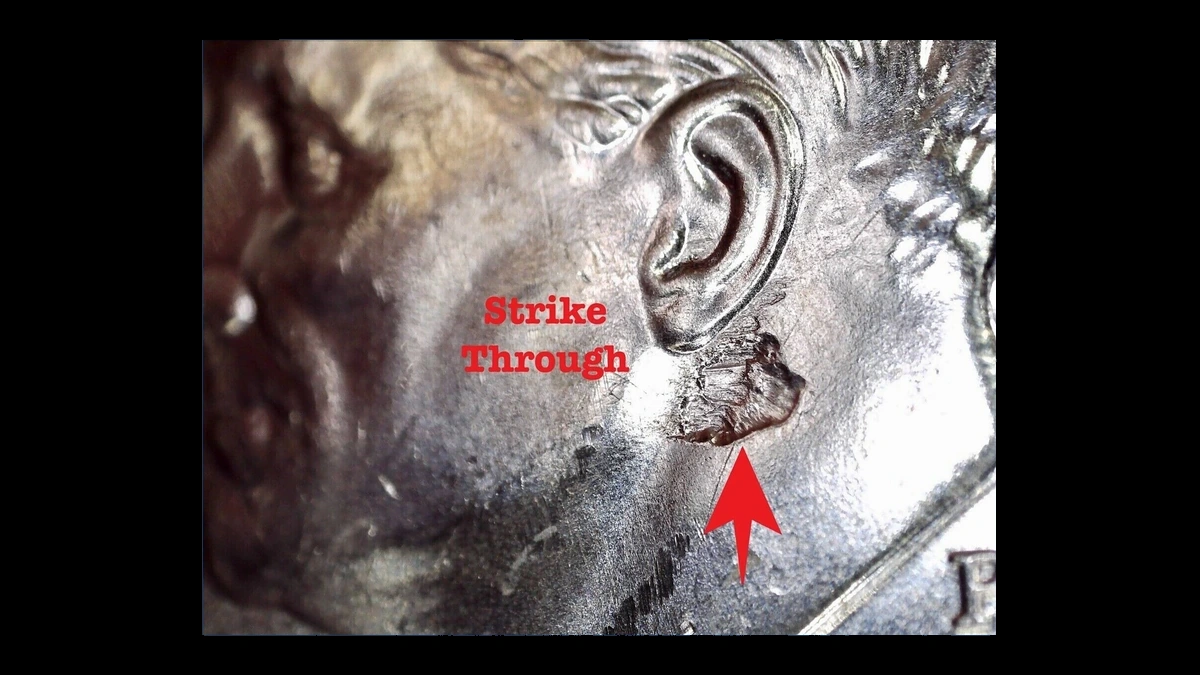
9. 2021 Dime A Sunken Mark Interrupts Local Detail: Struck Through Error
The Philadelphia report concerns a mark above the jaw, while a separate Denver example affects the date and mintmark area. Material blocked normal die contact during the strike.
The reports do not identify the obstruction or prove that anything remains embedded. A narrow depression alone cannot establish wire or thread.
How to Identify
Read the mint letter before choosing the jaw-area or date-area comparison. Follow the design into the depression to see whether it was interrupted during formation.
A later scratch can cut finished detail and displace metal along its border. Preserve surrounding intact detail in photographs instead of naming the material from a narrow isolated crop.
What It’s Worth
Genuine minor through larger clear strike-throughs are estimated at $15–$250. A distinct impression beside sharp original detail supports a stronger comparison than a faint unexplained mark.
No individual transaction is supplied for either report. An unsupported wire label cannot turn a later cut or dent into a mint error.
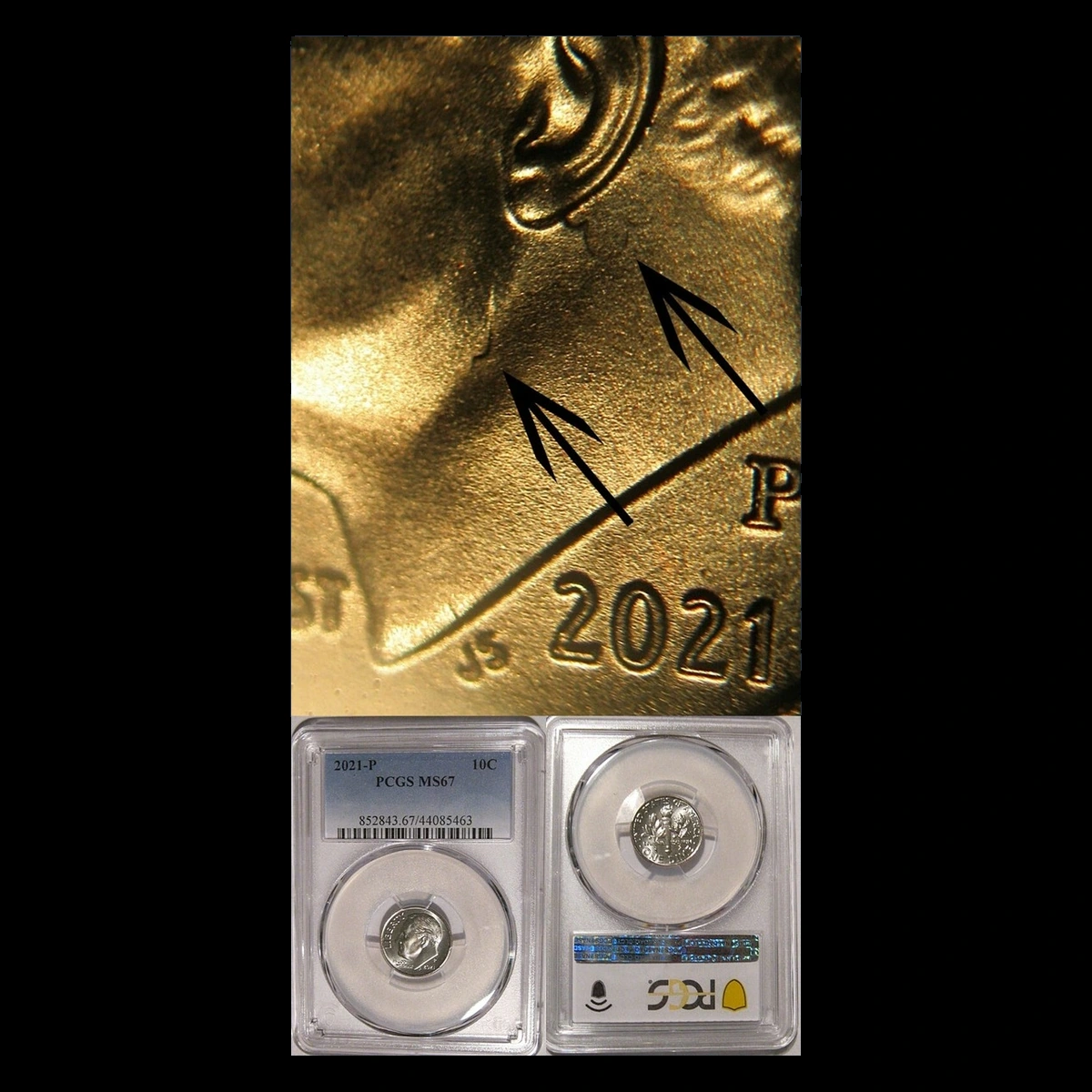
10. 2021 Dime Extra Lines Resemble the Other Face: Die Clash Error
Philadelphia clashes are reported for 2021. When the two dies meet without a blank, they can mark each other and transfer fragments of the opposing design to later coins.
An unexpected curve near Roosevelt should therefore relate to the reverse, or a mark near the torch to the front. A cluster of scratches alone supplies no such connection.
How to Identify
Orient clear views of the two normal designs as they would face one another in the press. Test whether several suspect curves or letter shapes fit the same relationship.
Keep random intersecting lines separate from recognizable fragments. Enlargement can expose a subtle contour but cannot create a design match that is absent.
What It’s Worth
Faint through clearly recognizable clashes are estimated at $20–$300. Original surfaces help the transferred detail remain visible.
The estimate covers the whole dime. Several fragments from one clash are not separate errors with separate full prices to add.
11. 2021 Dime Letters or Design Contours Repeat: Doubled Die Error
A doubled die already carries repeated design before it strikes a blank. Philadelphia front reports mention the date, LIBERTY, motto, and portrait.
Reverse reports concern lettering and the torch without establishing one mint for every example. These are different patterns, not a required checklist on a single coin.
How to Identify
Select the face and feature being tested, then match the same mint and repeated contour. Rounded added outlines or clear separation are more persuasive than general thickness.
A flat shelf that reduces the main letter can result from movement during striking. The Philadelphia front report cannot establish the mint or pattern of a reverse claim.
What It’s Worth
Genuine identified doubled varieties are estimated at $20–$350. Clear matching detail and attractive preservation support the stronger comparisons.
Ordinary flat striking-related doubling usually adds little to a modern dime. A doubled-torch comparison should not be transferred automatically to a different portrait or date pattern.
Conclusion
The reported 2021 categories require different evidence: a metal test for a wrong blank, an original boundary for missing clad, or a specific contour match for doubling. Unusual color and thick lettering are starting observations rather than complete identifications.
Keep the mint and finish visible in comparisons and preserve thin fins or attached flakes. The strongest other-year sale here concerns an identified iron blank, leaving the reported cent-blank type to be verified on its own evidence.