Rare 2010 Dime Errors (List & Pictures)
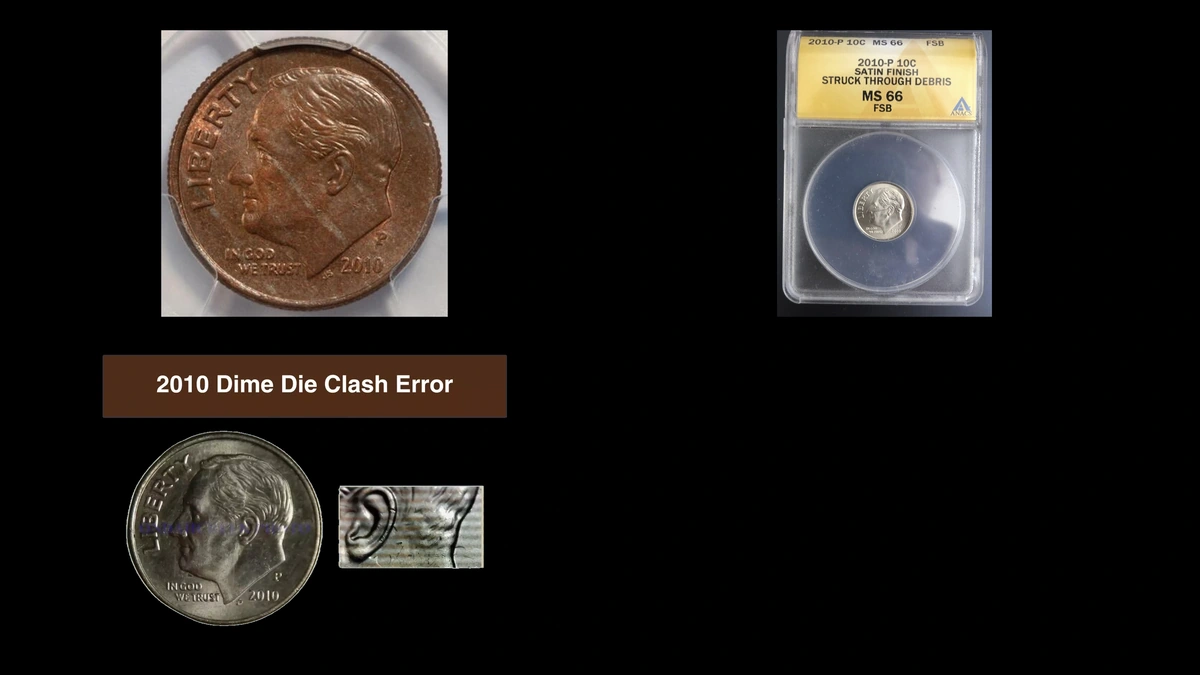
A recorded sale provides a useful starting point for 2010 Roosevelt Dime errors: a Philadelphia dime missing its front outer layer brought $131.38 in June 2019. Several much higher figures in year guides concern different reported coins.
Estimated values across the categories below run from $5–$1,500. Examine missing metal and the outline first, then compare surface marks with the correct circulation or collector issue.
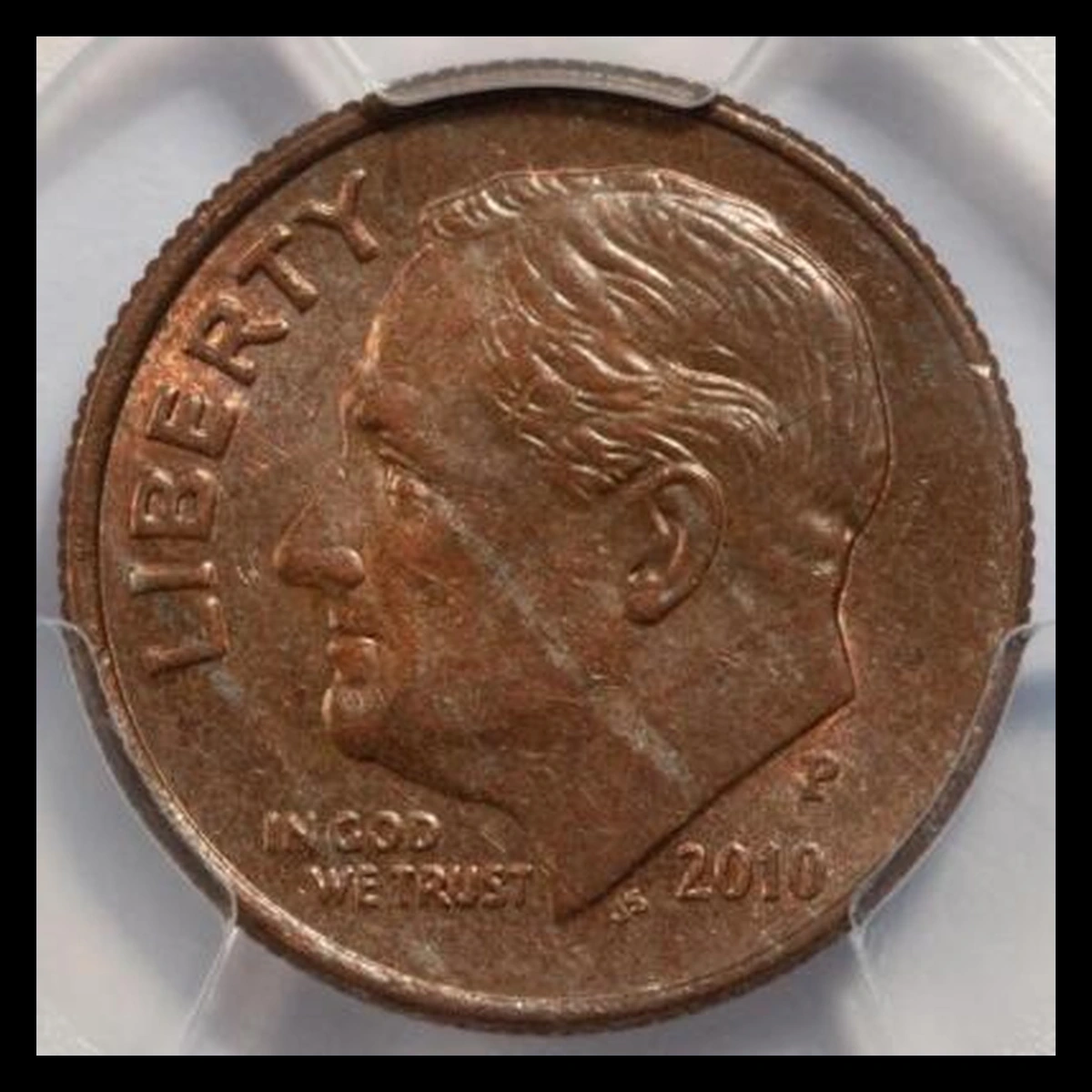
1. 2010 Dime Copper Shows beneath Missing Outer Metal: Clad-Layer Loss Error
The recorded Philadelphia coin lacks its front layer, with an auction title describing NGC MS65 FT. FT refers to sharp torch detail, while MS65 describes an unworn coin with relatively few marks.
A separate Denver guide report concerns partial reverse-layer loss. The face and extent of one error cannot identify the other.
How to Identify
Compare both faces and follow the boundary between exposed copper and remaining outer metal. Original struck detail should agree with the missing-layer explanation rather than show grinding or artificial stripping.
Normal clad dimes weigh 2.268 grams and measure 17.91 millimeters, with a grooved edge. Loss should reduce the weight, but no single error weight fits every partial or complete separation.
A 2010-S silver Proof normally weighs 2.50 grams and has different construction. Establish the metal and issue before applying a clad-loss comparison.
What It’s Worth
Genuine examples are estimated at $100–$1,400, according to the affected area, condition, and identification. A stained patch is not equivalent to absent outer metal.
PCGS records $131.38 for the Philadelphia front-layer coin in June 2019. The separate $1,320 figure for a Denver partial-reverse example remains a secondary year-guide report.
2. 2010 Dime Part of the Original Disc Is Missing: Clipped Planchet Error
A prepared blank, or planchet, can be incomplete before the dime design reaches it. A curved opening may result when the blanking punch overlaps an earlier hole in the strip.
The 2010 report identifies no fixed mint, gap shape, or size. Its general percentage examples are not measurements of one documented coin.
How to Identify
Inspect the gap from an angle for struck metal flowing toward the shortage. File marks, burrs, or a fresh sheared surface can reveal removal after minting.
Check the opposite rim for possible weakness, without making that clue compulsory. Low weight confirms missing metal but cannot tell when it disappeared.
What It’s Worth
Small genuine clips are estimated at $10–$40, larger ones around $50–$250, and very large clearly original examples with readable dates at $300–$1,000. These are appearance-based comparisons.
No individual 2010 specimen sale is assigned here. A dramatic gap still needs a convincing original boundary, especially if wear or corrosion obscures the rim.
3. 2010 Dime A Bare Crescent Borders Lost Design: Off-Center Strike Error
A blank positioned partly outside the dies receives incomplete designs on both faces. Untouched metal remains opposite details that miss the disc.
The guide lists the mechanism without identifying a measured 2010 specimen or mint. A percentage mentioned as a general example must not become a specific attribution.
How to Identify
Compare complete views of both faces for corresponding displacement. One narrow or uneven border alone may involve a misaligned die instead.
Read the surviving date without supplying missing digits from a seller’s guess. The bare area should retain original surface rather than grinding lines or remnants of flattened lettering.
What It’s Worth
Small genuine offsets are estimated at $5–$30; more dramatic readable-date examples at $50–$300. These ranges follow comparable modern clad dimes.
A larger shift can remove useful identity, so it is not automatically more desirable. No named 2010 auction result supports a particular coin in the supplied report.
4. 2010 Dime The Complete Design Has an Expanded Border: Broadstrike Error
The reported Denver circulation example concerns outward spreading without loss of the intended design. The collar failed to contain the blank during the blow.
The collar normally controls width and forms the edge grooves. Without its full restraint, an uneven wide margin and incomplete grooves can result.
How to Identify
Trace the whole design on each face and compare the border with a normal dime. Cropped lettering opposite an unused crescent belongs to an off-center comparison.
Inspect for crushed detail, battered grooves, or a thick rounded rim caused by later pressure or tumbling. Measurements support expansion, but the original surfaces must explain it.
What It’s Worth
Genuine broadstrikes are estimated at $15–$250. The guide’s general modern-dime comparison is $15–$200, with a stronger example potentially exceeding that modest range.
Complete detail and natural spreading should explain the stronger comparison. A high asking price alone does not establish a more dramatic error.
5. 2010 Dime A Narrow Channel Interrupts Detail: Wire-Shaped Strike-Through Error
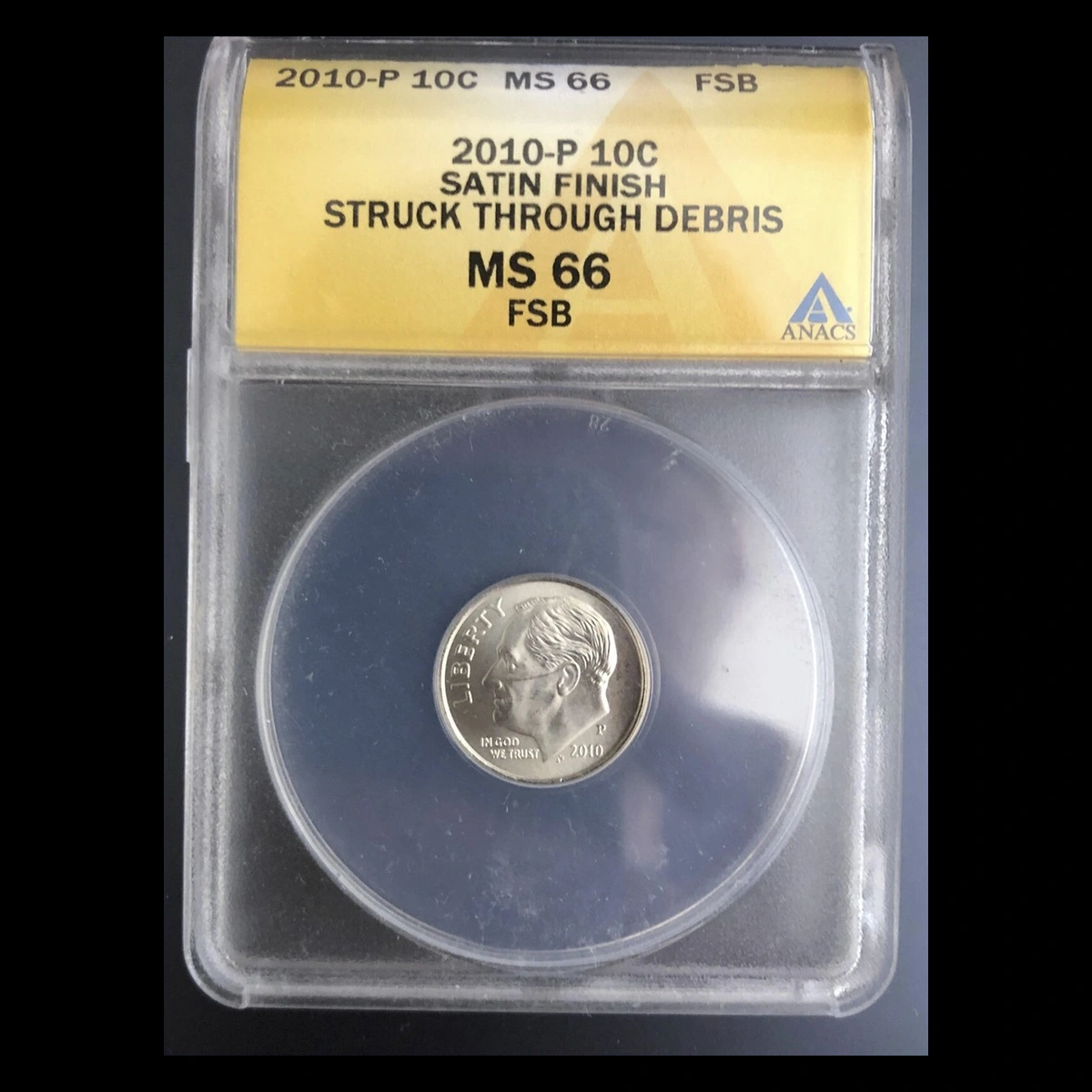
A dealer describes a Philadelphia ANACS MS64 dime with an impression made by wire during striking. The obstruction prevented the die from forming its normal design along that path.
The description does not establish that wire remains in the coin. An empty impressed channel and a retained object are different results.
How to Identify
Read the holder’s error description and compare it with the visible channel while leaving the holder sealed. Follow where the surrounding design was blocked rather than cut after formation.
Photograph any apparently retained material without pulling it. A hollow does not prove the object is still present, and something attached later is not automatically part of the original strike.
What It’s Worth
A clear wire-shaped impression on an attractive example is estimated at $100–$350. Length, depth, and the interrupted design affect the comparison.
The dealer’s MS64 listing asks $325 or best offer. That is an asking price, and a retained-object premium should not be assumed without actual identified retained material.
6. 2010 Dime Raised Lines or Lumps Replace Design: Die Crack, Chip, and Cud Error
A cracked die leaves a ridge, while a small missing part can leave a raised chip-shaped lump. A larger missing piece at the die edge creates a raised rim-connected cud.
The 2010 reports include clad S Proofs with interior chips and a separate rim-cud example. These specially made collector coins must not be confused with the silver Proof issue.
How to Identify
Trace a patch to the rim before calling it a cud; an isolated interior lump is a chip. Check whether it replaces normal design and is continuous with the struck surface.
Solder, glue, and metal raised beside a gouge need different explanations. A loose clad Proof has the normal 2.268-gram clad standard, while a silver Proof is 2.50 grams.
Both issues normally measure 17.91 millimeters. Keep graded pieces sealed and use their existing identification rather than opening a holder for routine measurements.
What It’s Worth
Fine through prominent cracks are estimated at $5–$150. Reported clad Proof breaks occupy a broader estimated $100–$1,500 range.
A secondary year guide reports $1,010 for a two-sided chip example and $1,450 for a separate rim cud. These remain secondary auction reports rather than primary records verified in this packet.
7. 2010 Dime Color Changes across Intact Metal: Improper Annealing Error
The Denver report attributes an unusual surface color to annealing, the controlled heating used to soften blanks. A preparation problem can affect the surface without removing the normal metal.
Later heat, chemicals, and environmental staining can create similar appearances. Color and moving surface shine alone cannot determine the heating history.
How to Identify
Inspect the edge first for a missing layer or obvious peeling that calls for another explanation. Then examine intact design, pits, coatings, and rubbed patches under neutral light.
Preserve the surface for examination rather than cleaning a test area. Original-looking shine can survive more than one kind of color change.
What It’s Worth
An identified mint-heating error is estimated at $25–$800. Minor appearances belong toward the lower end, with convincing original surfaces needed for stronger comparisons.
The year guide reports a $760 online-auction result in 2019 for a 2010-D described as MS63. That remains a guide report rather than an original auction record presented here.
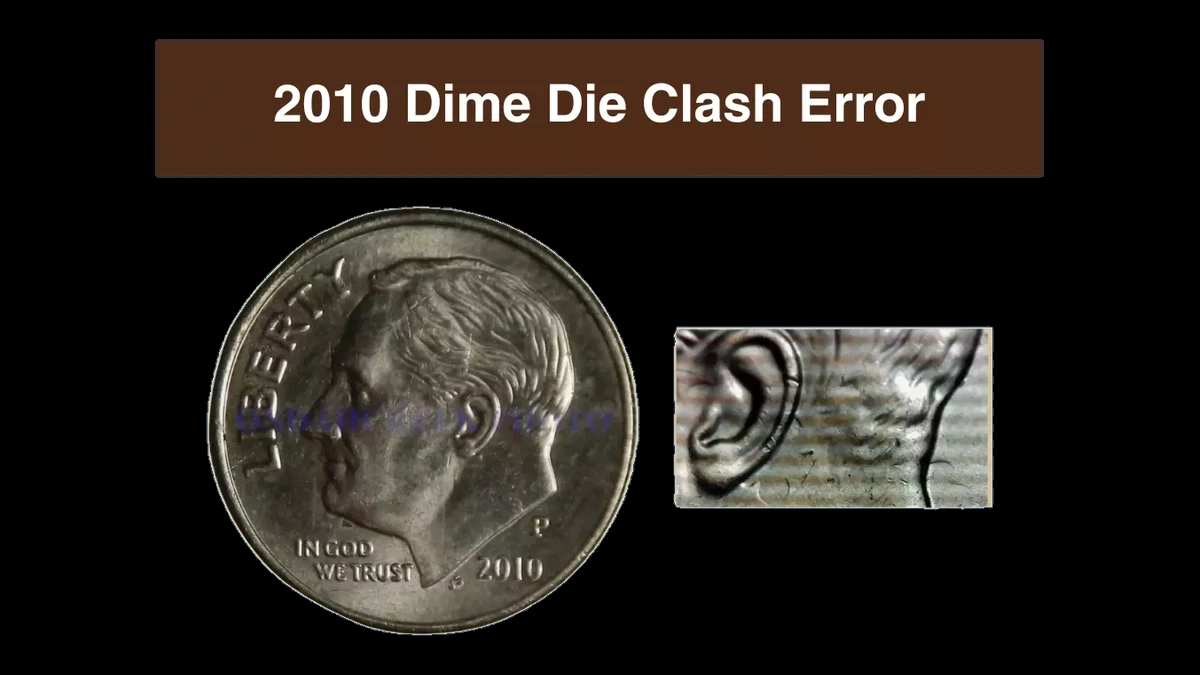
8. 2010 Dime An Extra Outline Fits the Other Face: Die Clash Error
Dies can mark each other when they meet without a blank. Later coins can carry partial opposite-face traces beside their usual design.
The reported Philadelphia example lacks a precise map of its marks. Suggested torch or portrait areas are places to investigate, not established diagnostics for every coin.
How to Identify
Trace a suspected curve in a photograph and compare it with the opposing design at the same scale. Seek a recognizable contour rather than unrelated lines.
Inspect for scratches and signs that another finished coin was pressed against the dime. Those can produce extra marks through a different process.
What It’s Worth
Slight identifiable clashes are estimated at $5–$30, with much clearer examples around $50–$500. The actual strength of the transferred shape determines a useful comparison.
A secondary guide reports a $490 eBay result in 2020 for a 2010-P described as MS60. That report should not become the routine price for every faint clash.
9. 2010 Dime Rounded Design Edges Appear Twice: Reported Doubled Die Error
A doubled die contains repetition before striking and can copy the same added contour onto multiple coins. The Philadelphia report points generally to lettering, the date, and reverse details without identifying one exact pattern.
Those suggested locations are not confirmed features of a single coin. Worn thickness, glare, and flat striking-related shelves can imitate additional edges.
How to Identify
Confirm the P and photograph the specific contour under steady light. Compare rounded raised separation with a normal dime and an independently identified example.
A claimed variety needs a complete matching pattern rather than scattered thick letters on both faces. A flat shelf does not establish a doubled die merely because it repeats one edge.
What It’s Worth
Identifiable minor through strong professionally attributed examples are estimated at $25–$850. Slight thickening should not be compared directly with the high end.
The year guide reports $835 at GreatCollections in 2022 for a 2010-P described as MS64. Neither the precise doubled pattern nor a matching primary auction record is established here, so that amount remains a secondary report.
Conclusion
The recorded $131.38 Philadelphia missing-layer result and the higher guide reports concern different coins with different levels of supporting evidence. Match the physical feature before selecting a range.
Keep circulation coins, softly textured satin-finish coins, clad Proofs, and silver Proofs separate in comparisons. Original layer boundaries, complete design, and recognizable repeated contours provide stronger identification than a high listed figure or an unusual surface color alone.