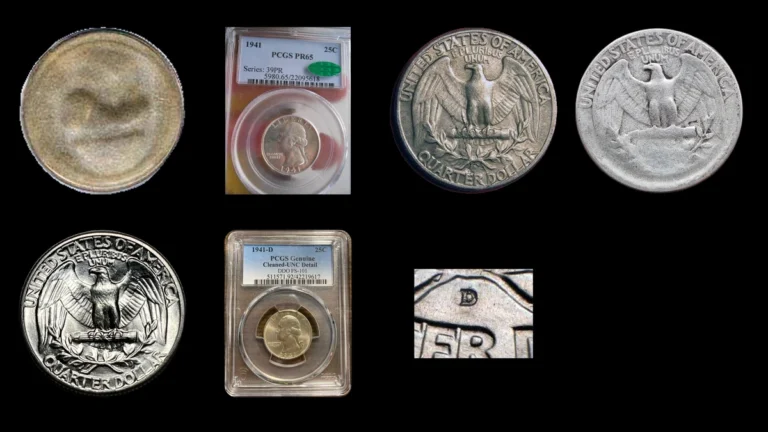
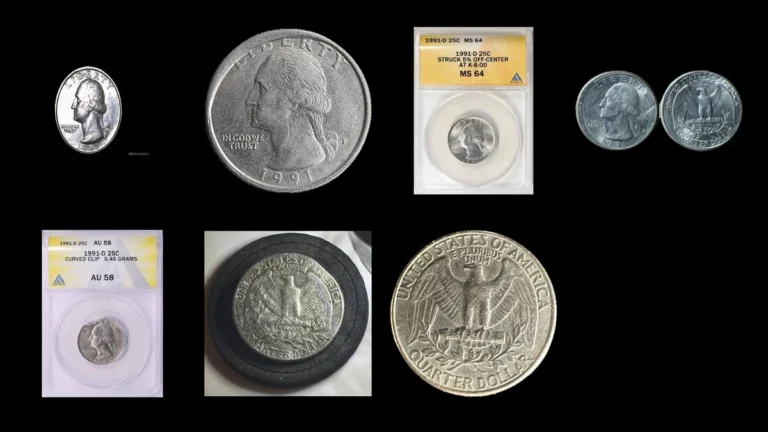
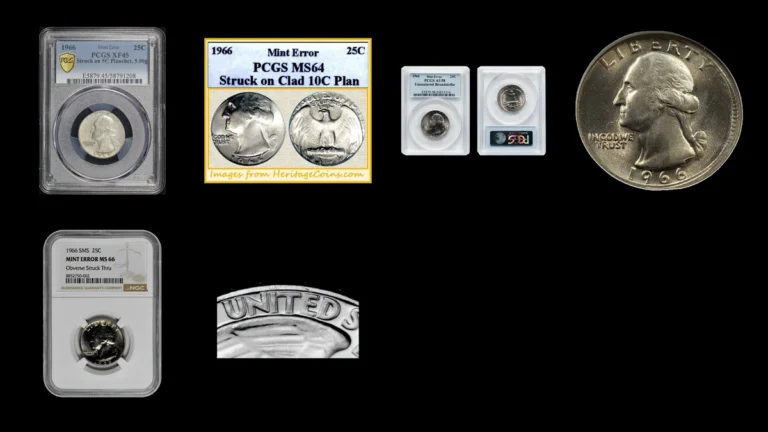
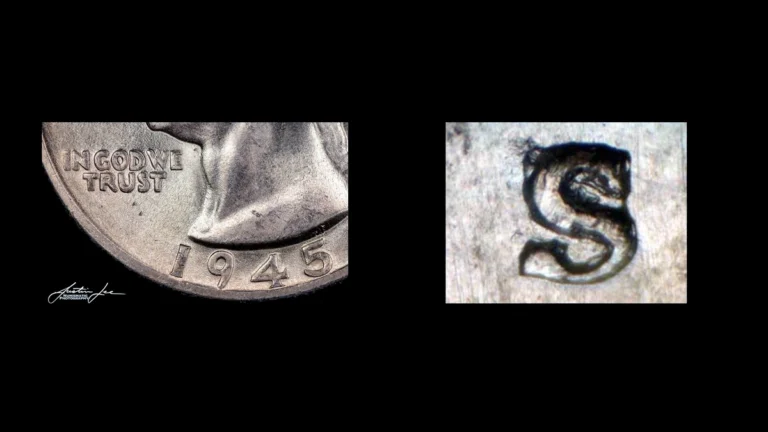
Rare 2010 Quarter Errors (List & Pictures)
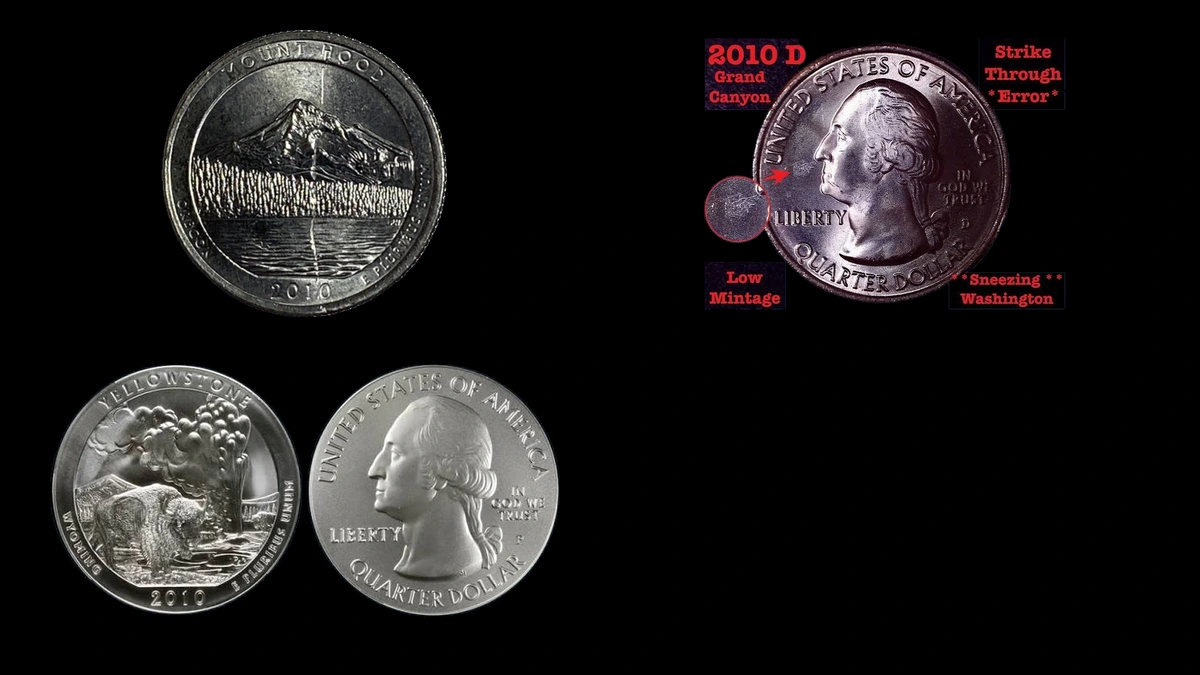
Identify the park and coin size before comparing 2010 quarter errors: this year includes ordinary quarters and much larger five-ounce silver pieces. Estimated values span $2–$6,000, and a Yosemite design struck on a nickel blank sold for $2,880 in April 2020.
The inspection route below starts with small surface clues, moves through outline and metal defects, and ends with the large Yellowstone finish error.
| What looks different | Possible cause | Estimated value |
|---|---|---|
| Parallel front-side marks | Reported feeder contact | $2–$40 |
| Raised ridge, lump, or rim patch | Die crack, chip, or cud | $2–$200 |
| Locally weak or missing detail | Struck through material | $5–$250 |
| Rounded repeated design | Reported doubled die | $15–$300 if confirmed |
| One displaced face | Misaligned die | $2–$75 |
| A missing edge section | Clipped planchet | $20–$350 |
| Expanded border with complete design | Broadstrike | $40–$400 |
| Matching blank areas on both faces | Off-center strike | $50–$500 |
| Several design positions | Repeated strikes | $100–$600 |
| A sunken mirror design | Brockage | $200–$1,500 |
| Exposed core or separating layer | Clad-layer defect | $30–$700 |
| Quarter design on a small solid-alloy blank | Wrong planchet | $1,500–$4,000 |
| Matte front and bright back on a five-ounce coin | Unfinished reverse | $1,500–$6,000 |
1. 2010 Quarter Parallel Lines Cross Washington’s Side: Reported Feeder-Related Marks Error
A Yosemite report links front-side parallel lines to the machine part that feeds blanks into the press. The correct explanation depends on whether the marks are raised or recessed.
A feeder scratching a die, the striking tool, can create raised copies on later coins. Direct contact with a blank can instead leave a recessed impression or scrape.
How to Identify
Use side lighting to inspect the center and edges of each line. A later scratch can have raised sides while remaining a cut groove through completed design.
Repeated raised patterns on other coins can support die damage; an isolated groove needs evidence of minting contact. The report does not supply one definitive line shape.
What It’s Worth
$2–$40 is the estimate for a genuine minor feeder-related feature on an ordinary clad quarter. No specimen-specific completed sale was supplied.
Clear original marks and undisturbed adjoining design make a stronger comparison than faint unexplained scratches. Parallel arrangement alone does not create an error premium.
2. 2010 Quarter Raised Metal Interrupts a Portrait or Rim: Die Cracks, Chips, and Cuds Error
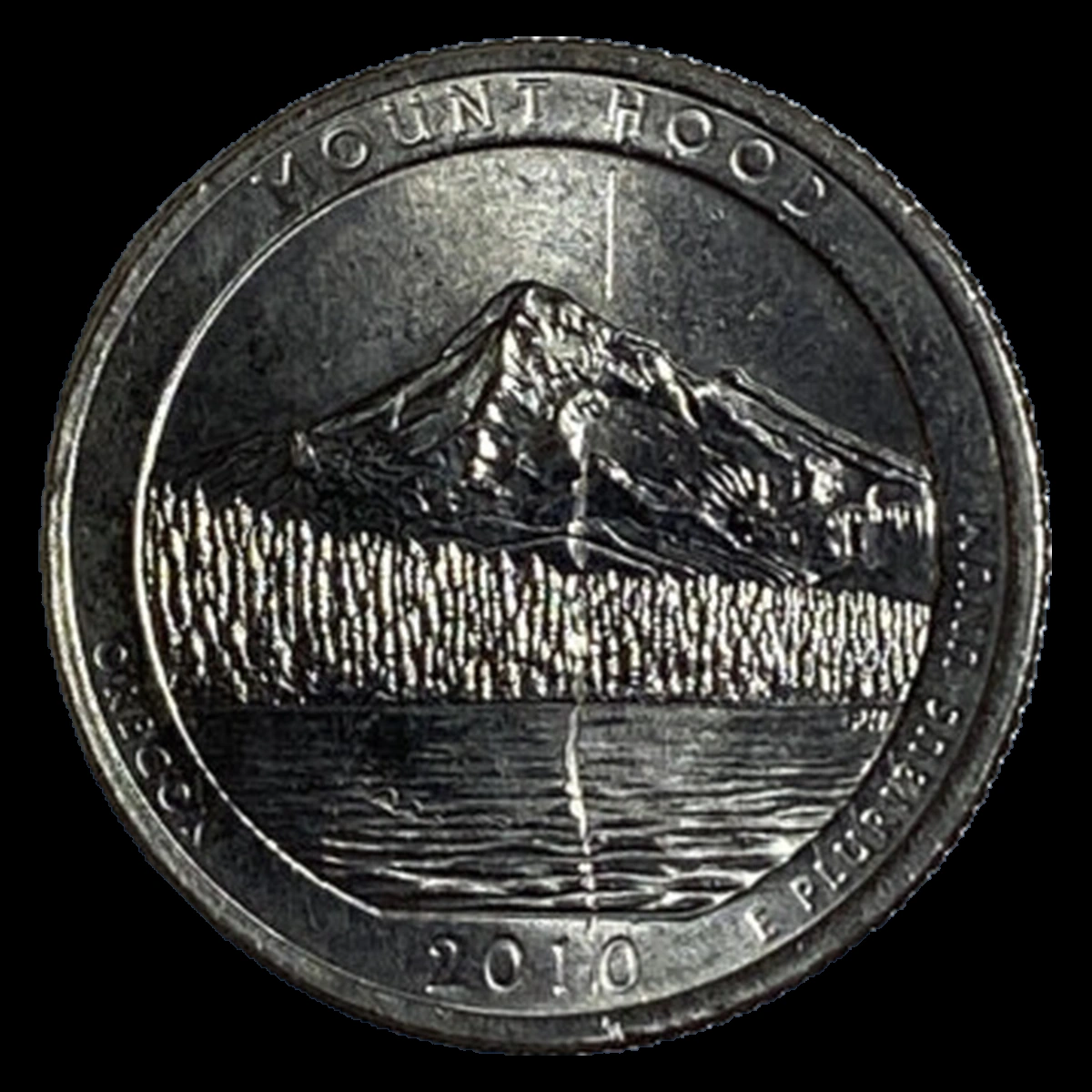
Hot Springs reports include a Denver mark near Washington’s mouth and a separate Philadelphia rim-connected break. Yellowstone has a Philadelphia front-crack report, while Yosemite has a front chip and Mount Hood has other reported die damage.
A cracked die produces a ridge, while a chipped die can produce a lump. Grand Canyon cracks and a Yosemite rim cud remain possibilities requiring established examples here.
How to Identify
Compare the same park and affected face before tracing the feature. A naturally struck raised patch meeting the rim supports a cud, while a small interior lump is a chip.
Inspect the nearby edge for crushing that could push up metal after striking. A Yosemite chip does not prove a separate rim cud, and the two Hot Springs reports describe different coins.
What It’s Worth
$2–$30 is the estimate for minor cracks and chips, with roughly $30–$200 for stronger rim breaks. These values concern ordinary clad examples.
A 1970-D nickel with two cuds sold for $63 in October 2022. That different coin provides perspective rather than a fixed price for any 2010 park break.
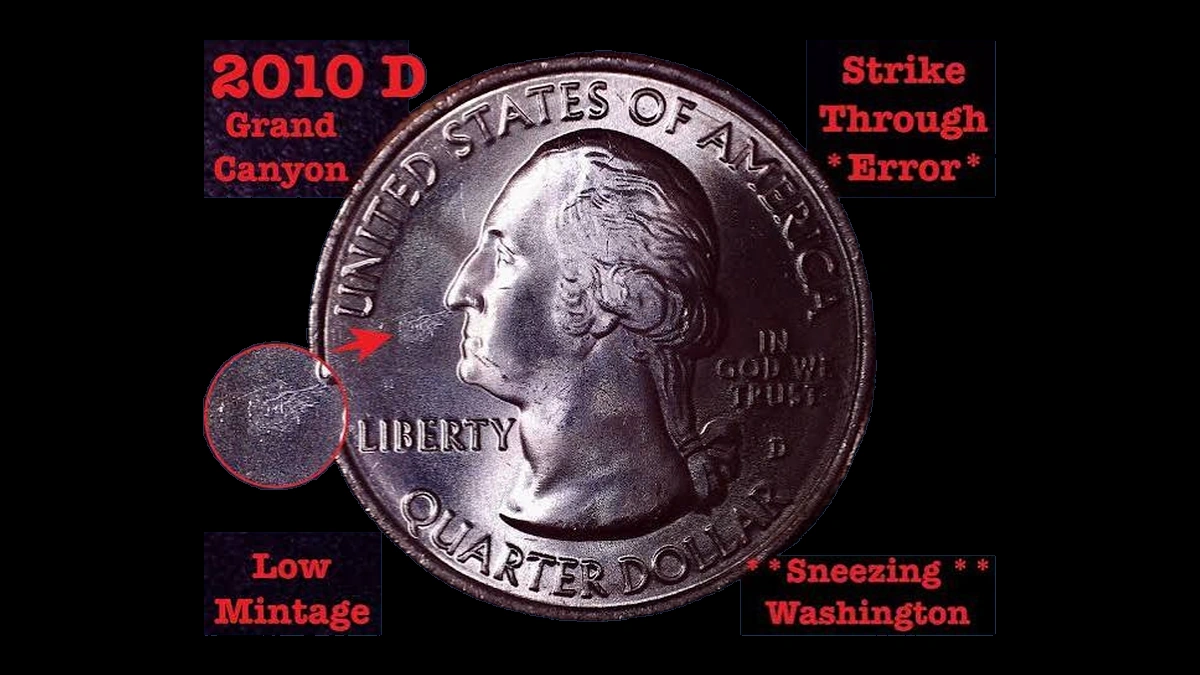
3. 2010 Quarter A Letter or Portrait Area Fails to Form: Struck Through Material Error
Mount Hood and Yellowstone reports include a missing E in WE. Yosemite has weak portrait detail, and Hot Springs has a separate blocked-strike report.
Material between the die and blank, or filling a die recess, can prevent detail from forming. Grease is a possibility, but the weak feature alone does not identify the obstruction.
How to Identify
For a missing E, compare the adjacent W and other motto letters to see whether the weakness is localized. General wear, scraping, and impact flattening can remove lettering after minting.
Check Yosemite’s actual portrait area rather than borrowing another park’s missing-letter position. Grand Canyon remains a possible example without a securely established specimen in the supplied reports.
What It’s Worth
$5–$50 is the estimate for minor genuine blocked detail, with $50–$250 for larger clear impressions. An isolated absent letter does not automatically command the upper range.
A 1986-P nickel struck through material sold for $204 in June 2023. Its impression does not establish the material or shape of a 2010 quarter’s error.
4. 2010 Quarter Small Design Elements Have Extra Rounded Contours: Reported Doubled Dies Error
Yellowstone has a front-lettering report around areas such as LIBERTY or WE. Grand Canyon and Hot Springs have separate reverse reports concerning their own designs or inscriptions.
A genuine doubled die already contains repeated detail before striking. The supplied reports do not establish a shared pattern or secure catalog attribution.
How to Identify
Select the park and face before comparing the local pattern. The date is on the reverse of these quarters, so it is not a front-side doubling location.
Rounded repeated shapes need to match an identified example. Flat mechanical shelves, worn-die thickening, and missing letters require different explanations.
What It’s Worth
$15–$300 is the conditional estimate for genuine die doubling on an ordinary clad example. No completed sale was supplied for a specifically attributed pattern.
Clear recognition and original surfaces support stronger comparisons. A generic DDO or DDR label does not establish a variety or its premium.
5. 2010 Quarter One Face Is Displaced while the Other Is Centered: Misaligned Die Error
A die sitting off to one side can move its design toward the rim while the blank remains normally positioned. The opposite face may stay centered.
A Denver example is reported without an established park or affected face. A severe shift can cut into outer design elements, so completeness alone does not define this error.
How to Identify
Photograph both faces straight on and compare their design-to-rim distances. Matching displacement on both faces instead calls for an off-center assessment.
Check the edge for dents or crushing that could create a false uneven outline. For ordinary loose clad quarters, the normal references are 5.67 grams, 24.26 mm, and a reeded edge.
What It’s Worth
$2–$75 is the estimate for genuine one-die misalignment. Slight border differences often attract little premium.
No completed sale was supplied for the Denver report. Clear displacement on one face and an undamaged centered opposite face make the identification more useful.
6. 2010 Quarter A Section of the Outline Is Absent: Clipped Planchet Error
Yellowstone and Hot Springs have clipped-blank reports. A Denver Mount Hood report places the shortage in the Lost Lake portion of the scene.
The blanking operation can overlap an earlier hole or an irregular strip edge before the design is struck. Grand Canyon clipping remains a type needing a definite example.
How to Identify
Inspect the missing boundary for natural formation rather than saw grooves, filing, or crushing. Follow surviving reeding toward the gap and look for supporting rim weakness opposite it.
Neither a curved outline nor opposite-rim weakness authenticates a clip by itself. The Mount Hood position must follow its own Lost Lake scene, without inventing a percentage or applying that location to another park.
What It’s Worth
$20–$350 is the estimate for genuine clipped clad quarters. Larger clear shortages and attractive preservation can support more than a small uncertain gap.
A 1999-D Pennsylvania quarter with overlapping curved clips sold for $74 in December 2024. Its two clips do not establish the shape, percentage, or value of the 2010 examples.
7. 2010 Quarter A Wide Border Contains the Complete Scene: Broadstrike Error
The collar normally controls the coin’s width and forms its reeded edge. If it fails to restrain the blank, the metal may spread beyond the normal outline.
Broadstrikes are reported for Hot Springs and Mount Hood. Grand Canyon remains a possible type without a firmly established specimen here.
How to Identify
Check that the intended lettering and scene remain within the expanded metal on both faces. The design can sit unevenly without becoming an off-center strike.
Look for free outward flow and absent or incomplete reeding rather than flattened letters and hammer marks. Width alone cannot distinguish mint expansion from later damage.
What It’s Worth
$40–$400 is the estimate for a genuine clad broadstrike. The visible spread and preservation of complete designs influence the comparison.
A 1988-P dime with overlapping strikes and expansion sold for $80.50 in May 2005. Its smaller denomination and additional strike make it a general reference rather than a direct 2010 quarter price.
8. 2010 Quarter Untouched Metal Adjoins a Cropped Scene: Off-Center Strike Error
Yellowstone, Hot Springs, and Mount Hood have reported off-center examples. The entire blank was displaced, leaving some metal unstruck and some intended design beyond the edge.
The retained Grand Canyon report remains unconfirmed. No single mint, direction, or percentage describes all the park examples.
How to Identify
Read the reverse park name and 2010 date, then compare the blank areas and design cutoff on both faces. A shift confined to one die gives a different relationship.
Inspect the transition into untouched metal for later scraping or grinding. An intact blank can retain normal mass even when the strike changes its outline.
What It’s Worth
$50–$500 is the estimate for genuine clad off-center quarters. Clear shifts with readable identity make stronger comparisons than slight uneven borders.
A 1999-P Georgia MS66 struck 40% off center sold for $192 in December 2024. That result supplies neither a percentage nor an auction identity for a 2010 park coin.
9. 2010 Quarter Several Impressions Occupy Different Positions: Repeated Strikes Error
Hot Springs, Mount Hood, and Yosemite have reports of repeated striking. Another blow after the coin moves can leave shifted or differently angled groups of design.
No shared strike count or offset is established, and the Grand Canyon possibility lacks definite matching evidence here. The individual impressions must support the proposed sequence.
How to Identify
Locate one coherent design position and then trace surviving parts of a later impression. Their intersections should explain where earlier detail was flattened or replaced.
Compare both faces rather than counting one thick letter as another blow. A doubled die and mechanical doubling can repeat small contours without striking the coin twice.
What It’s Worth
$100–$600 is the estimate for confirmed repeated strikes on ordinary clad quarters. Well-separated impressions and original surfaces support the stronger end.
A 2001-P dime with its second strike 75% off center sold for $114 in October 2021. The 2010 reports do not inherit that coin’s percentage, grade, or exact value.
10. 2010 Quarter A Reversed Scene Is Pressed into the Surface: Brockage Error
A struck coin caught between a die and the next blank can impress a sunken mirror image into that blank. This transferred design is called a brockage.
The Yellowstone report describes the reverse design transferred onto the other face. It does not establish an auction identity or the impression’s extent.
How to Identify
Check that the unexpected image is both reversed and recessed. Compare recognizable scene elements and lettering with the normal Yellowstone reverse.
Faint clash lines and a normal raised repeated design are different features. Inspect the faces and edge for evidence of later squeezing between finished coins.
What It’s Worth
$200–$1,500 is the estimate for a genuine Yellowstone brockage on an ordinary clad quarter. No completed sale was supplied for the reported example.
A strong readable mirror image offers a better comparison than an indistinct patch. The higher range requires that defining reversed, sunken design to be established.
11. 2010 Quarter Copper or a Separating Boundary Shows through: Clad-Layer Defects Error
Ordinary quarters have a copper core between copper-nickel outer layers. Hot Springs and Mount Hood have reports of loss or poor bonding, while Grand Canyon has a reverse outer-layer defect report.
The Grand Canyon description does not establish loss of its whole reverse layer. The extent and actual weight require examination of each coin.
How to Identify
Separate ordinary clad quarters from the small 90% silver collector versions, whose normal weight is 6.25 grams and which lack that copper-core construction. Record a candidate’s own measurements rather than borrowing another error’s reduced weight.
Trace a natural layer boundary toward the edge and inspect for stripping, scraping, or chemical damage. Color alone cannot establish a missing layer or failed bond.
What It’s Worth
$30–$200 is the estimate for localized layer defects, while clearly missing complete layers may fall around $100–$700. The physical extent must support the selected range.
A 1999-D Connecticut quarter missing its reverse layer sold for $149 in December 2024. That whole-layer loss does not directly price a small 2010 bonding defect.
12. 2010 Quarter Yosemite’s Design Crowds a Smaller Solid-Alloy Blank: Wrong Planchet Error
A Philadelphia Yosemite quarter graded PCGS MS62 was struck on a nickel blank. Its quarter design had less metal available, and the solid copper-nickel alloy differs from normal quarter cladding.
How to Identify
A normal nickel blank begins near 5 grams and 21.2 mm, compared with 5.67 grams and 24.26 mm for an ordinary quarter. These are standards rather than recorded measurements of the auctioned error.
Check the actual design cutoff and edge composition together, allowing for the smaller blank to spread during striking. Complete quarter reeding need not form on the wrong blank.
What It’s Worth
$1,500–$4,000 is the estimate for comparable genuine examples. The Yosemite PCGS MS62 sold for $2,880 at Heritage on April 15, 2020, as reproduced in Mint Error News’s auction report.
A slightly underweight ordinary quarter is not an equivalent object. The smaller blank, correct solid alloy, and original quarter strike must agree.
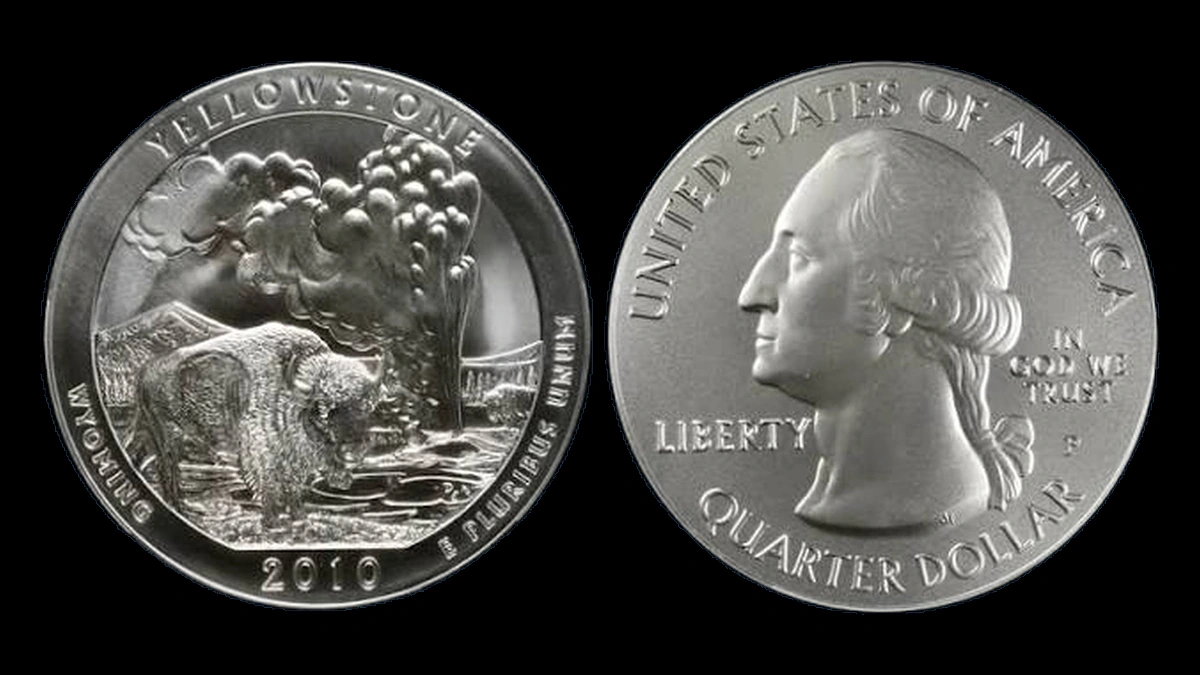
13. 2010 Quarter A Large Yellowstone Coin Has a Matte Front and Bright Back: Unfinished Reverse Error
NGC identified a 2010-P five-ounce Yellowstone collector coin with a matte Washington side and an untreated bright reverse. The normal design remains fully struck on the bright face.
The finishing treatment follows striking, and it missed one face on this example. NGC graded the coin Specimen 69, reflecting its special collector finish and preservation.
How to Identify
Confirm the large format first: approximately 76.2 mm across and about 155.5 grams of silver, with a silver-weight edge inscription. This is not the small reeded-edge quarter.
Check the P mintmark and compare both faces under identical light, looking for original finish rather than later polishing. NGC’s reported example combines one treated face with one untreated face.
A normally bright bullion version is a different product. A lightly finished Grand Canyon collector coin also does not automatically match this two-face Yellowstone contrast.
What It’s Worth
$1,500–$6,000 is the estimate for a properly authenticated five-ounce finishing error of this kind. No completed sale was supplied for the Specimen 69 example.
The range values the complete silver coin and its original finish mismatch. Spots, scratches, or cleaning that disturb those surfaces can weaken the comparison.
Conclusion
For 2010 quarters, the park, format, and actual affected area are essential parts of the identification. A Yellowstone letter report does not establish a Grand Canyon variety, and a small clad quarter is not comparable to a five-ounce silver finish error.
Use both faces and the edge to connect each unusual feature to its cause. Keep unconfirmed reports qualified and choose prices for the same mechanism and type of coin.