Rare 2006 Quarter Errors (List & Pictures)
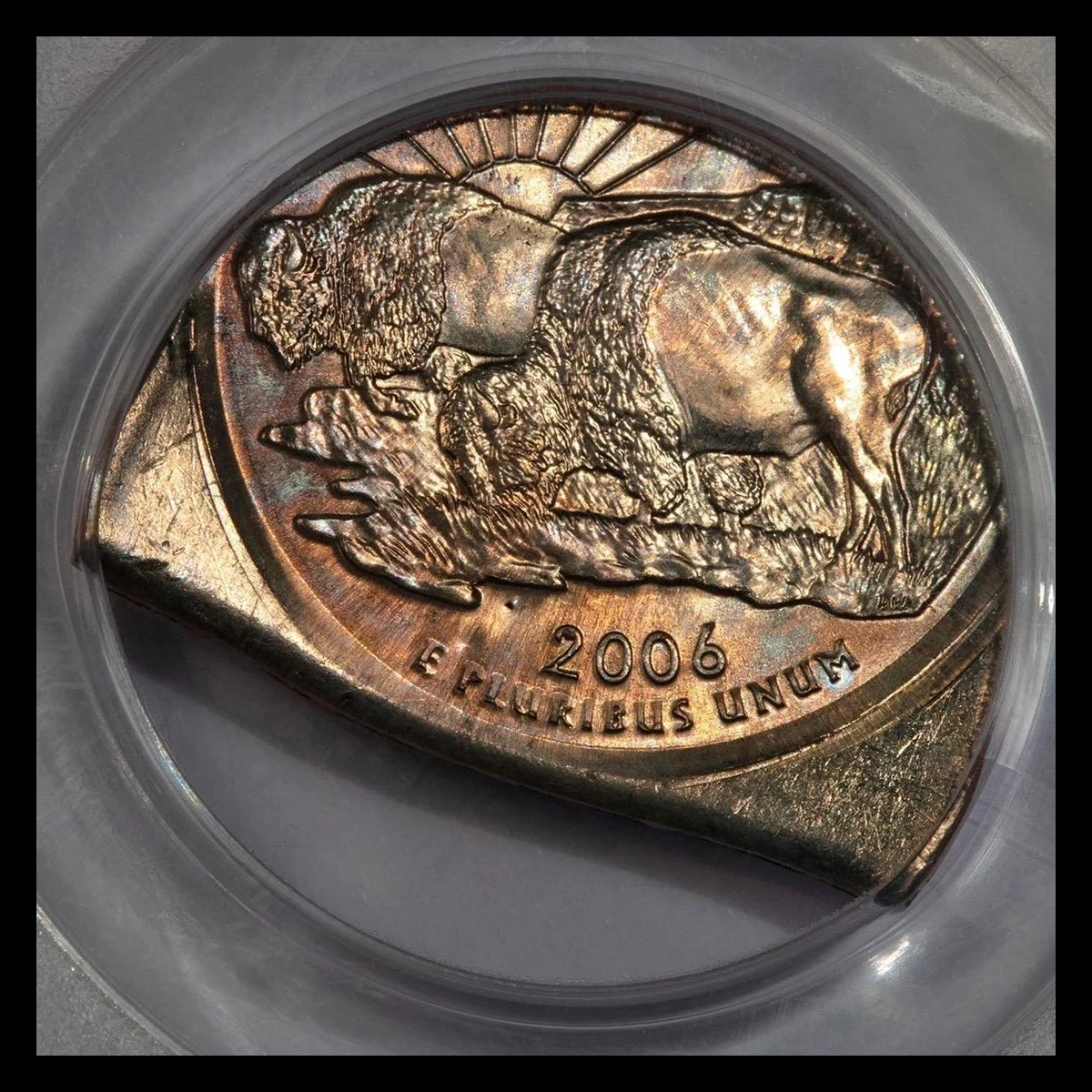
A quarter design on a steel washer belongs at the unusual end of 2006 quarter errors. The documented North Dakota example brought $8,625 in August 2011.
Estimated values across the five state designs range from $2–$12,000, including modest chips and weak design areas. Begin with the object’s shape and metal, then check whether an extra feature stands above the surface or sinks into it.
1. 2006 Quarter A Hole or Undersized Metal Piece: Wrong-Planchet and Washer Strikes Error
The Philadelphia North Dakota washer coin has an oval steel body and an off-center hole. Some left rim survives, while the smaller object cuts off right-side design.
A separate Nevada report concerns a quarter struck on a dime blank. That layered coin blank is a different object from a steel washer.
How to Identify
The washer weighs 2.6 grams, responds to a magnet, and was graded PCGS MS62. Its hole was present when the design was struck, so the design and surrounding metal must fit that sequence.
Inspect the hole and outside boundary for later drilling or cutting. A hole alone cannot demonstrate that an unusual object entered the Mint’s press.
An ordinary clad quarter starts at 5.67 grams and 24.26 mm, compared with a dime blank’s 2.268 grams and 17.91 mm. A later quarter strike can spread a small blank, and neither wrong object must retain a full quarter’s grooved edge.
Keep composition separate from appearance throughout the guide. Ordinary and satin-finish clad coins have a copper core between copper-nickel layers, while 90% silver Proofs have different construction.
What It’s Worth
Comparable authenticated washer strikes are estimated at $6,000–$12,000; the Nevada dime-blank type at $500–$2,500. The two mechanisms need separate comparisons.
Heritage sold the North Dakota steel-washer example for $8,625 on August 11, 2011. Its result does not establish a value for a drilled ordinary quarter or the Nevada report.
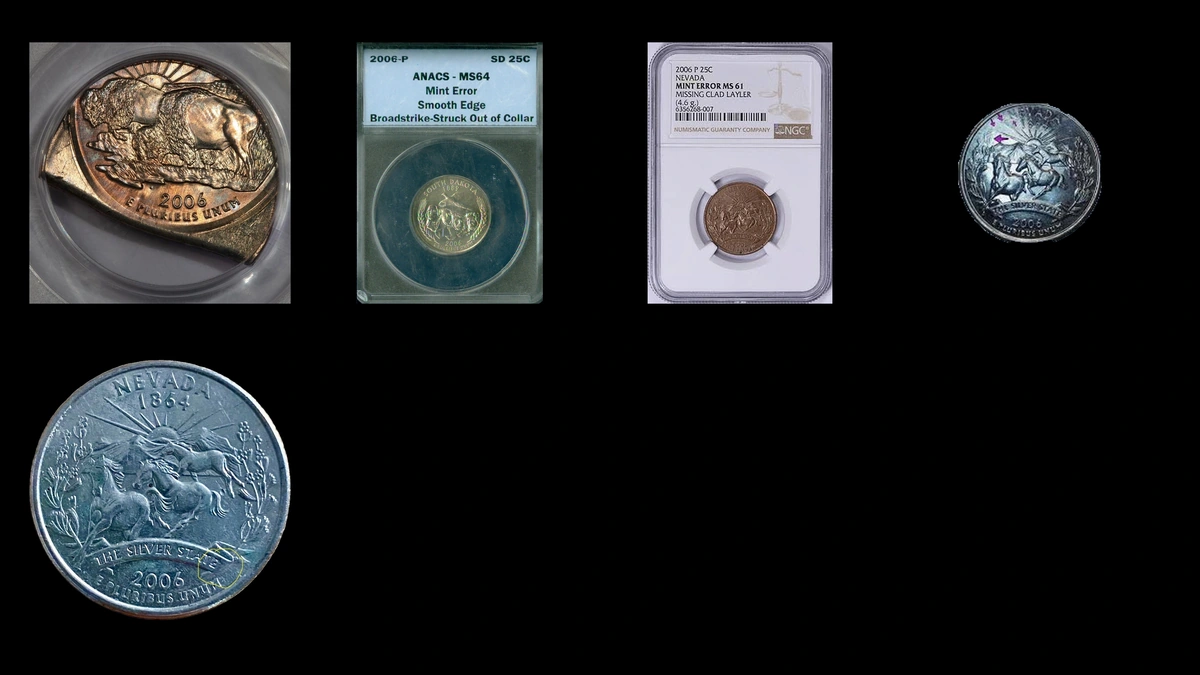
2. 2006 Quarter Curved Gaps, Straight Losses, or an Oval Outline: Clipped Blanks Error
Missing original metal can produce several shapes before a blank is struck. The Nevada reports include a 4% clip near 9:30 and separate multiple-clip coins.
Oval blank reports cover North Dakota, Colorado, Nebraska, and South Dakota. Another North Dakota example combines a 33% straight missing section with a 30% off-center strike.
How to Identify
Record the whole outline before deciding which type you have. The Colorado oval example weighs 4.6 grams, while the Nebraska oval example weighs 4.9 grams; those are separate measurements.
Inspect missing boundaries for natural cut-and-break surfaces that meet struck design. Filing or sawing through a completed coin leaves a different history in the edge.
On North Dakota’s combined error, distinguish the straight absent section from metal left untouched by the off-center strike. Both features must exist on the same piece to support that identification.
What It’s Worth
Smaller clips are estimated at $30–$250, with strong oval or combined errors around $150–$900. These are complete-coin values rather than separate sums for each visible fault.
A 1999-D Pennsylvania quarter with overlapping clips sold for $74 in December 2024. Its different-year shape is a comparison, not a sale of a 2006 oval blank.
3. 2006 Quarter Extra Width with a Complete Design: Broadstrike and Partial Collar Error
A widened quarter can reflect missing restraint from the collar, the ring surrounding the blank during striking. The Nevada report describes an uncentered broadstrike with an ungrooved edge.
The separate Colorado expanded example retains grooves on only part of its edge. That structure can indicate partial contact with the collar.
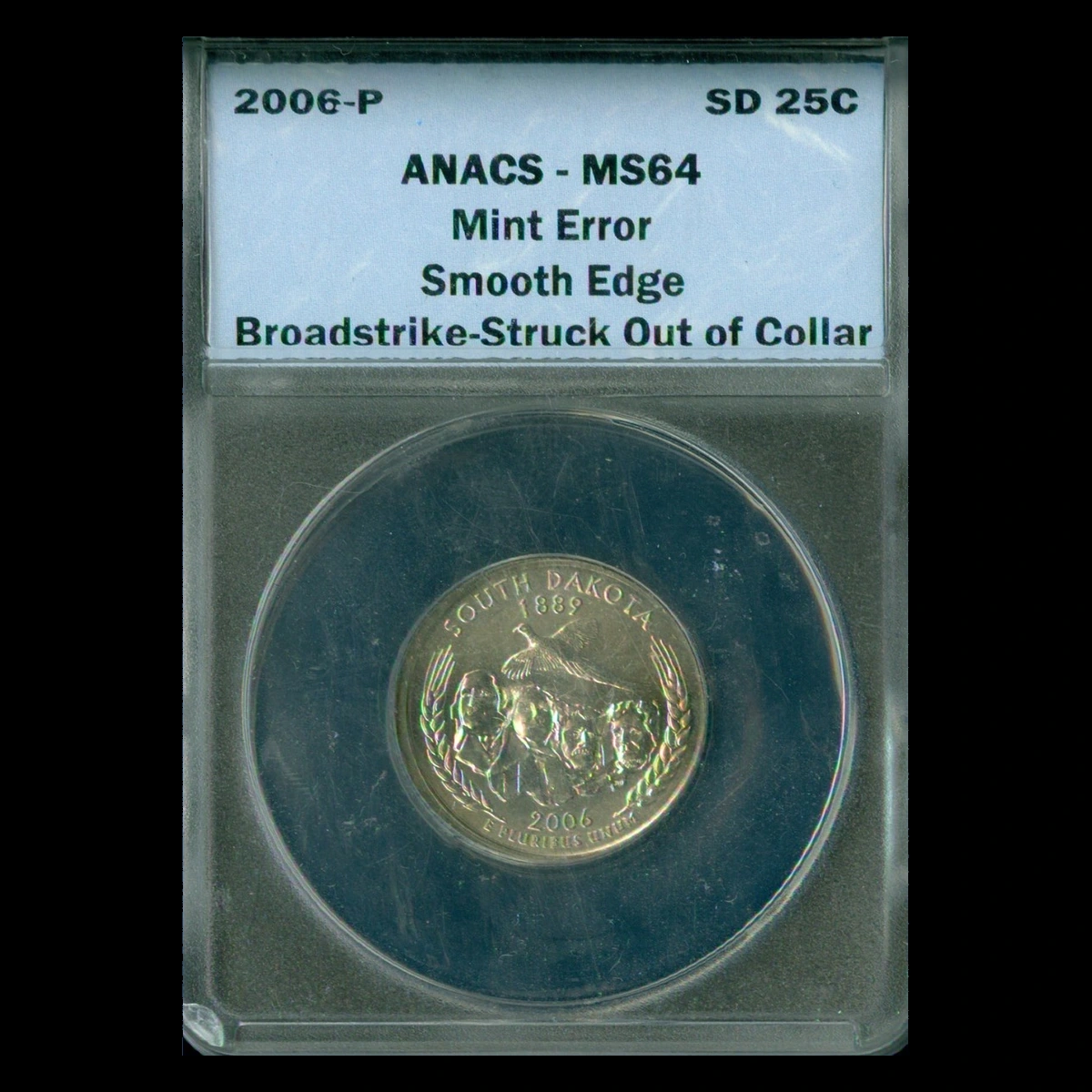
How to Identify
Read the outside design on both faces. Complete images within enlarged borders support a broadstrike even when the borders are uneven.
Use side views to distinguish an ungrooved expanded edge from a transition between grooved and spread bands. The latter is evidence of partial collar contact, not a feature to assign automatically to Nevada.
Hammering can widen a coin while flattening its design, and filing can erase grooves. Original struck detail and edge structure must explain the expansion together.
What It’s Worth
Genuine examples are estimated at $40–$400. A 1990-P nickel with partial collar contact sold for $99 in June 2025, a different-denomination comparison.
Its sale cannot directly price either 2006 quarter. Clear expansion or a visible edge step, together with preservation, guides the closer comparison.
4. 2006 Quarter Untouched Metal beside Missing Design: Off-Center Strike Error
When the blank sits partly outside the stamping area, a crescent remains unstruck and the opposite design runs off the metal. This differs from a broadstrike that retains its complete intended design.
Nebraska has a reported shift of roughly 40%. Nevada, Colorado, and South Dakota also have reports, without one percentage or direction shared among them.
How to Identify
Locate the 2006 striking date and state name on the reverse. The earlier date above the scene records statehood and cannot establish when the coin was struck.
Compare the displaced boundary on both faces. If only one design shifts, investigate a moved tool rather than assuming the entire blank was off center.
Examine the blank crescent and its transition into struck metal for later grinding. A photograph with an uneven angle should not supply a displacement percentage.
What It’s Worth
Genuine dated off-center clad quarters are estimated at $50–$500. A 1999-P Georgia quarter struck 40% off center sold for $192 in December 2024.
The Georgia result is a different-year comparison, not a sale of the roughly 40% Nebraska report. Date visibility, identifiable scenery, and clean surfaces matter alongside the amount of shift.
5. 2006 Quarter Horses or Lettering in Two Positions: Repeated Strike Error
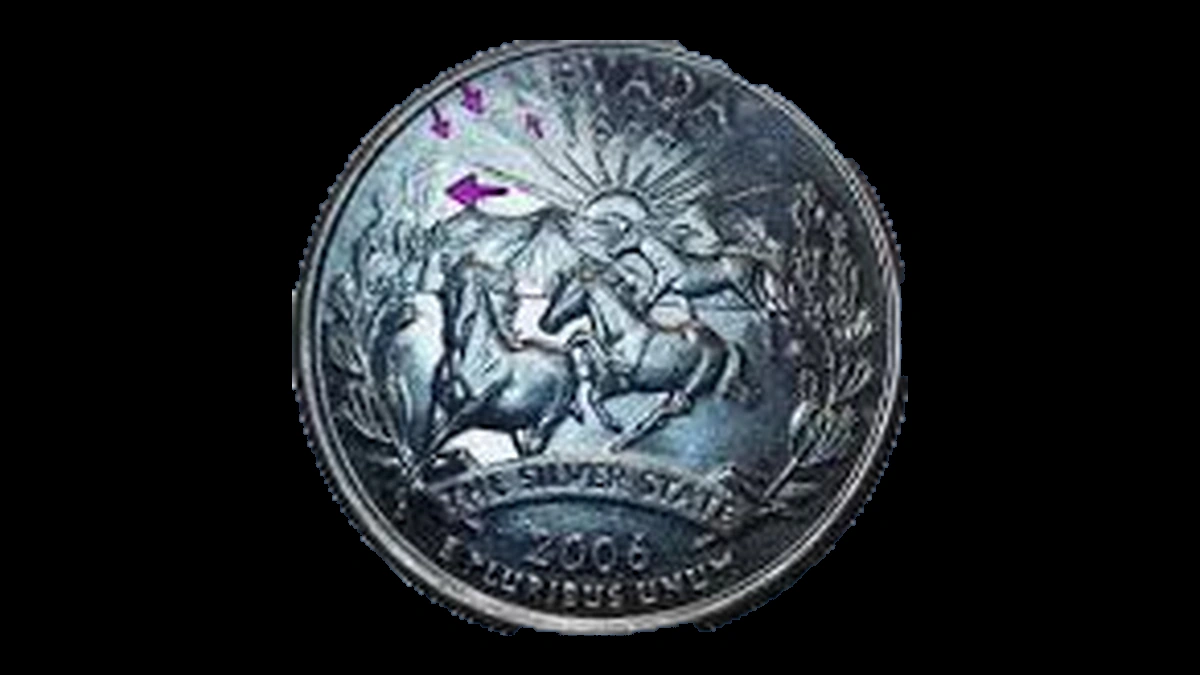
On the Nevada report, a second impression can displace horses, lettering, or the border. Movement between blows lets the later design overlap and partly flatten the earlier one.
How to Identify
Choose a recognizable detail and follow it through two positions, then examine the corresponding changes on Washington’s side. Both faces should fit a coherent striking sequence.
A single doubled-looking letter does not demonstrate another strike of the whole coin. Small flat shelves can arise during one blow instead.
No exact percentage, direction, or certified grade is established for this Nevada report. Those details must be derived from its own evidence.
What It’s Worth
A confirmed repeated strike is estimated at $100–$600. The supplied comparison is a 2001-P dime with a second strike 75% off center, sold for $114 in October 2021.
The dime’s displacement and grade do not describe the Nevada quarter. Separated, readable impressions and sound surfaces make the second blow easier to demonstrate.
6. 2006 Quarter A Raised Pocket or Peeling Boundary: Blistered Clad Layer Error
A Nebraska report describes a front-side bulge or separation beneath the surface. A local failure of the bond between clad layers can leave a pocket without removing an entire face.
How to Identify
Leave the pocket closed and avoid pressing it while measuring or handling the coin. Opening it changes both the condition and the evidence.
Examine the boundary for a separation beneath the outer metal, then check both faces and the edge for burns or discoloration. Heating a finished coin can also produce a misleading blister.
An enclosed pocket may retain nearly all the coin’s original weight. Its presence does not establish a wrong blank or complete outer-layer loss.
What It’s Worth
A genuine mint-made blister or local separation is estimated at $20–$350. The size of the pocket and preservation of the original surface influence the comparison.
No individual sale is supplied for the Nebraska report. A later heat bubble does not qualify for the same estimate.
7. 2006 Quarter Exposed Copper across a Patch or Face: Missing Clad Layer Error
Layer loss reports cover Nevada, South Dakota, Nebraska, and North Dakota. Colorado includes a local irregular copper area that should not automatically be described as an entire missing face.
One North Dakota reverse-layer example weighs 4.6 grams. A different satin-finish North Dakota collector coin lacks the front layer.
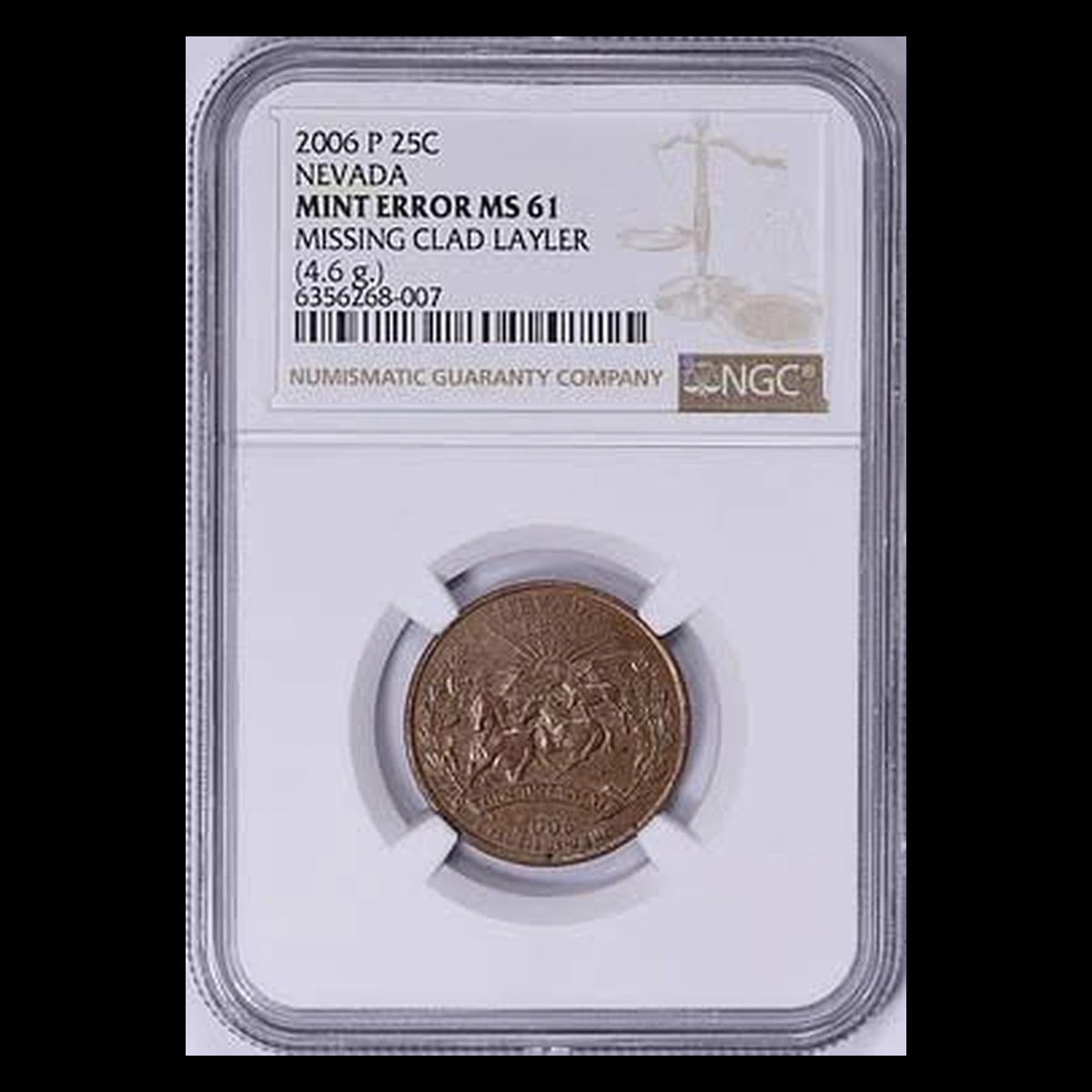
How to Identify
Record which face is affected and how far the exposed area extends. Compare the edge boundary with the surface design and measured metal loss.
The 4.6-gram measurement belongs only to its own reverse-layer example. It cannot be assigned to the satin coin or to the Colorado patch.
Check for coatings, stripping, and scraped surfaces before interpreting copper color as original loss. Silver Proof construction should be assessed separately from a clad coin’s exposed core.
What It’s Worth
Localized defects on ordinary clad coins are estimated at $30–$200; clear whole-layer losses at $100–$700. Collector finishes need their own price comparisons.
A 1999-D Connecticut quarter missing its reverse layer sold for $149 in December 2024. That different-year result does not price every state and finish identically.
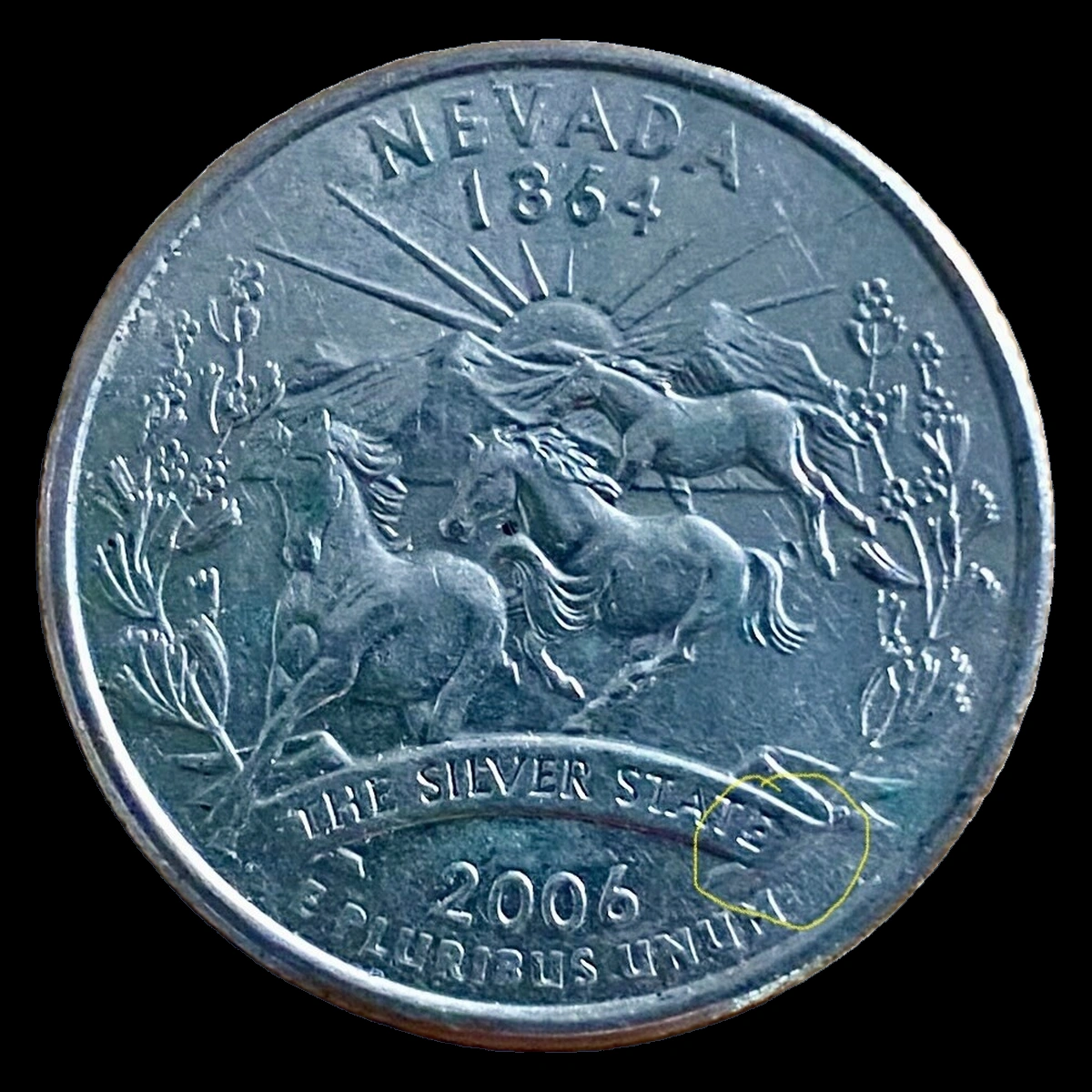
8. 2006 Quarter A Sunken Letter in the Wrong Place: Strike-Through and Dropped Filling Error
Material blocking a strike can leave a depression or missing detail. Nevada, Nebraska, and South Dakota have reports, while North Dakota also has displaced letter-shaped impressions.
Packed material can fill a letter in a die, fall free, and be pressed into another part of a coin. This dropped filling leaves a recessed shape rather than a raised extra letter.
How to Identify
The Denver North Dakota example has a recessed Y on the front. A separate Philadelphia report describes a recessed R below and left of Washington’s neck.
Use side lighting to establish that the unexpected letter sinks into the surface. A scratched outline or a raised doubled design records a different process.
For ordinary blocked areas, inspect the boundary and surrounding design for natural striking rather than later impact damage. Do not assign a dropped-letter explanation to an indistinct weak patch.
What It’s Worth
Small strike-throughs are estimated at $10–$250, while clear dropped letters can fall around $200–$1,200. The Denver North Dakota dropped-Y coin, graded PCGS MS65, sold for $780 at Heritage on October 6, 2021.
The Philadelphia R and other states’ weak areas require separate comparisons. The Y sale does not establish a uniform premium for missing or unusual lettering.
9. 2006 Quarter A Bison “Extra Leg” or Raised Rim Patch: Die Chips, Cracks, and Cuds Error
Extra metal beneath North Dakota’s leading bison can resemble another leg. The report attributes the lump between its legs to a chip in the die, not an added design element.
Other reports concern Nevada horses and sagebrush, Nebraska ridges, and South Dakota wing or wheat areas. Colorado also has a rim-break report.
How to Identify
Start with an ordinary example of the same state to establish its intended detail. A narrow die crack leaves a raised line; a missing piece of the tool leaves a broader lump.
A cud is a larger break connected to the rim, so an interior bison chip does not qualify simply because it looks conspicuous. Trace a claimed rim patch into the edge and check for later crushing.
Separate raised original relief from a dent that has pushed nearby metal upward. Each state’s location needs its own match.
What It’s Worth
Small cracks and chips are estimated at $2–$30, with larger rim-connected breaks around $30–$200. A 1970-D nickel with two cuds sold for $63 in October 2022, a different-denomination comparison.
The nickname does not determine the value. Size, clarity, original surface, and the underlying coin’s condition are more useful.
10. 2006 Quarter Rounded Extra Ear or Letter Details: Doubled Die Error
Nebraska and South Dakota reports include an extra outline at Washington’s ear. North Dakota reports concern LIBERTY, the motto, and earlobe, while the separate Colorado report establishes no fixed location here.
How to Identify
Confirm the state and striking year before selecting a close-up for comparison. Shared use of Washington’s portrait does not make these reported patterns interchangeable.
Trace a rounded repeated shape rather than judging a single thick point. Genuine die doubling is carried in the tool, whereas a flat shelf beside a feature can result from movement during striking.
Wear can merge fine outlines and scratches can obscure the affected area. A matching pattern is needed before calling an ear or letter a recognized doubled die.
What It’s Worth
Identified die doubling on ordinary clad examples is estimated at $15–$300. Clear recognized patterns on attractive coins support more than unexplained thickness.
No individual sale for these reports is supplied. Ordinary mechanical shelves generally add little special value.
Conclusion
The steel washer, missing-layer reports, and small bison chip show why 2006 quarter errors need very different comparisons. Identify the state and the actual striking date, then establish whether the unusual feature involves the blank, the strike, or the tool.
Keep measurements with their specific examples and value combined features as one coin. Preserve pockets, edges, and exposed surfaces so the original evidence remains available for examination.