Rare 1832 Quarter Errors (List & Pictures)
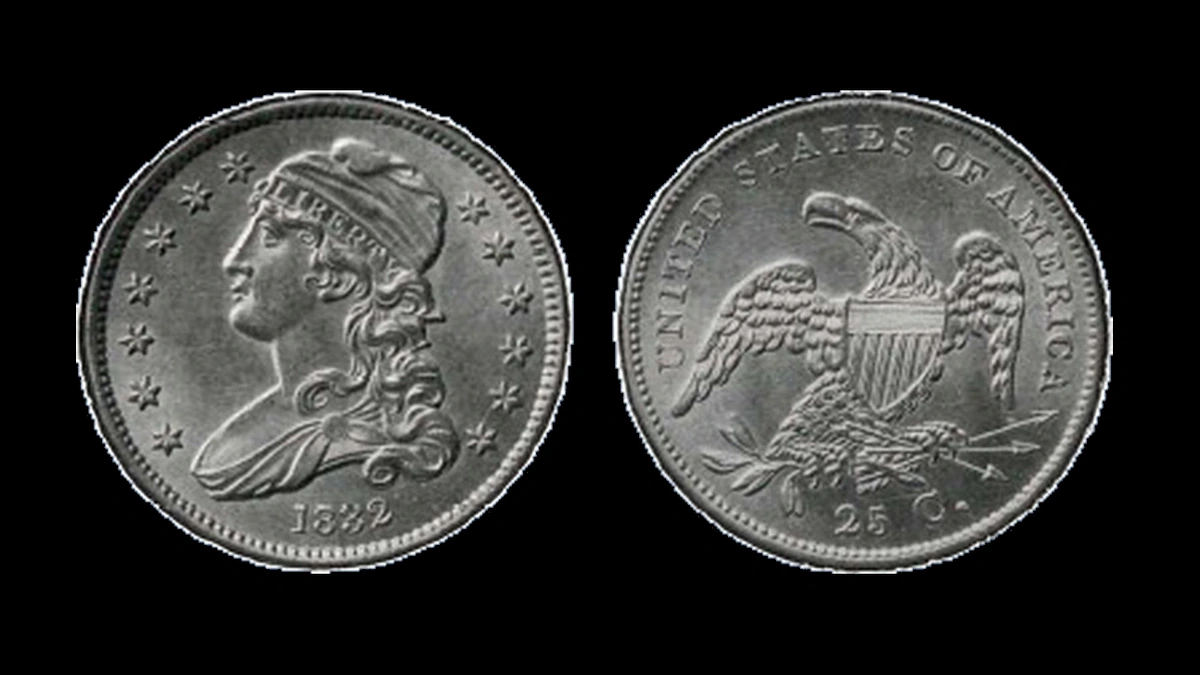
On the reported 1832 quarter error, follow the two lowest stars at the right of Liberty toward her curls. A fine raised connection records a crack in the die that made the coin.
A B-2 example graded MS65 sold for $52,875 on May 19, 2015. The supplied $100–$60,000 estimate spans greatly different whole-coin conditions, so identify the line before comparing preservation and value.
1832 Quarter A Raised Line Connects Curl and Stars: Die Crack Error
The diagnostic area lies at the inner points of stars thirteen and twelve, the two lowest stars on the right side of the portrait. A fine line extends between the hair curl and this part of the border design.
The steel die developed a fracture that accepted metal when it struck the blank. The resulting feature rises from the quarter’s surface rather than representing an added element of the intended artwork.
This obverse die was paired with two different reverse dies, producing the B-1 and B-2 varieties. The shared front crack therefore does not identify B-2 by itself.
The line also varies in visibility. Earlier strikes may show less development, and wear can make its route difficult to follow.
How to Identify
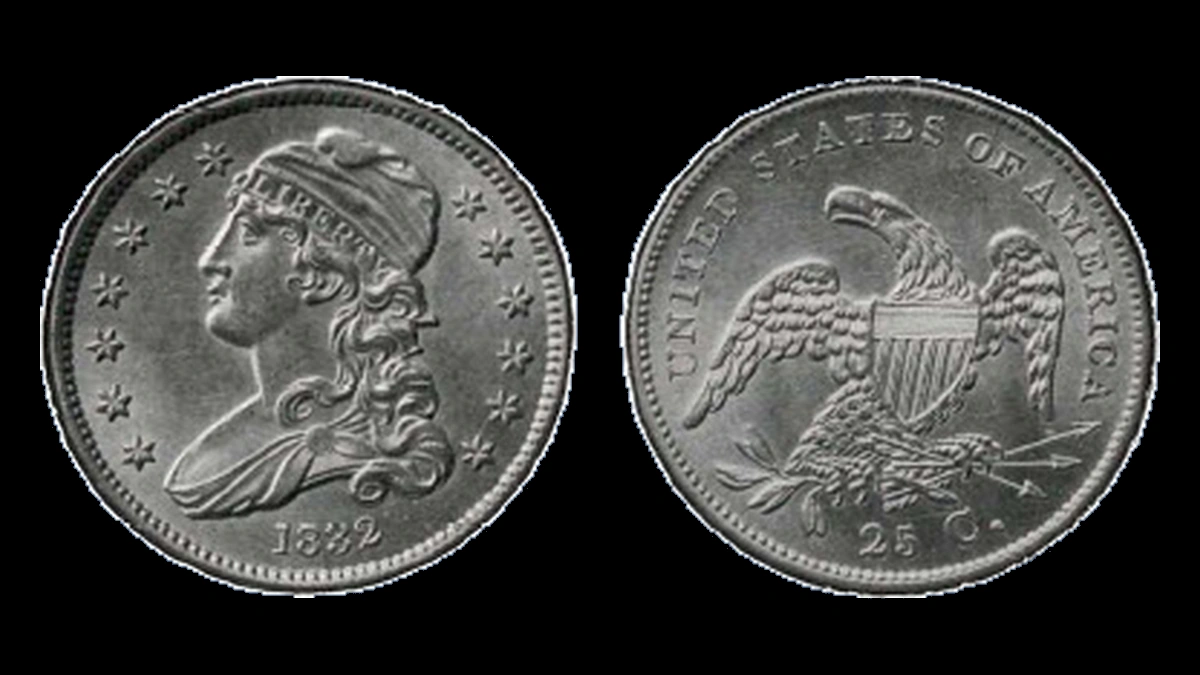
Orient Liberty upright and locate the two lower-right stars before using a close view. This keeps a normal curl or a stray scratch from becoming the starting point for the attribution.
Under magnification, follow the suspected line between the curl and the stars’ inner points. Compare that complete connection with a clearly identified example.
Bring light across the area from opposite sides to assess its relief. A scratch normally cuts a channel, even when displaced metal rises along the channel’s edges.
Keep enough of the portrait and star border in each photograph to preserve the line’s position. An isolated close-up of a tiny ridge may hide whether it follows the reported route.
When wear obscures the feature, use several lighting angles without cleaning the surface. Faintness alone does not tell you whether the die had little crack development or the struck trace later wore down.
If a seller identifies B-1 or B-2, check the reverse attribution as well. The same front tool’s use with two backs means the curl-to-star line cannot resolve that distinction alone.
What It’s Worth
$100–$60,000 is the supplied whole-coin estimate across worn through outstanding unworn examples. Much of that difference reflects preservation, original surfaces, and remaining design detail.
PCGS records a B-2 graded MS65 selling for $52,875 at Stack’s Bowers on May 19, 2015. That result values an exceptional complete quarter, not the thin crack as an independent feature.
A circulated coin with a clear line can still be far below the upper range. Compare similar levels of wear and surface quality before using the MS65 record as a guide.
Conclusion
The useful 1832 clue is a specific raised route connecting Liberty’s curl with the inner points of the two lower-right stars. Match that route in context and keep its shared use on B-1 and B-2 obverses in mind.
The wide estimated range reflects the entire quarter’s preservation. A visible crack can support identification, but it cannot make a worn coin comparable to the exceptional MS65 auction example.