Rare 1889 Quarter Errors (List & Pictures)
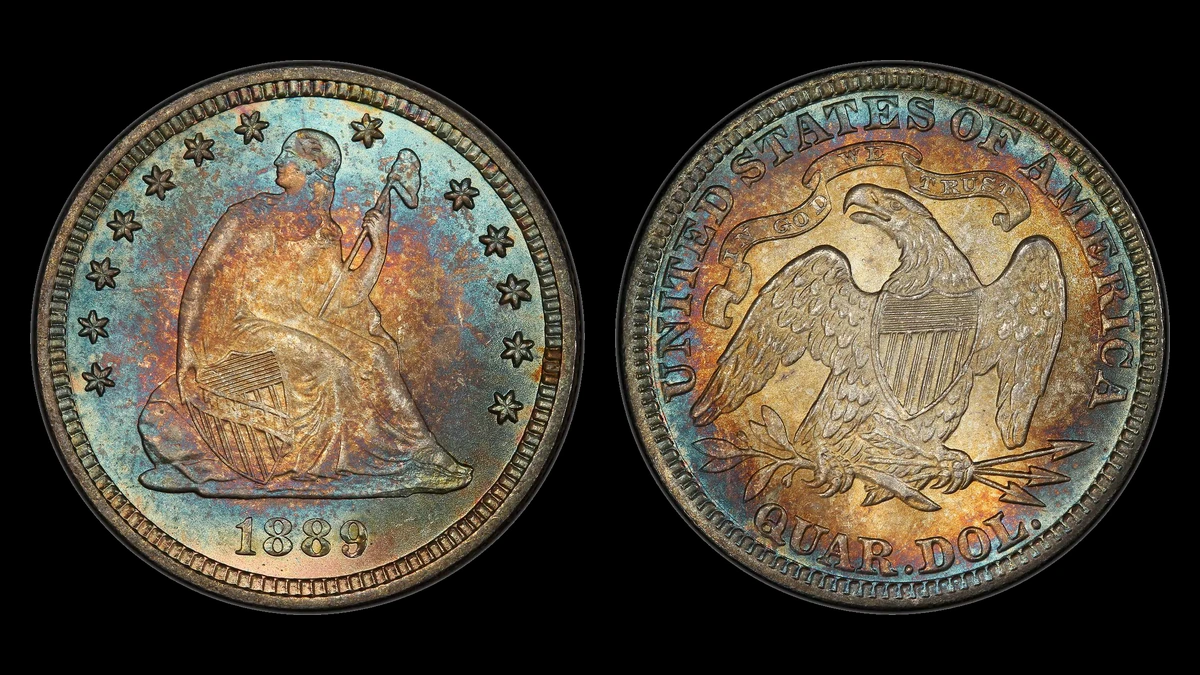
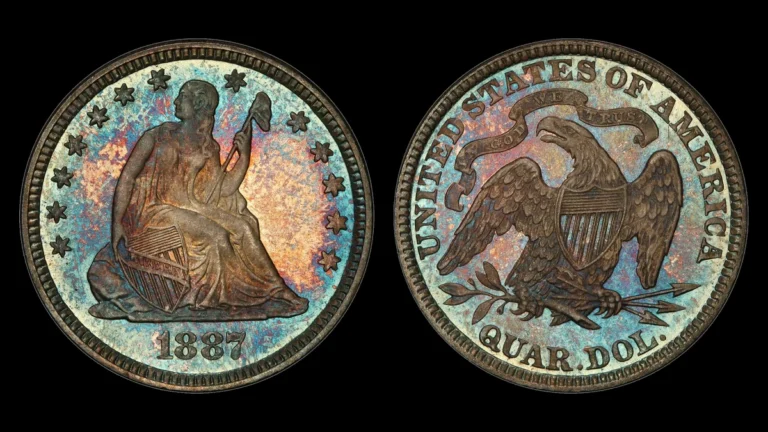
A slight rim irregularity needs careful examination on a reflective collector coin. The documented example in this 1889 quarter errors guide is a Proof with a minor clip, sold for $1,800 on July 5, 2015.
Comparable authenticated minor-clip Proofs have a supplied whole-coin estimate of $1,200–$3,500. Establish the collector finish first, then inspect how the rim formed at the affected edge.
1889 Quarter A Small Shortage at the Rim: Minor Clip on a Proof Quarter Error
The recorded coin was certified PCGS PR65 Cameo. Proof describes special collector manufacture, PR65 indicates its preservation, and Cameo describes the contrast between frosted-looking designs and reflective backgrounds.
A minor clip concerns the metal blank beneath that finish. Part of the intended disc was absent before the dies struck the design and formed the rim.
The resulting quarter can remain nearly round, with local rim weakness making the shortage more noticeable than the overall silhouette. A deep bite is therefore not required for the documented minor-clip category.
The supplied description gives no precise position or missing-metal percentage for this specimen. Those details should come from the actual coin and its photographs rather than from a generic clip illustration.
How to Identify
Begin with the whole coin and its finish. A polished ordinary quarter may look bright, but brightness alone does not establish the Proof manufacture needed for this comparison.
Study certified photographs showing the relationship between the reflective fields and frosted devices. The devices are the raised portrait, letters, and other parts of the design.
Next, rotate the coin slowly under a lamp and inspect the full circumference with a magnifier. Look for a localized area where the rim appears to have formed around insufficient metal.
Compare that location on both faces and from the side. A consistent relationship among the edge and neighboring struck surfaces is more useful than one dark patch in a front photograph.
A dent occurs after the coin is struck and may push finished metal into a lip or sharp fold. Fresh cuts and disturbed edges also suggest later damage rather than an incomplete blank.
Because the clip is small, lighting and viewing angle can easily exaggerate or conceal it. Take views that preserve nearby design so the affected spot can be located reliably.
Leave a certified coin in its holder and avoid touching the reflective fields. The minor edge feature should be matched to the documented error without risking the surfaces that account for much of the coin’s value.
What It’s Worth
$1,200–$3,500 is the supplied estimate for comparable authenticated minor-clip Proofs. It values the entire 1889 collector coin, including finish and condition, rather than assigning that amount to the tiny shortage of metal alone.
GreatCollections records the PCGS PR65 Cameo minor clip at $1,800 on July 5, 2015. That specific grade and contrast should remain attached to the auctioned specimen.
Clear Cameo contrast and original mirrors make a closer comparison than a hazy or cleaned surface. Cleaning lines and additional rim damage may reduce appeal even when a genuine clip is present.
The sale does not establish a similar premium for an ordinary circulated quarter with an unidentified edge mark. Proof status, original clip formation, and preservation all need to agree before the record becomes a useful guide.
Conclusion
The 1889 minor-clip Proof illustrates how a subtle blank defect can coexist with a valuable collector finish. Its nearly round outline makes the original rim and edge relationship more useful than the apparent size of a missing piece.
Confirm the Proof identity, compare both faces at the affected point, and leave the surfaces untouched. The $1,800 auction record prices a complete PR65 Cameo coin, not an isolated rim irregularity.