Rare 2021 America the Beautiful Quarter Errors (List & Pictures)
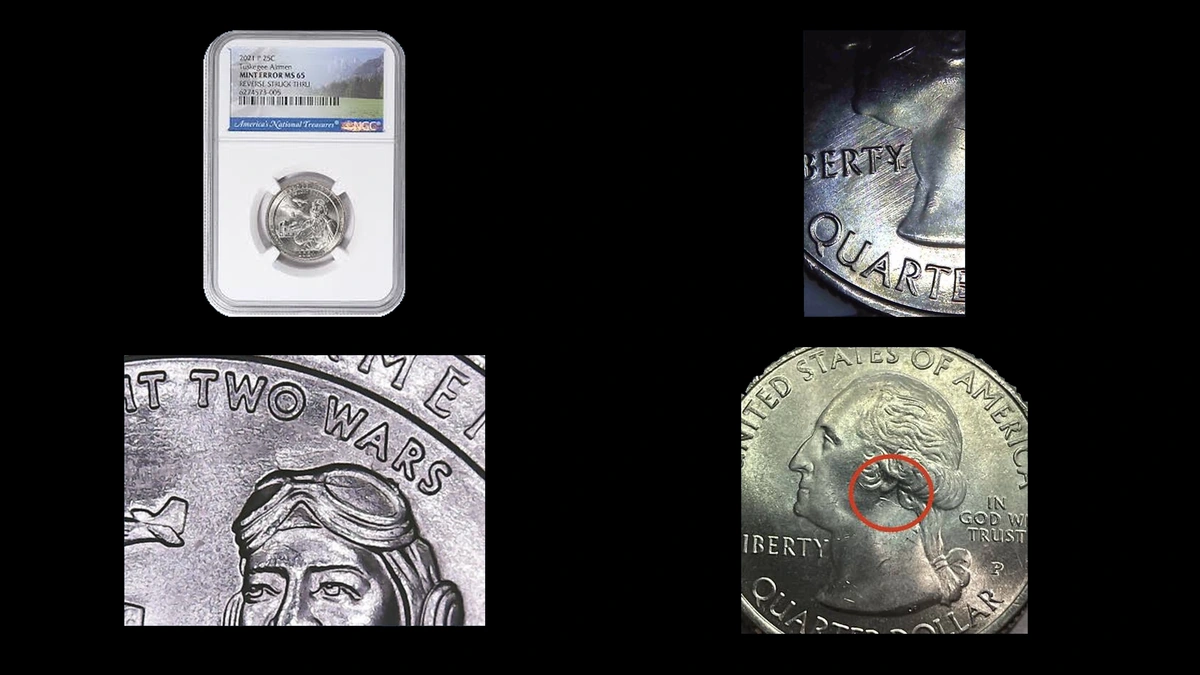
On the Tuskegee Airmen quarter, a mark beside the tower may rise above the surface or sink into it, and that distinction changes the diagnosis. Estimated 2021 America the Beautiful quarter errors span $2–$500 for ordinary clad examples.
A different-year comparison, a 1999-P Georgia quarter struck 40% off center, brought $192 in December 2024. Follow the tower and nearby design first, then check the front and the coin’s outline.
| What to inspect | Possible explanation | Estimated value |
|---|---|---|
| Smoke-like marks around the tower | “Burning Building” appearance | $10–$150 |
| Parallel raised lines | Feeder-related die scratches | $2–$50 |
| Raised dots, ridges, or patches | Die chips and cracks | $2–$150 |
| Faint extra design shapes | Die clash | $5–$100 |
| Repeated front lettering | Possible doubled die | $15–$250 if confirmed |
| Unstruck crescent and incomplete design | Off-center strike | $75–$500 |
1. 2021 Quarter Marks Make the Tower Look Smoky: “Burning Building” Appearance Error
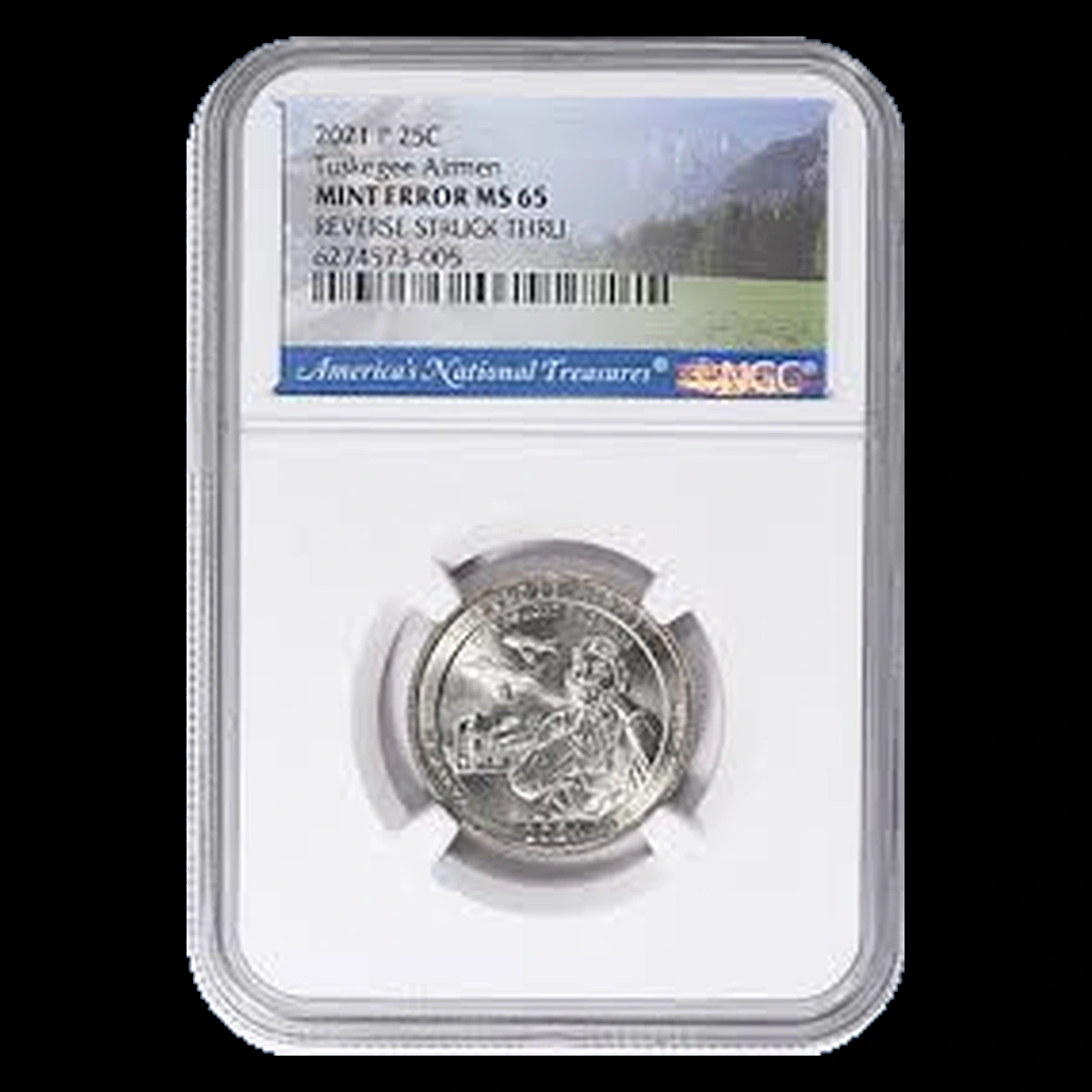
“Burning Building” describes an appearance around the Tuskegee tower rather than one established cause. Some reports propose material blocking the strike, while raised lines may instead come from a scratched die.
A die is the tool that stamps the coin. Material between that tool and the blank can leave a weak area or depression, whereas grooves in the tool can reproduce as raised lines.
How to Identify
Compare the tower with an ordinary Tuskegee quarter and determine whether the apparent smoke rises or sinks into the surface. Side lighting helps separate a ridge from a shallow depression.
A depressed interruption can support an obstruction, while parallel raised ridges favor tool damage. Neither the nickname nor a smoky-looking stain identifies cloth, grease, or another specific material.
What It’s Worth
$10–$150 is the estimate for a clear mint-made appearance on an ordinary clad coin. No completed sale was supplied for a precisely identified example.
The marks’ clarity and original condition determine the comparison. A scratch or stain does not receive the same premium simply because it resembles smoke.
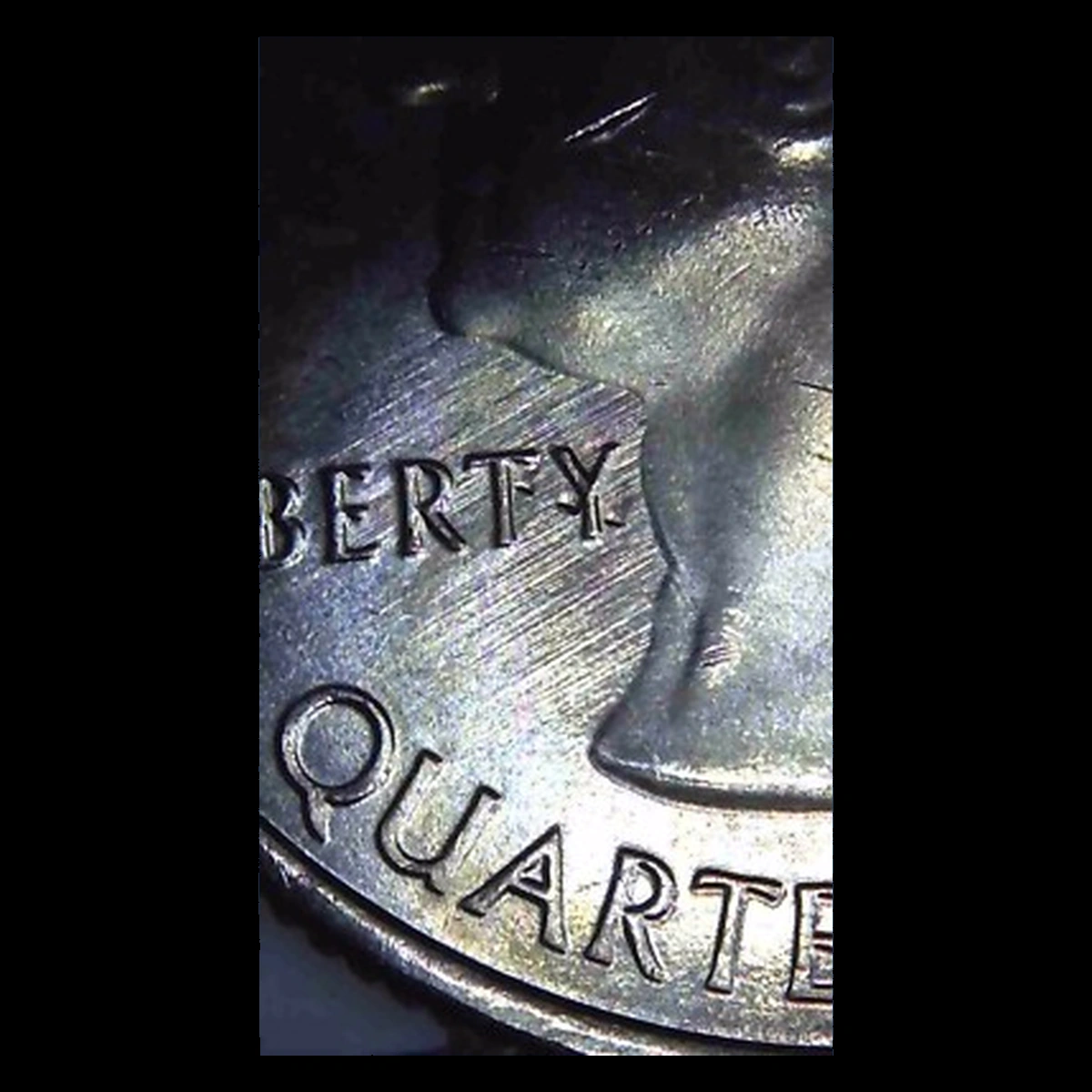
2. 2021 Quarter Fine Parallel Ridges Cross Open Areas: Feeder-Related Die Marks Error
Reported raised lines cross sky or ground areas around the design. A feeder finger, the machine part moving blanks into position, can scratch a die if it contacts the tool.
Later coins may receive raised copies of those recessed die scratches. This mechanism differs from directly scratching a finished quarter.
How to Identify
Inspect the full width of each line rather than only its bright edges. A later recessed scratch can push up metal on both sides and misleadingly appear raised in a photograph.
Repeated matching patterns on separate Tuskegee quarters can support a shared die origin. The ordinary clad references are 5.67 grams, 24.26 mm, and a reeded edge; the 2021 silver Proof instead has a 6.343-gram standard.
What It’s Worth
$2–$25 is the estimate for visible feeder-related die marks, with stronger attractive patterns potentially approaching $50. These are minor-error estimates rather than results for a cataloged Tuskegee variety.
Fine lines that are difficult to see often attract little premium. Asking prices do not establish completed sales.
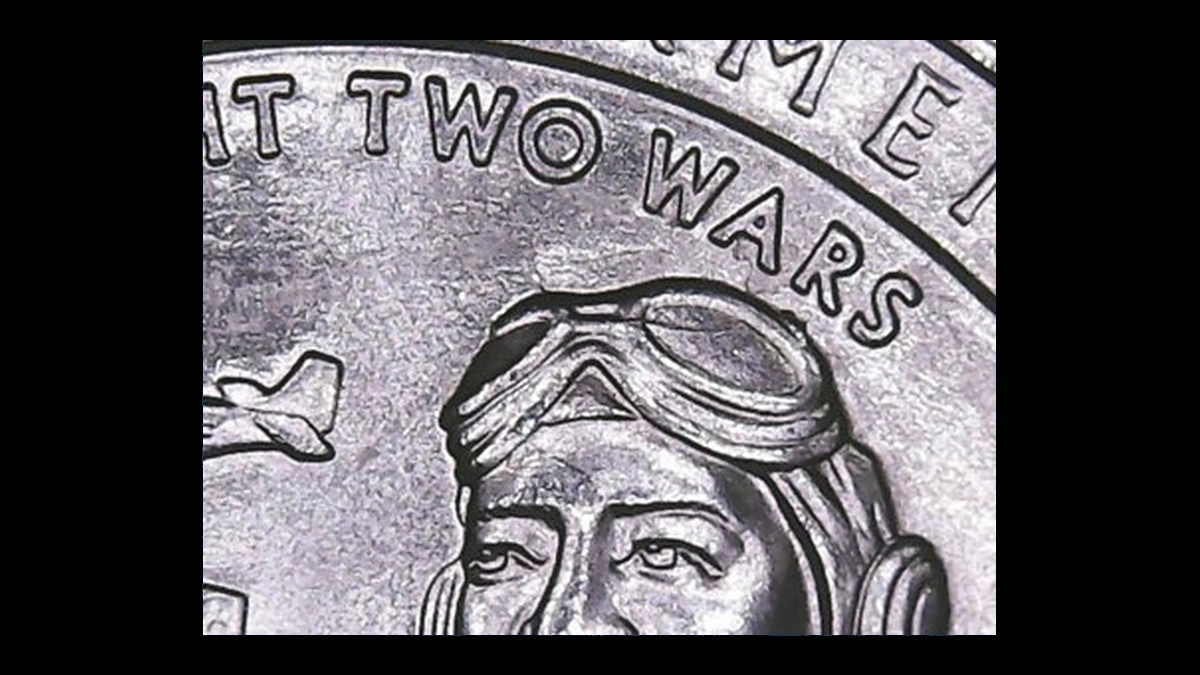
3. 2021 Quarter Small Lumps or Ridges Interrupt the Design: Die Chips and Cracks Error
Reports place raised features around the tower, an aircraft wing, the pilot’s goggles, or Washington’s hair. These locations belong to different examples or stages of die damage.
A crack in the die produces a ridge; a missing small section can produce a thicker chip. A substantial break at the rim may form a cud, but an isolated interior dot is not automatically a cud.
How to Identify
Follow the raised feature into adjacent detail and look for a naturally struck relationship. An impact crater nearby can explain metal pushed upward after striking.
For a rim-connected area, inspect the edge for crushing or a bend. Compare only the actual location shown rather than expecting a goggle chip and a hair chip to occur together.
What It’s Worth
$2–$25 is the estimate for small chips and fine cracks, with roughly $25–$150 for stronger visible breaks. Condition and the feature’s clarity affect the result.
A 1970-D nickel with two cuds sold for $63 in October 2022. That different-year and different-denomination result supplies context rather than a fixed Tuskegee chip price.
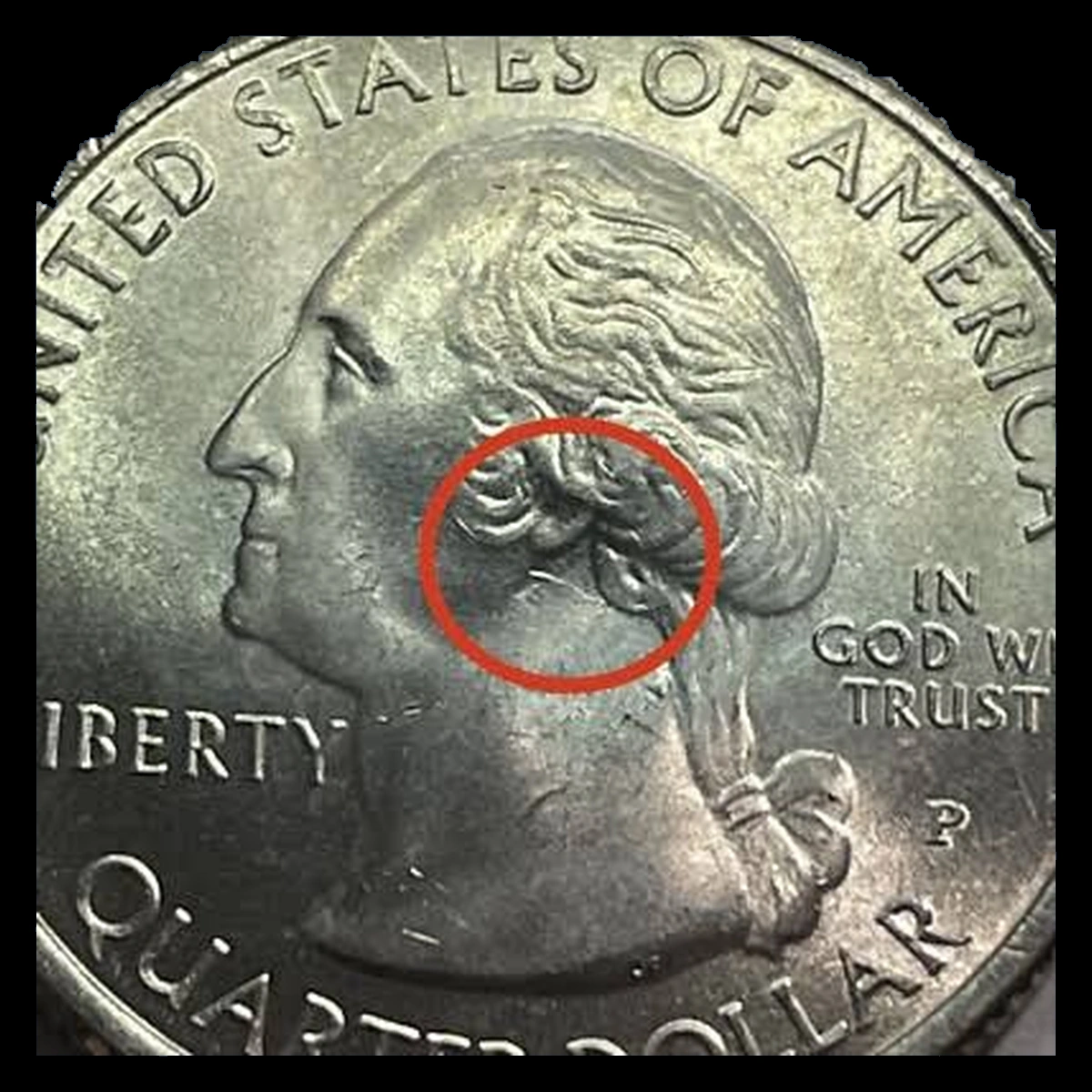
4. 2021 Quarter Faint Foreign Design Shapes Appear in Open Space: Die Clash Error
When the two dies meet without a blank between them, each can receive traces of the opposing design. Subsequent coins can carry those unwanted fragments.
Clashing is reported for the Tuskegee issue without one established outline or position. A specific wing, tower, or face shape should not be assumed in advance.
How to Identify
First compare the candidate with a normal Tuskegee design to identify what is truly extra. Its many intended fine lines can otherwise lead to false matches.
Then test whether the extra shape plausibly corresponds to the opposite face. A vaguely airplane-like scratch or unrelated marks on both sides do not demonstrate clashing.
What It’s Worth
$5–$30 is the estimate for faint genuine clashes, with $30–$100 for clearer recognizable transfer on attractive clad coins. These are editorial estimates without a supplied specimen-specific sale.
An unexplained line has no established clash premium. The identification needs to precede the price comparison.
5. 2021 Quarter Front Letters Appear to Have Extra Contours: Possible Doubled Die Error
A doubled die contains repeated design before striking and can reproduce the same feature on several coins. The front-side report here remains a candidate without a secure Tuskegee-specific catalog match.
The other 2021 quarter design, Washington Crossing the Delaware, is a separate issue. Its variety claims cannot automatically be transferred to the Tuskegee quarter.
How to Identify
Confirm the pilot, tower, and aircraft on the reverse before inspecting front LIBERTY and IN GOD WE TRUST. The 2021 date is on the Tuskegee reverse, so a claimed front-date error needs a different comparison.
Look for rounded repeated detail and a match to another identified Tuskegee example. A flat shelf beside a letter can be mechanical doubling from the strike.
What It’s Worth
$15–$250 is the conditional estimate if genuine front-side die doubling is established on a clad coin. It does not imply that a certified Tuskegee variety has a documented sale in that range.
A recognized pattern and clear separation would support the stronger end. The normal collector value of a silver Proof remains separate from an unproven doubling premium.
6. 2021 Quarter A Blank Crescent Remains beside Cropped Design: Off-Center Strike Error
A year-and-design report describes a Tuskegee quarter struck about 15% off center. Its mintmark, direction, and certified grade are not established in the supplied material.
The blank’s displaced position should affect both faces. A single shifted die can create an uneven border without the same pattern of untouched metal.
How to Identify
Compare both faces for corresponding blank areas and design cutoff. Read the reverse date and enough of the Tuskegee scene to distinguish it from the other 2021 design.
Inspect the boundary between struck and untouched metal for later grinding or scraping. Retaining a complete blank can leave the mass near the appropriate standard despite a changed outline.
What It’s Worth
$75–$500 is the estimate for a genuine Tuskegee off-center quarter with identifiable design. Attractive condition and a clear displacement support stronger comparisons.
A 1999-P Georgia quarter struck 40% off center, graded MS66, sold for $192 on December 23, 2024. That different-year result neither authenticates the reported 2021 example nor assigns its 15% shift the same value.
Conclusion
Confirm the Tuskegee design and the coin’s metal before choosing a value comparison. The ranges here concern genuine errors on ordinary clad quarters, while silver Proofs have their own normal collector identity.
For marks around the tower, determine whether they are raised, recessed, or merely discoloration. A physical explanation is more useful than the “Burning Building” nickname, and reported doubling or displacement still needs evidence from the actual coin.