Rare 1893 Nickel Errors (List & Pictures)
A partly missing date did not prevent one 1893 nickel from selling for $1,725 in November 2007: the surviving digit tops still identified the year. Other mistakes are less obvious, including a tilted reverse or a thin layer separating across Liberty’s face.
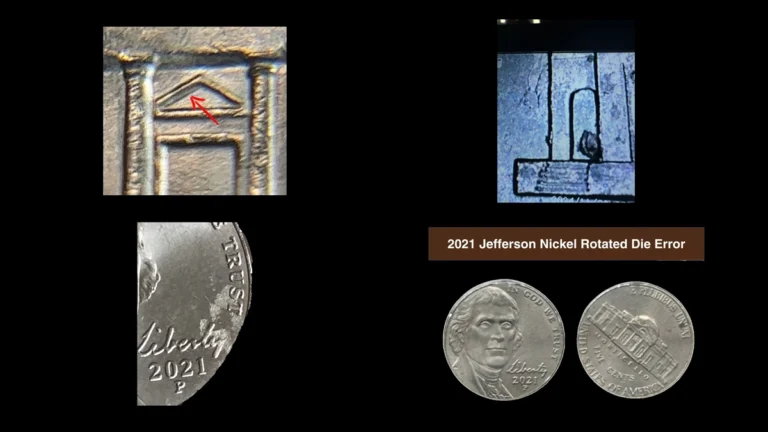
The 1893 nickel errors below have estimated values of $10–$6,000. Begin with the relationship between the two faces, then compare the surface, outline, and metal.
1. 1893 Nickel The V Does Not Finish Upright — Rotated Dies Error
A coin can have two complete designs that do not line up as expected. If one die turns relative to the other, the back appears tilted when the front is held upright and flipped correctly.
Minor rotations are reported for 1893, but the year listing supplies no measured angle or direction for a particular specimen.
How to Identify
Hold Liberty upright and flip the nickel top to bottom without twisting it sideways. On a normally aligned coin, the V should now be upright.
Repeat the movement beside an ordinary nickel to check your handling. If the coin is in a holder, account for the coin’s position inside it rather than using the holder’s edges as the design angle.
What It’s Worth
$20–$300 is an estimated range for an established rotation. A large, repeatable turn usually attracts more interest than a very slight tilt.
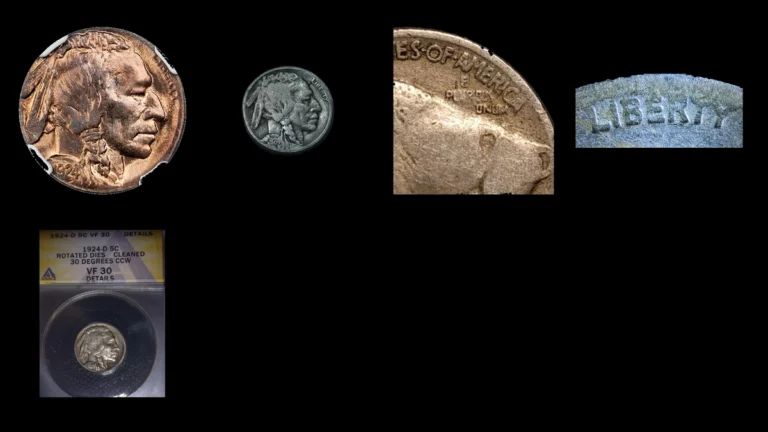
A 2015-D nickel rotated 90 degrees counterclockwise sold for $79 in October 2021. That is a different-year comparison, not the angle or price of the 1893 report.
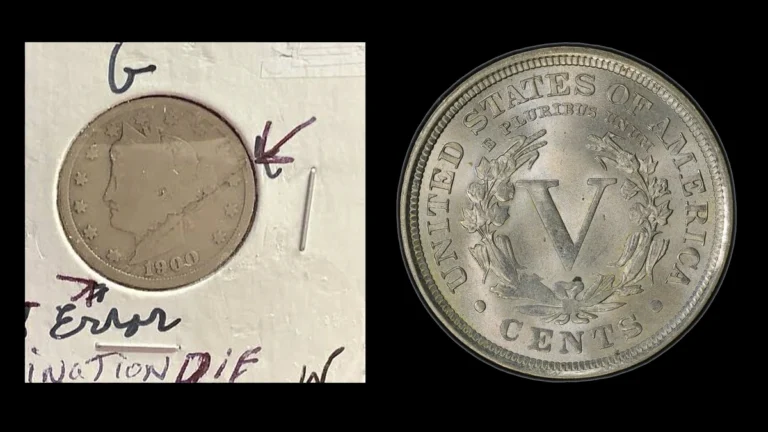
2. 1893 Nickel A Fine Line Standing above the Surface — Die Crack Error
When a steel die develops a crack, metal can fill the opening as it strikes a coin. The nickel then shows a raised ridge copied from that broken tool.
The general 1893 report does not set a path through a particular star, letter, or face. It describes a die crack, not a split through the nickel itself.
How to Identify
Follow the line under a low light and check that it rises above the surrounding surface. A scratch may have a raised lip, but a cut usually runs beside that lip.
Inspect the ridge’s ends and the nearby edge for a later dent. Attached dirt or other material should not be counted as original raised metal.
What It’s Worth
$10–$100 is an estimate for modest genuine cracks. A clear ridge on a well-preserved coin is easier to show than a faint line hidden by wear.
These figures concern the complete nickel. They are not separate amounts to add for each short line.
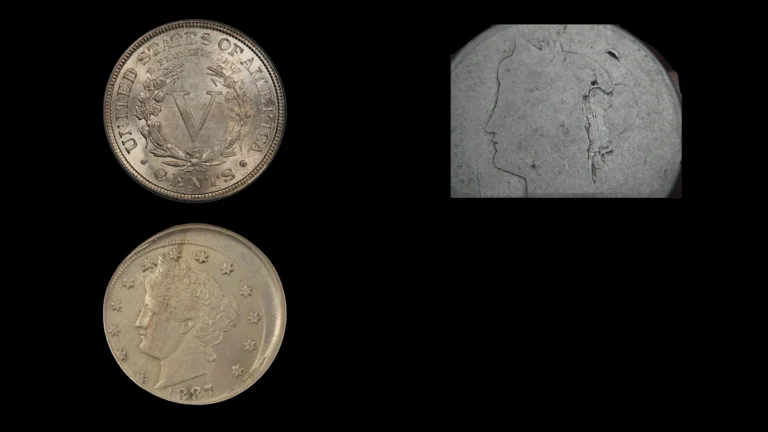
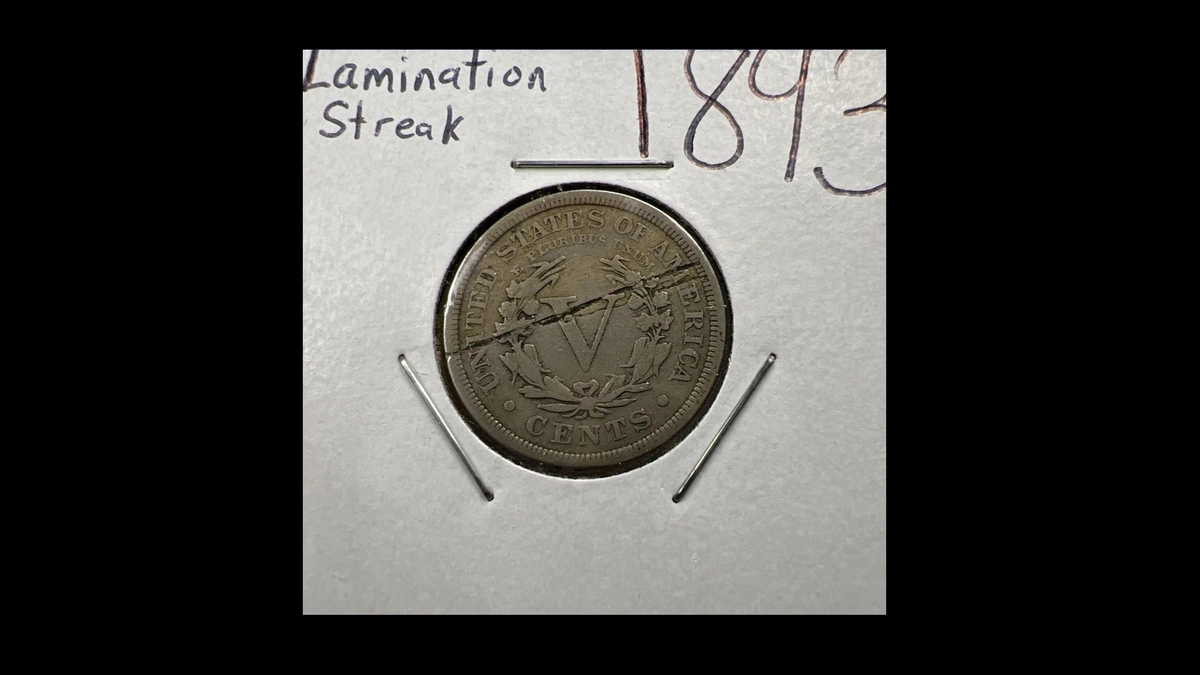
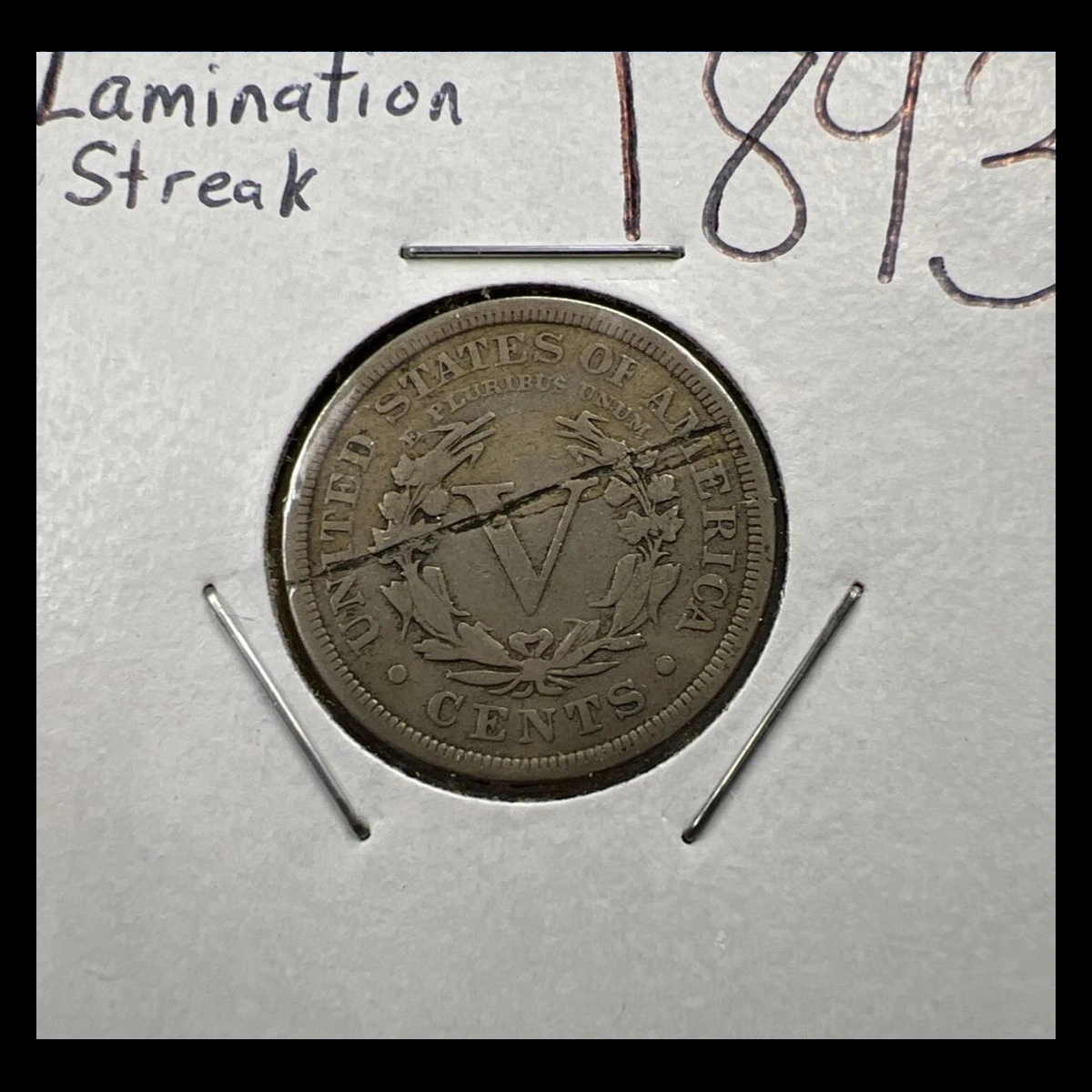
3. 1893 Nickel A Layer Separating across Liberty’s Face — Lamination Error
Weakness within the original metal can allow a thin layer to peel away. An 1893 nickel described with lamination across the face appeared in a 2022 auction group with two other nickels.
The description establishes the facial location, but not the exact path or whether the loose metal remained attached.
How to Identify
Shine light across the portrait and follow the boundary of the thin separating layer. Leave any flap untouched so its connection to the coin remains visible.
A gouge usually cuts into the surface and may push metal aside. A lamination should explain a natural layer separating from the original alloy.
What It’s Worth
$20–$300 is an estimated range for local laminations. A clear separation across the face can be appealing when the portrait and date remain readable.
The 2022 record describes a group lot, so its total would not establish this nickel’s individual selling price.
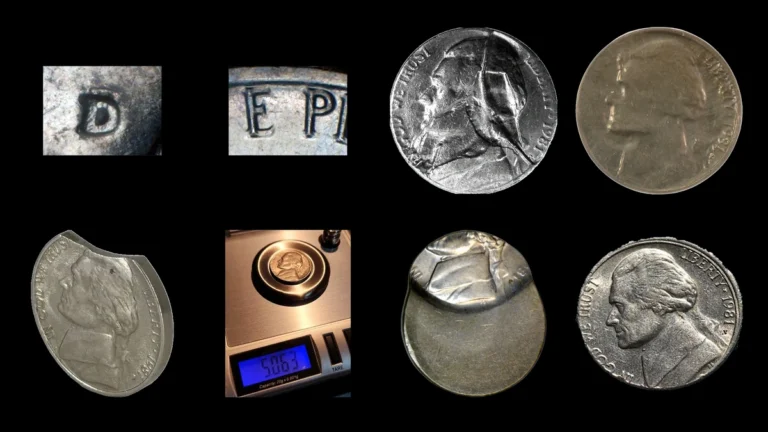
4. 1893 Nickel A Straight or Curved Gap — Clipped Planchet Error
The blank-cutting process can leave a straight gap at the end of a metal strip or a curved gap where the punch overlaps an earlier hole. The incomplete blank is then struck as a coin.
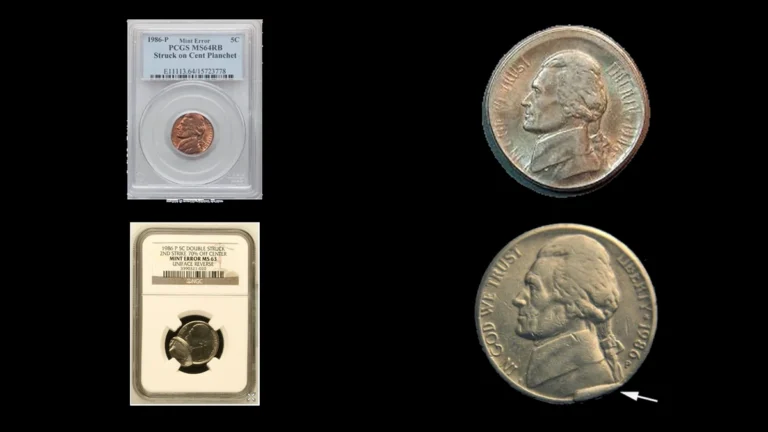
A documented straight-clipped 1893 nickel weighs 4.84 grams and was graded ANACS VF20. Separate curved clips are reported in the year guide.
How to Identify
A complete Liberty Head nickel normally weighs 5 grams and measures about 21.2 mm across. The recorded 4.84-gram reading belongs to the straight-clipped specimen, not to every clipped coin.
Examine the gap’s endpoints for struck surfaces flowing into the original boundary. Saw tracks, fresh burrs, or filing can reveal a cut made after minting.
Weakness on the opposite rim can support a genuine clip, but its absence does not decide the matter alone.
What It’s Worth
$50–$750 is an estimate for genuine clips of varying size and condition. VF20 means the recorded straight clip has circulation wear but retains clear main details.
A readable date and clean original metal around the gap help make a stronger example.
5. 1893 Nickel A Wide Border Holding the Complete Design — Broadstrike Error
The collar ring normally restrains the blank during striking. Without proper restraint, the metal can spread beyond the usual outline while keeping the entire design.
A Superior Galleries listing described an 1893 broadstrike with ANACS About Uncirculated Details. Scratches reduced its stated net assessment to Extremely Fine 45.
How to Identify
Check that the outer lettering and stars remain on the metal, then measure across several directions. The catalog does not provide a specific diameter for its example.
Look for natural expansion around the struck design rather than hammer marks or crushed letters. Keep the recorded scratches separate from the original broadstrike.
What It’s Worth
$75–$600 is the estimated range for a genuine 1893 broadstrike. Strong expansion and an intact readable design can increase appeal.
The cataloged coin had only slight wear, but its scratches still matter. A cleaner coin with similar expansion would offer a better condition comparison.
6. 1893 Nickel Only the Tops of the Date Remain — Off-Center Strike Error
One documented nickel was struck 15% off center toward six o’clock. The shift carried the lower date beyond the blank, leaving enough of the digit tops to identify 1893.
NGC graded the specimen MS65, indicating an attractive unworn coin. Its direction and date limitation describe that particular example.
How to Identify
Compare the surviving date tops with the recorded auction specimen. Do not fill in missing digits simply because the design looks familiar.
Turn the coin over to check that both faces agree with the displaced blank. The unstruck area should remain solid original metal, without filing or grinding.
What It’s Worth
$200–$2,500 is the estimated range for genuine dated examples. The documented MS65 coin realized $1,725 in November 2007.
Its preservation and identifiable date remnants help explain the result. A larger shift that removes the year entirely need not bring more.
7. 1893 Nickel A Smooth Hollow Interrupts the Design — Indentation Error
Another blank overlapping a nickel in the press can block part of the strike and leave a depression. The year guide reports this type for 1893 without identifying a graded specimen or a fixed position.
A plain hollow is the key feature here. Recognizable backward design inside it would call for a different explanation.
How to Identify
Inspect the transition from normal design into the hollow and check the opposite face. Matching impact damage or crushed edges may reveal that the dent happened later.
The depression should fit naturally into the original strike. Depth alone cannot distinguish a mint-made indent from damage.
What It’s Worth
$150–$1,000 is an estimated range based on comparable Liberty Head nickel indentations. Clear boundaries, readable dates, and original surrounding design support stronger prices.
8. 1893 Nickel Backward Letters below the Surface — Brockage Error
A struck coin left between a die and the next blank can press a mirror image into the new coin. This sunken, backward transfer is called a brockage.
The general 1893 report does not establish the affected face of an independently identified specimen. A vague depression alone is not enough to match the category.
How to Identify
Find a recognizable backward letter or portrait detail and compare it with the normal design. The transferred feature should lie below the surrounding surface.
Inspect the edge and opposite face for later squeezing, which can also transfer impressions between finished coins. Normal weight cannot settle that question by itself.
What It’s Worth
$500–$4,000 is an estimate for a genuine identified 1893 brockage. A strong mirror image with original surfaces offers a better comparison than a faint or incomplete impression.
9. 1893 Nickel A Brown Nickel Design on a Smaller Blank — Cent Planchet Error
Stack’s Bowers cataloged an 1893 nickel design struck on a bronze cent blank. The PCGS EF40 coin has brown surfaces and lighter high points, with some outer nickel details cut off by the smaller metal piece.
Its centering is uneven. The record identifies the cent blank but does not supply the specimen’s measured weight.
How to Identify
A contemporary cent blank starts near 3.11 grams and 19.05 mm, compared with the nickel standards above. These are reference measurements, and the strike can expand the smaller blank.
Check the metal, outline, and naturally cropped design together. A brown stain on an ordinary nickel or an edge ground smaller does not explain the same combination.
What It’s Worth
$2,000–$6,000 is an estimate for an authenticated 1893 cent-blank nickel. EF40 describes moderate circulation wear, which must be considered alongside the error.
A 1905 nickel on a cent blank sold for $3,120 in August 2024. That supplies different-year context rather than a realized price for the 1893 specimen.
Conclusion
A controlled flip can reveal rotation, while close side lighting helps separate raised cracks from peeling metal. For a strange outline, decide whether metal is missing, spread outward, or left unstruck.
The most expensive category here also requires the metal itself to fit a cent blank. Keep those checks together, and compare the actual surviving design and condition before using a price range.