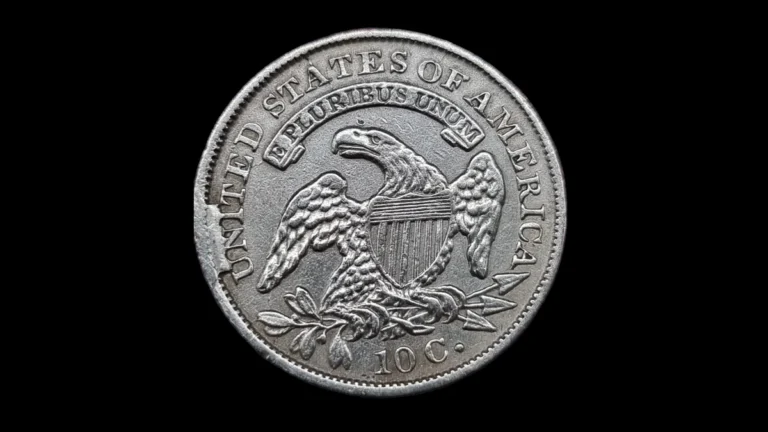
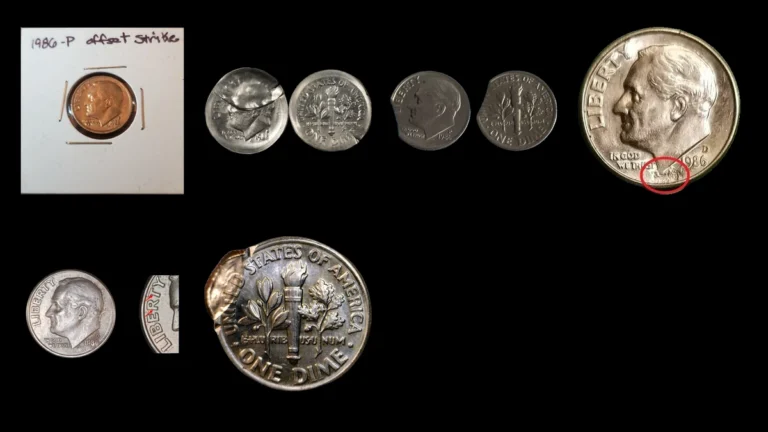
Rare 1901 Dime Errors (List & Pictures)
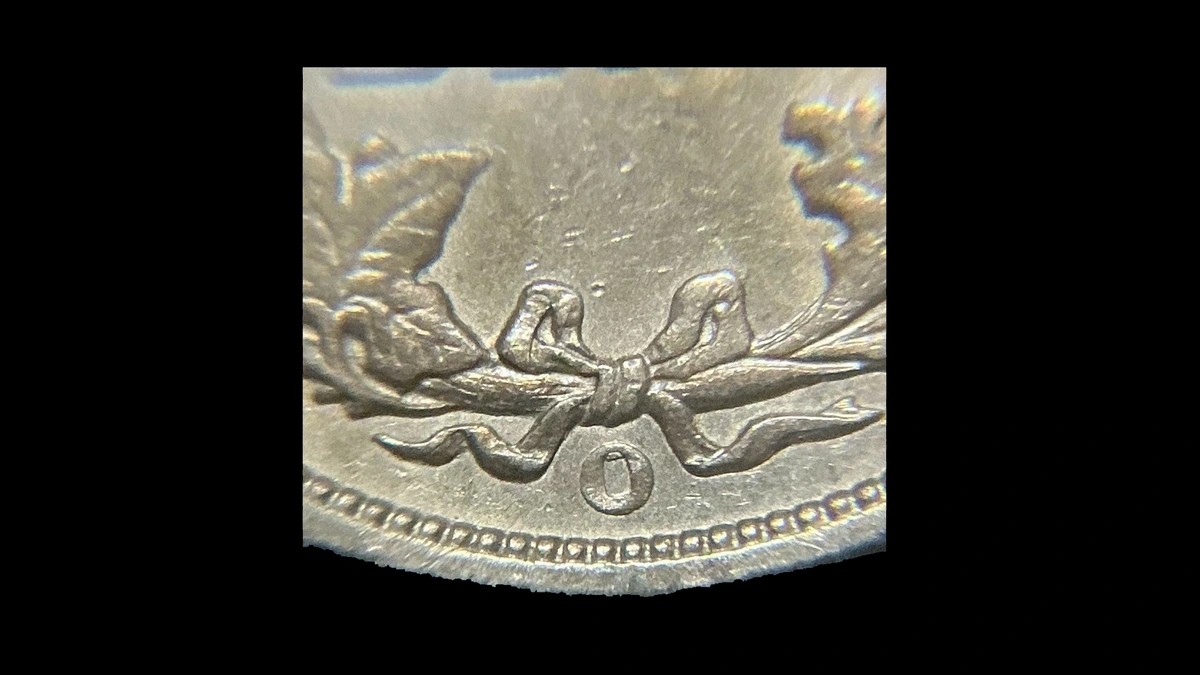
An extra curve inside the O can be the strongest clue on a 1901 New Orleans dime: an MS65 sideways-O variety sold for $4,230 in September 2018. Estimated 1901 dime errors range from $25–$6,000, covering small punch remnants, shifted strikes, and unusual blanks.
Read the mintmark and date first, then examine the outline and edge before investigating a split or different metal.
| Inspection clue | Possible error | Estimated value |
|---|---|---|
| Curves within the top and bottom of O | O over sideways O, FS-501 | $50–$5,000 |
| Extra date-digit fragments | Repunched date | $25–$600 |
| A curved missing section | Clipped planchet | $50–$500 for ordinary Philadelphia examples |
| Complete design in a wide border | Broadstrike | $150–$700 |
| Two levels along the edge | Partial collar | $175–$900 |
| Unstruck crescent beside cropped design | Off-center strike | $250–$1,800 |
| A split with an intact connection | Clamshell separation | $300–$3,000 |
| Metal and dimensions fit another blank | Reported foreign planchet | $1,000–$6,000 if authenticated |
1. 1901 Dime Curved Fragments Appear inside the Mintmark: O over Sideways O Error
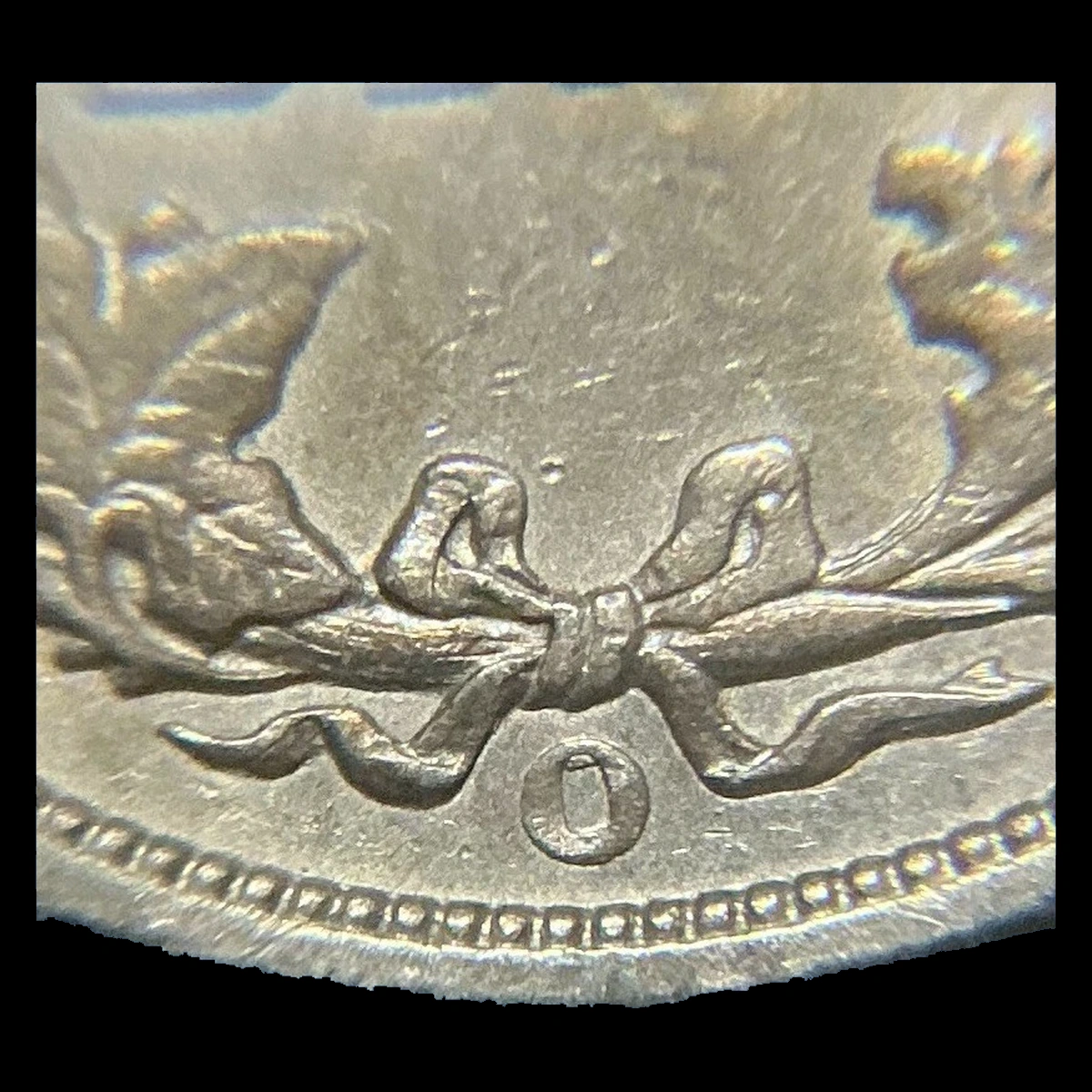
On FS-501, small curves inside the top and bottom of the O preserve part of a sideways mintmark impression. The worker corrected the letter by punching it upright into the die.
An early paired front die also has extra date traces above 91. Later examples used a replacement front die and may carry clash marks instead.
How to Identify
Locate the O below the wreath and compare the internal curves with an attributed FS-501 photograph. Raised remnants must be distinguished from pits, stains, or an irregular normal letter.
Use the date traces as a separate die-pairing check rather than a universal requirement. A normal-looking date does not cancel a matching sideways O from a later pairing.
What It’s Worth
$50–$5,000 is the estimate across worn through attractive unworn examples. PCGS records $4,230 for an MS65 in September 2018.
That high-grade result values the whole New Orleans dime. A faint remnant on a heavily worn coin requires a much more modest comparison.
2. 1901 Dime Small Digit Fragments Remain beside the Date: Repunched Dates Error
Reapplying a date punch in a different position could leave earlier outlines in the die. Philadelphia examples have traces below 01, below the final 1, or across 190.
New Orleans reports include sideways traces near 0 or 9 and a lower remnant beneath the last 1. Another report concerns a repunched date on the normal design called Hub I.
How to Identify
Photograph the complete date and the mintmark area before choosing a pattern. Philadelphia has no letter, while New Orleans has O below the wreath.
Match the relevant digit fragments rather than mixing the Philadelphia and New Orleans locations. A flat striking shelf, unrelated reverse lettering, or the Hub I designation alone does not establish a repunched date.
What It’s Worth
$25–$600 is the estimated whole-coin range for the smaller repunched-date varieties. No completed sale was supplied for an individually specified pattern.
The mint and underlying condition can affect value as much as the tiny remnants. Hub I is a normal design and adds no error premium without the extra date impression.
3. 1901 Dime A Curved Gap Removes Part of the Rim: Clipped Planchet Error
A blanking punch overlapping an earlier hole can leave a curved shortage before the coin receives its design. The year guide lists the type without establishing a particular mint or finish.
A clean curve alone does not authenticate a clip. Cutting a finished coin can leave a similar outline.
How to Identify
Inspect the gap from the side for original metal flow and rim formation. Fresh tool tracks, burrs, or a cut through completed letters suggest later removal.
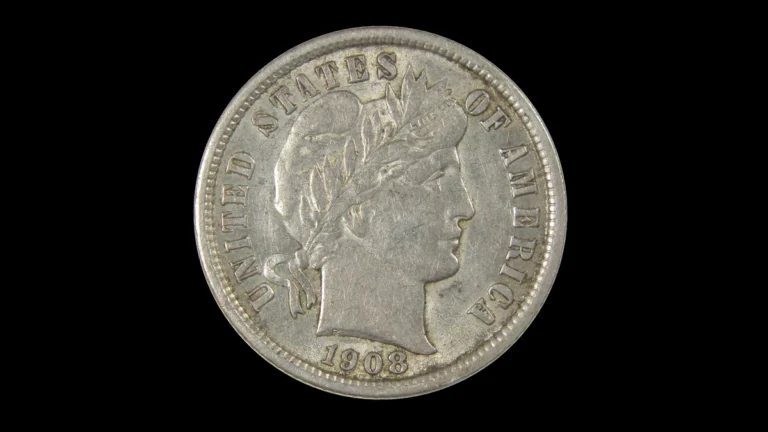
A weak opposite rim can help when present, but is not mandatory. A normal loose Barber dime is about 2.50 grams and 17.9 mm with a reeded edge; compare an intact span rather than measuring diameter across the missing section.
What It’s Worth
$50–$500 is the working estimate for genuine clips on ordinary Philadelphia examples. Larger visible gaps, a readable date, and original surfaces can support stronger comparisons.
A scarce 1901-S needs its own date-and-condition valuation before assessing the error’s contribution. Repaired or freshly cut coins do not qualify for the same range.
4. 1901 Dime A Complete Design Sits within Expanded Metal: Broadstrike Error
A 1975 dealer catalog described a toned, unworn Philadelphia broadstrike from the Bolt collection. The blank spread beyond its normal outline because the collar did not restrain it fully.
The design can remain complete despite an uneven wide border. That differs from a strike that carries intended details beyond the blank.
How to Identify
Read all outer lettering on both faces and compare the expanded border with a normal dime. Untouched metal opposite missing design instead suggests an off-center strike.
Inspect the edge and high points for natural formation. Hammering can enlarge a finished coin while flattening letters or leaving tool blows.
What It’s Worth
$150–$700 is the current working estimate for a genuine ordinary Philadelphia broadstrike. The old catalog offered its example for $75 in 1975.
That historical asking price is not an auction result. Original toning, readable identity, and a clear spread matter when comparing it with a present candidate.
5. 1901 Dime A Ledge Divides the Edge into Two Levels: Partial Collar Error
A partly seated blank can have a narrower section held by the collar and a wider section that expands above it. A side view reveals the boundary much better than a face-on view.
A 1978 dealer catalog described a Philadelphia dime with a strong partial collar and slight broadening. Both features belong to the same striking event and coin.
How to Identify
Follow the ledge and inspect how reeding changes where the contained metal meets the expanded portion. A local dent or scraped rim has a different relationship to already formed detail.
The slight outward spread should agree with the two-level edge. A broad border without this structure is not enough to establish a partial collar.
What It’s Worth
$175–$900 is the working estimate for genuine examples from circulated through attractive unworn condition. The historical dealer asked $125 in 1978.
That offered price is not a completed transaction. Value the edge step and spreading together rather than adding a full broadstrike estimate.
6. 1901 Dime An Unstruck Crescent Adjoins a Shifted Design: Off-Center Strike Error
A Philadelphia AU58 example was struck 20% off center toward two o’clock. A separate published MS61 has a smaller 7% displacement.
The blank missed the centered striking position, leaving untouched metal while part of the intended design fell beyond it. These percentages describe different coins rather than stages of one error.
How to Identify
Compare the blank areas and cropped details on both faces. A misplaced design on only one face can come from a shifted die instead.
Orient the front by the date before comparing the documented two-o’clock displacement. The 7% coin needs its own direction, and the boundary should show original untouched metal rather than grinding or trimming.
What It’s Worth
$250–$1,800 is the estimated range for genuine examples of varying strength and condition. The 20% off-center AU58 dime sold for $1,035 in January 2005.
Readable date and clear displacement make that result useful. Surface damage or cleaning can offset the appeal of a larger blank crescent.
7. 1901 Dime A Split Opens while Part of the Edge Stays Joined: Clamshell Separation Error
The Barber Coin Collectors’ Society displayed a 1901-S clamshell dime, with a John Frost article named in its June 2005 journal index. The coin has an internal separation while part of its thickness remains connected.
The weakness lies within the blank’s metal. Two finished coins joined together would be a different object.
How to Identify
Support the coin and photograph the opening and remaining connection without moving the layers. Never insert a blade or widen the split to inspect it.
Look for natural internal separation rather than glue, fresh pry marks, or incompatible edge patterns. Confirm the date and S in face photographs, and avoid squeezing the fragile opening with calipers.
What It’s Worth
$300–$3,000 is the working whole-coin estimate for a genuine readable 1901-S clamshell. No completed sale was supplied for the society’s example.
The scarce San Francisco host already has collector value, and an unusually high-grade coin needs individual assessment. An intact connection and undisturbed inner surface are preferable to a forcibly widened opening.
8. 1901 Dime The Blank May Belong to Another Country: Reported Foreign Silver Planchet Error
A 1975 catalog described a 1901 Barber dime as struck on a Venezuelan half-bolivar silver blank. That is a historical attribution requiring modern measurements and metal evidence for confirmation.
A normal 1901 dime already contains 90% silver. Silver color or a positive silver test alone cannot distinguish the proposed foreign blank.
How to Identify
Record the candidate’s mass, diameter, and design fit, then compare them with the proposed blank’s complete specifications. Wear can reduce mass, and trimming can change dimensions after striking.
Use nondestructive composition testing and inspect the edge for alteration. The Venezuelan identification requires metal, measurements, and original strike evidence to agree.
What It’s Worth
$1,000–$6,000 is the conditional estimate for an authenticated foreign-planchet example. No completed sale was supplied for the historical 1901 report.
A 1973-S Proof dime on a Liberian cent blank sold for $1,560 in November 2020. Its different metal, year, and collector preparation make it a category comparison rather than proof or pricing for the Venezuelan claim.
Conclusion
For a 1901 dime, preserve the connection between the date, mintmark, and physical feature being identified. A later front die can accompany the sideways O, while a scarce San Francisco host needs its own condition comparison.
Keep historical asking prices separate from auction results, support fragile clamshells without opening them, and require measured evidence for a foreign blank. The clearest error name is the one the coin itself supports.