Rare 1981 Dime Errors (List & Pictures)
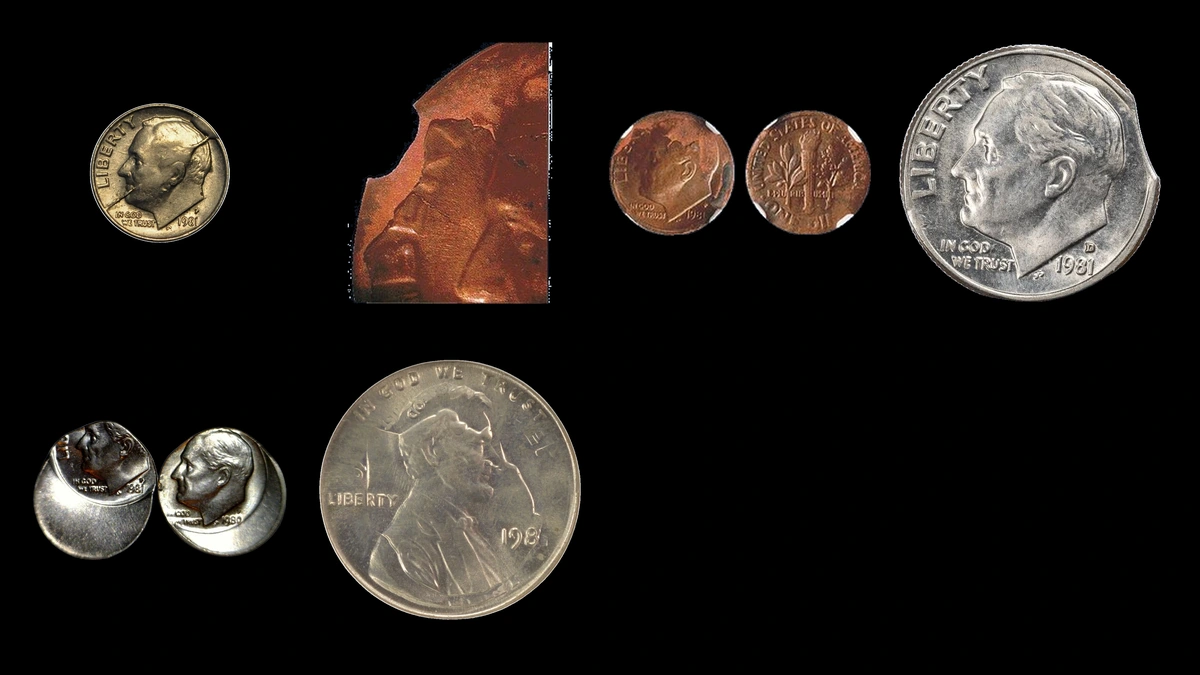
A complete dime, a detached metal sheet, and a cup-shaped cap should not be judged by the same measurements. Supplied estimates for 1981 dime errors span $2–$25,000 across these very different objects.
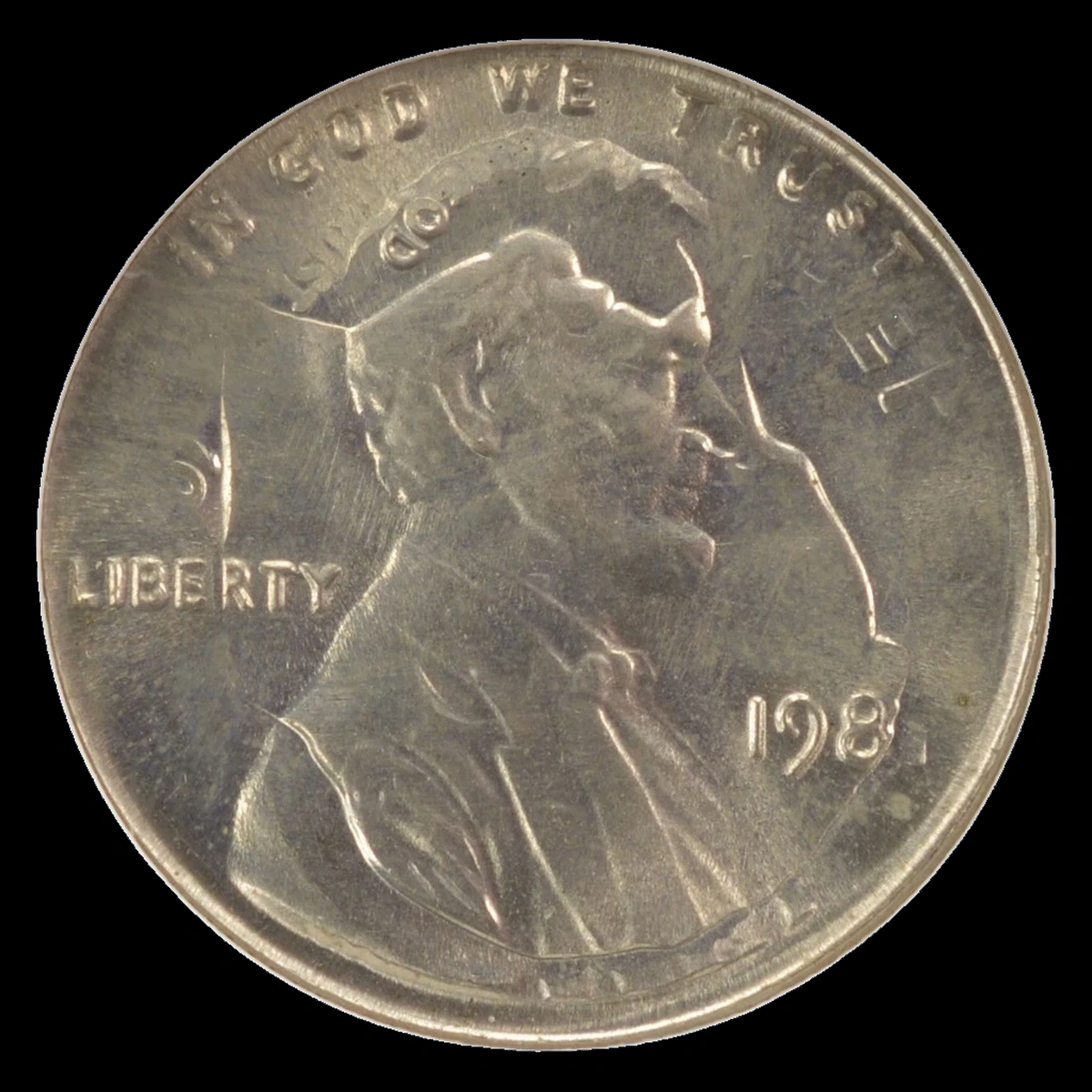
A 1981-D dime later struck as a 1981-D cent, graded NGC MS63, sold for $822.50 in June 2013. Begin with the small die features, then follow the metal structure and surviving images to identify larger errors.
| What changes | Category | Estimated value |
|---|---|---|
| Raised line or patch | Die crack or break | $2–$100 |
| Repeated design detail | Doubled die | $10–$150 |
| Extra P or D trace | Reported repunched mint mark | $10–$250 if accepted |
| Opposite-design traces | Die clash | $10–$200 |
| Abnormal original surface color | Improper annealing | $30–$300 |
| Nearly bare copper on both faces | Missing clad layers | $75–$600 |
| Very thin separated sheet | Split after striking | $75–$450 |
| Large missing section | Clipped blank | $30–$400 |
| Full design within expanded metal | Broadstrike | $25–$350 |
| Unstruck area beside lost design | Off-center strike | $30–$750 |
| Weak front with die damage | Struck through a die cap | $50–$800 |
| Additional or blocked strike | Repeated-strike combinations | $30–$5,000 |
| Incorrect metal blank | Reported wrong planchet | $200–$2,000 if authenticated |
| Cent design over a finished dime | Double denomination | $600–$2,500 |
| Dime image on a cent cap | Dual-denomination cap | $5,000–$25,000 if fully identified |
1. 1981 Dime Ridges or Raised Patches Interrupt the Design: Die Cracks and Breaks Error
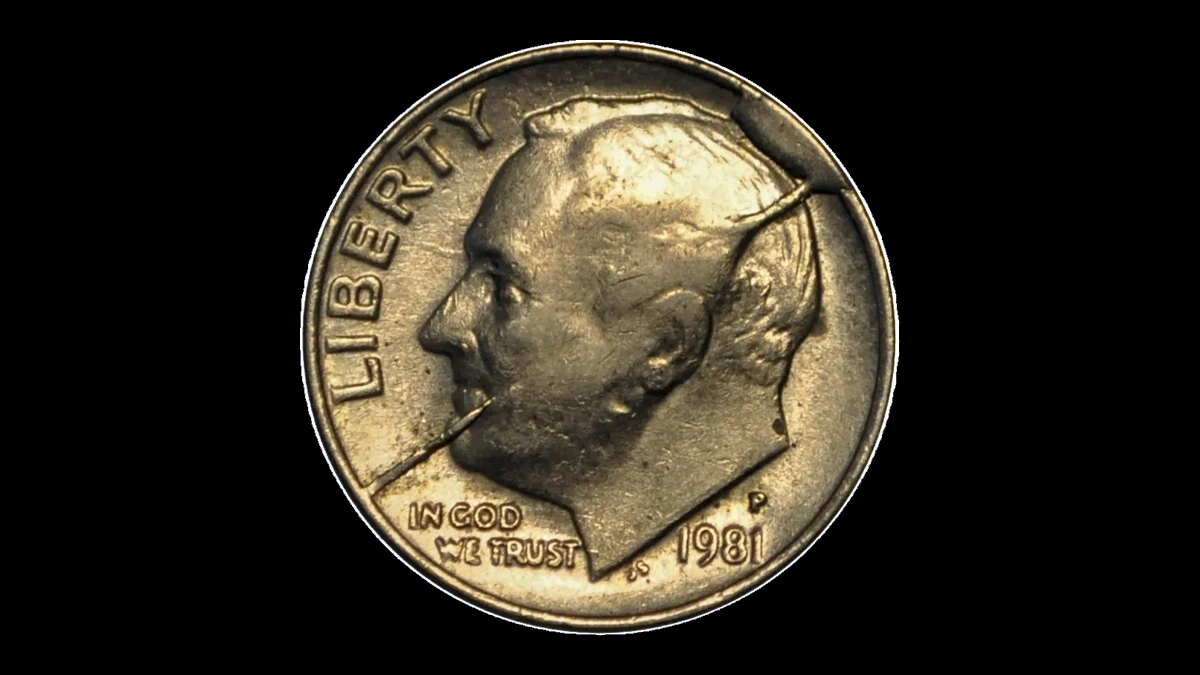
A crack in a die can admit metal during striking and leave a raised line on the dime. A larger broken area can leave a raised patch, with a rim-connected break called a cud.
How to Identify
Compare the line with normal hair and torch details before examining it under side lighting. A scratch cuts into the surface, although displaced metal along its edge can form a misleading raised lip.
Trace a larger patch to determine whether it actually reaches the outside rim. The general report supplies no fixed crack path or mint, and the cap-blocked Philadelphia combination below needs its own assessment.
What It’s Worth
$2–$100 is the estimated range for modest genuine cracks and small die-break patches. Strong relief and clear surrounding detail generally make them easier to display.
Several lines on one dime still require one whole-coin price. Dirt, corrosion, and impact ridges do not receive the same error premium.
2. 1981 Dime Letters, Dates, or Torch Details Repeat: Doubled Die Error
A doubled die contains an extra version of part of the design before striking any coin. Reports for 1981 concern obverse lettering and dates as well as reverse words, branches, and torch details.
The supplied material does not establish one cataloged pattern shared across mints. Mint-letter repunching and flat strike-related doubling are separate possibilities.
How to Identify
Compare a candidate with a normal dime of similar wear and inspect letter ends for rounded separation or notches. Look for connected repetition in nearby features rather than one thick straight edge.
Keep the affected face and mint recorded in full photographs. An obverse feature on one dime and a reverse feature on another do not form a single variety.
What It’s Worth
$10–$150 is the estimate for a confirmed modest doubled-die pattern. This assumes a matching original feature rather than glare, wear, or a flat shelf caused during striking.
Clear surviving separation supports more useful comparisons. A catalog number from another date cannot establish a 1981 attribution.
3. 1981 Dime An Extra Trace Appears above P or beside D: Reported Repunched Mint Mark Error
The proposed 1981-P WRPM-001 feature lies above the main P and extends toward Roosevelt’s neck. Its interpretation as an earlier P remains questioned in specialist literature.
Separate Denver repeated-letter reports have no matched variety number supplied here. A normal P or D is not itself an error.
How to Identify
Photograph the complete mint-letter area, including the space up to the neck for the Philadelphia claim. Compare the extra trace with recognizable parts of a P rather than treating any raised line as another letter.
A Denver candidate needs its own pattern comparison. Changing light can help separate rounded raised detail from a flat shelf, but specialist agreement is needed for the questioned Philadelphia explanation.
What It’s Worth
$10–$250 is a conditional estimate for an accepted original repunched-mint-mark variety. The catalog label alone does not resolve the disputed P trace.
Denver reports likewise require a genuine matching pattern before receiving a variety premium. Ordinary mint marks and damaged letters do not qualify.
4. 1981 Dime The Opposite Face Leaves Faint Traces: Die Clash Error
When dies meet without a blank, they can acquire marks from each other’s designs. Later coins can carry those traces alongside their ordinary artwork.
A collector illustrated a Philadelphia dime described as having two clash patterns. A Denver report is separate and does not establish the same arrangement.
How to Identify
Compare the suspected extra shapes with the portrait, torch, and branches on the opposite face. Use normal coins to distinguish transferred traces from lines already belonging to the design.
For the Philadelphia report, follow each proposed set independently. Two nearby scratches do not prove two die contacts, and its images cannot identify the Denver pattern.
What It’s Worth
$10–$200 is the estimate for comparable genuine clashes. Recognizable connected traces and undamaged surfaces make the feature easier to assess.
Two visible sets may add interest but do not automatically double the value. The particular pattern and condition remain part of a single-coin comparison.
5. 1981 Dime The Original Surface Has Abnormal Color: Improper Annealing Error
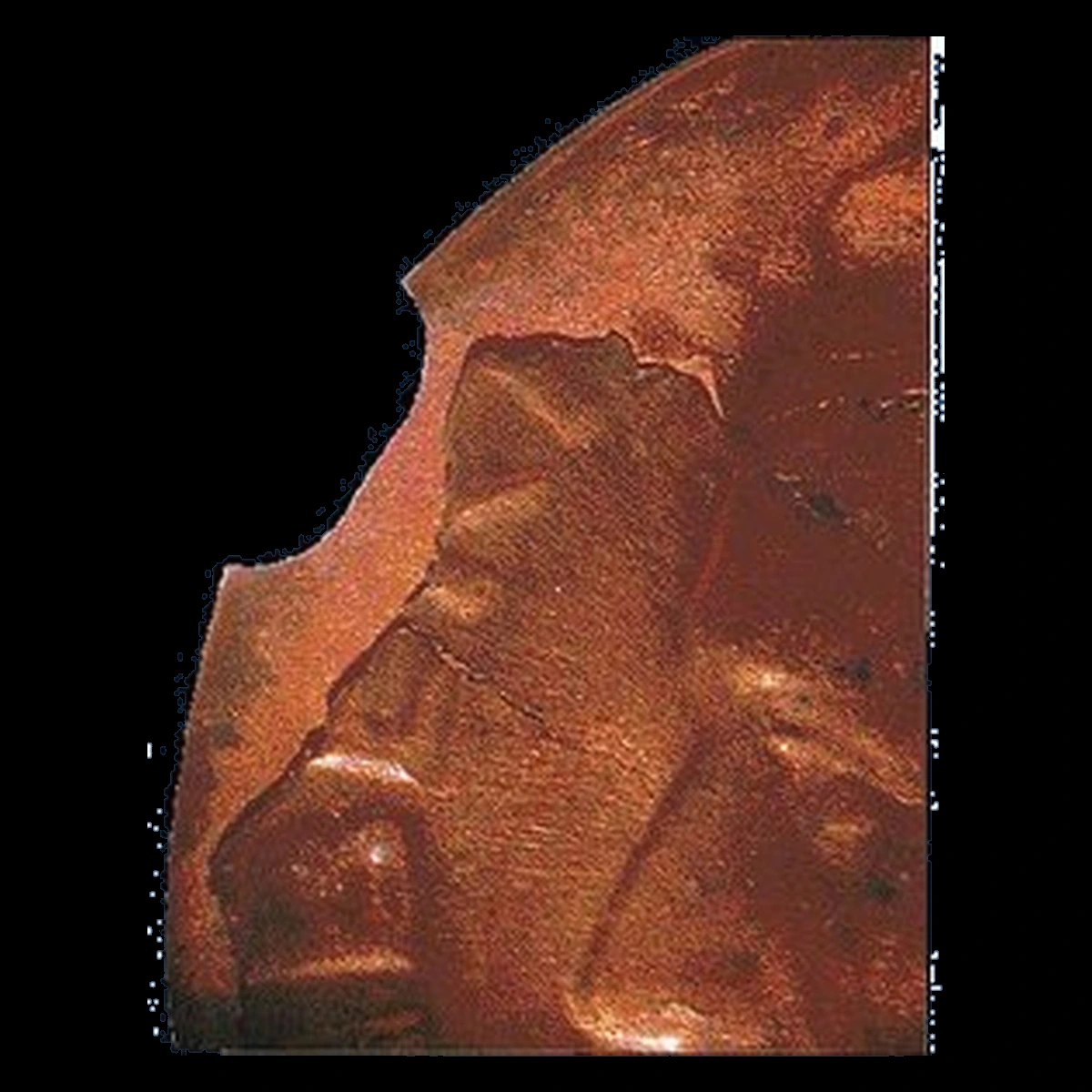
Annealing is the heating stage used to prepare a blank before striking. A 1981-P dime graded PCGS MS63 was cataloged as struck on an improperly annealed planchet.
How to Identify
Establish whether the outer metal layers remain intact before interpreting the color. Exposed copper from a missing layer is a different condition.
Under neutral light, compare protected areas inside lettering with exposed fields and look for corrosion, residue, or added coatings. Later burning and chemical treatment can also alter color.
Do not polish a test patch. The intact surface is needed to distinguish an original preparation problem from changes after minting.
What It’s Worth
$30–$300 is the supplied estimate for identified 1981 annealing errors. The PCGS MS63 example sold for $139 in March 2025.
The grade describes preservation, not a specific shade or chemical composition. A dark ordinary dime cannot inherit that identification from color alone.
6. 1981 Dime Both Faces Have Lost Nearly All Their Outer Metal: Missing Clad Layers Error
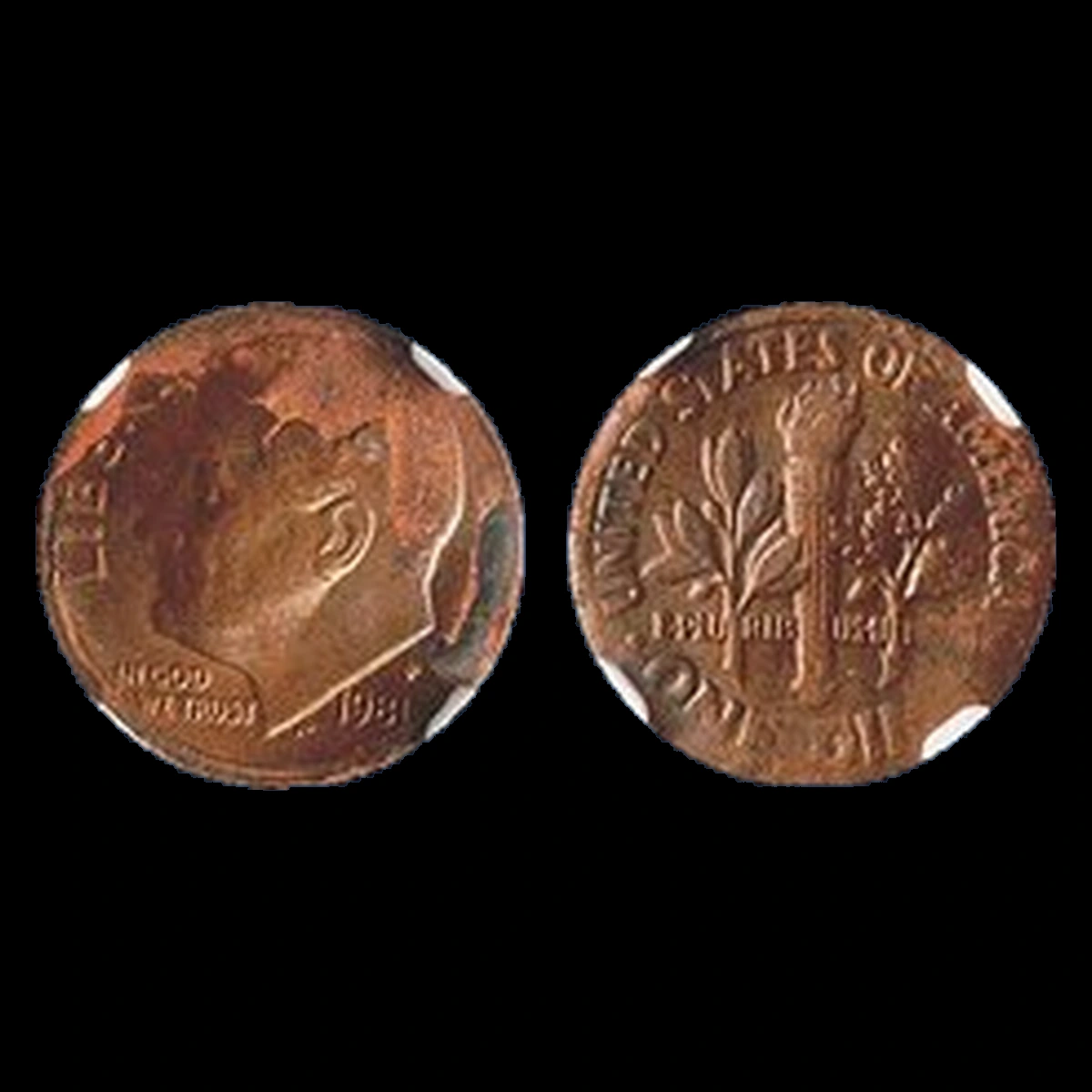
A 1981-P NGC MS65 Red and Brown dime was cataloged with about 99% of both outer layers missing and a weight of 1.3 grams. Its copper core makes up most of the surviving object.
A specialist separately examined a 1.3-gram copper-core dime with gray islands of debated origin. The matching weight does not establish that the two descriptions concern the same specimen.
How to Identify
Inspect both faces and the edge to establish actual metal loss rather than discoloration. Do not automatically call every gray island surviving cladding when its origin is unresolved.
The ordinary dime standard is 2.268 grams, including 1981-S Proofs. The 1.3-gram figure belongs to the described pieces, not every missing-layer dime.
Original design on exposed copper should be considered alongside any scraping or chemical pits. Metal removed after striking can create an altered coin with a low weight.
What It’s Worth
$75–$600 is the estimated range for comparable genuine missing-layer pieces. The NGC MS65 Red and Brown example sold for $129.25 in January 2013.
Loss from one face requires a different description from near-total loss on both. Surface preservation and the amount of original design influence the comparison.
7. 1981 Dime Only a Thin Off-Center Sheet Survives: Split after Striking Error
A Philadelphia piece graded ANACS MS62 weighs just 0.38 grams and carries a 20% off-center design. Its auction description places the separation after the strike.
This object is a detached layer from a struck coin. It is not a complete normal dime with an exceptionally low weight.
How to Identify
Compare the struck face with the exposed inner side and follow their boundaries. The surviving image and separation surface should support a layer that received its design before coming away.
Inspect for grinding or scraping without flexing or flattening the sheet. Keep a graded example in its holder.
Retain the 0.38-gram weight and 20% displacement with this specimen. It is separate from both the 1.3-gram copper-core examples and the 55% off-center Philadelphia dime below.
What It’s Worth
$75–$450 is the estimate for comparable genuine detached layers. This off-center sheet sold for $132 in May 2018.
The sale concerns the surviving layer, not an assumed matching remainder. Bending or scraping could damage both its appearance and evidence of formation.
8. 1981 Dime A Large Section Is Absent from the Disk: Clipped Blank Error
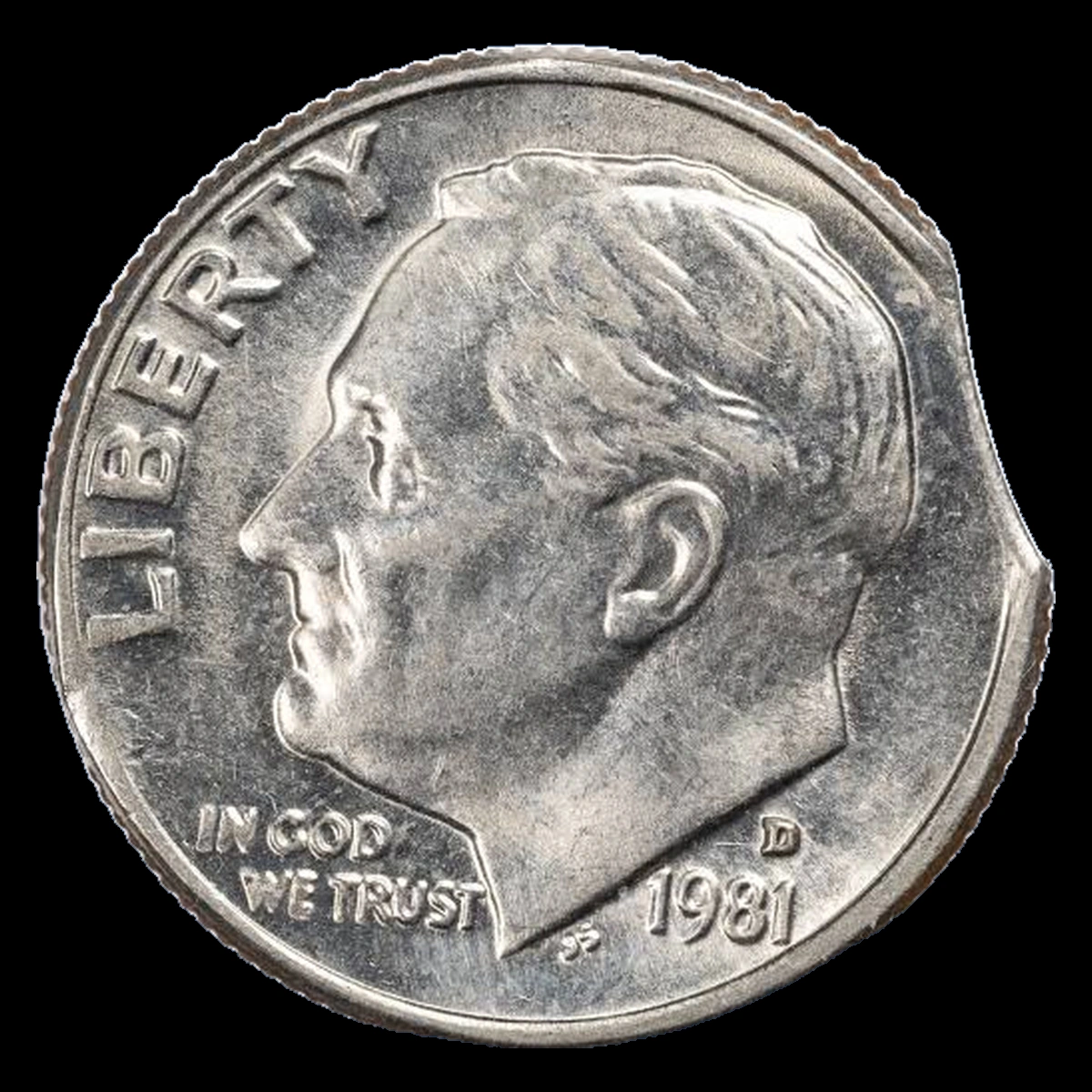
A cataloged 1981-D dime graded PCGS MS63 has a 38% clip. The blank was incomplete before the portrait and lettering were applied.
How to Identify
Inspect the gap through the coin’s thickness and follow both junctions with the rim. Nearby detail can soften or stretch toward an original opening, while file marks may reveal later removal.
Weakness on the opposite rim can support a clip but is not equally clear on every example. Low weight establishes missing metal without establishing when it disappeared.
The Denver coin appeared in a three-coin lot. Photograph and identify its own boundary rather than borrowing the other pieces’ shapes or percentages.
What It’s Worth
$30–$400 is the supplied estimate for comparable genuine large clips. A clear original boundary and readable date help display the error.
Any group price must remain attached to the complete auction lot. It should not be divided into invented individual sale results.
9. 1981 Dime Extra Metal Surrounds a Complete Design: Broadstrike Error
A Denver broadstrike is reported for 1981. With inadequate restraint from the collar ring, the blank can spread outward while keeping the main design on the metal.
How to Identify
Trace the outside words on both faces and compare the border with a normal dime. Loss of intended design beyond one edge calls for an off-center comparison.
Measure a loose coin in several directions against the normal 17.91-millimeter diameter and inspect the edge grooves. No measured error diameter is supplied for this report.
Look for an original struck portrait and torch within the expanded outline. Later hammering or squeezing can widen a finished dime while crushing those details.
What It’s Worth
$25–$350 is the estimated range for a genuine simple 1981-D broadstrike. Obvious spreading and readable original details support stronger comparisons.
An uneven rim alone does not establish lost collar restraint. Original design and edge evidence should account for the enlarged shape.
10. 1981 Dime A Large Blank Area Borders a Displaced Design: Off-Center Strike Error
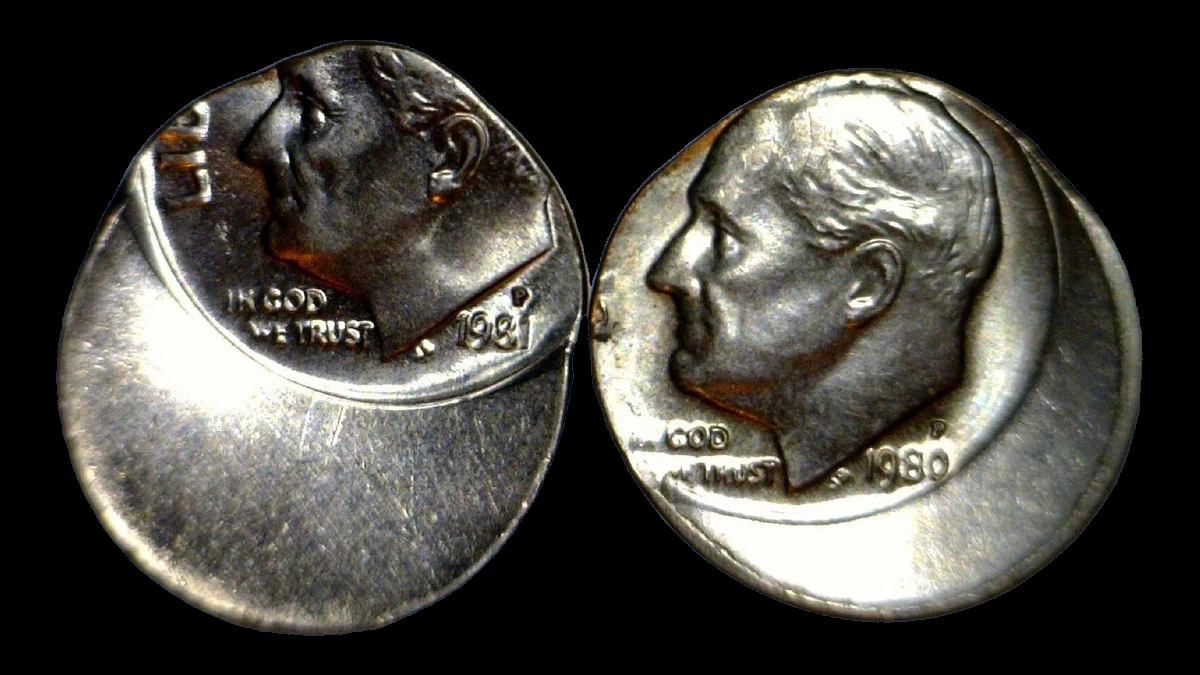
The Philadelphia ANACS MS64 example is described as 55% off center toward one o’clock. A separate Denver dealer listing gives a 60% shift in the same general direction.
How to Identify
With Roosevelt upright, compare the upper-right displacement with the plain area opposite it. Both faces should fit the same blank positioned away from the dies’ center.
Read the surviving year and mint letter directly from the coin. An unstruck mint-mark area cannot establish Philadelphia simply because no D is visible.
The percentages describe displacement, not missing metal. Inspect the untouched surface for grinding or erased design that would suggest later alteration.
What It’s Worth
$30–$750 is the estimated range for comparable genuine dated examples. The 55% Philadelphia ANACS MS64 coin sold for $49 in January 2022.
The Denver 60% description belongs to another piece. Greater displacement can hide identity and does not automatically outweigh damage or an unreadable date.
11. 1981 Dime A Weak Front Coexists with Raised Breaks: Struck through a Die Cap Error
A coin trapped on a die can spread into a cap that blocks the next blank’s design. The supplied 1981-P NGC MS64 Full Bands dime was struck beneath such a cap and also shows cracked or broken die features.
The auctioned dime is the coin struck through the cap, not the cap itself. A separate dealer description mentions a similar combination with a break behind the head, without proving it is the same specimen.
How to Identify
Compare the weaker front with the clearer reverse, then examine the raised damage features separately. Obstructed detail and extra raised metal can coexist for different reasons.
Do not expect tall cap walls on the underlying dime. Match a reference before assigning the dealer-reported behind-head break to the auction coin or another candidate.
What It’s Worth
$50–$800 is the estimate for comparable cap-blocked dimes with die damage. The NGC MS64 Full Bands example sold for $149.50 in January 2010.
Full Bands describes sharp horizontal torch bands and is not another error. Judge the weak front, die breaks, and intact reverse together as one coin.
12. 1981 Dime Additional Blows Leave Shifted or Blocked Images: Repeated Strikes Error
One Philadelphia ANACS MS64 dime has a second strike 95% off center with one face blocked. Another Philadelphia piece has an 80% second strike and a later wheel mark on the front.
A separate San Francisco Type 1 Proof graded NGC PR68 Ultra Cameo encountered an overlapping blank during a later blow. Its flattened seven-to-eleven-o’clock area, stretched portrait, and faint opposite-design outlines distinguish it from ordinary Proof production.
How to Identify
On the 95% example, locate the small later impression and the corresponding blocked area on the other face. On the 80% coin, separate the genuine added strike from the wheel mark, which is later damage.
For the Proof, compare the flattened sector with the stretched portrait under several lighting angles. The faint designs do not establish that the coin flipped between blows.
Proofs normally receive multiple blows, so repetition alone is not the error. The overlapping blank and resulting obstruction require their own evidence.
What It’s Worth
$30–$500 is the estimate for comparable ordinary repeated strikes, while $500–$5,000 is the estimate for a genuine major Proof obstruction. The Proof range is not a recorded sale of the PR68 coin.
The 95% ANACS MS64 specimen brought $60 in April 2020, and the wheel-marked 80% specimen sold for $36 in January 2016. Ultra Cameo describes the Proof’s strong design-to-field contrast rather than an additional mint error.
13. 1981 Dime The Dime Design Appears on Unsuitable Metal: Reported Wrong Planchet Error
A wrong-planchet dime would begin on a blank intended for another coin. The supplied 1981 report does not identify a particular incorrect blank for the Roosevelt example.
How to Identify
Record actual weight and diameter, then inspect the edge layers and how the design meets the outline. Plating, chemical treatment, and trimming can change an ordinary dime’s color or measurements.
A gold-colored surface does not establish a gold blank. Keep the blank unnamed until composition, dimensions, and original striking evidence support a specific identification.
A dime on another blank differs from a cent on an unused dime blank and from a finished dime later struck as a cent. The surviving design establishes which event is being claimed.
What It’s Worth
$200–$2,000 is a conditional estimate for an authenticated 1981 dime on an incorrect blank. The actual metal and intended denomination would narrow that range.
An unusually thin, colored, or damaged ordinary dime does not qualify without the original wrong-blank construction. A proposed denomination in a listing cannot substitute for that evidence.
14. 1981 Dime Lincoln Covers a Finished Roosevelt Dime: Double Denomination Error
The documented NGC MS63 coin began as a 1981-D dime and later received a 1981-D cent design. Roosevelt lies toward approximately one-thirty when Lincoln is upright.
Both dates and Denver marks remain identifiable, with the cent date clearer. The older dime design shows that the host was already a finished coin before entering the cent press.
How to Identify
Trace Roosevelt beneath Lincoln and look for surviving torch details on the reverse. Follow enough connected artwork to establish two genuine original designs.
Read both years and mint letters independently, then inspect the edge for seams or added metal. A joined novelty or a cent on an unused dime blank does not explain the same overlapping sequence.
What It’s Worth
$600–$2,500 is the estimated range for comparable authenticated 1981 cent-over-dime pieces. The NGC MS63 Denver example sold for $822.50 in June 2013.
Visible traces of both designs make the sequence easier to demonstrate. This is one combined object, not separately valued cent and dime components.
15. 1981 Dime A Dime Image Appears on a Lincoln Cap: Dual-Denomination Die Cap Error
The reported object began as a Lincoln cent cap and later received the image of a 1981-P Roosevelt obverse die. Its cup-shaped cent body makes it fundamentally different from the flat dime host above.
Mike Diamond’s discussion of undersized designs examines this unusual piece. Its impressions support a sequence, but they do not prove an accidental transfer between ordinary production lines.
How to Identify
Study the side profile and cap walls before identifying the portraits. The structure should fit repeated pressure around a die rather than a simple fold in a finished coin.
Locate the earlier Lincoln details and later Roosevelt image across the wider cap. Normal dime diameter is not a standard for the whole object.
Do not straighten the walls or scrape inside the cup. Specialist examination must consider structure, overlapping designs, and the limits of what they establish about its history.
What It’s Worth
$5,000–$25,000 is the conditional estimate for a genuine fully identified dual-denomination cap of this kind. It is not a recorded sale of the reported object.
The integrity of its walls and clarity of both designs would affect interest. A cup-like bend in an ordinary coin cannot establish the same identity or value.
Conclusion
The 1981 dime records include ordinary coins, fragile separated layers, and an unusual cent cap carrying a dime impression. Keep those objects distinct before applying standard dimensions or comparing values.
Small die features need matching patterns, while major combinations require a coherent explanation across both faces and the edge. Preserve each specimen’s measurements, percentages, and grade, and treat estimated ranges separately from the documented individual auction results.