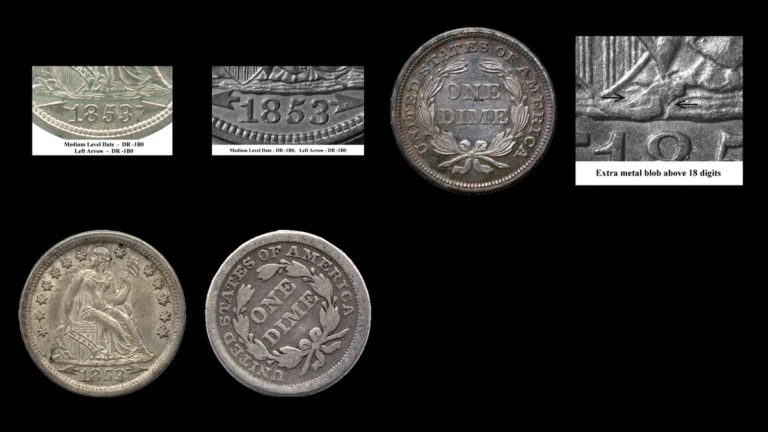
Rare 1888 Dime Errors (List & Pictures)
A different-year comparison helps frame the market: an off-center 1886 dime sold for $1,955 in July 2004. For 1888 dime errors, estimated whole-coin values range from $25–$2,500 across the categories below.
This guide follows the evidence on the coin, from extra date strokes to a documented off-center strike on an unfinished blank.
| Feature | Estimated value | Useful distinction |
|---|---|---|
| Lamination | $30–$150 | Natural layer separation versus scraping |
| Clash marks | $40–$200 | Opposite-side design traces |
| Doubled design | $50–$350 | Philadelphia front versus San Francisco reverse |
| Date-punch varieties | $40–$500 | Repeated or misplaced digits |
| Repunched S | $80–$600 | Secondary S outline |
| Cracks and cuds | $25–$700 | Small line versus rim-connected break |
| Rotated reverse | $100–$800 | Angle between the two designs |
| Broadstrike candidate | $300–$1,500 | Original expansion with complete designs |
| Off-center unfinished blank | $500–$2,500 | Displacement plus unprepared rim |
1. 1888 Dime Lamination or Peeling Silver Error
A seller’s 1888 dime listing places a lamination on the front and describes the condition as AU53. The coin is outside a grading holder, and the description does not establish its mint or whether it is an ordinary strike or Proof.
The suspected flaw is a separation within the silver alloy. A weak layer may remain attached or fall away, leaving a shallow opening in the surface.
How to Identify
Inspect the boundary where solid silver meets the separated area. Original design may continue onto a flap, while sharp scrape lines crossing finished details suggest later damage.
A normal dime of this type weighs 2.50 grams and measures 17.91 millimeters across. A retained layer may leave the weight near normal, so do not lift it merely to investigate.
The listing does not give a precise location within the front design. Examine the actual separation rather than assigning it to a particular fold or portrait feature.
What It’s Worth
Modest identifiable laminations have estimated values of $30–$150. The seller-described AU53 example has a $75 asking price, not a recorded sale.
Cleaning, corrosion, and the condition of the surrounding silver affect the whole coin’s appeal. An independent grade would make comparisons more reliable.
2. 1888 Dime Clashed Designs Error
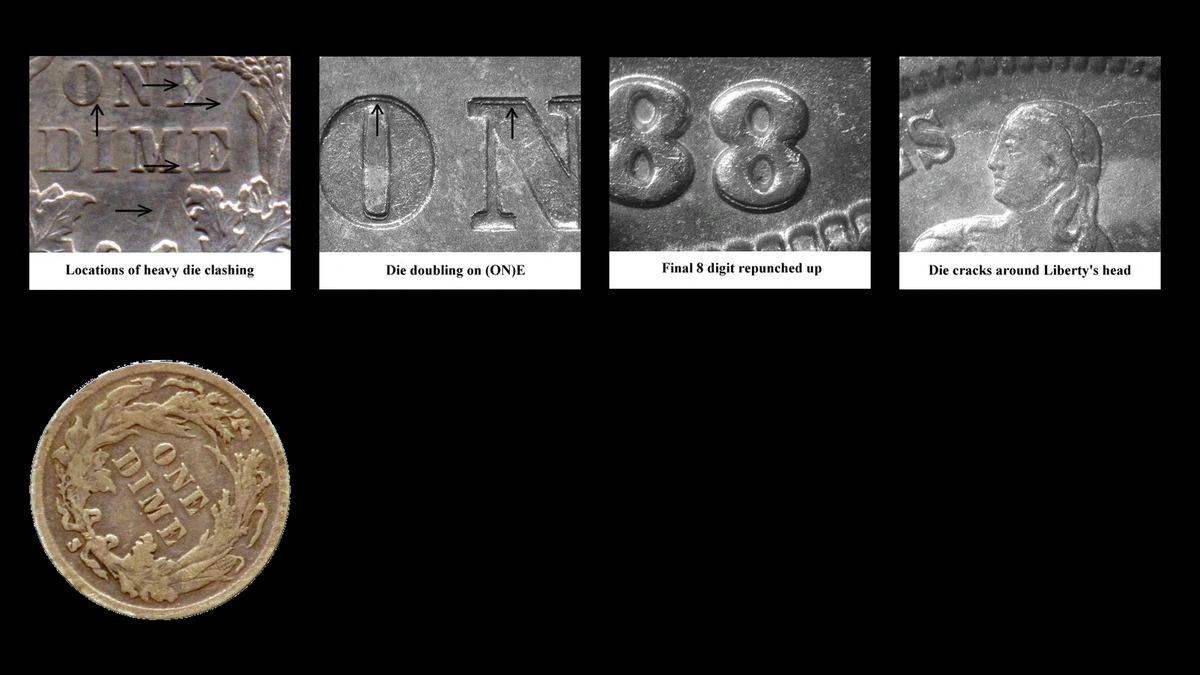
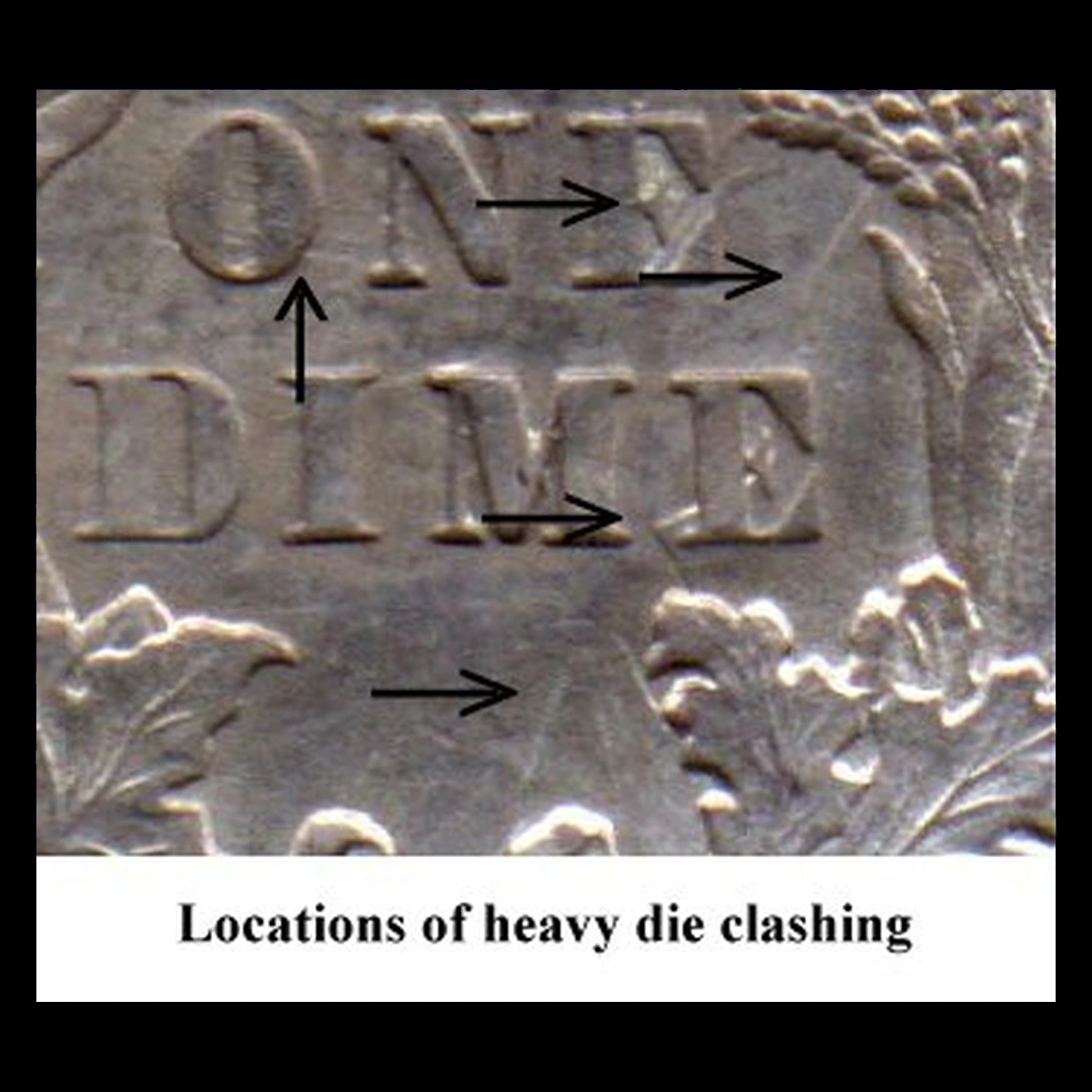
The Philadelphia variety gallery includes several 1888 dimes with clash marks on both faces. Their extra shapes come from contact between the dies when no blank separated them.
That contact can transfer traces of one design to the opposing tool. Later coins then reproduce faint features that seem to belong on the other side.
How to Identify
Compare full photographs of Liberty and the wreath, looking for connected shapes that fit the opposite design. Several related curves make a stronger case than an isolated line beside Liberty.
Use side lighting to follow the pattern without confusing it with scratches. Different recorded coins have different clash marks, so a match must concern the actual pattern present.
What It’s Worth
Visible modest clashes have estimated whole-coin values of $40–$200 in worn through lightly worn condition. These are comparison estimates, not recorded sales for every gallery example.
An unworn dime may also be valuable because of its preservation. That ordinary condition value should remain separate from any claimed clash premium.
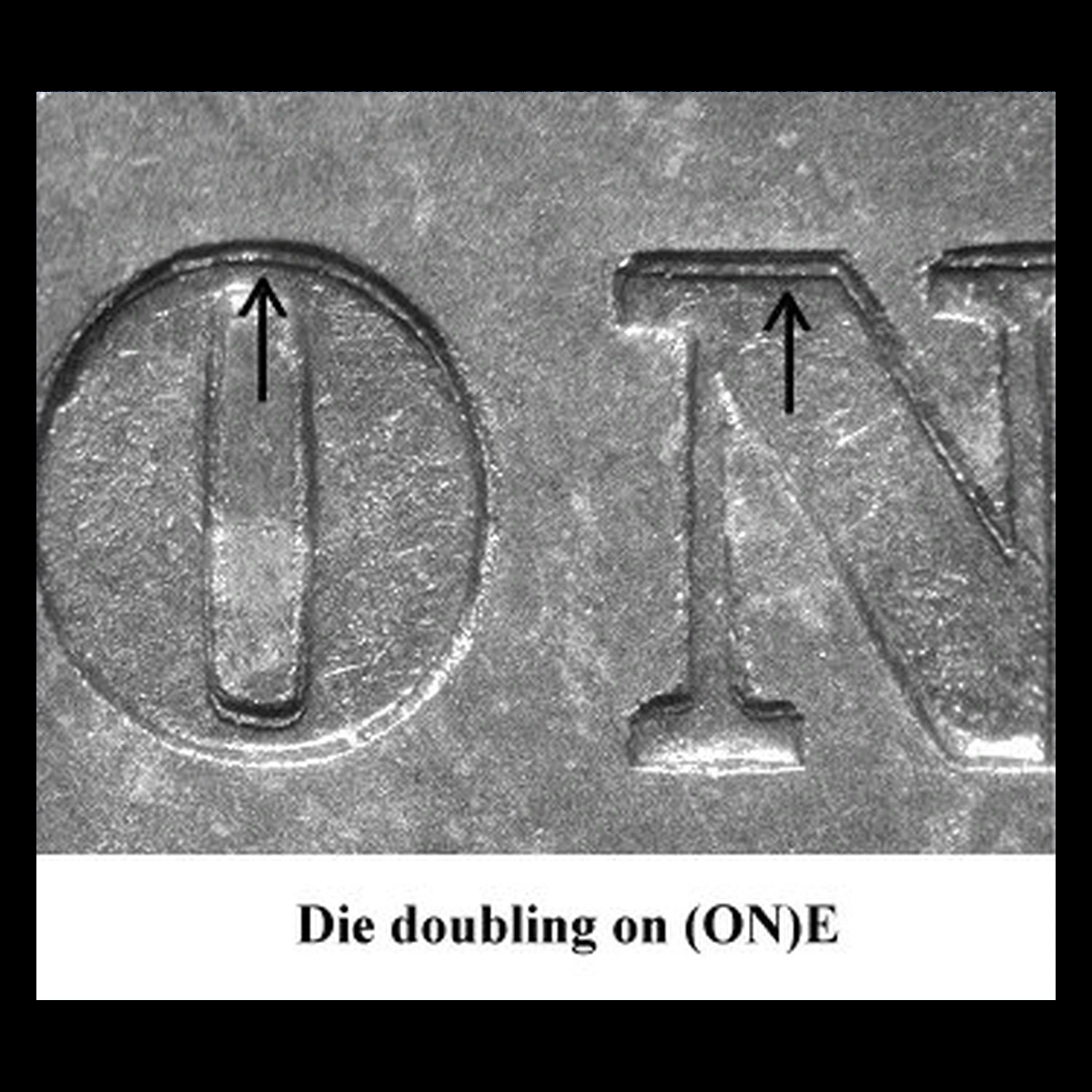
3. 1888 Dime Doubled Front or Reverse Design Error
On a listed Philadelphia variety, the right edge of Liberty’s shield has a doubled outline. A separate San Francisco listing concerns reverse doubling instead.
These patterns originated in different dies and should not be merged. A doubled die repeats part of its own design with each strike; it does not require the coin to receive two blows.
How to Identify
Establish the mint first by checking below the reverse wreath for an S. For the Philadelphia shield variety, compare the right-hand outline with the recorded example and with an ordinary shield.
The supplied San Francisco listing does not locate the precise reverse letters or wreath features involved. Use photographs of that specific pattern rather than applying the Philadelphia shield diagnostic.
What It’s Worth
Modest, clearly matched doubled designs have estimated values of $50–$350. A different 1889 Philadelphia F-104 dime graded MS63 brought $223 in 2017.
That 1889 coin combined reverse doubling and a repunched date. Its price is for one complete coin, not two premiums, and does not establish the value of the 1888-S pattern.
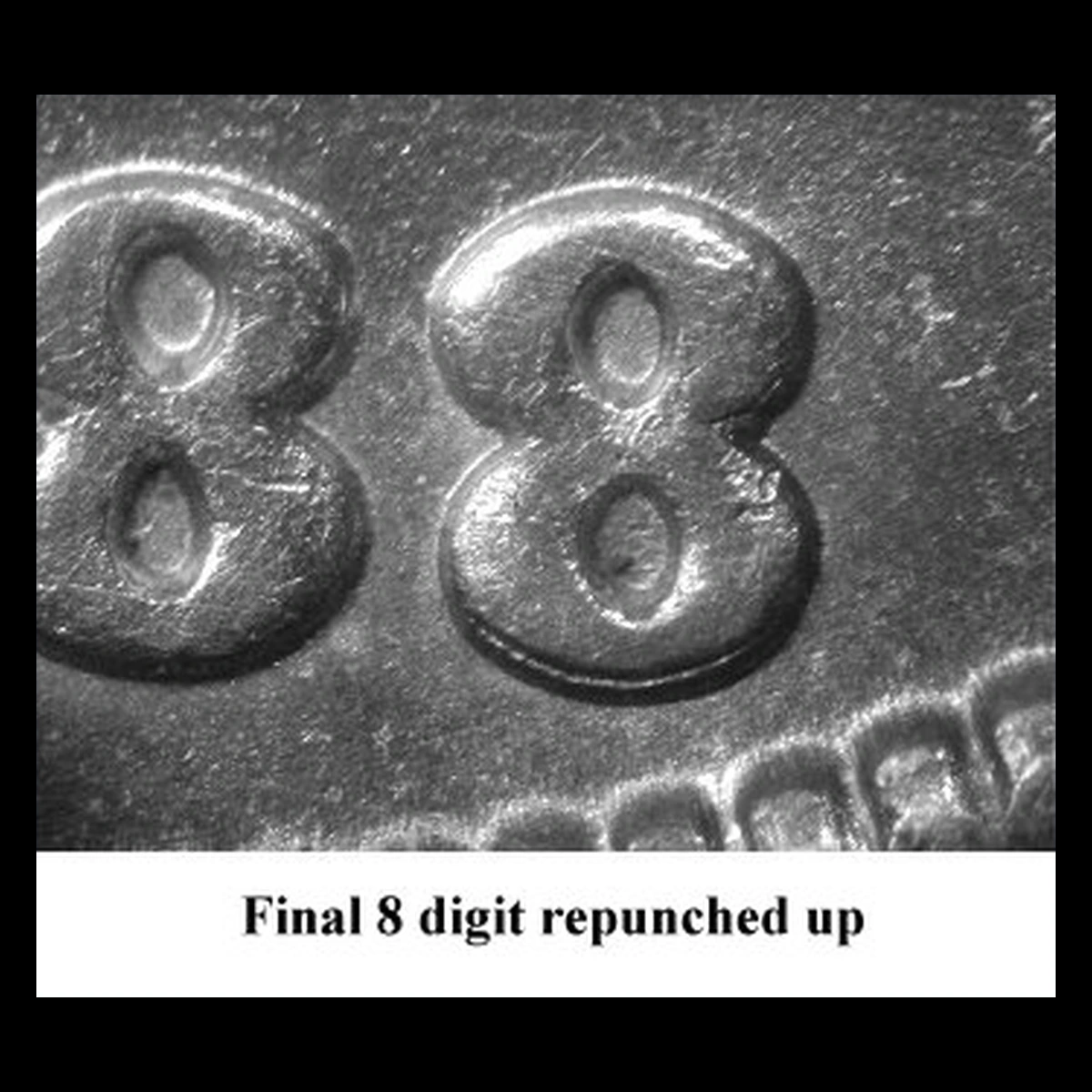
4. 1888 Dime Repunched or Misplaced Date Digits Error
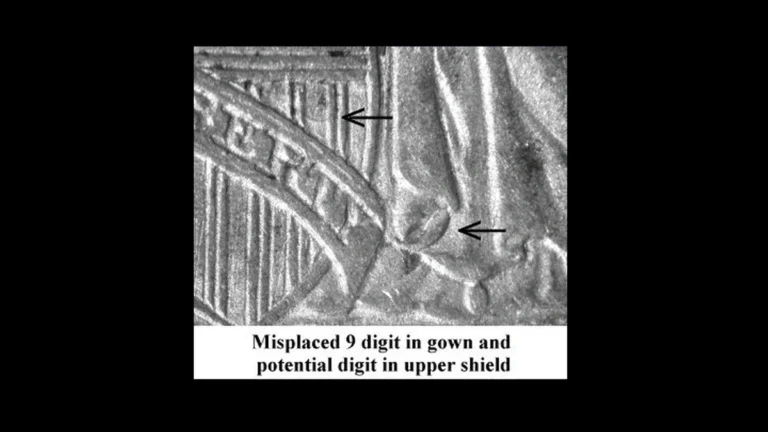
An extra digit close to the date suggests a different inspection from an 8 hidden higher in Liberty’s gown. Repeated date punches near their intended position can leave extra loops or serifs, while misplaced punches can put digit remnants within the design.
The 1888 Philadelphia variety gallery illustrates several patterns involving the date and nearby design. San Francisco has separate reports of an 8 in the gown or base.
How to Identify
Locate the suspected stroke before choosing a variety comparison. Near the date, inspect the ends of the 1, the lower loops of the 8s, and the space beneath the final digit.
For a misplaced digit, retain nearby folds, shield lines, or the base in the photograph. An extra curve resembling an 8 does not by itself identify an 1888-over-7 overdate.
What It’s Worth
Recognizable date-punch varieties have estimated whole-coin values of $40–$500 in worn through attractive lightly worn condition. Strong, traceable remnants are easier to compare than a vague isolated curve.
A 2015 auction catalog described a different 1886 repunched-date dime graded MS66+ as recently selling for $1,116. Its exceptional condition makes that a limited comparison, rather than a standard price for an extra 1888 digit.
5. 1888 Dime Repunched S Mintmark Error
The recorded 1888-S Medium S Over S variety preserves part of a repeated mintmark. The extra curve began when the mintmark punch entered the die in more than one position.
The name refers to impressions in the tool, not to two coins struck together. A broad normal S is not sufficient to identify it.
How to Identify
Find the S below the reverse wreath and trace its main upper and lower curves. Then compare the smaller stroke with photographs of the Medium S Over S pattern.
The remnant should fit part of a second letter and remain consistent as the light changes. Do not invent a punch direction from a shadow or use a flat strike-related shelf as proof.
What It’s Worth
A matched example has an estimated whole-coin range of $80–$600. Wear, clear visibility of the repeated stroke, and original surfaces determine how useful another coin is as a comparison.
High-grade 1888-S dimes can be valuable without this variety. Their full price should not be attributed solely to the repeated S.
6. 1888 Dime Die Cracks and Rim-Connected Breaks Error
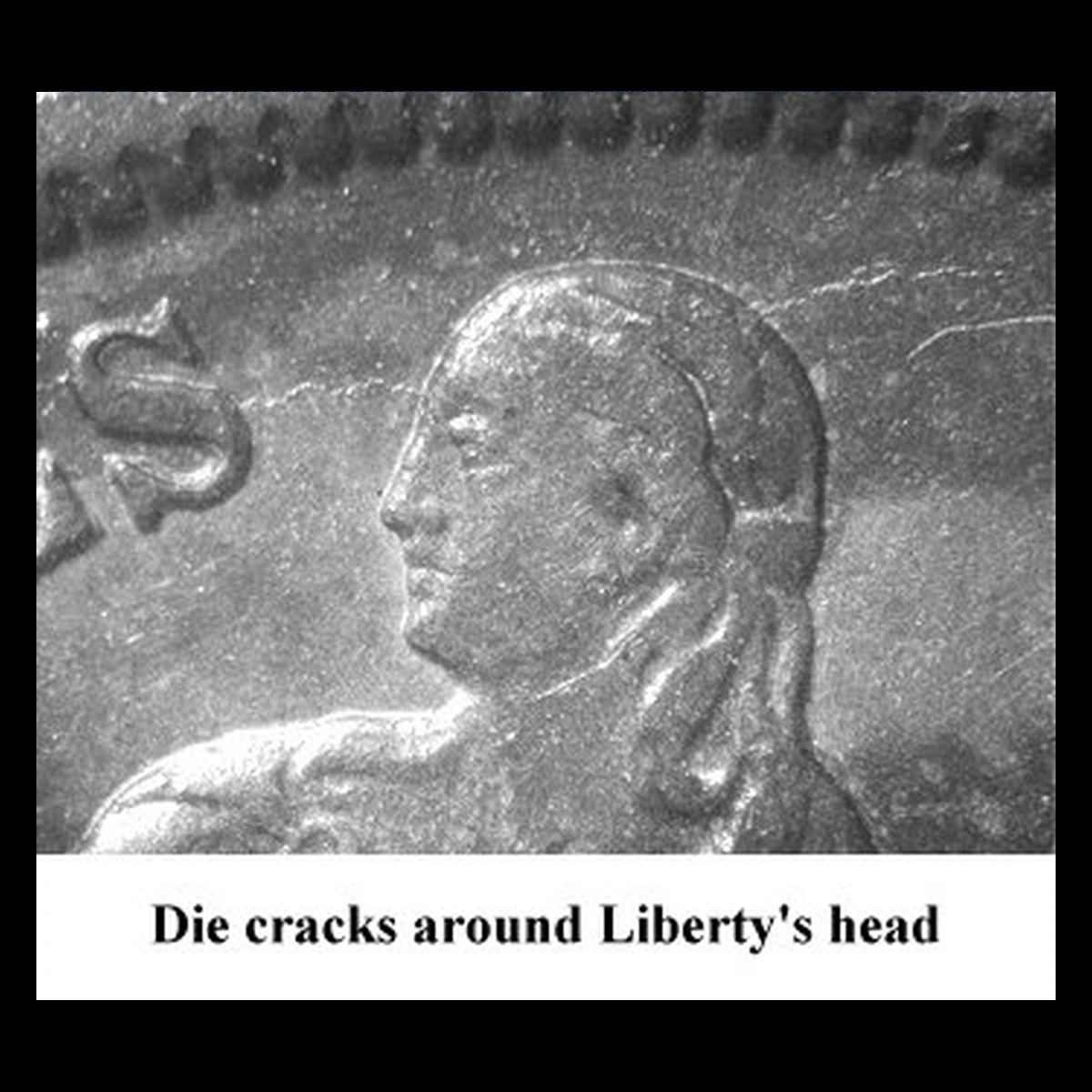
The Philadelphia gallery records a reverse cud between nine and ten o’clock. A cud is a raised patch joined to the rim where a piece of the die’s edge broke away.
Narrower cracks are listed around the Philadelphia head or reverse. Separate San Francisco examples include a line from the right end of Liberty’s base to the rim and another reverse crack near nine-thirty.
How to Identify
For the Philadelphia cud, inspect the left reverse rim and its connection to the raised patch. An impact can also push metal upward, but often leaves crushing, a hollow, or scrape marks beside it.
Trace a narrow crack along its full course. Keep the Philadelphia and San Francisco patterns separate instead of treating every line in a similar region as the same die.
What It’s Worth
Small visible cracks have estimated whole-coin values of $25–$150. A clearly formed rim-connected cud supports a higher estimated range of $150–$700.
The larger range assumes an original die break. The word “cud” in a listing cannot turn unrelated rim damage into that error.
7. 1888 Dime Rotated Reverse Error
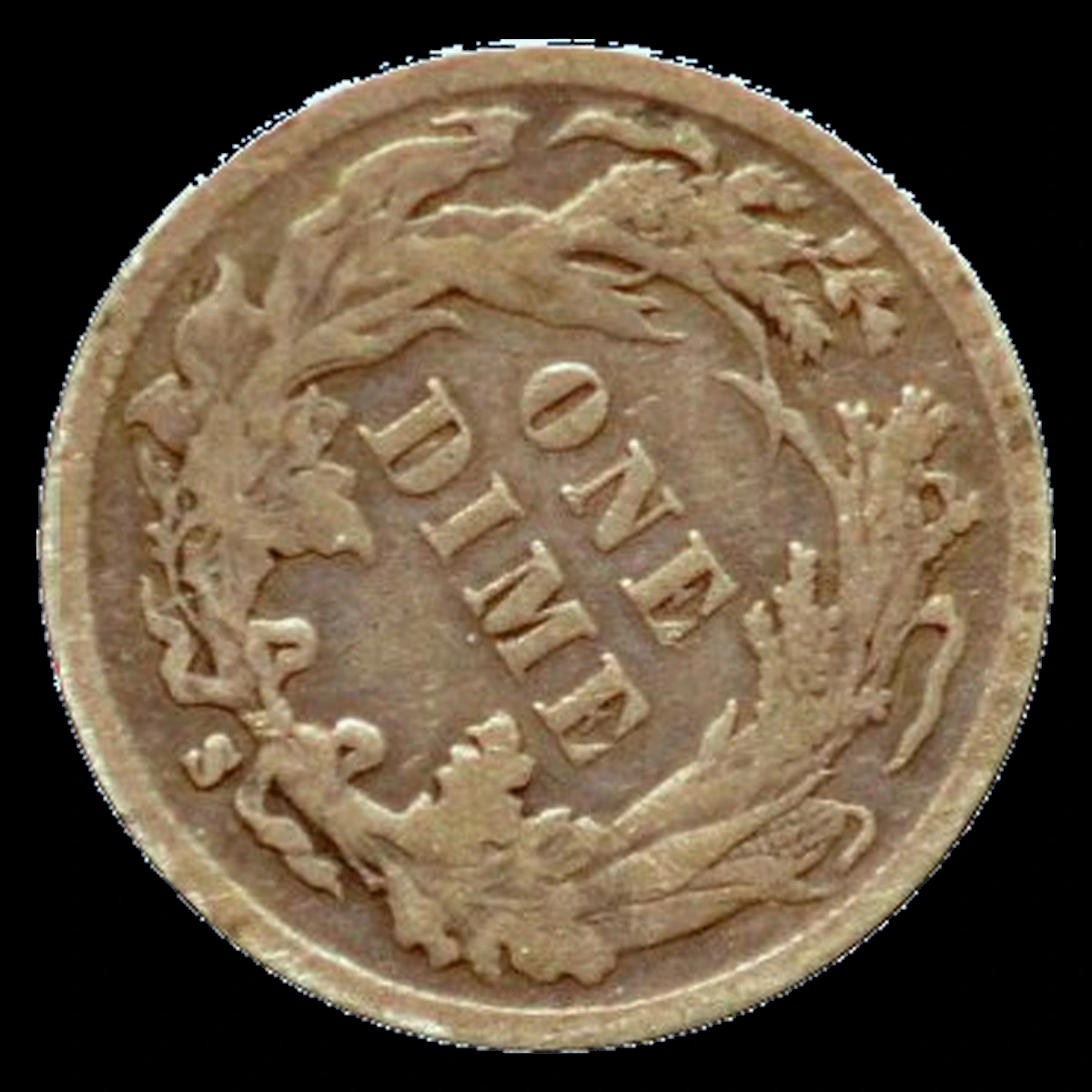
A recorded 1888-S dime has its reverse turned fifty-five degrees left from normal alignment. Fortin’s rotation index credits Jason Feldman with the 2013 discovery.
Both faces can be sharp because the error concerns the relative angle of the dies. A photograph showing only one side cannot demonstrate it.
How to Identify
Hold Liberty upright and flip the coin from top to bottom without twisting sideways. The reverse should normally appear upright after that movement.
Repeat the flip with a fixed straight reference and photograph the resulting wreath angle. For a certified coin, turn the whole holder rather than opening it.
What It’s Worth
A verified substantial rotation like the recorded example has an estimated range of $100–$800. The discovery record is not an auction result.
The fifty-five-degree angle belongs to that specimen, not every 1888-S dime. Slight tilts and photographs taken at an angle require different treatment.
8. 1888 Dime Reported Broadstrike Candidate Error
An unusually wide margin can suggest that silver spread outside the collar’s normal confinement. The collar is the surrounding ring that controls the edge during striking.
A year guide includes broadstrikes for 1888 but does not establish a specific confirmed specimen. An uneven border alone therefore cannot settle the identification.
How to Identify
Examine the complete designs, outward metal flow, and edge together. A loose candidate’s widest and narrowest dimensions can help document expansion, but later hammering can enlarge a coin too.
Look for edge alteration or flattened detail inconsistent with an original strike. Keep a certified coin in its holder and use its description alongside the visible evidence.
What It’s Worth
A confirmed 1888 broadstrike has a conditional estimated range of $300–$1,500. This uses comparable Seated-dime errors rather than a documented sale of a specific 1888 coin.
Complete designs with clear original expansion provide the strongest comparison. Missing portions of the design may instead point toward an off-center strike.
9. 1888 Dime Off-Center Strike on an Unfinished Blank Error
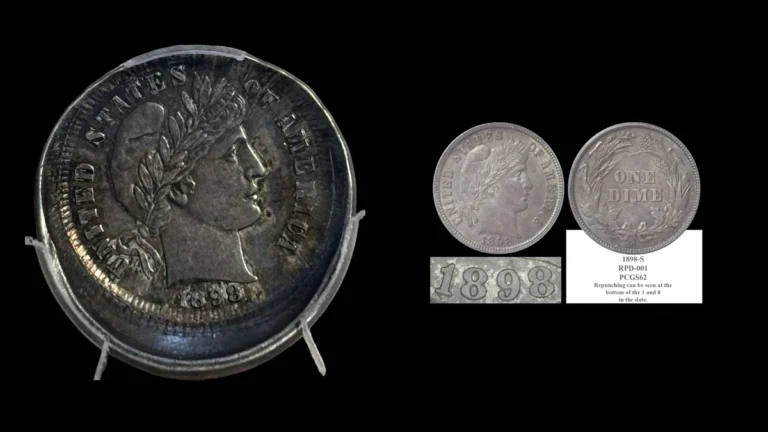
The documented Philadelphia PCGS AU55 example combines a ten-percent off-center strike with a Type One blank. Here, Type One means the disc had not received its raised rim before striking.
It does not name an earlier Seated-dime design. The unfinished blank and displaced image are two parts of the manufacturing history of this single coin.
How to Identify
Inspect the unstruck crescent for original blank texture and compare both faces for matching displacement. Scraping away finished design would leave different evidence.
Keep the readable 1888 date and remaining edge visible. Displacement alone does not remove silver, and the supplied description does not assign a clock direction to this coin.
What It’s Worth
A genuine dated example of this kind has an estimated range of $500–$2,500. A different 1886 dime struck five percent off center sold for $1,955 in July 2004.
The 1886 comparison was graded PCGS MS62 and had cataloged residue. It was unworn, while the 1888 AU55 coin has light wear and a distinct unfinished-blank history.
Conclusion
Extra digits, faint clash shapes, and an unstruck crescent call for different comparisons. Begin with the feature you can demonstrate, then match the year, mint, and condition before considering a price.
The $75 lamination figure is an asking price, and the $1,955 off-center sale belongs to 1886. Keeping those distinctions visible makes the estimates more useful and prevents a reported category from acquiring an auction history it does not have.