Rare 2004 Quarter Errors (List & Pictures)
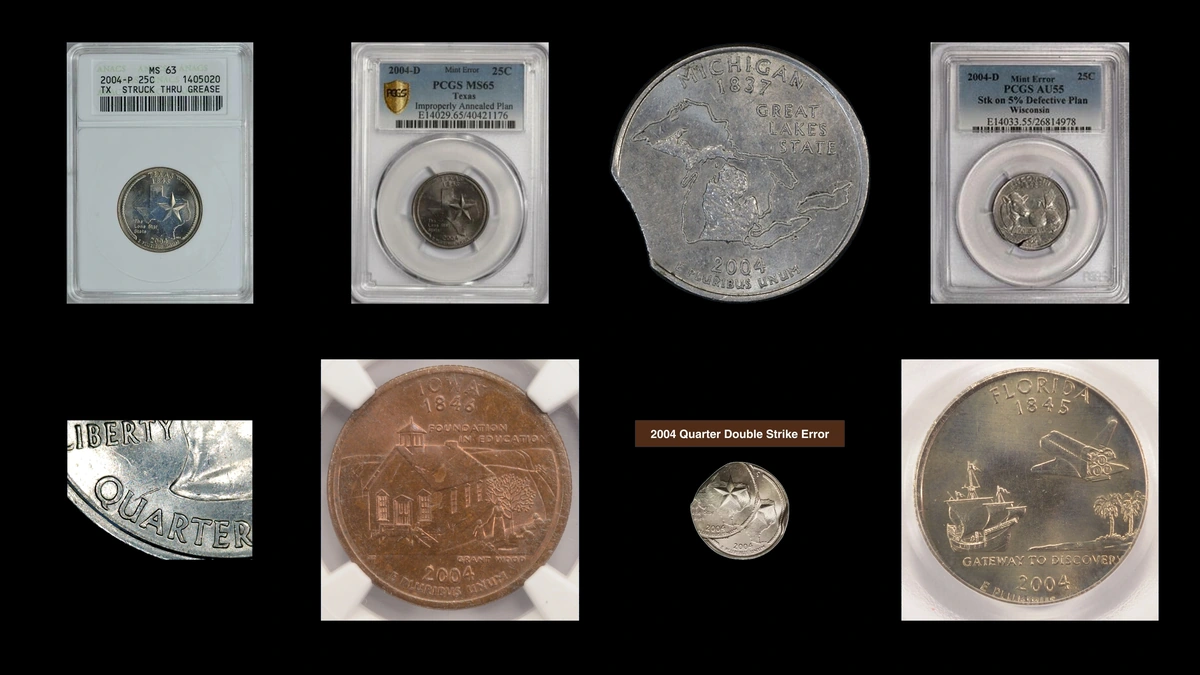
An Extra Leaf Low Wisconsin quarter graded MS67 sold for $6,000 in January 2020. The wider group of 2004 quarter errors has estimated values of $2–$6,000, with exceptional certified coins accounting for the top end.
This guide explains the visible clues across the five state designs and distinguishes actual sales from dealer prices and unconfirmed reports.
| Category group | Estimated value | Example to examine |
|---|---|---|
| Clashes, doubling, and filled detail | $5–$200 | Texas traces, Florida ear, Iowa school |
| Annealing and blank flaws | $30–$400 | Iowa color or clip; Wisconsin cracked blank |
| Collar errors | $40–$400 | Texas stepped edge |
| Die cracks and breaks | $2–$500 | Ordinary and Proof examples differ |
| Missing outer metal | $75–$700 | Florida patches on both faces |
| Double or off-center strikes | $40–$1,500 | Iowa overlap; displaced Florida design |
| Wrong blank | $500–$3,500 | Confirmed Florida nickel blanks |
| Wisconsin extra leaves | $50–$6,000 | Denver Low and High varieties |
1. 2004 Quarter Texas Die Clashes Error
Star or rope-like traces near Washington may relate to the Texas reverse. Philadelphia and Denver clash reports involve marks left when the dies contacted each other without a blank between them.
Later coins can reproduce those tool marks as faint pieces of the opposing design. Scratches around the portrait require a different explanation.
How to Identify
Compare both faces and look for adjoining shapes that fit the star or rope border. A horizontally reversed reference image can help show the relationship between the opposing designs.
Inspect the actual metal under changing light for cuts and displaced lips. Several connected matches are stronger evidence than one line that vaguely resembles part of the reverse.
What It’s Worth
Recognizable Texas clashes have estimated values of $15–$150. Clear original backgrounds and easily shown transferred shapes support stronger comparisons.
More stray lines do not necessarily mean a stronger clash. Damage can obscure or imitate the features that matter.
2. 2004 Quarter Doubled Design Details Error
Philadelphia Florida examples show an extra rounded detail below Washington’s earlobe. Iowa reports instead concern school windows and nearby building or tree outlines on the reverse.
The die itself carried the repeated image in these categories. Texas reverse doubling remains a candidate requiring its own matched pattern.
How to Identify
Inspect the Florida ear feature on the front and the Iowa school features on the back. Their different locations cannot serve as interchangeable diagnostics.
Compare rounded extra detail with an ordinary coin under the same lighting. A flat ledge from movement during striking or a worn, thick outline does not establish the same variety.
What It’s Worth
Florida earlobe doubling has an estimated range of $15–$100, while clear Iowa reverse doubling has an estimated range of $20–$200. Condition and strength of the actual repeated feature matter.
A Texas candidate confirmed as a minor doubled design could fall around $10–$100. An unconfirmed mark should not borrow an identified Iowa variety’s price.
3. 2004 Quarter Filled Letters and Grease Strike-Throughs Error
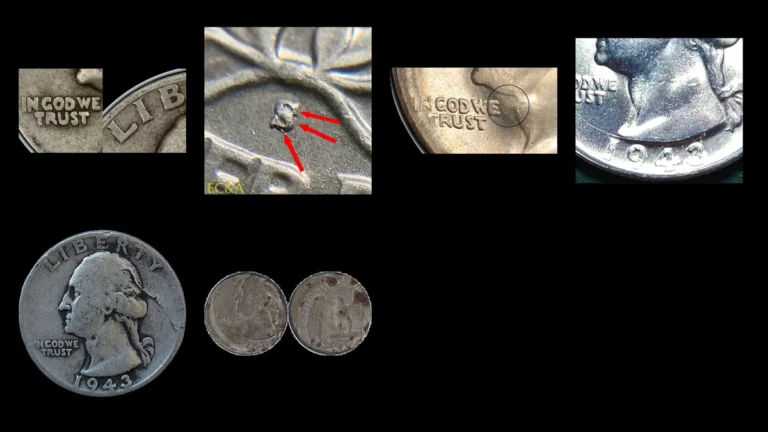
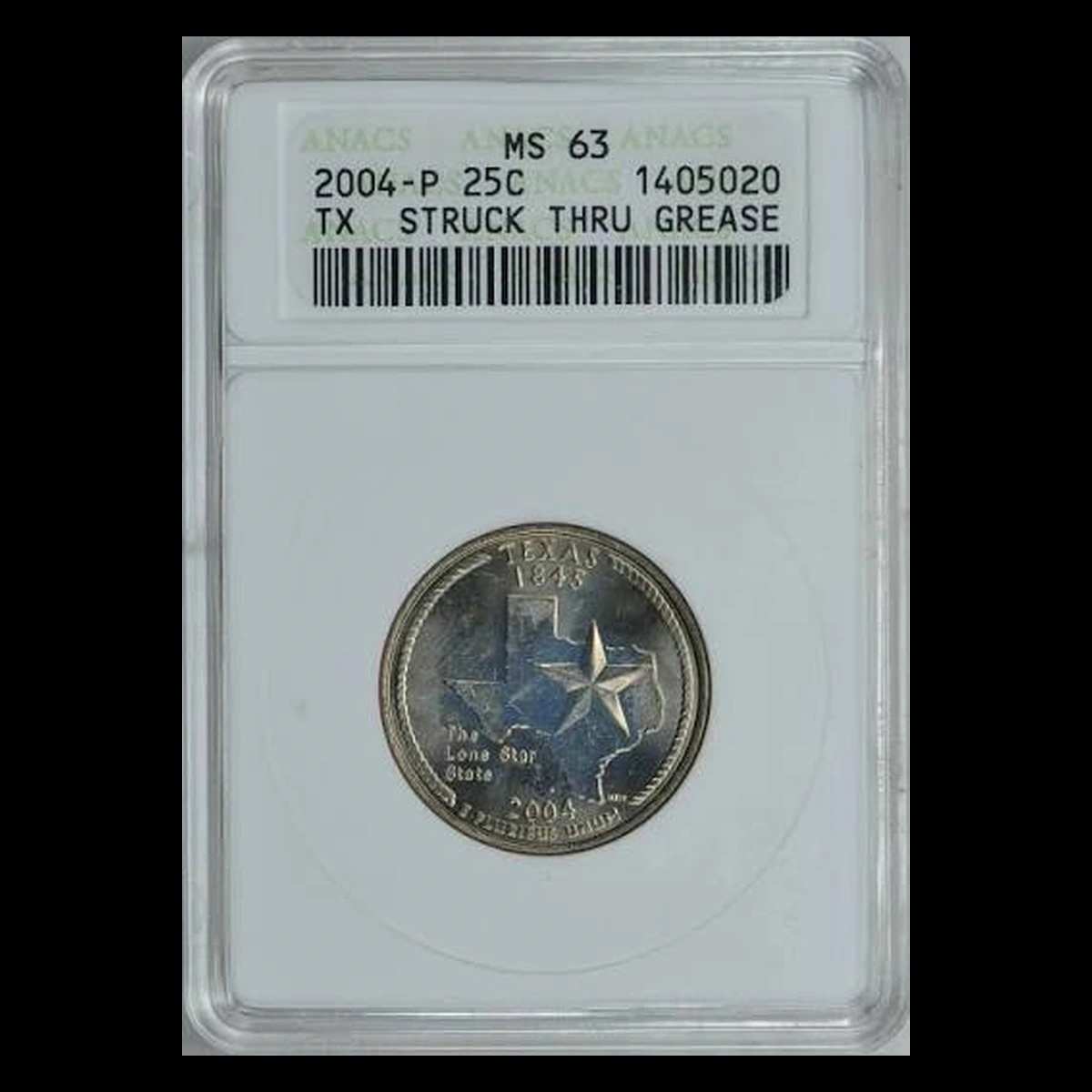
A seller describes a Philadelphia Texas quarter with a weak or absent T that makes TRUST resemble RUST. Material blocking a recessed part of the die can prevent the corresponding raised letter from forming.
Philadelphia Iowa examples also have grease-related interruptions in the school scene. Their locations and sale records must remain separate from the Texas letter report.
How to Identify
Compare the missing T with neighboring letters and the portrait. Broadly flattened details may indicate wear, while rubbing scratches or a scraped hollow can show later removal.
On Iowa, inspect the affected school area beside sharper surrounding detail. A Texas missing letter does not identify which part of an Iowa scene was blocked.
What It’s Worth
Lightly filled letters have estimated values of $5–$40. Larger, clearly interrupted scenes have an estimated range of $40–$200.
A Philadelphia Iowa grease strike-through graded AU58 sold for $35 in April 2022. It is separate from the reported MS65 reverse-error example and does not establish every Iowa coin’s price.
4. 2004 Quarter Blank-Heating Error
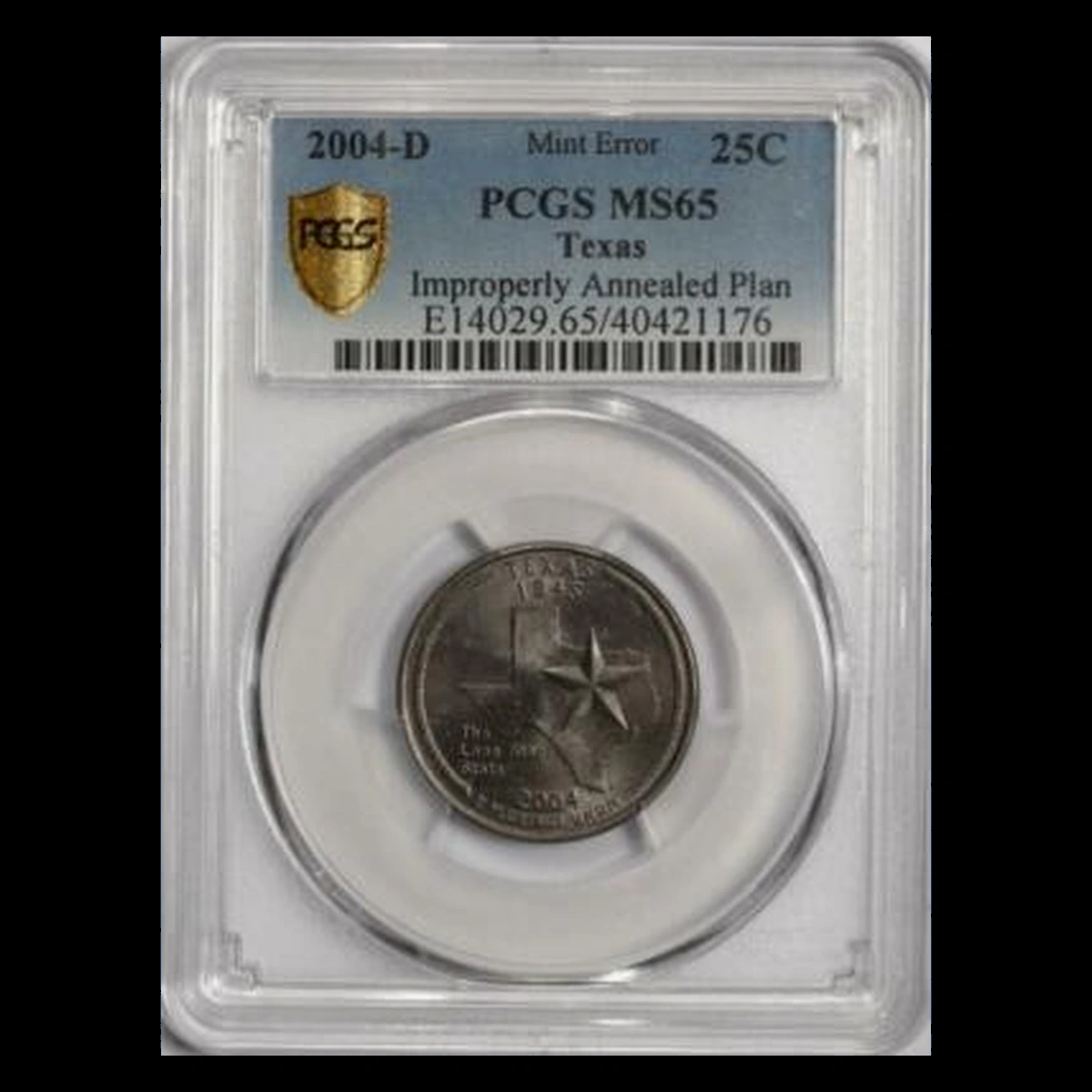
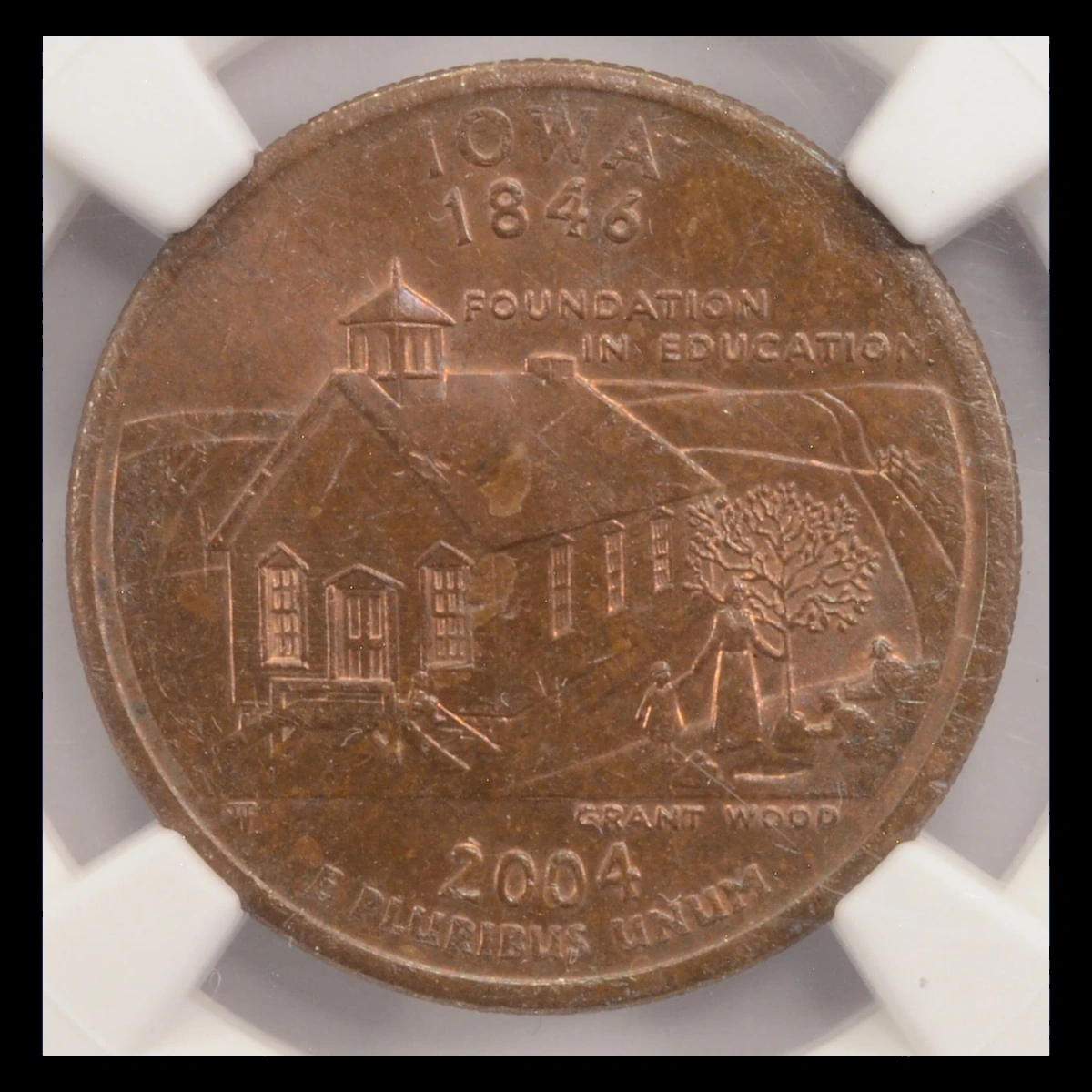
Michigan and Iowa examples have been identified with improper annealing, a problem during the heating treatment used to soften blanks. The reported Michigan coin was graded PCGS MS65 and the separate Iowa coin PCGS MS64.
The description concerns surface treatment during manufacture, not an intentionally different alloy. Later environmental changes can create similar color.
How to Identify
Read the holder’s error description rather than treating an ordinary grade as confirmation of annealing. Inspect the surfaces under neutral light for deposits, pits, and chemical residue.
A normal clad quarter weighs 5.67 grams and measures about 24.3 millimeters across. Weight can help flag missing metal, but normal weight alone cannot prove when discoloration formed.
What It’s Worth
Identified annealing errors have estimated values of $40–$300. The Philadelphia Iowa MS64 example brought $225.70 at Heritage in March 2026.
The Michigan MS65 listing records a sale but hides the final price. Its opening bid must not be substituted for a realized result.
5. 2004 Quarter Iowa and Texas Clipped Blanks Error
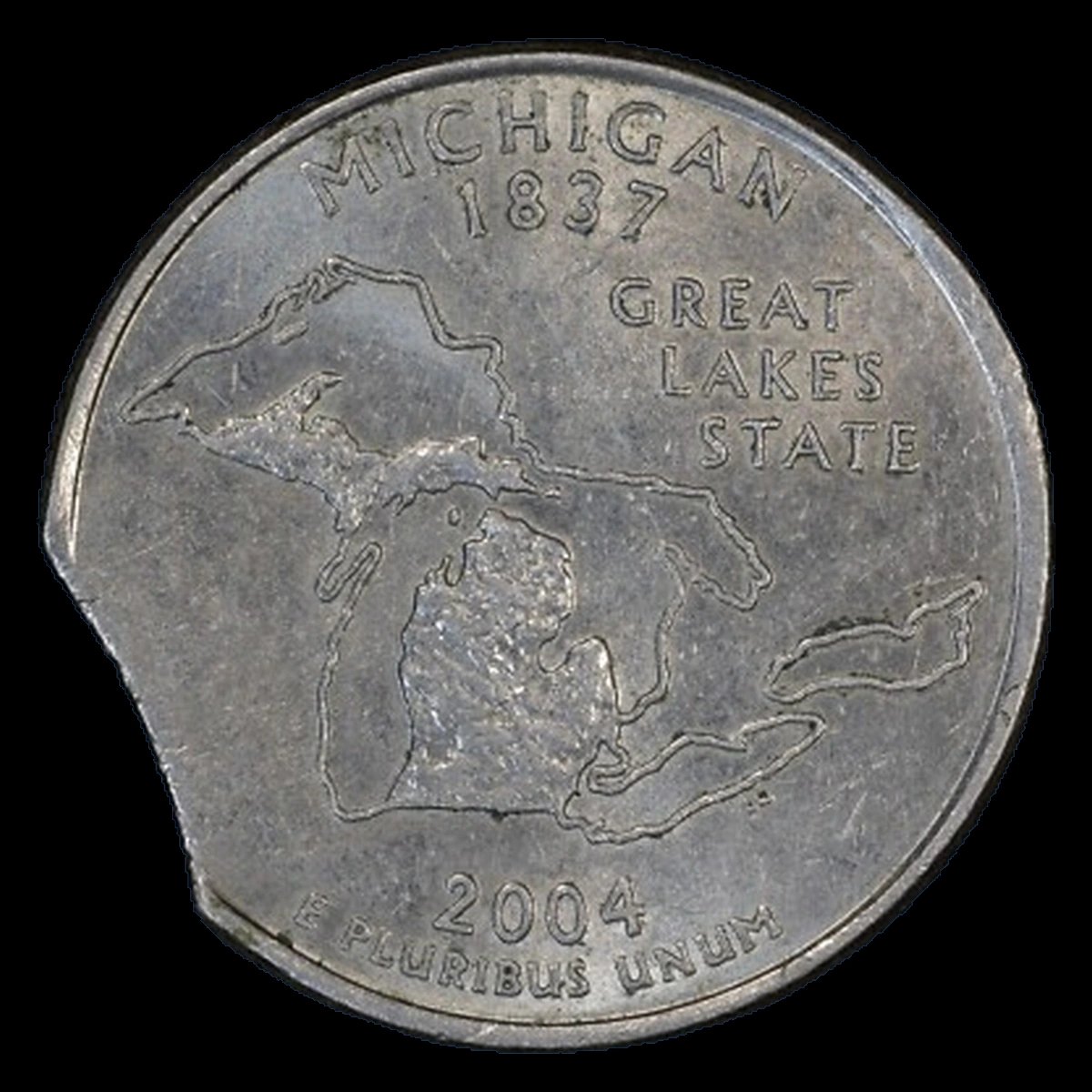
The Denver Iowa PCGS MS64 example is cataloged with a twelve-percent clip. That description does not specify a clock position or a particular curved shape.
A separate Texas report concerns a straight clip. Both involve an incomplete blank formed during cutting, rather than a notch removed from a finished quarter.
How to Identify
Follow the rim and lettering into the missing segment, looking for formation beside an existing gap. File marks or a sharp cut through finished detail suggest later alteration.
Inspect the Texas straight boundary from the side and examine both ends. Low weight and possible weakness opposite the gap can support examination, but neither proves the timing of metal loss alone.
What It’s Worth
Genuine examples have estimated values of $30–$350. The amount missing, original boundary, and preservation affect collector interest.
A different 2000-P New Hampshire elliptical-blank error graded PCGS MS66 sold for $288 in September 2024. Its different year and shape make it a broad comparison rather than a sale of the Iowa or Texas examples.
6. 2004 Quarter Texas Tilted Partial Collar Strike Error
The Denver Texas report concerns a blank held only partly within the collar during the strike. Its edge can show a step between restrained metal and metal that spread beyond the ring.
If the blank was tilted, that boundary changes height around the coin. The resulting shape differs from a completely unrestrained broadstrike.
How to Identify
Inspect the edge through a full turn and follow the transition between grooved and expanded bands. A side view is more informative than an uneven-looking front rim.
Check for crushed grooves, dents, or a seam from later squeezing. Those changes must be separated from original variation in collar contact.
What It’s Worth
A genuine tilted partial collar Texas quarter has an estimated range of $40–$350. A clear sloping step on well-preserved metal is easier to compare than a barely visible change.
Heavy rim damage can obscure the feature. No particular tilt angle or completed sale is supplied for this example.
7. 2004 Quarter Broadstrikes Error
A reported 2004 broadstrike has no settled state or mint identity in the supplied description. It does not establish matching examples for every one of the five designs.
The error forms when the collar fails to restrain the blank normally. Metal expands outward while the principal design remains on the coin.
How to Identify
Confirm that the scene and intended lettering are complete before considering the expanded outline. An unstruck arc beside missing design suggests an off-center strike instead.
Inspect the edge for original flow and any partial-collar step. Later flattening can also enlarge a coin, but often crushes already formed details.
What It’s Worth
Genuine broadstrikes have estimated values of $50–$400. Strong expansion and readable, attractive design make the comparison clearer.
Establish the actual state and mint on the specimen. A wide outline alone does not justify the error label or its price range.
8. 2004 Quarter Wisconsin Cracked Blank Error
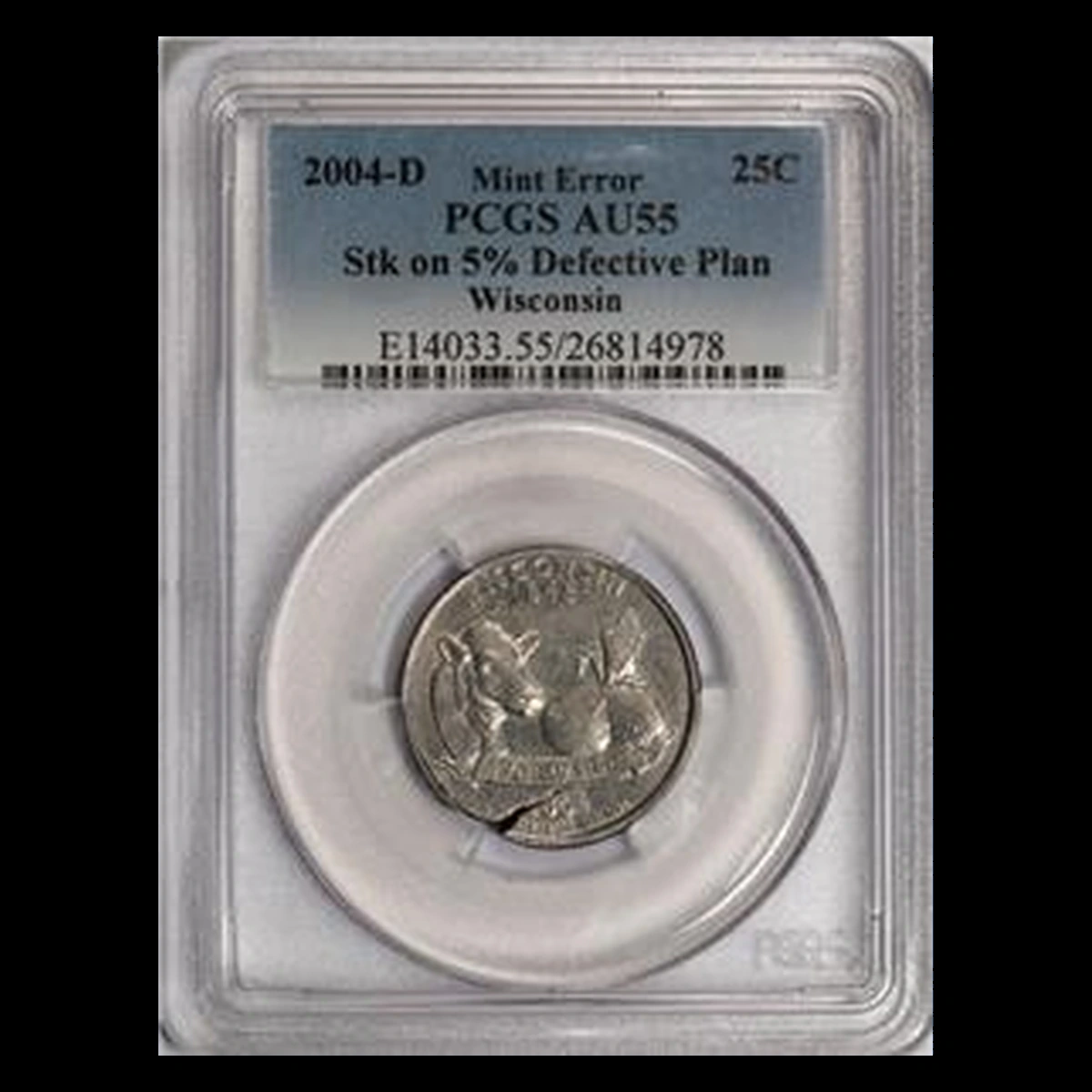
A Denver Wisconsin quarter was certified by PCGS as struck on a defective cracked blank. The supplied description does not specify the route of the opening.
This is a separation in the coin’s metal. A raised line copied from a cracked die is a different feature.
How to Identify
Examine the recessed seam and how nearby design formed beside it. A split present during striking can affect metal flow, while a later break may cut sharply through finished detail.
Photograph both faces and the edge without bending the coin or forcing the crack wider. Weight only helps with this feature if material has actually come away.
What It’s Worth
A genuine struck cracked blank has an estimated range of $50–$400. Clear separation with undamaged surrounding design provides a stronger comparison than an uncertain tiny seam.
A fresh jagged break does not automatically qualify as a blank defect. The surface must support the sequence of cracking and striking.
9. 2004 Quarter Die Cracks, Breaks, and Cuds Error
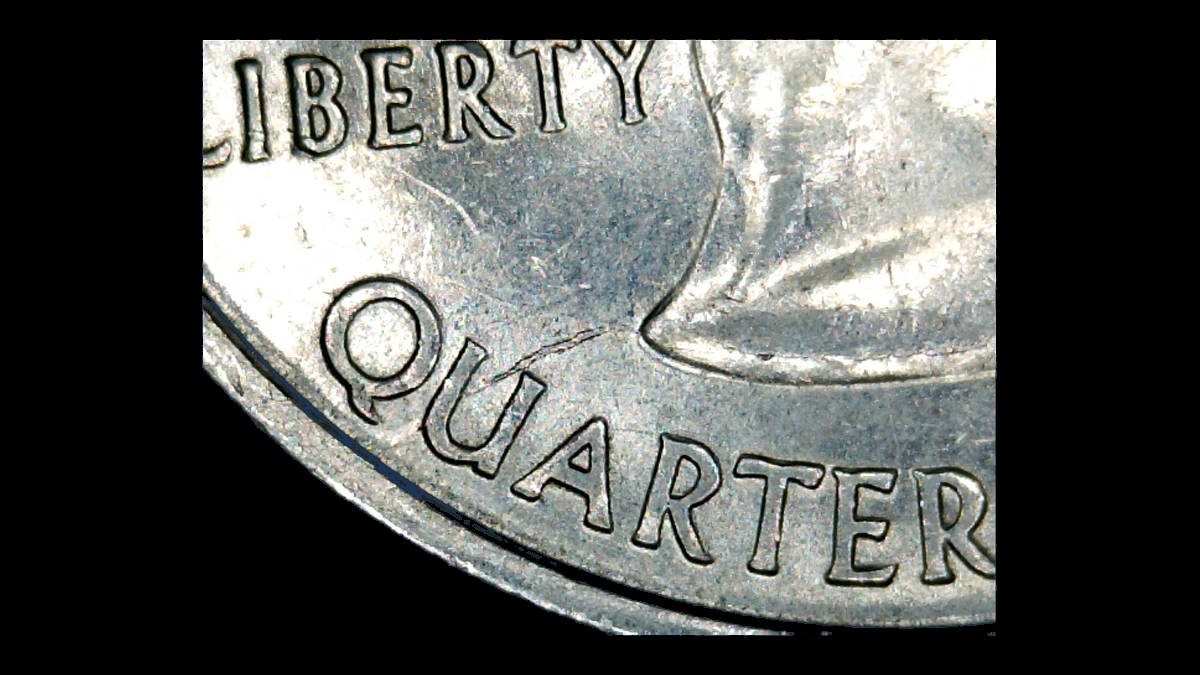
A large front break is reported on a Philadelphia Texas quarter, while a rim-connected Texas cud remains a separate candidate. A cud requires the raised patch to reach the rim.
Proof crack reports include silver Wisconsin and Michigan, clad Florida, and both silver and clad Iowa quarters. Their patterns are different and should not be grouped under one shared “spiked head” diagnostic.
How to Identify
Confirm raised metal with side lighting and inspect the full route of the feature. For silver Wisconsin Proofs, the reported front location is near four o’clock; the Michigan silver report describes a line from Washington’s head toward E in STATES.
Iowa reverse reports involve the teacher’s head and nearby tree, children, or rim. A separate clad Iowa front crack runs from the portrait base toward D in DOLLAR and the edge.
The clad Florida Proof report places its front line from the portrait base toward the left side of that D and the rim. For Texas, verify the edge connection before changing a large-break description into a cud attribution.
What It’s Worth
Small cracks have estimated values of $2–$50 on ordinary coins and $15–$100 on affected Proofs. These are whole-coin comparisons that include the collector issue’s ordinary value.
A substantial Texas break may fall around $50–$300. A large confirmed rim-connected cud has a separate estimated range of $100–$500.
10. 2004 Quarter Florida Missing Outer Layers Error
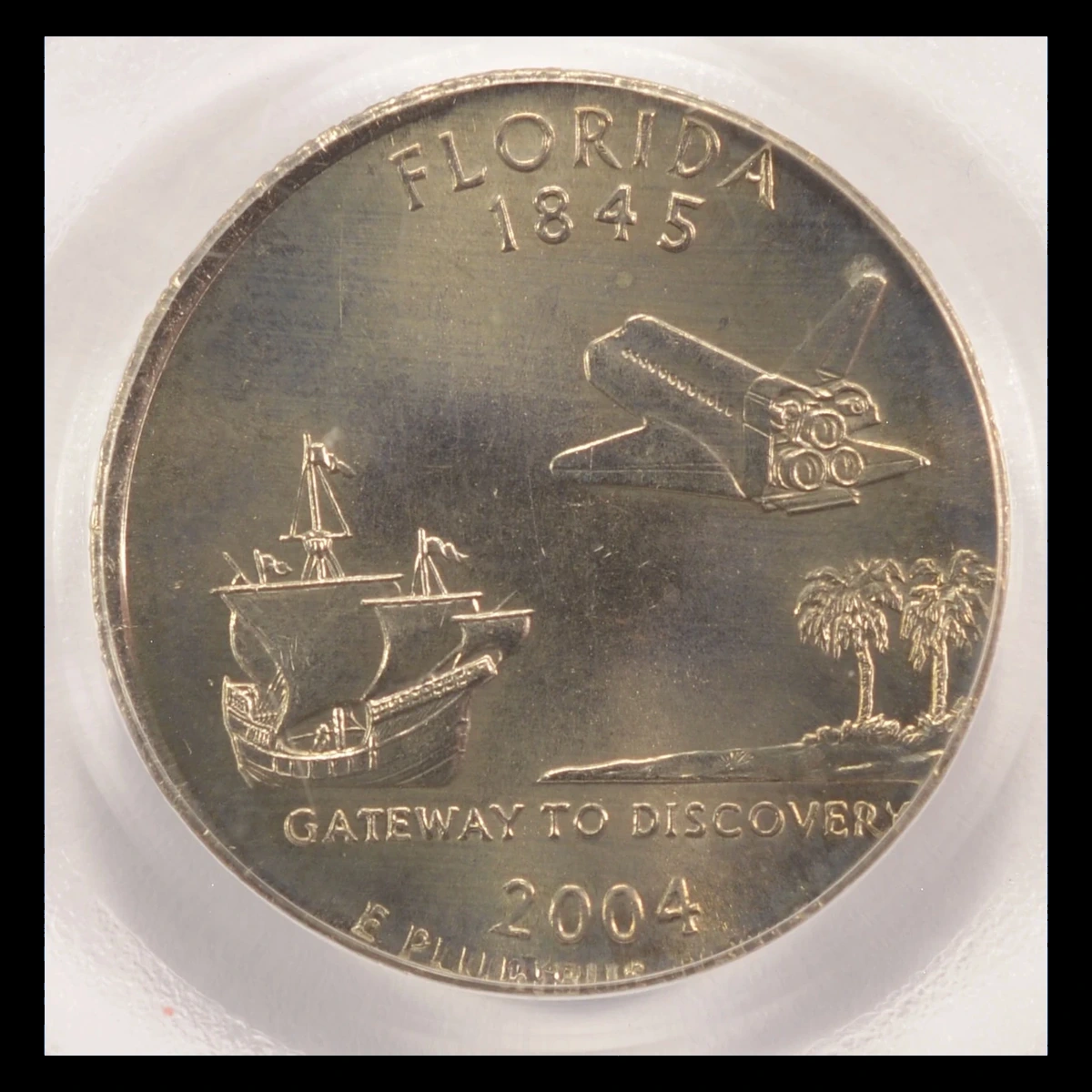
The Denver Florida report concerns partial outer-layer loss on both faces. Original quarter design can form on exposed copper when a pale outer sheet is missing before striking.
The two faces need not lose equal amounts. Brown staining or removal after minting can resemble the color change without reproducing the same original surface.
How to Identify
Follow each patch boundary and inspect the exposed design for scraping, corrosion, or plating. A real change in layers should be distinguished from a stain on a continuous surface.
There is no single reduced weight that every partial-loss coin must match. A 2004 silver Proof normally weighs 6.25 grams and is not the correct standard for an ordinary clad candidate.
What It’s Worth
Genuine partial layer loss has an estimated range of $75–$700. Two affected faces still form one coin rather than two separate price additions.
A different 2008-D New Mexico quarter missing its entire front layer, graded PCGS MS64, sold for $376 in January 2015. Its complete loss differs from the reported Florida patches.
11. 2004 Quarter Iowa Double Strike Error
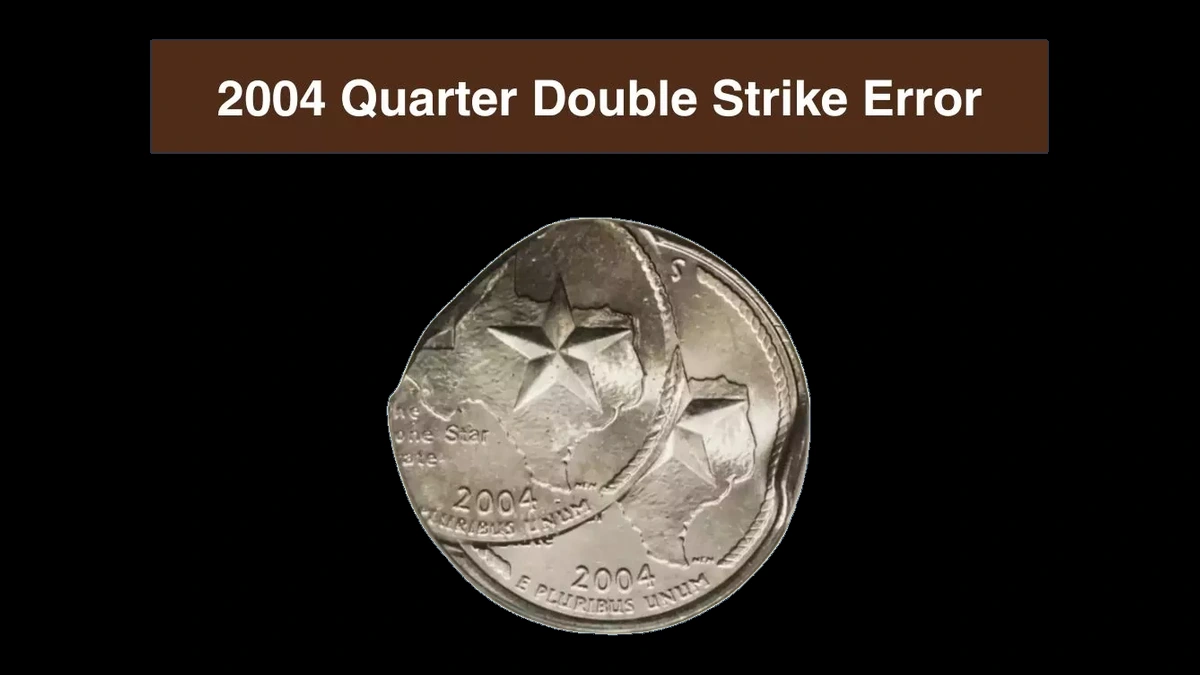
A Denver Iowa example is reported with a double-struck front and an MS65 grade. Its original auction has not been matched, so the exact overlap must come from the coin itself.
A second blow after movement can shift several design elements together and flatten portions of the first impression. That differs from small repeated details already present in a doubled die.
How to Identify
Trace two positions of Washington or surrounding letters as connected images. Unrelated thick letters or one narrow shelf do not establish another strike.
Examine the reverse and edge for evidence of finished coins squeezed together later. The two mint strikes need not leave equally sharp impressions on both faces.
What It’s Worth
Genuine Iowa double strikes have an estimated range of $150–$1,200. Readable identity and an understandable overlap affect the comparison alongside grade.
The MS65 description indicates an unworn coin with relatively few marks. It is not a confirmed auction result or a precise account of the second strike’s position.
12. 2004 Quarter Off-Center Strikes Error
The cataloged Philadelphia Florida coin combines a seventy-percent off-center strike with feeder contact and a buckled blank. Its remaining design and large unstruck area must be interpreted together.
A general Texas report also includes off-center strikes without establishing a particular specimen. The Florida combination cannot supply missing details for that candidate.
How to Identify
Find the surviving state name, issue date, and mintmark where visible, then compare both faces. The seventy-percent figure describes displacement, not rotation or an amount of metal removed.
Use a side view to document the Florida coin’s bend without flattening it. Bending by itself cannot prove either original feeder contact or an off-center strike.
What It’s Worth
Small genuine off-center strikes have estimated values of $40–$200. Dramatic Florida examples with readable identity have a comparison range of $500–$1,500.
A historical Fred Weinberg list asked $1,300 for the PCGS MS62 Florida combination. That was one asking price for the full coin, not an auction result or three separate error values.
13. 2004 Quarter Wrong Blank or Wrong Metal Error
Philadelphia Florida quarters are cataloged on nickel blanks. The smaller disc can interrupt outer quarter lettering even when the design is centered.
Michigan, Iowa, Texas, and Wisconsin also have off-metal reports, but their blank types are not established. Florida’s identified nickel blank should not be assigned to all of them.
How to Identify
A nickel blank normally starts at 5 grams and 21.21 millimeters, with seventy-five percent copper and twenty-five percent nickel throughout. It lacks the layered copper-centered construction of an ordinary quarter.
Assess metal and actual weight alongside the remaining design, allowing for expansion during striking. Plating or chemical color changes cannot establish an original wrong blank.
What It’s Worth
Genuine Florida nickel-blank quarters have an estimated range of $1,000–$3,500. Historical dealer prices of $2,000–$2,750 for PCGS MS65 through MS67 examples were asking prices rather than confirmed sales.
The other reported states have a conditional comparison range of $500–$3,500 until their actual blanks are identified. An unexplained color or size difference is insufficient.
14. 2004 Quarter Wisconsin Extra Leaf Low and High Error
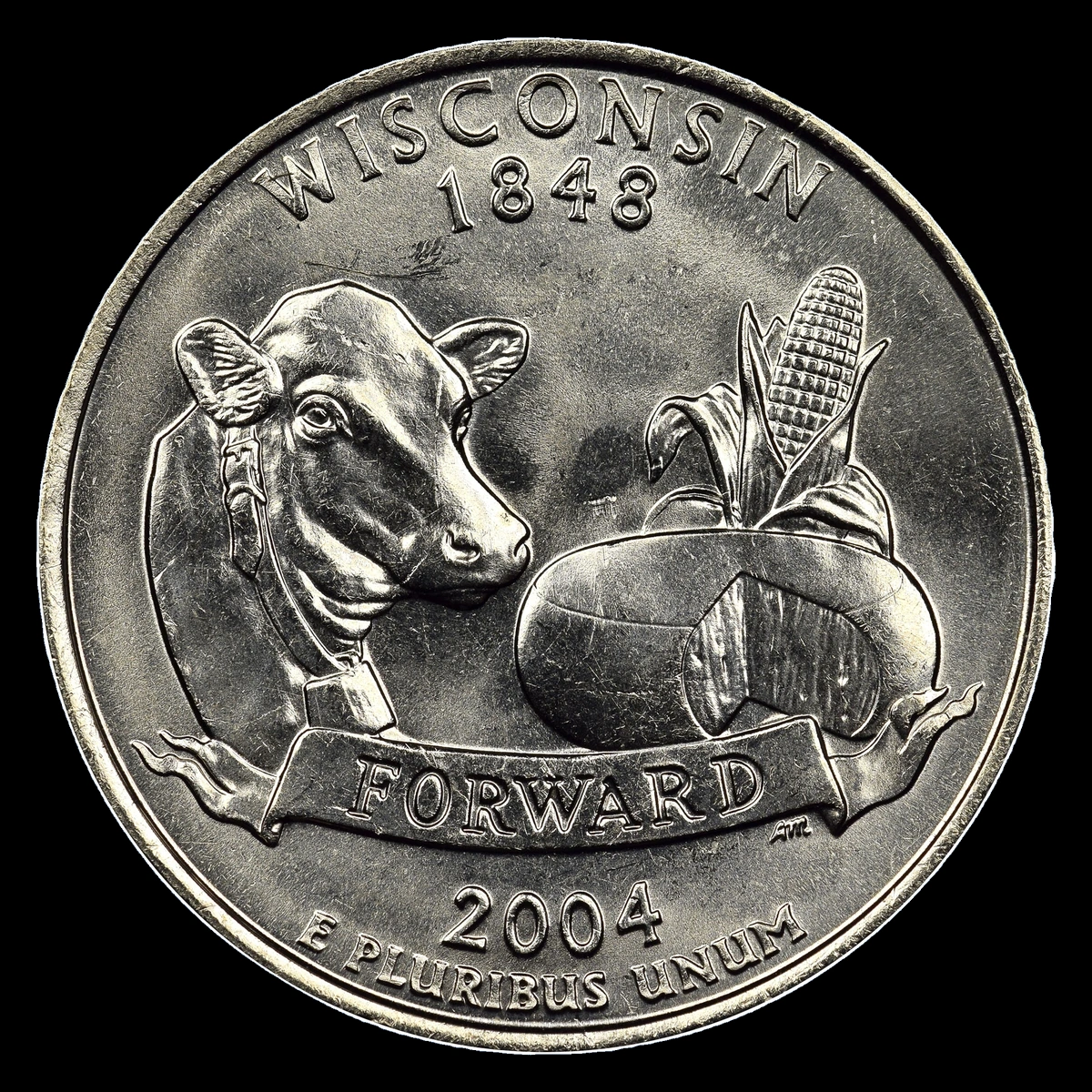
Denver Wisconsin quarters have two recognized extra-leaf forms beside the corn. Low Leaf arches close above the cheese wheel, while High Leaf rises farther upward along the corn’s left side.
The names describe their positions, not their condition grades. Their origin in altered dies remains debated, but identifying the forms does not require deciding whether the marks were intentional.
How to Identify
Compare the complete added curve with an ordinary Wisconsin reverse and confirm D on Washington’s side. The two varieties do not require two extra leaves to appear on a single coin.
The line should rise smoothly from the surface and follow the known Low or High shape. A sunken cut or metal pushed up beside a scratch is a different feature.
What It’s Worth
Ordinary collectible examples have estimated values of $50–$500. Exceptional certified pieces have a wider comparison range of $500–$6,000.
PCGS records an MS67 Extra Leaf Low at $6,000 in January 2020. An MS67 High Leaf brought $2,280 in January 2019.
Those are top-condition results. They do not establish the price of a worn pocket-change example merely because its leaf matches.
Conclusion
The five 2004 state designs provide different clues, from Florida’s rounded ear feature to Wisconsin’s added leaf curves. Keep each diagnostic attached to its own state, mint, and finish.
For larger errors, document the metal, edge, and full designs together. A clipped gap, a split blank, exposed copper, and an unstruck crescent reflect different events, so their price comparisons should remain distinct even when several features occur on one coin.