Rare 1980 Quarter Errors (List & Pictures)
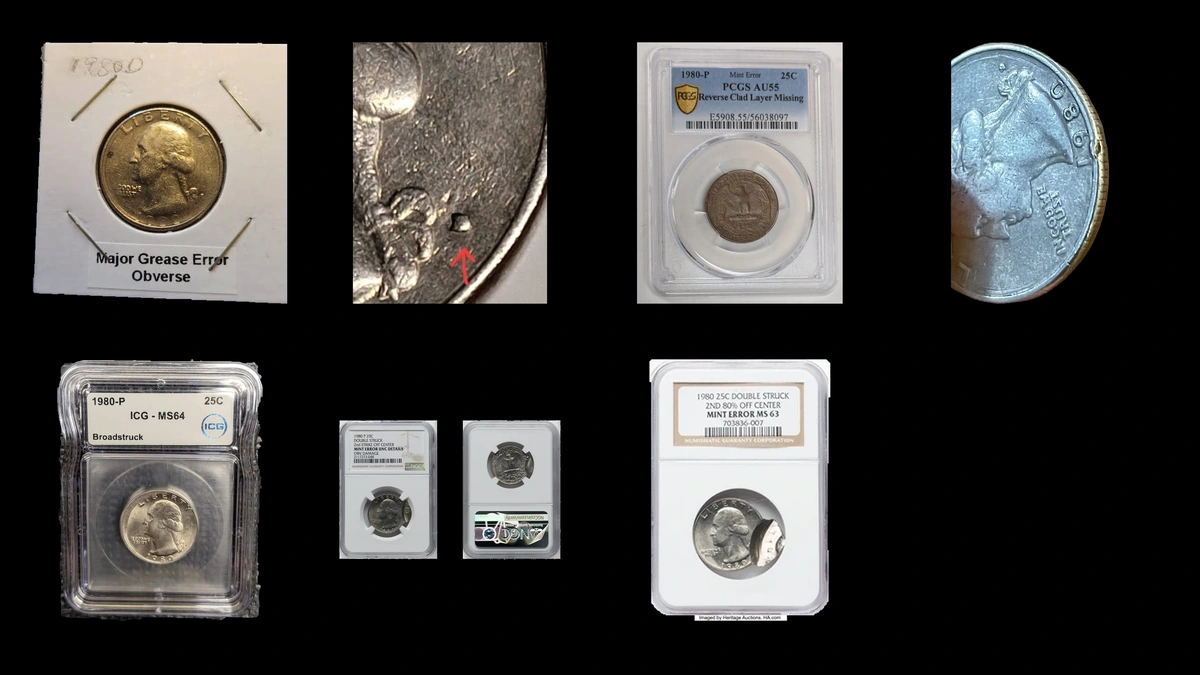
A clipped corner, shifted design, and exposed copper face require different explanations. The supplied estimates for 1980 quarter errors range from $5 to $700.
A Philadelphia corner-clip quarter graded NGC MS65 sold for $204 in June 2023. Begin with the letters and surface features, then use both faces and the edge to distinguish changes to the blank from changes during striking.
| Clue | Possible error | Estimated value |
|---|---|---|
| Local detail fades | Grease obstruction | $10–$100 |
| Extra D outline | Reported repunched mint mark | $20–$150 |
| Repeated main-design details | Doubled die | $20–$200 |
| Raised ridge or rim lump | Die crack or cud | $5–$250 |
| Outer metal is absent | Missing clad layer | $50–$350 |
| Missing segment or segments | Clipped blank | $20–$300 |
| Stepped edge | Partial collar | $15–$150 |
| Full design within spread metal | Broadstrike | $20–$150 |
| Unstruck crescent and missing design | Off-center strike | $25–$350 |
| Separate second impression | Double strike | $100–$700 |
| Quarter design on nickel metal | Wrong planchet | $150–$700 |
1. 1980 Quarter A Letter Fades beside Clear Detail: Grease-Blocked Design Error
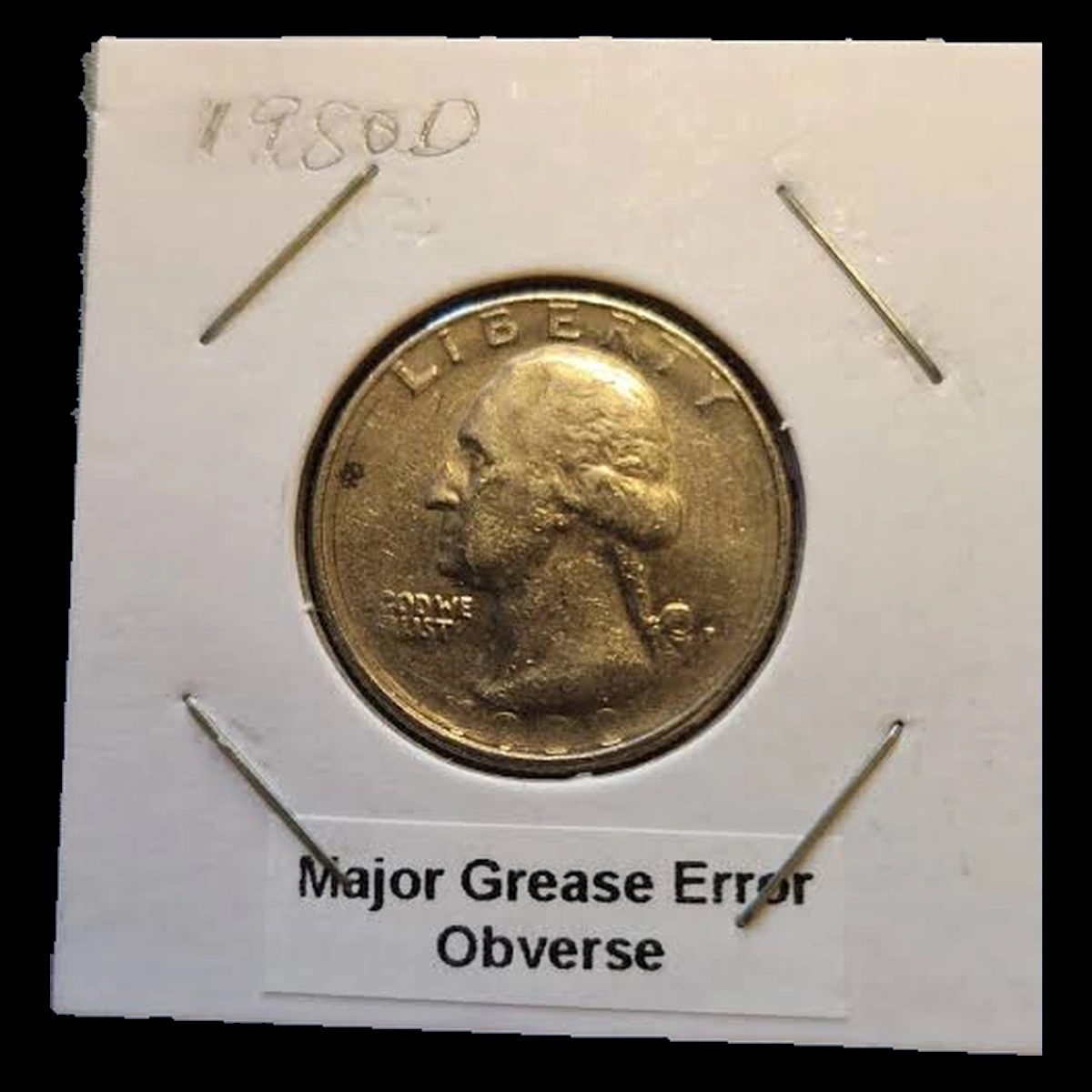
A Philadelphia quarter graded ANACS MS60 was described as struck through grease. The supplied record does not establish which particular detail was blocked.
Grease in a die recess can prevent the corresponding raised feature from forming. A faint P or date on another coin still requires its own examination.
How to Identify
Philadelphia began placing P on regular quarters in 1980, so an absent mark needs an explanation. Compare the surrounding field and nearby detail for wear or evidence that a finished letter was scraped away.
A sharply defined transition from strong to weak detail can support localized blockage. Broadly flattened hair, cheek, and letters may instead reflect circulation wear.
What It’s Worth
$10–$100 is the supplied estimate for a recognizable grease-blocked design. The MS60 grade allows many marks despite no circulation wear.
The surrounding surface should preserve the evidence of interrupted formation. A faint isolated feature with no clear origin is a weaker comparison.
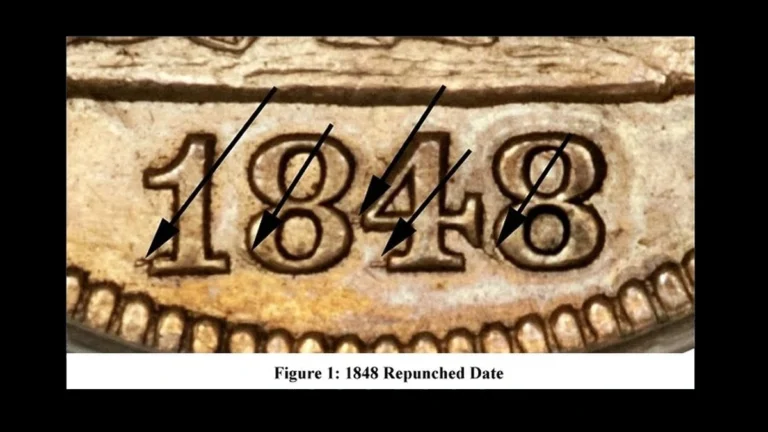
2. 1980 Quarter Another Letter Shape Appears at D: Reported Repunched Mint Mark Error
Year guides report repeated-D outlines in different directions on 1980 Denver quarters. These claims do not establish two separately authenticated varieties in the supplied material.
A true RPM results from another mint-letter punch impression in the die. Thickness or a random bump beside the D is not sufficient.
How to Identify
Keep the D upright to the right of Washington’s hair ribbon and trace its main upright and curve. Extra raised remnants should fit another D in a consistent position.
Change the light to exclude shadows and flat strike-doubling shelves. Match a clearly identified same-year quarter before attaching a variety name or direction.
What It’s Worth
$20–$150 is the estimate for a confirmed repunched D. Strong separation on original surfaces can draw more interest than faint traces.
Listing several apparent directions does not create additional value. The connected letter-shaped evidence must support the attribution.
3. 1980 Quarter Country-Name Letters Have Extra Edges: Doubled Die Error
Denver DDR-001 shows slight reverse separation in UNITED STATES OF AMERICA, with weaker repetition in E PLURIBUS UNUM. The repeated detail was already present in the die.
A separate Philadelphia obverse report concerns the date and motto and still needs a matching confirmed example. The Denver reverse cannot identify that front-side claim.
How to Identify
Compare the stronger reverse lettering with the Denver DDR-001 photographs before looking for the weaker inner motto. Several matched letters are more useful than one bright edge.
For Philadelphia, examine the date and IN GOD WE TRUST on the obverse. DOLLAR is on the reverse and cannot establish front doubling.
What It’s Worth
$20–$150 is the estimate for the subtle Denver reverse variety, while $20–$200 is conditional on confirmation of the Philadelphia front pattern. Wear can hide the weaker details.
Flat shelves from strike movement do not receive the same attribution. An unverified number in a listing cannot replace a matching pattern.
4. 1980 Quarter A Ridge or Rim-Connected Mound Replaces Detail: Die Crack or Cud Error
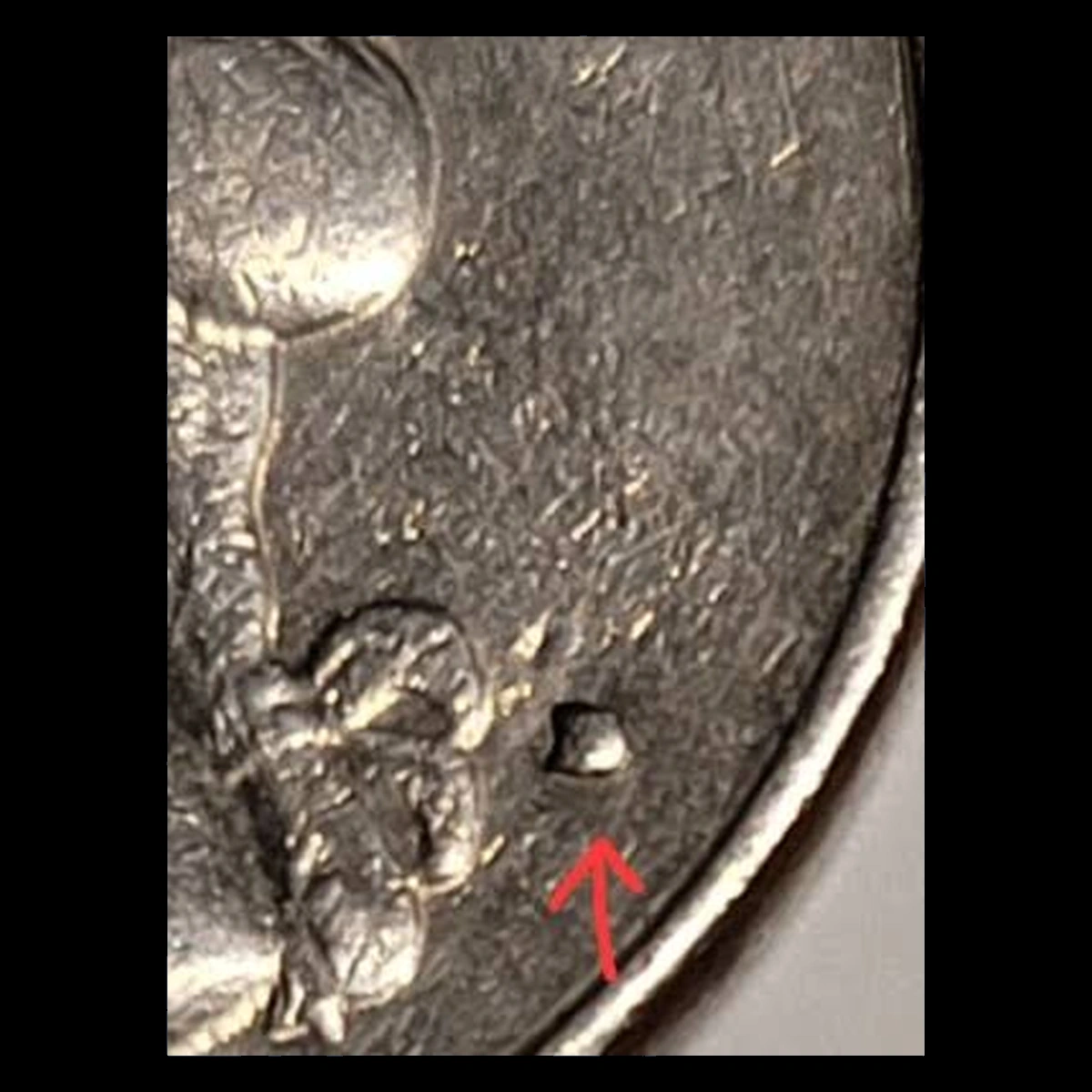
Philadelphia and Denver cracked or broken dies are reported for 1980. Thin die fractures leave raised lines, while a larger edge break can create a rim-connected cud.
How to Identify
For a cud, trace the mound into the outer rim and inspect nearby letters for damage from a later blow. For a narrow line, use side light to distinguish a raised ridge from a scratch channel.
Read all four date digits on the same coin. A partly dated example assigned only to 1980–1998 cannot establish a 1980 specimen.
What It’s Worth
$5–$40 is the estimate for small clear cracks, and $40–$250 for substantial identified rim breaks. The original shape and readability matter alongside size.
Metal squeezed inward by an impact can resemble a mound. It needs to be separated from the mint-made break before applying this range.
5. 1980 Quarter Copper Shows Where a Layer Is Absent: Missing Cladding Error
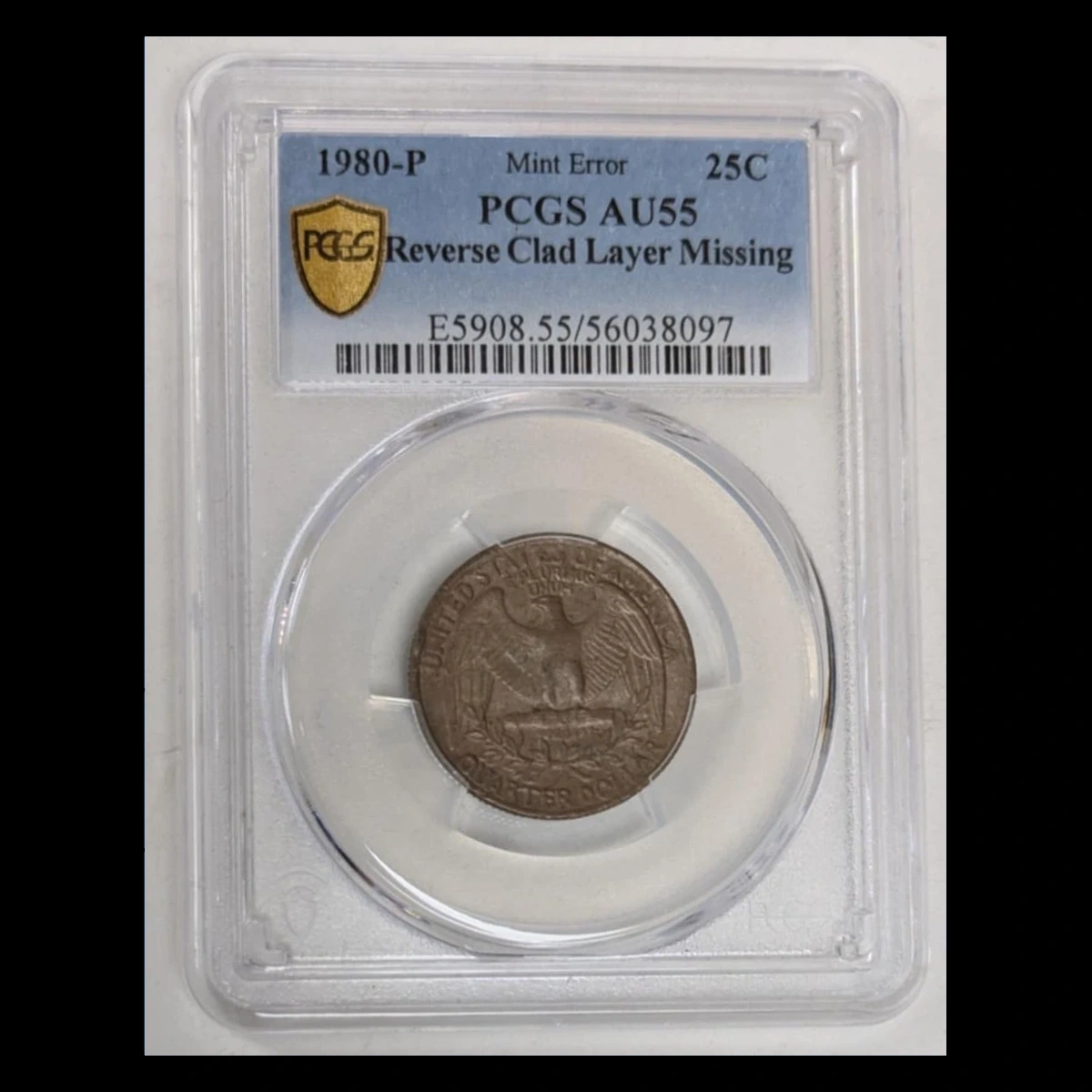
Two Philadelphia missing-reverse-layer examples, graded NGC MS62 and MS65, each weigh 4.7 grams. A separate NGC MS64 obverse-layer-loss coin also has a recorded weight of 4.7 grams.
Another Philadelphia report concerns partial loss with no established face or measurement. It should not inherit the full-face specimens’ details.
How to Identify
Compare the exposed surface and edge layers with the normal 5.67-gram clad construction. Staining can change color without removing metal, while grinding can remove metal and damage finished detail.
For partial loss, follow the boundary without lifting remaining material. Even 1980-S Proof quarters are clad, so actual layer structure remains the relevant test.
What It’s Worth
$50–$350 is the estimate for identifiable partial and full-face layer loss. The NGC MS64 missing-obverse coin sold for $104 in January 2010.
The MS62 missing-reverse record lists $56 in January 2015 but notes an owner repurchase. That must remain distinct from an ordinary sale to another collector.
6. 1980 Quarter One or Two Segments Are Missing: Clipped Blank Error
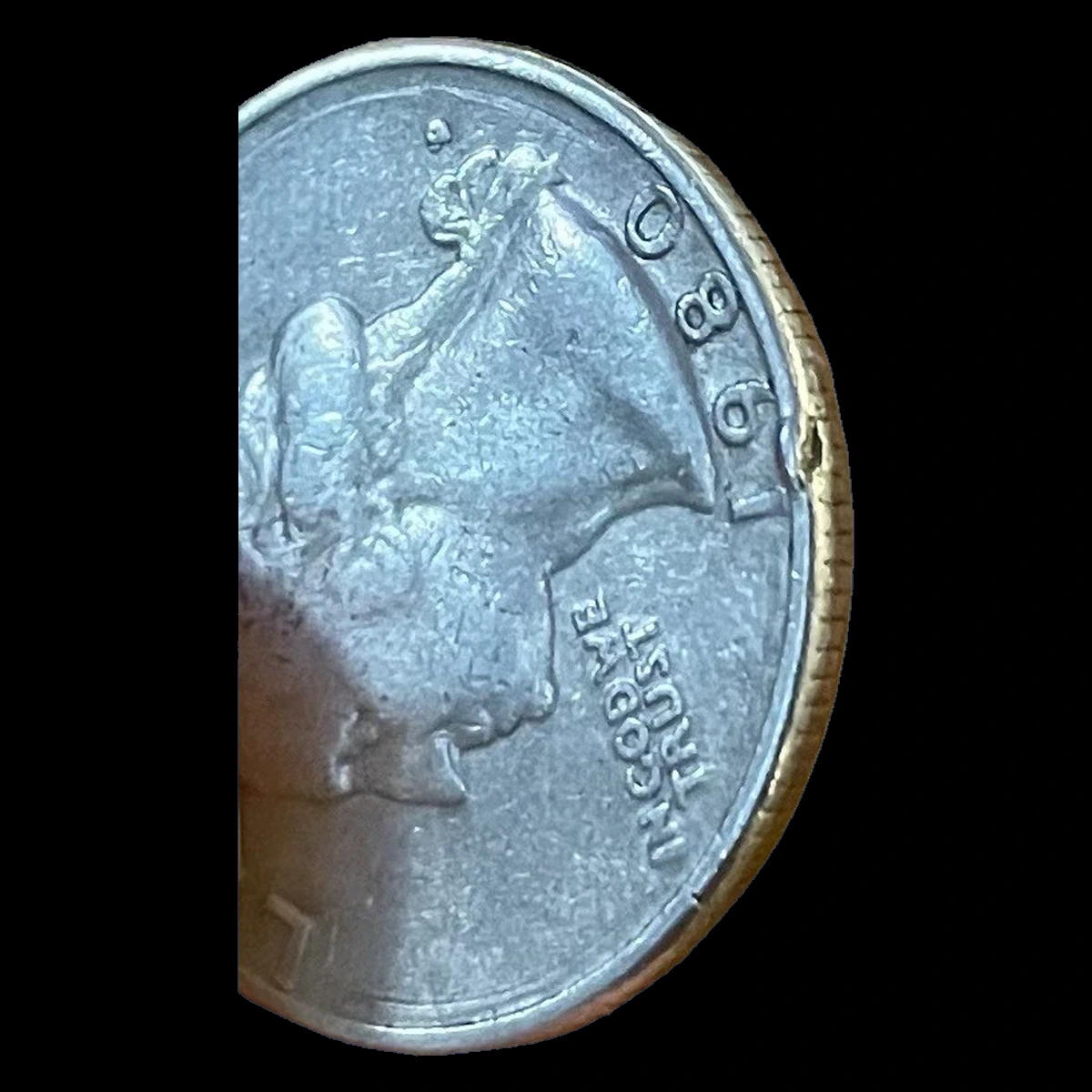
The documented Philadelphia corner clip is graded NGC MS65. A separate Philadelphia double-clip report concerns a coin found in a 1980 mint set, with collector agreement rather than professional authentication supplied.
How to Identify
Examine each gap and its rim junctions independently, leaving a mint-set coin in its packaging. A weak opposite rim can support a clip but is not equally visible on every example.
On the corner clip, compare the angled missing boundary with nearby struck letters. Saw marks, fresh shearing, or bent completed detail can indicate later cutting.
What It’s Worth
$20–$300 is the estimate across genuine single and multiple clips. The NGC MS65 corner-clip quarter sold for $204 in June 2023.
Mint-set origin is useful background without replacing edge authentication. Several small gaps do not automatically outweigh one clear original clip.
7. 1980 Quarter A Step Changes Height around the Edge: Partial Collar Error
A Philadelphia ANACS MS63 coin is described as a tilted partial collar. Only part of the tilted blank was restrained, producing a step whose height varies around the edge.
A separate Philadelphia ICG MS63 example is labeled partial collar without a stated tilt. Its grade does not establish the same edge arrangement.
How to Identify
Use side views to follow the transition from the grooved restrained band to smoother expanded metal. A tilted example should show the boundary changing height.
The ordinary copper-colored stripe is a material boundary, not evidence of a step. Leave graded coins in their holders and use edge photographs where needed.
What It’s Worth
$15–$150 is the estimate for identifiable partial collars. A prominent undamaged step can be more appealing than a tiny edge ridge.
The ANACS tilted and ICG examples require separate comparisons. Their shared numerical grade does not describe how visible each edge error is.
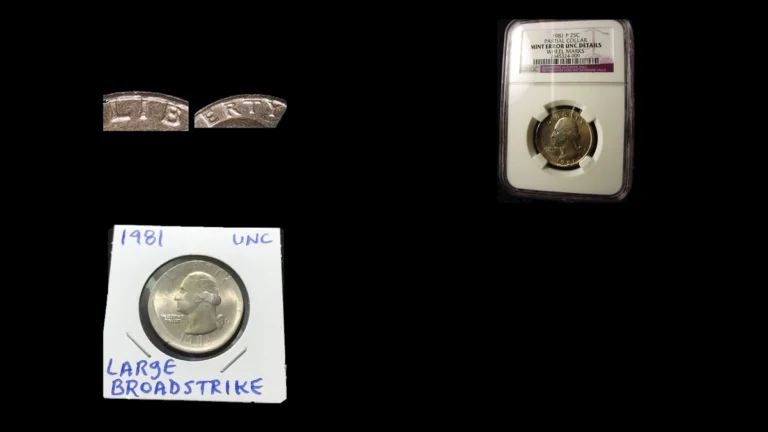
8. 1980 Quarter An Expanded Border Holds the Whole Design: Broadstrike Error
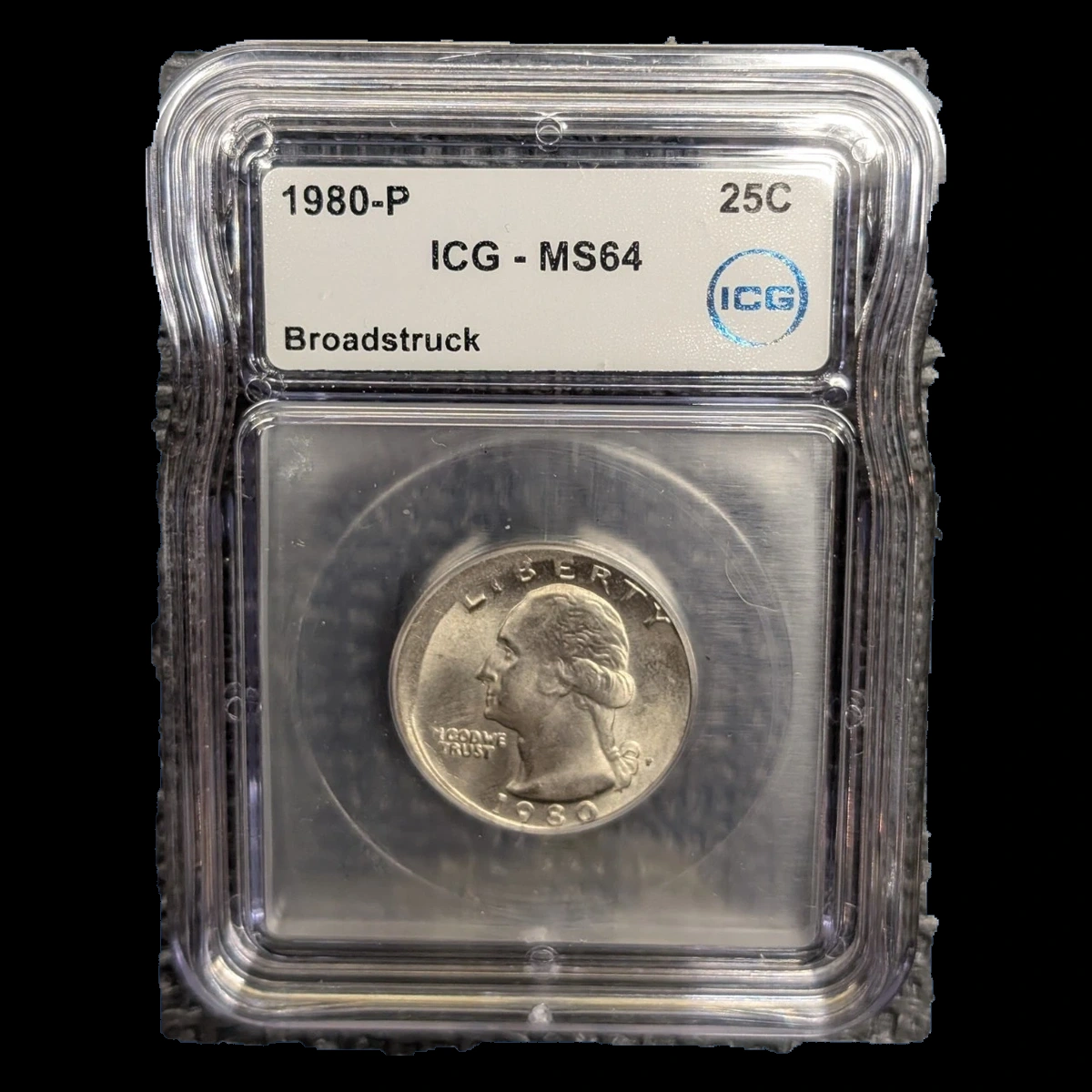
A 1980-P NGC MS65 broadstrike appeared in a lot with separate 1986-D and 1996-P broadstrikes. Denver examples are also reported for 1980.
In a broadstrike, insufficient collar restraint lets the metal spread while retaining the intended design. The border may be uneven without making the strike off center.
How to Identify
Compare the outline with the normal 24.3-millimeter diameter and trace all outer letters on both faces. Missing design beyond one edge calls for an off-center comparison.
Inspect the edge and portrait for grinding or hammering that enlarged a finished coin. Width alone does not establish the original striking event.
What It’s Worth
$20–$150 is the individual broadstrike estimate. The three-coin lot containing the 1980-P MS65 piece sold for $74 total in November 2015.
That total bought all three dates. It is neither an individual 1980 price nor a sum to divide equally without separate sale evidence.
9. 1980 Quarter The Design Falls beyond One Edge: Off-Center Strike Error
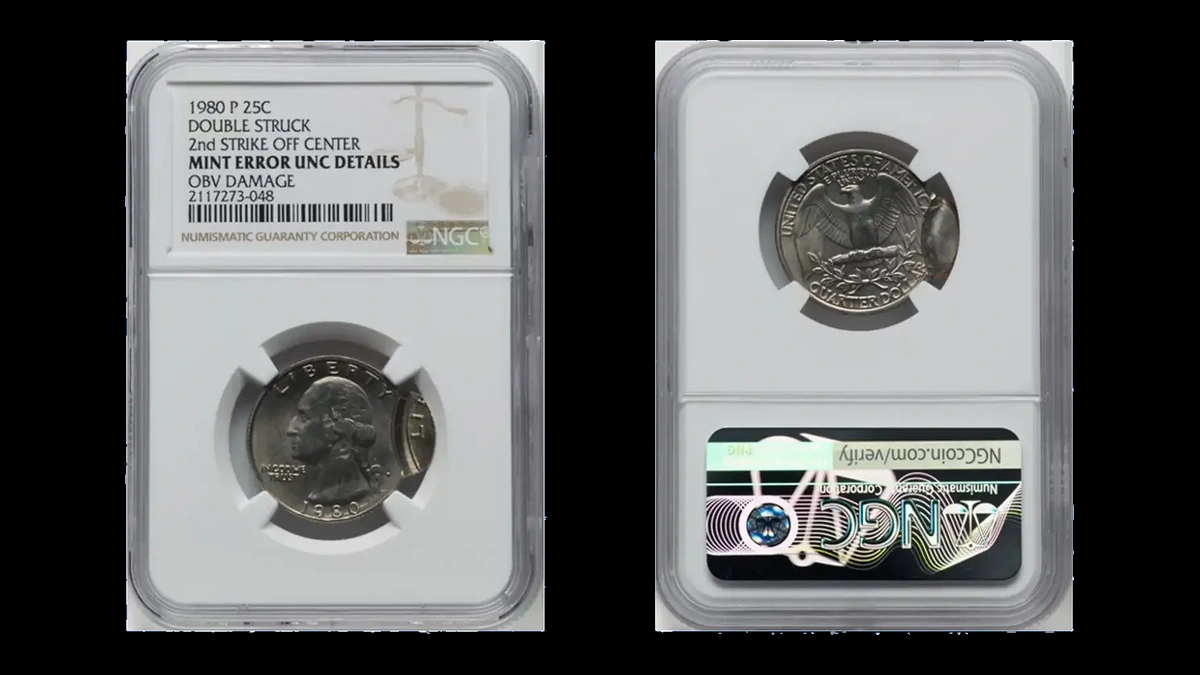
The identified Philadelphia ANACS AU55 example is 10% off center toward ten o’clock. Part of its design missed the blank, leaving an unstruck area opposite the lost artwork.
How to Identify
Orient Washington upright and compare both faces to establish that one misplaced blank explains the missing design. A shifted front with a centered reverse may instead involve die alignment.
Inspect the bare area for scraping or erased details. The 10% and ten-o’clock description belongs to this lightly worn specimen, not all Philadelphia off-center coins.
What It’s Worth
$25–$350 is the estimate for identifiable 1980 off-center quarters. A readable year, surviving mint, and original surfaces help make a comparison useful.
The AU55 report supplies an appearance reference rather than a recorded sale. A larger blank area does not overcome damage or missing identity automatically.
10. 1980 Quarter Another Impression Reaches the Edge: Displaced Double Strike Error
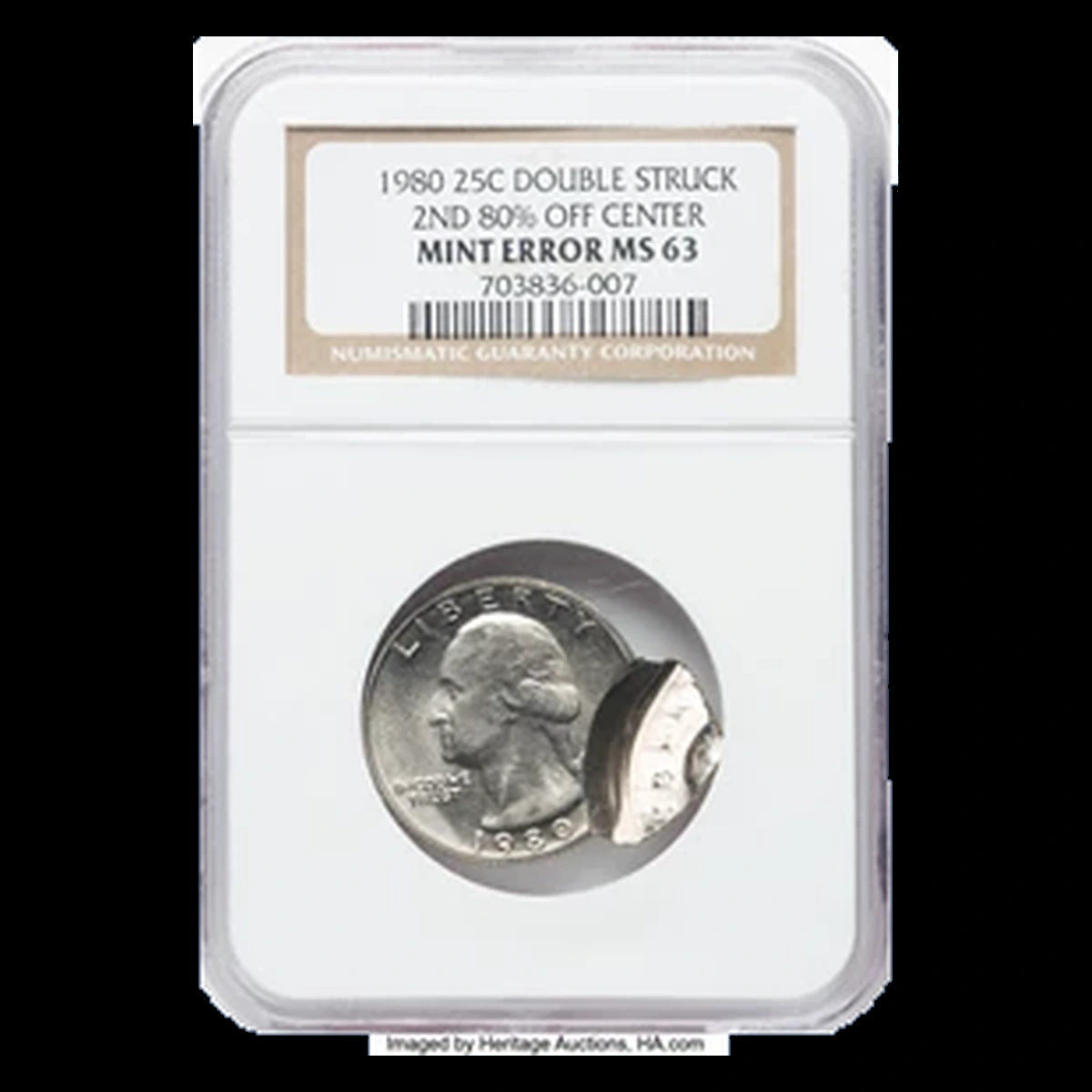
An NGC MS63 specimen has its second strike 80% off center, with its mint not specified. A separate older Philadelphia listing describes a second blow toward seven o’clock.
How to Identify
Trace connected extra letters or portrait fragments into a coherent second design on both faces. Unrelated scratches do not establish another strike.
Keep the Philadelphia direction separate from the unidentified-mint NGC coin. Closely repeated die details differ from an entire design displaced during a later blow.
What It’s Worth
$100–$700 is the working estimate for clearly identified displaced double strikes. Readable fragments and surface condition influence how well the sequence can be demonstrated.
An extreme displacement may preserve little of the later image. A smaller but clearer second strike can provide the stronger display.
11. 1980 Quarter Quarter Letters Run off Solid Nickel-Alloy Metal: Wrong Planchet Error
Philadelphia examples include an ANACS MS66 coin and NGC pieces recorded near 5 grams. A Denver ANACS MS61 specimen is reported separately without an established actual weight.
The quarter design was struck on a five-cent blank, which is solid copper-nickel rather than layered quarter metal. The error is not exclusive to Denver.
How to Identify
Record the surviving quarter design, date, and mint before comparing the small outline with a nickel. A nickel blank starts near 5 grams and 21.21 millimeters, although the quarter strike can spread it.
Inspect the edge for uniform alloy and original formation rather than trimming. A copper center between pale layers points away from an ordinary nickel blank.
What It’s Worth
$150–$700 is the estimate for correctly identified nickel-planchet quarters. A specialist offered the Philadelphia ANACS MS66 example at $325, an asking price rather than a completed sale.
The Denver MS61 report needs its own condition assessment and measurement evidence. It cannot inherit the Philadelphia grade or the weight of a different NGC piece.
Conclusion
The 1980 quarter examples show why an edge view and complete designs matter as much as an enlarged letter. Missing metal, unstruck metal, and expanded metal represent different events even when all produce unusual outlines.
Keep each specimen’s grade, weight, and direction attached to its record. Group totals, owner repurchases, and asking prices also need their original descriptions so they do not become misleading individual sale comparisons.