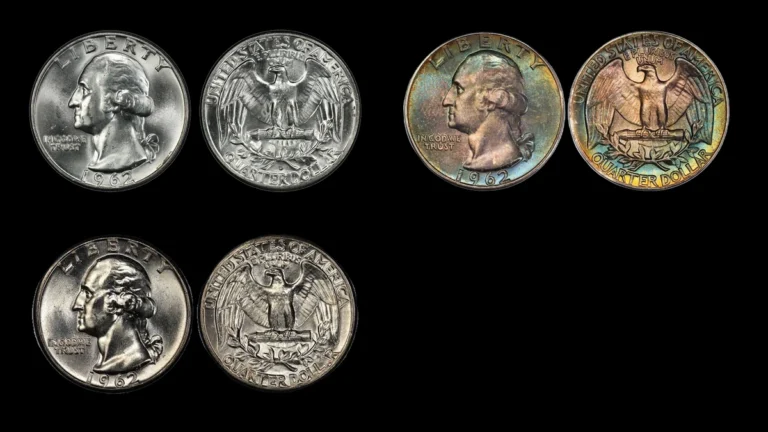
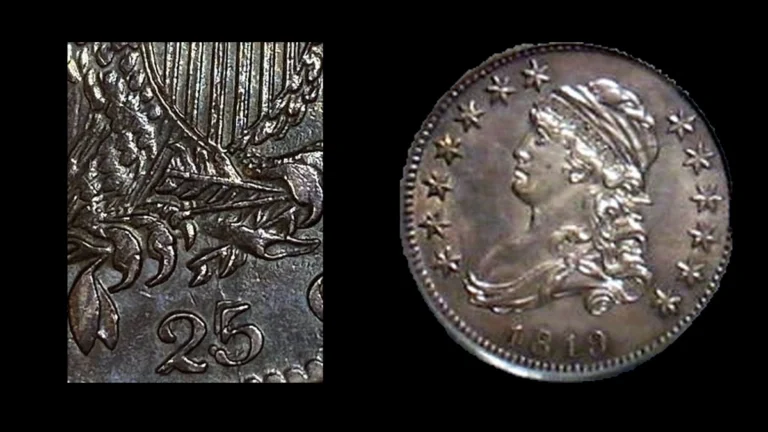
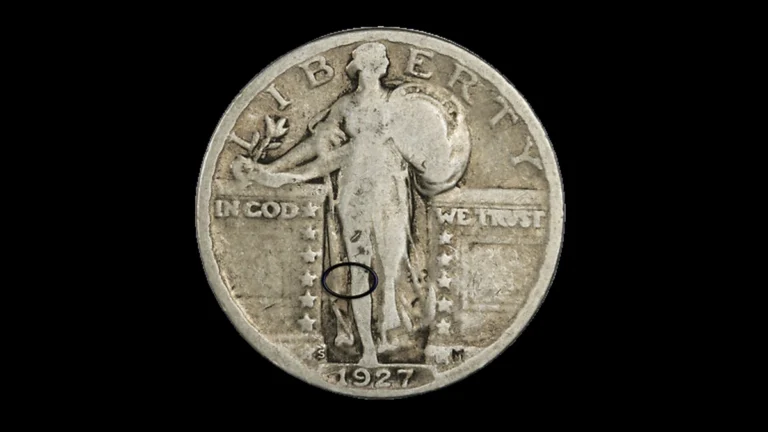
Rare 1939 Quarter Errors (List & Pictures)
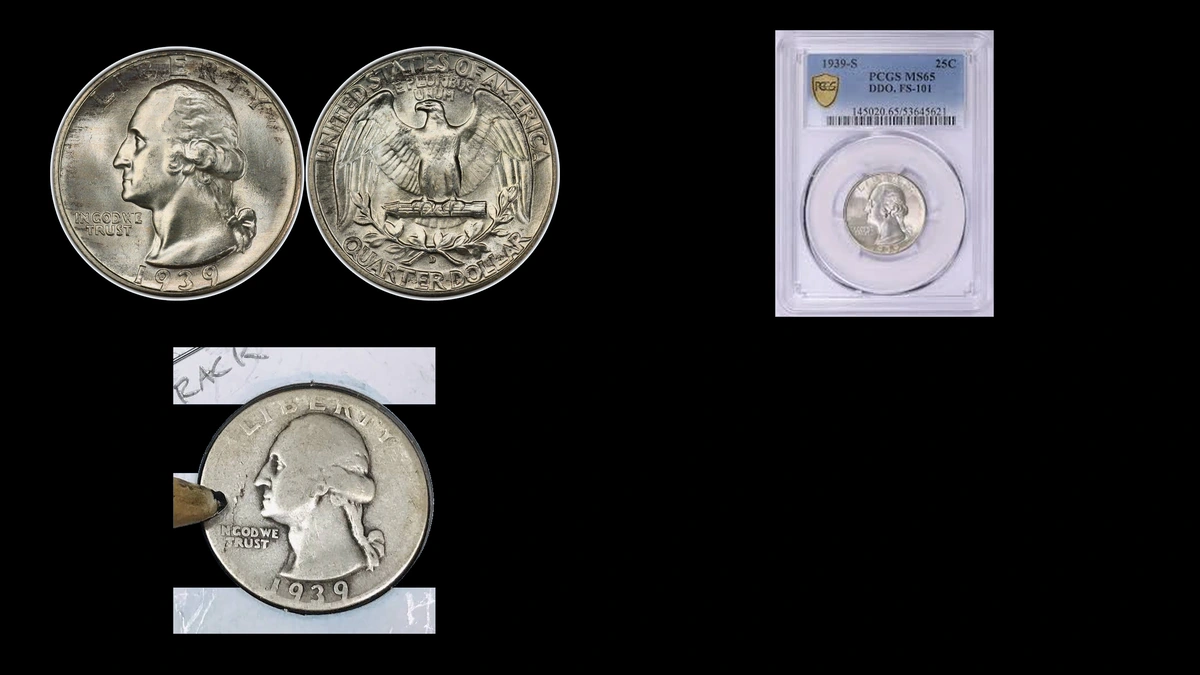
A 1939 quarter struck on a nickel blank brought $4,025 at auction in January 2012. The 1939 quarter errors below span about $10–$6,000, from small die flaws to a coin made from the wrong metal blank.
Begin with the reverse mintmark, examine the lettering and surface, then compare the coin’s size.
| Visible clue | Possible error | Working range |
|---|---|---|
| Filled or weak D | Die chip or obstructed die | $10–$100 |
| Extra mintmark outline | Repunched mintmark | $25–$400 |
| D with an attributed underlying mark | D/S, FS-501 | $50–$1,000 |
| Doubled front letters | Doubled die | $25–$350 |
| Raised thin ridge | Die crack | $10–$200 |
| Flawed coin metal | Defective planchet | $25–$250 |
| Small coin with incomplete outer details | Nickel planchet | $1,500–$6,000 |
1. 1939 Quarter A D with a filled center or weak outline Error
Find the D below the wreath on the reverse before deciding what looks wrong. Reports of a “filled D” can describe different appearances, so that nickname alone does not establish the cause.
A chip in the die can leave an extra raised lump inside the letter. Material lodged in the die can instead prevent part of the letter from forming clearly.
How to Identify
Turn the coin under a light and check whether its unusual area rises above the surface or lacks normal detail. Dirt packed into the D and wear across the entire letter can imitate these effects.
A useful photograph must show the mintmark and nearby undamaged surface together. Do not identify a die chip from a dark center alone.
What It’s Worth
About $10–$100 is a tentative range for a genuine, visible mintmark defect. A small change needs clear evidence before it adds much to the coin’s ordinary value.
No completed sale supplied for this category establishes a price for either specific appearance.
2. 1939 Quarter A second D or S outline: repunched mintmark Error
The mintmark was added to the die separately during this period. A misplaced punch followed by another impression could leave traces of the first D or S on coins struck from that die.
How to Identify
Inspect the edges of the mintmark for a second curved or straight feature that belongs to the same letter. The supplied reports include D/D and S/S examples, without a precise direction or catalog number for each.
A blob beside a letter is not enough to prove repunching. Use an attributed reference with the same mintmark shape and placement.
What It’s Worth
A broad allowance is $25–$400, depending on the variety and the coin’s condition. Faint traces on a worn quarter may carry only a modest premium.
There is no individual auction result in the supplied evidence for these D/D and S/S reports.
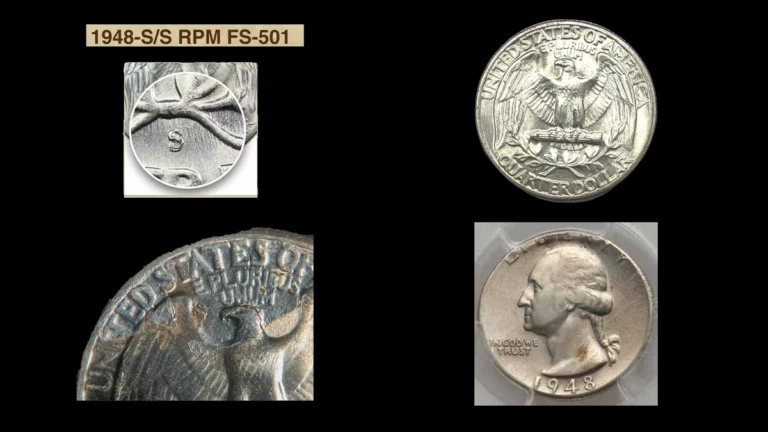
3. 1939 Quarter The cataloged D/S mintmark: FS-501 Error
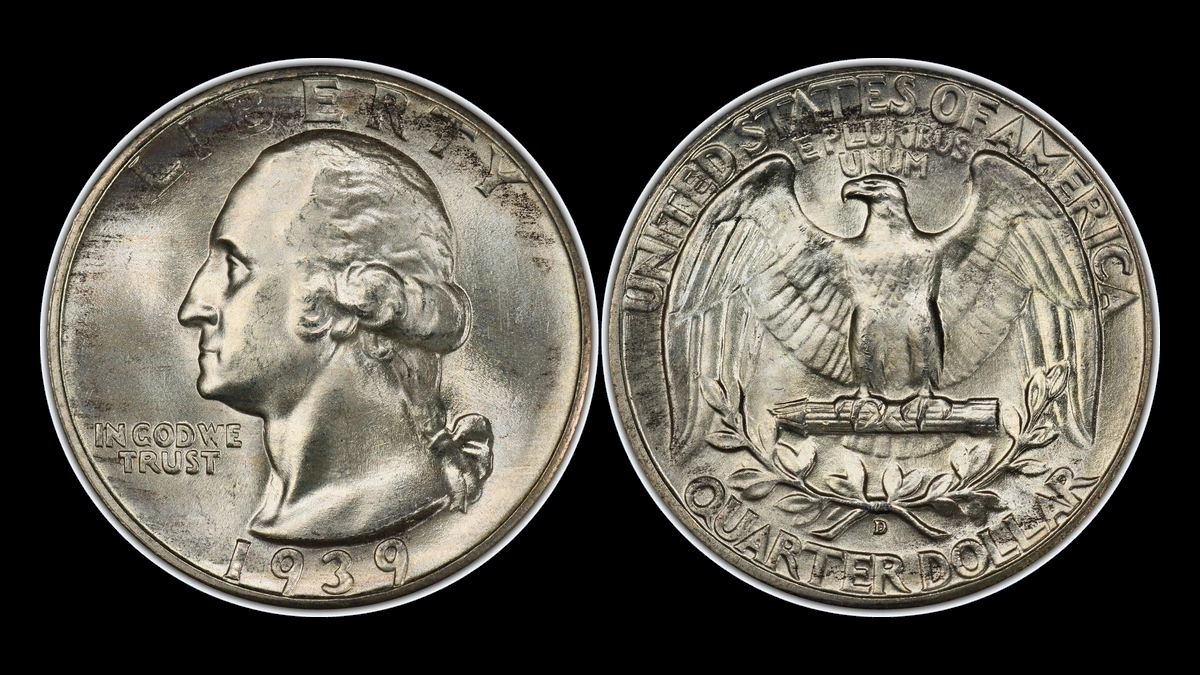
One 1939-D mintmark variety is traditionally described as D over S. Collectors use the catalog designation FS-501 to identify the specific pattern associated with that name.
How to Identify
Compare the complete D and surrounding traces with a verified FS-501 photograph. Do not try to reconstruct an S from a single bump or assume every doubled D is this variety.
The supplied evidence does not provide a reliable directional checklist for the underlying mark. An exact variety match matters more than the nickname.
What It’s Worth
Approximately $50–$1,000 covers a useful range for attributed examples across different grades. The mintmark must remain distinct enough to support the identification.
PCGS records an MS64 example at $870 on eBay in February 2015. That result belongs to the cataloged variety and grade.
4. 1939 Quarter Extra outlines in the front lettering: doubled die Error
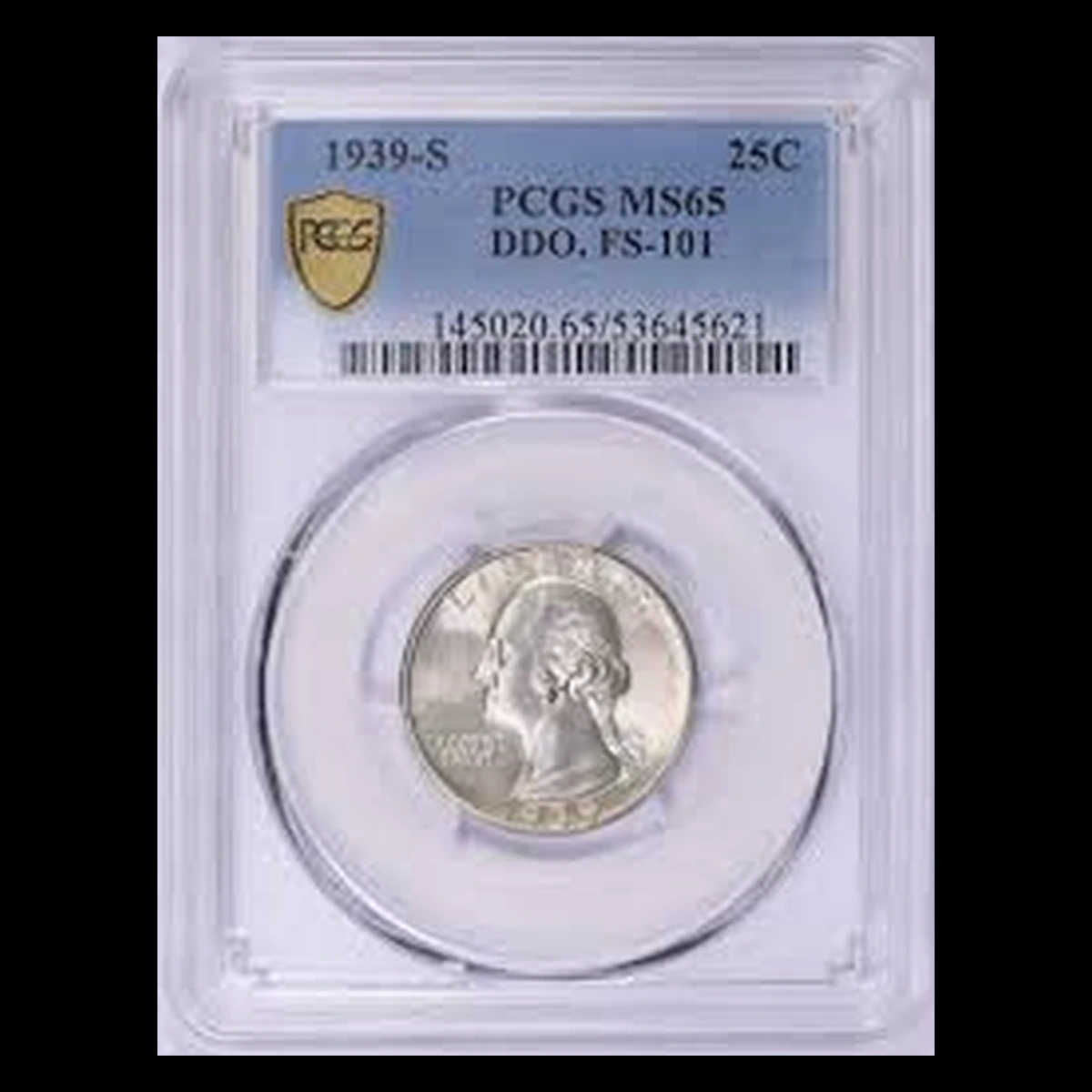
A doubled die carries a repeated version of part of the design before any coin is struck. On a reported Philadelphia 1939 quarter, light doubling appears in IN GOD WE TRUST.
A separate San Francisco report concerns LIBERTY and the date. Those locations should not be combined into one diagnostic pattern.
How to Identify
Examine the named lettering with magnification and compare it with a matching attributed example. Look for repeated design contours, rather than a flat shelf that shaves away part of a letter.
The supplied descriptions do not establish an exact separation direction for either report. Worn, thick letters by themselves cannot settle the attribution.
What It’s Worth
Allow roughly $25–$350 for the reported doubled-die material, with clarity and condition controlling the premium.
A Philadelphia example graded MS65 by ANACS sold for $45 in May 2000. It had light motto doubling, gold toning, and contact marks on Washington’s cheek.
5. 1939 Quarter A raised line across the design: die crack Error
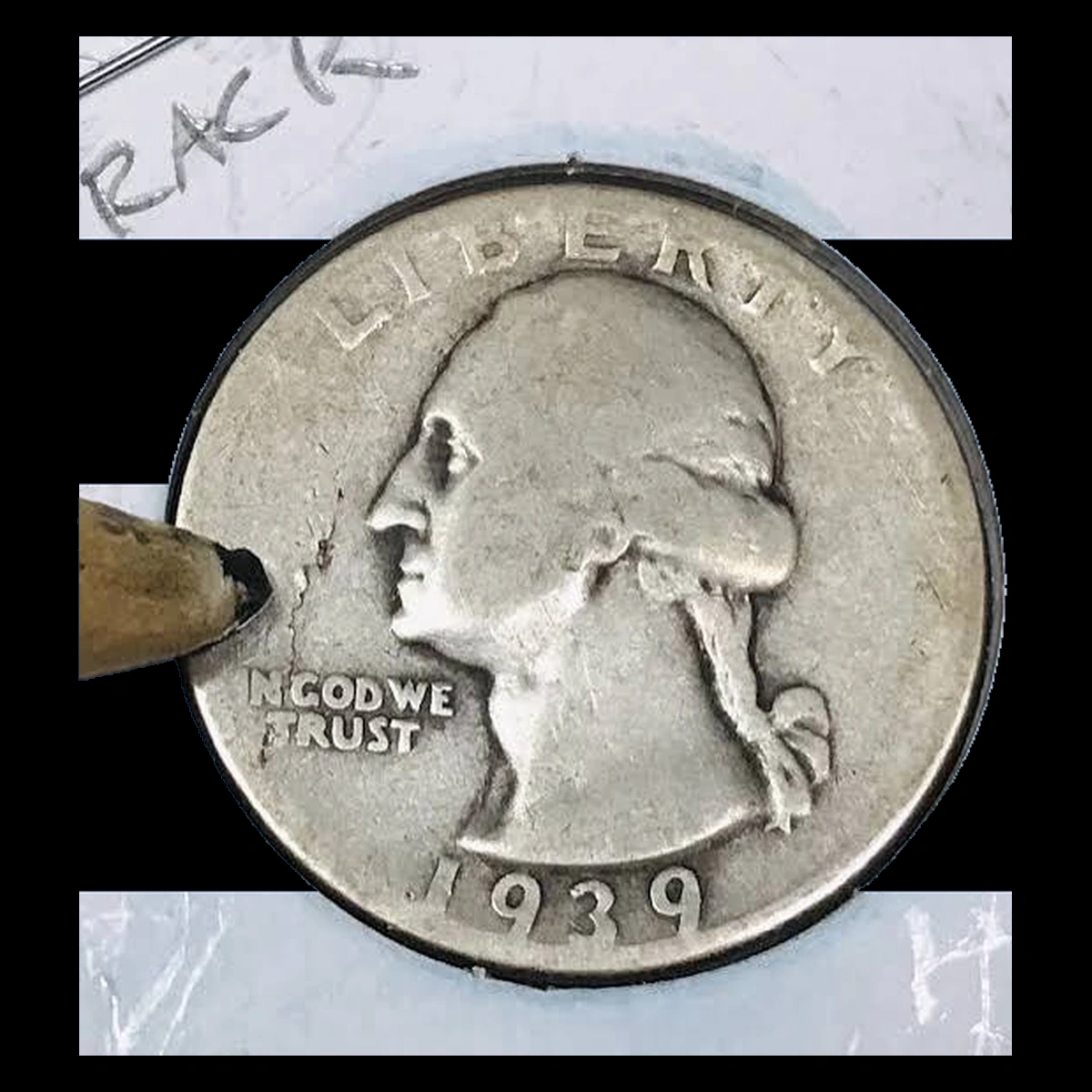
A thin ridge can trace a fracture in the die. During the strike, coin metal enters that opening and forms a raised line on the finished quarter.
How to Identify
Move a light across the line to check its height. A scratch usually cuts into the coin, although displaced metal beside a scratch can create a misleading lip.
Cracks are reported on Philadelphia, Denver, and San Francisco coins, but the packet does not define one shared route. A split in the coin’s own metal belongs to a different category.
What It’s Worth
Small to readily visible cracks commonly fit a $10–$200 working range for this guide. The mint, grade, and strength of the ridge affect the total price.
No specific completed sale was supplied for a 1939 crack pattern.
6. 1939 Quarter A flaw in the coin metal: defective planchet Error
A planchet is the prepared metal blank that receives the design. If that blank contains a flaw, the struck coin can retain a defect unrelated to damage in the die.
The documented 1939 example is described broadly as a defective planchet. Its record does not establish a particular split, peeling layer, or bubble.
How to Identify
Study the boundary between the unusual area and the struck design. Scraping, corrosion, and impact damage after minting can all disrupt a coin’s surface, so an unattributed rough patch needs closer examination.
A normal 1939 silver quarter has a standard weight of 6.25 grams and diameter of 24.3 millimeters. Those are comparison standards, not reported measurements of the defective example.
What It’s Worth
A practical broad range is $25–$250 for a confirmed blank defect. Size, visibility, and the remaining design matter.
An NGC MS66 example sold through Heritage for $65 in July 2021. The modest result shows that even a high numerical grade does not make every blank flaw expensive.
7. 1939 Quarter A smaller copper-nickel coin: struck on a nickel planchet Error
This error began with a five-cent blank entering the quarter press. The smaller blank could not accommodate the quarter design in the same way as a normal silver blank.
On the documented coin, the blank lay against the collar near 9 o’clock. Lettering toward the right was stretched or lost.
How to Identify
A standard nickel blank weighs 5 grams and measures 21.21 millimeters across. Compare those specifications with the normal quarter standards above, while allowing for how striking changes the shape.
The nickel blank is copper-nickel instead of the quarter’s 90% silver composition. Both appearance and measurements matter; strong magnetic attraction would not establish this nickel-planchet error.
This is a wrong-blank strike, so it does not require visible Jefferson nickel lettering underneath Washington’s design.
What It’s Worth
About $1,500–$6,000 is a reasonable guide range for an authenticated 1939 quarter on a nickel planchet. The preserved design and grade can move a coin within that span.
A PCGS MS67 example sold for $4,025 at Heritage on January 7, 2012. It provides a documented result for the wrong-planchet category.
Conclusion
On a 1939 quarter, start by deciding whether the unusual feature belongs to the mintmark, the die design, or the coin’s own metal. Each possibility calls for a different comparison.
Small mintmark changes need exact attribution, while a suspected nickel-planchet strike needs convincing physical evidence. Keep the mint and grade attached to any price comparison, especially when a modest surface flaw is being compared with a major wrong-blank error.