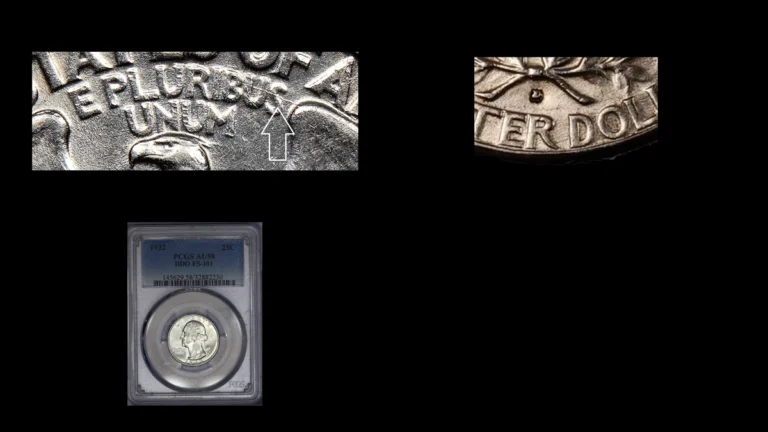
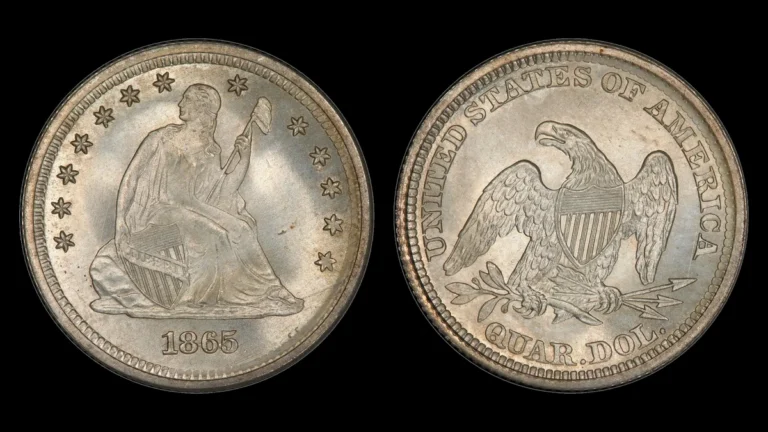
Rare 2013 Quarter Errors (List & Pictures)
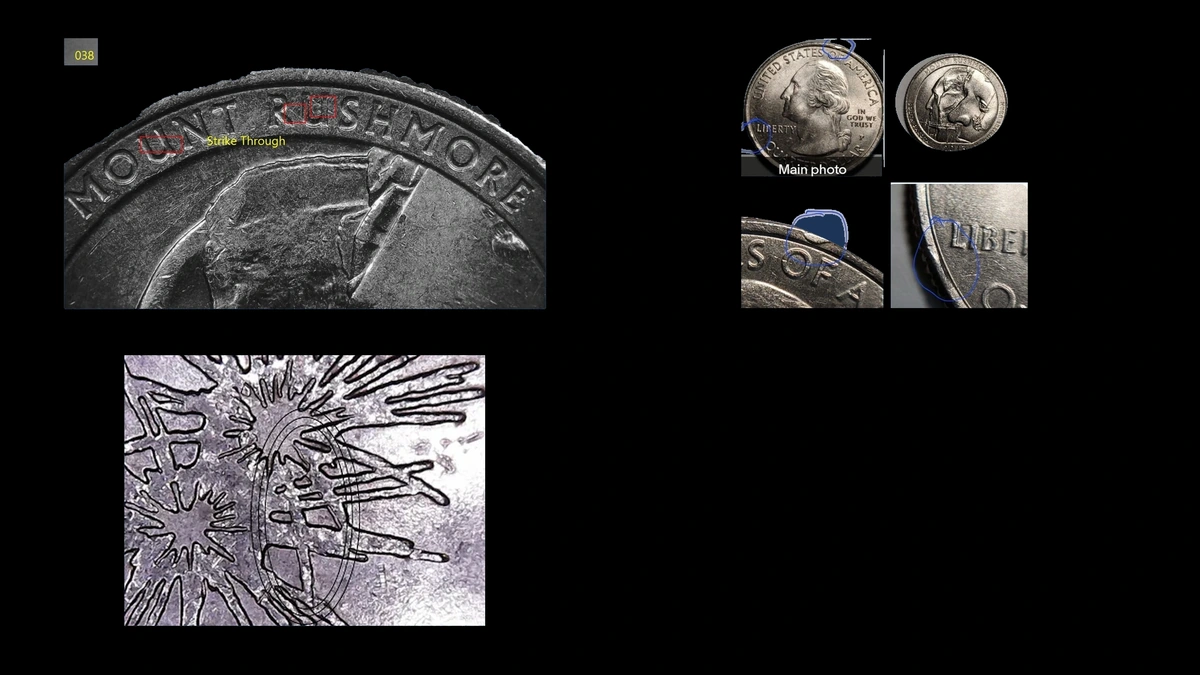
The five annual designs give 2013 quarter errors very different places to hide, from tree needles to fireworks and a carved nose. Supplied estimates range from $2–$5,000.
The highest provided completed sale is $881.25 for a 1776–1976 quarter struck through cloth in January 2017, a different-year comparison. Identify the 2013 scene first, then use the outline, edge, surface, and design checks below.
| Inspection area | Possible types | Estimated values |
|---|---|---|
| Size and outline | Wrong blank; clip; off-center strike; broadstrike | $25–$5,000 across these types |
| Edge and face relationship | Partial collar; misalignment or rotation | $5–$350 |
| Metal and color | Missing clad layer; improper annealing | $25–$1,000 |
| Interrupted or marked surface | Strike-through; reported feeder lines | $3–$1,000 |
| Extra raised design | Cracks, chips, cuds; doubled dies | $2–$500 |
1. 2013 Quarter A Design Too Large for Its Disc: Reported Wrong Blanks Error
A smaller blank can carry the center of a quarter design while leaving outer words beyond its boundary. Great Basin reports mention dime or nickel blanks, while the Fort McHenry report does not identify a particular substitute.
The proposed blank must explain the weight, metal, and incomplete design together. A trimmed or coated quarter can look unusual without having been struck on another denomination’s blank.
How to Identify
For ordinary clad coins, the normal weight is 5.67 grams and diameter is about 24.26 millimeters. Modern dime blanks weigh about 2.27 grams and nickel blanks about 5 grams, though a smaller blank can spread under quarter dies.
Record the Great Basin or Fort McHenry design, surviving year, both faces, and original edge. Filing marks, coatings, or letters cut through after striking may explain a smaller-looking coin without supporting the reported error.
Measurements alone do not name the substitute blank. Metal testing and an assessment of the actual strike are needed before a candidate becomes an authenticated wrong-blank example.
What It’s Worth
$500–$5,000 is the supplied estimate for authenticated 2013 wrong-blank quarters. The substitute metal, surviving identity, and preservation determine which comparisons are useful.
A 1988-P quarter on a nickel blank, graded NGC MS66 and weighing 5.0 grams, sold for $852 in October 2021. That older coin does not establish the weight or blank identity of a 2013 candidate.
2. 2013 Quarter Curved or Ragged Pieces Missing from the Edge: Clips Error
Missing metal can predate the strike, leaving an incomplete blank to receive the design. White Mountain has a listed double curved clip in NGC AU58, while a separate Perry’s Victory example has a 15% ragged straight clip.
Great Basin and Mount Rushmore also have clip reports without a specified gap shape. The appearance of one example should not be imposed on another design.
How to Identify
At White Mountain’s two curved gaps, examine each pair of endpoints separately. For Perry’s ragged straight clip, preserve the distinction between its uneven boundary and a smooth curved opening.
The rim or adjacent design may weaken near a genuine gap, and opposite-rim weakness can offer supporting evidence. Saw grooves, burrs, or cuts through finished lettering instead suggest later removal.
Weigh a loose candidate against the normal clad standard, but interpret the result with the edge. Both an original clip and later cutting remove metal.
What It’s Worth
$25–$750 is the supplied estimate for genuine 2013 clips. Clear gaps and preserved surrounding design make stronger comparisons than tiny, unexplained edge losses.
Mint Error News illustrates the Perry’s Victory 15% ragged straight clip in NGC MS65. Its percentage describes missing metal, while the White Mountain AU58 grade indicates slight wear on a separate double-clip coin.
A 1980-P corner clip in NGC MS65 sold for $204 in June 2023. That different-year shape is a broad comparison, and two clips on one White Mountain coin still receive one whole-coin valuation.
3. 2013 Quarter Part of the Picture Beyond the Metal: Off-Center Strikes Error
An intact blank positioned partly outside the striking area can receive only part of the intended picture. An original unstruck crescent remains beside the displaced design.
Reports cover White Mountain, Perry’s Victory, Great Basin, Fort McHenry, and Mount Rushmore. They do not establish one mint, percentage, or direction that applies across all five designs.
How to Identify
Use the surviving annual scene and date to identify the issue before estimating displacement. Both faces should fit the same misplaced blank, with some design falling beyond its original boundary.
If one face remains centered, consider a misaligned die instead. Examine any supposedly unstruck area for grinding, flattened letters, or altered texture that might show a finished design was removed later.
What It’s Worth
$30–$1,500 is the supplied estimate for genuine identifiable 2013 off-center quarters. A readable year and conspicuous displacement can help, but a larger shift alone does not guarantee a higher value.
A 1988-P example struck 30% off-center in ANACS MS63 sold for $109 in January 2022. Its displacement and grade describe that older coin, not an established specimen of any 2013 design.
4. 2013 Quarter A Complete Picture Inside a Wider Outline: Broadstrikes Error
Without restraint from the collar, the ring surrounding the blank, metal can spread beyond its intended width. A broadstrike retains the complete design even if the expanded border is uneven.
The supplied reports include Great Basin and Perry’s Victory. Fort McHenry remains a reported possibility without a specific authenticated example established.
How to Identify
Follow all the outer lettering and artwork on both faces. Complete designs on expanded metal support a broadstrike; missing design beyond the blank requires an off-center comparison.
Measure a loose coin at several points against the normal diameter. Expansion does not require extra metal, so the ordinary clad weight remains a useful reference.
Check the edge and adjacent letters for hammering, bending, or flattening. A slightly uneven rim on a normal-size coin is not enough to establish collar failure.
What It’s Worth
$50–$500 is the supplied estimate for authenticated 2013 broadstrikes. The Fort McHenry report needs independent physical confirmation before the range can be applied.
A 1984-P broadstruck quarter in PCGS MS65 sold for $169 in December 2025. It illustrates the mechanism from another year rather than documenting one of the 2013 issues.
5. 2013 Quarter Grooved and Expanded Bands Along the Side: Partial Collar Error
A partial collar strike can leave one edge band restrained and grooved while another band spreads into a step. Great Basin and Mount Rushmore quarters have reports of this two-level structure.
The blank was only partly enclosed by the collar when struck. A wider-looking front rim alone does not show that relationship.
How to Identify
Use a side photograph to follow where the grooved band meets the wider smooth metal. Rotate the coin to see how the transition continues around the edge and meets each rim.
A rolled lip, crushed lettering, or a scraped strip may instead result from later pressure. Width measurements support the observation, but the edge itself must show how the restrained and expanded portions formed together.
What It’s Worth
$25–$350 is the supplied estimate for genuine examples of either reported design. An obvious original step is more informative than a faint irregularity mixed with dents.
No completed 2013 partial-collar sale is supplied. Both faces’ preservation still matters, particularly when corrosion or scratches obscure the original edge.
6. 2013 Quarter Unequal Borders or a Turned Reverse: Misalignment and Reported Rotation Error
Sideways die movement changes the design’s centering, while a turned die changes its orientation. Great Basin and Mount Rushmore have misalignment reports; the Philadelphia White Mountain account mixes shifting and rotation.
Those are different claims requiring different checks. A stated percentage cannot be converted into an angle or prove that both movements occurred.
How to Identify
For centering, compare straight-on photographs with complete rims visible. A shifted design on one face with the other centered supports a die-placement issue, while both faces missing design suggests an off-center blank.
For rotation, hold Washington upright and turn the coin top to bottom without adding a sideways twist. The reverse should then appear upright; repeat the same movement before judging a departure.
Keep the actual White Mountain face relationship visible in your record. Tilted photographs or ambiguous seller percentages cannot decide between these explanations.
What It’s Worth
$5–$200 spans the supplied group estimates: $5–$100 for a clear sideways shift and $25–$200 for authenticated substantial rotation. Very small deviations may attract limited interest.
These ranges describe alternative demonstrated conditions. They do not establish two priced errors on the reported White Mountain coin.
7. 2013 Quarter Copper Showing Through One Face: Missing Clad Layer Error
A normal circulation quarter has pale outer layers over a copper center. If an outer layer is missing, the exposed copper and reduced weight can distinguish the coin from one whose color merely changed.
The Denver Perry’s Victory report concerns Washington’s side. White Mountain and Mount Rushmore need their affected faces established individually, while a Great Basin claim needs its own complete reverse photograph and physical evidence.
How to Identify
Identify the design and collector finish before interpreting the edge. A 2013 silver Proof normally weighs 6.25 grams and has a different composition from the 5.67-gram clad circulation coin.
Compare the edge beside the affected face with the intact side, looking for an actual change in layer structure. Exposed copper should retain original struck detail rather than scraped, corroded, or coated surfaces.
Weight and color need to agree with the missing layer. Another design’s photograph cannot authenticate a brown Great Basin candidate.
What It’s Worth
$50–$1,000 is the supplied estimate for authenticated 2013 missing-layer quarters. Extensive layer loss with original detail is easier to establish than a small discolored patch.
A 1988-D quarter missing its front layer in NGC MS62 sold for $156 in November 2020 and weighed 4.8 grams. That measured weight belongs to the older specimen and should not be assigned to a 2013 coin.
8. 2013 Quarter Unusual Color with Intact Layers: Reported Improper Annealing Error
Annealing is the heating process that softens blanks before striking. A Philadelphia Mount Rushmore report concerns a possible abnormal heating or surface reaction during this preparation.
Brown or gray color alone cannot establish when a change happened. Chemicals, later heating, and environmental exposure can produce similar appearances after the coin leaves the Mint.
How to Identify
Compare the coin with a normal Mount Rushmore quarter under neutral white light, rotating both to check reflections. Inspect protected lettering spaces as well as open areas for consistent original surface evidence.
Coatings, corrosion spots, or color following scratches can suggest later alteration. Check that the outer layers remain intact before confusing a color claim with missing clad metal.
Leave the surface dry and untouched for examination. A specialist can assess texture and metal condition, while a warm-colored photograph cannot establish an annealing error.
What It’s Worth
$25–$300 is the supplied estimate for an authenticated 2013 annealing error. Coins colored after striking do not qualify for that error range.
A 2009-P Native American dollar with improper annealing sold for $61 in November 2011. Its different denomination and year make it broad context rather than a Mount Rushmore transaction.
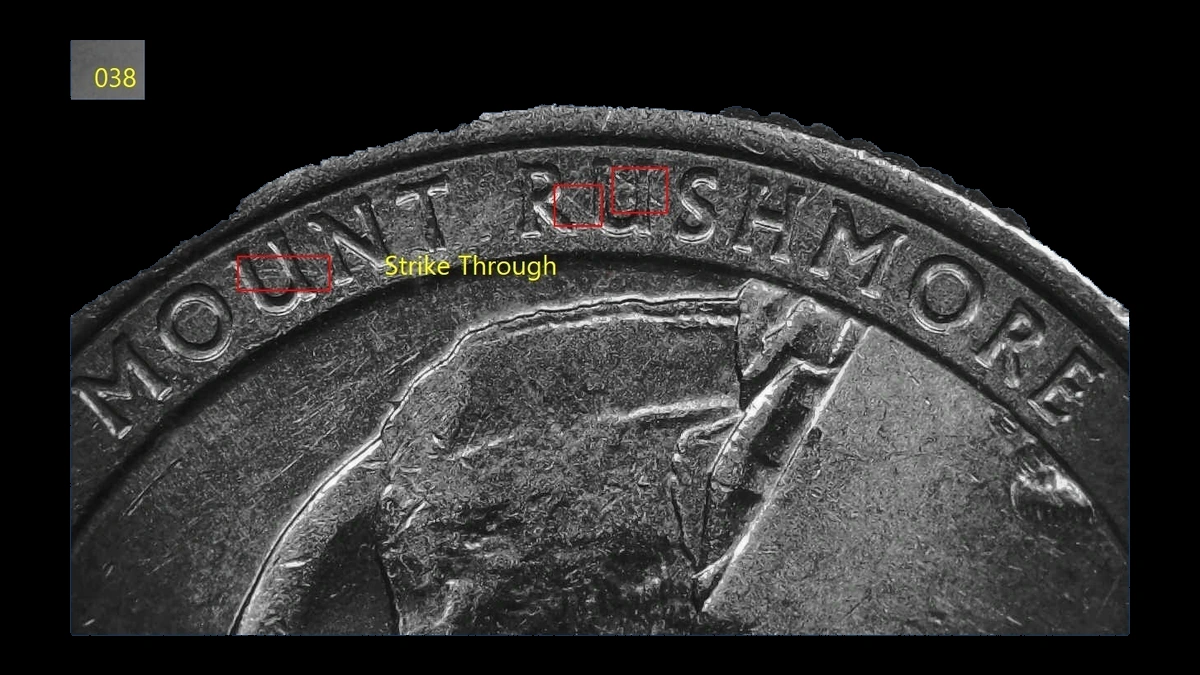
9. 2013 Quarter Local Patches Where Detail Stopped: Struck-Through and Grease-Blocked Areas Error
Material blocking the space between a die and blank can interrupt only part of the intended design. The Denver Perry’s Victory report concerns local weakness without a fixed position, and Great Basin has a separate report with no identified obstruction.
A Philadelphia Mount Rushmore seller described marks near Washington’s neck, the Y of LIBERTY, and above QUARTER. Those reported marks require examination rather than an assumed cloth or wire explanation.
How to Identify
Follow the boundary between interrupted and sharply formed detail. Side lighting can distinguish a depressed interruption from a raised die chip or a later scrape with directional cuts.
Check each Mount Rushmore location independently instead of assuming that every mark shares one cause. Preserve any retained material because its relationship with the strike may provide better evidence than its color.
What It’s Worth
$10–$1,000 covers the supplied group estimates, with $10–$150 for clear grease-blocked detail and $50–$1,000 for stronger identified strike-throughs. The nature and visibility of the obstruction matter.
A 1776–1976 quarter struck through cloth in NGC MS66 sold for $881.25 in January 2017. Its recognizable woven impression and high preservation cannot be transferred to an unexplained weak patch on a 2013 coin.
10. 2013 Quarter Straight Lines Across Washington’s Side: Reported Feeder Marks Error
Front-side lines on Denver White Mountain quarters have been described as feeder-finger marks. A feeder is the machine part that moves blanks into the striking area.
If that part scratches a die, the grooves in the tool can produce raised lines on later coins. A groove cut into the coin itself is physically different, and the supplied White Mountain report does not resolve whether its lines are raised or sunken.
How to Identify
Move a low light between opposite sides to determine whether the lines stand above the surface or cut into it. Study their meeting points with raised letters for signs of a later scratch through a finished design.
Repeated raised lines in identical locations on other Denver White Mountain quarters would support a damaged-die explanation. Record the D and mountain design with the affected area rather than borrowing a cause from another issue’s scratches.
What It’s Worth
$3–$50 is the supplied estimate for an identified minor Mint-made feeder mark. The higher end requires a persuasive manufacturing explanation and an attractive original coin.
A seller’s label does not resolve the raised-versus-incuse question. Later cuts generally reduce appeal instead of establishing this error premium.
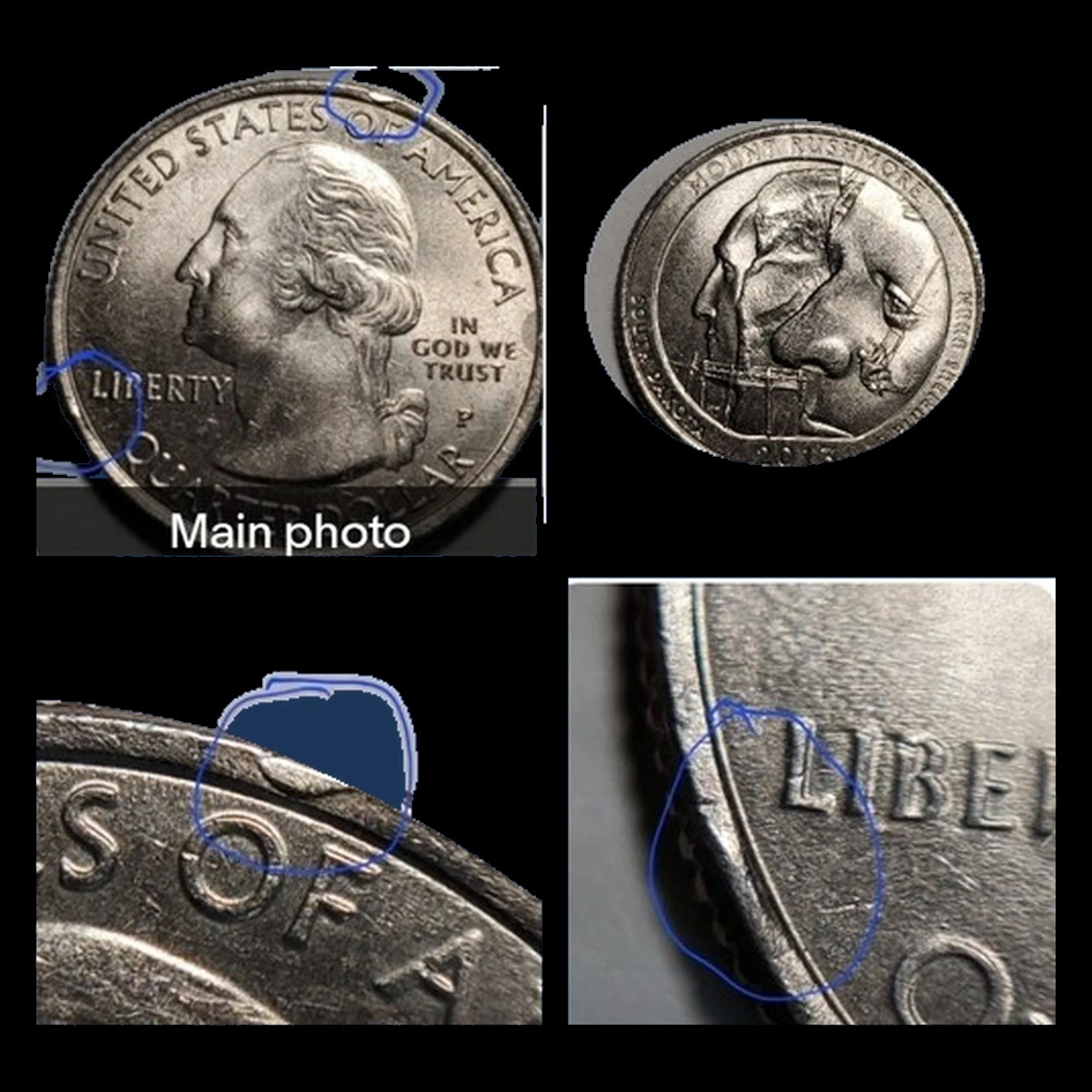
11. 2013 Quarter Raised Ridges, Lumps, or Rim Blobs: Cracks, Chips, and Cuds Error
A cracked die can leave a raised ridge, while metal flowing into a broken-out area can form a lump. A substantial die break connected to the rim is called a cud.
Reported positions include White Mountain’s ridge, Great Basin’s branches, Mount Rushmore’s carving-tool area, Fort McHenry’s lower fireworks, and parts of Perry’s Victory. Separate rim-break reports concern Philadelphia White Mountain and Denver Great Basin.
How to Identify
Compare the same reverse design with a normal coin to learn which branches, ridges, and sparks belong in the artwork. Extra metal must be distinguished from ordinary detail before a break is attributed.
At Fort McHenry, a solid lump suggests a chip while a repeated recognizable firework line needs a doubled-die comparison. Follow a proposed cud to the outer rim; an interior lump remains an interior break even if it is large.
Inspect raised lines for an incuse center and displaced edges that might indicate a scratch. Photograph the path’s intersections with letters or artwork to preserve its actual location.
What It’s Worth
$2–$300 spans the supplied estimates: $2–$40 for small cracks and chips, and $40–$300 for substantial authenticated rim-connected breaks. Tiny lumps hidden in busy scenery may add little.
Assess the complete appearance and preservation of the coin. Multiple small cracks do not each carry a separate price to add together.
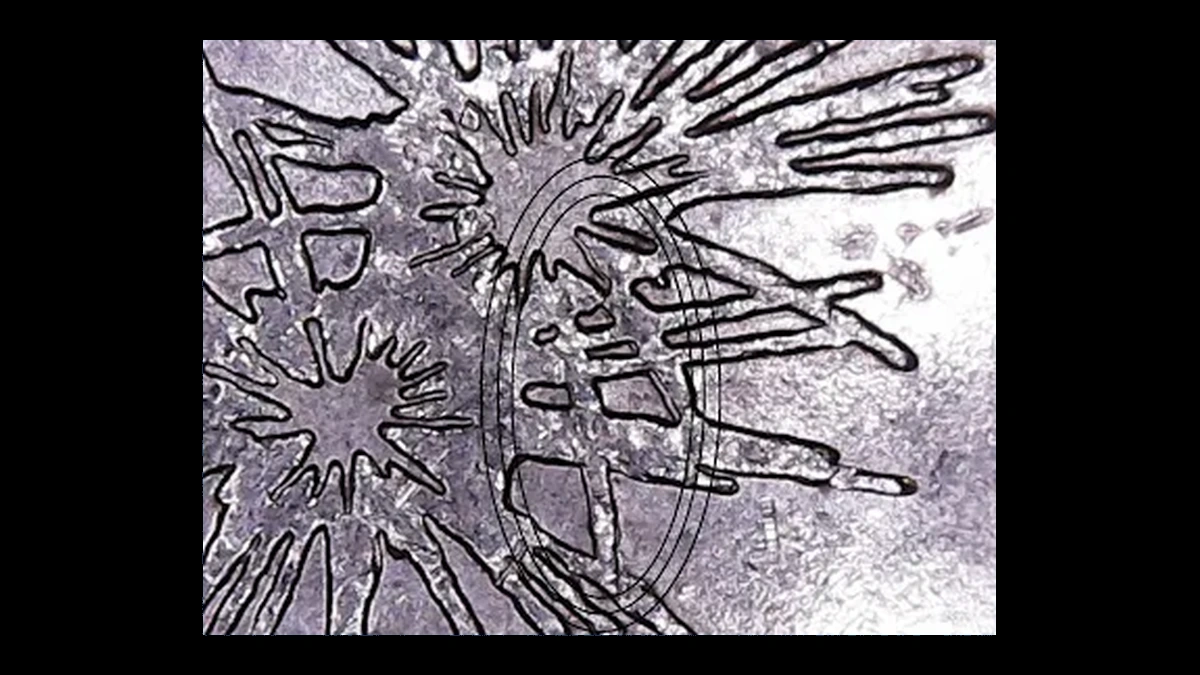
12. 2013 Quarter Repeated Fireworks, Tree Parts, or Portrait Details: Doubled Dies Error
Philadelphia Fort McHenry varieties repeat lower fireworks and windows above the arch. Great Basin Philadelphia varieties involve needles, branches, or trunk details, while Mount Rushmore examples may affect Jefferson’s nose or front lettering.
Perry’s Victory examples include detail below Washington’s earlobe or beside Perry’s coat near his upper leg, with some coins combining both faces. A separate Fort McHenry front-letter report lacks an established mint and exact affected letters.
These repeated shapes originate in the die before a coin is struck. Each specific pattern needs its own attribution rather than a shared label for any thick-looking line.
How to Identify
Use Wexler’s Fort McHenry photographs to compare the lower spray and windows in their actual positions. Do not assume that a doubled reverse carries the separately reported front-letter feature.
For Perry, inspect the earlobe and coat regions separately and establish that both faces belong to the same coin before claiming a combined pattern. For Rushmore, locate Jefferson’s nose; for Great Basin, match particular tree details rather than the general density of the branches.
Rounded repeated contours should be distinguished from low flat shelves produced by movement during striking. Confirm mint, face, and scene before choosing the reference.
What It’s Worth
$10–$500 is the supplied estimate for matched 2013 doubled designs of differing strengths and conditions. Strong clear separation and original surfaces generally make more useful examples.
A Fort McHenry firework does not establish the value of a Rushmore nose variety. The range does not price every cataloged pattern equally, and ordinary thick lettering needs no doubled-die premium.
Conclusion
Choose the correct annual design before deciding where a 2013 quarter should show its unusual feature. A lump among fireworks, a repeated nose outline, and a copper-colored face call for different kinds of evidence.
Use complete face and edge views for shape or metal claims, and matched references for tiny die varieties. Keep reported possibilities conditional until the actual coin supports them, and retain each comparison’s real year, mint, grade, and error identity.