Rare 1840 Quarter Errors (List & Pictures)
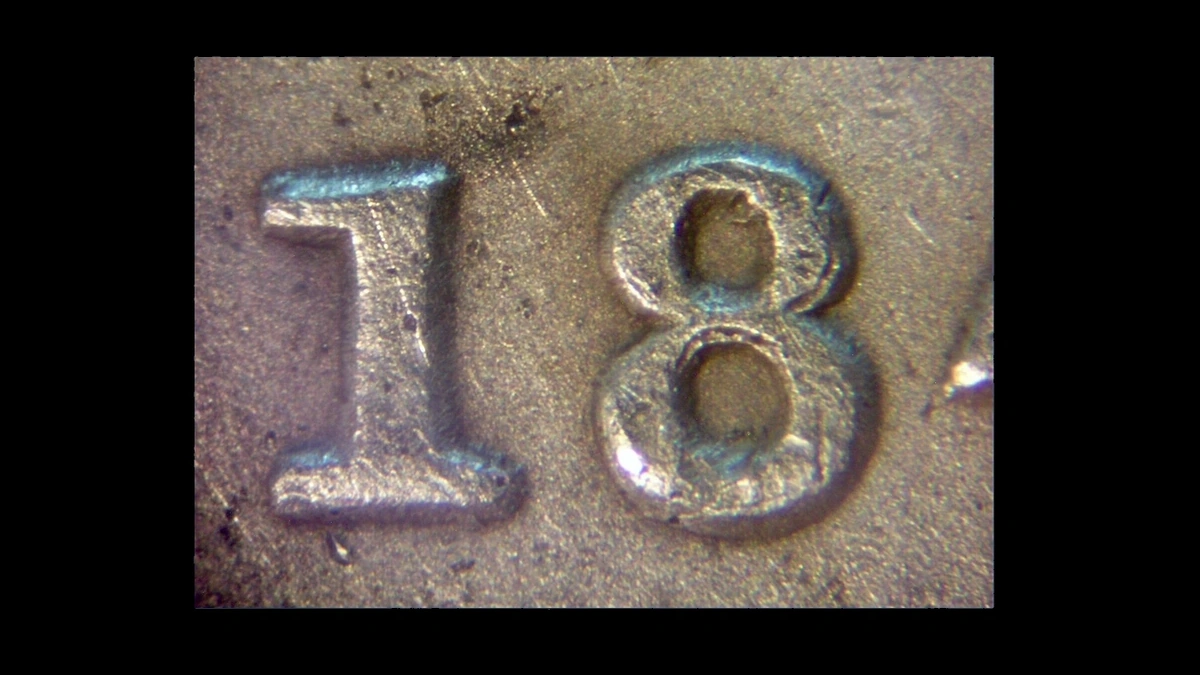
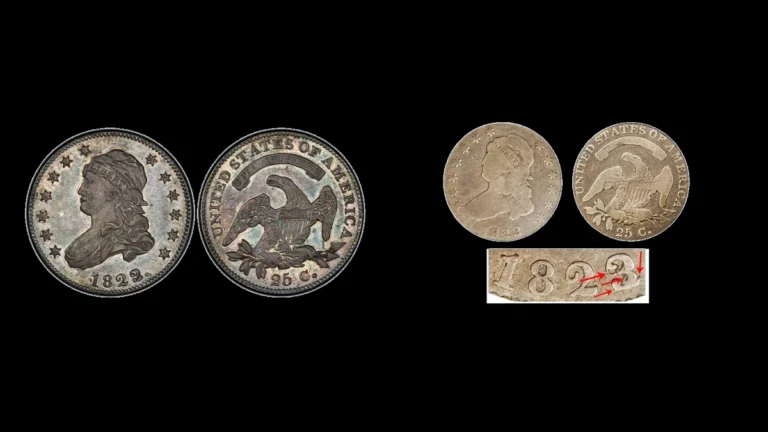
Two front designs make 1840 quarter errors especially dependent on an accurate variety match. A With Drapery large-O quarter with reverse cracks and bulges sold for $35,250 in April 2014, reflecting its rarity and MS64 preservation.
Supplied whole-coin estimates span $50–$40,000. Check for the added cloth below Liberty’s elbow before comparing the date, shield, mintmark, or damaged-die features.
| Design or area | Feature to check | Estimated value |
|---|---|---|
| No Drapery, New Orleans | Repunched date | $100–$15,000 |
| No Drapery reverse shield | Diagonal clash traces | $100–$15,000 |
| With Drapery, large O | Crack through N and reverse bulges | $500–$40,000 |
| O mintmark | Reported repunching | $150–$2,500, if confirmed |
| Whole outline | Reported off-center strike | $300–$10,000 |
| Separating metal | Reported lamination | $50–$1,500 ordinarily |
1. 1840 Quarter A Faint Earlier Date Digit: No Drapery Repunched Date Error
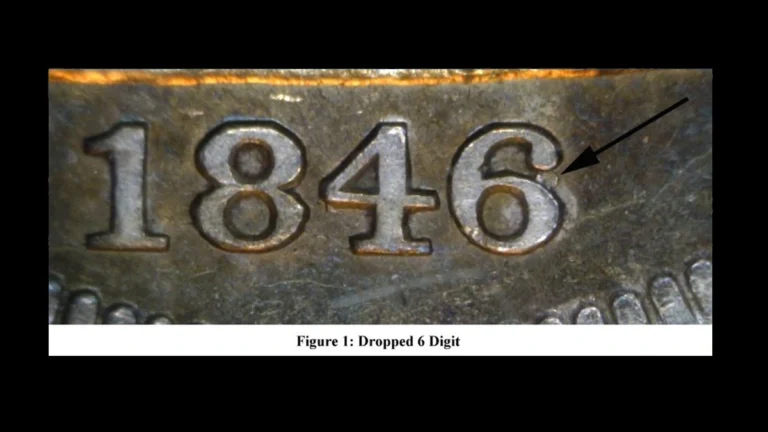
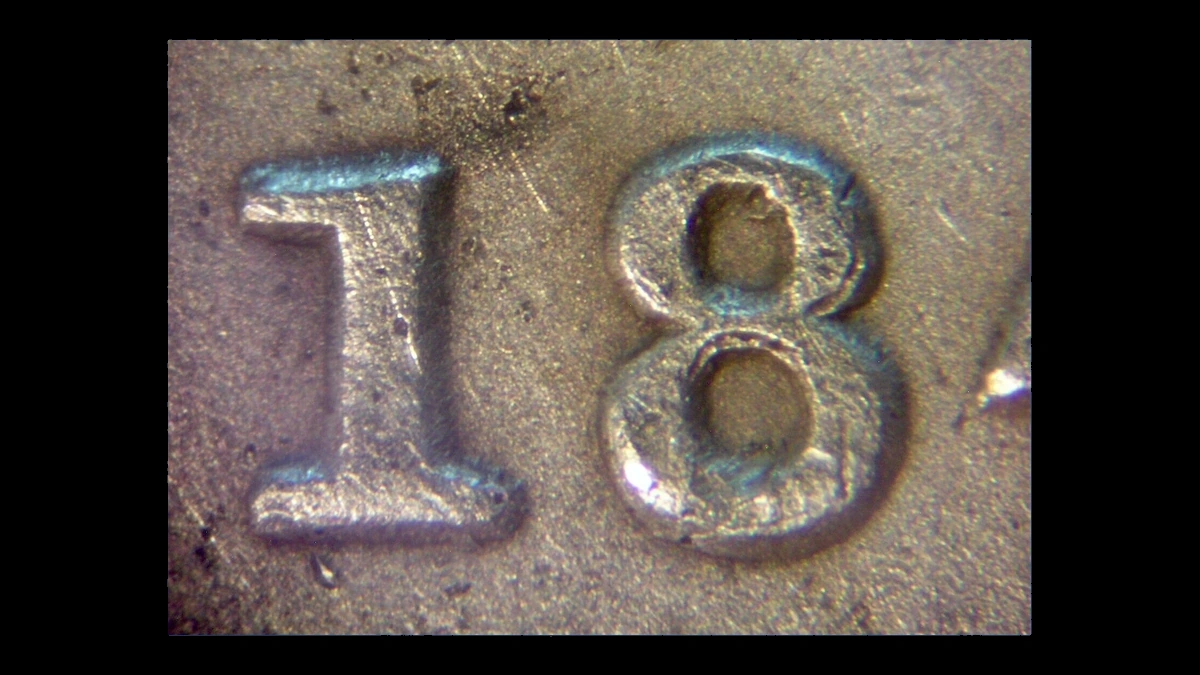
On one 1840-O No Drapery variety, an earlier 8 remains visible below the final 8. A different cataloged date variety concerns a repeated 0.
Repeated impressions of the hand-held date punch left these traces in the die, which then reproduced them on coins. The two numeral patterns should be matched separately rather than expected together.
How to Identify
Confirm the O beneath the eagle and the absence of added cloth below Liberty’s elbow. That No Drapery front is essential to selecting the correct reference.
For the repeated 8, examine its lower edge for an earlier curved outline. A scratch may continue into the surrounding surface without following the numeral’s intended shape.
For the repeated 0, use the NGC No Drapery variety listing and an identified photograph. The downward position described for the 8 must not be transferred to the separate 1840/0 pattern.
The documented repeated-8 example also has diagonal clash marks within the reverse shield. Those linked features help match that coin but do not imply that every repeated-date specimen shares them.
What It’s Worth
$100–$15,000 is the supplied estimate for identified No Drapery date varieties from worn through well-preserved unworn examples. Much of that spread reflects condition and the underlying issue.
The repeated-8 specimen was cataloged in NGC MS65, indicating an unworn coin with relatively few marks. No completed price for that specimen is supplied here.
A repeated 0 needs its own condition and variety comparison. The 8 and shield clash on one coin receive one whole-coin valuation, not two additive amounts.
2. 1840 Quarter Diagonal Lines Inside the Shield: No Drapery Die Clash Error
The eagle’s shield normally contains its own regular line pattern. Diagonal traces described on an 1840-O No Drapery quarter are additional marks from dies meeting without a blank between them.
That contact transfers fragments of one design onto the other die, allowing later coins to carry the unintended details. The cataloged example is the same coin noted for its repeated 8.
How to Identify
Compare a normal No Drapery reverse to learn which shield lines belong in the design. Then locate the extra diagonal traces and match their shape and position with the documented example.
Low lighting helps distinguish struck traces from scratches with sunken centers and disturbed edges. A random diagonal mark is not enough, even if it crosses the correct shield.
Check the front for the No Drapery design and repeated 8 when comparing the cataloged specimen. These observations tie both faces to the proper coin instead of treating an isolated shield image as a complete attribution.
What It’s Worth
$100–$15,000 is the supplied estimate for genuine clear shield clashes on the discussed No Drapery issue, across circulated through high-grade unworn condition. The upper range depends heavily on preservation.
The documented MS65 quarter combines the clash and repunched 8. Its appeal cannot be reduced to the faint shield marks alone, and the two guide ranges must not be added.
3. 1840 Quarter A Ridge Through N with Reverse Bulges: With Drapery Die Damage Error
The With Drapery large-O variety has a raised line running from the rim through the left upright of N in UNITED and onward to the wing. Its damaged reverse die also produced bulges near the right wing’s junction with the shield and beside the lower right leg.
A crack in the die admits metal that becomes a raised line on the coin. Changes in the tool’s surface can also produce the broader raised areas described on this variety.
How to Identify
Look beneath Liberty’s elbow for the added cloth fold before following the reverse crack. A No Drapery coin with a similar-looking line is not automatically this With Drapery variety.
Trace the path from the rim through N to the wing under side lighting. The mark should rise above the surface rather than cut through finished lettering.
Compare the gently raised areas beside the shield and lower right leg with the identified example. Dents or unrelated lumps cannot substitute for the documented locations.
The large O is elongated and centered beneath the eagle’s crossed stem and arrow ends. Its shape, the front’s cloth detail, and the reverse damage together provide the useful match.
What It’s Worth
$500–$40,000 is the supplied estimate for worn through strong unworn examples of this With Drapery large-O variety. Cleaning, corrosion, and lost detail can reduce its appeal substantially.
The PCGS MS64 example sold for $35,250 in April 2014. That is a price for a scarce well-preserved whole coin, not a stand-alone value for its crack.
4. 1840 Quarter A Second Curved Outline Beside O: Reported Repunched Mintmark Error
A repeated mintmark would preserve parts of an earlier O after another punch impression was placed in the die. The tool would then transfer both outlines to coins without any mintmark being added to them afterward.
The supplied O-over-O report establishes neither a clear With Drapery or No Drapery example nor a specific direction of repunching. Normal large and small O mintmarks within the year are not evidence of overlap by themselves.
How to Identify
Choose the front design first, then compare the candidate with a normal O from that design. At about 10× magnification, inspect both the inner opening and outer curve for a second shaped letter remnant.
A wide ring alone does not establish repunching. Flat shelves, dirt, or metal displaced by a hit can create misleading edges beside the mintmark.
Require a matching identified repeated-mintmark photograph before assigning a direction or named variety. Two normal coins with different-sized O letters show different punches, not an O-over-O impression.
What It’s Worth
$150–$2,500 is the supplied conditional estimate for a confirmed circulated example of the reported repeated O. It is not an 1840 auction result.
Clear separated curves provide stronger evidence than a worn thick letter. The scarce With Drapery large-O quarter’s $35,250 sale must not be applied to an unidentified repunching candidate.
5. 1840 Quarter Unstruck Space Beside Missing Design: Reported Off-Center Strike Error
An off-center blank can leave an untouched crescent while part of the intended design falls outside the metal. Both faces should reflect that same displaced blank.
Year-specific reports mention mild 1840 off-center quarters without establishing a particular mint, cloth design, or measured specimen. A broad percentage description therefore cannot serve as a measurement for a specific coin.
How to Identify
Compare the full outline with surviving designs on both faces. An uneven border confined to one face may instead come from die misalignment.
Record the date and cloth detail before naming the issue. If the mintmark area is missing, do not assume Philadelphia simply because no O can be read.
A normal 1840 quarter began near 6.68 grams, though wear and damage reduce weight. Use that reference with the edge and blank crescent, checking for smoothed letters or grinding that removed an already struck design.
What It’s Worth
$300–$10,000 is the supplied estimate for authenticated examples with enough date and design remaining. The underlying issue and degree of displacement both affect the comparison.
A 30% off-center 1876 quarter sold for $2,160 in December 2022 despite cleaning. That different-year, larger-error comparison does not automatically price a mildly shifted 1840 candidate.
6. 1840 Quarter A Thin Layer Lifting from the Surface: Reported Lamination Error
A weakness within the silver alloy can allow a thin piece to lift or separate, leaving a flap or shallow irregular loss. This type is reported for 1840 without an established mint, cloth design, or affected location.
The separation belongs to the coin’s metal, potentially involving impurities or poorly joined material in the blank. It is not missing copper-nickel cladding, because this silver quarter is not built like a modern clad coin.
How to Identify
Leave any loose flap attached and use low side lighting to inspect its boundary. Follow the surrounding design into the separation without pulling back the metal.
A corrosion hollow may lack layered structure, and a scrape may show parallel tool cuts. A peeling coating or glue is also different from separation within the original alloy.
Keep full front and back photographs to establish the issue. A genuine same-year lamination may occur elsewhere than another pictured example, but its metal structure must support the explanation.
What It’s Worth
$50–$1,500 is the supplied estimate for a confirmed lamination on an otherwise ordinary 1840 quarter. Mint, cloth design, and preservation still account for much of the whole-coin value.
A clear natural peel is easier to assess than an unexplained rough patch. A rare underlying variety needs a separate appropriate comparison, while scraping or corrosion does not acquire a Mint-error premium merely because metal is missing.
Conclusion
On an 1840 quarter, the cloth beneath Liberty’s elbow is a practical first check that prevents several attribution mistakes. No Drapery date and shield features belong to different comparisons from the With Drapery large-O crack and bulges.
Keep lightly documented mintmark, shape, and metal reports conditional until the actual coin supports them. Value the complete identified issue and condition, especially when one specimen carries both a repunched date and a clash.