Rare 1823 Quarter Errors (List & Pictures)
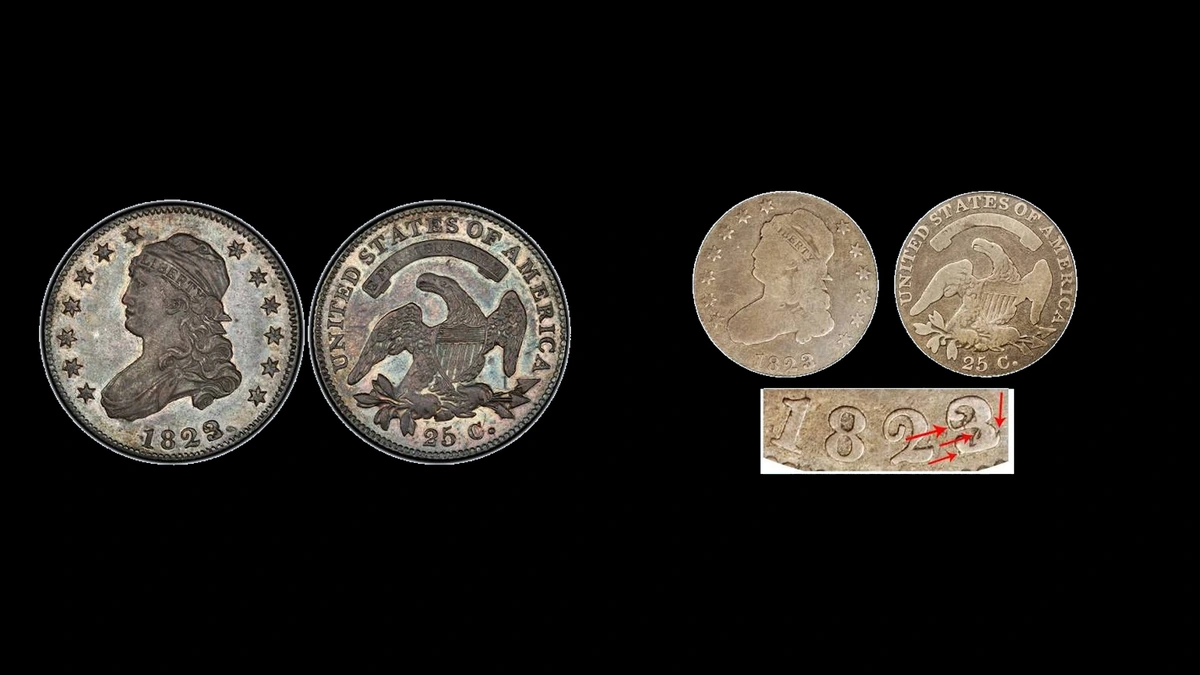
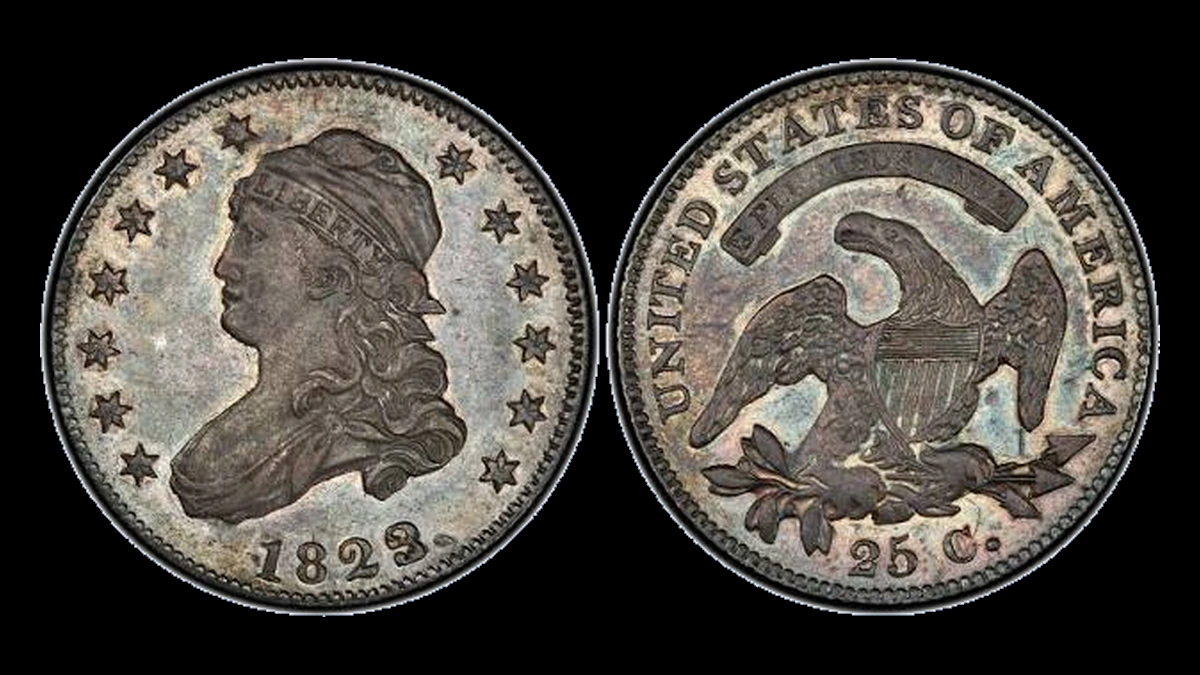
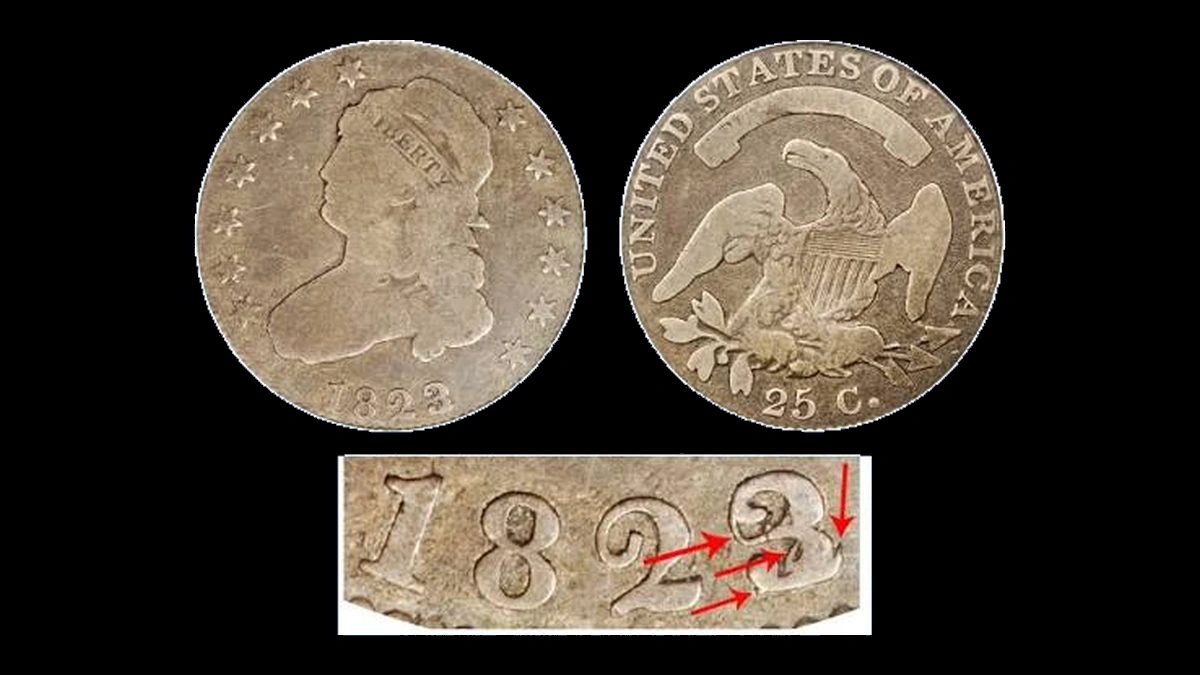
Every known genuine 1823 quarter has a 3 over an earlier 2, making the date essential to any discussion of 1823 quarter errors. The exceptional PCGS PR64 Proof sold for $396,562.50 in June 2014.
Supplied whole-coin estimates range from $10,000–$400,000 across very different conditions and finishes. Establish the overdate and incomplete reverse design before evaluating separately reported cracks or off-center striking.
| Feature | Evidence status | Estimated whole-coin value |
|---|---|---|
| 2 beneath final 3 | Known overdate issue | $10,000–$400,000 |
| Incomplete arrows and central toe | Documented reverse feature | $10,000–$400,000, same issue |
| Raised line | Reported crack requiring confirmation | $10,000–$100,000 circulated |
| Lost design and original blank crescent | Reported off-center type requiring confirmation | $15,000–$150,000 circulated |
1. 1823 Quarter A 2 Remaining Under the Final 3: Overdate Error
The die used for 1823 quarters had previously carried an 1822 date and was changed before striking this issue. Part of the older final digit remained beneath the replacement 3.
This is an overdate in the tool, not a finished 1822 coin struck again in 1823. Both ordinary circulation strikes and the celebrated Proof carry the feature.
How to Identify
Keep all four date digits visible while enlarging the last 3. Compare its underlying strokes with the PCGS 1823/2 reference rather than interpreting isolated bright lines.
The extra contours should form the surviving parts of a 2. Scratches or cuts around an altered date can create a misleading impression in a small photograph.
Compare the portrait, stars, and eagle as well as the numerals. The date needs to belong naturally to the same surface and wear pattern as the rest of the coin.
Proof status is a separate determination of special manufacture. A clear overdate or bright polished background cannot establish it.
What It’s Worth
$10,000–$400,000 is the supplied whole-coin estimate, spanning heavily worn pieces through the exceptional Proof. The overdate identifies the issue, while condition and finish explain enormous price differences.
The PCGS PR64 Proof sold for $396,562.50 in June 2014. The auction catalog described it as the only known Proof at that time.
PCGS also records an ordinary-strike AU58 example at $246,750 in May 2015. That lightly worn coin is a different specimen and finish, so it should not be confused with the Proof record.
2. 1823 Quarter Missing Arrow Parts and a Central Toe: Incomplete Reverse Design Error
Incomplete arrowheads and shafts appear even on a sharply struck 1823/2 reverse. The central toe of the eagle’s claw on the viewer’s right is also absent.
Damage in the master design tool carried these omissions into the working die. Additional striking pressure could not restore a shape that the tool did not contain.
How to Identify
Examine arrowheads and shafts separately, comparing them with the adjacent feathers and lettering. Sharp surrounding design makes ordinary wear a poor explanation for matching missing portions.
With the eagle upright, inspect the claw on the viewer’s right for the absent middle toe. Keep that orientation explicit in photographs to avoid examining the wrong foot.
Compare the pattern with the sharply struck 1823/2 Proof. The reverse was repaired before later use, so a later repaired appearance is not the correct reference for the original omissions.
What It’s Worth
$10,000–$400,000 is the supplied whole-coin estimate for the same rare 1823/2 issue. The incomplete reverse is not another amount to add to the overdate value.
The $396,562.50 Proof also shows these missing details. Its entire preservation and special finish account for the transaction, rather than separate prices for the arrows and toe.
On circulated examples, visible remnants and undamaged surfaces help separate original omissions from wear.
3. 1823 Quarter An Additional Raised Ridge: Reported Die Crack Error
A die crack can produce a narrow raised line when silver enters the opening in the tool. The coin receives the ridge during striking instead of acquiring an incuse scratch afterward.
A year list includes cracks for 1823 without an illustrated specimen or fixed route. A candidate therefore needs evidence beyond the rare date itself.
How to Identify
Move a low light between opposite sides to determine whether the center of the mark rises or cuts into the surface. Raised lips beside a scratch can otherwise imitate a thin die ridge.
Trace the line through open fields and any intersections with letters or the portrait. A complete path fitting the struck surface is more useful than a cropped bright segment.
No specific route is established by the source report. Preserve the area without cleaning and obtain examination of both the ridge and the genuine 1823/2 identity.
What It’s Worth
$10,000–$100,000 is the supplied conditional estimate for a genuine circulated 1823/2 with a confirmed die crack. The rare issue and remaining condition drive most of that total.
No completed crack-specific transaction is supplied. Severe cleaning or damage may outweigh the interest of a small ridge, and the estimate should not be read as a premium for the line alone.
4. 1823 Quarter Design Cut Off Beside Untouched Metal: Reported Off-Center Strike Error
An off-center blank would receive incomplete designs while retaining unstruck metal on the opposite side. The year guide reports this type without a photographed 1823 specimen or stated percentage.
Early quarters may have uneven borders while retaining all their designs. That centering variation and later trimming must be separated from a genuine misplaced blank.
How to Identify
Compare both whole faces for missing design and an original blank crescent. If only one face shifts, a misaligned die is a different possible explanation.
Inspect the edge for cutting or filing that removed a finished border. For a loose coin, the normal starting specifications of 6.74 grams and roughly 27.5 millimeters offer context, but wear and missing metal can change the readings.
The date must retain enough detail to identify 1823/2. Neither a general Capped Bust appearance nor a quoted displacement percentage supplies missing date evidence.
What It’s Worth
$15,000–$150,000 is the supplied conditional whole-coin estimate for a confirmed circulated example. Readable overdate, original blank surface, displacement, and condition would all matter.
This is not an auction record for an established specimen. A slight shift on a worn coin would require a different assessment from a dramatic error with a clear intact identity.
Conclusion
The overdate and incomplete reverse belong to the same rare 1823 quarter issue, so their estimates must not be added. Authenticate the 2 beneath the 3 and compare the arrow-and-claw pattern before considering any extra feature.
A proposed crack or off-center strike remains a separate claim needing physical evidence. Keep ordinary strikes distinct from the exceptional Proof, and assess the complete coin’s identity, finish, and condition before using the highest recorded prices.