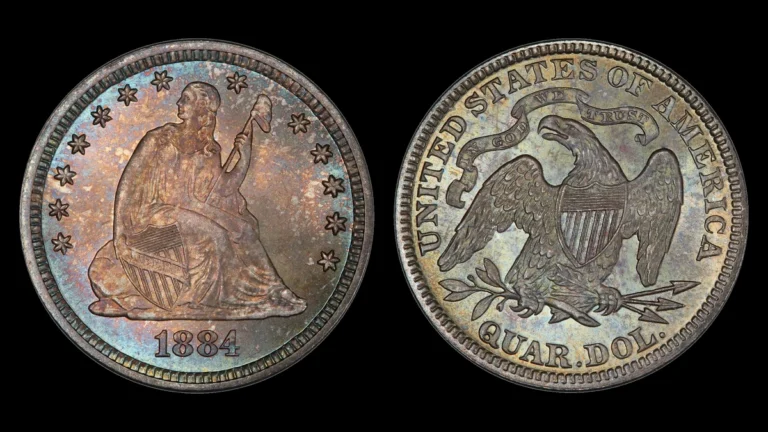
Rare 1877 Quarter Errors (List & Pictures)
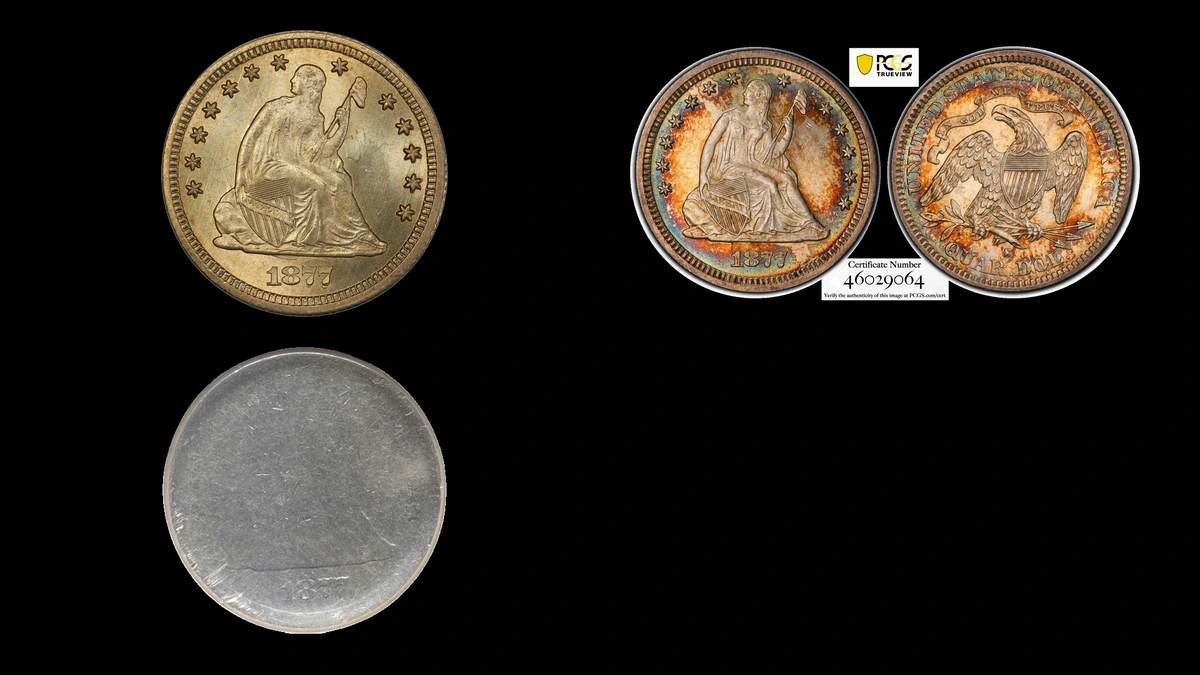
Two small corrections stand out among 1877 quarter errors: repeated 7s on a Carson City date and a sideways S beneath a corrected San Francisco mintmark. Other documented coins have unusually uneven borders or extremely faint designs.
Estimated whole-coin values span $80–$30,000, with an exceptional sideways-S example realizing $25,850 in June 2016. Start by identifying the mint, then compare the date and letter remnants before assessing the full strike.
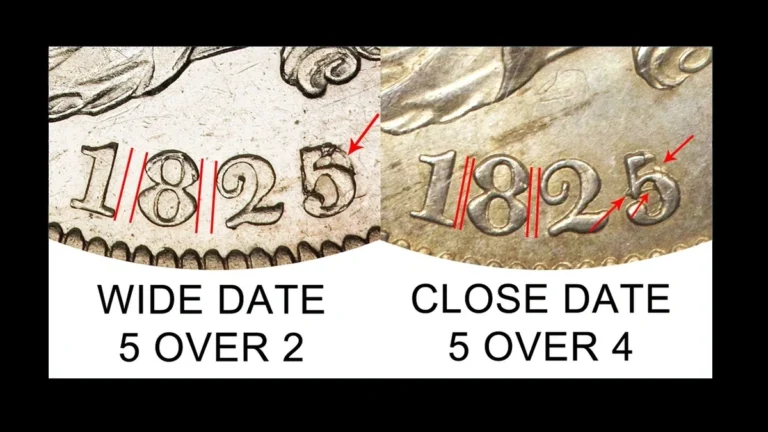
1. 1877 Quarter Earlier Outlines below Both 7s: Repunched Date Error
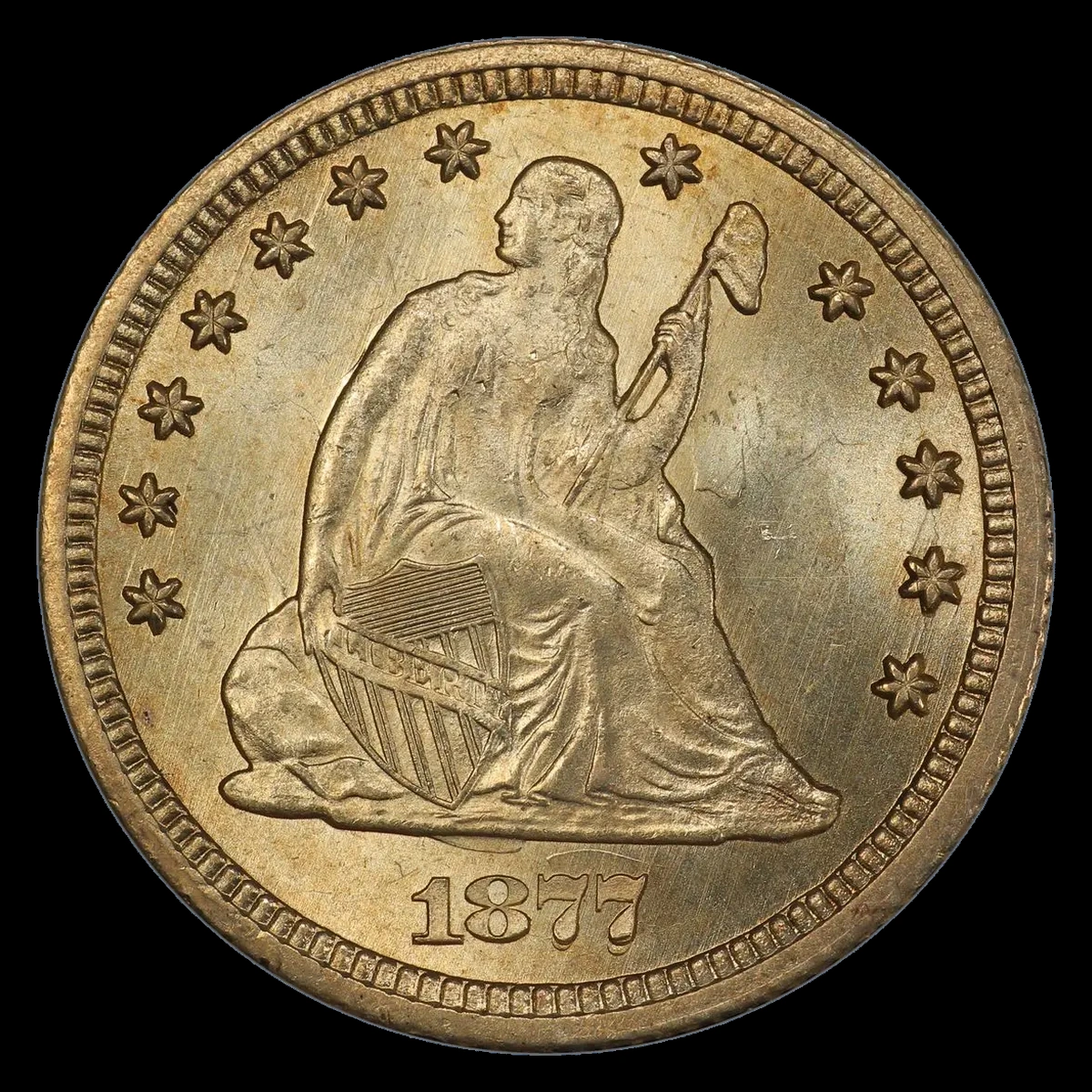
The Carson City variety known as FS-301 or Briggs 2-B has extra raised detail below the two 7s. The notation 1877/77 describes repeated impressions of those digits, not a different year underneath.
Those remnants originated when the date was entered into the die more than once. The finished tool transferred the combined shapes to its coins.
How to Identify
Locate CC beneath the eagle before applying this specific attribution. On the front, photograph the entire date and inspect each 7 for the expected lower outlines.
A close match needs the pair of remnants in their correct positions. General date blurring or an isolated line beside one numeral is less specific.
Use side lighting to distinguish a raised stroke from a cut with displaced edges. Leave dirt undisturbed rather than scraping around a possible remnant.
What It’s Worth
$80–$3,000 is estimated for confirmed examples across heavily worn through attractive unworn coins. The GreatCollections FS-301 archive reports seven sales from $82–$2,084 across grades 1 through 65.
These are whole-coin results at different levels of preservation. Readable date detail helps attribution, but does not undo cleaning or other surface problems.
2. 1877 Quarter A Sideways Curve beside the Upright S: Repunched Mintmark Error
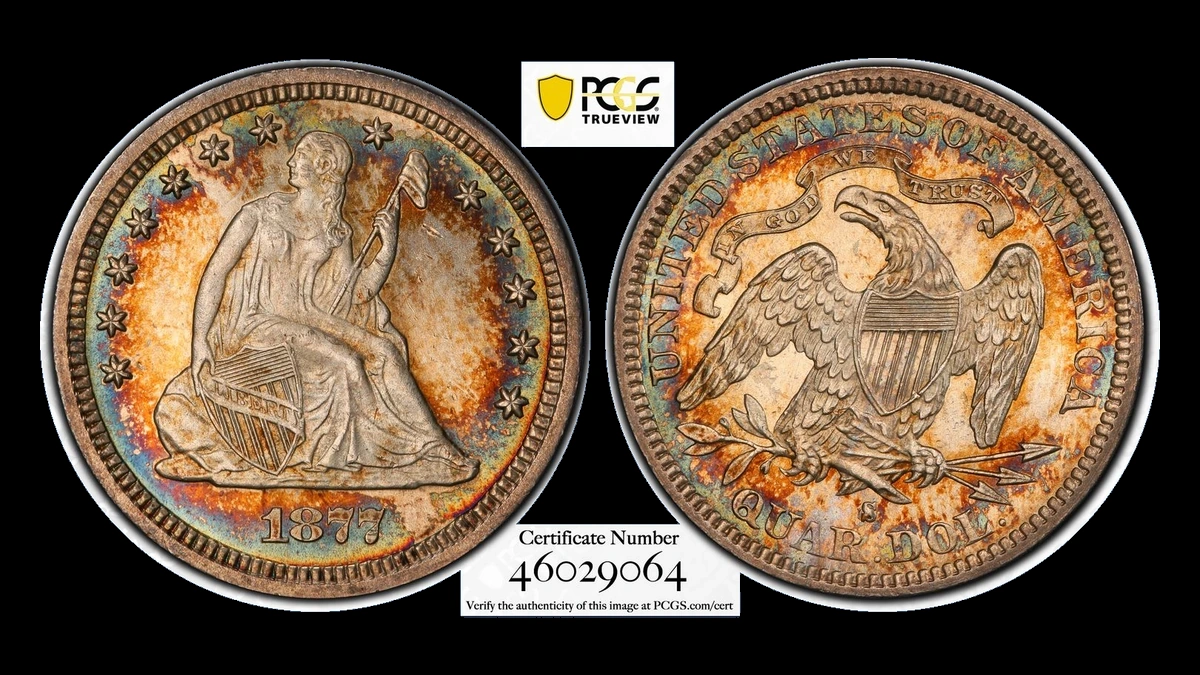
On FS-501, the first S was entered horizontally and then corrected by an upright punch. A surviving portion remains to the left of the final mintmark below the eagle.
Collectors call the variety S over Horizontal S. The correction affected the die, allowing later coins from that tool to repeat the same added curve.
How to Identify
Keep the reverse upright and concentrate on the left side of the S’s lower portion. Compare the curved remnant’s shape, attachment, and location with an attributed FS-501 photograph.
Retain surrounding reverse detail in the image to preserve orientation. Turning a normal mintmark photograph sideways does not recreate a horizontal underletter.
A dent beside the letter can produce a bright edge, while wear can make the S appear thick. Check that the extra curve remains raised in the same location under changing light.
What It’s Worth
$100–$30,000 is estimated across worn through exceptional examples. PCGS records an MS67 at $25,850 in June 2016 and an MS65 at $3,760 in April 2017.
Both are unworn grades, but MS67 represents substantially finer preservation. Their price difference illustrates why the presence of the same sideways letter does not establish one value for all specimens.
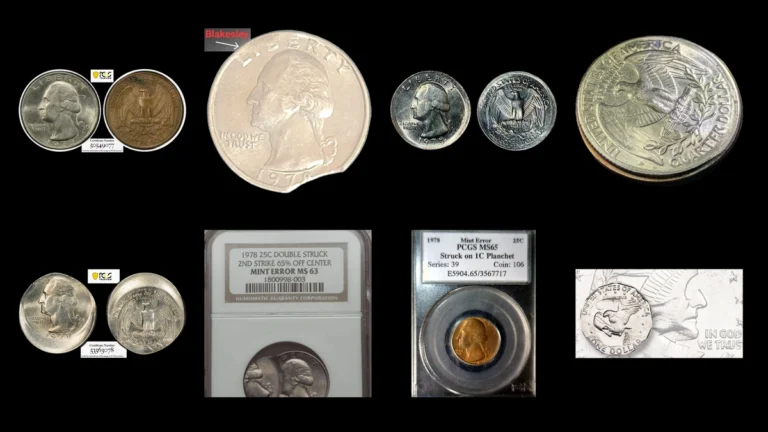
3. 1877 Quarter Uneven Borders toward the Lower Left: Reported Off-Center Strike Error
An 1877-S in PCGS MS64 was cataloged as struck 5% off center toward 7 o’clock, with distorted outer lettering. The same description says the inscriptions remain complete.
That combination deserves care because an off-center strike normally loses intended design beyond the blank. Uneven expansion outside the retaining collar can preserve a complete picture while producing an uncentered appearance.
How to Identify
Compare both full faces around the lower-left border and its opposite side. Separate genuinely missing design from stretched but complete letters before settling the mechanism.
A wide margin alone cannot distinguish displacement of the blank from uneven spreading without collar support. If only one face is shifted, movement of an individual die is another possibility.
For an accessible loose coin, the normal diameter of about 24.3 millimeters provides a comparison for expansion. Inspect the actual outline without pressing or bending the edge.
What It’s Worth
$1,000–$8,000 is estimated for an authenticated 1877-S with a comparable abnormal strike. Heritage offered the MS64 example in August 2004, but it did not sell.
There is therefore no winning price from that auction to quote. The estimate reflects the coin’s preservation and unusual strike, while the precise physical classification still needs the border evidence.
4. 1877 Quarter A Readable Date among Very Faint Designs: Weak Strike Error
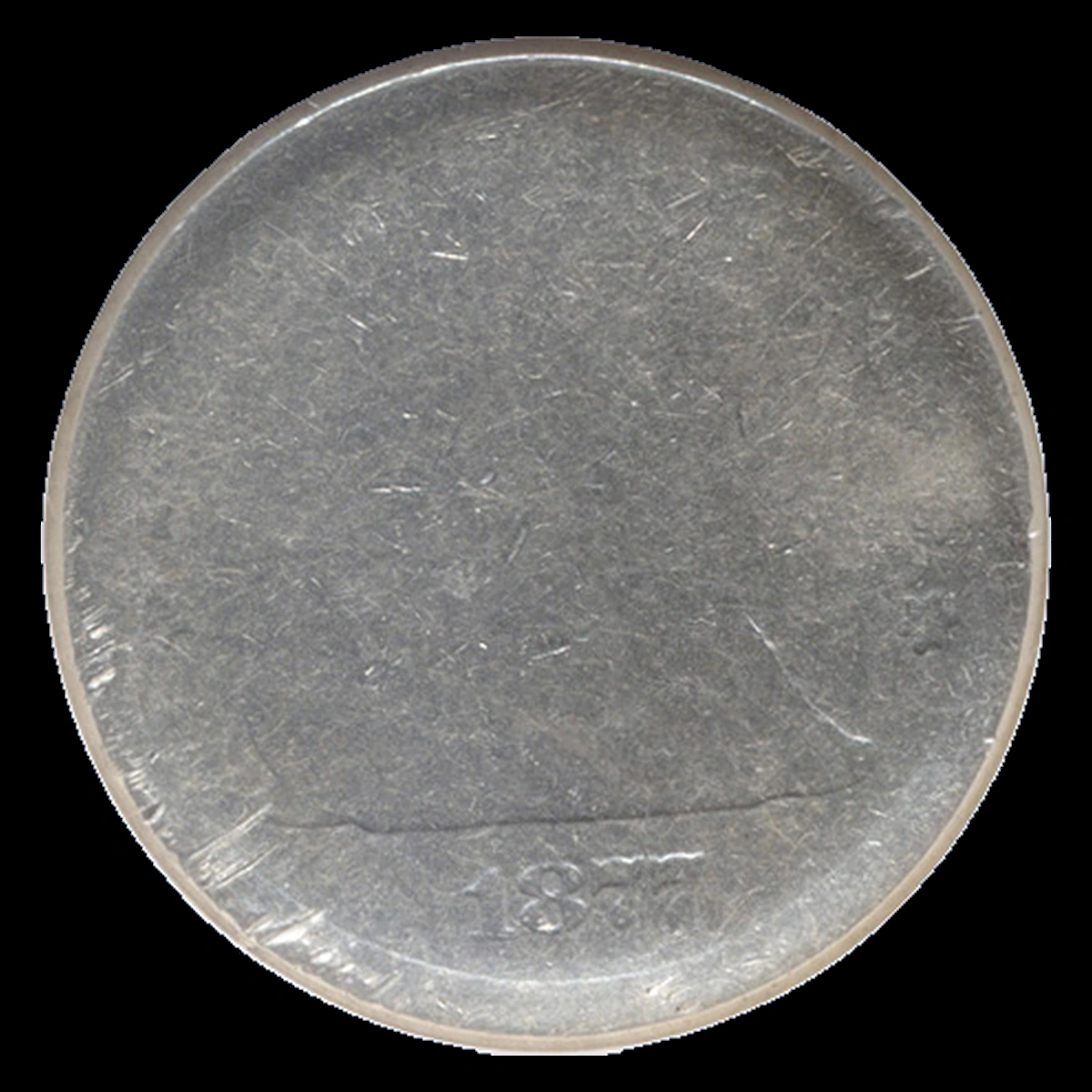
Mint Error News published an NGC-certified 1877 quarter with extreme weakness on both faces while the date remained readable. It was presented as a die adjustment strike, a term suggesting low pressure during equipment adjustment.
The shallow design is observable, but a worker’s exact intent is harder to establish. Weak striking alone does not prove a deliberate test.
How to Identify
Compare the date and other features that formed with the broad shallow areas. On a weak strike, much detail never developed fully; on a heavily worn coin, previously formed detail was removed in use.
Examine surviving high points for wear and the surrounding surface for abrasion or chemical removal. A few soft stars do not match the exceptional weakness described here.
A loose candidate can be compared with the normal 6.25-gram weight alongside its outline. Reduced metal and disturbed surfaces may support a later-damage explanation, while a certified example should remain sealed.
The published 1877 weak-strike example shows both faces. Use that paired view instead of attributing a nearly smooth coin from one faint area alone.
What It’s Worth
$2,500–$15,000 is estimated for a specialist-confirmed example comparable to the documented coin. No realized sale of that published specimen is supplied.
The estimate requires exceptional original strike weakness, an identifiable date, and preserved physical evidence. Ordinary wear or minor soft detail does not qualify for the same comparison.
Conclusion
The repeated date and horizontal S can be tested through precise raised remnants. Whole-coin striking claims require broader evidence from both faces, the outline, and the surviving surface.
Keep historical descriptions and transaction outcomes separate: the MS64 abnormal-strike coin went unsold, and the weak-strike label does not establish a worker’s purpose. Preservation remains a major reason that otherwise matching varieties can occupy very different price levels.