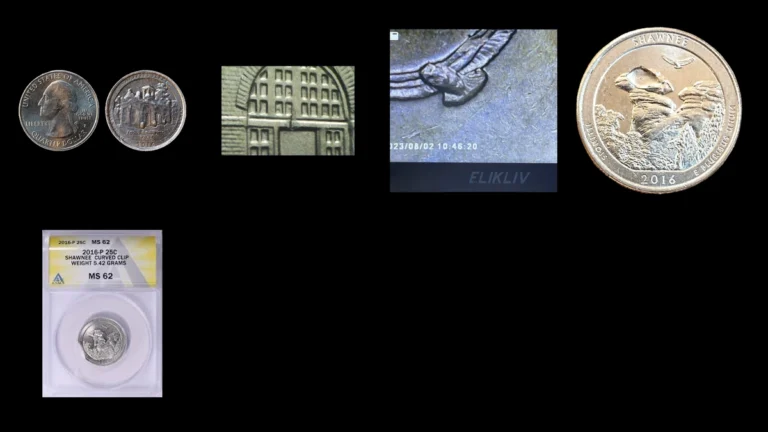
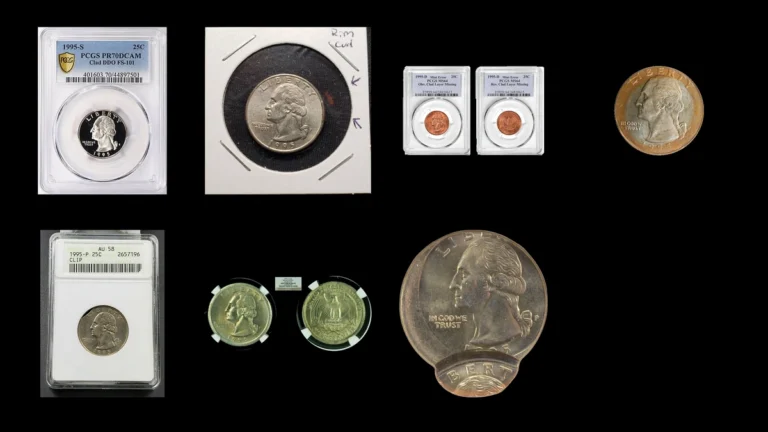
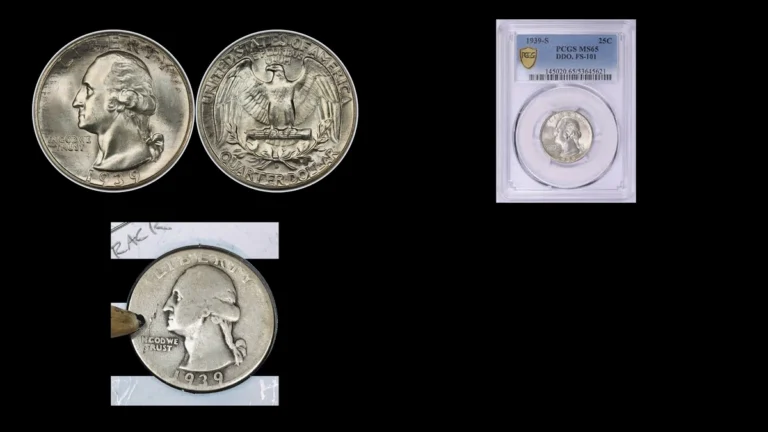
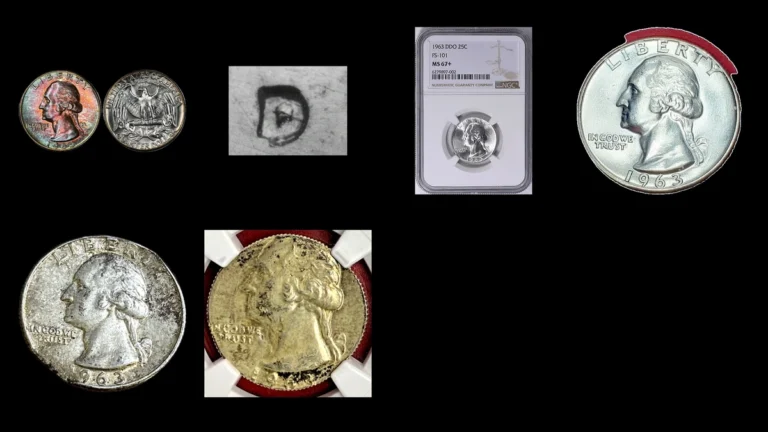
Rare 1825 Quarter Errors (List & Pictures)
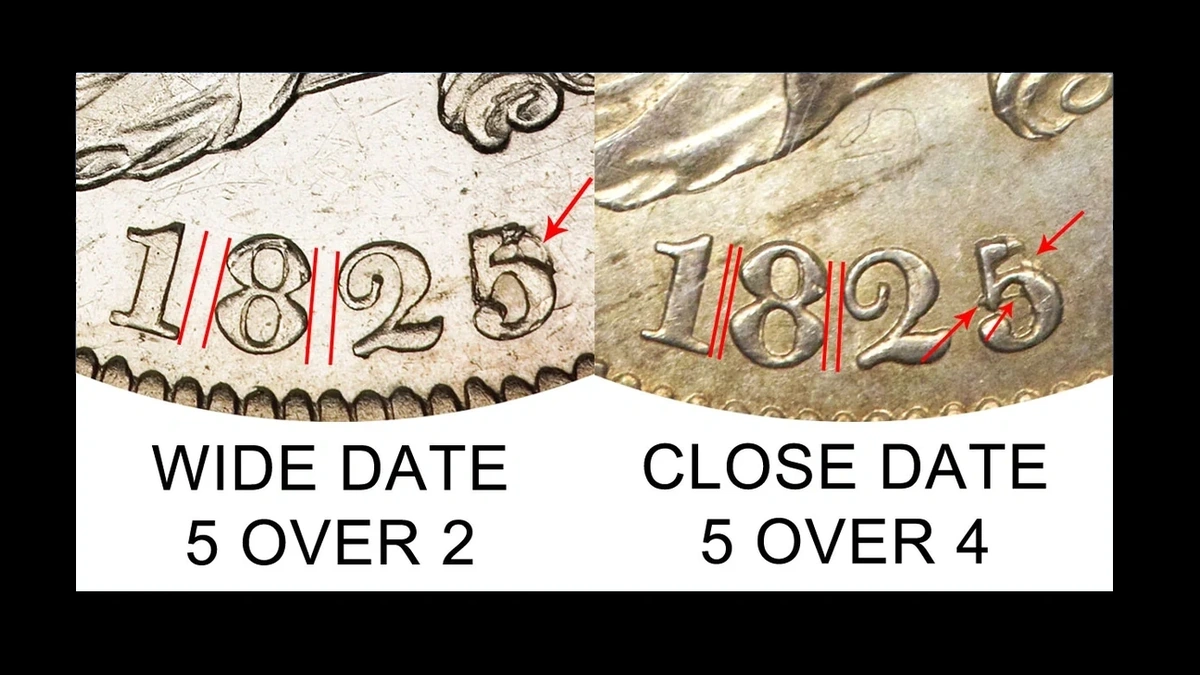
The final digit is a useful starting point for 1825 quarter errors: remnants of earlier numerals survive within and around the 5. An exceptional MS66+ overdate sold for $70,500 at Heritage in October 2014.
Estimated whole-coin values across the varieties and conditions below span $200–$80,000. Identify the date variety first, then separate a small reverse crack from evidence of contact between the dies.
1. 1825 Quarter Crowded Strokes around the Final 5: Overdate Error
The extra strokes record an earlier date on a reused die, the steel tool that stamps a coin. A newly punched digit did not entirely eliminate the previous numeral features.
The current designation 1825/4/2 reflects that history. Older labels may instead read 1825/2, 1825/3, or 1825/4, so the physical variety should guide the identification.
How to Identify
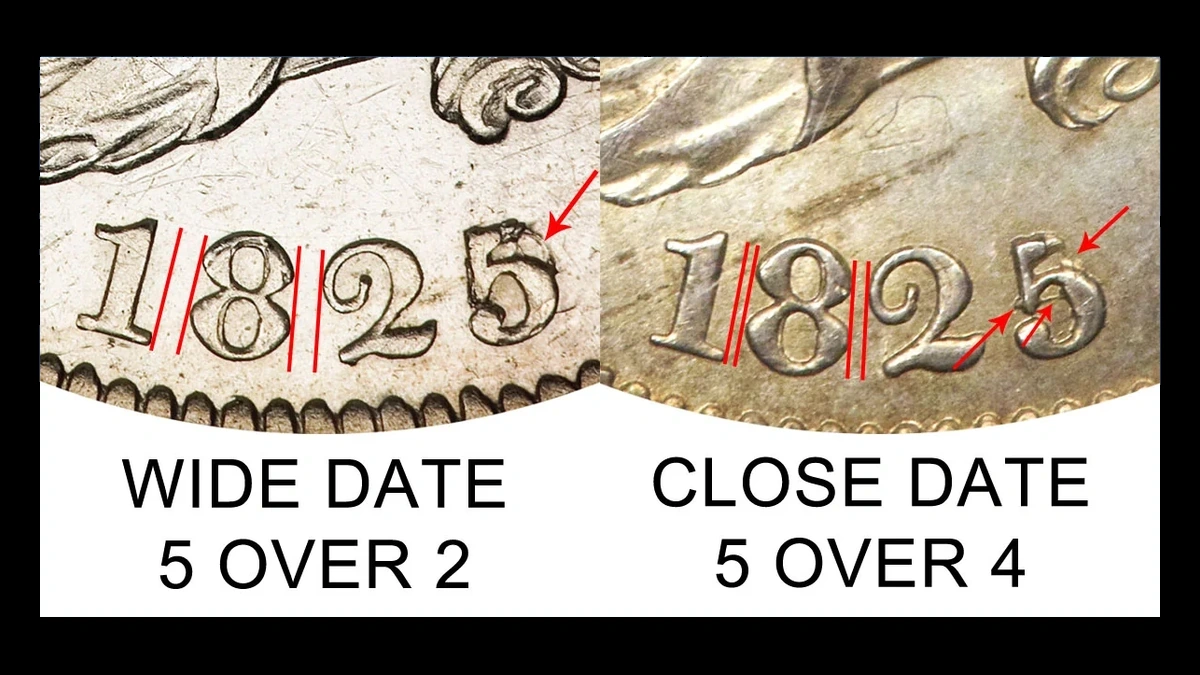
Examine the inside and edges of the last 5 under magnification, looking for raised remnants connected naturally to the numeral. Fresh cuts or material lodged beside the digit do not represent an earlier punch.
Use an attributed example of the same variety and compare the neighboring date figures too. Wear may blend the remnants, so forcing every stroke into a complete earlier number can create an inaccurate reading.
An abbreviated older label does not change the visible issue year. If the wording differs, a full variety comparison is more useful than treating the label alone as evidence of another date.
What It’s Worth
$200–$80,000 is an estimated whole-coin range across varieties and preservation levels. PCGS records the $70,500 Heritage result in October 2014 for an outstanding MS66+ example.
B-2 is relatively more available than scarce B-1, so variety affects the comparison alongside wear and surface condition. A bold underlying stroke does not make an ordinary circulated coin equivalent to the high-grade auction specimen.
2. 1825 Quarter A Raised Connection from UNITED to the Rim: Die Crack Error
On a documented B-2 in PCGS VF25, a short line joins the reverse rim to the left serif of the I in UNITED. A serif is the small projection at the end of a letter stroke.
The raised line formed when silver entered a crack in the die. It is a feature on the coin’s surface rather than a split through the coin itself.
How to Identify
Find the I between N and T and trace outward from its small left projection. Compare the full rim-to-letter connection with the recorded B-2, keeping the lettering and border in one image.
Use low-angle light to assess the ridge and inspect the center of the mark as well as its edges. A scratch may have raised lips beside a recessed cut, which is different from a raised copy of a die crack.
The feature is small, so a large network of cracks is not required for this match. Leave dirt and the original surface undisturbed rather than cleaning the line to make it more visible.
What It’s Worth
$200–$3,000 is estimated for worn to lightly worn B-2 examples with this feature. The PCGS VF25 B-2 sold for $546.25 at Heritage on February 5, 2010.
That result values the entire substantially circulated coin. Its small crack should not be assigned an independent price apart from the quarter’s remaining detail and surfaces.
3. 1825 Quarter Faint Shapes from the Other Face: Die Clash Error
Light clashing is described in a collector’s record of an AU58 B-1 quarter. The precise transferred shapes need to be matched to that coin’s photographs.
When the dies touch with no blank between them, parts of their designs can mark one another. Coins struck afterward may show traces of the opposing image in unexpected places.
How to Identify
Compare both faces at the same scale and align the opposing designs appropriately, including their mirrored relationship. Several connected shapes that fit together make a stronger case than a single unexplained line.
The long raised line behind the lowest arrowhead identifies the reverse die but does not itself prove a clash. A scratch in a die can create a raised line without transferring any design from the other face.
Change the light to examine weak traces that may vanish in a flat photograph. Keep the specific B-1 attribution with the comparison rather than borrowing the B-2 crack as clash evidence.
What It’s Worth
$500–$15,000 is an estimated whole-coin range for circulated to lightly worn B-1 quarters with identifiable light clashing. The scarce variety can account for substantial value even if the transferred image is faint.
The $546.25 VF25 B-2 sale is a different, more available variety in a lower state of preservation. It should not be applied directly to the AU58 B-1 record.
Conclusion
Start with the overdate and full variety before deciding what another unusual line means on an 1825 quarter. The rim-to-I crack is a specific B-2 feature, while the B-1 clash needs a match to an opposing design.
Preservation and variety rarity shape the whole-coin estimates more than the presence of one extra stroke. Keep the exceptional MS66+ sale distinct from the circulated examples used to explain smaller features.