Rare 1922 Dollar Errors (List & Pictures)
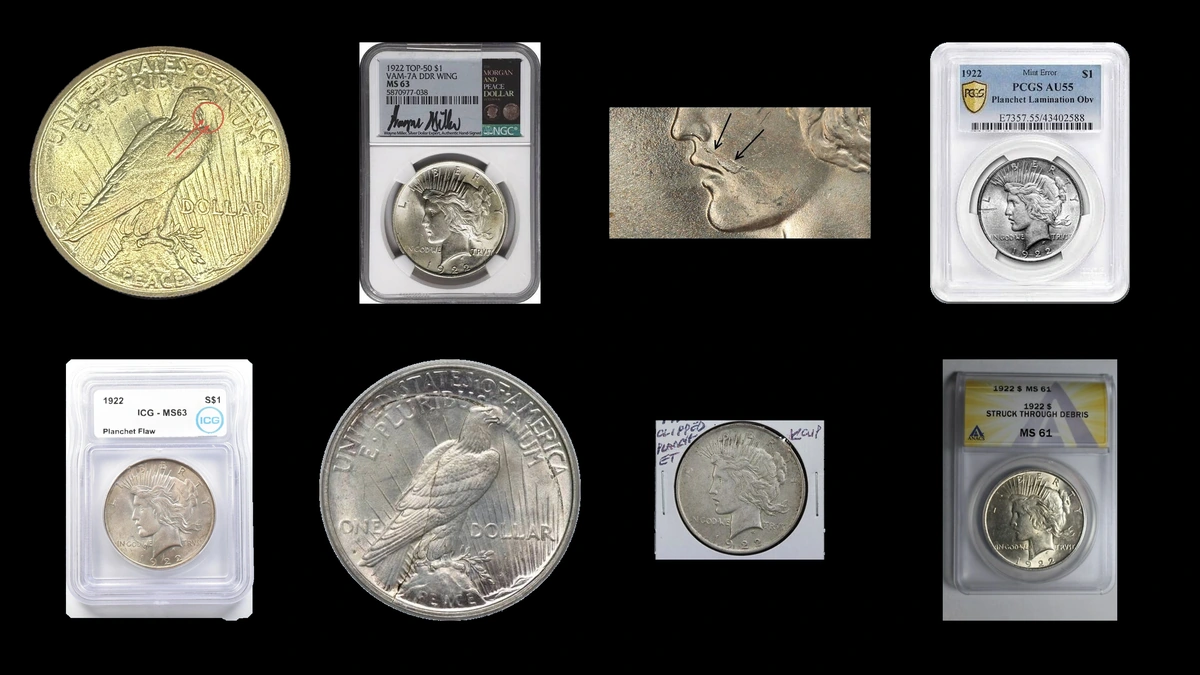
A small “moustache” under Liberty’s nose and a large unstruck crescent tell very different stories. Both appear among the 1922 Peace dollar errors covered here.
Estimated whole-coin values span $60–$40,000. A 1922-S dollar struck 15% off-center brought $32,200 at the 2003 ANA auction, where its PCGS MS65 grade reflected strong preservation.
Look for repeated or raised design first, then separating metal, edge defects, and misplaced strikes.
1. 1922 Dollar Hair Traces among Reverse Details: Die Clash Error
Dies can hit each other when no blank is between them. This contact leaves marks that later coins may copy from the opposite design.
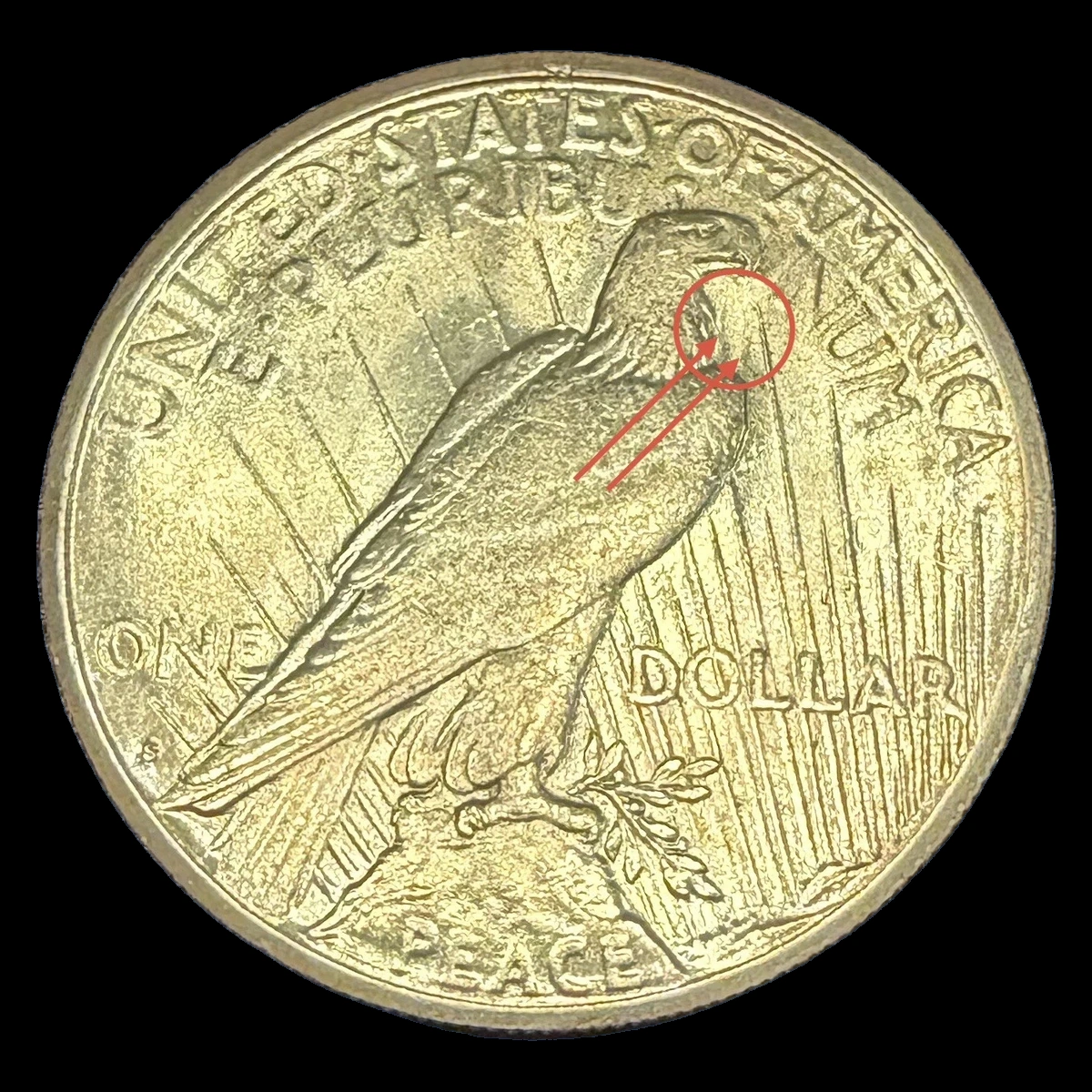
Philadelphia reports describe possible Liberty hair traces right of the leaves and below DOLLAR. A Denver example has a separate mark between the eagle and the N of UNUM.
How to Identify
Compare the faint mark with the corresponding part of Liberty’s portrait. Its shape and position should fit contact between the two dies, not just resemble a random line.
Keep the Philadelphia and Denver locations separate. A scratch with a sunken groove or pushed edges does not establish transferred design.
What It’s Worth
$60–$600 is the estimated whole-coin range for a clearly identified clash. A recognizable design fragment has more appeal than an unexplained fine line.
The Denver example can also show tripled leaves. Those features belong to one coin and do not create separate values to add together.
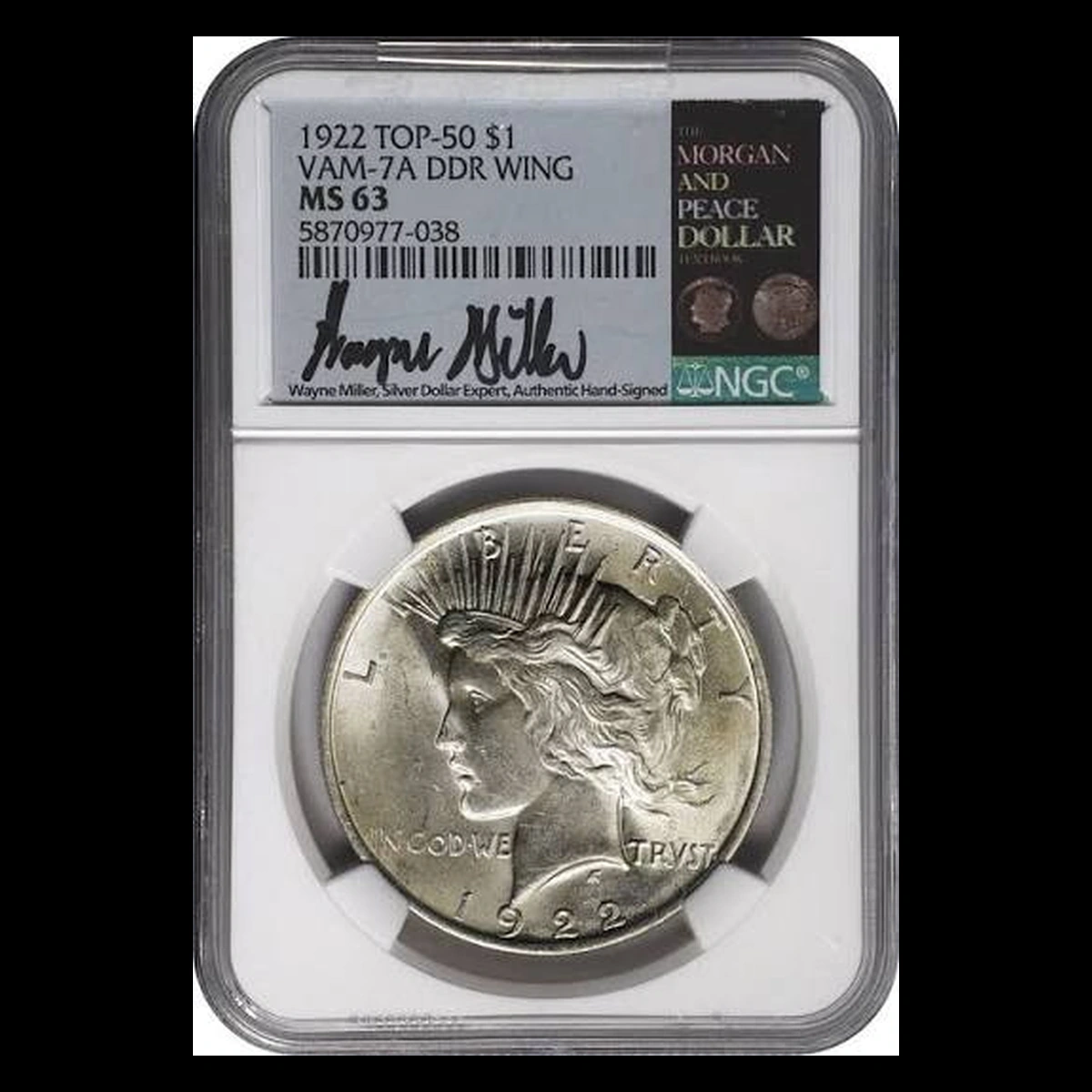
2. 1922 Dollar Extra Date Edges or Repeated Leaves: Doubled Dies Error
Philadelphia date doubling appears along the lower-right sides of the numbers. The repeated detail was already in the die, so the finished dollar did not need a second strike.
Other Philadelphia patterns involve reverse leaves, eagle details, letters, and rays. Denver has a separate tripled-leaf variety.
How to Identify
For the Philadelphia date, examine the lower-right outlines before judging flat shelves that may occur on the left. The shelves can result from movement during striking and are a different effect.
On the reverse, match the correct mint and specific pattern around the leaves, eagle, ONE, DO, or nearby rays. Do not expect every reported location on one coin.
Denver’s tripled leaves need their own comparison. Use several matching details instead of assigning a variety from one bright edge in a photograph.
What It’s Worth
$75–$2,000 is the estimate for identified repeated-date or reverse-design varieties in commonly collected conditions. Clear separation and original surfaces support stronger interest.
A different-year 1926-S VAM-5 doubled-reverse dollar graded AU58 has a recorded $750 sale from April 2019. Its pattern is not the 1922 Philadelphia or Denver variety.
3. 1922 Dollar A Raised Moustache below Liberty’s Nose: Die Cracks and Breaks Error
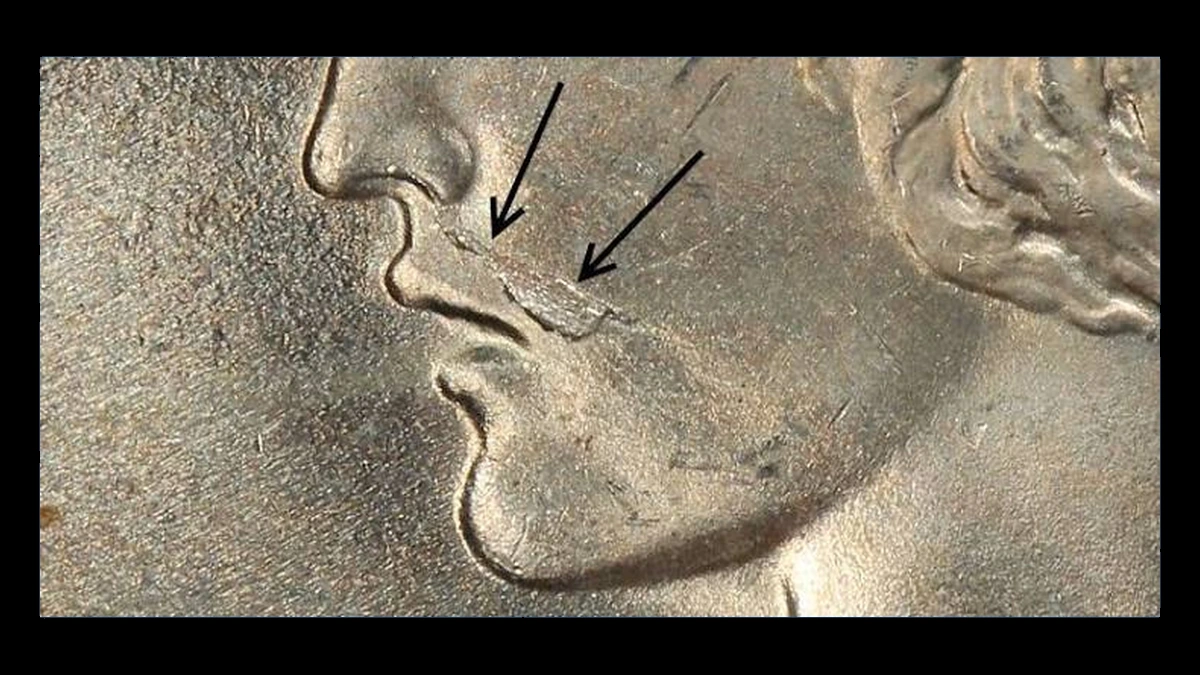
The Philadelphia VAM-12A Moustache variety has a raised crack between Liberty’s nose and upper lip. Silver filled a damaged area in the die, creating the extra metal.
A supporting crack near the crown base helps identify it. Denver has different breaks around the hair bun and letters in LIBERTY, including larger broken die sections that stayed in place.
How to Identify
Inspect the space beneath the nose under side lighting. Match both the raised moustache-shaped feature and the supporting crown crack.
A scratch or attached speck in that area does not identify VAM-12A. The 1923 Whisker variety is also a separate coin, despite its similar nickname.
For Denver, compare the actual hair-bun or R, T, or Y break with that mint’s reference. Do not use a Philadelphia facial mark to identify a Denver reverse or letter feature.
What It’s Worth
$75–$2,500 is the estimated span across identifiable 1922 cracked- and broken-die varieties. Small ordinary lines often add less than strong named features.
A Moustache example graded MS64 has a recorded $1,438 auction result from August 2011. That price belongs to the complete Philadelphia coin, including its preservation.
4. 1922 Dollar A Flap or Missing Surface Flake: Lamination Error
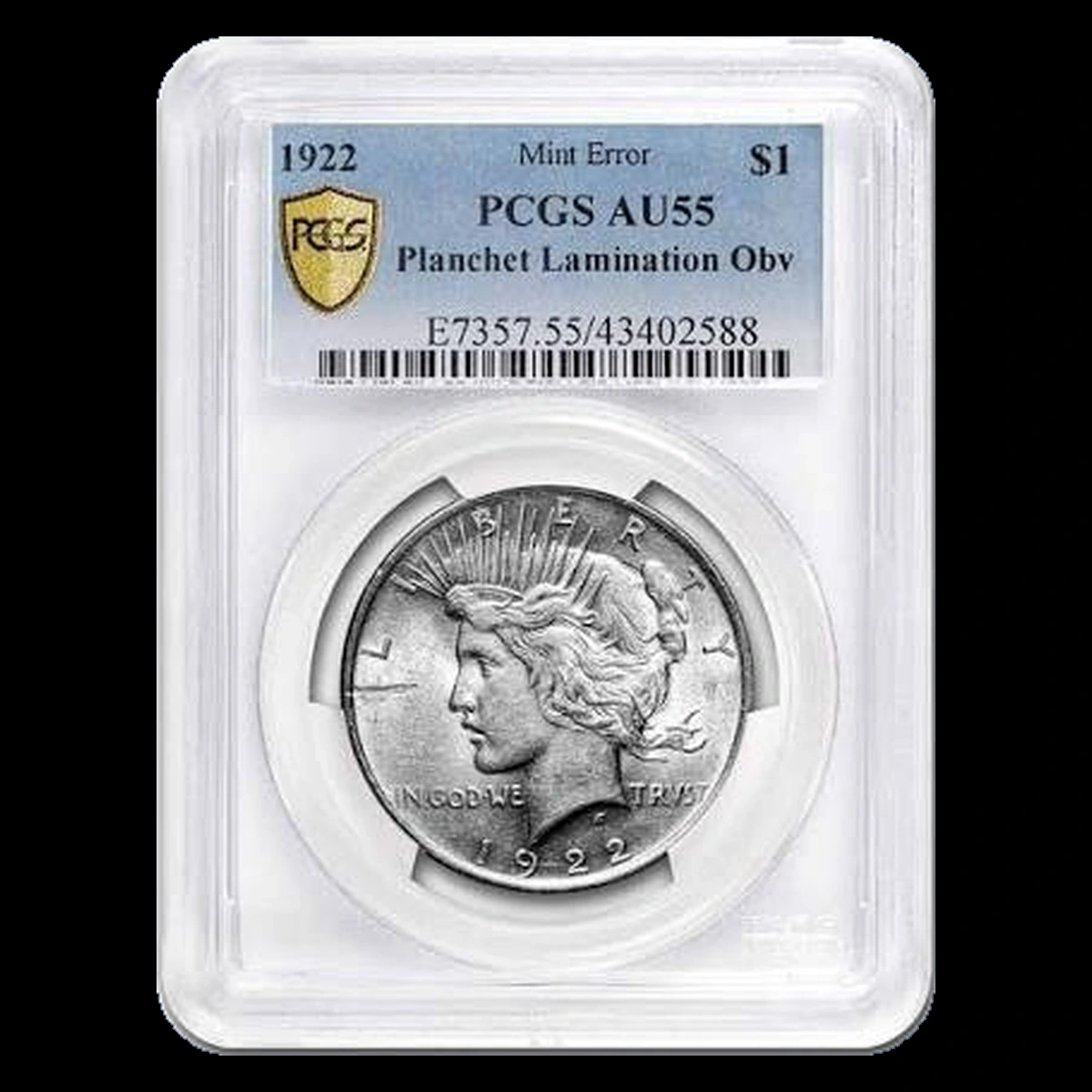
Weakness within the silver alloy can let a thin layer lift or fall away. This is lamination, which may appear as an attached flap or an opening where a flake detached.
Recorded 1922 examples include Philadelphia coins and a separate San Francisco lamination. Their affected faces and locations should not be combined.
How to Identify
Examine the boundary and any design remaining on the flap. A natural layered split differs from a broad scrape with cut edges and tool marks.
Leave attached metal where it is. Peeling it away removes the connection that helps show how it belonged to the original surface.
What It’s Worth
$75–$850 is the estimated range for authenticated laminations. Size, the remaining attachment, and the dollar’s condition influence the whole-coin value.
A Philadelphia front-lamination example graded NGC MS64 brought $192 in July 2021. A small detached flake should not automatically receive the estimate for a large retained flap.
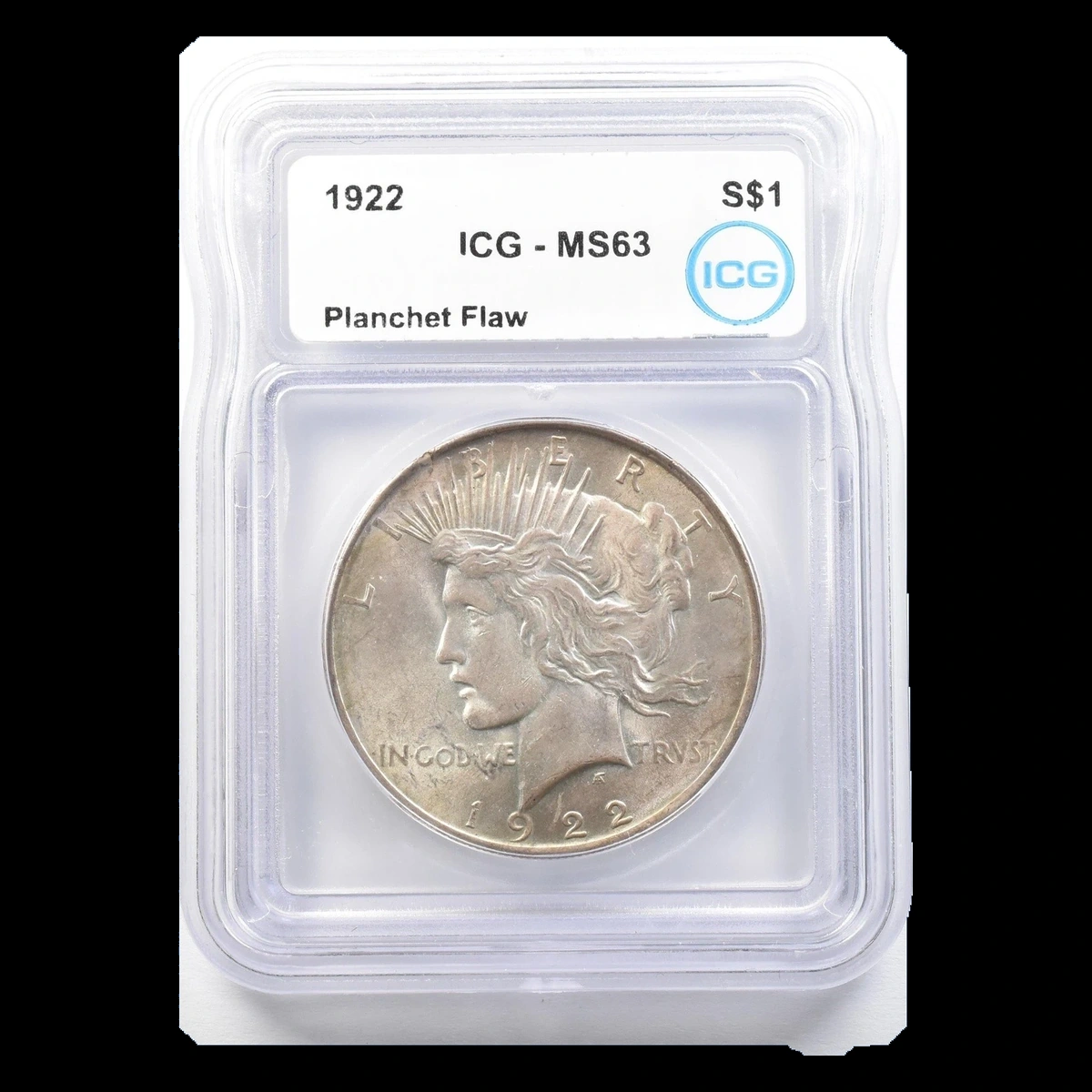
5. 1922 Dollar Design Struck over Irregular Metal: Defective Blank Error
Some blanks have a surface flaw before they receive a design. Two Philadelphia dollars were cataloged as defective-blank strikes, one at ANACS AU55 and another at AU58 Details.
The labels do not establish that the two flaws have the same shape or cause. Their useful evidence lies where the design meets the abnormal metal.
How to Identify
Follow letters or portrait details into the irregular area. Check whether the strike formed around an existing flaw or whether later damage cut through finished detail.
Look for scraping, corrosion, and freshly disturbed borders. If the flaw reaches the edge, photograph that connection as well.
A normal Peace dollar weighs about 26.73 grams and measures 38.1 millimeters. Those measurements offer context but cannot prove the cause of a rough patch.
What It’s Worth
$75–$1,000 is the estimate for a confirmed defective-blank dollar. The AU58 Details description also signals a separate condition problem that must remain part of the valuation.
A 1923 cracked-planchet dollar graded PCGS MS64 brought $432 in March 2023. That nearby-year comparison has a specific crack, so its price does not identify an unexplained surface flaw.
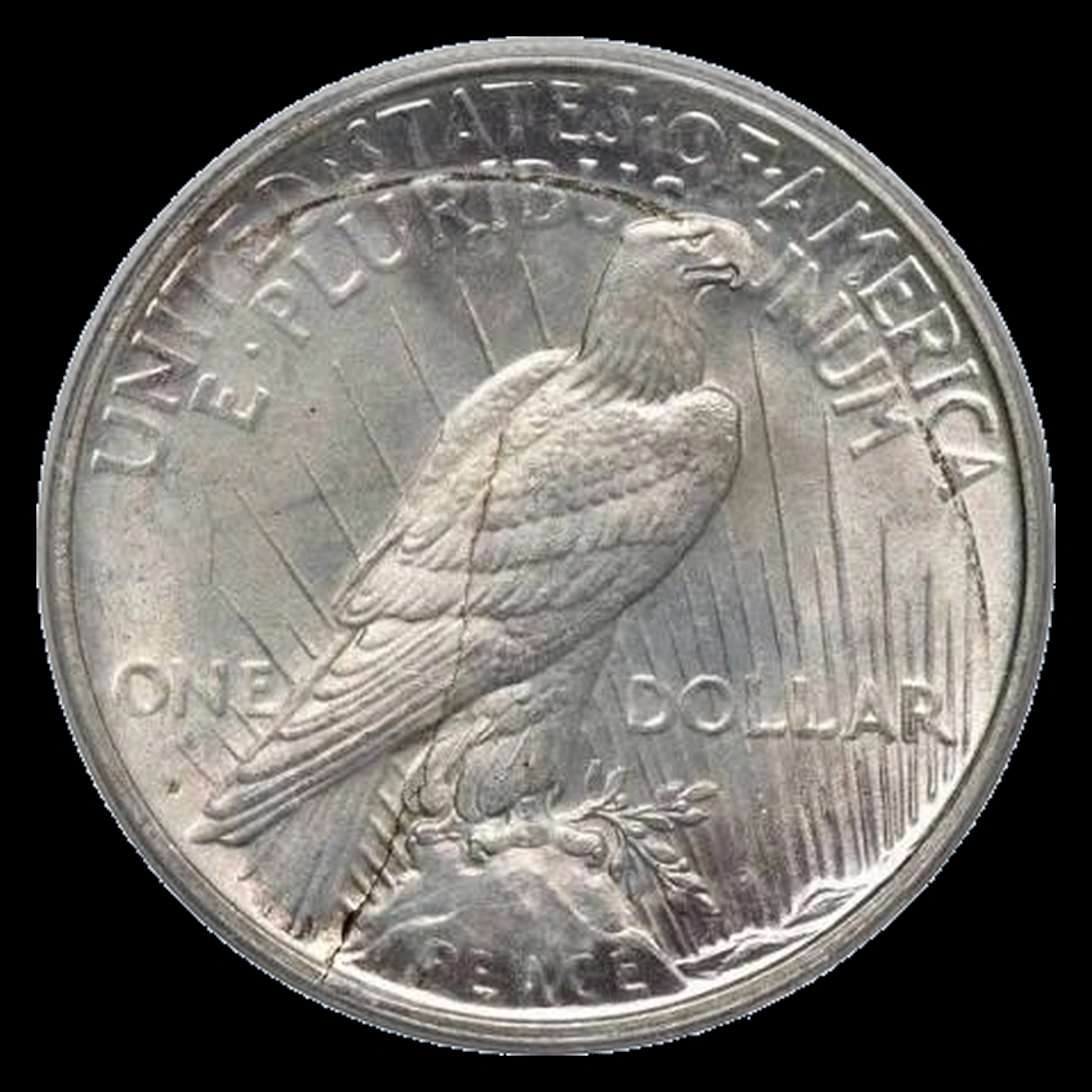
6. 1922 Dollar An Opening into the Silver: Cracked Planchet Error
A cracked planchet has an actual split in the coin’s metal. It differs from a raised line copied from a cracked die.
A dealer gallery describes a quarter-inch crack, while a separate auction coin graded PCGS MS62 has a quarter-inch crack at five-thirty. Only the latter description supplies that position.
How to Identify
View the edge where the opening begins, then trace it onto the face. Never flex the coin to test whether the gap moves.
Examine both sides for bending, cuts, or a later blow that could have forced the silver apart. The fracture walls and nearby struck detail should support an original metal defect.
What It’s Worth
$100–$1,200 is the estimate for authenticated cracked blanks. A visible original opening can add interest, but severe later damage still affects the price.
The PCGS MS62 quarter-inch-crack example brought $180 in July 2021. That result applies to an actual split, not a raised die-crack line.
7. 1922 Dollar A Bite Missing from the Edge: Clipped Blank Error
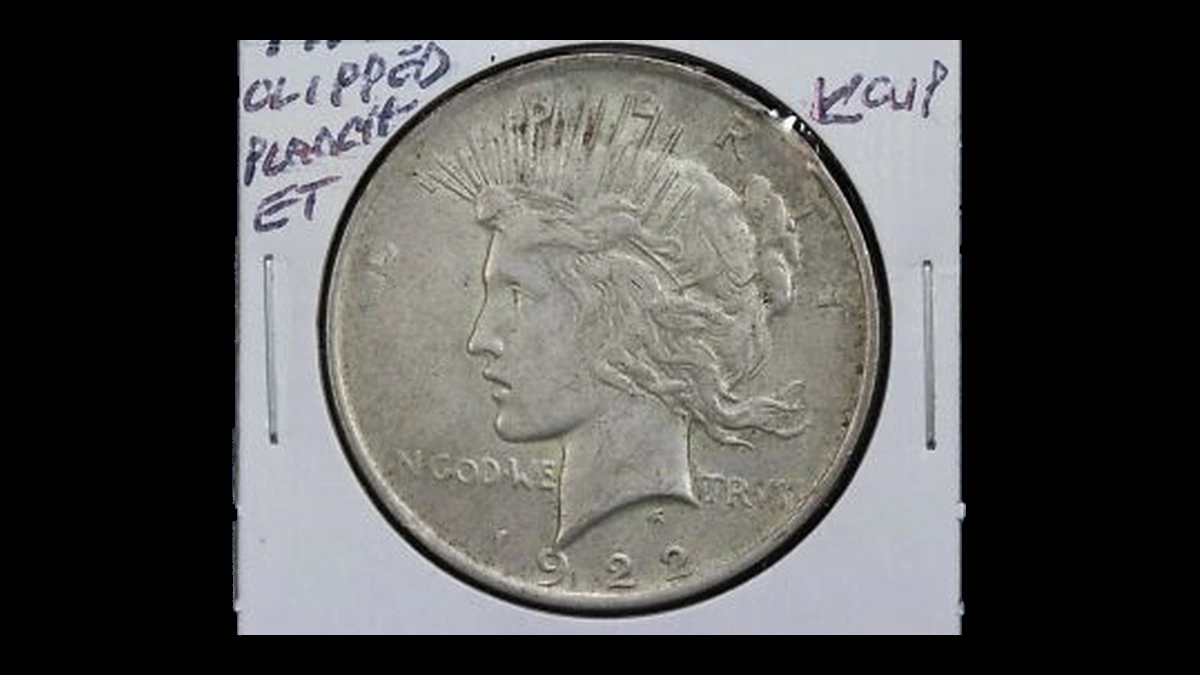
A blank cutter can overlap an earlier hole in the strip, leaving an incomplete silver disc. The remaining metal then receives the dollar design.
Philadelphia examples include small upper-edge clips described near one or two o’clock. A separate PCGS AU58 coin has a 2% clip without a stated position.
How to Identify
Look at how the rim and nearby letters approach the gap. Natural weakness and softened transitions can support a blank that was incomplete before striking.
Inspect the inner wall for saw marks, filing, or fresh burrs. Old cuts can darken, so matching color alone does not prove a mint origin.
A lighter weight is expected when silver is missing, but cutting also reduces weight. Keep the actual gap, adjoining design, and complete coin in the comparison.
What It’s Worth
$150–$1,500 is the estimated whole-coin range for genuine clipped Peace dollars. A small 2% gap should be compared with other small clips, not dramatic missing sections.
Readable identity, a natural boundary, and pleasant surfaces help support the estimate. A gouged or filed rim does not earn the same error premium.
8. 1922 Dollar Weak Patches or Shaped Depressions: Strike-Through Error
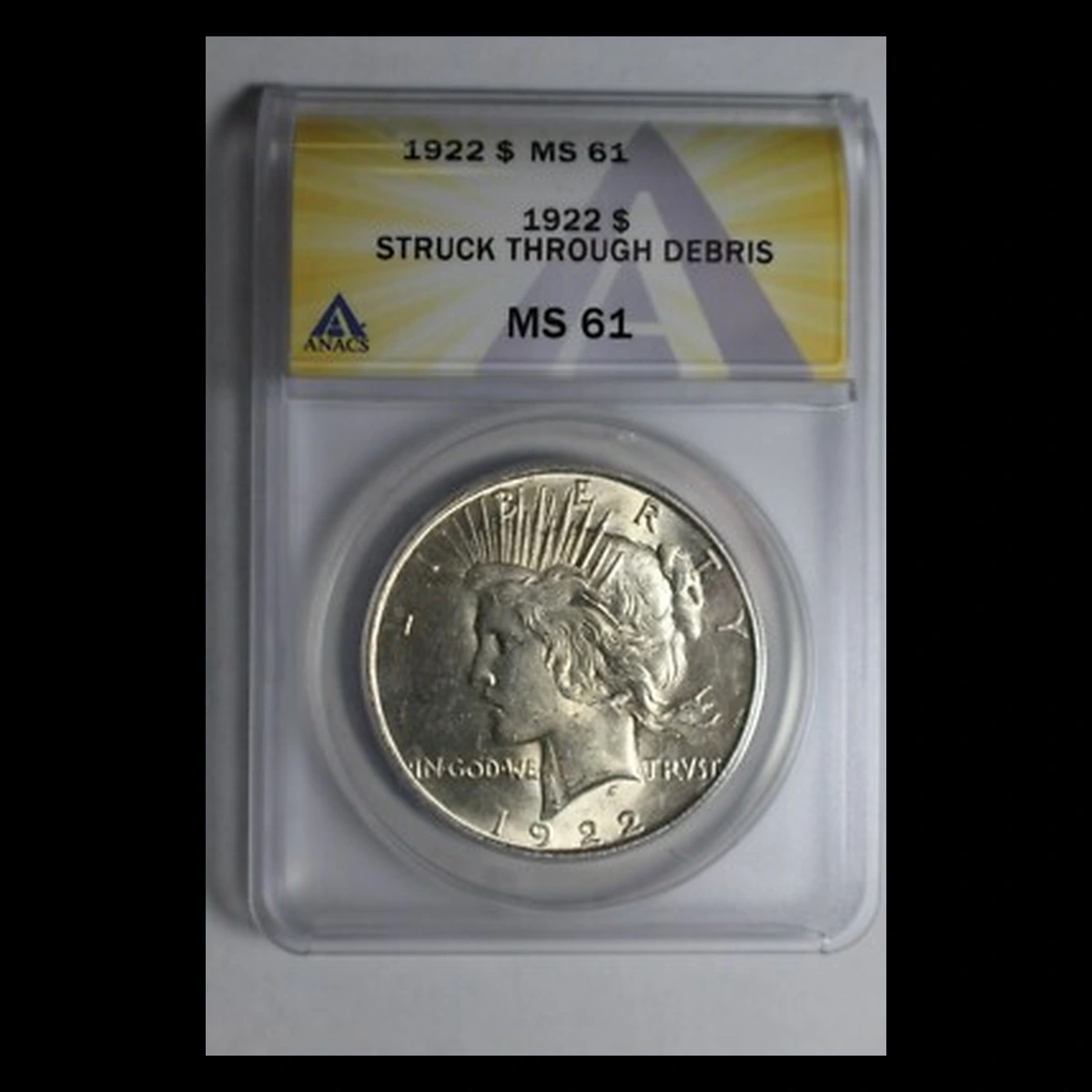
Material between a die and the blank can interrupt the design. The resulting mark depends on the obstruction and how it met the silver.
Reported 1922 examples include extensive weakness on both faces, a reverse line below DOLLAR, and a metal-piece impression across the last 22 in the date. These are separate specimens.
How to Identify
Decide whether the feature is a narrow line, a shaped depression, or a broad weak area. Then compare the corresponding example rather than treating every mark as a wire impression.
Look at where normal detail stops and how the boundary formed. Circulation wear smooths high points, while a later gouge can leave cutting tracks or pushed metal.
For the date example, keep both final digits and nearby undamaged surface in view. For widespread weakness, examine both faces before naming an obstruction.
What It’s Worth
$75–$3,000 is the estimated range for minor through major authenticated strike-throughs. A clearly shaped impression generally tells more than a faint soft patch.
Coin World reports $552 in November 2024 for a 1922 dollar with significant struck-through areas on both faces. That result does not belong to the separate line or date-impression coins.
9. 1922 Dollar A Ledge along the Grooved Edge: Partial Collar Error
The collar is the ring that controls a dollar’s width and forms its edge grooves. When only part of the blank sits inside it, the exposed portion can spread into a step.
A recorded Philadelphia example was graded NGC AU58. Its description does not set one required step height or tilt for every partial-collar dollar.
How to Identify
View the edge from the side and rotate the coin slowly. Look for a transition between the normally grooved part and the metal that expanded outside the ring.
Check the neighboring rim for impacts or marks from jewelry mounting. A later blow or rolled edge can look uneven without having the original struck step.
What It’s Worth
$300–$3,000 is the estimate for authenticated partial-collar Peace dollars. A distinct step with preserved edge structure makes the error easier to judge.
The Philadelphia NGC AU58 example sold for $720 in March 2021. That is a whole-coin price, not an amount assigned to each bit of edge expansion.
10. 1922 Dollar Full Designs inside an Expanded Outline: Broadstrike Error
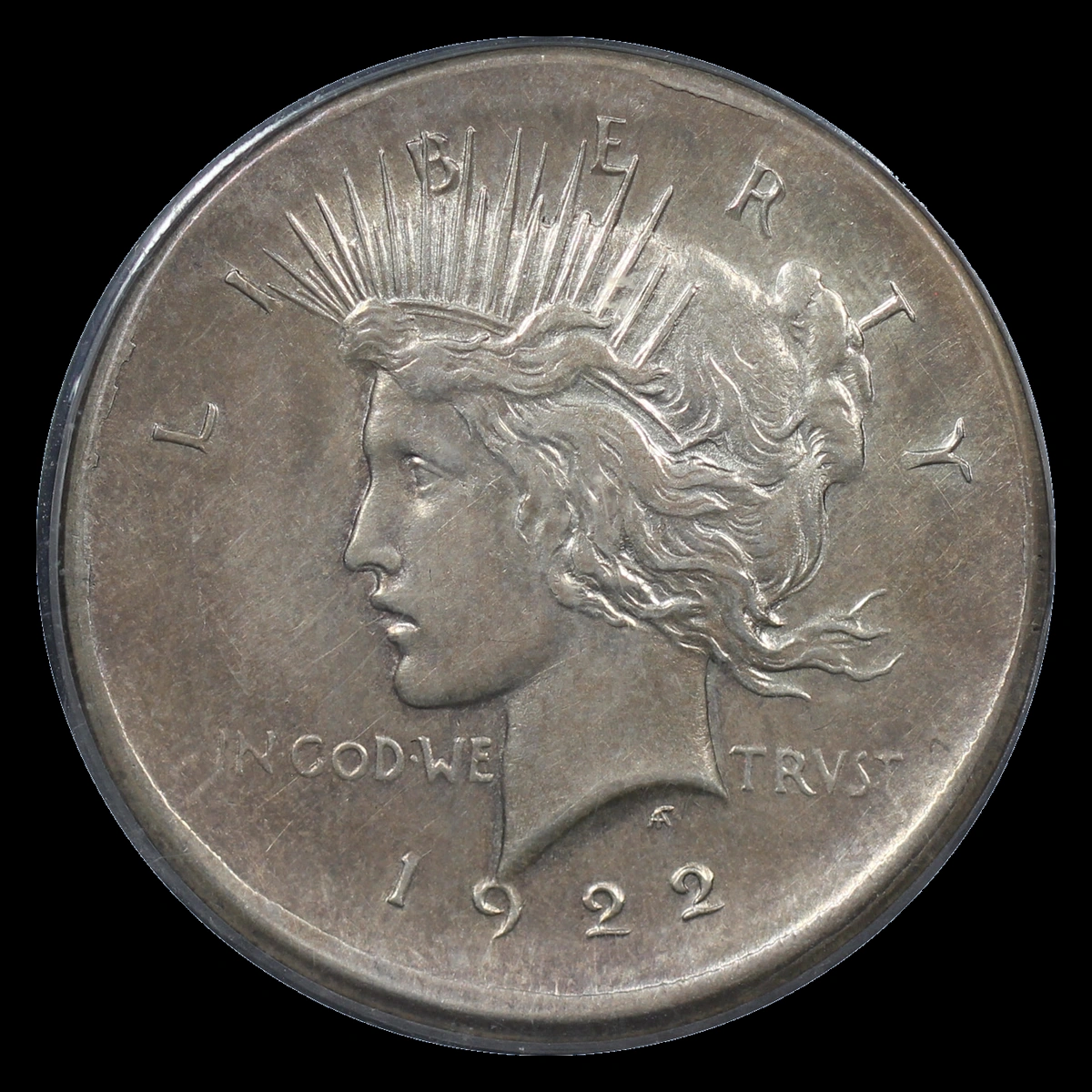
A broadstrike forms when the collar does not restrain the silver. Metal spreads outward, but the full intended design remains on the coin.
Separate 1922-S examples are recorded at PCGS AU55 and NGC AU58. Their grades should stay attached to their own specimens.
How to Identify
Trace the outer words and date on both faces before measuring the width. If part of the design runs beyond the metal, consider an off-center strike instead.
Compare the expanded border with the preserved design. Later flattening can widen a dollar at normal weight while crushing details and leaving pressure marks.
For a loose coin, measure across several directions using the normal 38.1-millimeter diameter as a reference. Natural metal spread should explain the outline, not grinding that removed the grooves.
What It’s Worth
$2,500–$10,000 is the estimated range for an authenticated 1922-S broadstrike. The size of the expansion and remaining surface quality guide the comparison.
A 1921 Peace-dollar broadstrike graded NGC AU58 sold for $7,762.50 in January 2009. That earlier coin has a higher-relief design and is not a sale of either recorded 1922-S example.
11. 1922 Dollar Shifted Designs beside Bare Silver: Off-Center Strike Error
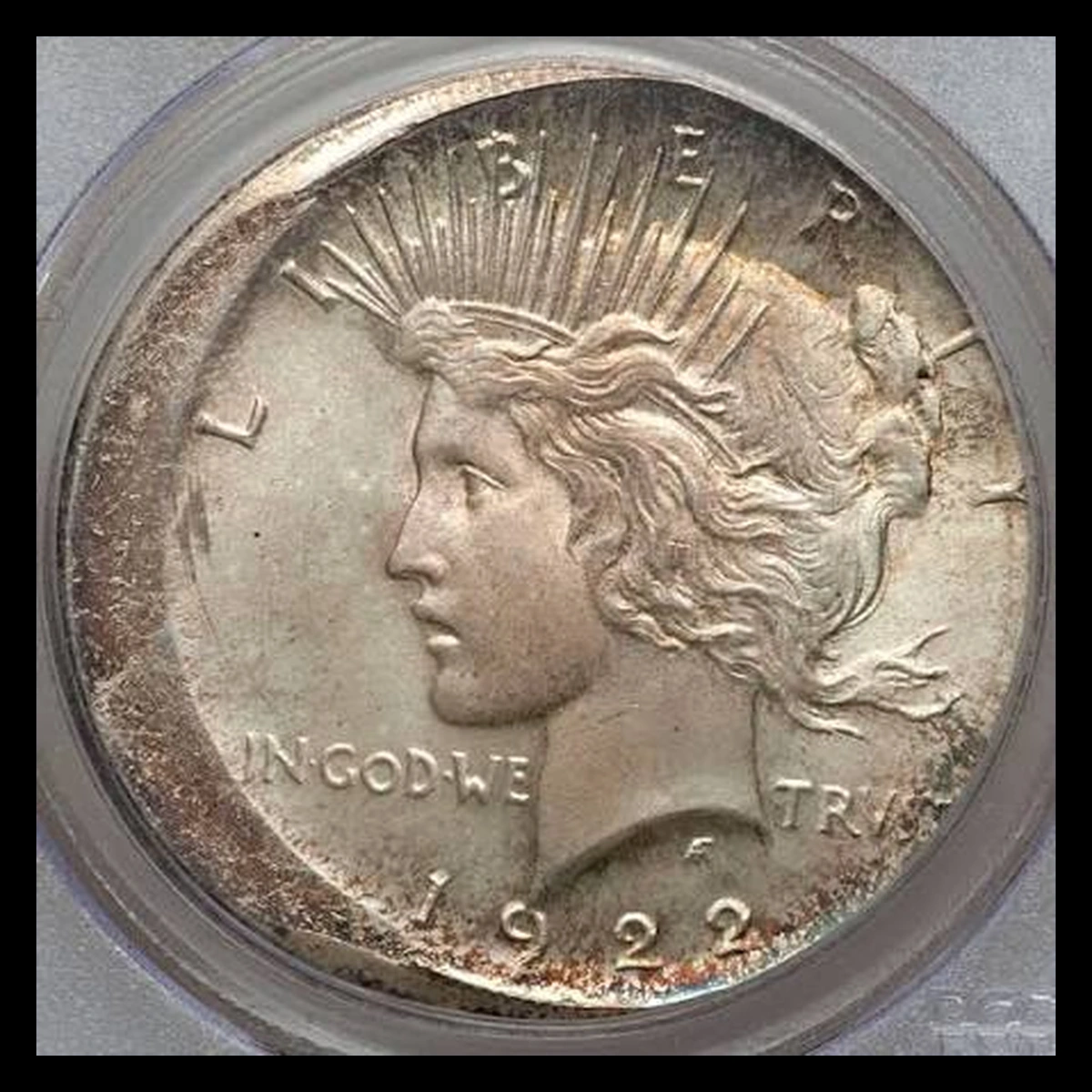
An off-center dollar has a blank that missed the dies’ proper position. Both designs shift, leaving an unstruck crescent and some intended detail beyond the opposite edge.
A documented 1922-S specimen was struck 15% off-center and graded PCGS MS65. Other 1922 reports need their own mint and displacement established.
How to Identify
Keep the bare crescent in the same physical position while comparing the portrait and eagle. Both faces should explain the same misplaced disc.
Find the surviving date and mintmark, then inspect the boundary of the struck area. Filed grooves, flattened patches, or added metal need a different explanation.
A large border with complete designs can be a broadstrike. Actual missing design opposite original unstruck metal is the key difference here.
What It’s Worth
$3,000–$35,000 is the estimated range for authenticated examples with clear displacement. Preservation and a readable date can make a substantial difference.
PCGS reports $32,200 for the 15% off-center 1922-S dollar at the 2003 ANA auction. Its MS65 grade and strong original error make it a different comparison from a worn coin with a small shift.
12. 1922 Dollar Earlier Designs beneath the Final Strike: Double Strikes Error
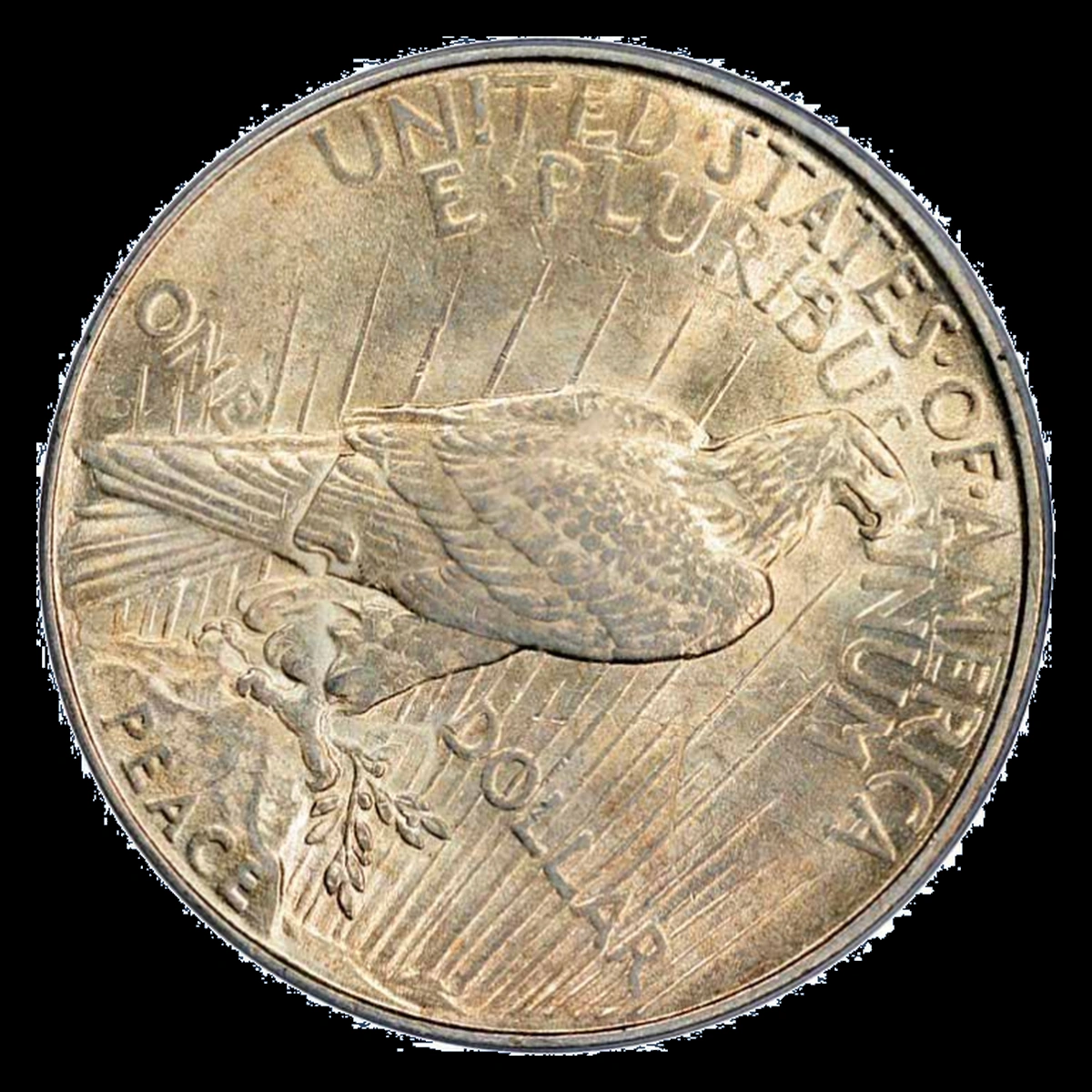
A Philadelphia PCGS MS64 dollar was cataloged with a 90-degree clockwise turn between strikes. An earlier mouth impression remains in Liberty’s neck, with matching rotated details near the eagle’s tail and legs.
The coin stayed within the collar, so it did not develop a large off-center crescent. A separate San Francisco owner’s flipover claim is less established.
That owner described PEACE on the front and date or portrait traces on the back. An ordinary NGC MS65 grade does not authenticate the proposed error.
How to Identify
For the Philadelphia example, compare the mouth remnant with the reverse tail and leg traces. The earlier details should fit the same quarter-turn on both sides.
A flipover requires recognizable reverse design on the front and front design on the back. Several connected details are needed, rather than an imagined letter or an ordinary clash mark.
Read the holder’s attribution as well as its number grade. Have the opposite-face design relationship checked before assigning a confirmed flipover description.
What It’s Worth
$8,000–$40,000 is the estimate for authenticated repeated strikes. A confirmed flipover may fit $15,000–$40,000, depending on clarity and condition.
A double-struck 1921 Peace dollar with a reverse scratch brought $8,400 in November 2024. Its 10-degree rotation and damage differ from the documented 1922 Philadelphia quarter-turn example.
The San Francisco claim cannot receive a confirmed-error price from an ordinary MS65 grade alone. Its repeated designs must first be established.
Conclusion
Read the metal before relying on a nickname or a high auction figure. A raised ridge, a peeling flap, an open crack, and an earlier struck design each need a different explanation.
Photograph both faces and the edge, keeping the mint and specimen details together. When one dollar combines several features, assess it as one coin rather than adding separate guide prices for every mark.