Rare 1882 Morgan Dollar Errors (List & Pictures)
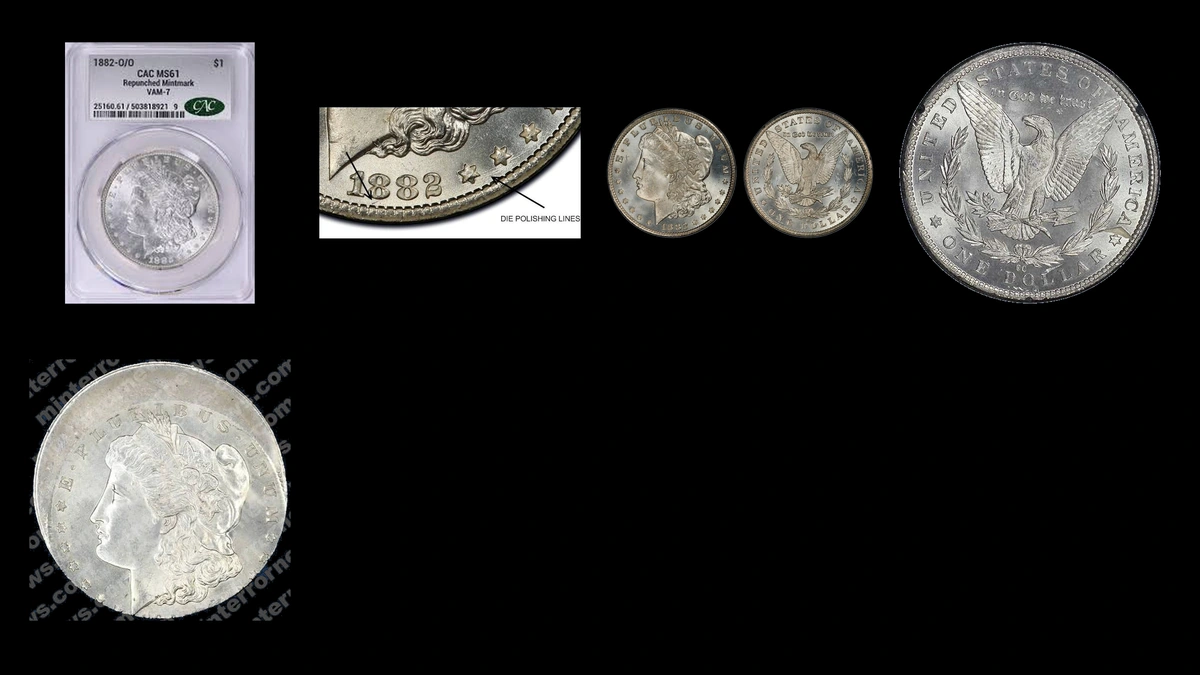
An earlier letter inside O or a tiny misplaced digit below the date can identify more than a large-looking surface flaw. The 1882 Morgan Dollar errors below also include distinct Carson City coins preserved in original government holders.
Estimated whole-coin values span $75–$100,000, with an exceptional O/S realizing $84,000 in August 2022. Examine the mintmark and date first, then follow surface defects and complete strike patterns without mixing the separate GSA specimens.
1. 1882 Dollar An Earlier Letter inside O: Repunched and Overpunched Mintmarks Error
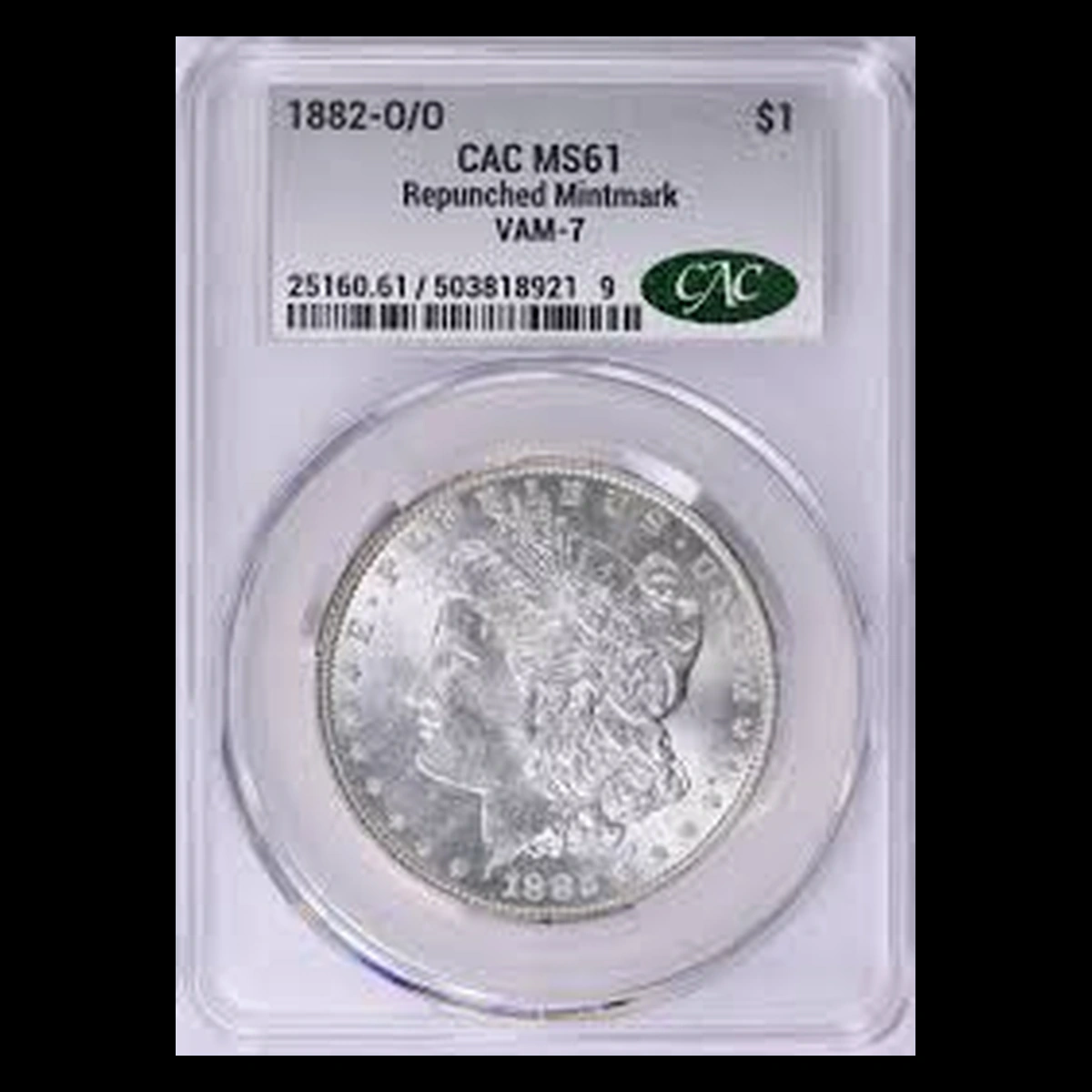
VAM-7 retains another O from a repeated mintmark punch. The O/S group instead preserves portions of an S beneath the New Orleans O.
VAM-3, VAM-4, and VAM-5 have differing S remnants described as flush, recessed, and broken. These terms describe surviving die details, not damage inflicted on the finished coin.
How to Identify
Inspect the earlier contour inside the O to decide whether it belongs to another oval or to an S. Overall thickness without recognizable letter shape is insufficient.
Use the appropriate variety and die-stage photograph because early and later impressions can differ. A strong O/S example is not a universal model for every flush, recessed, or broken-S appearance.
Change the light to distinguish metal relief from a reflection or flat ledge. Leave any dirt in place rather than digging into the small opening.
What It’s Worth
$75–$90,000 is estimated across the O/O and O/S varieties. PCGS records a strong O/S in MS65+ at $84,000 in August 2022.
A lightly worn VAM-3 in AU55 realized $104 at Heritage in August 2025. The difference demonstrates why preservation and the exact underletter pattern must both match the comparison.
2. 1882 Dollar Numeral Fragments near the Border: Misplaced Date Error
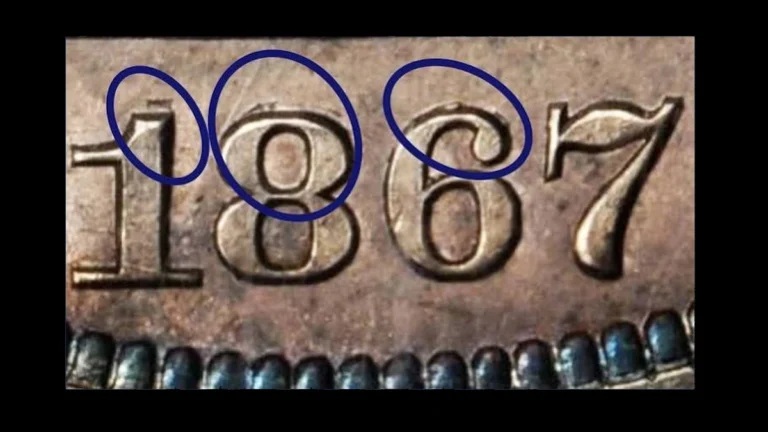
Carson City VAM-2 has a misplaced 1 below the first 8. Philadelphia VAM-24 instead has two remnants of 1 among the border teeth in that area.
An errant date-punch contact marked the die before the final date was completed. The Philadelphia remnants may weaken as the tool changes with use.
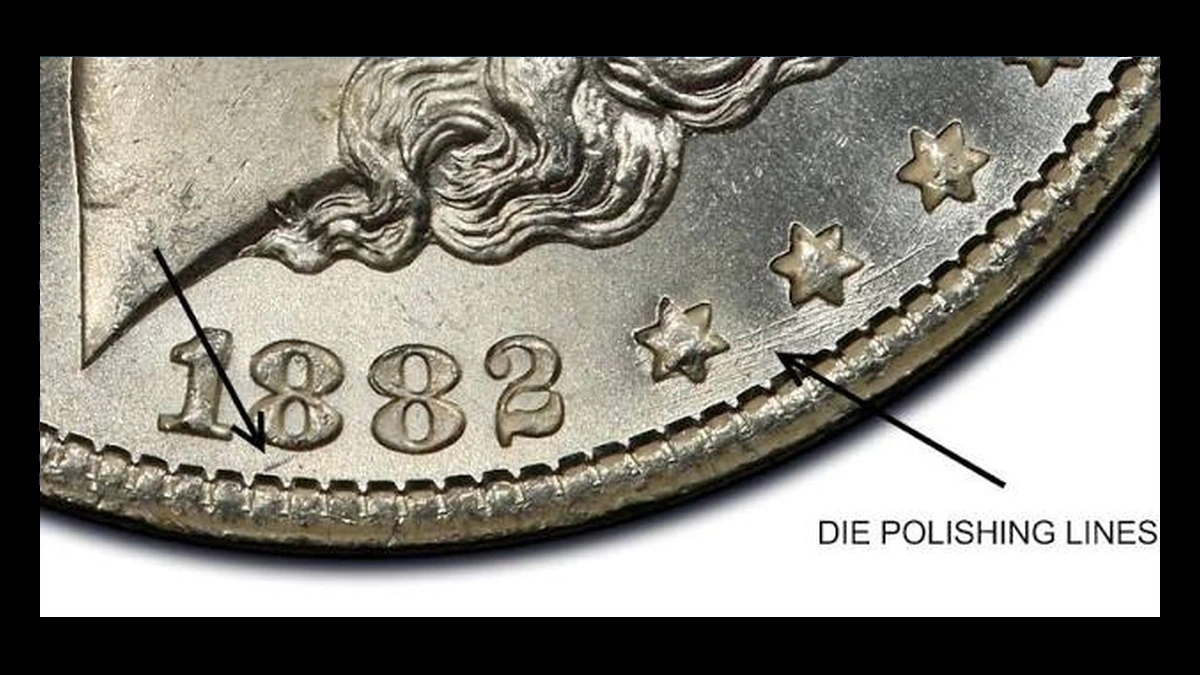
How to Identify
Choose the correct mint first: CC beneath the wreath identifies Carson City, while Philadelphia has no mintmark. Their misplaced numeral patterns are not interchangeable.
Inspect below the first 8 for a recognizable part of 1 rather than any raised speck. For VAM-24, also compare upper-ear texture and the diagonal tool line above the eagle’s inner claw with the published Philadelphia study.
What It’s Worth
$75–$5,000 is estimated across ordinary Philadelphia and better-preserved Carson City examples. PCGS records an 1882-CC VAM-2 in MS66 at $1,695 in August 2018.
That high-grade transaction does not price every mark under an 8. Mint, surfaces, and confidence in the die match remain part of the whole-coin assessment.
3. 1882 Dollar Opposite-Design Traces near the Neck: Die Clash Error
Carson City VAM-2A, VAM-2B, and VAM-2C represent different stages of a die history connected with the misplaced date. Their clash details must be matched separately.
When dies meet without a blank, contact can place parts of one design into the opposite tool. Later coins reproduce those traces without receiving another complete strike themselves.
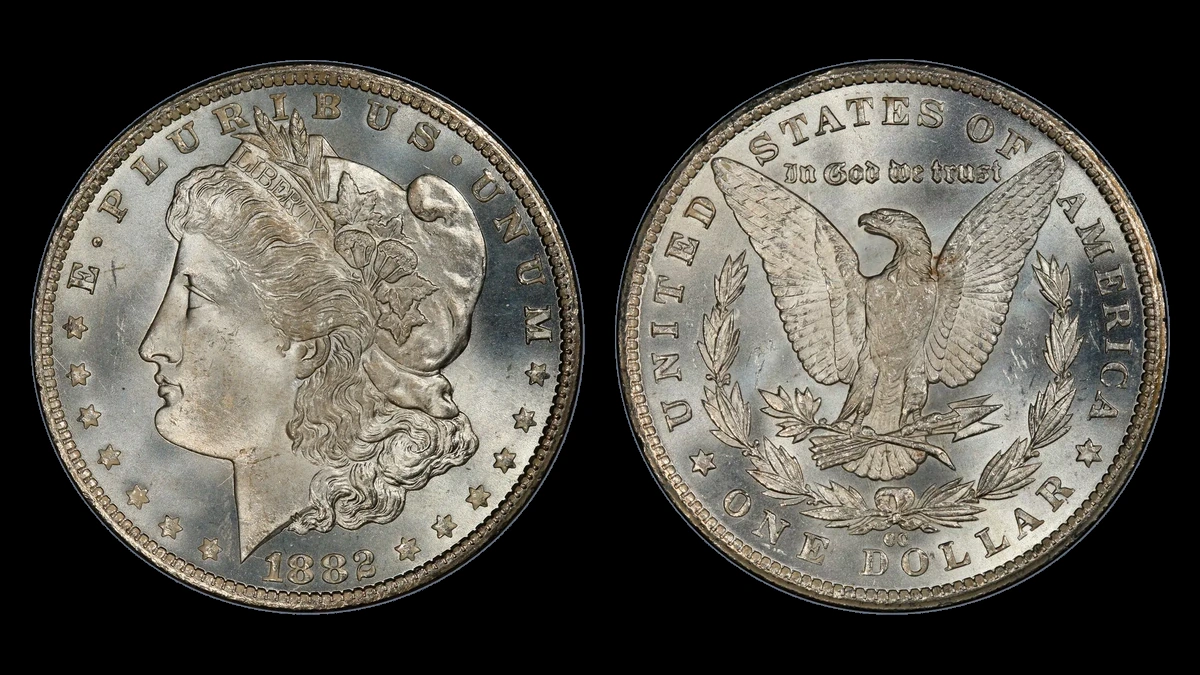
How to Identify
Compare neck-area lines and the corresponding reverse details with one attributed stage at a time. Matching the misplaced date alone does not establish which clashed form is present.
Trace the full pattern through neighboring landmarks and check relief under side lighting. Do not combine attractive close-ups from three different varieties into a diagnostic list for one coin.
What It’s Worth
$150–$6,000 is estimated for these 1882-CC clash varieties across ordinary worn and better unworn grades. PCGS records a Heritage VAM-2A MS66 sale at $999 in February 2017.
The transaction concerns one stage and grade. Carson City’s underlying collector value remains part of the total even when the clash is subtle.
4. 1882 Dollar A Shallow Patch after Metal Peeling: Detached Lamination Error
A Stack’s Bowers catalog lists an 1882-S detached lamination in AU55 Details, Cleaned. A thin portion of metal separated along an internal weakness, leaving an uneven exposed patch.
The cleaning is an additional condition problem, not the explanation for the original layer defect. The patch’s physical boundary still needs comparison with the actual coin.
How to Identify
Use low-angle light to inspect where the shallow opening meets the surrounding silver. Layered separation differs from a tool cutting a groove and pushing metal into a lip.
Look for scraping or corrosion while retaining the recorded cleaning distinction. A loose coin can be compared with the normal 26.73-gram standard, but weight loss alone cannot determine whether metal separated naturally or was removed later.
What It’s Worth
$75–$1,000 is estimated for genuine San Francisco detached laminations. The documented AU55 Details coin needs comparisons with similarly worn, cleaned surfaces.
An 1887 Philadelphia lamination in NGC MS65+ sold for $162 in July 2020. That other-year example shows that an authentic metal flaw need not command a large premium by itself.
5. 1882 Dollar A Front Impression and Separate Reverse Flaw: Strike-Through Error
Mint Error News illustrates an 1882-CC NGC MS64 in its GSA government holder with a front strike-through and a reverse planchet flaw. These are two observations on the same coin but need not share one cause.
Material interrupted the front strike, while the back has a defect in the original metal. The impression alone does not reveal what object blocked the die.
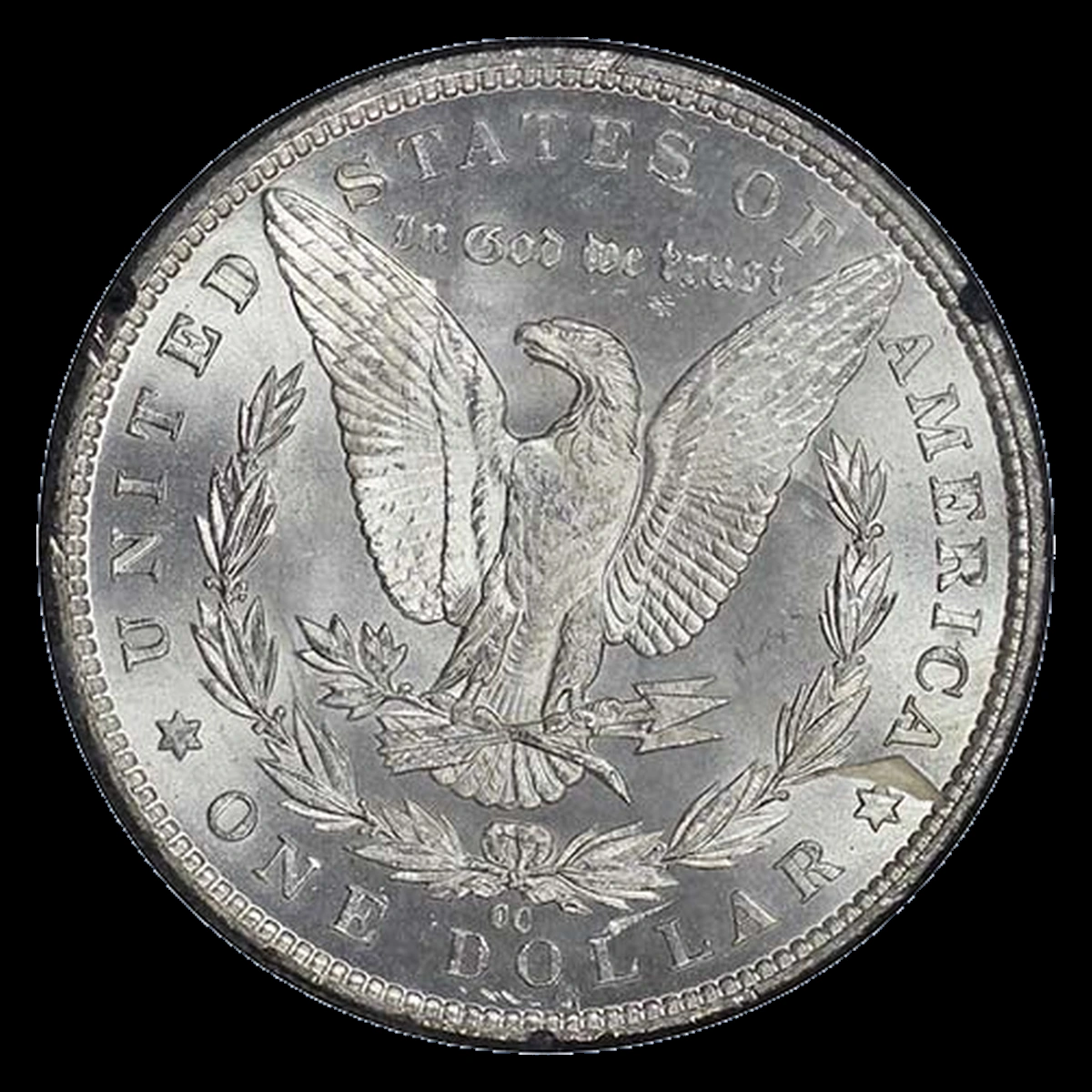
How to Identify
Label and compare both faces with the same holder record. On the front, trace the boundary where normal design meets the interruption and check for later sharp cuts or dragged silver.
Examine the reverse independently rather than naming it a second strike-through by association. Preserve any attached material or loose metal so the separate mechanisms can be assessed.
What It’s Worth
$400–$7,500 is estimated for an authenticated Carson City coin with comparable combined features. Their visibility and the complete dollar’s condition matter more than counting two error labels.
An 1899-O Morgan retaining wood realized $504 in October 2022. That different-year retained-object sale cannot identify the obstruction on the MS64 or supply two additive prices for its faces.
6. 1882 Dollar Earlier Outlines beneath a Centered Image: Double Strike Error
The GSA-holder NGC MS62 1882-CC first received a strike about 5% toward 6 o’clock, leaving border teeth beneath the date outside the metal. After moving into a better position, it received a second, more centered strike.
The designs shifted without obvious rotation between them. This is a different coin from the single 15% off-center Grand Snake.
How to Identify
Use the date and lower border to trace the first impression beneath the later image. Several distant details on both faces should agree with the earlier southward displacement and later northward position.
The full design relationship is more informative than one doubled-looking letter. The GSA holder conceals the edge, so visible rim detail cannot establish an extra partial-collar error.
What It’s Worth
$15,000–$60,000 is estimated for major authenticated 1882-CC double strikes with comparable evidence and preservation. The MS62 realized $29,900 on August 14, 2006.
The sale includes its two impressions, Carson City identity, and original government holder as one collectible. The strikes are not separately priced objects.
7. 1882 Dollar A Broad Unstruck Area beside the Design: Grand Snake Off-Center Strike Error
NGC certified the Carson City dollar known as the Grand Snake at MS65 and 15% off center. Both faces show incomplete designs beside original unstruck metal.
The coin survives in its GSA holder and became publicly documented again in 2022. It represents a single off-center specimen, distinct from the MS62 double strike whose first blow was only 5% displaced.
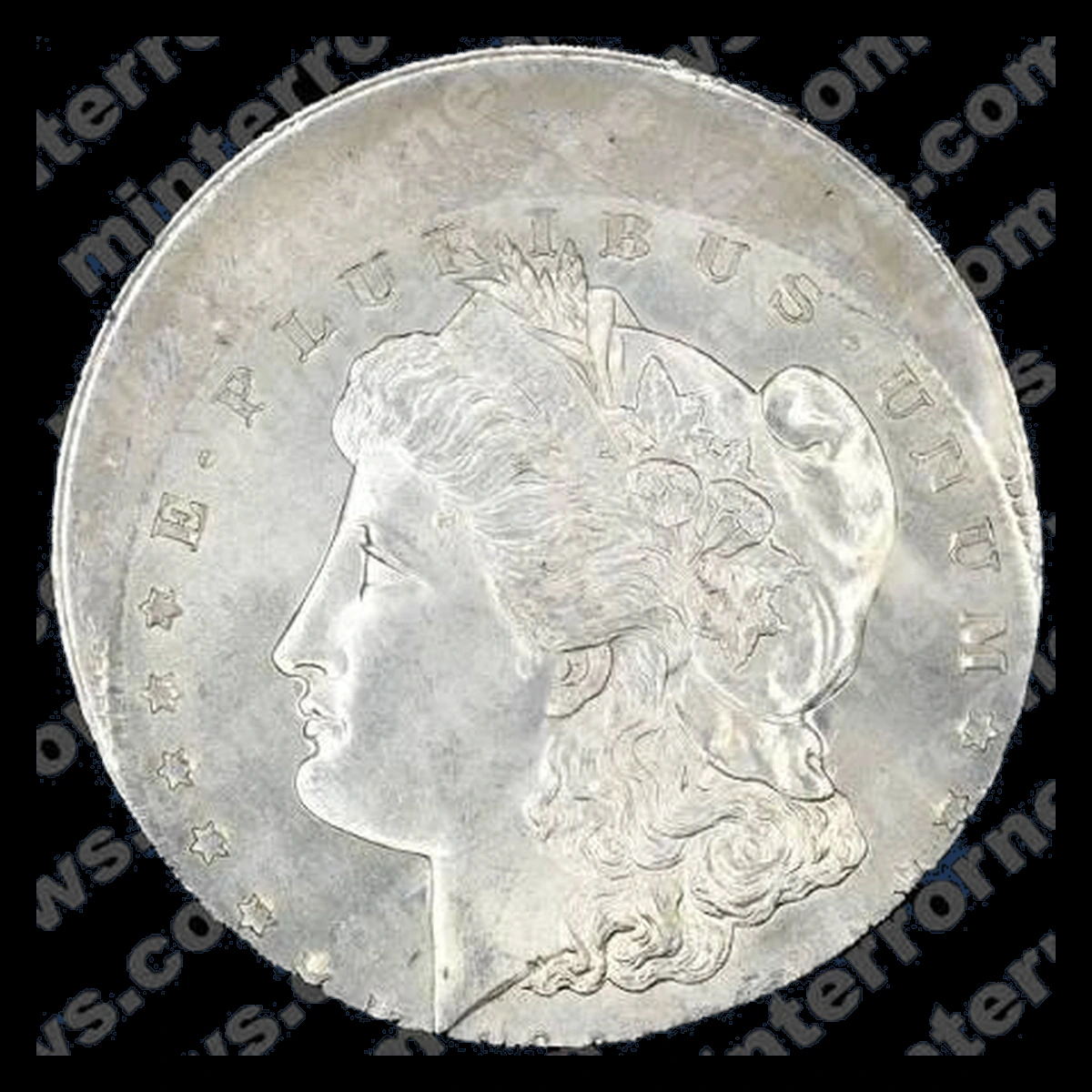
How to Identify
Compare the whole holder and both faces with NGC’s published Grand Snake photographs. Match the surviving portrait, words, and unstruck area rather than relying on a generic 1882-CC attribution.
Distinguish exposed silver from black holder plastic that may hide part of the outline. Keep the original packaging intact rather than removing this coin for routine weighing.
What It’s Worth
$25,000–$100,000 is estimated for the authenticated Grand Snake or a genuinely comparable major Carson City off-center dollar. Condition, mint, and documented government-sale history all contribute.
A different-year Philadelphia Morgan struck 30% off center with cleaning realized $18,300 in January 2026. The supplied description gives no exact date for that comparison coin, so it should not be presented as another 1882.
The Grand Snake’s original $30 government purchase in 1973 records its historical acquisition. It is not an estimate of its later collector value.
Conclusion
The underletter and misplaced numerals identify particular tools, while a metal separation or obstructed strike describes what happened to an individual blank. Related die stages still need their own matches.
Keep the three GSA examples distinct: the MS64 with different defects on opposite faces, the MS62 double strike, and the MS65 Grand Snake. Their holders, patterns, grades, and transaction histories are part of each complete coin’s identity.