Rare 1971 Dollar Errors (List & Pictures)
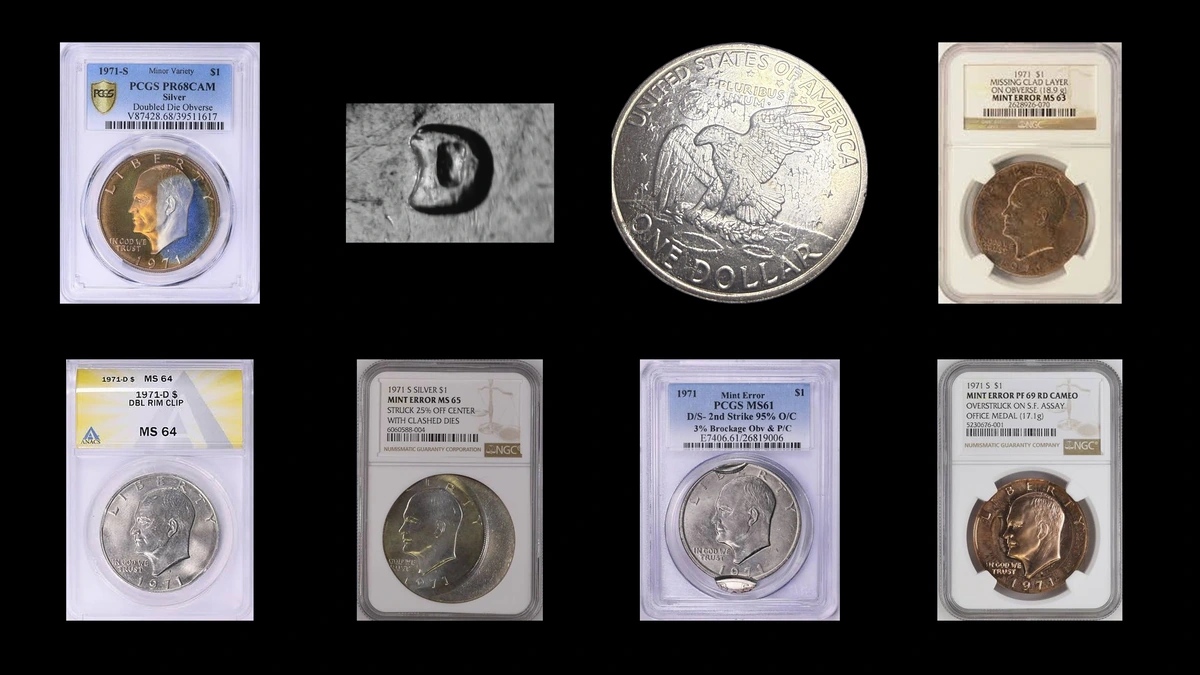
Unusual metal on a 1971 dollar can mean a missing layer, a different blank, or even an older medal underneath. The surviving design helps separate those possibilities.
Estimated values for 1971 Eisenhower dollar errors span $20–$60,000. A 1971-S Proof struck over a finished Assay Office medal brought $40,800 in August 2022.
Identify the mint and finish first, then work from small design details toward the larger changes in metal and shape.
1. 1971 Dollar Extra Raised Letter Edges: Doubled Dies Error
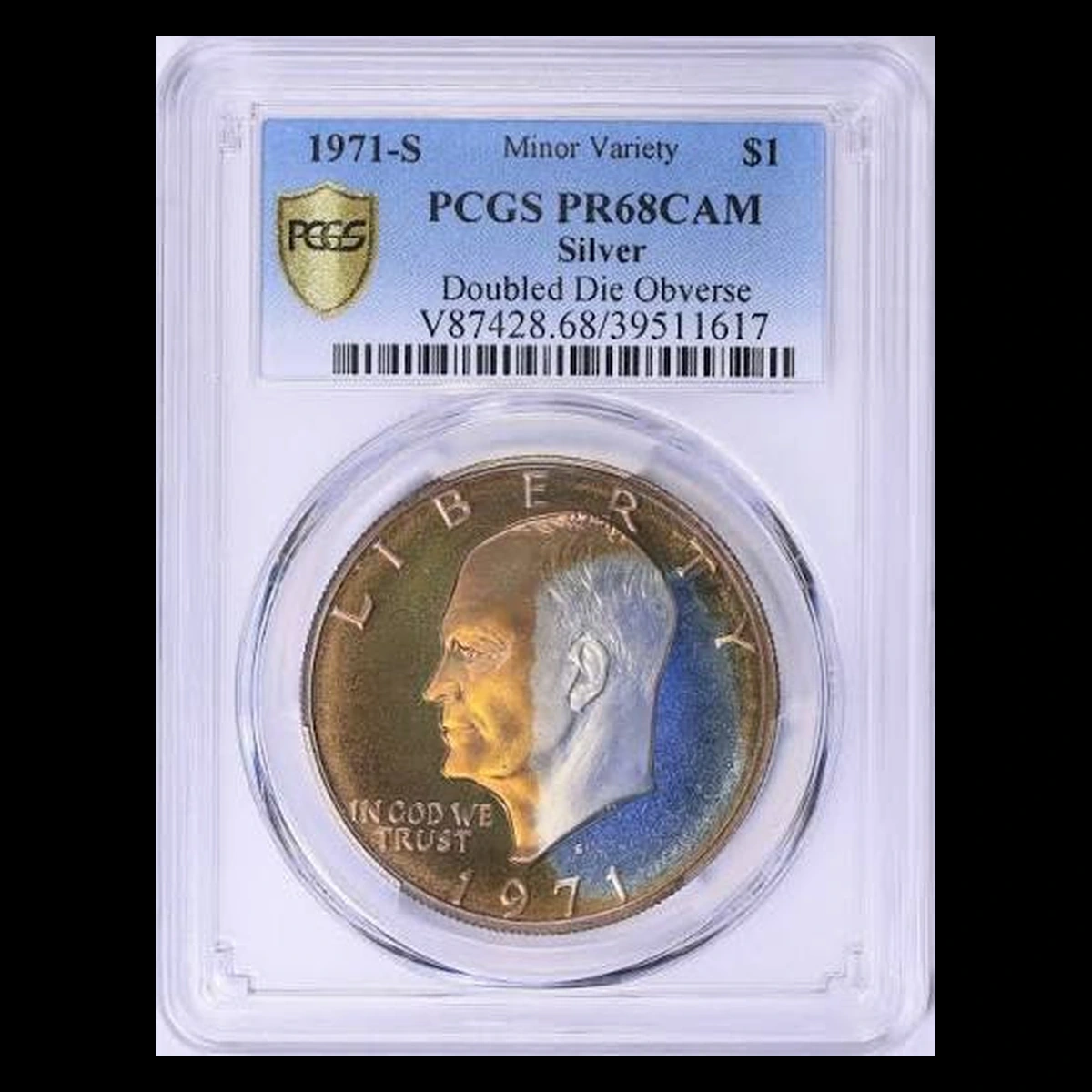
Repeated detail can originate in the die before any coin is struck. Reported 1971 varieties include Philadelphia and Denver ordinary coins, plus San Francisco silver ordinary issues and Proofs.
A Proof is a specially prepared collector coin. Its detailed pattern needs a different comparison from an ordinary dollar.
How to Identify
Match the mint and finish before studying IN GOD WE TRUST, LIBERTY, and the date. Look for separated raised tips rather than low flat shelves.
Reverse varieties need their own lettering, star, eagle, or branch comparisons. The strong S Proof FS-801 pattern includes separation in the outer words, stars, and ending of DOLLAR.
Some repetition was inherited from shared earlier tools and is common. Doubling on both faces also belongs to one coin, not two separately priced objects.
What It’s Worth
$20–$2,500 is the estimate across minor and stronger identified varieties. Clear separation with good preservation generally attracts more interest.
Common inherited doubling can add little to ordinary value. A recognized stronger pattern needs a matching mint, finish, and condition comparison.
2. 1971 Dollar Another D or S beside the Mintmark: Repunching Error
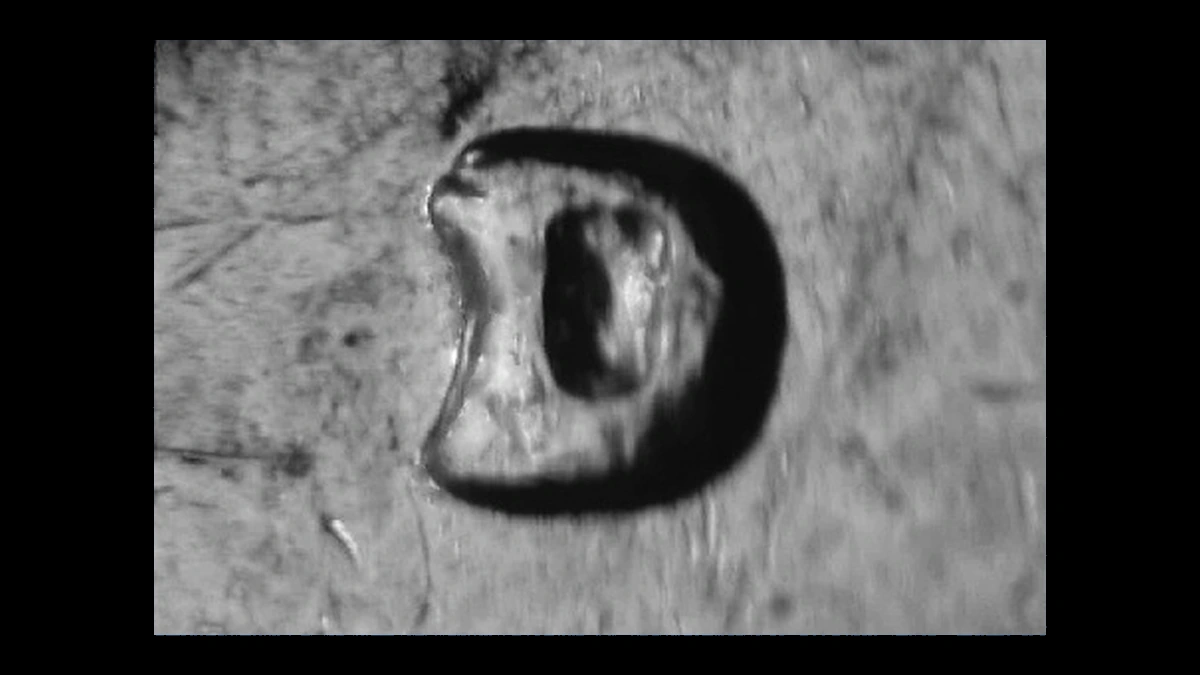
Repeated use of a mintmark punch could leave part of an earlier letter in the die. Denver varieties include turned or tilted D remnants, while ordinary silver S coins have several different S patterns.
The well-known S variety FS-501 has an earlier outline above and to the left. A bump from a damaged punch is not automatically a second letter impression.
How to Identify
For FS-501, compare the extra S beneath Eisenhower’s neck together with two supporting line segments. One is near the T of TRUST and another is above the date’s first 1.
Trace the curved remnants rather than every nearby line. Flat strike shelves can imitate an extra letter at first glance.
Other S and D patterns need their own photographs. They do not inherit FS-501’s supporting lines simply because a remnant points upward.
What It’s Worth
$20–$10,000 spans ordinary examples and exceptional high-grade FS-501 pieces. Ordinary circulated coins may fit $20–$500, while exceptional FS-501 preservation can reach $5,000–$10,000.
PCGS records $8,812.50 for an MS67 FS-501 in January 2016. That unusually well-preserved dollar is not a routine price for a worn repeated mintmark.
3. 1971 Dollar A Thin Flap on the Front: Lamination Error
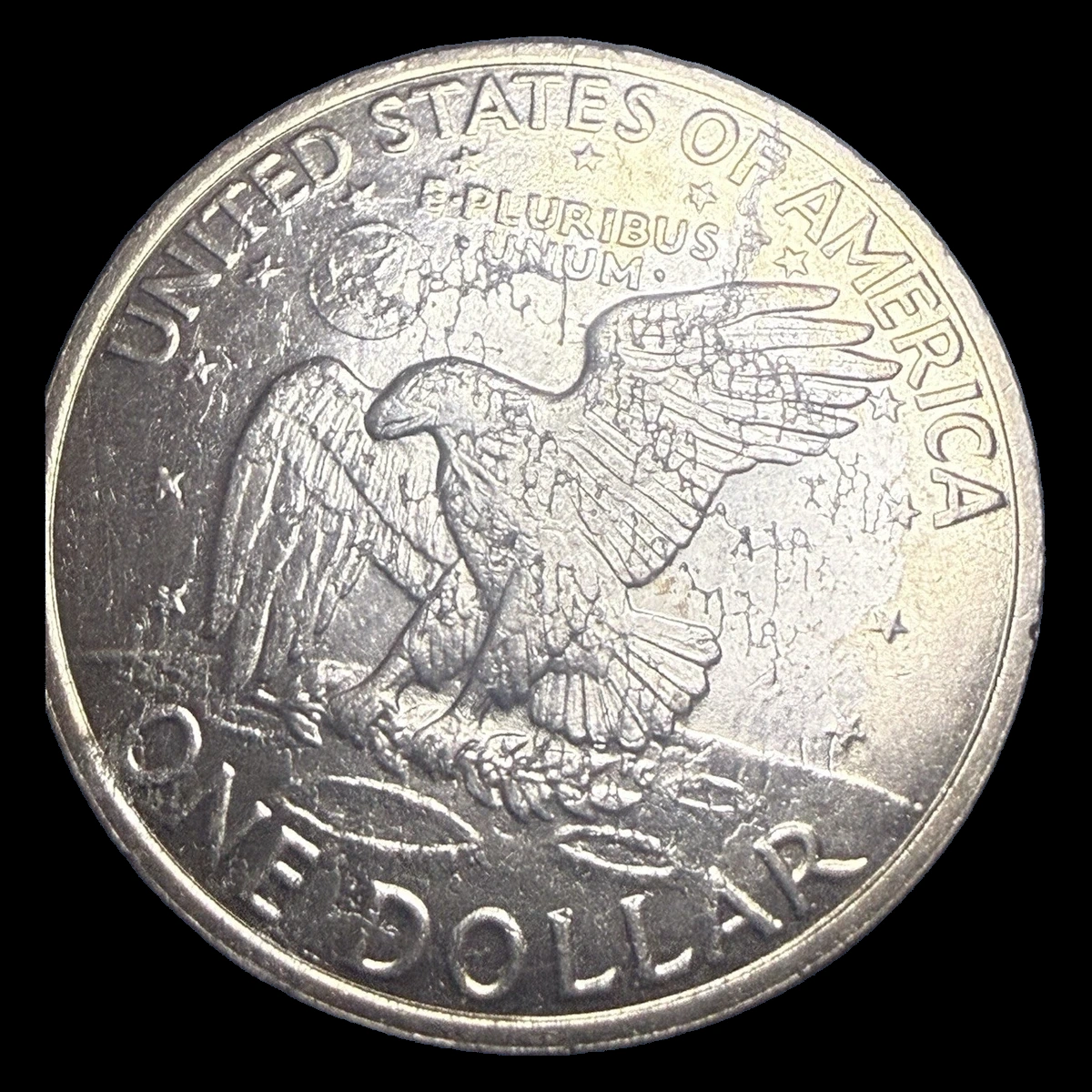
The ANA museum list records Denver dollars with front-side laminations. Weakness within the metal allowed a thin section to lift or separate.
The reports do not place every defect on the cheek or forehead. A local peel also differs from losing a complete outer layer across the face.
How to Identify
Find the boundary between normal struck detail and the separating layer. A flap may retain design that connects it with the original surface.
Look for scraping tracks or corrosion that could explain the patch differently. Photograph the flap’s profile without lifting or bending it.
What It’s Worth
$25–$750 is the estimate for authenticated ordinary Denver laminations. Larger clear separations can display better than minor shallow patches.
A 1976 Type 1 dollar with front lamination sold for $37 in August 2021. That is a different-year same-series comparison at the affordable end.
4. 1971 Dollar A Copper Front with a Normal Back: Missing Clad Layer Error
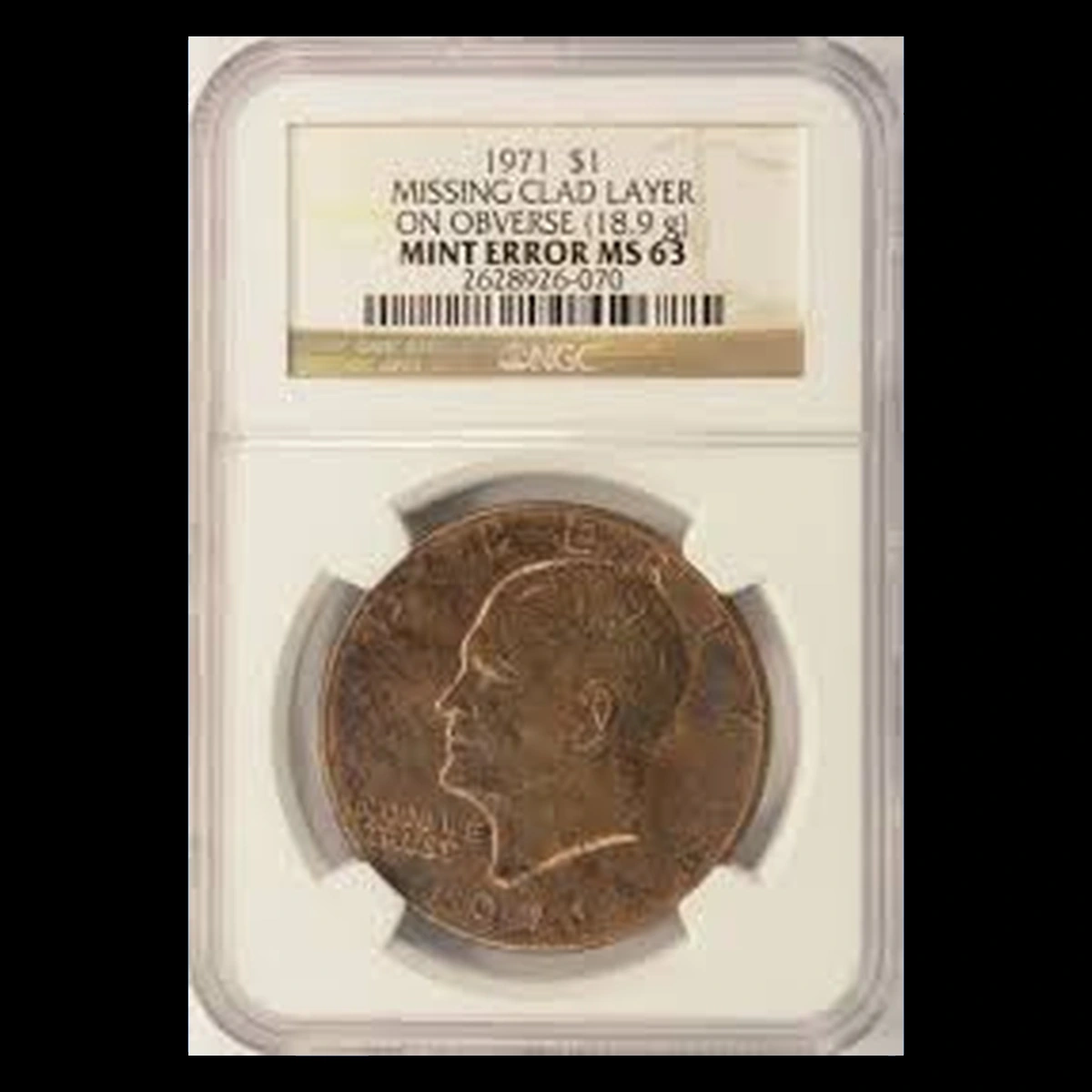
The documented 1971-D dollar lost its front outer layer before striking. Eisenhower’s portrait formed directly on exposed copper.
The thinner blank did not fully fill the dies near the outside, leaving weak outer detail. The reverse kept its normal pale covering.
How to Identify
Compare the front, reverse, and edge together. A brown surface alone may be a stain, while grinding can expose copper after the design has already formed.
Look at how the portrait and lettering sit on the copper. Original weakly formed detail differs from scraping through a finished outer layer.
A normal Denver dollar weighs 22.68 grams, so substantial layer loss should reduce weight. Use that as supporting evidence alongside the surface, not as proof by itself.
What It’s Worth
$400–$3,500 is the estimate for comparable authenticated front-layer losses. Original copper detail against the normal reverse makes a useful display.
The PCGS MS63 example brought $1,150 in August 2001. Cleaning or heavy scratches can lower another specimen’s appeal despite genuine layer loss.
5. 1971 Dollar A Depression Where Another Blank Intervened: Indent Error
An extra blank between a dollar and a die can block the design and press a depression into the coin. It need not leave a second coin picture.
Records include a small front indent on a silver S dollar, a Denver reverse indent attributed to a dime blank, and a separate Denver partial-collar combination. Museum reports also mention cent-sized and unidentified small-blank obstructions.
How to Identify
Follow where the normal design stops at the depression. A smooth recess from an unused blank differs from a sunken mirror image supplied by a struck coin.
The silver S example affects about 5% of the front. The Denver dime-related example is on the back, and the partial-collar combination also needs an edge view.
Do not identify the obstructing denomination from size alone. Pushed metal or crushed finished detail can also indicate a later impact.
What It’s Worth
$100–$6,000 is the estimate across authenticated indent types. Size, clarity, and any accompanying collar feature affect the whole-coin comparison.
The Denver partial-collar combination sold for $408 in August 2020. A separate Denver dime-blank indent brought $3,120 in August 2018.
6. 1971 Dollar A Blank Gap in the Outline: Clipped Planchet Error
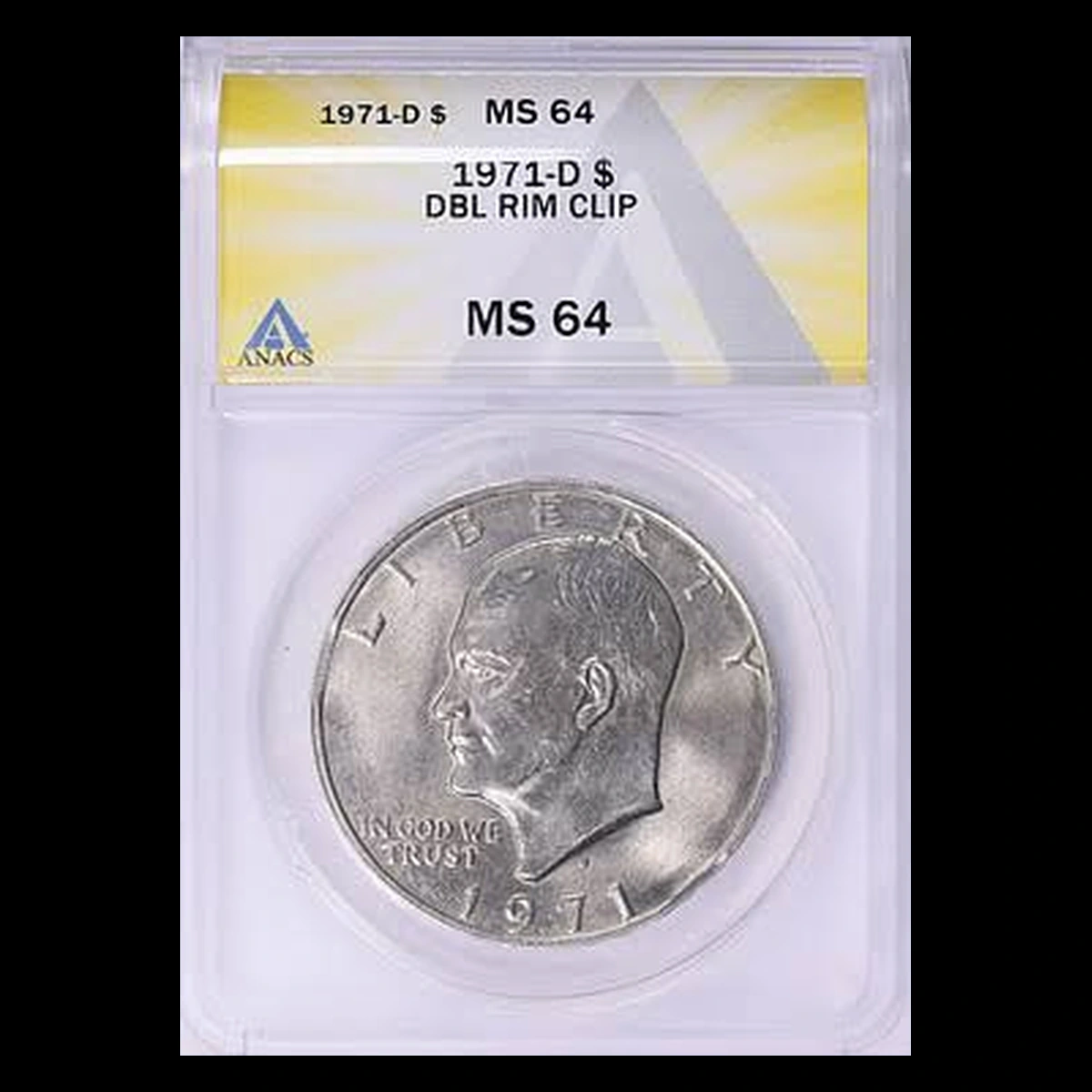
Denver reports include curved clips, a ragged-edge clip, and a coin with three curved gaps. The dollar design formed on blanks already missing those sections.
A separate silver S Proof has a 45% curved clip extending from about nine-thirty to one-thirty above the cheekbone. That specific coin weighs 16.1 grams.
How to Identify
Map each gap on both faces before estimating the loss. The triple-clip coin and the deep single-clip Proof have different outlines.
Inspect for natural rim transitions and nearby stretched or weak detail. Saw marks, scraped inner walls, or squeezed metal suggest later removal.
Use the correct normal blank when comparing weight. The Proof’s 16.1 grams belongs to its large loss from silver stock, not to smaller Denver clips.
What It’s Worth
$25–$10,000 spans small ordinary clips through dramatic Proof examples. The large 45% silver Proof clip sold for $2,880 in August 2022.
A minor Denver gap normally fits a much lower comparison. Original edges and an attractive surviving design remain important.
7. 1971 Dollar An Expanded Border around Complete Designs: Broadstrike Error
A silver 1971-S dollar graded NGC MS66 has an almost evenly spread outline. The expansion is slightly greater below the portrait and above the eagle.
The collar, the ring that controls width and edge grooves, failed to contain the metal normally. This example is an ordinary silver collector issue, not a Proof.
How to Identify
Trace all the outer words on both faces to confirm that the design remains complete. Compare the spread with the normal 38.1-millimeter dollar diameter.
Silver issues normally weigh about 24.59 grams, versus 22.68 grams for copper-nickel dollars. Keep those different normal products separate.
Inspect for hammer marks and crushed lettering from later flattening. Natural expansion should agree with the preserved original design.
What It’s Worth
$100–$2,500 is the estimate for an authenticated silver broadstrike of this kind. A clear spread and complete attractive picture help show the error.
The MS66 example gives a high-condition reference. Its grade should not be borrowed to price a scratched or edge-damaged specimen.
8. 1971 Dollar An Upside-Down Eagle after a Flip: Rotated Proof Error
A silver 1971-S Proof was certified with medal alignment. Its two faces line up differently from normal American coin alignment.
NGC graded it PR68 Ultra Cameo, meaning very strong Proof preservation and clear contrast. The orientation error is separate from that normal collector finish.
How to Identify
Hold the portrait upright and flip the coin straight from top to bottom. On the medal-alignment example, the eagle finishes upside down.
Repeat without a sideways twist and watch for movement within the holder. Photograph the turning sequence rather than making both images upright afterward.
This check compares the two faces. Two overlapping portraits on one side would require a different striking explanation.
What It’s Worth
$200–$3,000 is the estimate for authenticated rotated-design Proofs. The extent of rotation and the reflective surface condition guide the comparison.
The PR68 Ultra Cameo example brought $900 in January 2025. Scratches or haze can reduce value even when another coin has the same unusual alignment.
9. 1971 Dollar Backward Designs in a Smaller Recess: Brockage Error
A struck object can transfer a sunken mirror image when it gets between a dollar and a die. This is called brockage.
One Denver dollar received a reverse impression from a thin dime blank already carrying a dollar design. A separate museum report describes contact with a dollar struck on a quarter blank.
How to Identify
Look inside the recess for backward design rather than judging the receiving dollar’s weight first. The dime-related example shows distorted portrait and motto traces, including parts of IN GOD WE TRUST.
Grooves at the impression’s left boundary help explain contact with the smaller struck object. The receiving dollar itself remains dollar-sized.
A smaller impression does not mean the large dollar was struck on a dime blank. It also does not establish a newly found matched pair when the smaller partner is absent.
What It’s Worth
$1,000–$12,000 is the estimate for authenticated mirror-impression combinations of this kind. Readable reversed design and a clear contact boundary make the sequence easier to understand.
A receiving coin alone should not be priced as though both original partners are included.
10. 1971 Dollar A Shifted Strike with Faint Opposite-Side Details: Off-Center and Clash Error
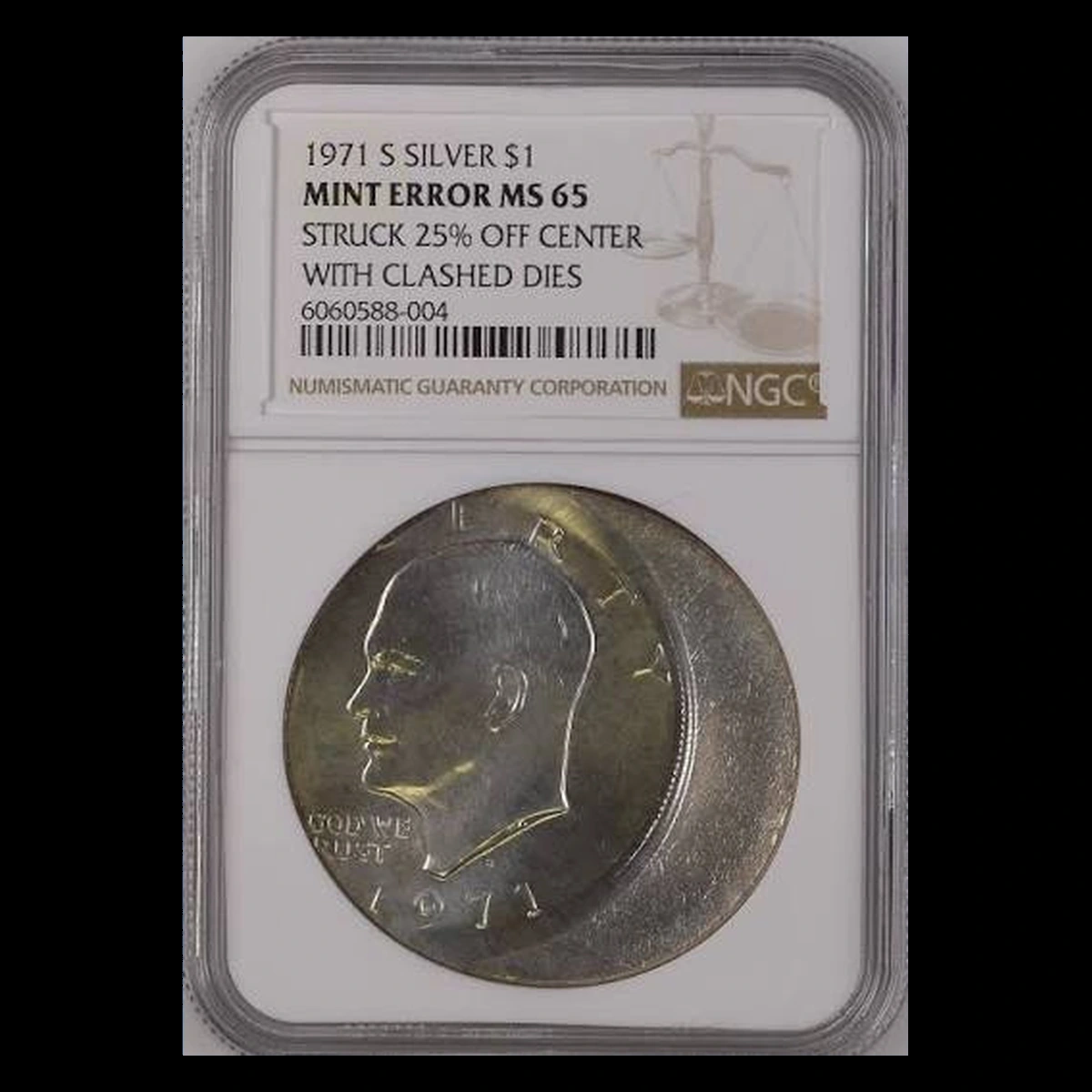
A documented silver S dollar was struck about 25% off-center toward nine-thirty. Its dies had also collided without a blank between them, leaving clash marks that later appeared on the coin.
Faint portrait and front-letter traces show on the reverse. A U-shaped part of UNUM appears beside the E of WE on the front.
How to Identify
Use low light to trace reverse fragments of ERTY and GOD WE TRUST along with the portrait outline. Then compare the small U shape beside WE on the front.
Check the off-center strike separately: the main design sits toward the upper left, with some blank metal untouched. Parts of UNITED and ONE fall beyond the coin.
The date and S remain readable. Their presence and the matching clash features must belong to the same specimen.
What It’s Worth
$500–$15,000 is the estimate for a comparable authenticated silver off-center dollar with clear clash details. The NGC MS65 example sold for $9,000 in August 2022.
A faint clash alone does not receive that combined-error price. The shift, recognizable extra outlines, and condition work together.
11. 1971 Dollar Separate Overlapping Impressions: Multiple Strikes Error
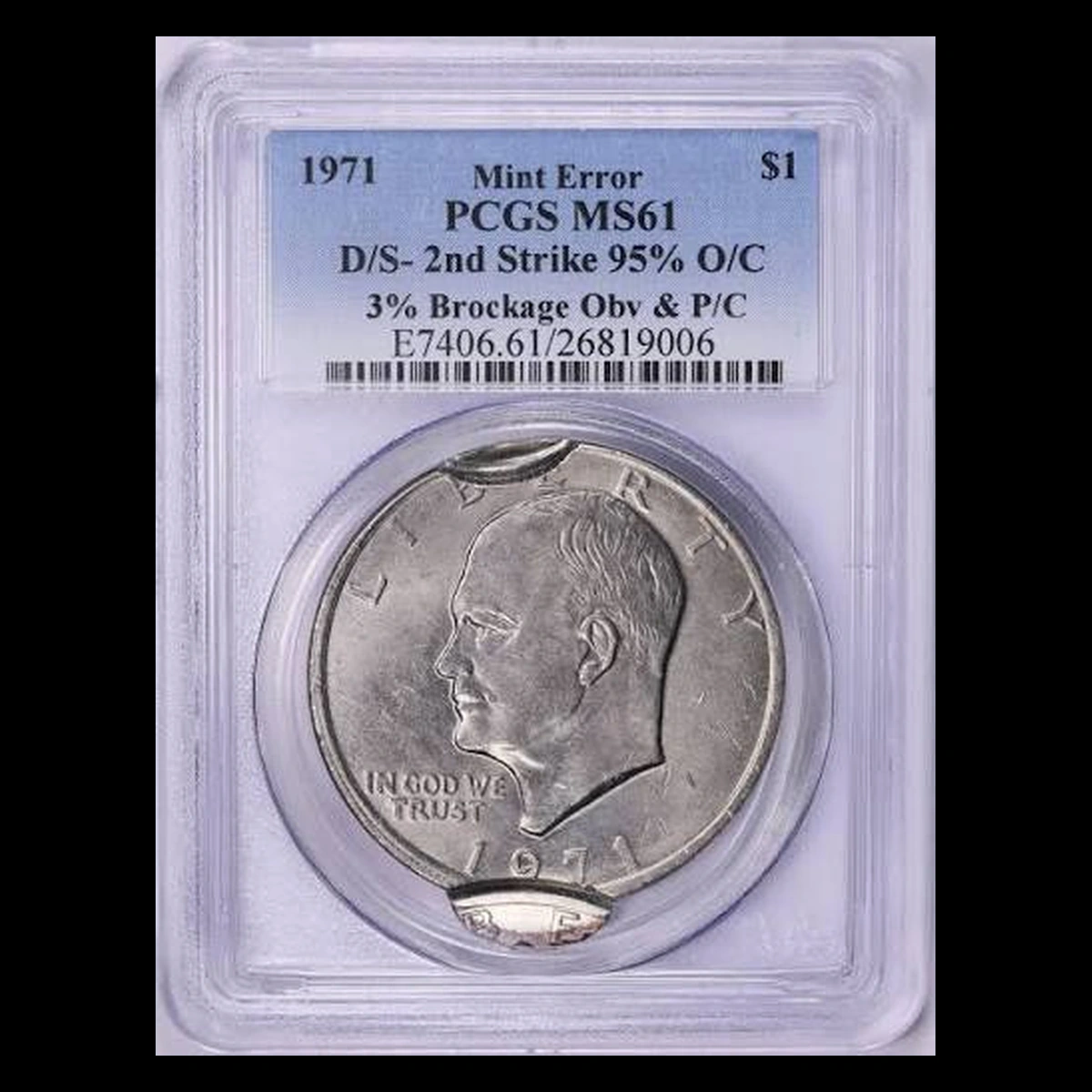
A Philadelphia dollar combines a 95% displaced second strike, a small contact impression, and tilted collar marks. Its little contact area shows an edge, grooves, and plain surface rather than a clear mirrored portrait.
A separate ordinary silver S dollar received two off-center strikes, about 60% and 65%, both toward ten o’clock. It is not a Proof.
How to Identify
On the silver S coin, find 971 from one impression and 71 with S from the other. Follow the design attached to each fragment to map the two strikes.
The Philadelphia example instead has a small contact impression near eleven o’clock. Its reverse was partly blocked during the later blow, and tilted edge grooves fade downward.
Keep those blocked areas with the Philadelphia specimen. A single bright doubled letter edge does not explain either coin’s separated strike sequence.
What It’s Worth
$300–$20,000 is the estimated range for comparable authenticated multiple strikes. Separation, readable identity, and preservation create large price differences.
The Philadelphia compound error sold for $480 in June 2023. The dramatic silver S double strike brought $10,219.20 in August 2022.
12. 1971 Dollar Unexpected Alloy or Size: Foreign and Medal Blanks Error
A documented S Proof was struck on a copper-nickel blank intended for a Liberia dollar. It weighs 18.2 grams and spread into an oval.
Museum records also list Denver dollars on unused bronze presidential-medal blanks. Other reports mention Denver silver and S copper-nickel candidates without established certified specimens.
How to Identify
Begin with mint and finish, then compare weight and width with the correct normal product. Philadelphia and Denver dollars are copper-nickel clad, while ordinary 1971-S dollars use 40%-silver stock.
The Liberia-blank Proof has an incomplete lower date and some missing reverse lettering, with collar contact at the top. Its 18.2 grams belongs to that actual specimen.
Suspected alloy swaps need composition testing; edge color alone is not enough. Bronze pieces with older medal lettering belong in the finished-medal category instead of the unused-blank group.
What It’s Worth
$2,000–$30,000 spans the authenticated examples and conditional metal-swap estimates. Comparable foreign or medal-blank strikes can fit $3,000–$15,000.
The Liberia-blank Proof sold for $8,700 in August 2022. The Denver-silver and S-copper-nickel reports have conditional estimates of $2,000–$30,000, not established sale records.
13. 1971 Dollar TREASURY and 1789 beneath Eisenhower: Medal Overstrike Error
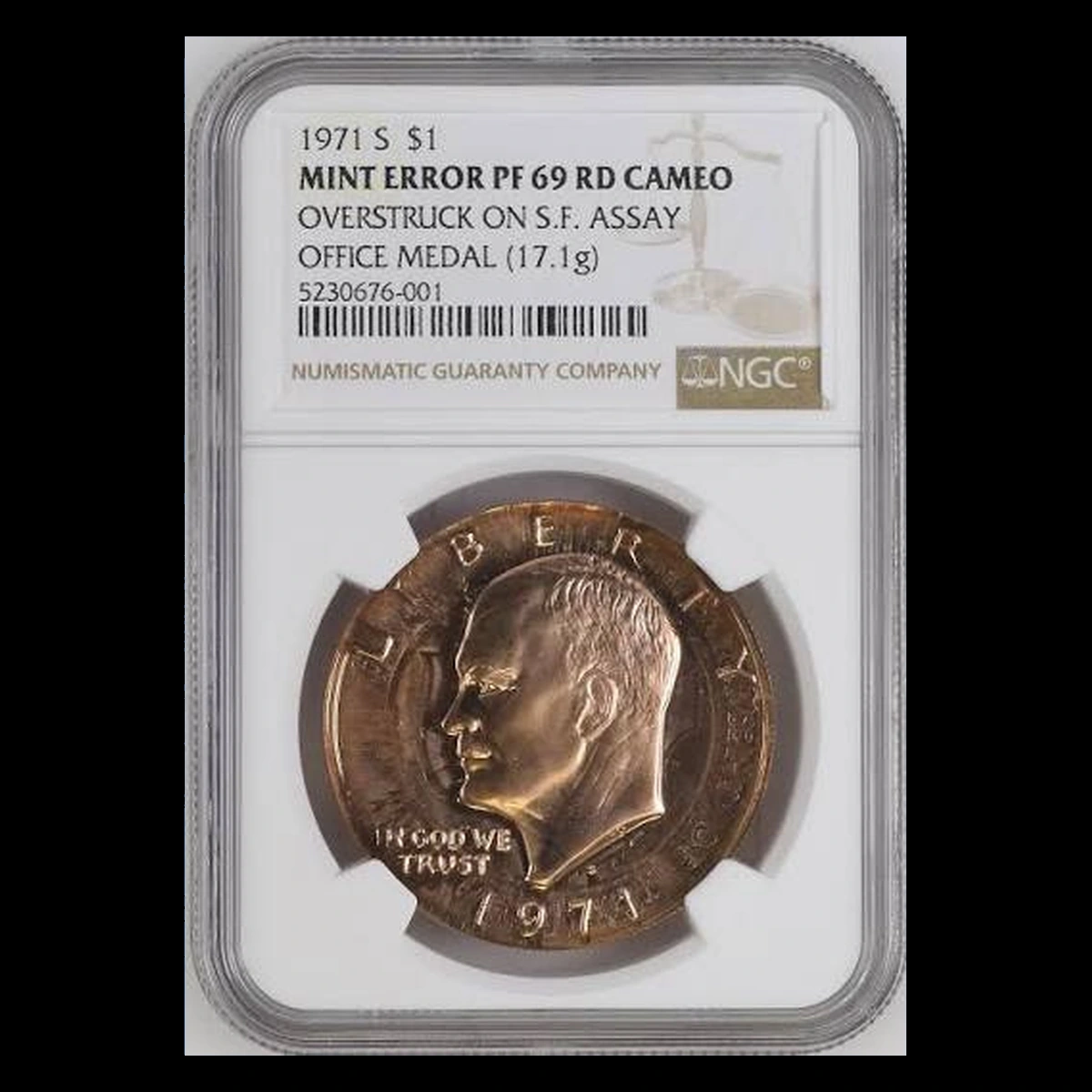
A finished San Francisco Assay Office medal received the 1971-S Proof dollar designs. Parts of TREASURY and 1789 remain beneath the portrait, with SAN and CAL on the eagle side.
The copper specimen weighs 17.1 grams and was graded NGC PR69 Red Cameo. That describes a nearly flawless Proof with reddish copper color and contrasting design.
How to Identify
Find connected older words before relying on the copper color. On the reverse, SAN and CAL appear beside the downward-pointing wing.
Compare those remnants with the documented medal layout. The dollar’s outer words also stretch outward as the smaller host spread.
Matching 17.1 grams alone cannot establish the overstrike. The earlier medal and later Proof designs must have a believable relationship on the same object.
What It’s Worth
$20,000–$60,000 is the estimate for a comparable authenticated medal overstrike. Its unusual host, readable earlier design, and excellent condition explain the scale.
The PR69 Red Cameo specimen sold for $40,800 in August 2022. A copper-colored dollar without the earlier medal details is not the same rarity.
Conclusion
Identify the normal metal and finish before treating an Eisenhower dollar as unusual. Then use surviving letters, exposed layers, edge profiles, and older designs to narrow what happened.
A small transferred impression does not make the receiving dollar a dime-blank coin, and an unused medal blank differs from a finished medal host. Those distinctions keep both image comparisons and estimated values tied to the actual object.