Rare 2014 Presidential Dollar Errors (List & Pictures)
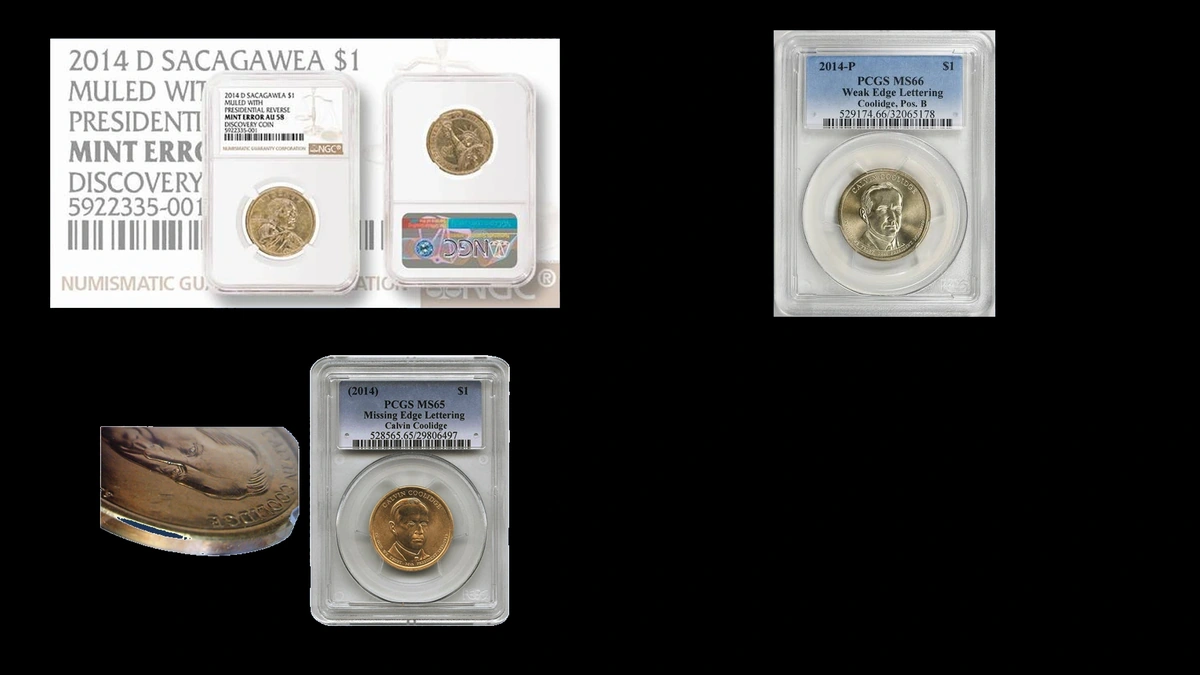
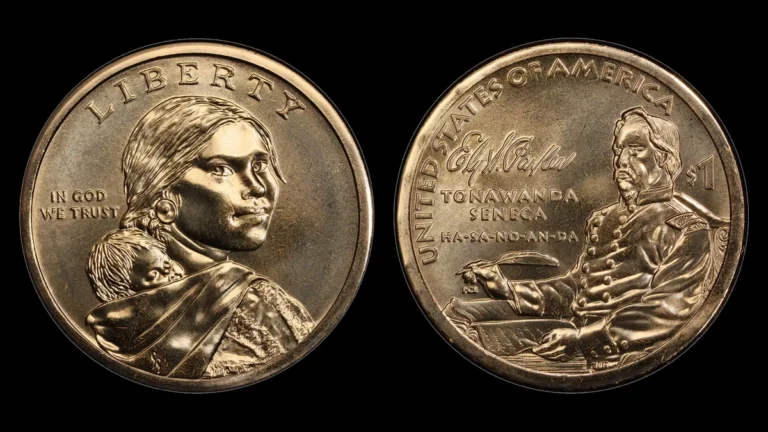
The four presidents issued in 2014 were Harding, Coolidge, Hoover, and Franklin Roosevelt. One remarkable entry among 2014 Presidential dollar errors instead pairs the series’ Statue of Liberty with Sacagawea and her infant.
That mule realized $84,000 on April 24, 2021, within an overall estimated span of $10–$100,000. Check which designs share the coin, then follow its edge text and any extra face outlines before choosing a comparison.
1. 2014 Dollar Sacagawea Opposite the Statue of Liberty: Mule Error
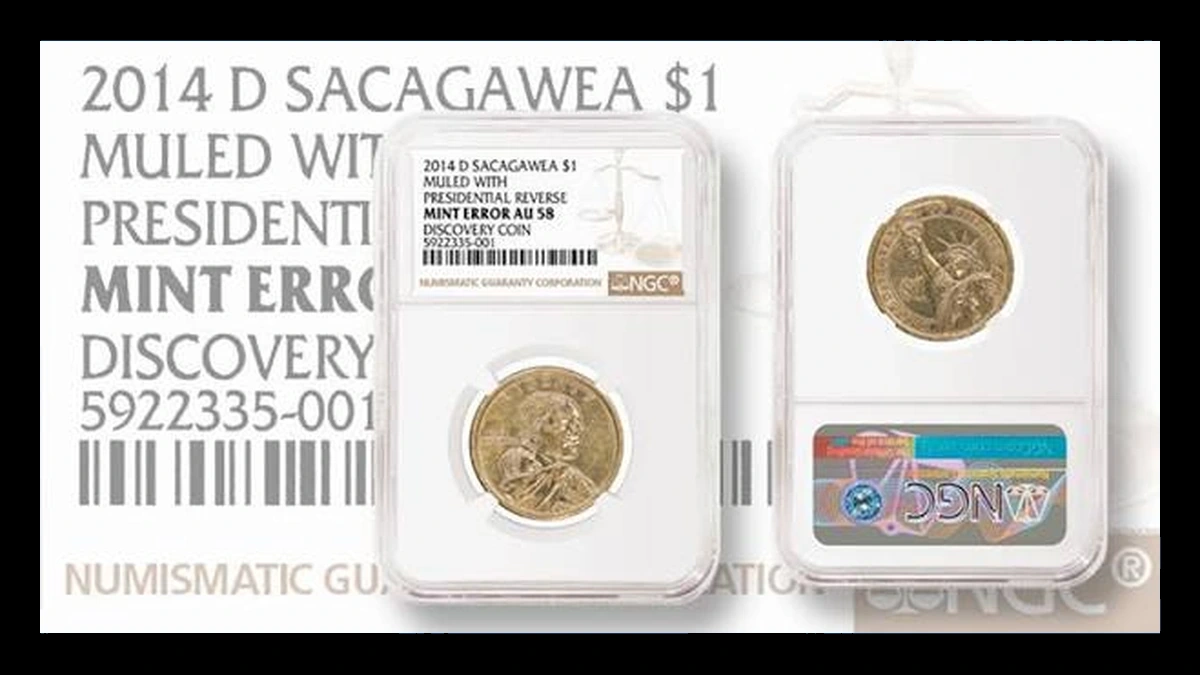
The documented discovery combines dies from two different dollar series on one blank. Sacagawea’s portrait appears where a presidential portrait would normally accompany the standing Statue of Liberty reverse.
Its edge reads 2014 and D, establishing Denver directly from the coin. Found in a mixed dollar bag in 2019, it was certified NGC AU58 after acquiring slight circulation wear.
How to Identify
Verify both designs on the same physical coin rather than relying on separate face photographs. Sacagawea carrying her infant must be paired with the Presidential-series Liberty image.
Read the year and D on the edge and inspect for a seam that could reveal joined altered coins. Do not pry or scrape at a suspicious boundary.
The series share the basic dollar blank, with normal references around 8.1 grams and 26.49 millimeters. Correct measurements cannot alone prove the mismatched die pair; professional authentication must establish that both designs were struck on one original blank.
What It’s Worth
$60,000–$100,000 is estimated for a comparable authenticated mule. The NGC AU58 discovery realized $84,000 on April 24, 2021.
Slight wear did not prevent a strong result for that unusual pairing and its history. A normal dollar with an altered face does not belong in the same comparison.
2. 2014 Dollar Some Edge Strokes Are Very Shallow: Weak Lettering Error
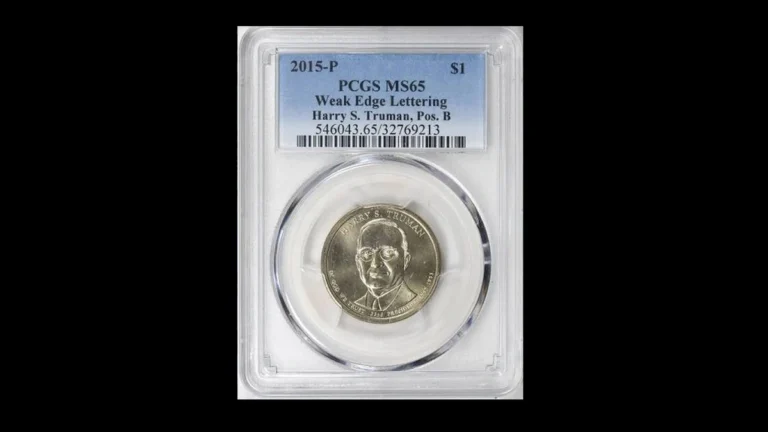
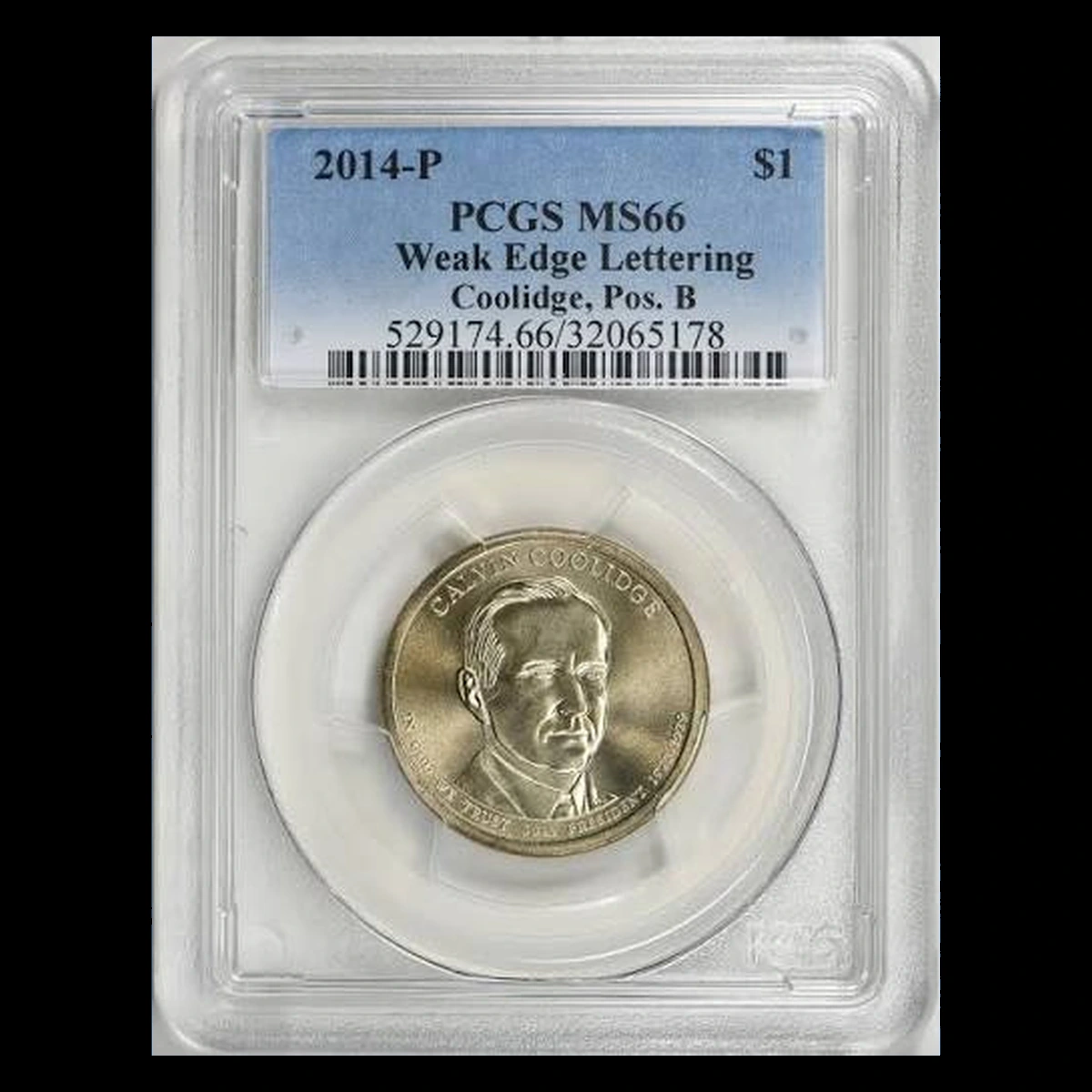
PCGS lists Philadelphia weak-edge examples for all four 2014 presidential designs. The separate lettering equipment failed to impress some characters to their intended depth, leaving shallow original traces.
Positions A and B describe normal inscription directions relative to the portrait. Neither direction is an error by itself, and weakness differs from a completely unlettered edge.
How to Identify
Compare with an ordinary coin of the same president under matching light. Trace a clear letter into the weak area and examine the bottoms of faint strokes while moving the lamp rather than rubbing the metal.
Retain any readable 2014 and P with the photographs. The documented Philadelphia varieties do not automatically establish the same attribution on D or S coins.
Inspect adjacent edge and rim surfaces for wear, scratches, and rounding. An originally shallow impression beside intact metal is different from a letter smoothed away later.
What It’s Worth
$10–$200 is estimated for identified Philadelphia weak-edge examples. PCGS records a Coolidge Position B MS66 at $95 in October 2015.
That unworn specimen provides one president-and-grade comparison. It does not set the value of every faint letter on all four issues.
3. 2014 Dollar The Coolidge Edge Has No Text: Missing Lettering Error
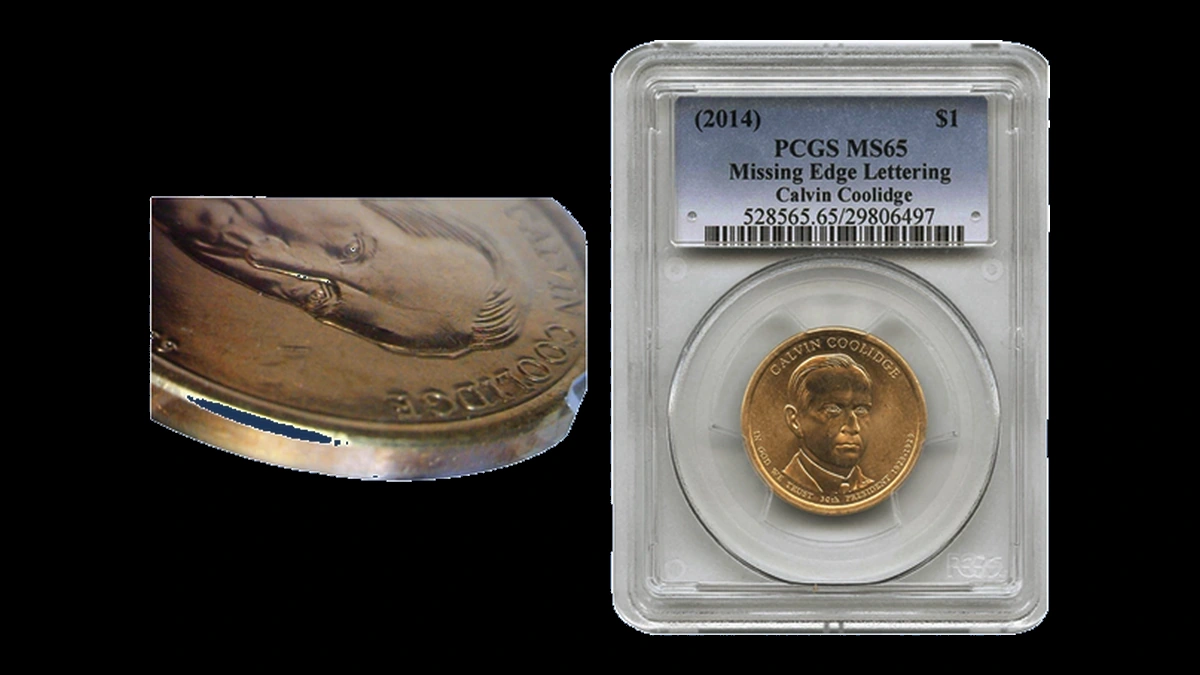
The reported Coolidge discovery came from a Mint-wrapped Denver roll whose other coins retained their edge words. PCGS graded it MS65 in the 2014 discovery report.
No D is readable on the coin because the entire required edge inscription is absent. Denver origin therefore rests on the original roll evidence, unlike the mule’s directly readable edge mintmark.
The missing inscription includes the year, mint letter, and E PLURIBUS UNUM. IN GOD WE TRUST belongs on the face in 2014, so its absence from the edge is normal.
How to Identify
Use the Coolidge portrait to identify the issue, then examine the whole circumference under angled light. Search especially for faint date bottoms that would indicate weak rather than completely missing lettering.
Check both rims for filing tracks, rounding, or a flattened band from later smoothing. Loose-coin measurements can help detect removed metal, but an ordinary-sized plain edge still requires an originality assessment.
Keep roll provenance with the documented discovery. A different unlettered Coolidge cannot be assigned to Denver solely because its edge is equally smooth.
What It’s Worth
$1,000–$5,000 is estimated for an authenticated Coolidge missing-edge dollar. A 2016 Reagan example in MS65 realized $3,881 in January 2019 as a different-president comparison.
That was not a sale of the Coolidge discovery. Original edge evidence, preservation, and demand for the particular issue shape a closer valuation.
4. 2014 Dollar An Opposite-Design Trace near Hoover: Possible Die Clash Error
The Hoover clash remains a possibility without a confirmed specimen or defined outline in the supplied material. Dies contacting without a blank can transfer portions of one design into the other tool.
Later coins may reproduce those traces. An unfamiliar line near Hoover therefore needs a recognizable opposite-face match before it is given a variety identity.
How to Identify
Compare equal-sized photographs of Hoover and the Statue of Liberty, accounting for their normal alignment and the reversed outline transferred by die contact. A vaguely similar curve is insufficient.
Use an ordinary Hoover coin to separate intended artwork from an extra feature. Inspect the line for an incised channel and pushed-up edges that might instead indicate scratching.
Photograph the entire affected area rather than one bright fragment. Several connected details matching actual Liberty artwork would provide stronger evidence than an isolated stroke.
What It’s Worth
$25–$300 is conditional on authentication of a 2014-P Hoover clash. It is a comparison-based estimate, not a sale price or confirmation of a named Hoover variety.
Conclusion
The mule has readable 2014-D edge text, while the Coolidge missing-edge discovery depends on its original roll for the Denver connection. Faint surviving letters lead to the separate weak-edge category.
Inspect the complete object and retain its provenance before choosing a value. The possible Hoover clash still needs a coherent opposite-design match, and an unusual line should not inherit the price of an established major error.