Rare 1877 Dollar Errors (List & Pictures)
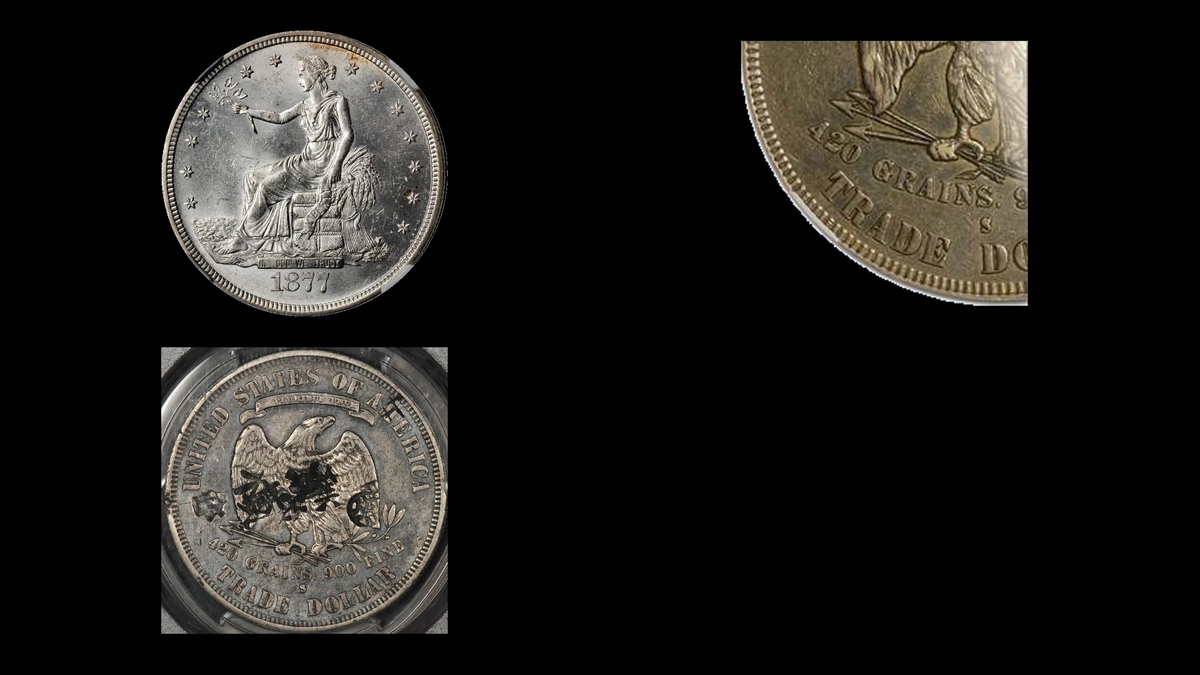
Extra strokes around the sevens and missing arrow details offer two close-up checks on an 1877 Trade dollar. Other 1877 dollar errors change the edge or repeat larger parts of the design, with estimated whole-coin values of $150–$12,000.
An 1877-S doubled-reverse example graded MS65 brought $7,800 in February 2018. Read the mintmark before choosing a comparison, since Philadelphia, Carson City, and San Francisco patterns differ.
1. 1877 Dollar Earlier Strokes around 7: Repunched Date Error
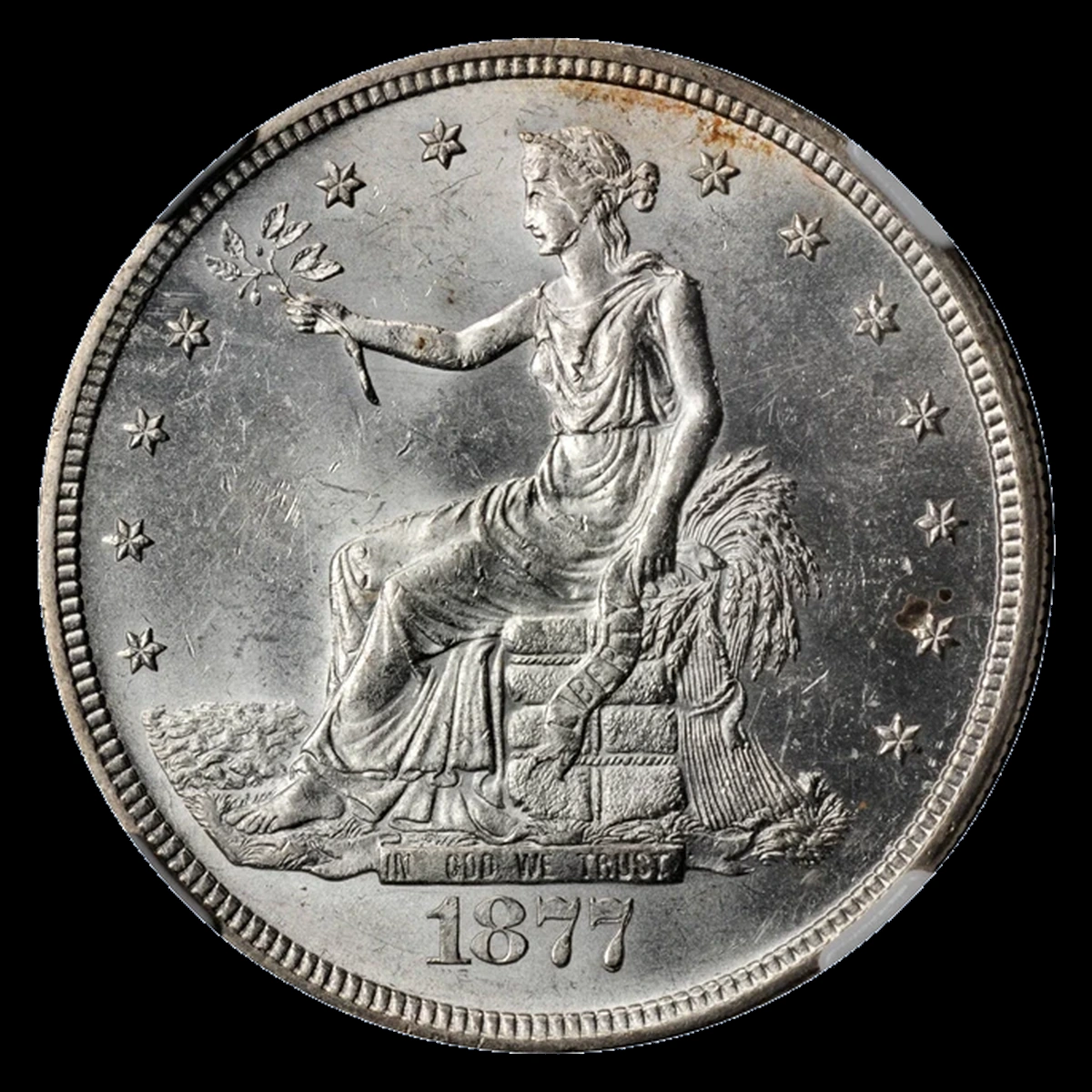
Moving the date punch between blows could leave an earlier stroke in the die. Philadelphia and Carson City catalogs include 77-over-77 patterns, while San Francisco has a repeated final 7.
The San Francisco FS-301, also called C-21, combines its date feature with a repunched S. Some Carson City examples also have reverse doubling.
How to Identify
Follow the top and diagonal of each 7 under magnification, comparing the same mint’s pattern. The earlier stroke should fit a numeral rather than cut across it like a scratch.
For FS-301, match the extra S outline as well. The paired features identify one combined variety and should not be borrowed from separate specimens.
What It’s Worth
$200–$10,000 spans the group. Philadelphia and San Francisco examples are estimated at $200–$5,000, with Carson City at $400–$10,000 across circulated and attractive unworn grades.
Mint rarity and original surfaces may explain more of the price than the extra 7. Date and mintmark repetition on one dollar receive one whole-coin valuation.
2. 1877 Dollar Repeated Letter and Design Edges: Doubled Die Error
Some dies carried overlapping contours before they struck their coins. Philadelphia front patterns include the LIBERTY ribbon, cotton-bale top, motto scroll, and far-right star.
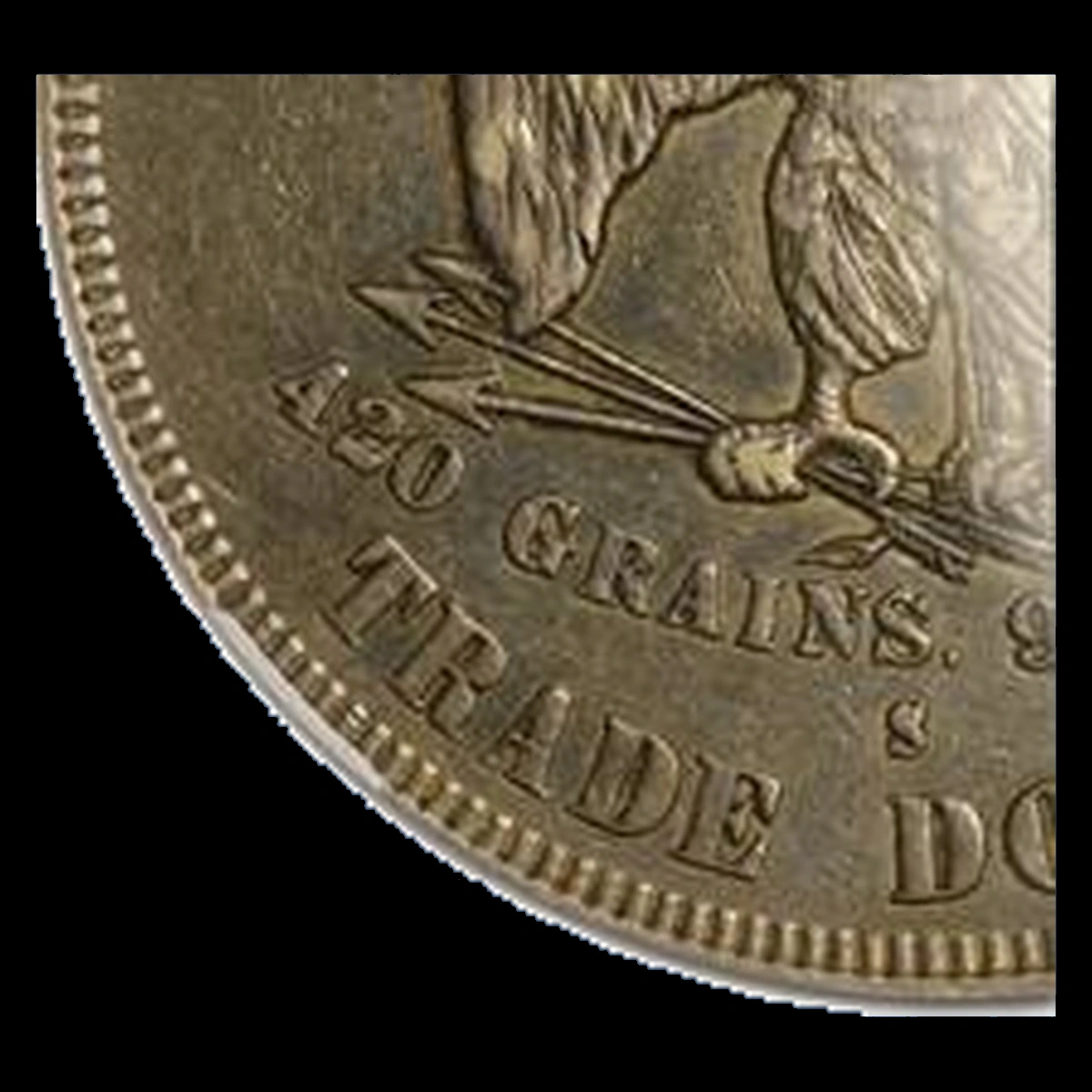
San Francisco reverse varieties affect words, 420 GRAINS, 900 FINE, and the motto. Carson City has its own reverse patterns rather than one universal combination shared by every mint.
How to Identify
Choose the appropriate face and mint before matching the specific contours. Rounded repeated shapes differ from flat shelves caused by movement during striking.
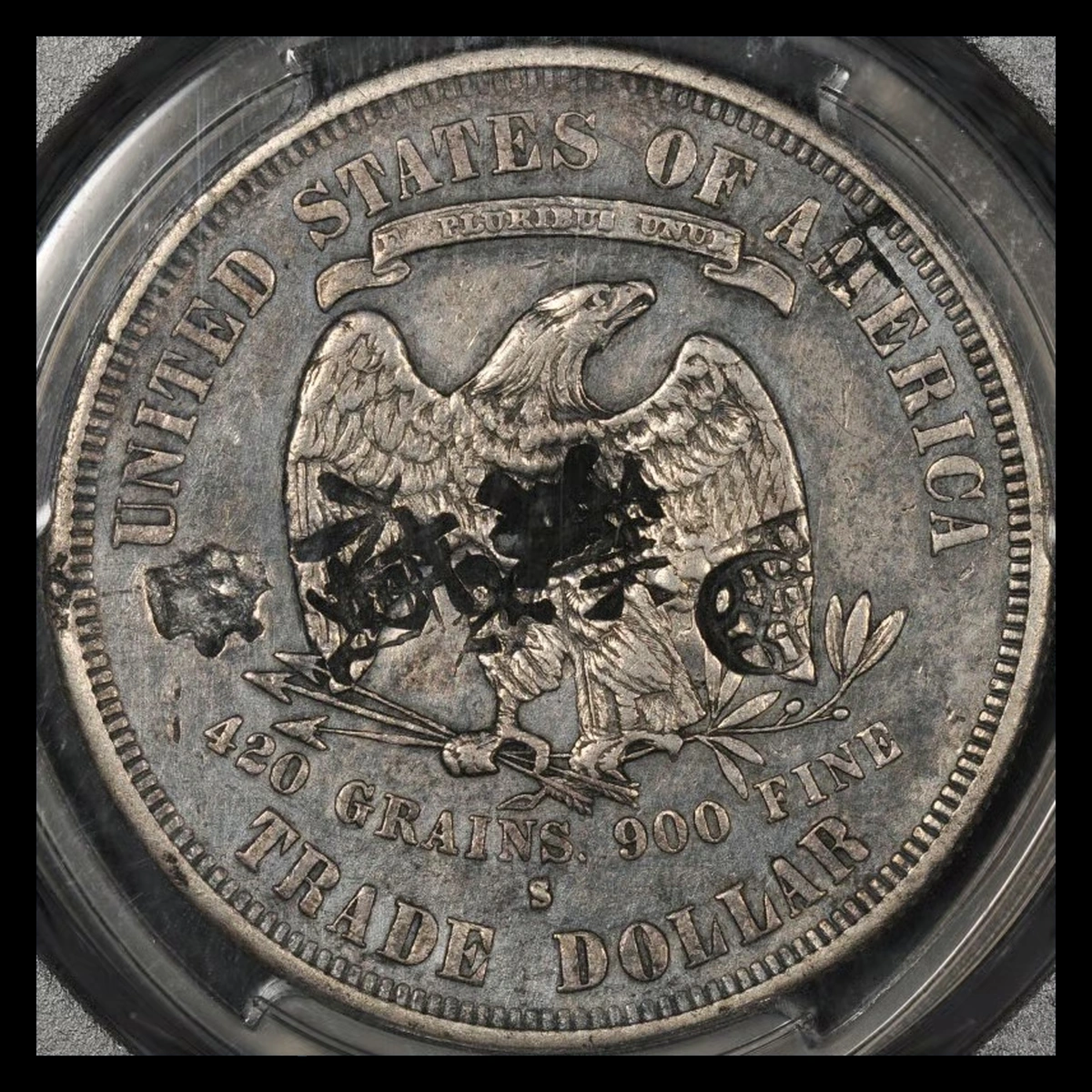
Check several details from the same documented pattern. A later merchant stamp may interrupt original letters but does not count as die doubling.
What It’s Worth
$200–$12,000 is the estimate across identified front and reverse varieties. PCGS records $7,800 for an 1877-S FS-802 in MS65 at Heritage in February 2018.
That result belongs to an attractive unworn example. Weaker patterns, wear, scratches, or merchant stamps require a different comparison.
3. 1877 Dollar Incomplete Arrow Shafts or Missing Periods: Die-Detail Varieties Error
The San Francisco Broken Arrows variety has short upper and lower shaft remnants instead of continuous lines. A researcher quoted by Heritage suggested the defect began in an earlier master tool.
A separate S pattern lacks periods after FINE and DOLLAR and has a blunt R ending. It should not be merged with the arrow variety.
How to Identify
Compare the shaft remnants while checking that surrounding eagle detail remains readable. General wear can erase thin lines without establishing Broken Arrows.
For the punctuation pattern, inspect both period positions and the end of R under angled light. One faint dot alone is less useful than that full combination.
What It’s Worth
$150–$2,500 covers identifiable missing-detail varieties from worn through lower unworn condition. An NGC AU58 Broken Arrows coin sold for $431.25 in November 2006.
The range values complete dollars. A missing period by itself does not support the upper figure without a matching pattern and strong preservation.
4. 1877 Dollar A Tall Rim and Edge Step: Partial Collar Error
Only part of a blank may enter the collar, the ring that controls width and forms edge grooves. Unsupported metal can expand beside the contained section, leaving a step.
A documented 1877-S PCGS AU55 has a blank flaw near one to two o’clock on the front that helps reveal its edge inside the holder. Other G4 and VF30 reports concern separate coins.
How to Identify
Follow the grooved band into the expanded portion and inspect the transition for original striking. Filing, crushed metal, or a jewelry mount can alter an edge later.
On the AU55, use the visible area beside the front blank flaw without opening the holder. A tall rim alone is less persuasive than a clear step.
What It’s Worth
$250–$3,000 is the estimate for authenticated 1877-S partial collars. The PCGS AU55 example sold for $1,035 on April 17, 2008.
Edge visibility and preservation guide the comparison. Cleaning or mounting damage can reduce appeal despite a genuine strike error.
5. 1877 Dollar A Centered Picture on Wider Metal: Broadstrike Error
The documented 1877-S broadstrike measures 39 millimeters, compared with a normal Trade dollar’s roughly 38.1 millimeters. The full picture remains centered within broad irregular borders.
Without normal collar restraint, metal spread outward and stretched some reverse lettering and border teeth. Heritage described this NGC AU58 example with a large S and slight wear on the eagle’s breast.
How to Identify
Trace the complete outer design on both faces before comparing width. The reported 39-millimeter measurement belongs to this specimen, not a required size for every broadstrike.
Examine naturally stretched detail and the edge for collar effects. Later hammering may enlarge a dollar while crushing its already finished design.
What It’s Worth
$2,000–$12,000 is the estimate for comparable 1877-S broadstrikes. The NGC AU58 coin sold for $6,300 on November 9, 2018.
Its complete centered design and obvious expansion provide a strong display. A damaged dollar that simply measures wider does not share the comparison.
Conclusion
Inspect sevens, letter contours, and missing details with the correct mint’s reference. At the edge, separate partial restraint from a fully expanded strike that keeps its centered design.
Preserve original surfaces and account for later merchant stamps or damage when comparing values. Two features on the same dollar strengthen its identification without creating two complete prices.