Rare 1940 Quarter Errors (List & Pictures)
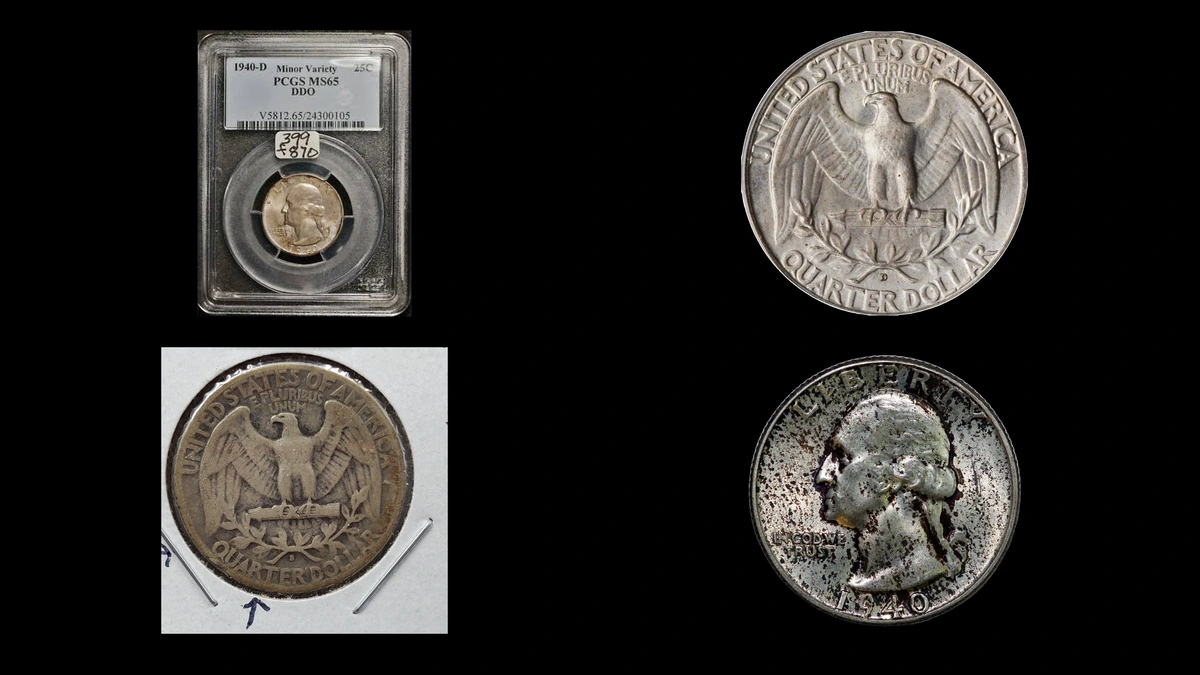
A second outline is worth investigating, but its location matters. The five groups of 1940 quarter errors below cover doubled designs, repeated mintmarks, raised cracks, peeling metal, and off-center strikes, with estimated values of $25–$5,000.
A Denver doubled-motto quarter graded MS66 sold for $2,880 in February 2018. Begin with the lettering, then move to the surface and outline of the coin.
1. 1940 Quarter Doubling in IN GOD WE TRUST: Doubled Die Error
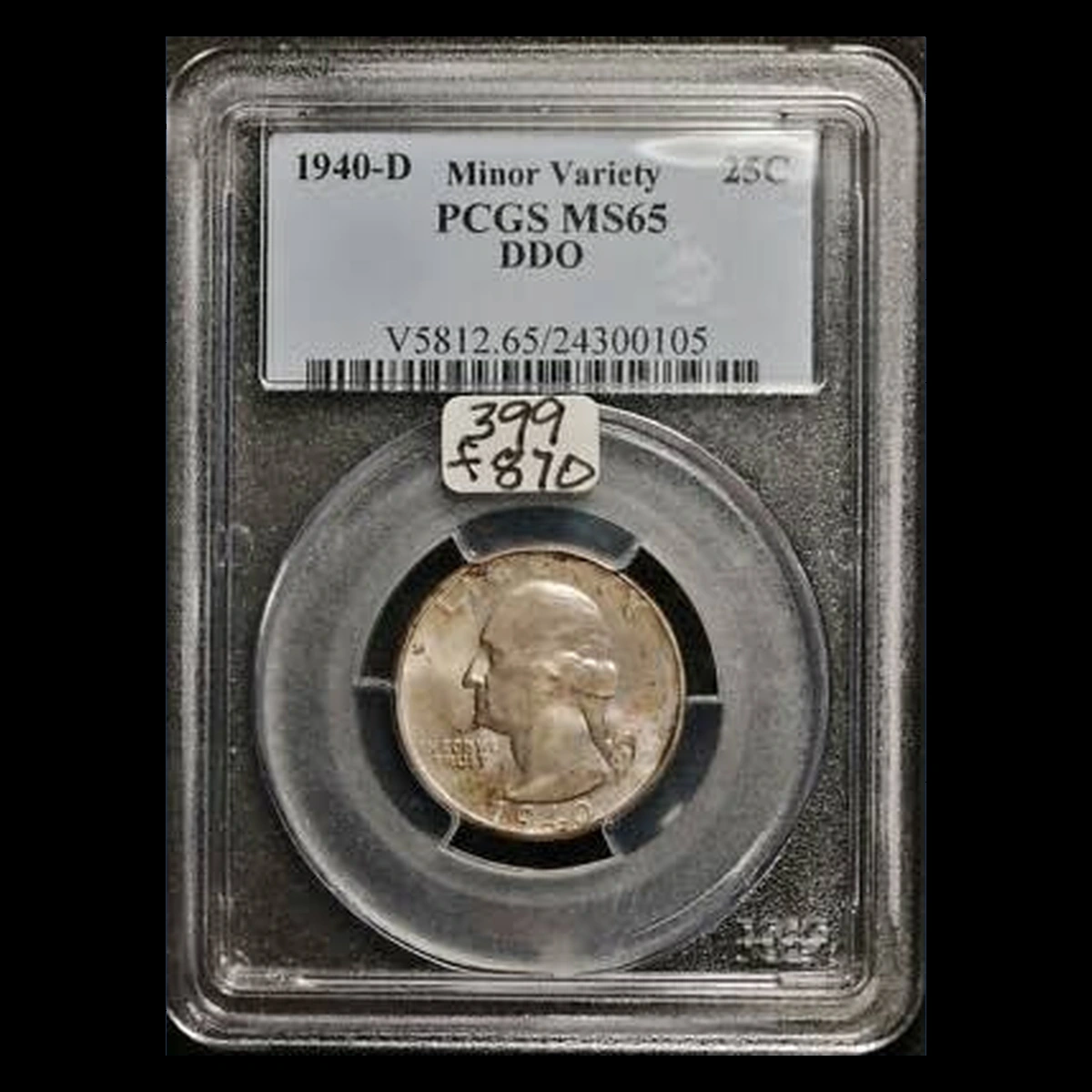
On the 1940-D FS-101 quarter, the motto carries the clearest extra outlines. Lighter doubling also appears in the date.
The doubling was part of the die before the coin was struck. Other front and back varieties exist, but their patterns should not inherit the FS-101 name.
How to Identify
Compare several motto letters with a verified Denver FS-101 photograph, then check the date. Confirm the D below the reverse wreath as part of that match.
Philadelphia and San Francisco varieties require their own photographs. Look for matching separated shapes rather than reflections or a flat ledge beside a letter.
What It’s Worth
$25–$3,500 covers confirmed doubled-die patterns across different grades. A Denver FS-101 graded MS66 sold for $2,880 in February 2018.
MS66 indicates a well-preserved coin without circulation wear. A weaker variety or a heavily worn example should not be assigned that result just because its letters look thick.
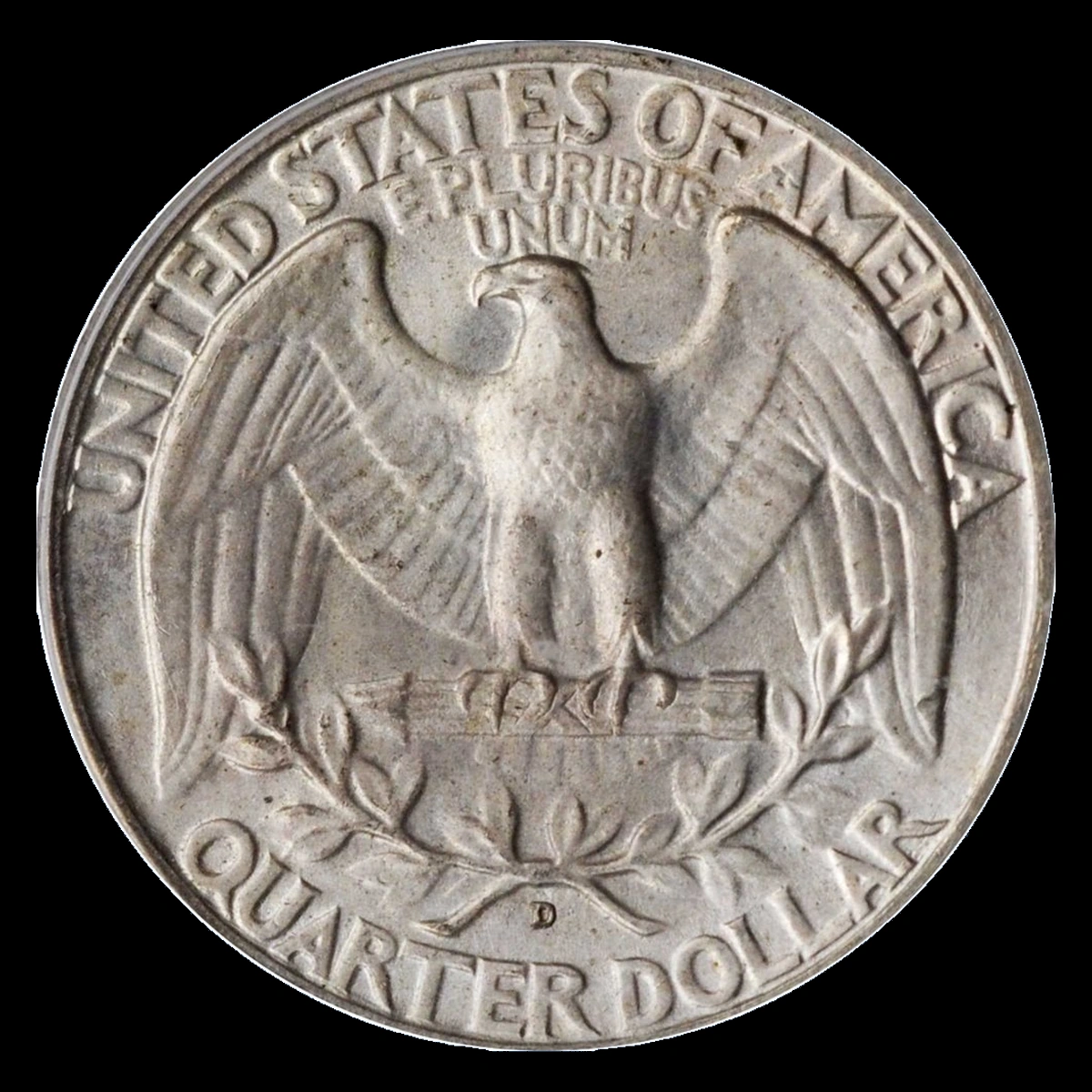
2. 1940 Quarter Overlapping D or S Shapes: Repunched Mintmark Error
The small mintmark below the wreath can preserve more than one punch position. Workers added that letter to the die by hand, so an earlier impression could remain beside a later one.
Denver FS-501, also called CONECA RPM-002, has three punch impressions. FS-502 is a different Denver pattern, and San Francisco has its own repeated-S varieties.
How to Identify
Enlarge the entire mintmark and trace the extra curves around it. A lone bump does not establish a second letter.
Match the same mint and pattern, including the relative spacing of the impressions. Some quarters also have front doubling, but both features still belong to one coin.
What It’s Worth
$25–$3,500 is the estimate for identified repunched mintmarks. A Denver FS-501 graded MS66 brought $2,585 in August 2015, while an FS-502 in MS65 appears at $297 in a December 2024 auction index.
Those different results show why counting punch impressions is not a pricing method. Do not add a second whole-coin value when a repunched mintmark shares a coin with a doubled front.
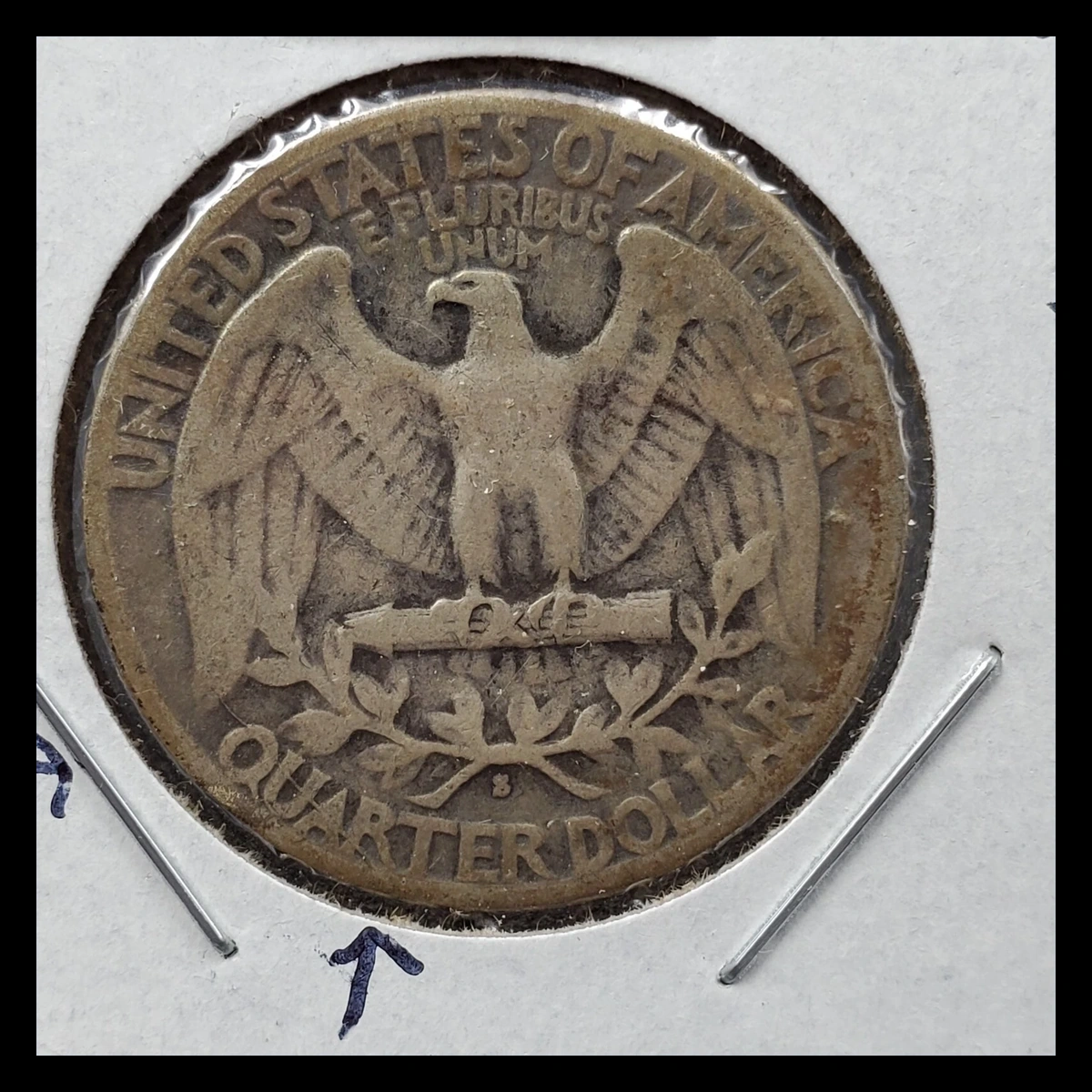
3. 1940 Quarter Raised Lines or a Rim Lump: Die Cracks and Cuds Error
A crack in a die can leave a thin raised line when coin metal enters it. If a piece breaks away at the die’s edge, a larger rim-connected lump may form instead.
That larger break is called a cud. The Philadelphia year-guide reports do not establish one fixed crack route or prove that every thick line is a cud.
How to Identify
Turn the coin under side lighting and follow the full line. A die crack rises above the surface, whereas a scratch cuts into it.
For a cud, look for a raised mass joined to the rim and replacing normal design. A crushed edge with silver pushed inward is a different kind of damage.
What It’s Worth
$25–$1,500 spans this broad group. Minor cracks are estimated around $25–$250, while a confirmed substantial rim break can fall around $100–$1,500.
The upper figures require a clear, sizable break. A dark stain beside a fine crack does not turn it into a larger error.
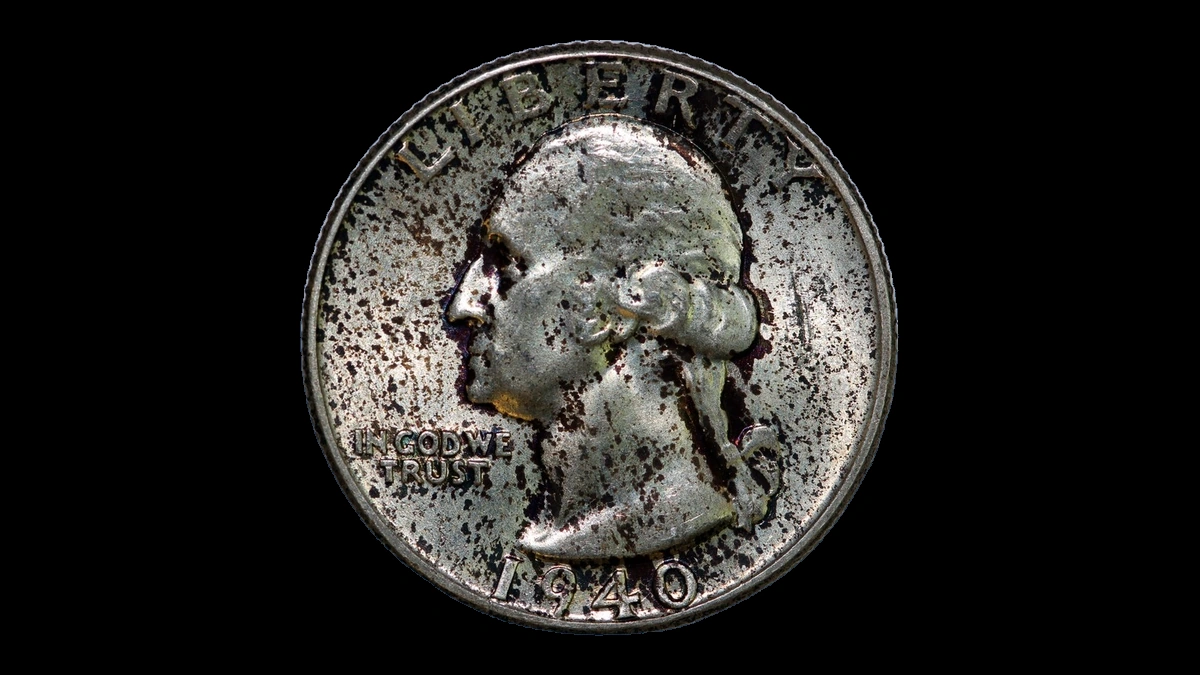
4. 1940 Quarter A Thin Surface Peel: Lamination Error
A loose flap may reveal a weakness within the original blank. The silver and copper in a 1940 quarter are mixed throughout the coin, so this is not a silver coating coming off.
How to Identify
Look along the peel for a thin layered boundary and follow any design that reaches it. Leave attached metal alone rather than lifting it with a fingernail.
A deep pit, parallel scrape marks, or metal pushed to one side suggests another explanation. The reported category concerns local peeling and has no single required location.
What It’s Worth
$25–$500 is the estimate for an authenticated lamination. An obvious intact flap can attract more interest than a small rough patch.
Condition and the appearance of the peel matter together. Cleaning or tearing the layer can reduce appeal and remove useful evidence.
5. 1940 Quarter Missing Design beside a Bare Crescent: Off-Center Strike Error
A blank placed off center can receive only part of the design. One side stays bare while lettering or artwork runs beyond the opposite edge.
How to Identify
Check that both faces fit the same misplaced disc. One shifted face with a centered opposite face may instead show a misaligned die.
The blank crescent should retain its original surface, without grinding marks. A complete design surrounded by extra spread metal is a broadstrike comparison, not the same missing-design pattern.
Record the year and only the mintmark you can actually read. A mintmark lost beyond the edge does not establish a particular mint.
What It’s Worth
$100–$5,000 covers authenticated dated examples. A visible shift with the full year intact generally makes a stronger display than a slight shift or an unreadable date.
Wear and scratches still affect the result. The supplied category does not fix one percentage, direction, or mint for every 1940 off-center quarter.
Conclusion
Let the feature guide your next check: motto doubling needs a matching die pattern, and a repeated mintmark needs an extra letter shape. Surface peels and incomplete designs require different evidence.
Use sale records only after identifying the same variety and a comparable grade. A coin with two named features remains one quarter, with one whole-coin value.