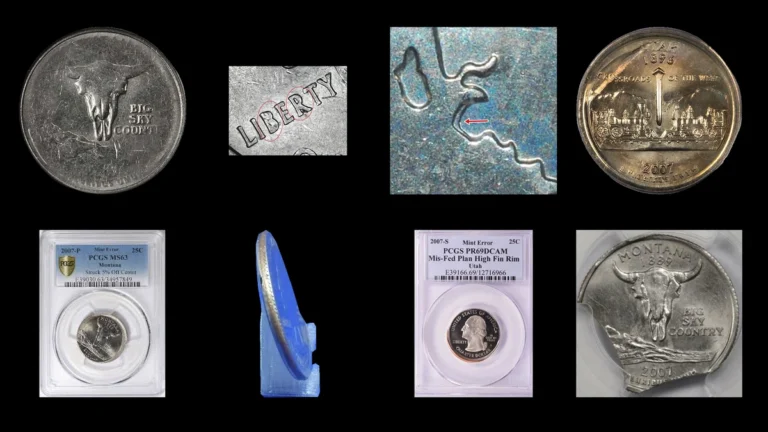
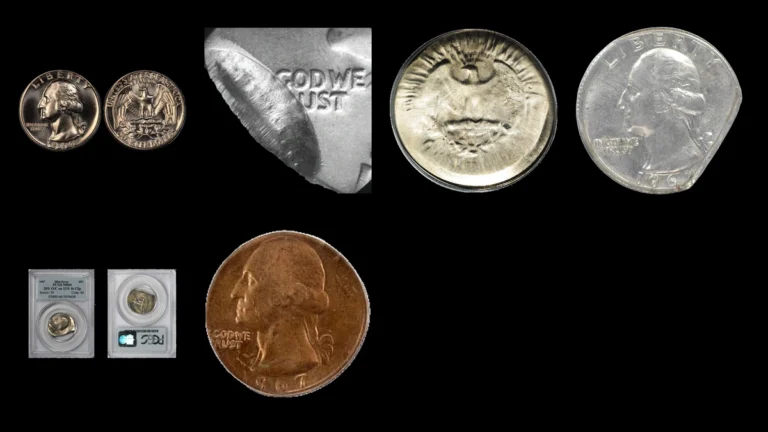
Rare 1971 Quarter Errors (List & Pictures)
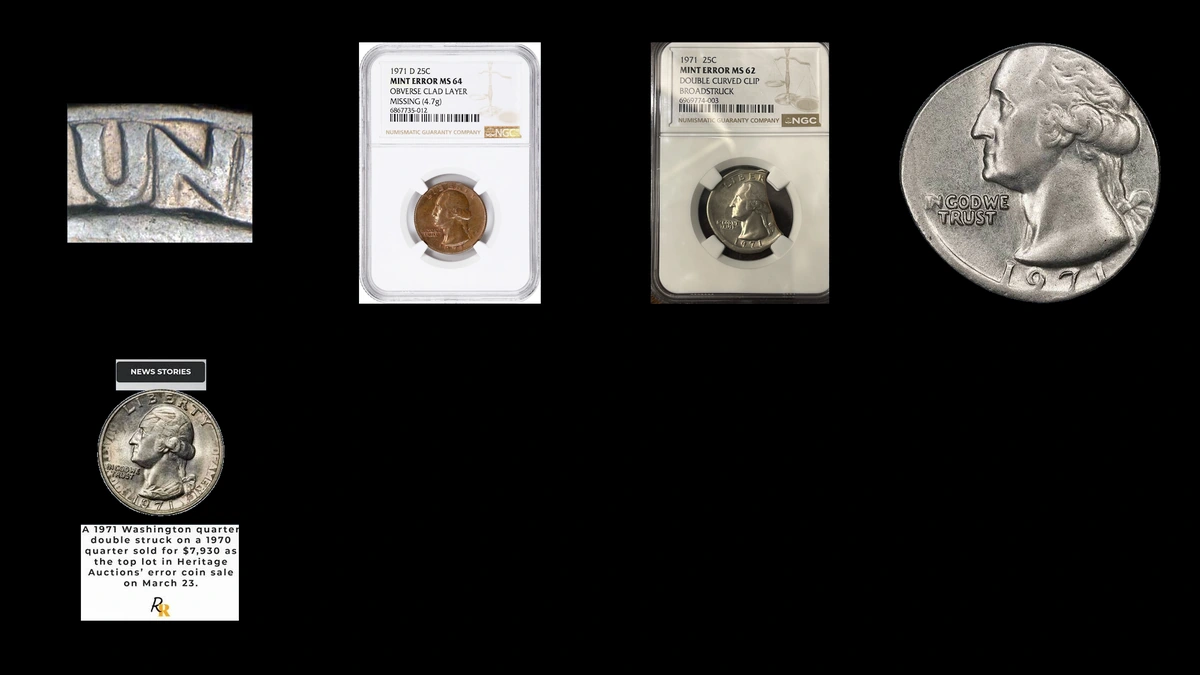
For a 1971 quarter, several repeated reverse words can be more significant than an uneven rim. The supplied estimates for 1971 quarter errors range from $5 to $12,000.
A Philadelphia FS-801 doubled reverse graded PCGS MS65 sold for $8,812.50 in February 2017. Identify the mint and reverse pattern first, then inspect the metal and any evidence of a displaced or later strike.
| Observation | Identification | Estimated value |
|---|---|---|
| Repeated reverse lettering and wreath | FS-801 doubled die | $100–$10,000 |
| Raised line or rim mound | Die crack or cud | $5–$300 |
| Copper exposed by missing metal | Missing clad layer | $50–$500 |
| Gap through the disk | Clipped blank | $20–$250 |
| Full design inside expanded metal | Broadstrike | $20–$200 |
| Unstruck crescent opposite lost design | Off-center strike | $25–$400 on normal blanks |
| Different blank metal or size | U.S. or Philippine wrong planchet | $250–$4,000 |
| 1970 date beneath a 1971 design | Different-year overstrike | $5,000–$12,000 |
1. 1971 Quarter Several Eagle-Side Words Repeat: FS-801 Doubled Reverse Error
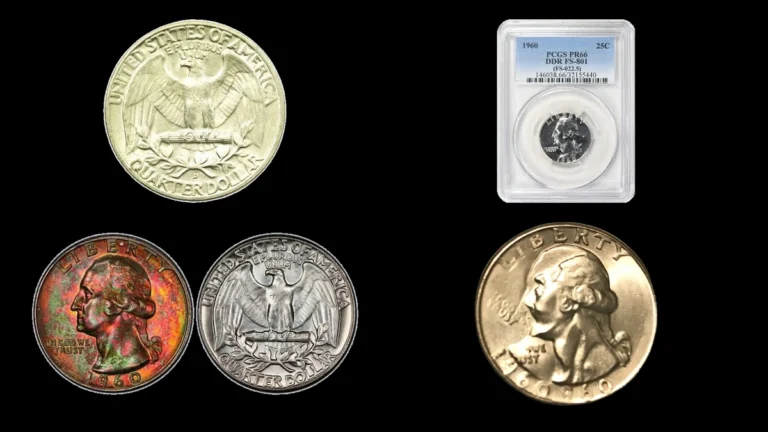
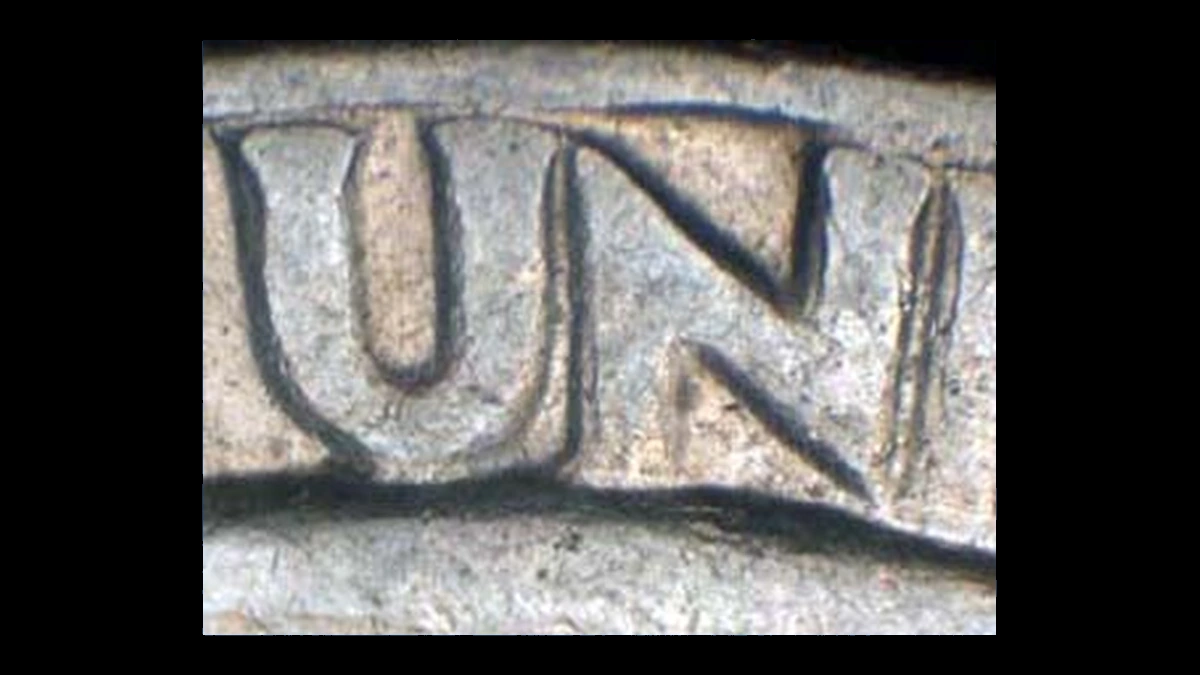
Philadelphia and Denver each have a distinct 1971 reverse variety designated FS-801. Both involve strong repetition in the country name, E PLURIBUS UNUM, QUARTER DOLLAR, and the wreath.
The doubling originated in the die before it struck the coin. Common minor doubling inherited from earlier design-making tools does not automatically establish either FS-801.
How to Identify
Check for D beside Washington’s hair ribbon before choosing reference photographs. No mint mark is normal for a 1971 Philadelphia quarter and does not indicate a missing-S error.
Compare multiple reverse words and the wreath with the correct mint’s pattern. For Philadelphia, a line northwest from the lips and another rising from a leaf right of the eagle’s tail can support the match.
Those secondary markers are not supplied for Denver. Match the repeated design first rather than using one thick letter or a transferred supporting mark.
What It’s Worth
$100–$10,000 is the estimate across identified Philadelphia and Denver varieties in different conditions. The Philadelphia PCGS MS65 FS-801 sold for $8,812.50 in February 2017.
The high result concerns an unworn attributed coin with strong preservation. It does not price an ordinary Denver quarter with slight letter thickening.
2. 1971 Quarter A Raised Line or Rim Patch Replaces Detail: Die Crack or Cud Error
A crack in the die leaves a ridge when metal enters the opening during striking. A larger broken area connected to the rim can leave a cud.
The supplied Denver rim-break report has a text-and-image date conflict: its illustration shows 1972. That picture cannot establish the claimed 1971 specimen.
How to Identify
Read the final date digit on the actual coin before examining the break. A cud needs a natural rim connection and adjacent design consistent with the missing die area.
Use side lighting to distinguish a raised crack from a scratch channel with a burr. Nearby crushing may instead show that a later edge impact pushed metal inward.
What It’s Worth
$5–$40 is the estimate for confirmed small cracks, with $40–$300 for clear rim breaks. The date and original raised structure must be established together.
A larger mound can draw more interest than a fine ridge. The conflicting illustration does not support a premium on an unverified 1971 claim.
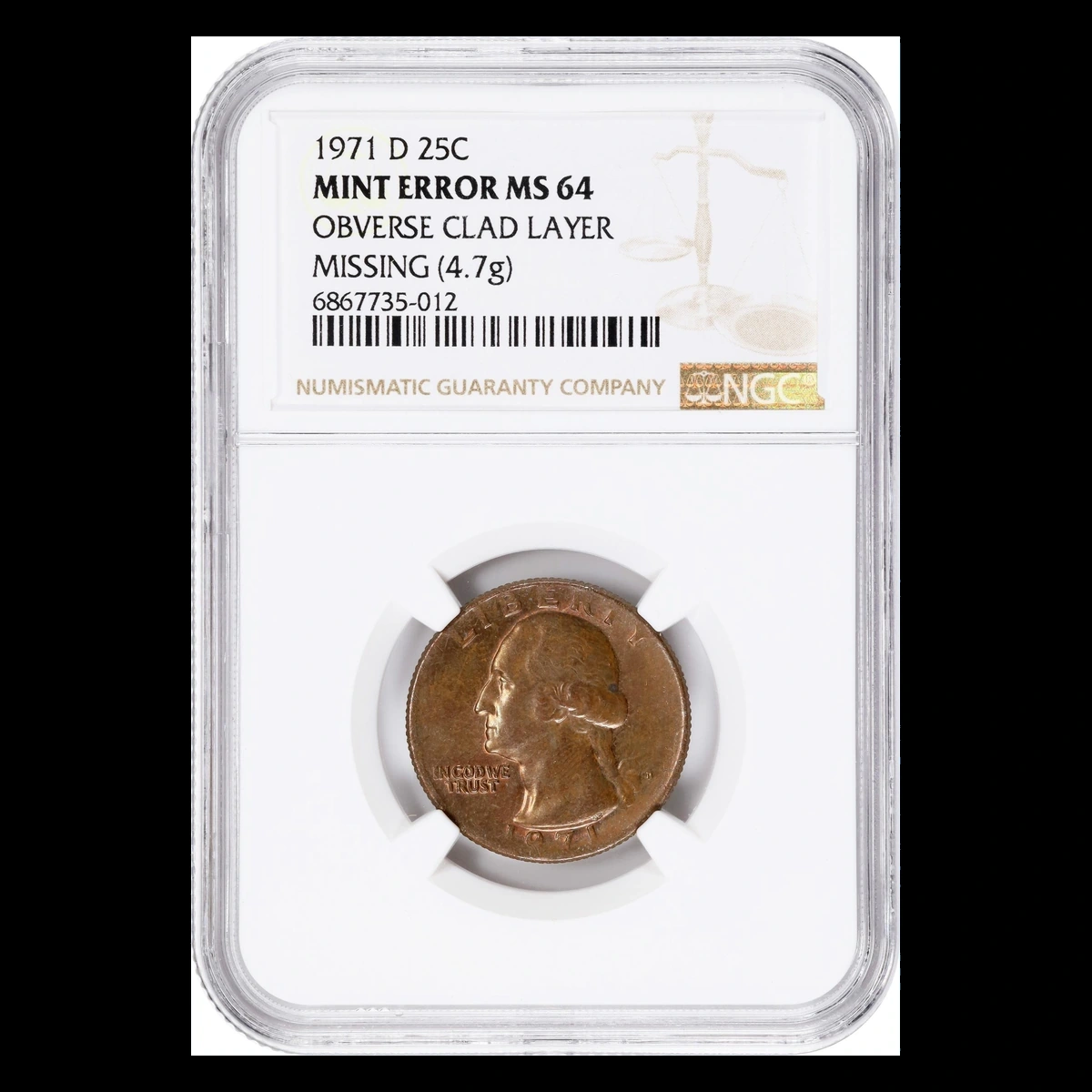
3. 1971 Quarter An Outer Layer Is Absent: Missing Cladding Error
A quarter’s copper core becomes visible if an outer copper-nickel layer is missing. The general 1971 report establishes neither the affected face nor a measured weight.
How to Identify
Follow the boundary of the copper-colored area and compare it with the edge layers. A color change without structural loss may be staining or toning.
Record a loose coin’s weight against the normal 5.67-gram standard and inspect for scraping or chemical corrosion. San Francisco Proof quarters of this year are clad too, rather than a separate silver version.
What It’s Worth
$50–$500 is the estimate for a correctly identified missing-layer coin. The extent of original loss and surface preservation guide the comparison.
A 1988-D obverse-missing-layer quarter graded NGC MS62 sold for $156 in November 2020. Its 4.8-gram recorded mass and affected face belong to that later specimen, not the unspecified 1971 report.
4. 1971 Quarter Metal Is Missing from the Edge: Clipped Blank Error
A clip begins with an incomplete blank, so the quarter’s design forms after the gap is already present. The 1971 category does not fix one mint, shape, or position.
How to Identify
Examine both ends of the gap and the way the struck rim approaches them. Natural weakness or altered metal flow may support a preexisting opening.
Filed surfaces, sharp tool grooves, and letters bent across a newly cut edge suggest later alteration. An opposite weak rim is useful on some clips but is not required on every genuine example.
What It’s Worth
$20–$250 is the estimated range for genuine 1971 clips. Surviving identity and the quality of the original boundary affect the comparison.
A 1980-P corner clip graded NGC MS65 sold for $204 in June 2023. Its specific corner shape does not describe every reported 1971 clip.
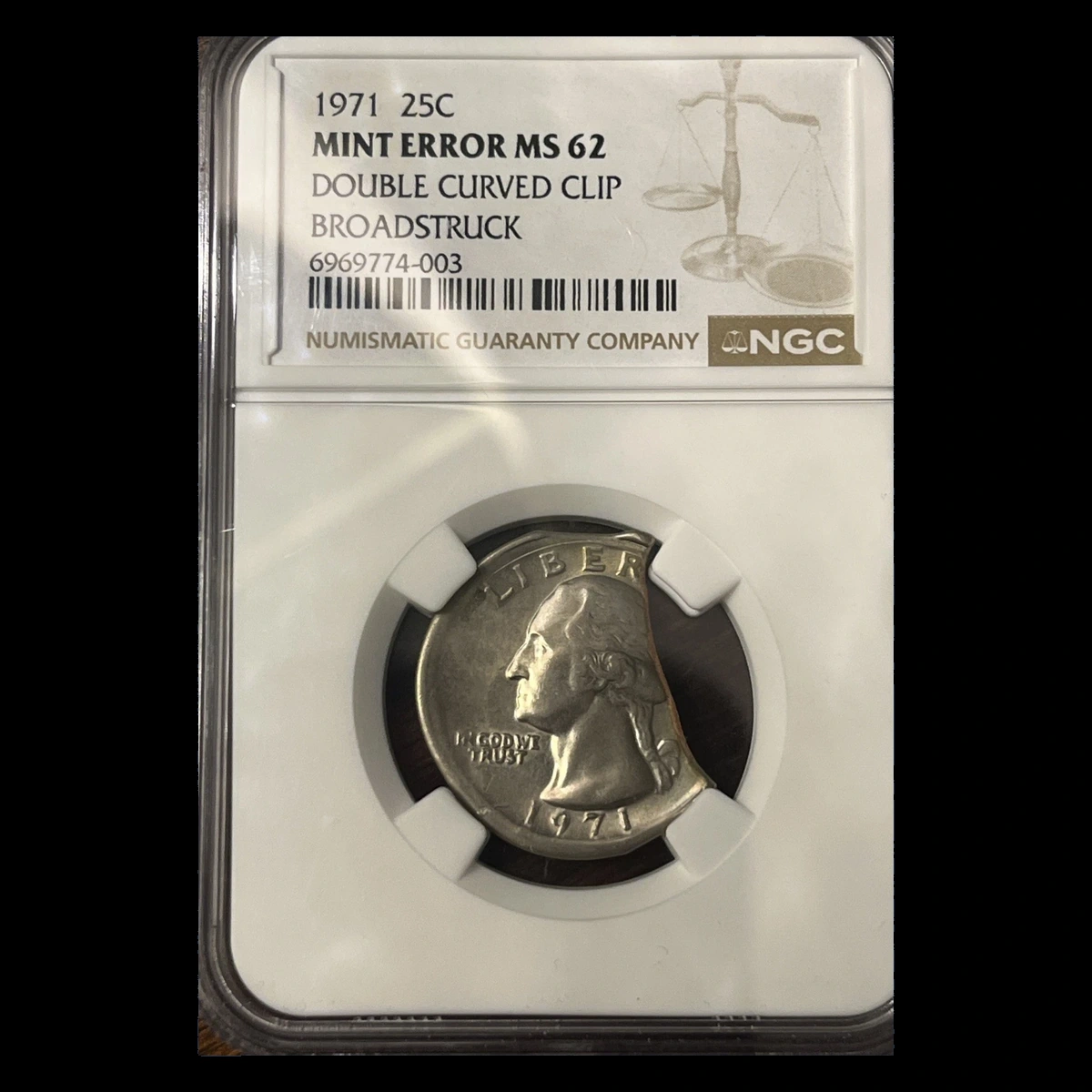
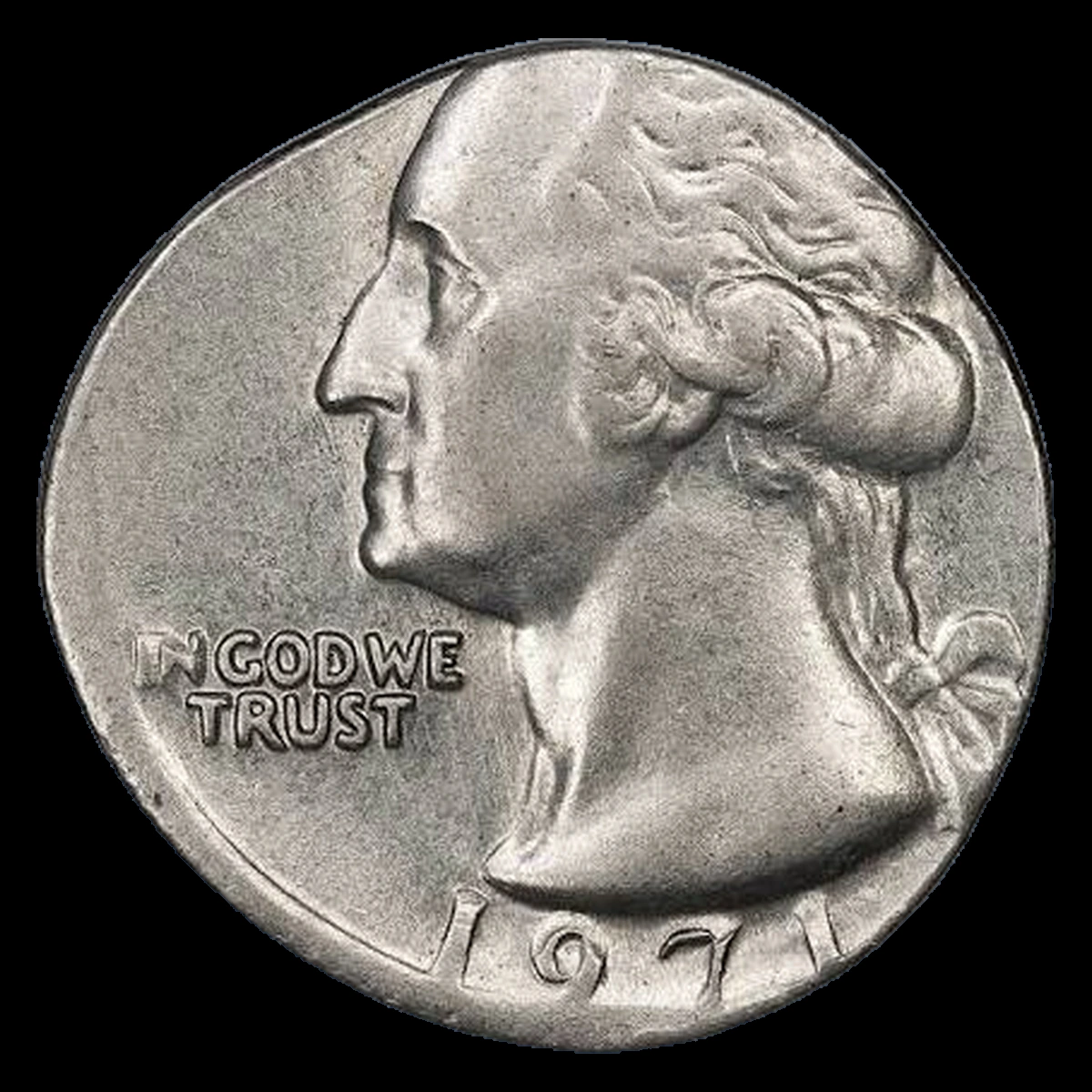
5. 1971 Quarter The Complete Design Fits a Wider Disk: Broadstrike Error
Philadelphia and Denver broadstrikes are reported for 1971. Without normal restraint from the collar ring, the metal spreads beyond the usual outline while retaining the intended design.
How to Identify
Compare the width with the normal 24.3-millimeter diameter, then trace all outer lettering on both faces. An uneven border can still surround a complete broadstrike.
Inspect the edge and raised artwork for grinding or crushing from later reshaping. An enlarged diameter alone does not distinguish a mint error from a flattened finished coin.
What It’s Worth
$20–$200 is the estimate for an identifiable 1971 broadstrike. Pronounced original spread and sharp surviving designs can improve appeal.
A 1984-P PCGS MS65 broadstrike sold for $169 in December 2025. Its later date, grade, and outline are context rather than measurements of a 1971 specimen.
6. 1971 Quarter Part of Each Design Misses the Blank: Off-Center Strike Error
Ordinary Philadelphia and Denver off-center quarters are reported without one shared direction or percentage. Some original blank metal remains untouched opposite the design that falls beyond the edge.
How to Identify
Compare both faces for compatible missing design and inspect the unstruck area for grinding or erased detail. A centered reverse behind a shifted front may instead indicate one misaligned die.
Read enough of the date to establish 1971 and examine the surviving mint area. The separate report of 70% displacement on a Philippine blank belongs to the wrong-planchet group below.
What It’s Worth
$25–$400 is the estimate for identifiable off-center quarters on normal blanks. Original surfaces and a readable year remain important alongside displacement.
A 1988-P quarter graded ANACS MS63 and struck 30% off center sold for $109 in January 2022. That percentage and result cannot be assigned to a general 1971 report.
7. 1971 Quarter Quarter Dies Strike U.S. or Philippine Blanks: Wrong Planchet Error
Denver examples use dime and nickel blanks, and a copper cent-planchet coin is labeled “(1971).” The parentheses indicate an assigned year rather than a fully readable date.
Separate Philippine ten- and twenty-five-sentimo examples are documented, with the ten-sentimo piece displaced toward twelve o’clock and the twenty-five-sentimo coin weighing 4 grams. Another report describes 70% off-center striking on an unspecified Philippine blank.
A different “(1971)” dime-planchet quarter has an obverse indent. The indent and foreign-blank displacement must remain attached to their own specimens.
How to Identify
On the Denver dime-planchet coin, the partial date and D survive while LIBERTY and QUARTER DOLLAR are absent. Match those details with the blank’s metal and original edge rather than small size alone.
U.S. starting standards are about 3.11 grams and 19.05 millimeters for a cent, 5 grams and 21.21 millimeters for a nickel, and 2.268 grams and 17.91 millimeters for a clad dime. The supplied cent specimen actually weighs 3.07 grams.
Do not give the unspecified 70% Philippine report a mint or denomination from another coin. Its displacement requires evidence in addition to foreign-blank identification.
What It’s Worth
$250–$4,000 is the estimate across identified wrong blanks and combinations. The Denver dime-planchet AU58 sold for $345 in May 2005, while the separate “(1971)” dime-planchet indent graded MS63 brought $504 in December 2025.
The Philippine ten-sentimo error sold with a normal Philippine coin for $325 before buyer’s premium in September 2006. That amount covers the two-coin group rather than the error alone.
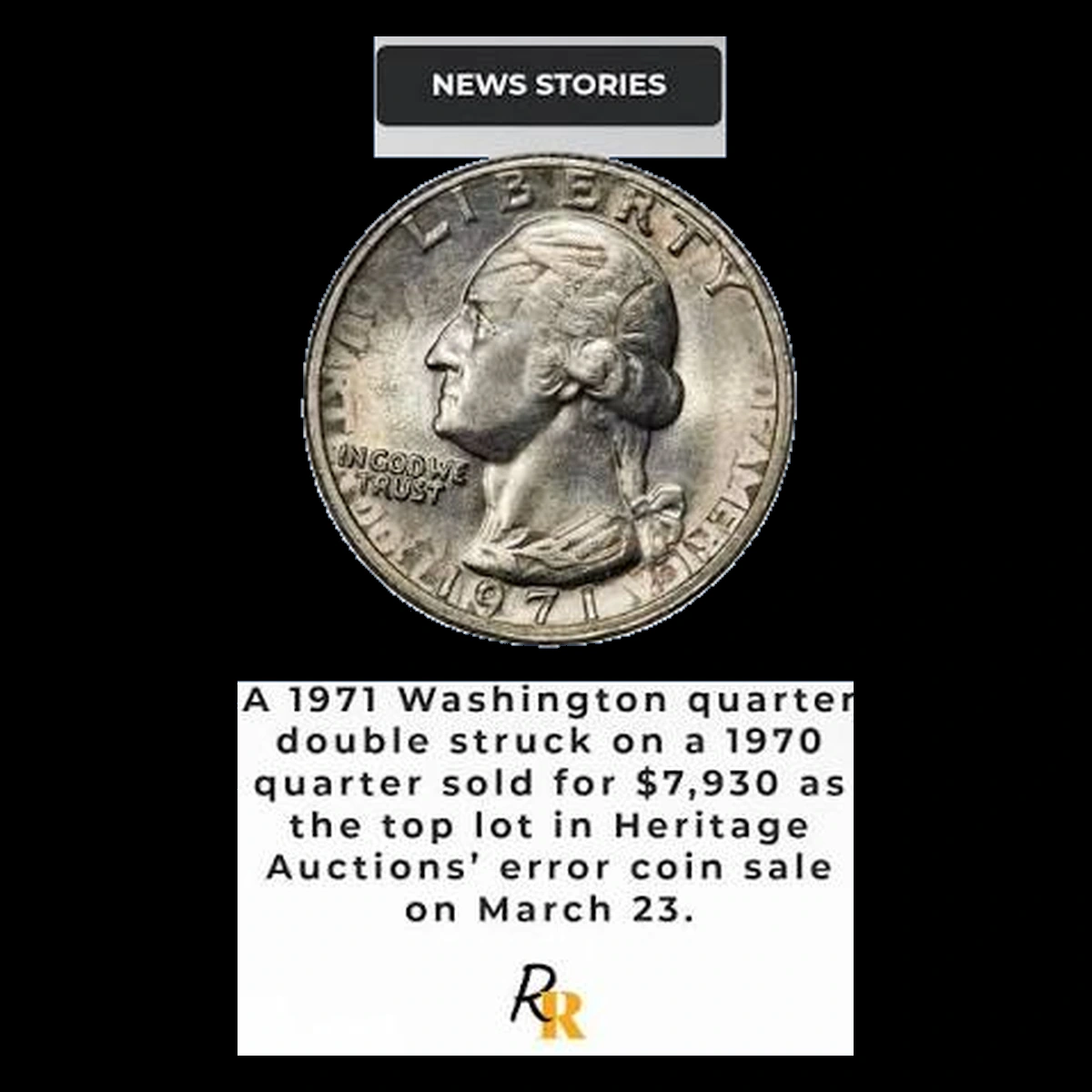
8. 1971 Quarter A 1970 Date Survives beside the Eagle: Different-Year Overstrike Error
The documented coin began as a finished 1970 quarter and received a 1971 quarter design after turning over. Earlier reverse details remain beneath the new obverse, and earlier portrait-side details cross the new reverse.
The older 1970 date survives between the eagle’s right wing as viewed and the rim. This crossed arrangement is far more extensive than a repunched digit or doubled die.
How to Identify
Locate the old date beside the wing, then follow connected remnants of its portrait-side design. Compare the new Washington side for corresponding parts of the older eagle-side image.
Both crossed faces support the flip between strikes. A few isolated marks resembling digits cannot establish a complete earlier quarter underneath.
What It’s Worth
$5,000–$12,000 is the estimate for a similarly clear authenticated different-year overstrike. The NGC MS64 1971-over-1970 quarter sold for $7,930 in March 2026.
The readable pair of years and connected underdesigns make the sequence understandable. Damage obscuring that relationship can reduce appeal.
Conclusion
The 1971 quarter’s reverse variety, metal structure, and surviving earlier designs each answer a different identification question. Match the correct mint’s FS-801 pattern, and keep normal Philadelphia absence of a mint mark separate from missing-detail claims.
For wrong blanks and overstrikes, preserve the individual coin’s measurements and visible dates. A paired sale, an assigned year, and a specimen-specific displacement should retain those limits when used in a value comparison.