Rare 2011 Sacagawea Dollar Errors (List & Pictures)
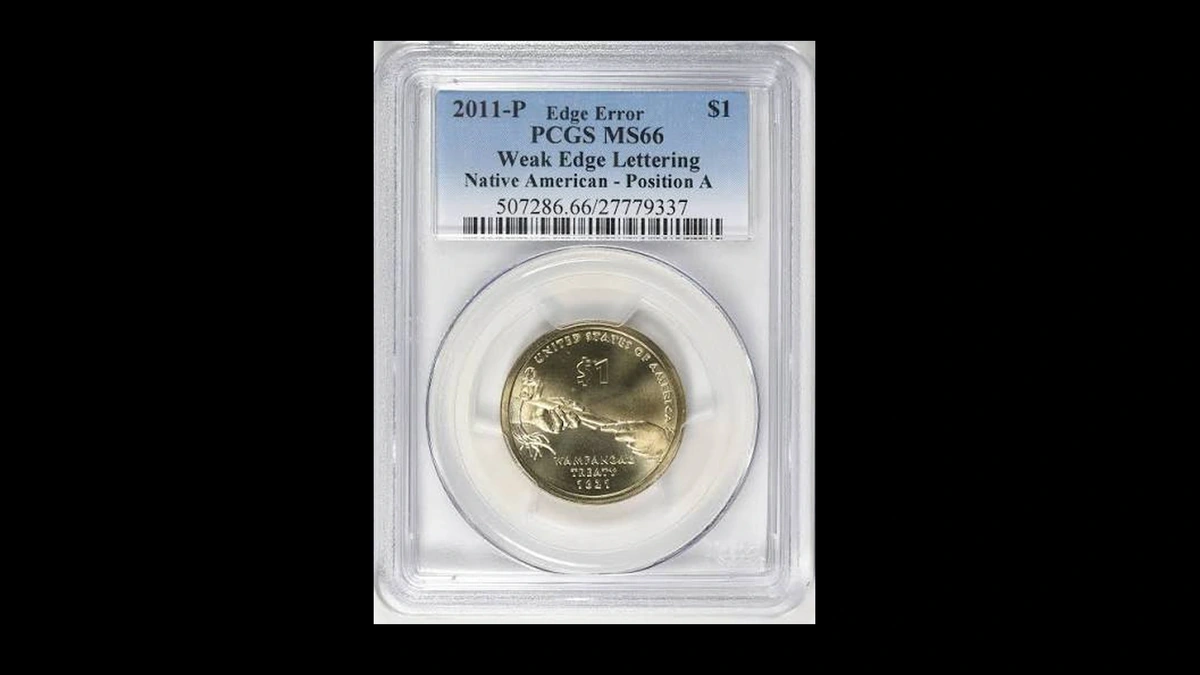
The hands-and-pipe reverse can identify 2011 Sacagawea dollar errors when an edge problem removes the date. Estimated values span $20–$6,000, with several categories requiring confirmation of a reported candidate.
The highest supplied completed comparison is a different-year 2004-P dollar on a quarter blank that sold for $4,440 in August 2024. Examine the complete edge first, then use the reverse design, metal, and outline to separate the possibilities below.
| Check | Possible finding | Estimated value |
|---|---|---|
| Depth and continuity of edge text | Weak, partial, or missing inscription | $20–$650 |
| Two edge text sequences | Doubled edge lettering | $50–$750 |
| Repeated reverse details | Reported doubled die | $25–$300 |
| Copper-colored reverse with metal loss | Reported missing outer layer | $75–$200 |
| Wide or displaced design | Broadstrike or off-center strike | $50–$3,500 |
| Abnormal blank identity | Possible wrong planchet | $1,000–$6,000 |
1. 2011 Dollar Edge words are faint or absent: weak, partial, or missing lettering Error
Ordinary dollars receive edge lettering after the faces are struck. Incomplete contact or a missed operation can leave shallow text, an unlettered stretch, or an entirely blank edge.
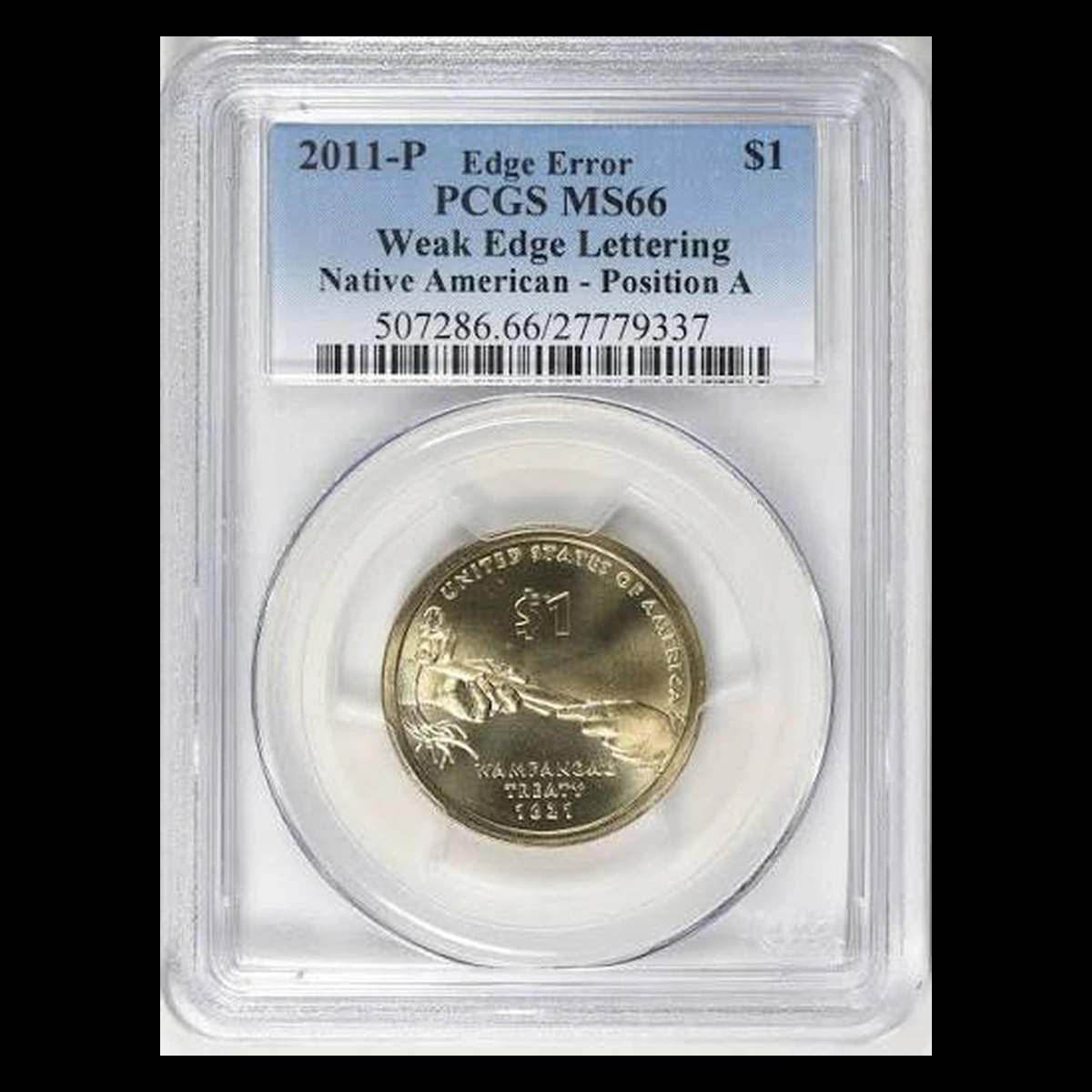
PCGS lists Philadelphia weak and partial examples. A separate completely plain-edge discovery reported by Coin World had an incorrect P designation on its paperwork.
How to Identify
Make overlapping edge photographs so every section is visible. Distinguish strokes that remain shallow throughout from an inscription that ends and resumes around a missing stretch.
For a completely plain edge, identify the hands passing a pipe on the reverse and check for grinding or a narrowed edge. The missing mint letter cannot be restored by assuming the mint named on a roll is correct.
Coin World’s discovery account explains that the NGC-graded coin had no circulation wear but did have damage, and its mint remained unknown. Finding it in a Denver roll did not establish Denver manufacture.
What It’s Worth
$20–$300 is the estimate for clear weak or partial lettering, with $50–$650 for a genuine completely blank edge. Preservation and the extent of the omission affect the comparison.
The supplied PCGS guide comparison values 2010 missing-edge dollars at $65–$650 across grades. Those are different-year guide figures, and the damaged 2011 discovery should not be valued as flawless simply because its inscription is absent.
2. 2011 Dollar Two inscriptions cross each other: doubled edge lettering Error
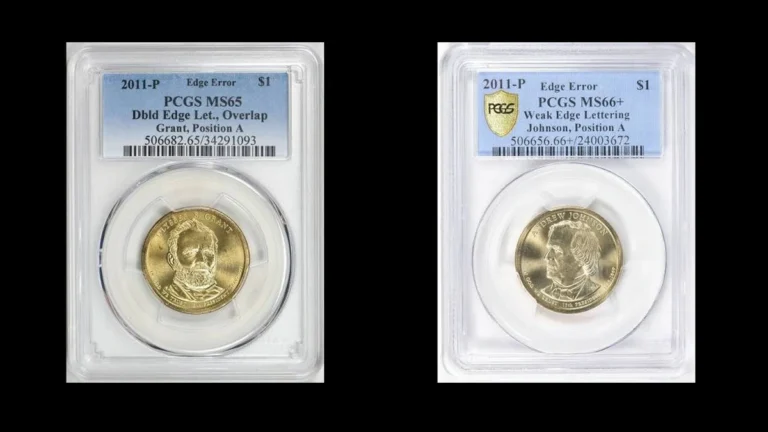
A second pass through the edge-lettering equipment can place another run of sunken characters over the first. PCGS lists a 2011-P overlapping variety with Position A lettering.
Position A describes reading orientation rather than the reason for the error. A collector’s separate Denver claim does not establish the same certified variety for D-mint coins.
How to Identify
Start with a clearly repeated star or letter and follow several characters in both runs. Each sequence should retain normal character style and spacing instead of dissolving into unrelated dents.
The overlapping inscriptions read in the same direction. Turning one normal inscription upright does not create a second run.
Record the edge date and mint letter with the treaty reverse to maintain identity. Use multiple views where the two sequences become difficult to follow.
What It’s Worth
$50–$750 is the estimate for clearly identified overlapping inscriptions. Strong readable repetition and clean surfaces support the better comparisons.
A 2013-P Position B overlap graded MS66 sold for $315 at GreatCollections in November 2019. That result belongs to a different date and lettering position.
3. 2011 Dollar The hands or pipe have additional outlines: reported doubled die Error
A die carrying repeated raised-design shapes can reproduce them on each coin it strikes. Reports include a doubled 2011 reverse, but no fixed diagnostic spot is established in the supplied material.
The hands, pipe, and lettering are inspection areas rather than proof by location alone. Their ordinary overlapping outlines can look doubled under angled light.
How to Identify
Place a normal treaty reverse beside the candidate and choose one clearly comparable area. Check for a second raised curve or letter stroke that remains visible when the light changes.
A flat ledge beside a reduced original stroke may result from movement during striking. A scratch can cross the design without matching its shape.
Keep a full reverse photograph with the close detail. Confirmation should connect the repeated shape to another example from the same die before treating it as an established variety.
What It’s Worth
$25–$300 is a conditional estimate for confirmed reverse doubling. Clear repetition and little wear would support a stronger comparison than tiny ambiguous detail.
No recorded sale for a specific 2011 doubled-reverse specimen is supplied. Strike-related shelves do not qualify for this variety range.
4. 2011 Dollar One face exposes copper-colored metal: reported missing outer layer Error
The normal golden appearance comes from manganese-brass outer layers over a copper center. The supplied 2011 report describes a copper-colored reverse opposite a normal-looking front.
If an outer layer was absent before striking, the treaty design would be pressed into the exposed center. Brown toning or later chemical alteration does not establish that sequence.
How to Identify
Compare the two faces in neutral light and inspect the edge where the layers meet. A loose normal dollar weighs 8.10 grams, so loss of a full layer should affect weight.
Examine how the hands and pipe formed in the exposed-looking area. Rough pits and eaten-away letter edges can suggest later removal instead of an original missing layer.
Neither low weight nor red color settles the question alone. A specialist needs the layer boundary, surface structure, and design together.
What It’s Worth
$75–$200 is the supplied modern-dollar estimate for a confirmed example of this reported type. It is not an auction result for an individually identified 2011 coin.
A complete missing layer with clear detail offers better evidence than a discolored patch. Staining alone earns no missing-layer premium.
5. 2011 Dollar The complete design has an expanded border: broadstrike Error
A broadstrike results when the collar fails to contain the blank and metal spreads outward. Its larger outline still contains the complete intended design.
The supplied 2011 reports provide no measured specimen or fixed edge-lettering pattern. Expanded shape and edge inscription must be examined as separate observations.
How to Identify
Trace the outermost artwork and letters on both faces to verify that none was lost beyond the blank. Compare the dimensions with a normal dollar approximately 26.5 millimeters across.
Inspect for flattened design from later hammering or squeezing. Record the extra border’s width and thickness without pressing on the coin.
If artwork runs off the edge, investigate an off-center strike instead. Do not assume a broadstrike also lacks lettering without inspecting the entire edge.
What It’s Worth
$50–$500 is the estimated range for genuine broadstrikes. A larger attractive example with both designs intact offers a clearer display than slight spreading on a marked coin.
This estimate does not include an assumed second edge-lettering error. A quarter-sized view of an ordinary flattened dollar would not justify the attribution.
6. 2011 Dollar An unstruck area accompanies lost design: off-center strike Error
A blank struck outside its intended central position can lose part of both pictures while retaining untouched metal elsewhere. This is more than one side of a rim looking wider.
The reported 2011 category has no universal displacement percentage. Surviving hands-and-pipe artwork can help identify the issue when the edge date is unavailable.
How to Identify
Find the original blank region and the design that runs off the opposite edge. Compare both faces while maintaining the same physical reference points.
A centered reverse behind a shifted front suggests a misaligned die. An expanded outline containing every design element fits the broadstrike question instead.
Photograph the whole object and surviving edge text before estimating displacement. Rim width alone does not establish a percentage.
What It’s Worth
$300–$3,500 is the estimate for a genuine 2011 off-center dollar. Strong visible displacement with clear identity generally supports more interest.
A 2000-P graded NGC MS66 and struck about halfway off center sold for $3,120 in April 2021. That earlier eagle-reverse sale is not a 2011 treaty-design transaction.
7. 2011 Dollar The design occupies another denomination’s blank: possible wrong planchet Error
A wrong-planchet dollar would place this design on a blank intended for another coin. An undersized blank could affect artwork coverage, weight, composition, and the edge.
The 2011 reports mention a quarter-blank possibility without identifying a certified specimen. An illustrative size comparison does not establish an actual coin’s mint, grade, or measurements.
How to Identify
Record actual measurements or use the documented figures for a sealed coin. The normal dollar standard is 8.10 grams, while a clad quarter blank is nominally 5.67 grams.
A wrong blank can spread under larger dies, so its final diameter need not equal a regular quarter’s. Check how design coverage fits the remaining metal and inspect for filing around the edge.
Metal composition must agree with the proposed blank as well. Silvery color by itself can result from a changed surface and cannot identify the denomination.
What It’s Worth
$1,000–$6,000 is the conditional estimate for a confirmed 2011 dollar on another denomination’s blank. The actual blank and readable identity are essential to a closer value.
A 2004-P quarter-blank dollar graded ANACS MS64 sold for $4,440 in August 2024. It supplies a real earlier-design comparison without proving a 2011 discovery.
Conclusion
Let the treaty reverse establish the issue when the edge date is missing, but do not let a roll label invent an absent mintmark. Follow every inscription around the complete edge before deciding what is weak, missing, or repeated.
For color and shape questions, combine surface evidence with actual measurements. Several categories remain reported possibilities, and their estimates apply only after the specific coin’s manufacturing feature has been confirmed.