Rare 1978 Dollar Errors (List & Pictures)
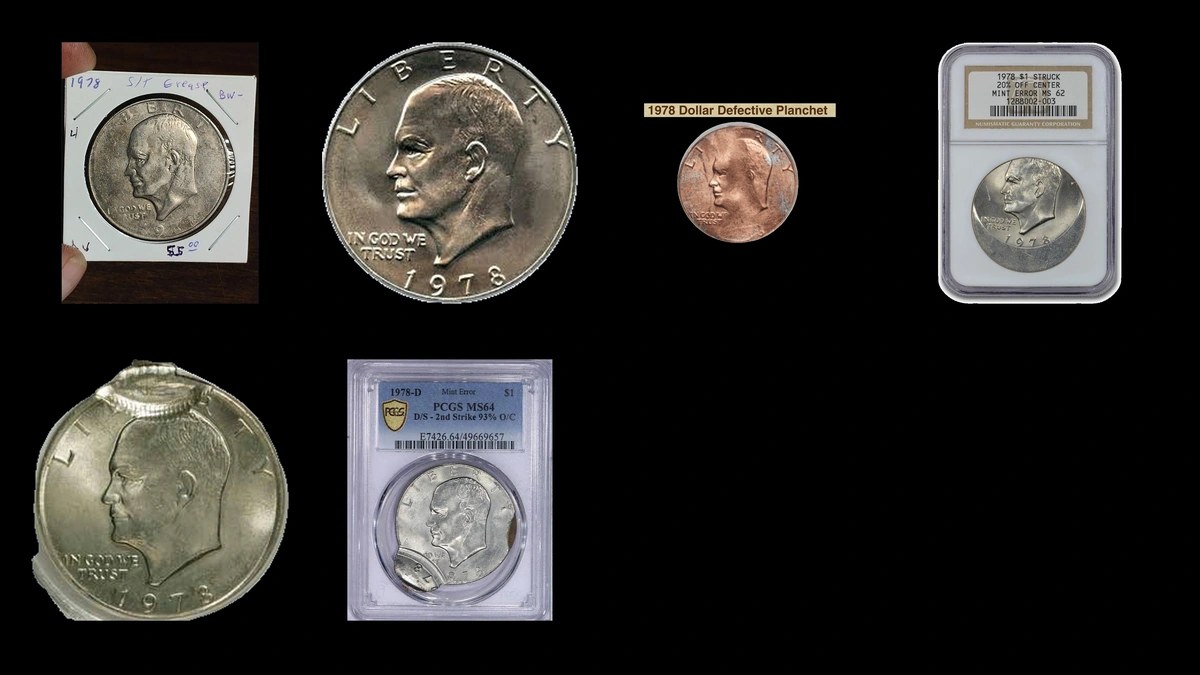
A 30% off-center dollar sold for $1,680 in March 2023, while a different double-struck coin brought $1,560. Estimated values for 1978 Eisenhower dollar errors span $10–$3,500.
Work from weak or extra design details to surface color, missing metal, and displaced images. Copper color deserves a closer look because a surface wash and a missing outer layer describe different conditions.
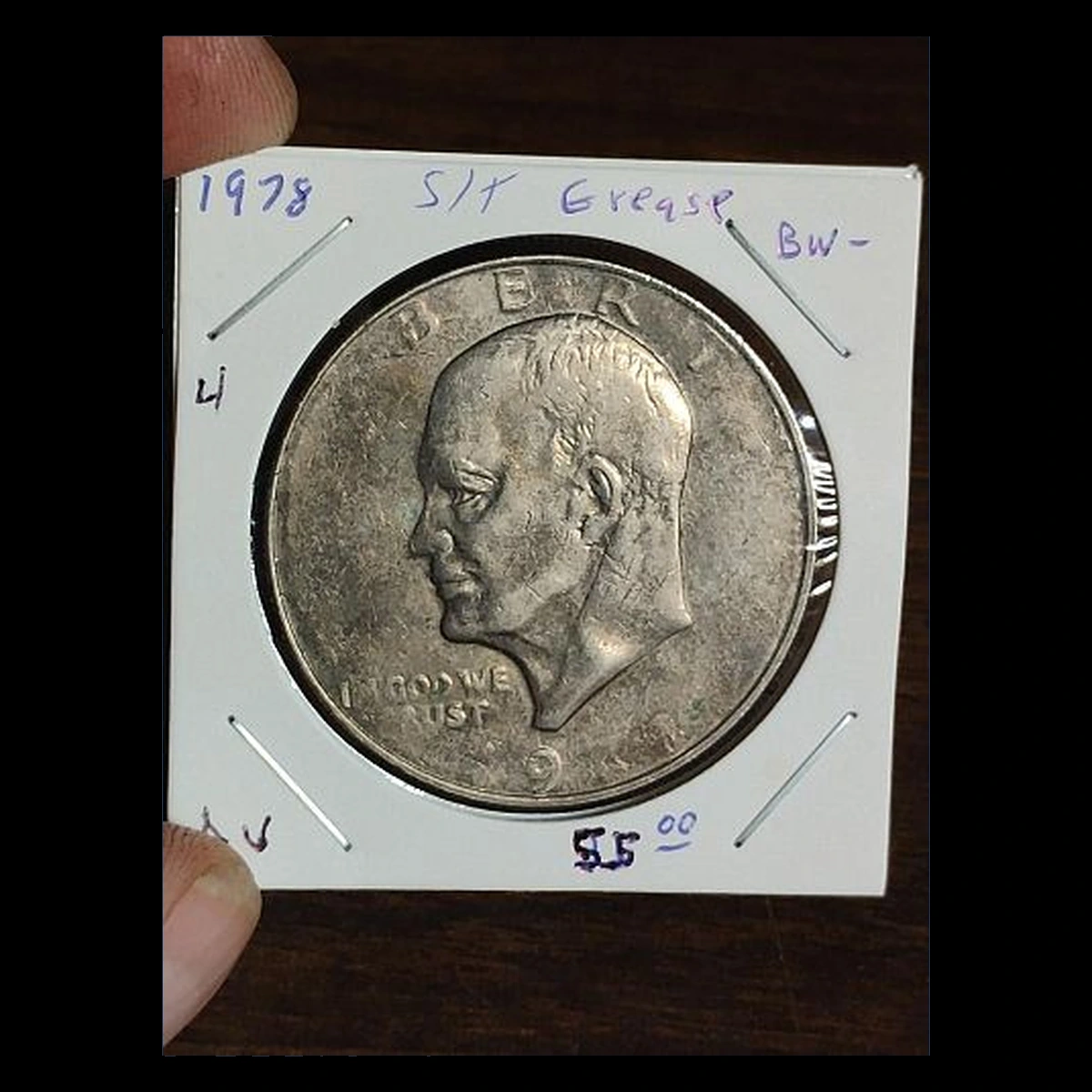
1. 1978 Dollar Letters That Never Fully Formed: Grease Strike-Through Error
Packed grease or dirt in a die can block the recesses that normally make raised detail. A seller reports a 1978 dollar with this effect on both faces, without a confirmed mint or professional error identification.
How to Identify
Compare the weak area with neighboring features at similar height. Uniformly smoothed high points suggest wear, while a sharply formed letter beside a missing one may support a localized obstruction.
Check for scrape lines or polishing and examine each face separately. The seller’s two-sided description does not establish the same condition on every weak-looking dollar.
What It’s Worth
$10–$150 is an estimate for genuine grease-related loss of detail. More conspicuous missing design can attract interest, but a seller’s label cannot authenticate the cause or turn ordinary wear into an error.
2. 1978 Dollar Unfamiliar Design Fragments: Die Clash Error
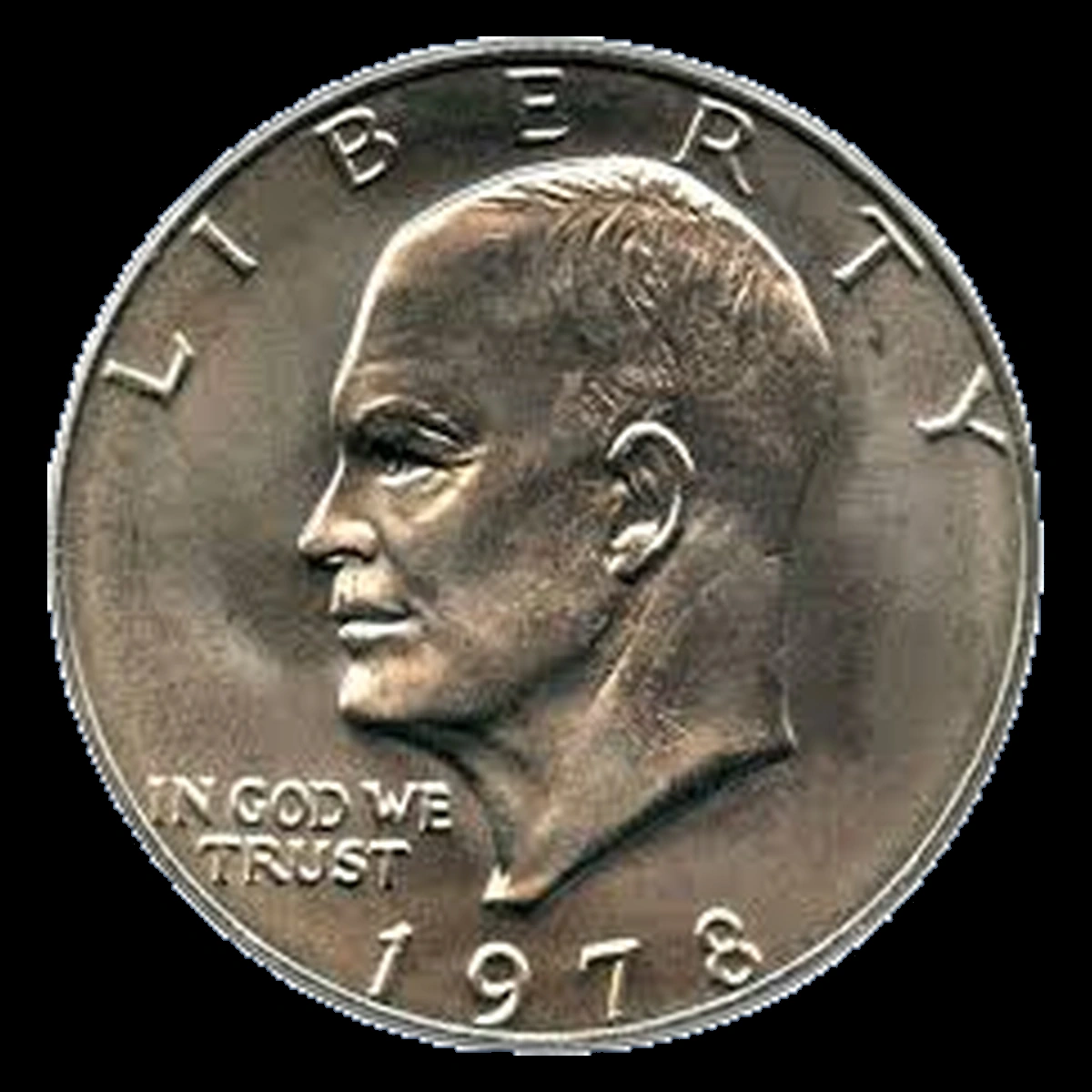
After the dies collide without a blank between them, they can carry traces of the opposite design. Later coins reproduce those fragments in unexpected places.
A collector reported a Philadelphia example sent for grading at MS66. That account provides neither an independently established clash pattern nor a sale.
How to Identify
Connect a suspected trace to a recognizable element of the opposite face. Random scratches may cross normal details without forming any coherent transferred picture.
Keep the coin’s orientation recorded while comparing photographs. An unworn condition grade such as MS66 does not identify the particular line as a clash.
What It’s Worth
$25–$250 is an estimated range for authenticated, recognizable clashes. Clear transferred outlines and original surfaces make a more useful comparison than a faint unexplained mark.
3. 1978 Dollar A Copper-Colored Reverse Surface: Copperwash Error
A Denver dollar graded PCGS MS63 was cataloged with a copperwash reverse. This describes a surface coating on the back rather than proof that an entire outer layer is missing.
Applied plating, heat, and ordinary color changes can look similar in photographs. The actual surface needs to support a mint-made explanation.
How to Identify
Photograph both faces and the edge under the same neutral light. A camera that makes everything orange can exaggerate a modest color difference.
For a loose coin, compare weight with the normal 22.68 g standard. A large shortfall raises a separate missing-metal question, while normal weight still cannot prove the coating’s origin.
What It’s Worth
$50–$300 is the estimate for authenticated copperwash examples. The PCGS MS63 attribution describes an unworn coin with marks, but no sale price is supplied for that specimen.
The range does not apply automatically to a plated souvenir or a heat-altered dollar. Preserve the surface for examination rather than rubbing it to test the color.
4. 1978 Dollar Exposed Copper and Reduced Metal: Missing Clad Layer Error
A 1978-D missing its front copper-nickel layer weighs 18.9 g and was graded NGC AU58. The missing layer exposes the copper center beneath it.
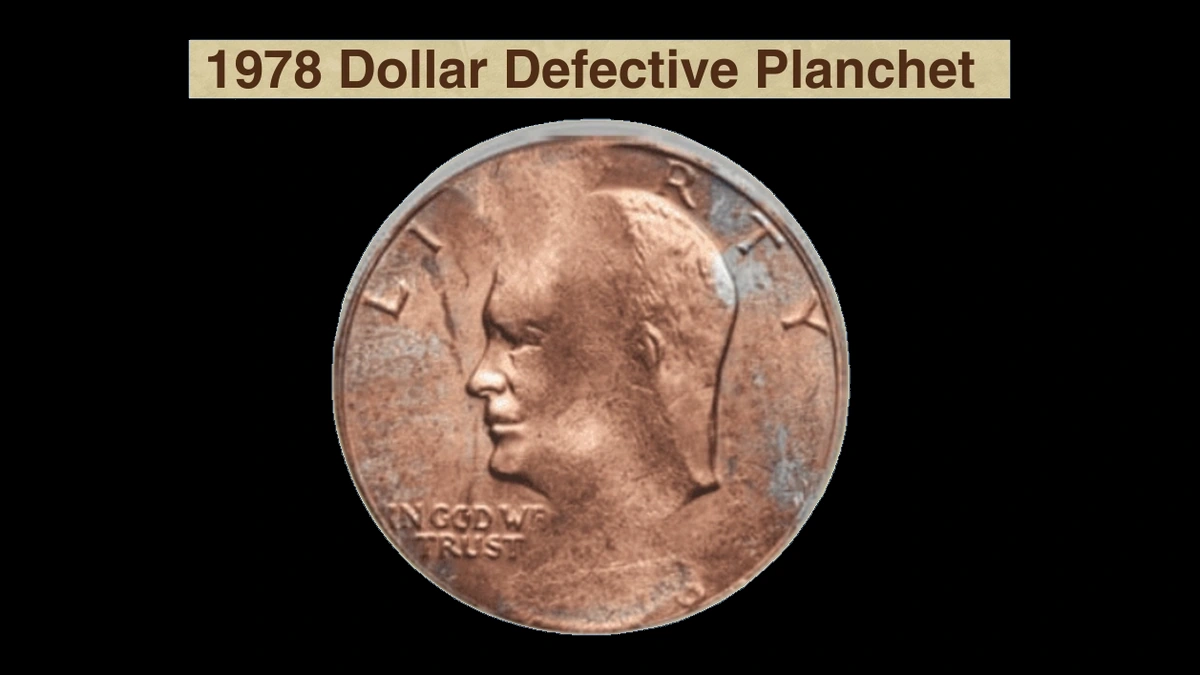
A different Philadelphia coin has a vertical depression from about 22% of an outer strip being absent before striking. Its thin area weakened both designs, leaving much of the date absent but the 8 visible.
How to Identify
Determine whether the loss covers an entire face or forms a recessed strip. The known Denver weight supports a substantial loss from the normal 22.68 g, but it belongs to that coin alone.
On a strip defect, examine the reverse directly behind the depression for corresponding strike weakness. Later thin test scratches on the documented Philadelphia reverse are damage, not part of the missing-strip mechanism.
What It’s Worth
$400–$2,500 is an estimated range across these different missing-metal forms. The Denver AU58 whole-front-layer example sold for $1,320 in November 2022.
The Philadelphia MS63 defective-strip coin brought $705 in August 2016. Its unworn condition and partial loss differ from the slightly worn Denver dollar.
5. 1978 Dollar Two Curved Gaps and an Edge Step: Clips with Partial Collar Error
A documented 1978-D combines two curved clips with a partial-collar strike. The gaps formed during blank cutting, while the stepped edge developed when only part of the blank was held correctly inside the collar ring.
PCGS graded this coin AU55, indicating light wear. The combination belongs to one dollar; an ordinary clip does not necessarily come with an edge step.
How to Identify
Follow the change in edge level or grooves through several side views. A collar step needs more evidence than one dent.
Inspect both curved gaps independently for naturally formed rim transitions rather than saw lines or filing. Keep the date and D visible with the edge views to tie all features to the same coin.
What It’s Worth
$150–$750 is the estimated range for a genuine combination of this kind. The PCGS AU55 example supplies a specific comparison for appearance, without a quoted sale amount here.
The complete coin receives one value based on its gaps, edge definition, and preservation. A single clip without the step needs a different comparison.
6. 1978 Dollar A Blank Area Beside Missing Design: Off-Center Strike Error
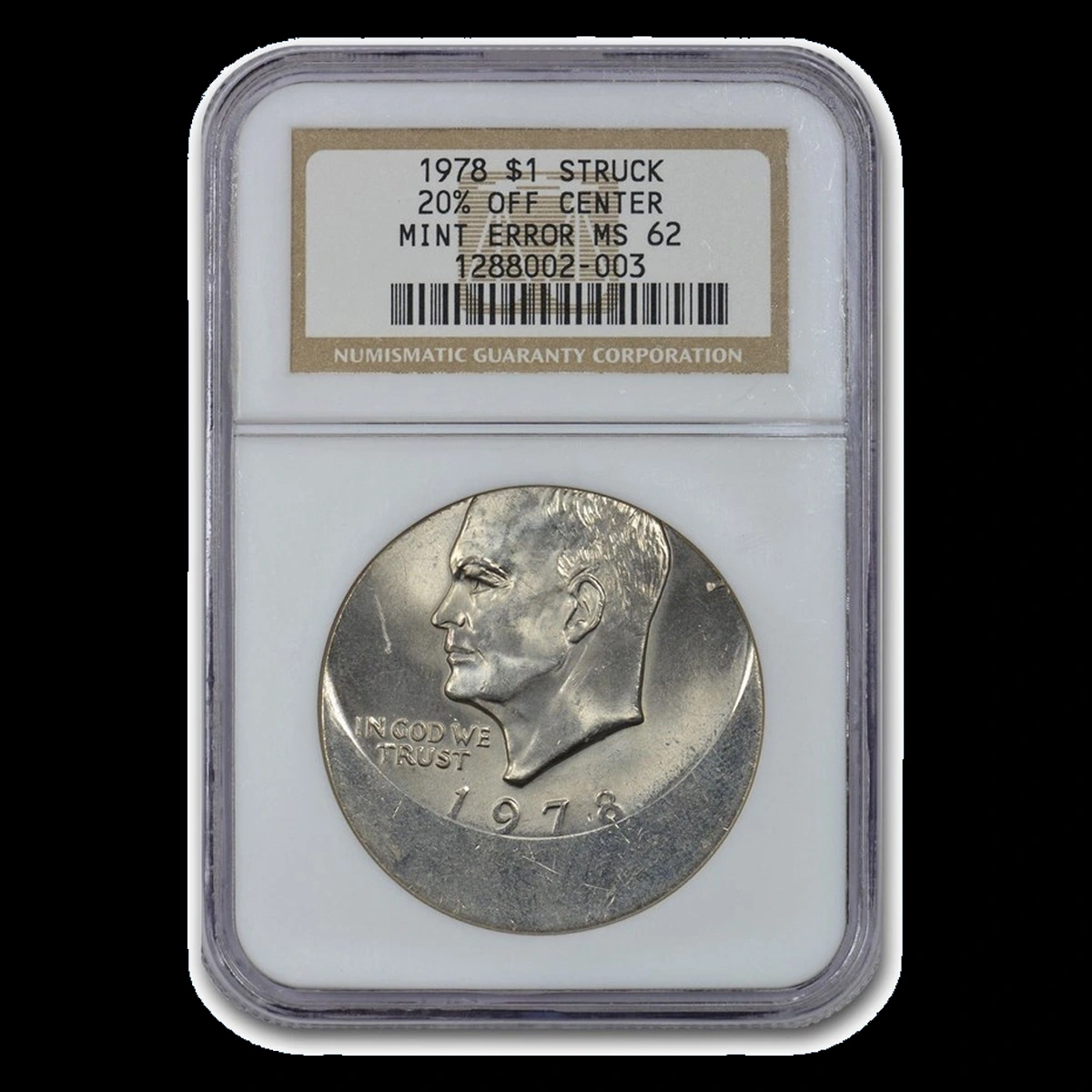
A Philadelphia MS65 dollar is documented 25% off center toward 12 o’clock with its date still visible. The blank was displaced when both dies struck it.
Other examples include small Denver shifts and a separate NGC MS66 coin struck 30% off center. Their percentages and grades should remain attached to their own specimens.
How to Identify
Identify the lettering or picture that runs beyond the metal, then match it to the untouched area on both faces. One shifted face beside a centered face points toward a different die-alignment problem.
Inspect the unstruck metal for cutting or flattening and preserve the readable year in photographs. Do not transfer the 25% coin’s upward direction to the separate 30% specimen.
What It’s Worth
$150–$2,500 is the estimated range across genuine shifts and condition levels. The 30% off-center NGC MS66 example sold for $1,680 in March 2023.
That transaction is not a sale of the pictured 25% MS65 coin. Greater displacement can display well, especially when the date survives.
7. 1978 Dollar A Small Sunken Mirror Image: Partial Brockage Error
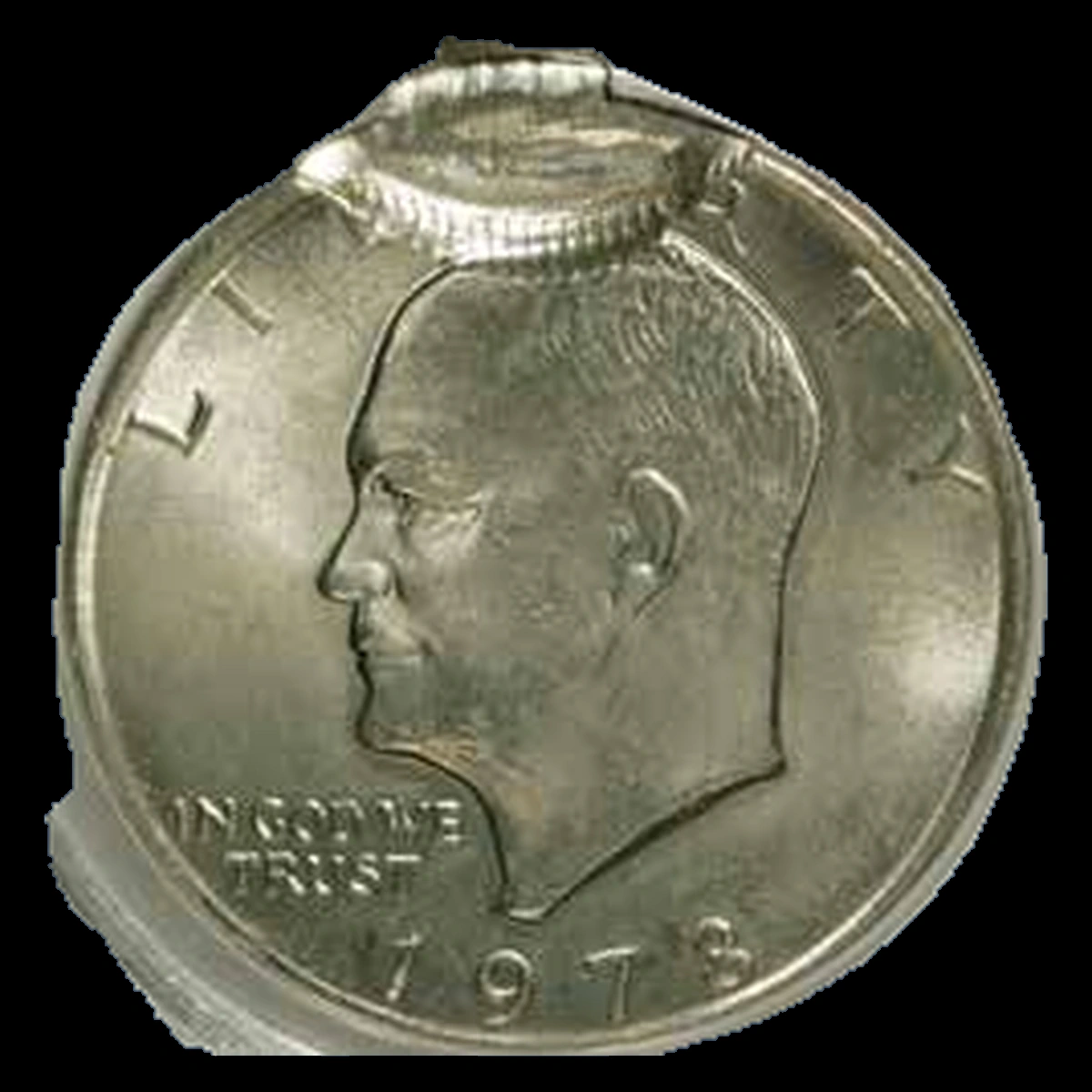
A struck coin trapped against a fresh blank can press its raised design into that blank as a reversed recess. The resulting mirror-image transfer is a brockage.
The supplied account identifies a Philadelphia PCGS MS64 dollar illustrated as a 10% front brockage. The transferred image covers only part of the face.
How to Identify
Locate recognizable backward letters or picture fragments inside the depression. A smooth dent without transferred detail does not establish the same error.
Confirm that the copy is sunken and follow its boundary into normal design. Later squeezing between coins can imitate reversed detail, so the edge, contact surfaces, and both faces need examination together.
What It’s Worth
$500–$2,500 is an estimate for authenticated partial brockages of this kind. No sale amount is supplied for the illustrated MS64 coin.
A nearly full-face brockage is a different comparison. Readable identity and a crisp transfer improve the appeal of a smaller example.
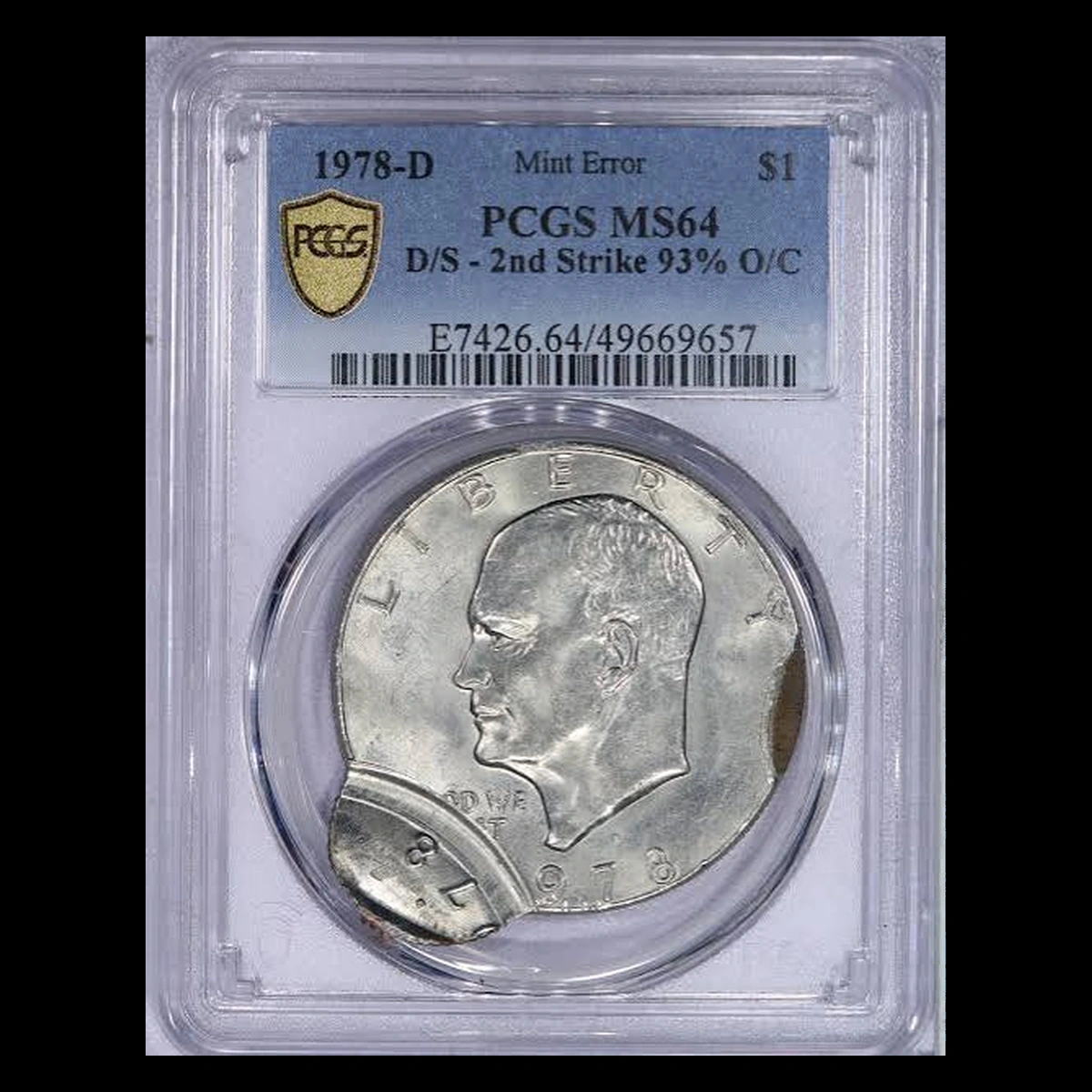
8. 1978 Dollar Two Separated Design Positions: Double Strike Error
A Denver dollar graded NGC MS64 retained its first design and then received another blow 75% off center. The large movement left distinct groups of design fragments.
This is a second strike on an already struck coin. Small doubled edges beside a letter cannot demonstrate the same sequence.
How to Identify
Trace an original portrait or line of lettering, then follow its displaced counterpart. Overlap and flattened earlier detail can show which impression came later.
Keep the first date and D in the record and compare the other face. Much of the second image missed the metal, so every second date digit need not survive.
What It’s Worth
$800–$3,500 is an estimated range for comparable double strikes. The NGC MS64 1978-D with its second strike 75% off center sold for $1,560 in March 2023.
The figure values one coin with two blows. A readable first date and clear sequence make it easier to compare than a heavily distorted example.
Conclusion
On a 1978 dollar, similar-looking symptoms can have different origins. Copper color may involve a wash or missing metal, while a blank crescent and two displaced images require different strike explanations.
Use both faces and the edge to identify the actual feature before applying the $10–$3,500 estimates. The $1,680 off-center coin and $1,560 double strike are separate sales, and the clip with partial collar is one combined example.