Rare 1794 Dollar Errors (List & Pictures)
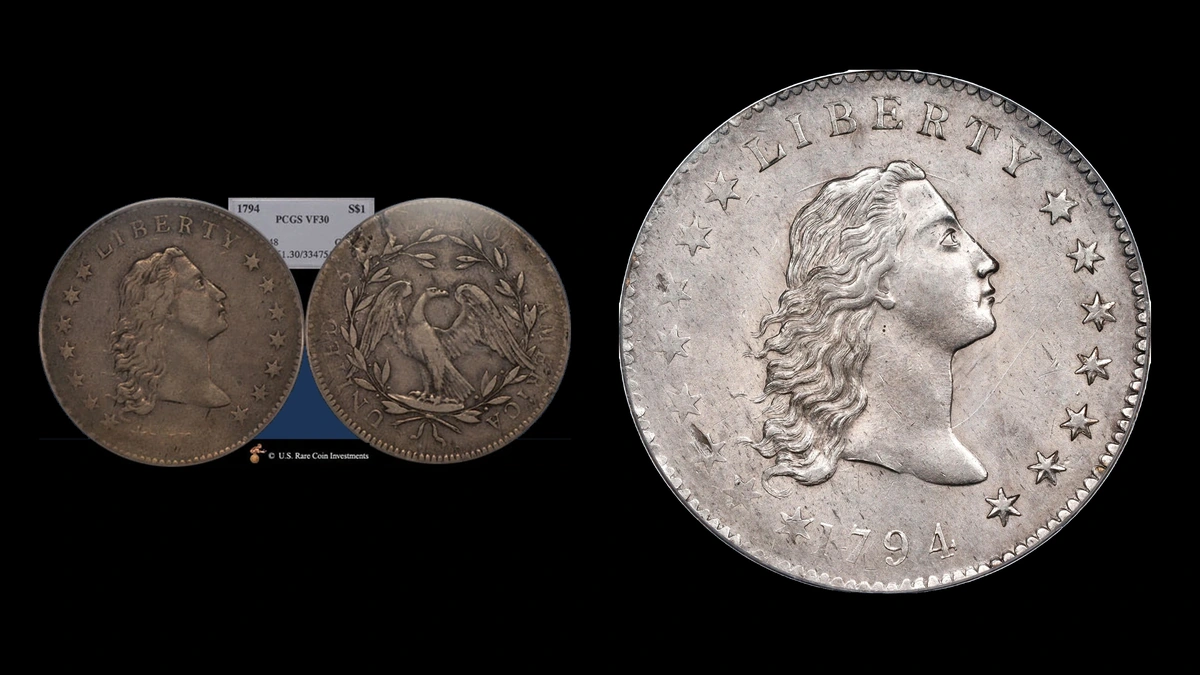
Small original flaws can survive on an exceptionally valuable early dollar. The Boyd-Cardinal 1794 dollar sold for $4,500,000 in November 2025 with clash traces and minor blank defects.
These three groups of 1794 dollar errors have estimated whole-coin values of $50,000–$5,000,000. The wide range reflects the rare issue and its preservation, so compare the complete coin before treating a weak area or small flake as a premium.
1. 1794 Dollar Soft Left Detail beside Sharper Design: Uneven Strike Error
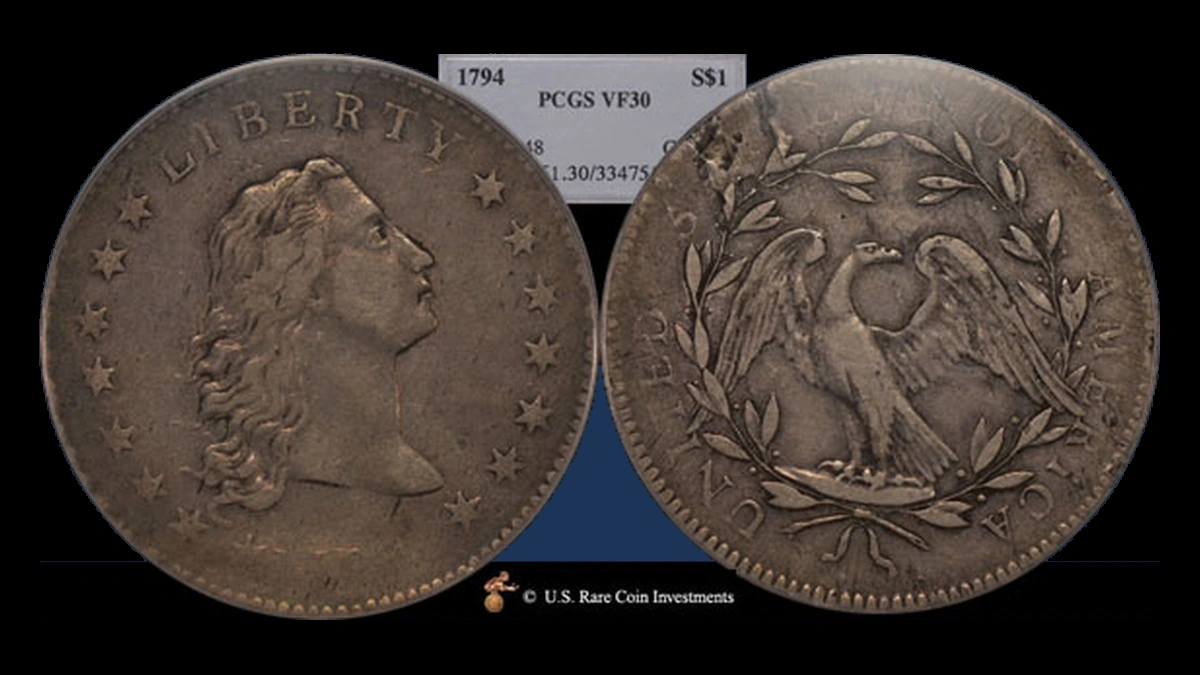
Some ordinary 1794 dollars have weak left-side stars and date details while other areas remain much sharper. Auction descriptions connect the uneven impression with dies that did not meet the blank evenly.
A tilted die gives some areas a stronger squeeze than others. Wear, adjustment filing, and flaws within the blank can also reduce local detail, so softness alone does not prove alignment.
How to Identify
Compare the left stars and date with the stronger right-hand design. Then examine UNITED STATES against the better-formed parts of the reverse.
Wear tends to smooth exposed high points, while weak striking can leave neighboring low detail shallow. Keep original adjustment lines separate from areas that never received a full impression.
For a loose coin, a specialist can assess edge thickness without altering it. A certified dollar should remain in its holder.
What It’s Worth
$50,000–$750,000 is the estimate for circulated dollars with this reported uneven strike. It is a whole-coin value, not an added alignment premium.
A PCGS VF30 example sold for $161,000 on May 28, 2008. That coin also had blank defects, showing why one weak spot should not determine the entire valuation.
2. 1794 Dollar Eagle and Portrait Fragments on Opposite Faces: Die Clash Error
Faint eagle shapes can appear before Liberty’s face and behind her hair, while portrait traces surround the eagle on the reverse. The dies collided without a blank and passed their resulting marks to later coins.
Subsequent smoothing of the dies reduced some traces and weakened certain hair-curl ends. The surviving fragments are not a complete second strike on the dollar.
How to Identify
Match the unexpected curve with a recognizable part of the opposite design. Inspect both the spaces around Liberty and the area surrounding the eagle.
Move the lamp to reveal faint contours rather than rubbing the surface. Straight filing lines may be original weight-adjustment marks, but they do not follow the same borrowed design shapes.
What It’s Worth
$60,000–$5,000,000 spans worn examples through exceptional unworn survivors. The Boyd-Cardinal dollar graded PCGS MS63+ brought $4,500,000 in November 2025, with clash marks described on both faces.
That price reflects extreme rarity, preservation, and the complete coin’s identity. A faint clash on a damaged dollar is not a direct comparison with that celebrated specimen.
3. 1794 Dollar Small Hollows, Flakes, or Streaks: Flawed Silver Blank Error
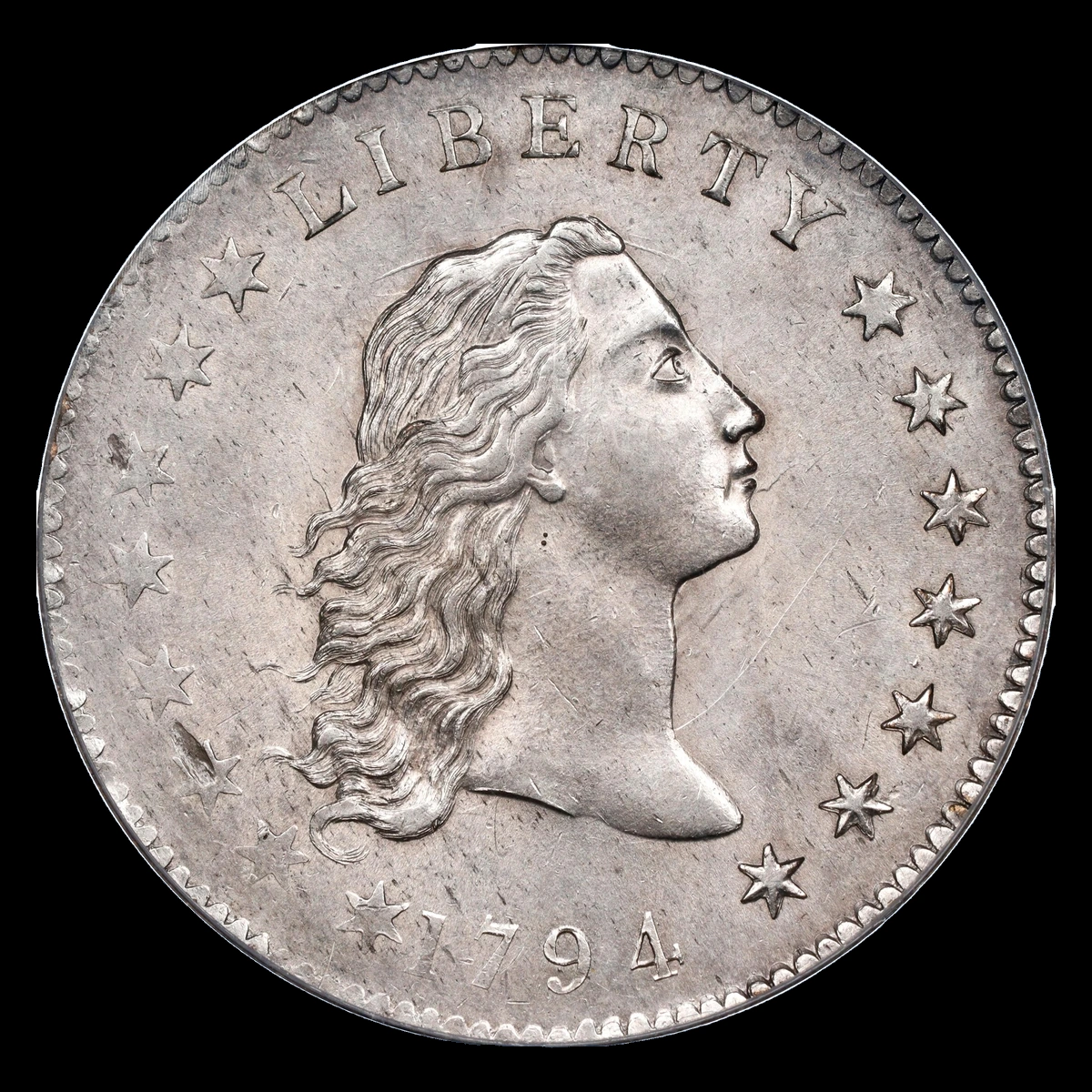
The Boyd-Cardinal dollar has a shallow hollow near star three, a smaller flake at star six, and faint reverse streaks near AM in AMERICA. The catalog describes these as blank defects.
A weak area in the silver can open or lose a small piece during manufacture. Deliberate weight-adjustment filing or a Mint-added silver plug is a separate feature.
How to Identify
Use the two stars as separate landmarks and examine the physical boundary of each affected area. A flat stain differs from an actual missing flake.
Check the reverse streaks without assuming each is a detached layer. Leave attached metal in place and have corrosion, smoothing, repaired holes, or a round original silver plug assessed separately.
What It’s Worth
$50,000–$5,000,000 is the estimate across worn and exceptional unworn examples. Small original flaws can be tolerated on an outstanding early rarity.
The $4,500,000 sale record belongs to the same MS63+ dollar discussed in the clash section. Its different manufacturing features are not separate purchases or values to add together.
Conclusion
Uneven detail, transferred design fragments, and flawed silver each need a different close-up, even when they share one dollar. Preserve original adjustment marks and small flakes while making those comparisons.
The highest figures here belong to exceptional complete 1794 dollars. Match the coin’s condition and identity before deciding what any individual manufacturing mark means for its value.