Rare 1856 Dime Errors (List & Pictures)
An 1856 dime described as Fine 15 and struck 10% off-center sold for $467.50 in August 1996. Estimated whole-coin values for 1856 dime errors range from $75 to $3,000.
Inspect the outline, date area, shield, and reverse lettering in turn. A normal dime weighs 2.49 grams, measures 17.9 millimeters, and contains 90% silver.
| Clue | Identification | Estimated whole-coin range |
|---|---|---|
| Curved missing edge | Clipped planchet | $75–$500 |
| Design displaced beside plain metal | Off-center strike | $500–$3,000 for stronger examples |
| Earlier outlines near date digits | Repunched date | $75–$1,000 |
| Number fragments above date | Misplaced date | $100–$1,200 |
| Repeated shield or gown | Doubled die obverse | $100–$2,000 |
| Repeated UNITED outlines | Doubled die reverse | $100–$1,500 |
1. 1856 Dime A curved gap in the edge: clipped planchet Error
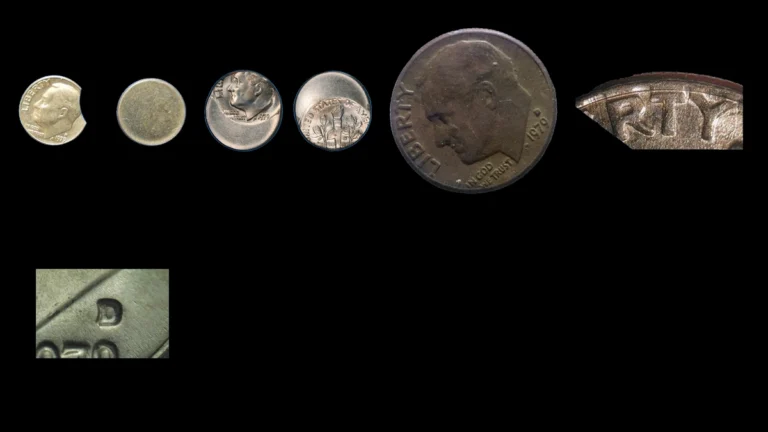
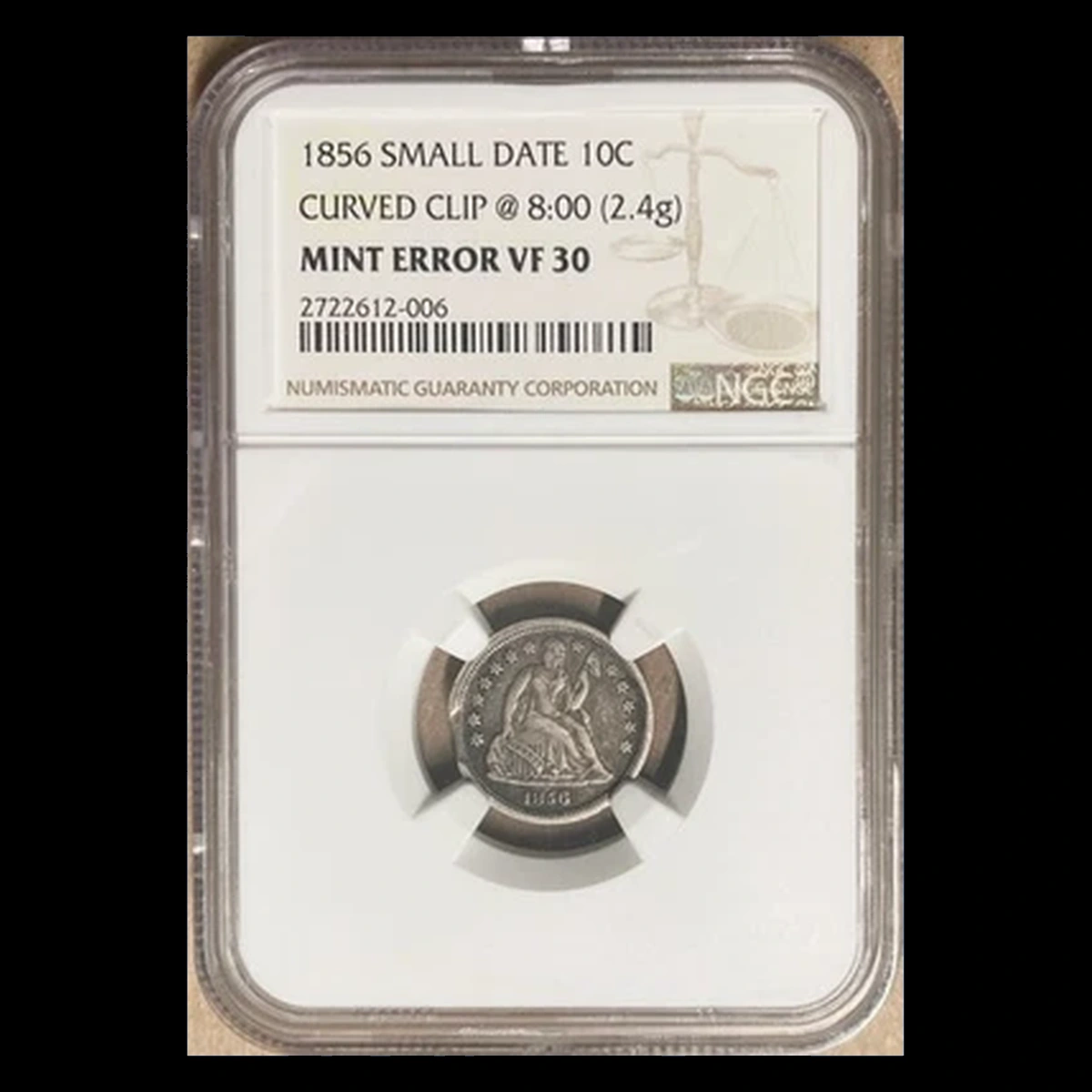
The documented ANACS F15 clip weighs 2.43 grams and has a curved section missing from its edge. A separate historical VF listing describes a 2% clip at eight o’clock.
The gap begins before striking when the blank-cutting punch overlaps an existing hole. The incomplete disc then receives the design around its missing section.
How to Identify
Examine the ends of the gap and the adjacent edge grooves for natural strike formation. Tool lines or abruptly cut design can indicate a later alteration.
Check the opposite rim for possible weakness, while recognizing that this clue is not compulsory. Compare the actual specimen’s boundary with an authenticated clip.
The difference between 2.43 grams and the original standard includes any wear as well as missing metal. It cannot be converted directly into a clip percentage, and the older coin’s eight-o’clock position does not belong automatically to the ANACS example.
What It’s Worth
Genuine circulated through lightly worn clips have an estimated whole-coin range of $75–$500, using neighboring-year Seated examples as context. No completed-sale price is supplied for the ANACS F15.
The older VF listing’s $2.50 was a minimum bid, and a GreatCollections page’s $1 was a starting bid. Neither represents a realized sale.
2. 1856 Dime Plain metal beside a shifted design: off-center strike Error
A historical example was described as 10% off-center with Fine 15 detail. Its supplied record does not establish the mintmark, date size, or direction of displacement.
A separate society report describes a Small Date off-center dime that also has front-side doubling. That combines a misplaced blank with repeated detail already in the die, not two descriptions of the same mechanism.
How to Identify
Check that both faces have displaced design beside the same original unstruck area. A ground edge removes metal instead, while a single misaligned die may affect only one face.
Read the complete date and record the actual mint information. Keep the historical 10% description separate from the reported Small Date coin with doubling.
If doubling is claimed, inspect those contours independently after establishing the off-center strike. Neither feature proves the other, and both must belong to the actual coin.
What It’s Worth
An estimated $500–$3,000 covers identifiable examples with stronger preservation or more visible displacement. The older worn example provides a lower historical benchmark.
The 10% Fine 15 dime sold for $467.50 at Heritage in August 1996. That old transaction is a comparison, not an inflation formula or a price for the separate combined-error coin.
One dime with both an off-center strike and a doubled die still needs one whole-coin valuation. Adding two full category estimates would overstate what the evidence establishes.
3. 1856 Dime Remnants around the intended numbers: repunched date Error
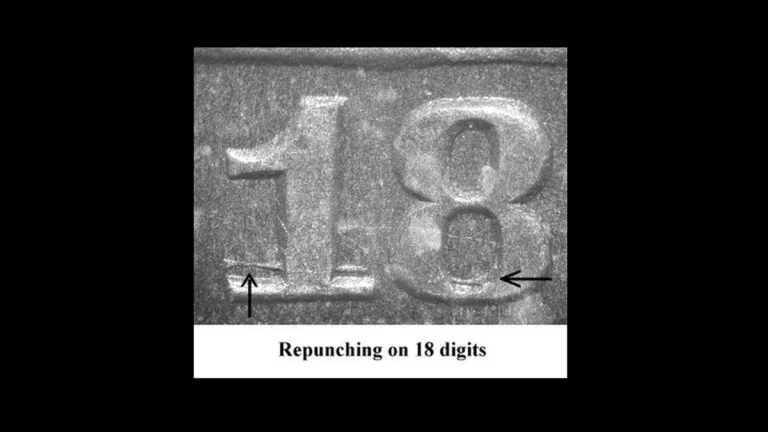
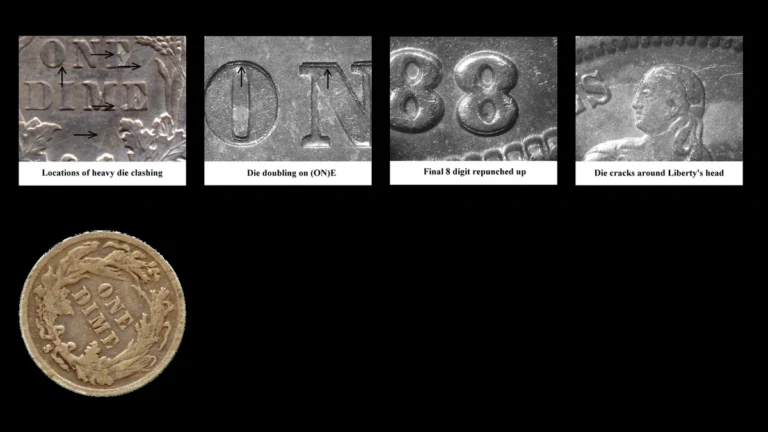
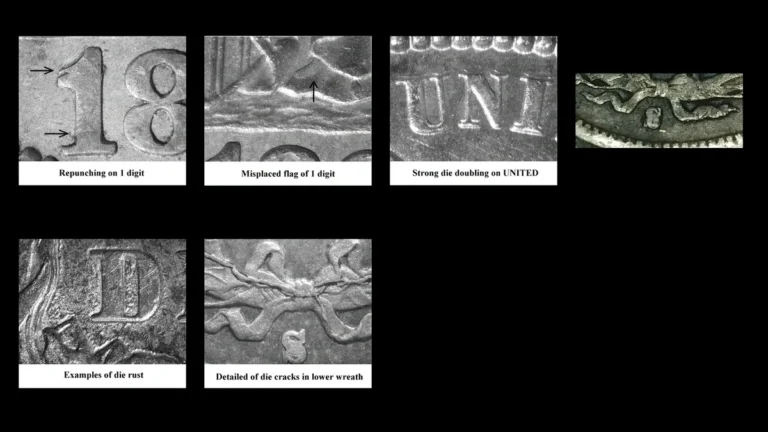
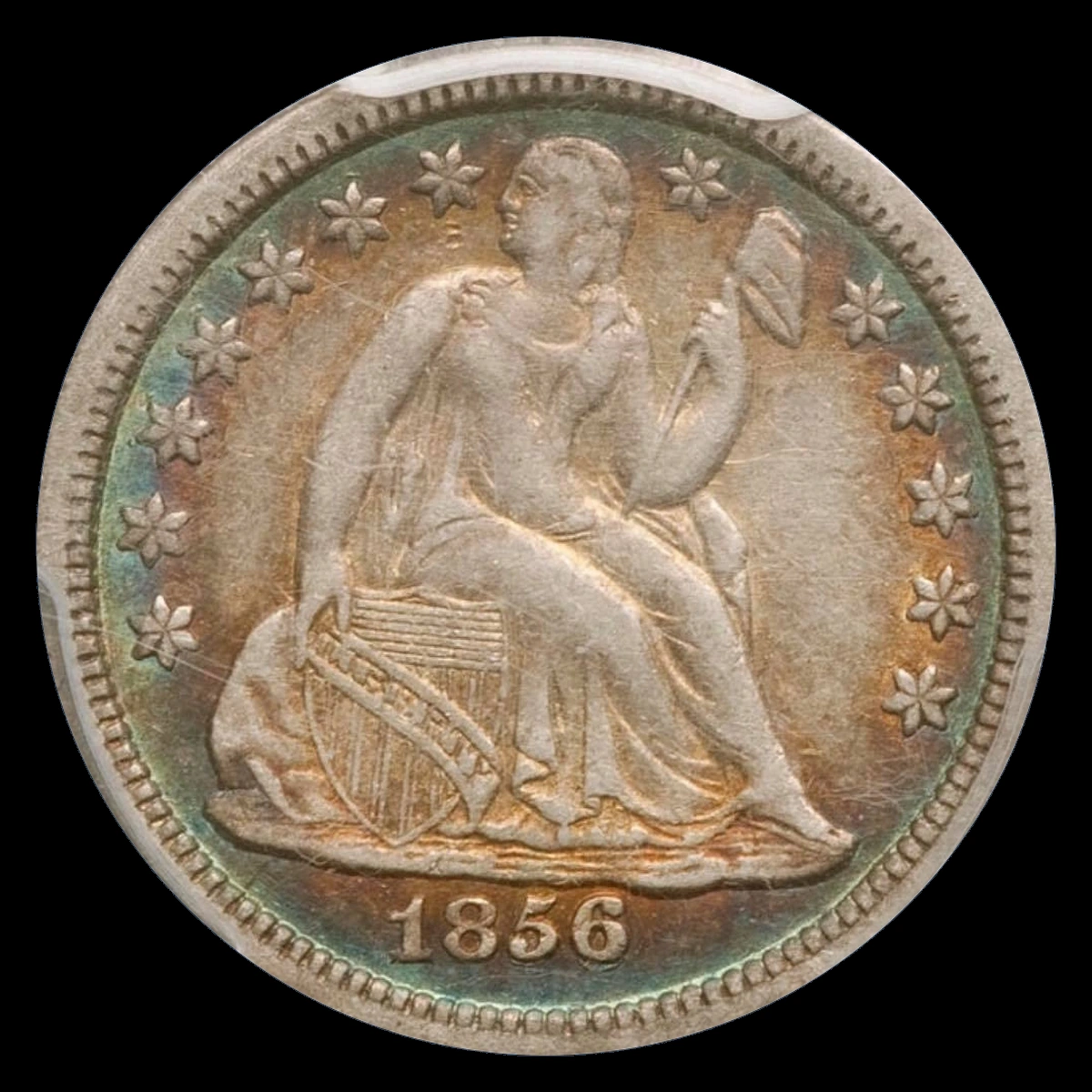
Philadelphia Small Date varieties have reported traces around 185. New Orleans examples repeat parts of 56 and have a large O mintmark.
Repeated date-punch entries left earlier strokes in the die. Different New Orleans varieties have upward or downward relationships, so there is no universal direction to apply to all of them.
How to Identify
Read the mintmark before selecting the date reference. Compare Philadelphia’s Small Date 185 pattern separately from the New Orleans 56 varieties.
Trace raised fragments that follow earlier numeral shapes. Ordinary Small Date and Large Date forms are varieties of the normal design, not errors by themselves.
Any shield doubling needs its own check because it originated during a different step in preparing the die. A doubled-looking date cannot explain repeated gown or shield outlines.
What It’s Worth
Identified circulated through lower-grade unworn examples have an estimated whole-coin range of $75–$1,000. A reported marketplace result of $132.50 concerns a New Orleans repunched date graded PCGS VF35.
That circulated coin is a comparison for its own mint and variety. It does not set a fixed value for Philadelphia examples or justify separate full prices when one coin also carries shield doubling.
4. 1856 Dime Number pieces within Liberty’s base: misplaced date Error
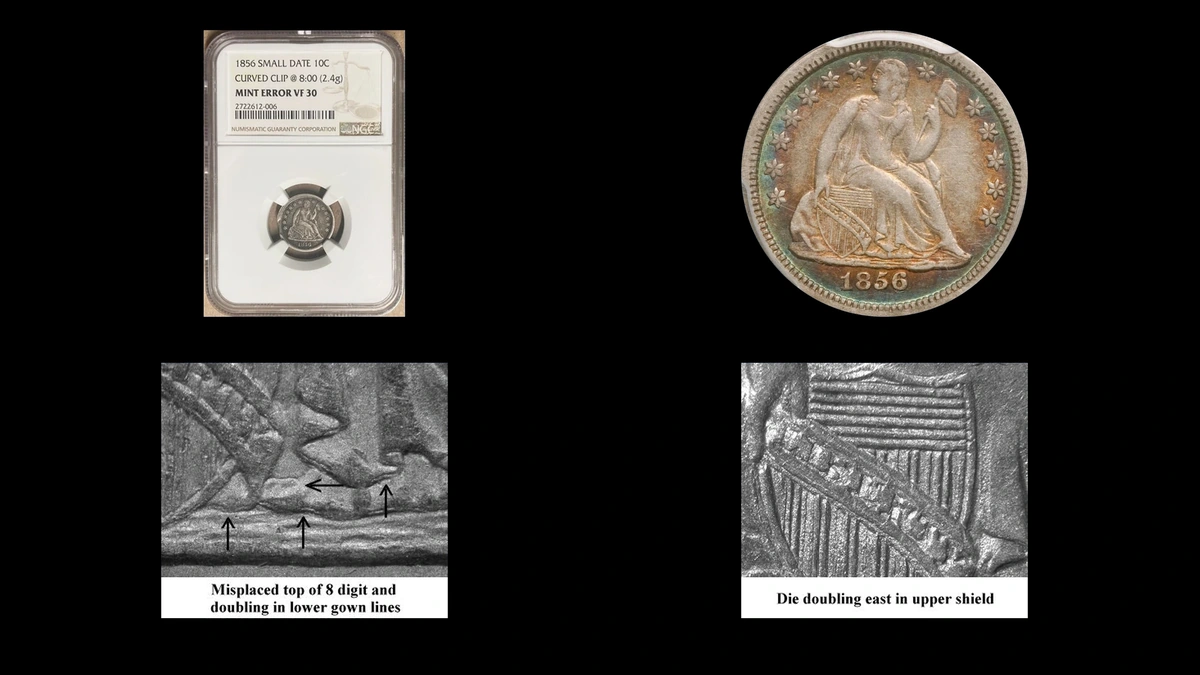
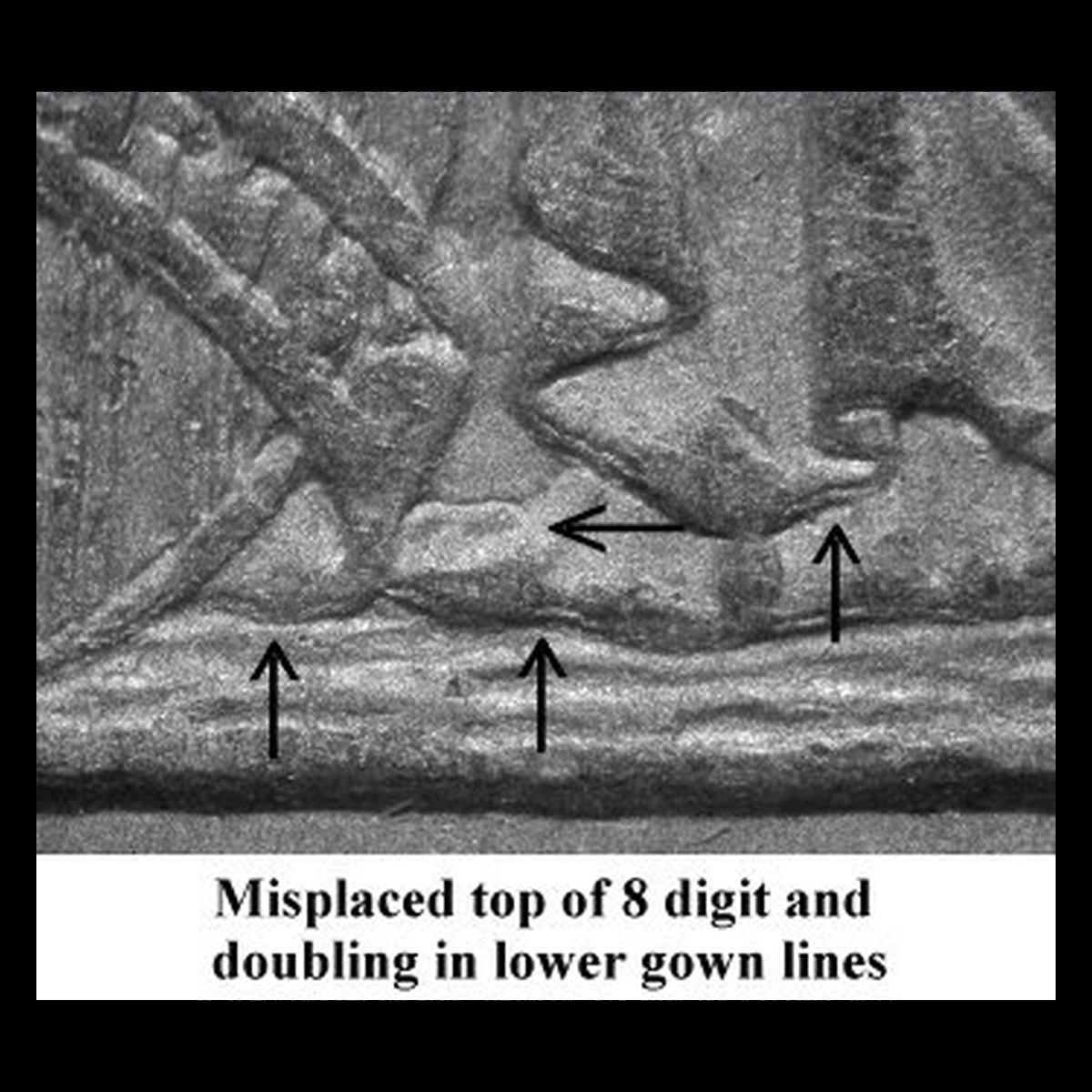
One Small Date variety preserves lower portions of 856 in Liberty’s base above the normal date. A different example has the top of an 8 near the right end of the LIBERTY scroll.
These fragments came from a date punch entering the wrong area of the die. The small scroll-area fragment is an 8 top, not an extra 1.
How to Identify
Keep the full front visible so each fragment can be located correctly. For the base example, compare the lower portions of all three digits, 856.
For the separate scroll-area example, find the curved 8 top at the correct end of the scroll. Do not join normal gown folds into an imagined numeral.
Match the shape and location together using the appropriate variety image. A tight closeup of an ordinary fold can be misleading when its position is hidden.
What It’s Worth
Identifiable worn through better-preserved examples have an estimated whole-coin range of $100–$1,200. Clarity and location of the fragments affect the comparison.
A reported DLRC result lists a PCGS VF30 Small Date F-107 at $171 in February 2023. This supplies a circulated variety benchmark rather than a fixed price for any line beneath Liberty.
5. 1856 Dime Extra shield and gown contours: doubled die obverse Error
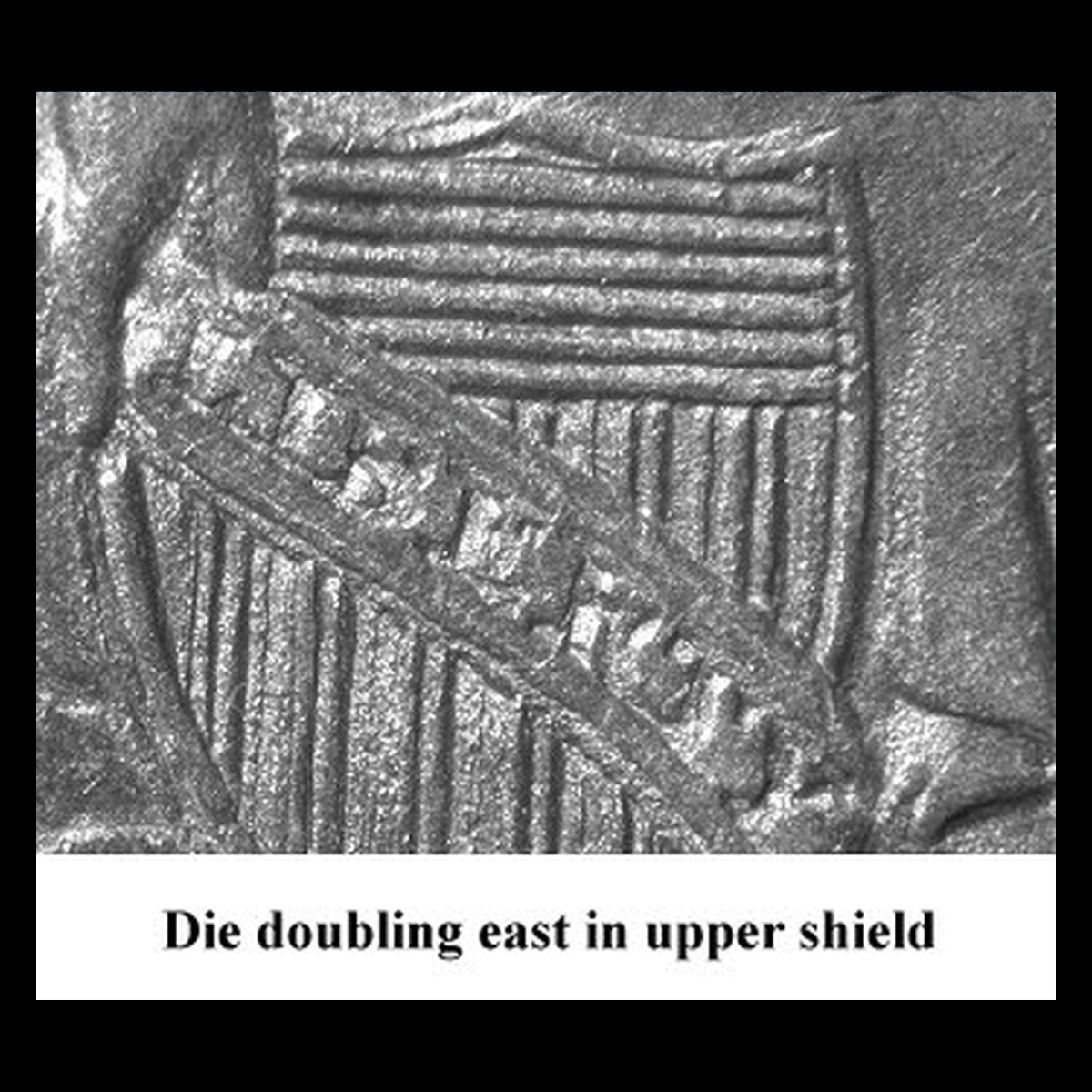
Some Small Date dies show upward doubling above the shield, while others have rightward repeated shield or gown outlines. These are distinct doubled dies with different diagnostic directions.
The design repetition was present in the tools before coins were struck. Separate repunched or misplaced digits can occur on the same coin without causing the shield doubling.
How to Identify
Compare the affected shield and gown edges with the correct reference. An upward extra edge above the shield should not be attributed from a photograph of a rightward variety.
Assess any date fragments independently, retaining the Small Date identification. A reflective surface alone does not establish a collector Proof rather than a circulation strike.
Check repeated raised contours under changing light. Flat shelves, wear, or reflections can make an edge appear thicker without reproducing the documented doubled shape.
What It’s Worth
Confirmed circulated through lower-grade unworn examples have an estimated whole-coin range of $100–$2,000. The actual direction and variety remain important.
Reported records list an ANACS AU50 F-108 at $432 in December 2024. That lightly worn example has rightward doubling and cannot price every upward or rightward variety equally.
6. 1856 Dime Rightward repetition in UNITED: doubled die reverse Error
F-110 combines rightward extra outlines in UNITED on the reverse with upward doubling of the front shield. The two faces provide complementary evidence for one die pairing.
Both tools carried their repeated details before striking. A normal strike could therefore put these differently directed outlines onto the same dime.
How to Identify
Compare UNITED with the F-110 photograph, following the outlines toward the right. Then turn to the front and check the upward extra edge above the shield.
Keep the two directions distinct and verify that both features appear on the same coin. A thick letter or a shield reflection alone does not identify the combination.
Use changing light to distinguish repeated raised detail from a flat shelf. Retain enough surrounding design to keep the small outlines in their correct positions.
What It’s Worth
The estimated whole-coin range is $100–$1,500 for circulated through lower-grade unworn F-110 examples. No separate F-110 auction result is supplied here.
The estimate already covers the paired upward front and rightward reverse doubling. Adding the obverse category’s full range would count the same dime twice, while cleaning or surface damage can reduce its appeal.
Conclusion
The date and mint guide the smaller-feature comparisons, while the full outline distinguishes a missing piece of metal from a shifted strike. Direction also matters when comparing the different shield and lettering varieties.
Keep each recorded specimen attached to its own weight, percentage, condition, and price type. A starting bid is not a sale, and two genuine features on one coin still produce one overall valuation.